filter_list Showing 14 results for "COLLECTIVE" close Clear
dashboard All 107 museum exhibitions 66article local 16article news 14article culture 5rate_review review 3candle obituary 2person people 1
date_range Range Today This Week This Month All
Subscribe

Art Movements: New Museum Names Its First Artist Studio Residents

The New Museum has named Yun Choi, Alison Kuo, and Korakrit Arunanondchai as the first artists-in-residence for its new Artist Studio, a 730-square-foot space created by the museum's OMA-designed expansion. The residencies will run from spring 2025 through winter 2027, with each artist developing new work, onsite exhibitions, and public programs. Separately, Forge Project announced its 2026 fellows—six Indigenous artists including Jay Bellis, Heidi Brandow, and Tiare Ribeaux—who will each receive $25,000 and a three-week residency. In other news, the Robert Therrien Estate has left Gagosian for David Zwirner Gallery, Laurel Nakadate won the Maud Morgan Prize, and Frieze New York revealed a staff uniform designed by artist Reika Takebayashi.
The Holy See Pavilion asks Venice Biennale Visitors to Slow Down and Listen, and Other News.

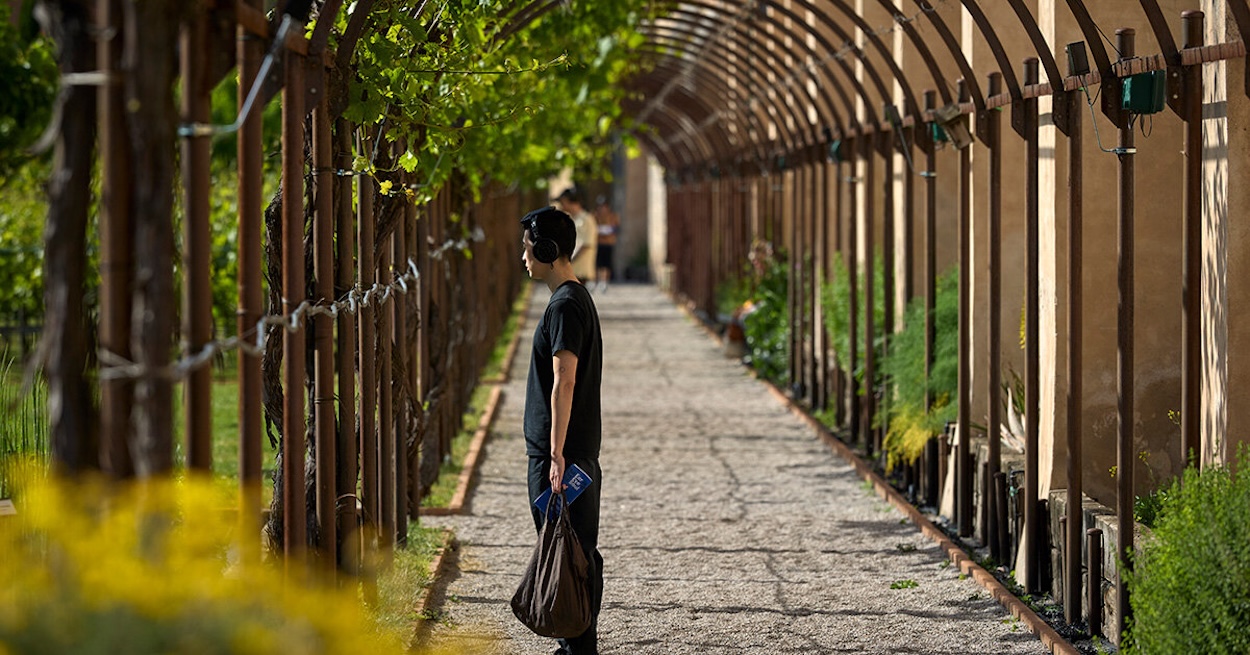
The Holy See's pavilion at the 61st Venice Biennale presents "The Ear is the Eye of the Soul," a multi-sensory exhibition centered on deep listening and inspired by Hildegard von Bingen, curated by Hans Ulrich Obrist and Ben Vickers with Soundwalk Collective, featuring new commissions by 24 artists including Patti Smith, Brian Eno, FKA twigs, and Dev Hynes across two Venetian sites. Separately, Chanel and the Solomon R. Guggenheim Foundation have launched the Chanel Culture Fund Fellowship, a transatlantic curatorial program for postgraduate scholars at the Guggenheim Museum in New York and the Peggy Guggenheim Collection in Venice. In other news, a father-daughter duo from New Jersey pleaded guilty to a $2 million counterfeit art scheme involving forged works attributed to Andy Warhol, Banksy, and others; Vienna's Burgtheater is offering guided scaffolding tours of Gustav Klimt's early ceiling paintings during restoration; and the sixth edition of the Head Hi Lamp Show opens in New York.

Venice Biennale’s fierce pussy Group Says City Censored Posters About Queer and Trans People

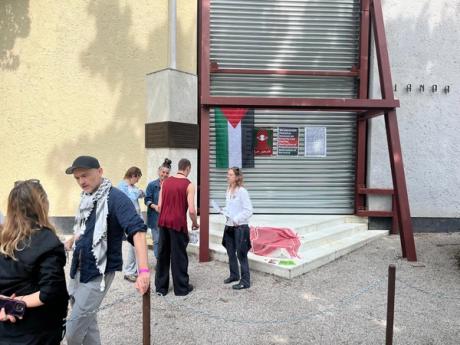
The lesbian artist collective fierce pussy, comprising Nancy Brooks Brody, Joy Episalla, Zoe Leonard, and Carrie Yamaoka, claims that the city of Venice censored their posters for the Venice Biennale. The posters, which feature phrases like "Welcome queers and trans people" and "we are queers and trans people" alongside a list of occupations, were intended to be pasted across the city. After the city blocked the full-scale posting, the group created stickers and placed them on walls, windows, and advertising spaces. As a concession, La Biennale installed the original posters inside the Arsenale entrance.

Historic Strike Disrupts Biennale as Thousands March in Venice

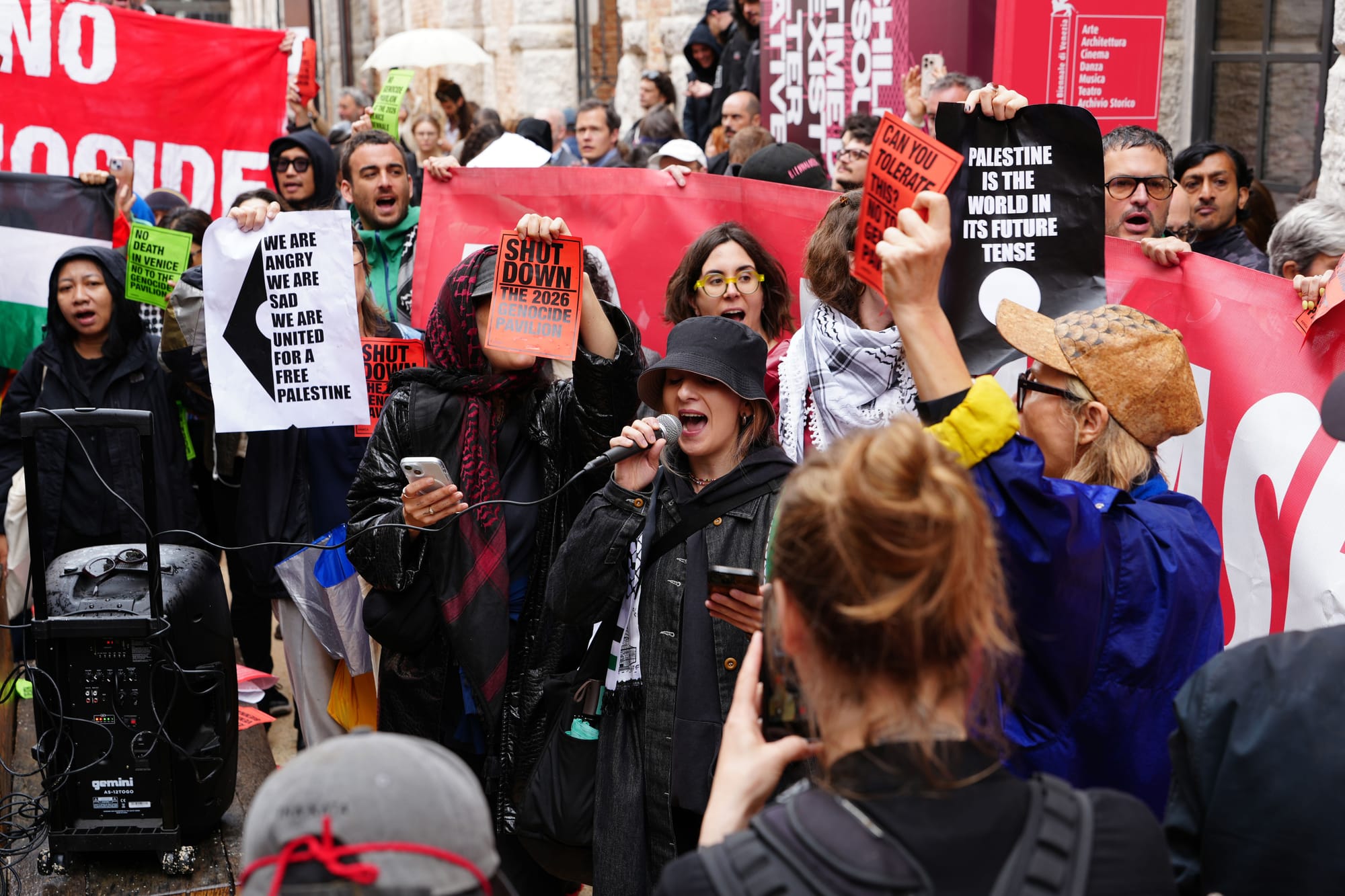
On May 8, 2026, artists and cultural workers staged the first strike in the 131-year history of the Venice Biennale, disrupting the pre-opening of the international exhibition. At least 27 of the 100 national pavilions were partially or fully shut down, and thousands marched through Venice to the Arsenale, which was barricaded by Italian riot police. The strike, organized by the Art Not Genocide Alliance (ANGA) and local activist groups, was a 24-hour action for Palestine and workers' rights, with some artists altering or draping their works in the main exhibition, "In Minor Keys."

Venice Biennale strike sees more than 15 pavilions temporarily or partially close

On 8 May, more than 15 national pavilions at the Venice Biennale temporarily or partially closed in a coordinated strike organized by the Art Not Genocide Alliance (ANGA). The protest opposes Israel’s participation in the event, which organizers say normalizes what they call genocide and exploits precarious labor. Participating countries include Austria, Lebanon, Slovenia, Egypt, Poland, and the Netherlands, whose artist Dries Verhoeven stood outside his shuttered pavilion with a Palestinian flag. Some pavilions, like Japan’s, remained open but suspended interactive elements. The strike follows earlier controversies, including the resignation of the prize jury and an open letter demanding the Israeli pavilion’s cancellation.

An Unprecedented 24-Hour Strike Could Upend the Venice Biennale

An unprecedented 24-hour strike is set to interrupt the Venice Biennale's opening week on Friday, May 8, in protest of Israel's participation in the global art event. The action, organized by the activist group Art Not Genocide Alliance (ANGA), follows a letter signed by over 230 Biennale participants demanding Israel's exclusion. The strike has exposed divisions among participants, with some artists and pavilion teams weighing solidarity against the rare opportunity to platform their own political messages. The Slovenian pavilion, represented by Nika Grabar of the Nonument Group, has committed to the strike, while others like Ecuador's Tawna Collective remain undecided, balancing protest with their mission to highlight ecological crises in the Amazon.

Venice Biennale opening marked by protests

The 2026 Venice Biennale opened for professionals on Tuesday amid a series of protests, with more planned throughout the week. Around 60 artists from the exhibition "In Minor Keys" gathered at the Giardini for a collective action called "Solidarity Drone Chorus," inspired by Gazan composer Ahmed Muin's "Drone Song," to draw attention to genocide and war in Palestine. The Art Not Genocide Alliance (ANGA) organized a 24-hour strike for Friday 8 May, protesting Israel's participation. Pussy Riot staged a protest outside the Russian pavilion, and the Latvian pavilion launched a campaign against Russia's involvement. The protests follow a highly politicized lead-up, including calls for boycotts of the Russian, Israeli, and US pavilions, EU funding cuts over Russia's participation, and the resignation of the Biennale jury.

Pussy Riot and Topless Activists Rally Against Russian Pavilion at Venice Biennale

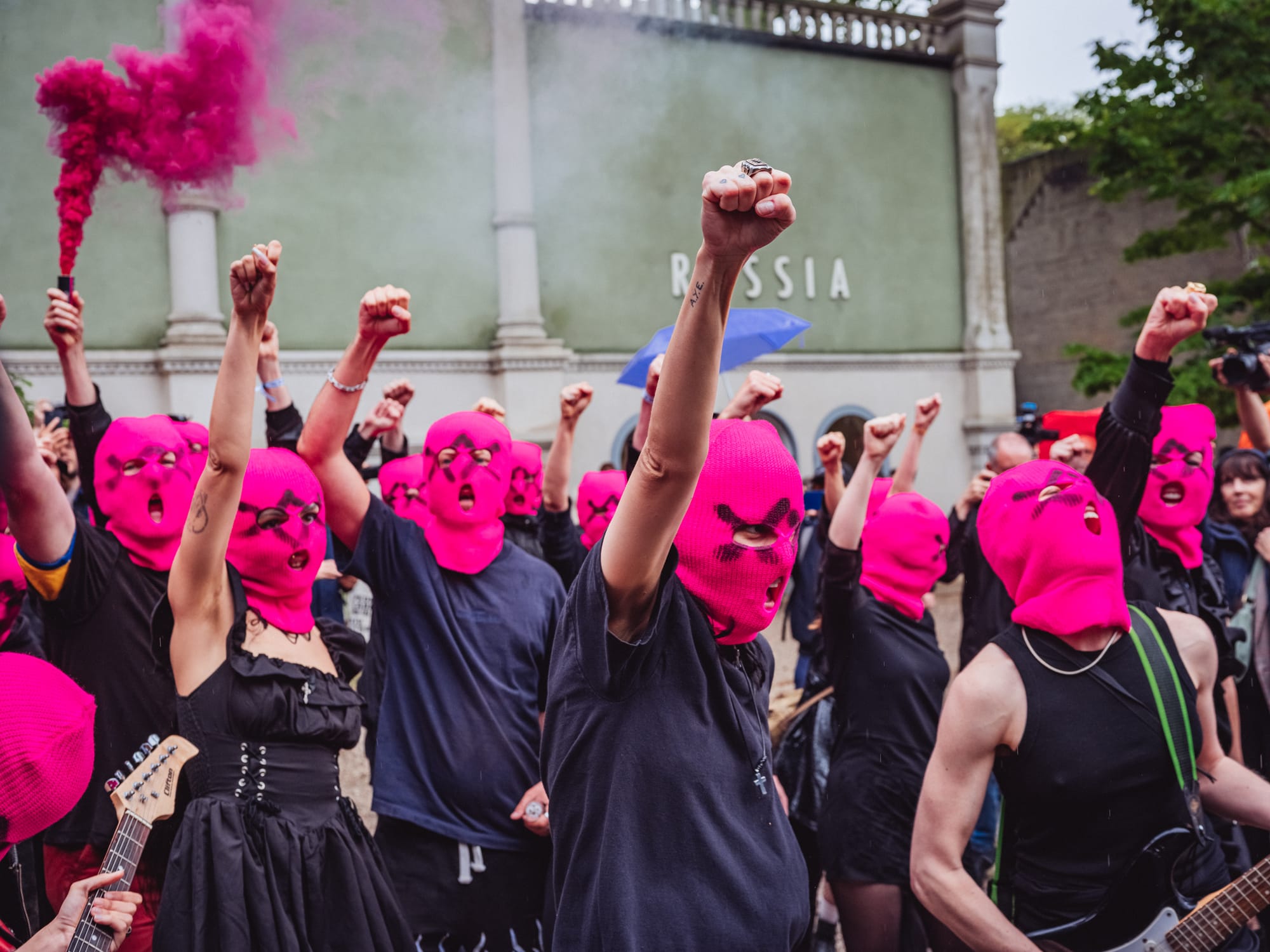
On May 6, 2026, the art collective Pussy Riot and the Ukrainian feminist group FEMEN staged a protest outside the Russian Pavilion at the 61st Venice Biennale. Approximately 50 activists released pink smoke and blue-and-yellow flares evoking the Ukrainian flag, while FEMEN members staged a topless protest with anti-war slogans like “RUSSIA KILLS, BIENNALE EXHIBITS.” Italian police and Biennale security blocked access to the pavilion, and some Pussy Riot activists were tackled after entering. The protest targeted Russia’s participation in the Biennale for the first time since its full-scale invasion of Ukraine in 2022, with activists condemning the event for lending legitimacy to Russian officials and artists aligned with the government.

THE VENICE BIENNALE IN AN EDITION MARKED BY POLITICAL GAMES

The Venice Biennale's 2024 edition is embroiled in political controversy surrounding its national pavilions, particularly those of Russia, South Africa, and Israel. The Russian pavilion's readmission amid the war in Ukraine drew sharp criticism from the artistic community and led the European Union to withdraw approximately two million euros in funding. The Israeli pavilion, which remained empty in 2024 to protest hostage situations, now features a proposal by sculptor Belu-Simion Fainaru, prompting protests from the Art Not Genocide Alliance and over 200 artists demanding its exclusion. The curatorial team, appointed by the late curator Koyo Kouoh, resigned collectively nine days before the opening, and the Biennale's directorship canceled the opening ceremony, postponing awards to November. Demonstrations led by Art Not Genocide Alliance, Pussy Riot, and FEMEN surrounded the Russian pavilion during the press opening, and a strike by cultural workers is planned for May 8th.

Hundreds Protest Israel’s “Genocide Pavilion” at Venice Biennale

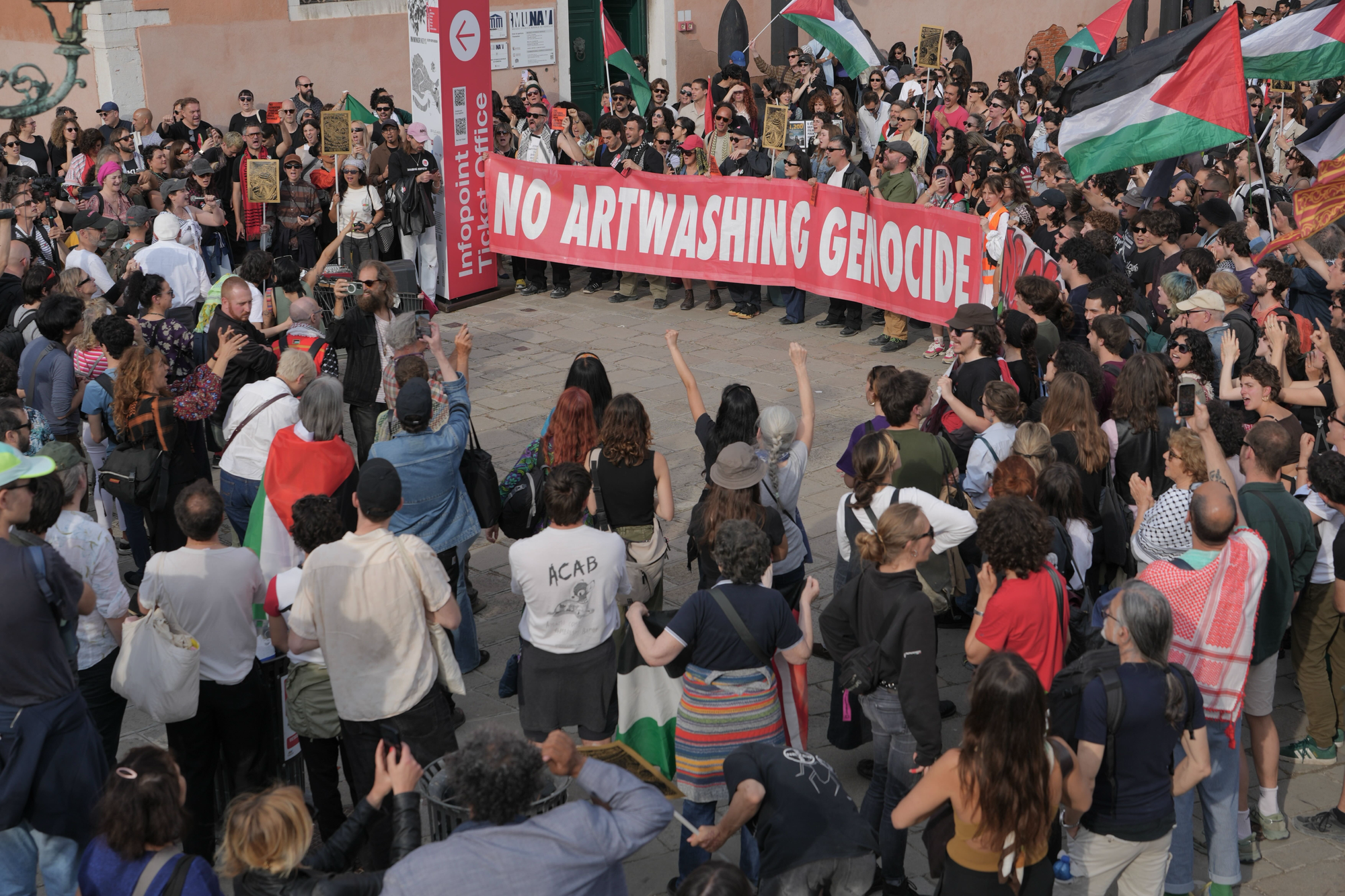
On May 6, 2026, the first day of previews at the Venice Biennale, hundreds of pro-Palestine activists led by the Art Not Genocide Alliance (ANGA) blocked the entrance to the Israeli pavilion, demanding its immediate closure. Protesters waved Palestine flags and banners reading "No Artwashing Genocide" and "No Genocide Pavilion at Biennale," chanting accusations of genocide against Israel. The demonstration temporarily shut down access to Belu-Simion Fainaru's exhibition "Rose of Nothingness" for about half an hour. The protest followed a letter signed by over 200 artists urging the Biennale to exclude Israel, which instead moved the pavilion to an alternative location in the Arsenale due to renovations. Separately, Pussy Riot and FEMEN rallied outside the Russian pavilion, which will only open during preview days due to sanctions. Venice cultural workers plan a 24-hour strike on May 8 in solidarity with Palestinians, potentially disrupting the Biennale's schedule.

From Minor Keys to Uproar: The Crisis of the Venice Biennale

DE LAS MINOR KEYS AL ESTRUENDO: LA CRISIS DE LA BIENAL DE VENECIA

The 61st Venice Biennale is engulfed in a structural crisis, marked by geopolitical tensions over the inclusion of Russia (amid its invasion of Ukraine) and Israel (amid the Gaza genocide). The Biennale Foundation, led by Pietrangelo Buttafuoco, defended their participation on legalistic grounds, sparking outrage from over 200 artists, curators, and cultural workers who demanded Israel's exclusion, aligning with Art Not Genocide Alliance (ANGA). The international jury, chaired by Solange Farkas and including Zoe Butt, Elvira Dyangani Ose, Marta Kuzma, and Giovanna Zapperi, resigned collectively on April 30 after deciding not to award prizes to countries whose leaders face International Criminal Court arrest warrants. This led to the cancellation of the traditional Golden and Silver Lions, replaced by audience-voted "Visitor Lions," with awards deferred until November. The European Commission suspended a €2 million subsidy over Russia's participation, and Italian Culture Minister Alessandro Giuli notably skipped the May 9 opening.

As the South African Pavilion Sits Empty, Gabrielle Goliath Continues a ‘Life-Work of Mourning’

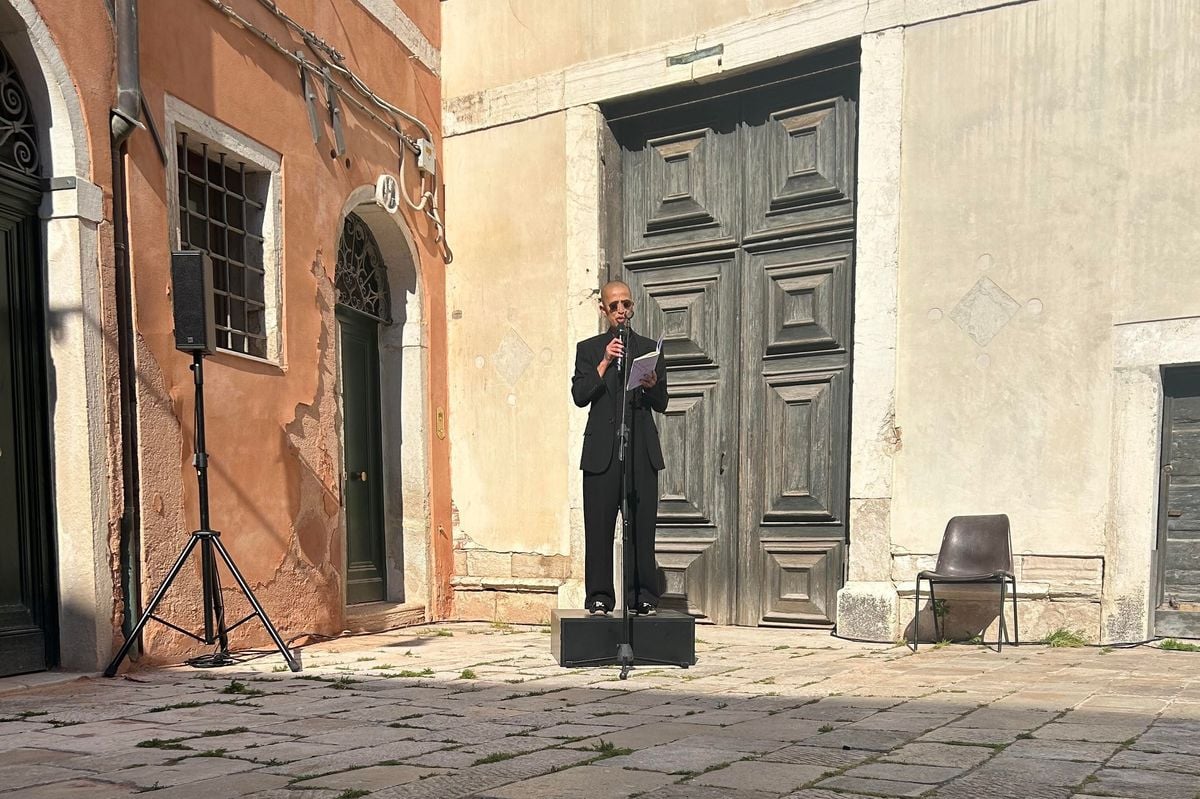
South African artist Gabrielle Goliath inaugurated an off-site Venice exhibition with a public poetry reading after her official presentation at the South African Pavilion was canceled. The performance, part of her ongoing series *Elegy* (2015), features seven singers sustaining a single tone for an hour as a mourning ritual. The work addresses femicide, rape culture, and the killing of Palestinian civilians, and includes new video and sound installations lamenting specific victims: South African teenager Ipeleng Christine Moholane, Nama women killed during Germany’s colonization of Namibia, and Palestinian poet Hiba Abu Nada. The South African Department of Sport, Arts and Culture rescinded Goliath’s invitation in January, deeming the work “related to an ongoing international conflict that is widely polarising.” Goliath unsuccessfully challenged the decision in South Africa’s high court, and the exhibition now runs throughout the Venice Biennale outside the official program before traveling to London in October.

Stilllive Documents 2019–2025 @ The 5th Floor

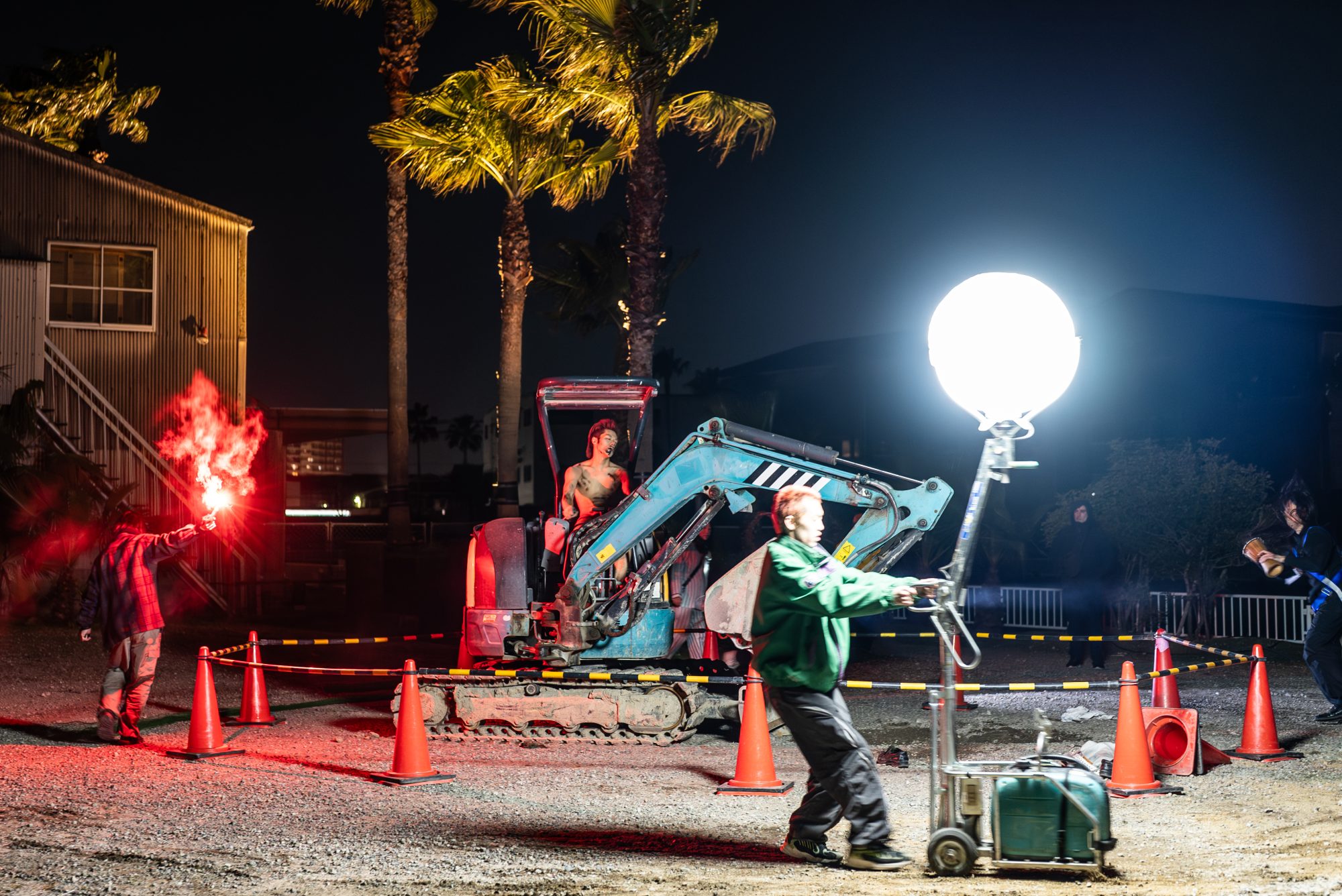
The 5th Floor in Tokyo is hosting "Stilllive Documents 2019–2025," a retrospective exhibition running from May 14 to June 7, 2026, that reviews the activities of the performance platform Stilllive. The show features unpublished photographs and video materials from 2019 to 2025, presenting them not as mere traces of events but as records of relationships, tensions, and responses that emerged in each moment. Stilllive was founded in 2016 by Yuki Kobayashi and graduates of the Royal College of Art's Performance program, and has held annual events since 2019 at venues including the Goethe-Institut Tokyo. A new performance, "Stilllive 2026," will take place on May 16–17 at BUoY in Senju Nakamachi, Tokyo, connecting past accumulations to future practice.

Artists’ Strike Closes Pavilions at Venice Biennale, Adding to Upheaval

Several national pavilions at the Venice Biennale were shut down after artists staged a strike, protesting working conditions, funding disparities, and the event's relationship with sponsors linked to geopolitical conflicts. The closures disrupted the opening week of the prestigious international exhibition, with participating artists and curators withdrawing their work or locking pavilion doors in solidarity.