filter_list Showing 47 results for "IMI" close Clear
dashboard All 139 museum exhibitions 48article news 47article culture 10trending_up market 9article local 9rate_review review 6person people 5article policy 4candle obituary 1
date_range Range Today This Week This Month All
Subscribe

Nominees for the Turner Prize 2026 announced by Tate

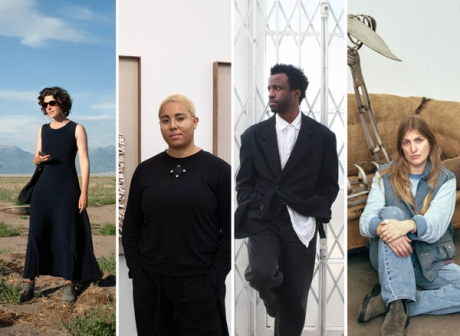
Tate Britain has announced the four nominees for the 2026 Turner Prize: Simeon Barclay, Kira Freije, Marguerite Humeau, and Tanoa Sasraku. The shortlist was revealed during a press conference broadcast online. An exhibition of their work will open at the Middlesbrough Institute of Modern Art (Mima) on 26 September, with the winner announced on 10 December. The winner receives £25,000, while each runner-up gets £10,000. The jury, chaired by Tate Britain director Alex Farquharson, praised the diverse range of work spanning installation, performance, and sculpture.

The Turner Prize Has Revealed Its 2026 Nominees—and Already Courted Controversy

The Turner Prize has announced its 2026 nominees: Simon Barclay, Kira Freije, Marguerite Humeau, and Tanoa Sasraku. The award, administered by Tate Britain, includes a £25,000 prize for the winner. For the first time, the nominees' exhibition will be held at Teesside University's Middlesbrough Institute of Modern Art, an academic setting. The selection has already drawn criticism for being tame and safe, with Guardian critic Eddy Frankel describing the prize as "timid" and "fearful." Tate Britain director Alex Farquharson defended the nominees, praising the diversity and sculptural focus of their work.

Art Basel Curbs Pre-Fair Sales—and More Art Industry News

Art Basel has launched a "Basel Exclusive" initiative to curb pre-fair PDF sales, encouraging galleries to withhold works from previews to drive in-person discovery at its flagship Swiss event (June 16–21). Around 170 of 232 exhibitors have opted in. Meanwhile, Volta returns to Basel with a new "5,000 Edit" section for works under CHF 5,000 to attract younger collectors, and the alternative fair Esther will hold its third edition in New York during Frieze Week. In other news, Sotheby's set a U.S. record for design auctions with the Jean and Terry de Gunzburg collection totaling $96 million, and billionaire collector Mitchell P. Rales pledged $116 million to the National Gallery of Art to fund loans to smaller museums. The Smithsonian American Art Museum named Lynda Roscoe Hartigan as its new director, and Gladstone Gallery plans a new Seoul space for 2026.

How Much Is That Chagall in the Window: Metropolitan Opera Faces Funding Crisis After Saudi Deal Collapse

The Metropolitan Opera in New York faces a $30 million deficit after a $200 million funding deal with Saudi Arabia collapsed. The Saudi government withdrew from the agreement, which would have sent Met performers to the Royal Diriyah Opera House for three weeks each February, citing economic pressures from the Iran War and the blockage of the Strait of Hormuz. To address the shortfall, the Met is considering selling two monumental Marc Chagall paintings—The Sources of Music and The Triumph of Music (1966)—valued at $55 million, along with other options like selling naming rights or seeking a similar deal with another country.

Dartmouth Students Turn to Moldy Beef Jerky Installation in Renewed Bid to Remove Leon Black’s Name from Arts Center

Art students at Dartmouth College installed a provocative piece titled "Something Rotten" in the Black Family Visual Arts Center, consisting of 20 moldy beef sticks arranged into a smiley face over the dedication wall honoring billionaire financier Leon Black and his family. The work, created by students Erik Siegel, Angeles Juarez-Ruiz, and Roan Wade, was removed one week after the exhibition "Storage Room" opened on April 14. The piece references Black's documented friendship and business dealings with convicted sex offender Jeffrey Epstein, with the wall label quoting an Epstein email mentioning "jerky." The installation is part of a broader student and alumni campaign to remove Black's name from the arts center, which was funded by a $48 million gift from Black and his wife Debra.

Gearing Up for Venice

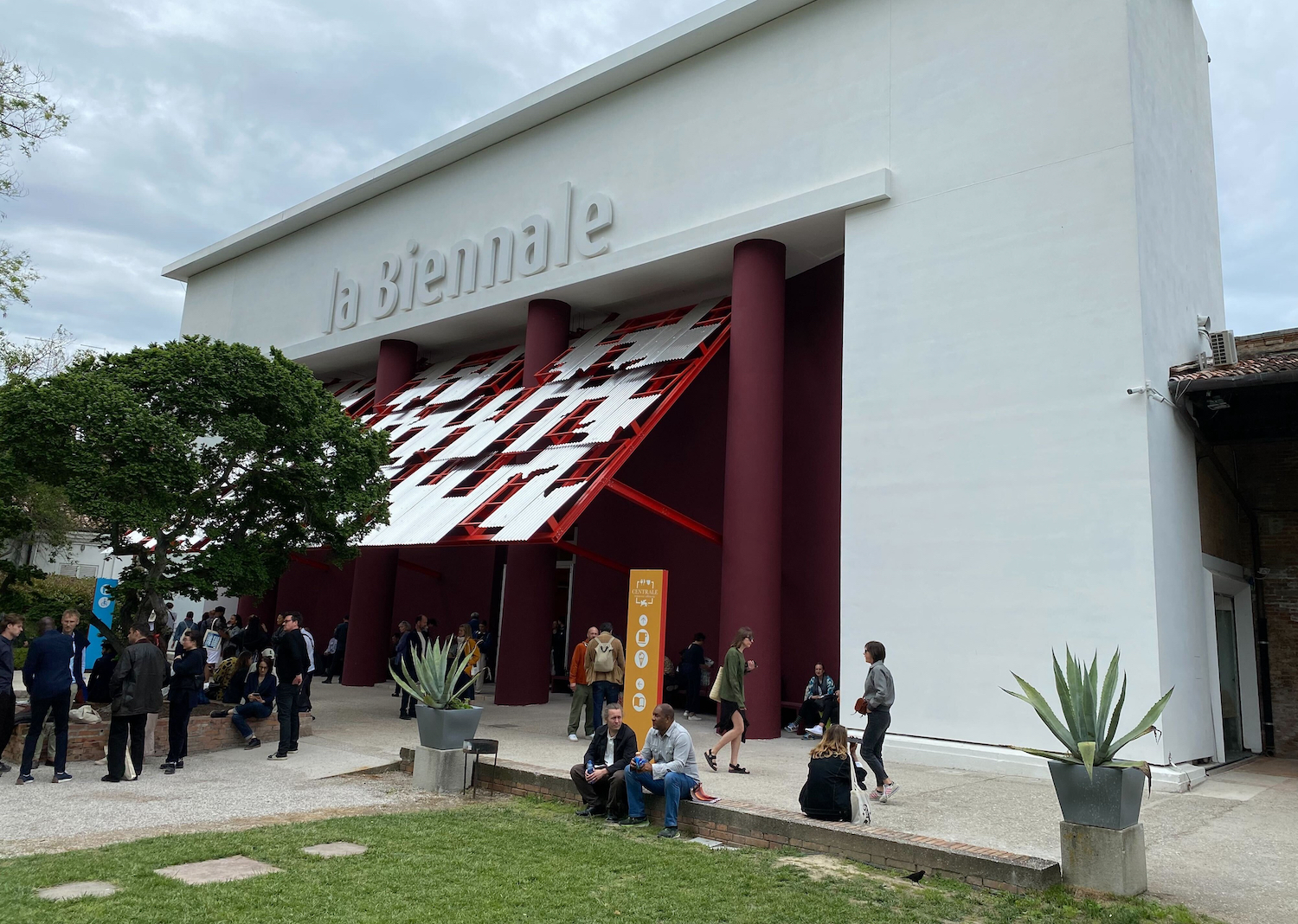
The 2026 Venice Biennale's awards jury has announced it will not consider artists from countries whose leaders are charged with crimes against humanity by the International Criminal Court, specifically naming Israel and Russia. In other news, satellite imagery confirms Azerbaijan demolished an Armenian church in Artsakh, the World Press Photo of the Year was awarded to Carol Guzy for an image of ICE detaining a father, and Argentine abstract painter Ides Kihlen died at age 108. Hyperallergic also published a guide to the Biennale by Hrag Vartanian and reported on Lynda Roscoe Hartigan's appointment as director of the Smithsonian American Art Museum.

Taiwan revokes Sakuliu Pavavaljung’s National Award for Arts

Taiwan’s National Culture and Arts Foundation has revoked the National Award for Arts granted to artist Sakuliu Pavavaljung in 2018, ordering him to return the NTD 1 million prize. The revocation follows a Supreme Court ruling on 1 April that upheld a January 2025 conviction by the Pingtung District Court, which found the artist guilty of rape and sentenced him to four years and six months in prison.

Venice Golden Lion jury won’t consider Russian and Israeli pavilions

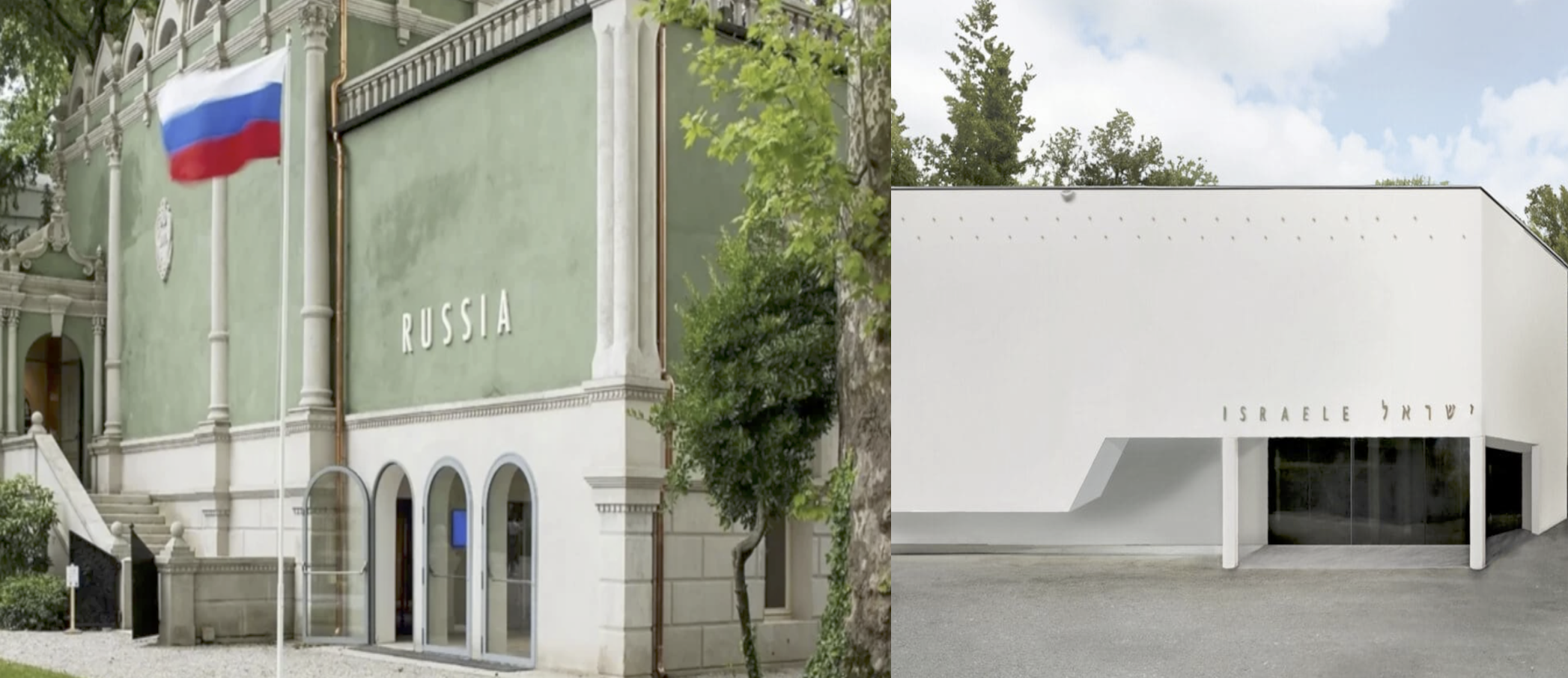
The jury for the Golden and Silver Lion awards at the 61st Venice Biennale has announced it will not consider the national pavilions of any country whose leaders are currently charged with crimes against humanity by the International Criminal Court. This decision specifically excludes Russia, whose president Vladimir Putin is charged with unlawful deportation of Ukrainian children, and Israel, whose prime minister Benjamin Netanyahu is charged with targeting Palestinian civilians and using starvation as a weapon. The jury, presided over by Solange Oliveira Farkas and including Zoe Butt, Elvira Dyangani Ose, Marta Kuzma, and Giovanna Zapperi, issued a full statement explaining their commitment to human rights and alignment with the curatorial vision of the late Koyo Kouoh.

Venice Biennale’s Prize Ban on Israel and Russia Falls Short for Critics

The jury of the 2026 Venice Biennale has ruled that Israel and Russia will be ineligible for the Golden and Silver Lion prizes, citing International Criminal Court charges of crimes against humanity against their leaders. The decision follows years of activism and political pressure, with the European Union withdrawing €2 million in funding from the event in protest of Russia's participation. While groups like Art Not Genocide Alliance praised the move as an unprecedented step, critics argue it falls short of a full ban on participation. Israel's artist representative, Belu-Simion Fainaru, condemned the policy as discriminatory, and an open letter signed by 70 artists and curators called for excluding all regimes committing war crimes, including the United States.

Venice Biennale Jury Bars Israel and Russia from Official Prizes

The international jury of the 61st Venice Biennale announced on April 23 that it will not consider the Israeli and Russian pavilions for official prizes, including the Golden Lion for national participation. The five-member, all-women panel—comprising Solange Farkas, Zoe Butt, Elvira Dyangani Ose, Marta Kuzma, and Giovanna Zapperi—said it would exclude countries whose leaders are currently charged with crimes against humanity by the International Criminal Court, a criterion that applies to Israel and Russia due to ICC arrest warrants for Benjamin Netanyahu and Vladimir Putin. The decision comes amid mounting controversy over the Biennale's decision to host both pavilions, with Russia returning after its artists withdrew in 2022 over the Ukraine invasion and Israel reopening after its 2024 pavilion remained closed pending a Gaza ceasefire. The European Commission had also threatened to suspend a €2 million grant over the Russian pavilion's reopening.

The soap opera continues. Minister Giuli will boycott the inauguration of the Venice Biennale

La telenovela continua. Il Ministro Giuli diserterà l’inaugurazione della Biennale di Venezia

Alessandro Giuli, Italy's Minister of Culture, has announced he will boycott the pre-opening and inauguration ceremony of the 61st Venice Biennale on May 9, 2026, escalating a political and cultural crisis. The dispute began when Biennale president Pietrangelo Buttafuoco allowed the Russian pavilion to reopen, absent since 2022 due to the Ukraine invasion, citing artistic freedom. Giuli demanded the removal of ministry representative Tamara Gregoretti from the Biennale board for failing to oppose the decision. Tensions flared during the Italy Pavilion press conference, where journalists were confined to a separate streaming room and questions were restricted. The European Commission condemned the Russian pavilion's reopening, cutting €2 million in funding and issuing a 30-day ultimatum, while 22 European countries signed a letter pressuring the institution. The Biennale's international jury, led by Solange Oliveira Farkas, then excluded Russia and Israel from award consideration, citing ethical guidelines against countries whose leaders face International Criminal Court charges for crimes against humanity.

Venice Biennale Awards Jury Won’t Consider Russia and Israel

The international awards jury for the 61st Venice Biennale has announced it will not consider countries whose leaders are charged with crimes against humanity by the International Criminal Court (ICC) for prizes. The all-women jury, chaired by Solange Farkas, published a statement on e-flux declaring this policy, which implicitly targets Russia and Israel, whose leaders Vladimir Putin and Benjamin Netanyahu face ICC warrants. The jury is responsible for awarding Golden Lions for the best national pavilion and best artist in the central exhibition. A majority of artists in the main show issued an open letter supporting the decision, while the Biennale Foundation faces criticism for allowing both nations to participate in 2026.

According to an AI, El Greco would actually be the sole author of the 'Baptism of Christ' in Toledo, long considered a workshop work

Selon une IA, Greco serait en réalité l’unique auteur du « Baptême du Christ » de Tolède, longtemps considéré comme une œuvre d’atelier

A new study published in Science Advances uses an AI tool called Patch to analyze the monumental painting "Le Baptême du Christ" (1608–1614) by El Greco, long believed to be a workshop piece completed by his son Jorge Manuel Theotocópuli. By mapping the 3D microtopography of the brushstrokes and comparing them with El Greco's authenticated "Christ on the Cross" at the Cleveland Museum of Art, the AI found consistent painterly gestures across the entire work, suggesting the master himself painted it despite tremors from neurological disorders in his old age.

A Dismembered Album by Gerard van Honthorst (1592-1656): Unpublished Drawings and Reconstruction of a Corpus

Un album démembré de Gerard van Honthorst (1592-1656) : dessins inédits et reconstitution d'un corpus

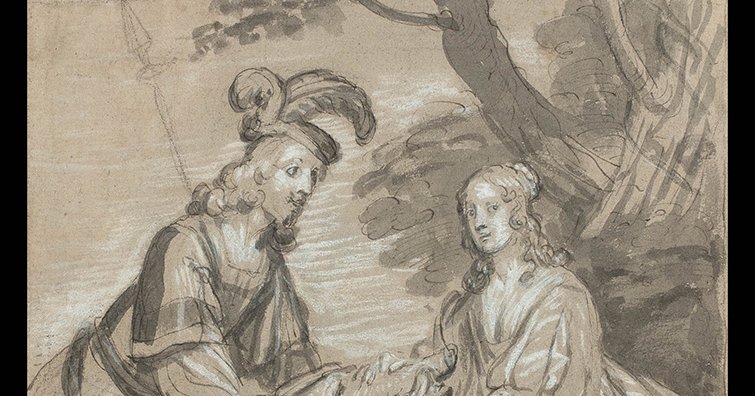
An article in La Tribune de l'Art presents a significant expansion of the known corpus of drawings by Dutch Golden Age painter Gerard van Honthorst (1592-1656). Following the 2014 exhibition of twenty-seven drawings identified by the author, this study adds thirty-two more sheets—twenty-two of which are previously unpublished—as a preliminary step toward reconstructing a dismembered album. The research, conducted with direct observation and advanced imaging techniques (digital microscopy, ultraviolet, raking light), aims to restore the album's original order and shed light on the role of drawing in Honthorst's workshop and creative process.

Un album démembré de Gerard van Honthorst (1592-1656) : dessins inédits et reconstitution d'un corpus

An article in La Tribune de l'Art presents a significant expansion of the known corpus of drawings by Dutch Golden Age painter Gerard van Honthorst (1592-1656). The author, who previously identified and exhibited twenty-seven drawings in 2014, now adds thirty-two more sheets—twenty-two of which are previously unpublished. This collection represents a first attempt to reconstruct a dismembered album of Honthorst's drawings. The research is based on direct observation, digital microscopy, and various lighting techniques, and is intended as a preliminary step toward a forthcoming catalogue raisonné of the artist's drawings to be published by R.S.V.P. Editions in Brussels.

"Etwas zaghaft, etwas ängstlich, etwas sicher"

The article surveys recent art-world commentary, focusing on a critical review of the Turner Prize shortlist in The Guardian, where Eddy Frankel calls the selection "timid, anxious, safe" and laments a self-perpetuating, elitist system. It also covers a Hyperallergic essay by Lisa Siraganian questioning whether artworks can possess personhood, sparked by Pierre Huyghe's Venice exhibition. Additionally, it reports on controversy at the Venice Biennale, where the jury preemptively excluded countries whose leaders are sought by the International Criminal Court—namely Russia and Israel—drawing sharp criticism from Die Welt's Marcus Woeller. A podcast interview with US sculptor Alma Allen, selected for the US Pavilion, rounds out the coverage.

Venice Biennale Jury Says It Won’t Consider Countries Charged with Crimes Against Humanity, Including Israel and Russia

The Venice Biennale's jury announced it will not consider nations whose leaders are charged with crimes against humanity by the International Criminal Court, effectively excluding Israel and Russia from competing for top honors. The jury, led by Videobrasil founder Solange Farkas, stated this decision aligns with curator Koyo Kouoh's vision and the Biennale's historical role as a platform connecting art to urgent issues. The ICC has issued arrest warrants for Israeli Prime Minister Benjamin Netanyahu and Russian President Vladimir Putin, while other indicted leaders like Sudan's Omar al-Bashir and Afghan officials lack Biennale pavilions.

Venice Biennale jury ‘will not award artists from countries facing war crimes charges’

The jury of the Venice Biennale has announced it will not award prizes to artists from countries whose leaders face charges of crimes against humanity by the International Criminal Court, a decision widely seen as targeting Russia and Israel. The five-member jury, appointed by the late curator Koyo Kouoh, stated its commitment to human rights and will exclude artists from nations whose governments are under ICC investigation when selecting winners of the Golden and Silver Lion awards for the 2026 edition, which opens on 9 May. The move follows controversy over Russia’s participation in the biennale, with the European Commission threatening to suspend a €2m grant due to Russia’s involvement, and Italy’s far-right government opposing the decision.

Korea’s art market grows, but working conditions for entry-level workers do not

A 20-something intern at a small Seoul gallery, identified as Park, accepted a job paying 1.35 million won ($910) per month after taxes—below South Korea's minimum wage—because she believed early experience was essential for career advancement in the art world. The article, based on interviews with the Korea JoongAng Daily, reveals that many entry-level workers face low pay and precarious conditions, exacerbated by a severe oversupply of arts graduates (48,000 annually) versus only about 3,523 job postings per year on the industry site Art More, leading to reliance on personal connections and informal hiring.

Tourist Damages Florence’s Neptune Fountain in Pre-Wedding Stunt

A 28-year-old tourist in Florence climbed the Neptune Fountain in Piazza della Signoria and caused €5,000 ($5,800) in damage while attempting to touch the statue's genitals as part of a pre-wedding challenge. Police intervened, and specialists from the Fabbrica di Palazzo Vecchio later found damage to a horse's legs and a frieze. The woman has been reported to judicial authorities but is presumed innocent until a verdict.

Taiwanese Indigenous artist stripped of national prize after sexual assault conviction

Taiwan has revoked the National Award for Arts from Indigenous artist Sakuliu Pavavaljung after his sexual assault conviction was upheld by the Supreme Court. The Ministry of Culture and the National Culture and Arts Foundation announced the withdrawal on 17 April 2025, and Pavavaljung must return the NT$1 million prize. The conviction stems from a February 2021 incident involving a woman under his artistic mentorship; he was sentenced to four years and six months in prison. Allegations first surfaced in December 2021 via social media, prompting further accusations. Pavavaljung had previously been dropped from representing Taiwan at the Venice Biennale and suspended from Documenta 15.

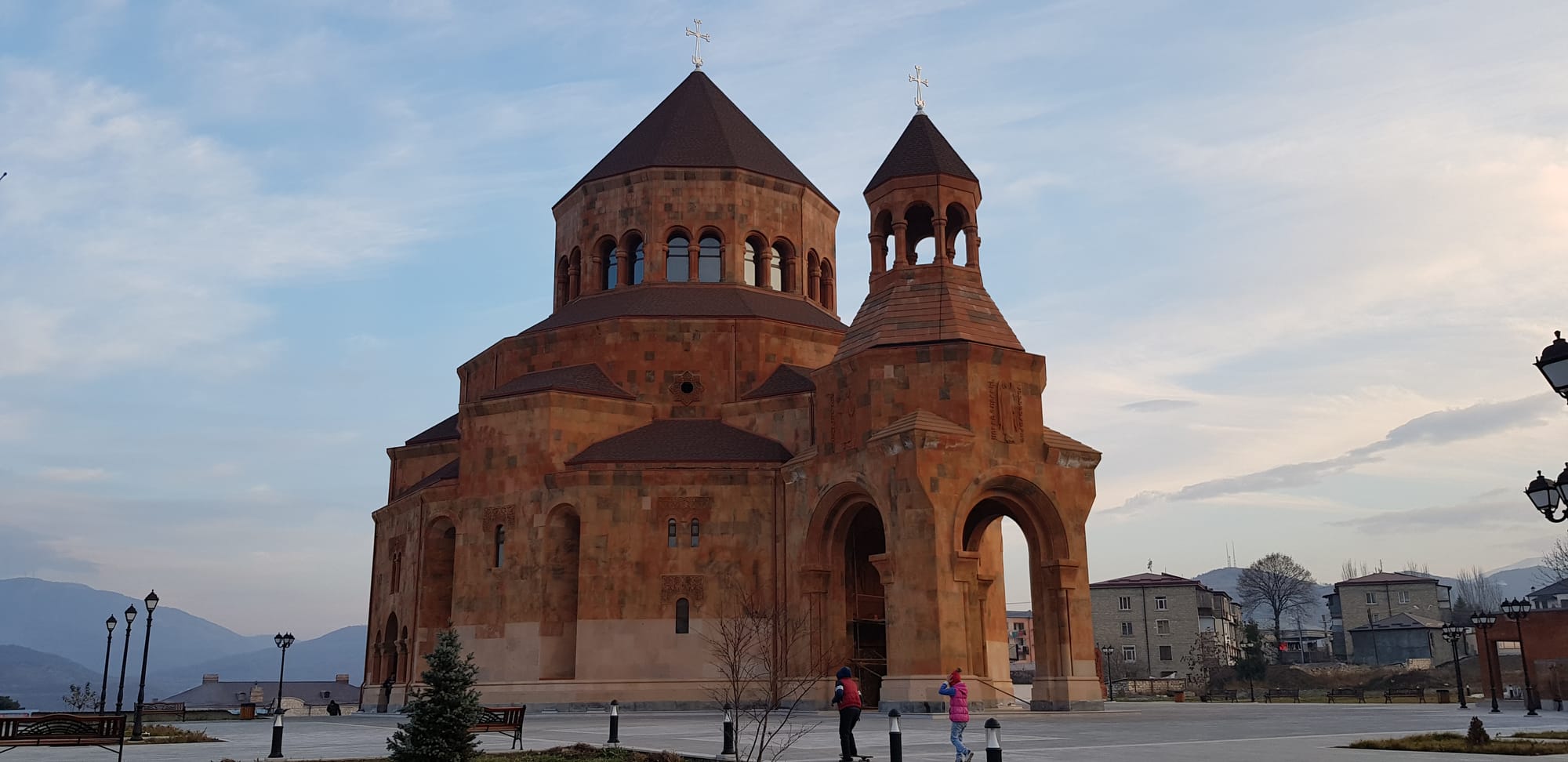
Azerbaijan Destroys Armenian Holy Mother of God Church in Artsakh

Satellite imagery obtained by Caucasus Heritage Watch (CHW) confirms that the Azerbaijani regime has demolished the Holy Mother of God Church in Stepanakert, the former capital of the Republic of Artsakh (Nagorno-Karabakh). The church, consecrated in 2019 after 12 years of construction, was destroyed within the last eight weeks, as evidenced by Sentinel-2 satellite images from March 3 and April 2. The Artsakh Tourism and Cultural Development Agency announced the destruction on April 21, three days before the 111th anniversary of the Armenian Genocide. This demolition follows a pattern of damage to Armenian religious and cultural sites since the forced displacement of over 130,000 Armenians in September 2023.

Russia and Israel cannot win any prizes at the next Venice Art Biennale 2026. The jury takes a stand

Russia e Israele non potranno vincere nessun premio alla prossima Biennale Arte di Venezia 2026. La giuria prende posizione

The international jury for the 61st Venice Biennale, led by Solange Farkas, has unanimously declared it will not consider countries whose leaders are currently accused of crimes against humanity by the International Criminal Court. This means Russia and Israel are excluded from competing for the Golden Lion awards, including Best National Participation and Best Artist. The jury's statement, published on e-Flux Notes, emphasizes the Biennale's historical role as a platform connecting art with contemporary urgencies and acknowledges the complex relationship between artistic practice and state representation.

Venice Biennale jury to avoid artists from nations with ICC-charged leaders

The jury for the Venice Biennale International Art Exhibition announced on April 24, 2026, that they will not consider artists from countries whose leaders face charges at the International Criminal Court, an apparent reference to Israel and Russia. The five jury members, tasked with selecting Golden and Silver Lion winners among 110 participants, stated they felt compelled to commit to the defense of human rights. The ICC has issued arrest warrants for Russian President Vladimir Putin and Israeli Prime Minister Benjamin Netanyahu for alleged war crimes. The decision follows criticism of the Biennale for allowing Russia to reopen its pavilion after its 2022 invasion of Ukraine.

Biennale Jury Will Not Consider Countries with ICC Allegations

Biennale-Jury will Länder mit IStGH-Vorwürfen nicht berücksichtigen

The jury of the Venice Art Biennale has announced that it will not consider countries whose heads of state or government face allegations of crimes against humanity from the International Criminal Court (ICC) when awarding prizes this year. The jury, led by Brazilian art historian Solange Farkas, cited its commitment to defending human rights. While no specific countries were named, the ICC currently has arrest warrants against Russian President Vladimir Putin for alleged war crimes in Ukraine and Israeli Prime Minister Benjamin Netanyahu for alleged war crimes in Gaza. The Biennale leadership stated the jury acted in full autonomy and independence.

Father Daughter Counterfeiting Duo Face Twenty Years in Prison

A father-daughter duo from New Jersey, Erwin Bankowski (50) and Karolina Bankowska (26), pleaded guilty to creating and selling over 200 counterfeit artworks falsely attributed to artists including Andy Warhol, Pablo Picasso, Fritz Scholder, and Banksy. They admitted to wire fraud conspiracy and misrepresentation of Native American-produced goods, defrauding buyers out of at least $2 million. The pair fabricated provenances and collection histories, forged gallery stamps, and attempted to auction the works for up to $160,000 each. They each face up to 20 years in prison.

Whistleblower Complaint Alleges Misconduct at Palm Springs Art Museum, Where an Ex-Trustee Describes a ‘Shattered Moral Compass’

An anonymous whistleblower has filed a complaint alleging misconduct by leadership at the Palm Springs Art Museum, including improper movement of funds between accounts to address cash shortages, the forced resignation of a former director based on fabricated staff complaints, and a failure to properly interview external candidates for the director position. The complaint, forwarded to ARTnews, also references a $3 million discrepancy in the reported endowment value and the departure of several trustees, leaving the board below its required size. The museum has formed a special committee to investigate the allegations, which were first reported by the Los Angeles Times in November 2025.

An Inside Look at Realizing Koyo Kouoh’s Venice Biennale Exhibition and More: Morning Links for April 29, 2026

The article reports on the 2026 Venice Biennale proceeding without its curator Koyo Kouoh, who died last May from liver cancer. Her husband Philippe Mall and son Djibril Schmed agreed with Biennale president Pietrangelo Buttafuoco to continue the exhibition, which opens to the public on May 9. Elsewhere, a Chicago judge sentenced Robert Dunlap to 23 years for a cryptocurrency scam claiming to be backed by artworks by Picasso, Dalí, and van Gogh. A Renoir painting once owned by the Duchess of Alba is returning to Spain, and a robot docent named R1 debuted at Palazzo Madama in Turin.

EU imposes sanctions on Mikhail Piotrovsky, director of Russia's State Hermitage Museum

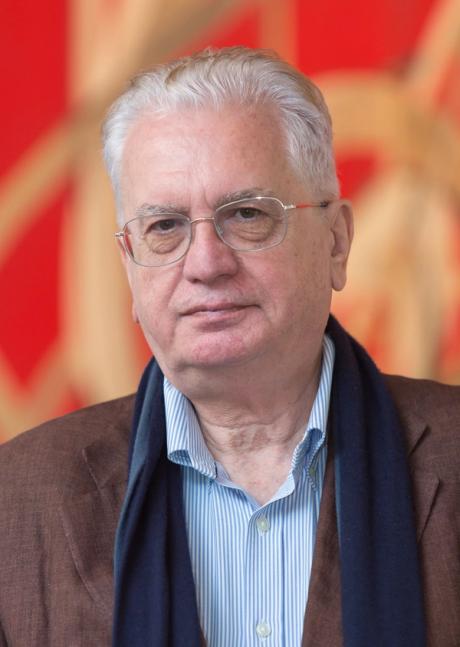
The European Union has imposed sanctions on Mikhail Piotrovsky, the director of Russia's State Hermitage Museum, as part of its 20th sanctions package adopted on 23 April. Piotrovsky, a vocal supporter of Russia's full-scale invasion of Ukraine, is cited for being a close associate of Vladimir Putin and for actively supporting the war, including justifying Russian cultural policies that incorporate Ukrainian museum items into Russia's State Museum Fund and enabling unauthorized archaeological excavations in occupied Crimea. The sanctions also target three other cultural officials involved in the Crimean digs. Meanwhile, Hermitage archaeologist Alexander Butyagin, arrested in Poland in December 2025 at Ukraine's request, was released in a prisoner exchange on 28 April.

"Eine Idee, die gut ist, kann fast alles verändern"

Henrike Naumann's final major artistic project, the German Pavilion at the Venice Biennale, is completed posthumously by friends after her death from cancer at age 41. Meanwhile, the sudden death of curator Koyo Kouoh at 57 has left her team to finish the central exhibition "In Minor Keys" for the Biennale, opening May 9. The US Pavilion is openly crowdfunding for its 2026 presentation by sculptor Alma Allen, citing opaque funding under the Trump administration. Israel's foreign ministry has accused the Venice Biennale jury of boycotting its artist Belu-Simion Fainaru by excluding countries whose leaders face International Criminal Court charges.