filter_list Showing 6 results for "ahu" close Clear
dashboard All 16 article news 6museum exhibitions 6article local 2article culture 1rate_review review 1
date_range Range Today This Week This Month All
Subscribe

Historic Strike Disrupts Biennale as Thousands March in Venice

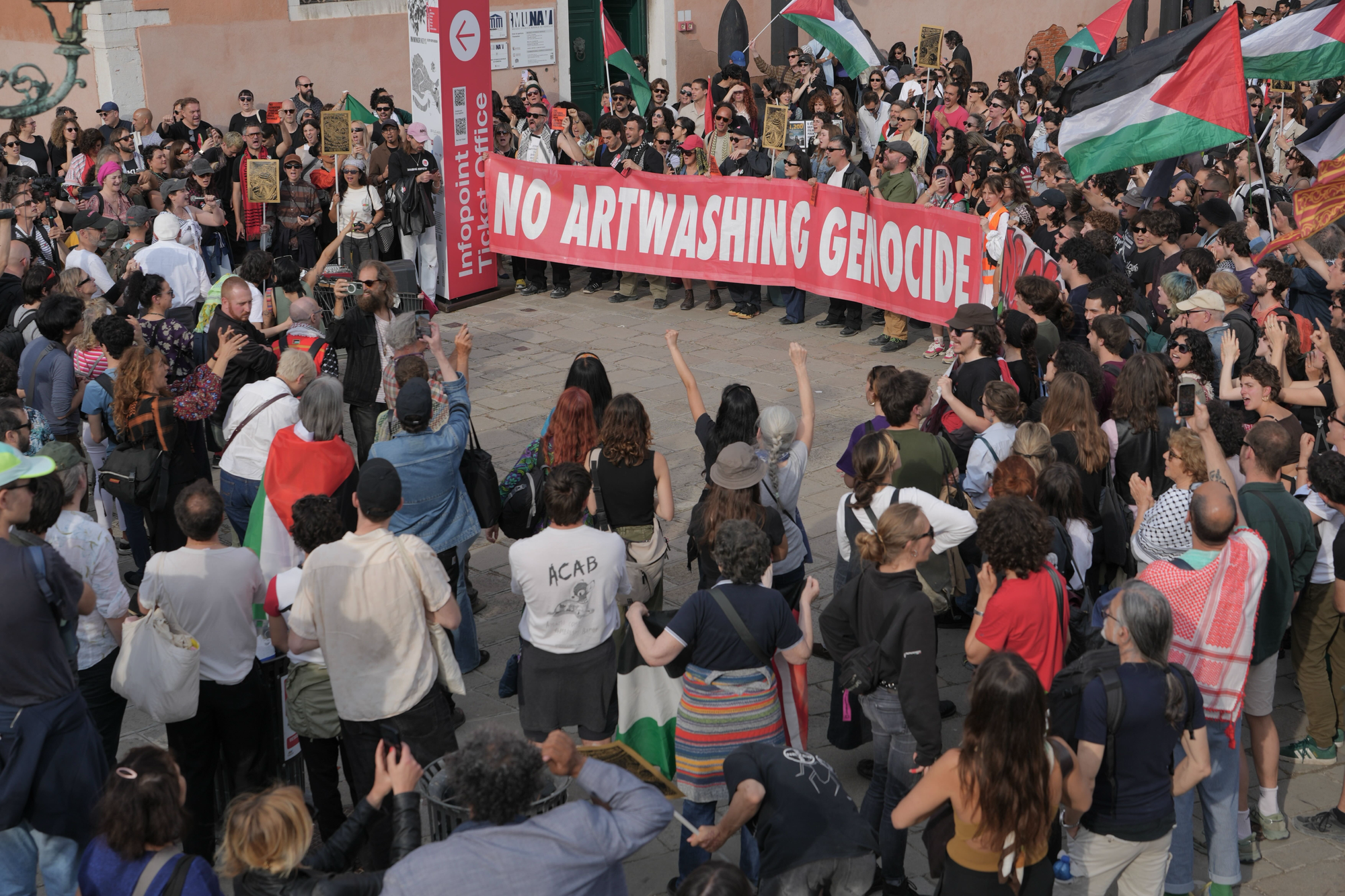
On May 8, 2026, artists and cultural workers staged the first strike in the 131-year history of the Venice Biennale, disrupting the pre-opening of the international exhibition. At least 27 of the 100 national pavilions were partially or fully shut down, and thousands marched through Venice to the Arsenale, which was barricaded by Italian riot police. The strike, organized by the Art Not Genocide Alliance (ANGA) and local activist groups, was a 24-hour action for Palestine and workers' rights, with some artists altering or draping their works in the main exhibition, "In Minor Keys."
Venice Biennale opens under shadow of protests over Russia and Israel

The 61st Venice Biennale opened under heavy protest as Russia returns to the event for the first time since its 2022 invasion of Ukraine. Ukrainian feminist collective Femen and Russian punk band Pussy Riot demonstrated outside the Russian pavilion, with activists accusing Russia of using art as a weapon in a hybrid war. Meanwhile, pro-Palestinian protesters gathered outside Israel's pavilion, holding banners reading 'No artwashing genocide' and demanding Israel's exclusion over the war in Gaza. The Biennale's international jury resigned last month, refusing to award prizes to countries led by figures subject to ICC arrest warrants, namely Vladimir Putin and Benjamin Netanyahu. EU foreign policy chief Kaja Kallas called Russia's participation 'morally wrong' and threatened to cut €2 million in funding, while culture ministers from 22 European countries urged organizers to reconsider.

Brussels, Russia and the Venice Biennale

The jury of the 61st Venice Biennale Art Exhibition has resigned en masse to protest the decision to allow Russian participation for the first time since the 2022 invasion of Ukraine. The jury stated it would refuse to consider artists from countries whose leaders face International Criminal Court warrants, specifically Israel and Russia, citing a commitment to human rights. The Biennale organizers defended the re-admission as consistent with openness and dialogue, while Ukrainian Foreign Minister Andriy Sybiha and EU foreign policy chief Kaja Kallas condemned the move, with the EU threatening to cut funding. The Italian government distanced itself, calling the Biennale autonomous.

Venice Biennale previews in chaos, overshadowed by Israeli and Russian participation

The Venice Biennale previews have descended into chaos, with the event overshadowed by controversies surrounding Israeli and Russian participation. Protests and disruptions have marked the lead-up to the prestigious international art exhibition, as demonstrators voice opposition to the inclusion of Israel amid the Gaza conflict and Russia's ongoing war in Ukraine. The situation has created a tense atmosphere, drawing significant media attention and complicating the Biennale's usual celebratory preview period.

How the Venice Biennale imploded over Israel

The 61st Venice Biennale, scheduled to open on May 9, has been thrown into turmoil after its International Jury announced that national pavilions and artists representing countries whose leaders are charged with crimes against humanity by the International Criminal Court will not be eligible for prizes. This excludes Israel, represented by sculptor Belu-Simion Fainaru, and Russia from competing for the Golden Lion. The decision follows an open letter signed by hundreds of artists and curators demanding Israel's exclusion over the war in Gaza, and comes amid ongoing geopolitical tensions, including Russia's absence from previous editions after its invasion of Ukraine. The Biennale's theme, 'In Minor Keys,' curated by the late Koyo Kouoh, aimed to focus on dignity and listening to marginalized voices, but the prize ban has sparked accusations that identity politics are overshadowing artistic merit.

Venice Biennale in crisis: The controversies explained

The Venice Art Biennale's official awards ceremony, scheduled for May 9, has been canceled after the entire five-member jury resigned days before the event. The jury had previously announced they would not consider countries whose leaders face International Criminal Court charges, directly impacting Russia and Israel. Instead of jury-selected prizes, visitors will vote throughout the Biennale's run, with "Visitor Lions" awarded on November 22. The event, running from May 9 to November 22, features 100 national participations, including seven first-time countries, and a posthumous main exhibition titled "In Minor Keys" curated by the late Koyo Kouoh, the first African woman to lead the show. Iran withdrew on May 4 amid Middle East tensions, while Russia's return to the Biennale in 2026 has sparked EU threats to cut funding.