filter_list Showing 26 results for "war in ukraine" close Clear
search
dashboard All 57 article news 26museum exhibitions 11article policy 10article culture 4person people 3rate_review review 2trending_up market 1
date_range Range Today This Week This Month All
Subscribe

There Has Never Been an Apolitical Venice Biennale

"Es hat niemals eine unpolitische Venedig-Biennale gegeben"

The Venice Biennale is embroiled in political controversy, with the US Pavilion's selection process criticized for bypassing traditional curatorial expertise in favor of a politically connected outsider. Simultaneously, a collective of artists and academics is protesting Russia's return to the Biennale, arguing it uses art as a political instrument to normalize its actions amid the war in Ukraine. An analysis in ArtReview contends the Biennale has never been apolitical, serving as a stage for geopolitical power plays since its inception.
The week around the world in 20 pictures

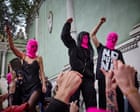
This photo essay from The Guardian presents 20 images capturing global events from the past week, including a protest by Femen and Pussy Riot activists against Russia's participation at the Venice Biennale art show, Israeli strikes in Gaza, the hantavirus outbreak, and Emma Chamberlain at the Met Gala. Other images document the war in Ukraine, with scenes of Russian military rehearsals in Moscow, damaged monuments, and drone strike aftermath, as well as a political protest in Nashville where Democratic state representative Justin J Pearson was removed from the house gallery during a redistricting protest.

Pussy Riot and FEMEN Join Forces in Punk Protest in Venice: ‘Russia Kills! Biennale Exhibits!’

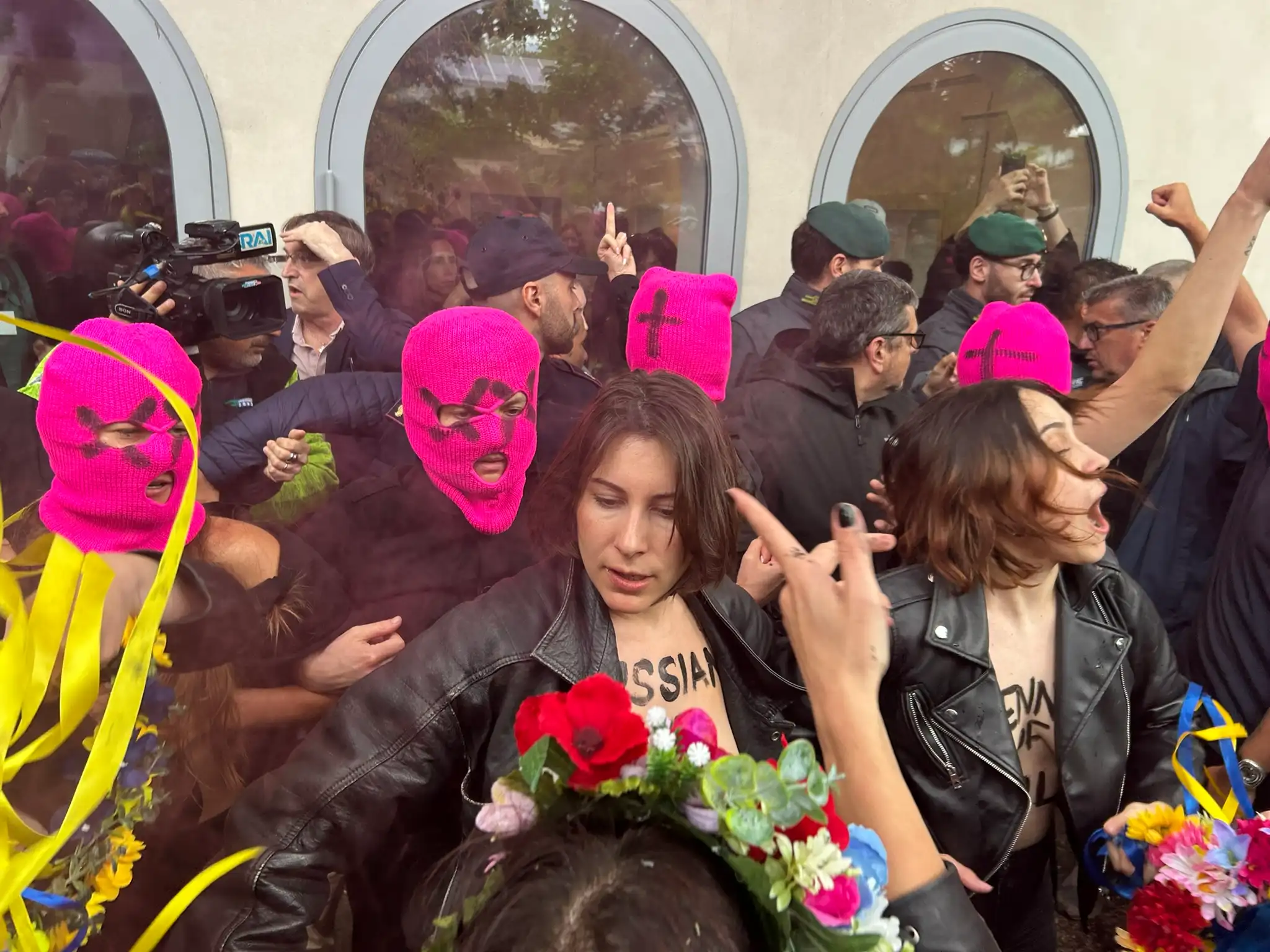
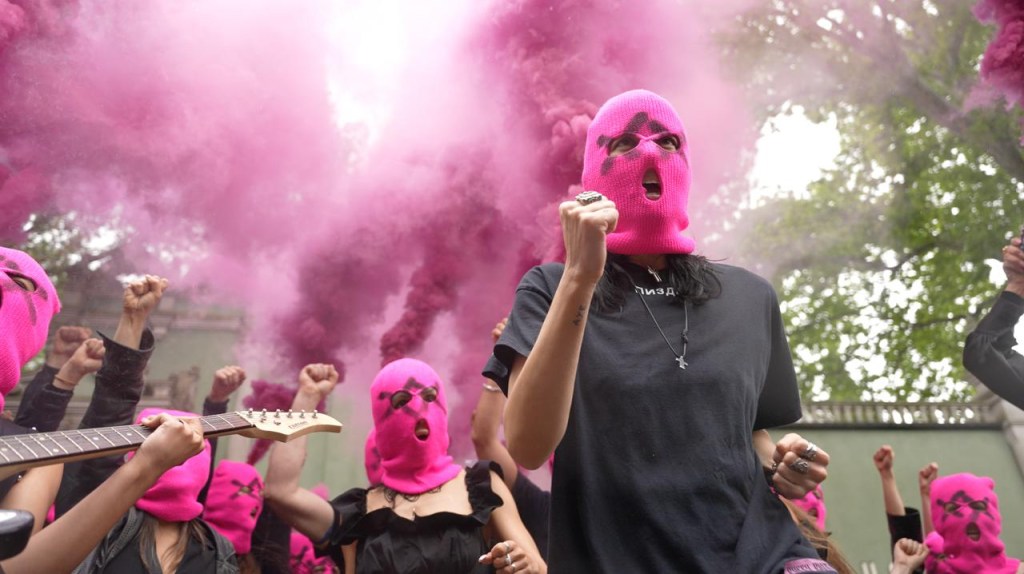
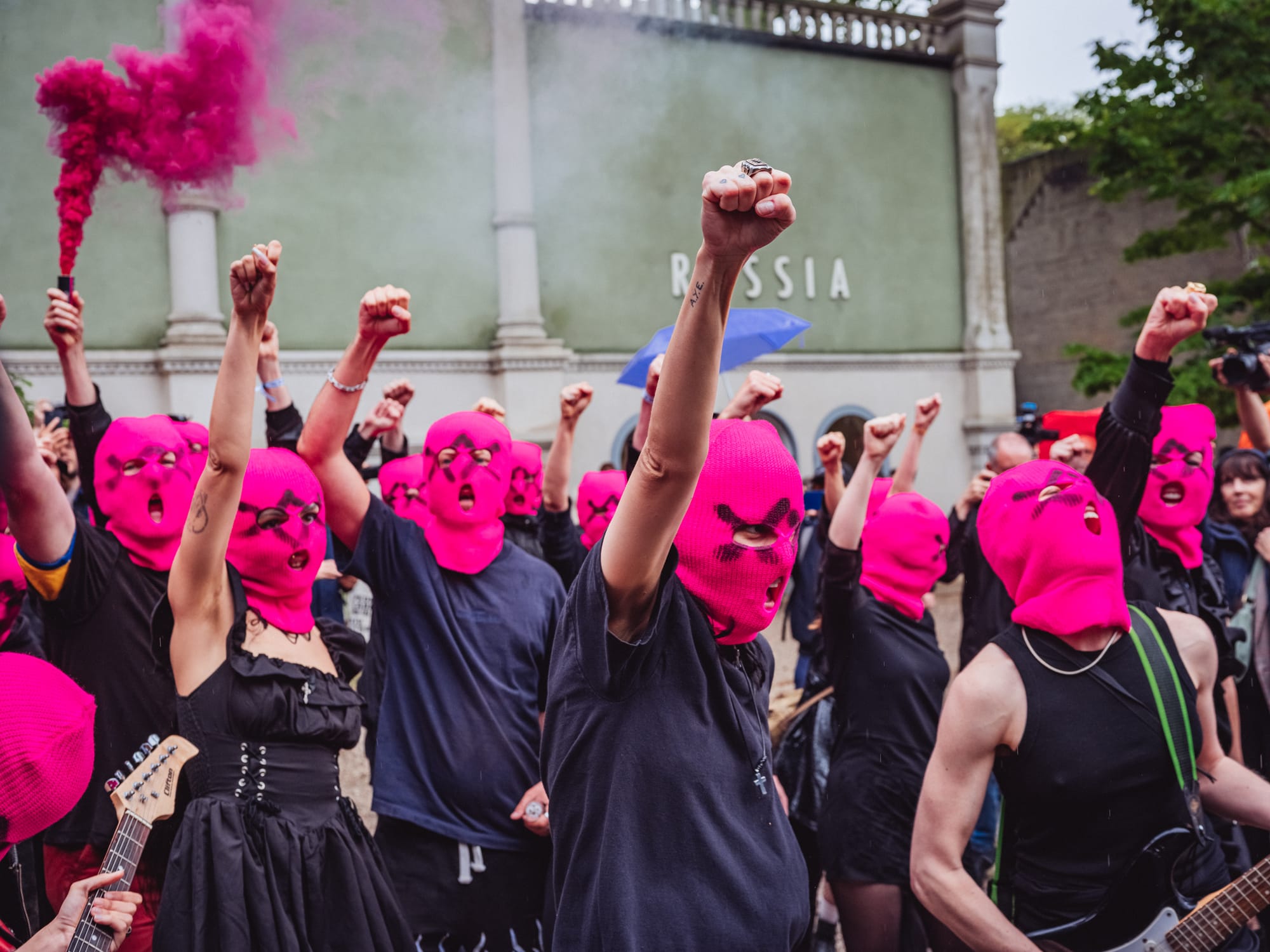
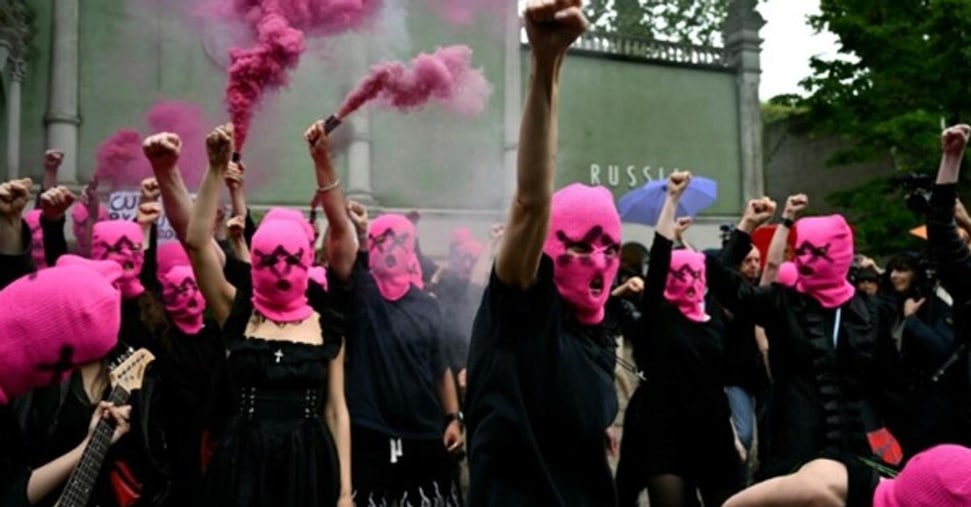
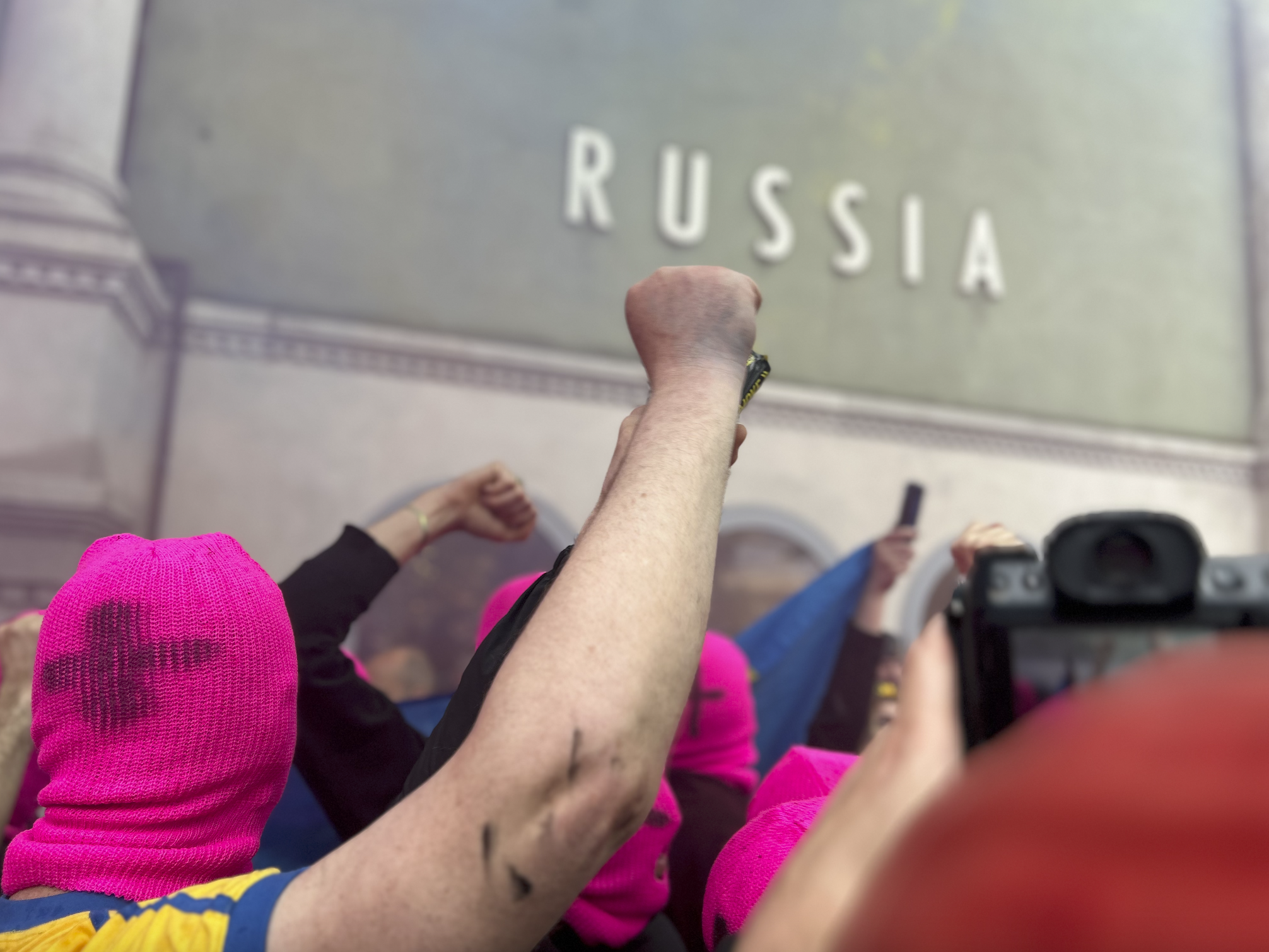
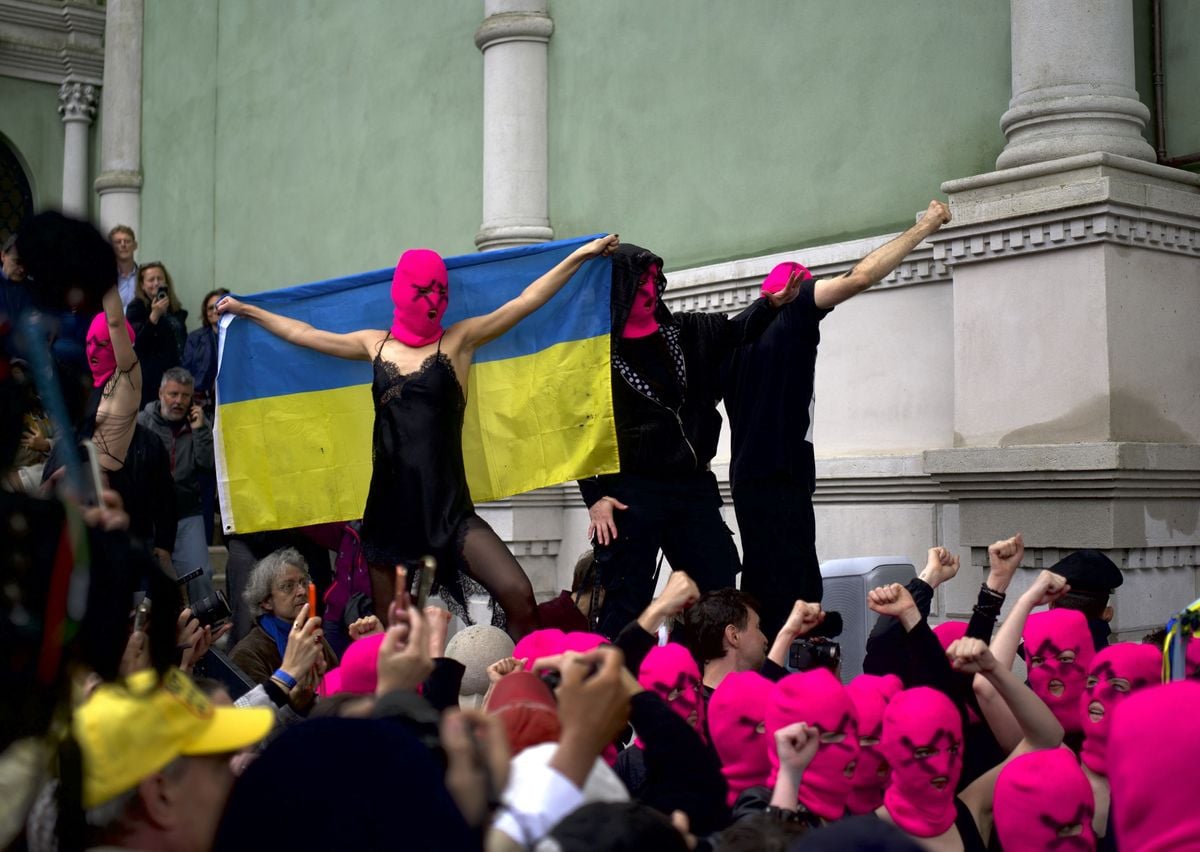
On Wednesday morning, Pussy Riot and FEMEN led a protest outside the Russian Pavilion at the 2026 Venice Biennale, chanting slogans like “Russia kills! Biennale exhibits!” and “Blood is Russia’s art!” Dozens of protesters, some in pink balaclavas and others bare-chested with floral crowns, gathered in the Giardini under light rain, carrying guitars and blasting punk rock and hip-hop. The action was organized by Nadya Tolokonnikova and other Pussy Riot members alongside FEMEN, a Ukrainian-founded women’s movement. They released pink, yellow, and blue smoke, and Tolokonnikova criticized the Biennale for allowing Russian participation while artists who oppose the war in Ukraine are imprisoned. She proposed an alternative exhibition, “Resistance Imprisoned,” currently on view in Strasbourg, featuring incarcerated artists.

At the Venice Biennale I saw anger at Russia and Israel – and its leadership pretending everything was fine | Charlotte Higgins

At the 2024 Venice Biennale, the Russian pavilion returned with festive performances and prosecco deliveries, drawing sharp criticism from observers who saw it as a propaganda effort to distract from Russia's war in Ukraine. Meanwhile, Ukraine's Kramatorsk was bombed, and protests erupted, including a Pussy Riot intervention. Biennale president Pietrangelo Buttafuoco defended Russia's and Israel's participation, rejecting preemptive bans despite open letters and appeals. European Commission investigated potential sanctions breaches, and culture ministers from Ukraine, Poland, Estonia, and Baltic states boycotted or condemned the biennale's stance, accusing it of yielding to the aggressor.

Russian art today is blood. A tough interview with Pussy Riot

“L’arte russa oggi è il sangue”. Una dura intervista alle Pussy Riot

During the preview of the 2026 Venice Biennale, the Russian Pavilion became the site of a protest by Pussy Riot and FEMEN, who staged an action called "STORM OF VENICE." Wearing pink balaclavas and carrying radical slogans, they denounced Russia's presence at the Biennale, accusing the Kremlin and the European cultural system of complicity. The protest centered on the phrase "Blood is Russia's art." In an interview, Pussy Riot member Nadya Tolokonnikova argues that artists who represent the official Russian Pavilion become instruments of the aggressive imperial state, and that the Biennale confuses cultural dialogue with political normalization.

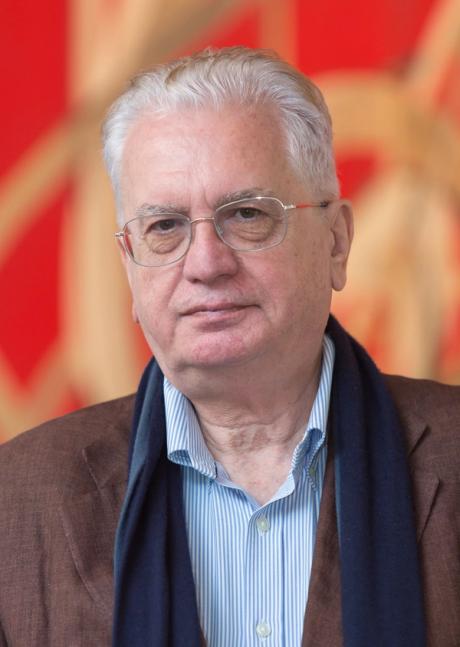
EU imposes sanctions on Mikhail Piotrovsky, director of Russia's State Hermitage Museum

The European Union has imposed sanctions on Mikhail Piotrovsky, the director of Russia's State Hermitage Museum, as part of its 20th sanctions package adopted on 23 April. Piotrovsky, a vocal supporter of Russia's full-scale invasion of Ukraine, is cited for being a close associate of Vladimir Putin and for actively supporting the war, including justifying Russian cultural policies that incorporate Ukrainian museum items into Russia's State Museum Fund and enabling unauthorized archaeological excavations in occupied Crimea. The sanctions also target three other cultural officials involved in the Crimean digs. Meanwhile, Hermitage archaeologist Alexander Butyagin, arrested in Poland in December 2025 at Ukraine's request, was released in a prisoner exchange on 28 April.

Russian Pavilion Will Be Closed to the Public During Venice Biennale: Report

The Russian Pavilion will be closed to the public for most of the 2025 Venice Biennale, opening only during the pre-opening vernissage (May 5–8) for live performances tied to the exhibition “The Tree Is Rooted in the Sky.” After May 9, the pavilion will remain closed, with digital documentation displayed in the windows. The compromise follows weeks of pressure from European cultural and political figures—including Italy’s culture minister—to shutter the pavilion due to Russia’s ongoing war in Ukraine. Plans were confirmed via email correspondence between Biennale Foundation president Pietrangelo Buttafuoco, general director Andrea Del Mercato, and Russian Pavilion commissioner Anastasia Karneeva, as reported by Italian outlets Open and La Repubblica.

Venice Biennale’s Russian Pavilion and Pussy Riot Spar Over Usage of Protest Footage

The Russian Pavilion at the 2026 Venice Biennale has become embroiled in a new controversy after accusing the anti-Putin art collective Pussy Riot of censorship. The pavilion posted on Instagram that Pussy Riot demanded the removal of footage featuring them from a documentary film about the pavilion's project, labeling the request as self-censorship. Pussy Riot responded sarcastically, questioning the pavilion's use of Instagram given Russia's 2022 ban of the platform. The dispute follows earlier protests at the pavilion's opening, led by Pussy Riot and FEMEN, against Russia's participation in the Biennale amid its ongoing invasion of Ukraine.

Pussy Riot protest at Venice Biennale forces Russian pavilion to briefly close

On the second day of the Venice Biennale preview, the activist group Pussy Riot staged a chaotic protest at the Russian pavilion, forcing it to temporarily close. Wearing pink balaclavas and carrying flares, about 40 activists—including members of Femen—gathered outside the pavilion, shouting slogans like "Blood is Russia's Art" and attempting to enter before being pushed back by police. Founding member Nadya Tolokonnikova led the protest, condemning Europe for allowing Russian participation despite the war in Ukraine. Separately, the Art Not Genocide Alliance (Anga) demonstrated outside the Israeli pavilion, which was locked from inside, over Israel's war in Gaza.

pussy riot russia prison sentences response

A Moscow court sentenced five members of the Russian activist art collective Pussy Riot in absentia to between eight and 13 years in prison. The charges stem from a 2022 music video titled *Mama, Don’t Watch TV*, which denounced the war in Ukraine, and a 2024 protest performance in Munich. The targeted artists are Maria Alyokhina, Diana Burkot, Taso Pletner, Olga Borisova, and Alina Petrova. They were found guilty of “discrediting the Russian Armed Forces” and “spreading false information” about the military.

ai weiwei censorship die zeit allegations

Chinese artist Ai Weiwei has accused the German newspaper Die Zeit of publishing a “distorted and unjust” article about him, following an earlier incident in which he claims the paper censored an article it commissioned him to write. In a series of posts on X, Ai detailed how Die Zeit’s magazine, Zeit Magazin, invited him to write a piece in July, then revised and ultimately refused to publish it—an act he calls censorship. He later agreed to an interview with Die Zeit journalist Olivia Kortas in Kyiv, where he had just unveiled a large-scale installation at Pavilion 13 responding to armed conflict. Ai alleges that Kortas had not seen the exhibition and that her published article, titled “The Annoyance,” contained distortions and subjective judgments, particularly regarding his statements on arms deliveries to Ukraine.

Pussy Riot and Topless Activists Rally Against Russian Pavilion at Venice Biennale

On May 6, 2026, the art collective Pussy Riot and the Ukrainian feminist group FEMEN staged a protest outside the Russian Pavilion at the 61st Venice Biennale. Approximately 50 activists released pink smoke and blue-and-yellow flares evoking the Ukrainian flag, while FEMEN members staged a topless protest with anti-war slogans like “RUSSIA KILLS, BIENNALE EXHIBITS.” Italian police and Biennale security blocked access to the pavilion, and some Pussy Riot activists were tackled after entering. The protest targeted Russia’s participation in the Biennale for the first time since its full-scale invasion of Ukraine in 2022, with activists condemning the event for lending legitimacy to Russian officials and artists aligned with the government.

Art Biennale: artists reject the popular jury

Fifty-two artists and curators, along with sixteen National Participants of the 61st Venice Art Biennale, have withdrawn from the newly introduced 'Lions of the Visitors' (People's Prizes) competition. The boycott follows the resignation of the jury appointed by artistic director Koyo Kouoh, who died in 2025, and is a protest against the inclusion of Russia and Israel in the prize—countries initially excluded by the international jury. The controversy escalated after Italian Minister of Culture Alessandro Giuli publicly opposed the Biennale president Pietrangelo Buttafuoco's decision to allow Russia's participation, drawing in the European Commission and even Ursula von der Leyen, who warned of potential sanctions violations. The signatories include artists and curators from France, Belgium, Luxembourg, Turkey, Switzerland, Spain, the Netherlands, and several other nations.

THE VENICE BIENNALE IN AN EDITION MARKED BY POLITICAL GAMES

The Venice Biennale's 2024 edition is embroiled in political controversy surrounding its national pavilions, particularly those of Russia, South Africa, and Israel. The Russian pavilion's readmission amid the war in Ukraine drew sharp criticism from the artistic community and led the European Union to withdraw approximately two million euros in funding. The Israeli pavilion, which remained empty in 2024 to protest hostage situations, now features a proposal by sculptor Belu-Simion Fainaru, prompting protests from the Art Not Genocide Alliance and over 200 artists demanding its exclusion. The curatorial team, appointed by the late curator Koyo Kouoh, resigned collectively nine days before the opening, and the Biennale's directorship canceled the opening ceremony, postponing awards to November. Demonstrations led by Art Not Genocide Alliance, Pussy Riot, and FEMEN surrounded the Russian pavilion during the press opening, and a strike by cultural workers is planned for May 8th.

Venice Biennale jury ‘will not award artists from countries facing war crimes charges’

The jury of the Venice Biennale has announced it will not award prizes to artists from countries whose leaders face charges of crimes against humanity by the International Criminal Court, a decision widely seen as targeting Russia and Israel. The five-member jury, appointed by the late curator Koyo Kouoh, stated its commitment to human rights and will exclude artists from nations whose governments are under ICC investigation when selecting winners of the Golden and Silver Lion awards for the 2026 edition, which opens on 9 May. The move follows controversy over Russia’s participation in the biennale, with the European Commission threatening to suspend a €2m grant due to Russia’s involvement, and Italy’s far-right government opposing the decision.

estonian museum director russian prison

Maria Smorzhevskikh-Smirnova, the director of the Narva Museum in Estonia, was sentenced in absentia to 10 years in prison by a Russian court. The charges stem from her hanging banners on Narva Castle that label Russian President Vladimir Putin a “war criminal,” including one that fuses Putin’s face with Adolf Hitler’s and another showing a bloodied mug shot of Putin. The court cited laws against disseminating “war fakes” and “rehabilitating Nazism.” Smorzhevskikh-Smirnova has been displaying such banners since 2023 on Russian Victory Day, and Russian authorities have projected Victory Day parades toward Narva from the nearby town of Ivangorod.

Amid crackdowns on dissent, Russia’s private museums are threatened

Russia's private art museums, once symbols of post-Soviet integration into Western elite culture, are now struggling to survive amid increasing state repression and the war in Ukraine. The Garage Museum of Contemporary Art, founded by Roman Abramovich and Dasha Zhukova, was raided by security services in 2024 and visited by right-wing activists demanding pro-war messaging; its founding director was replaced. Other institutions have closed entirely: the Institute of Russian Realist Art shut in 2019 after its founder Aleksei Ananyev fled embezzlement charges, and Art4.ru, Russia's first private contemporary art museum, closed in 2024 after a nationalist raid. The GES-2 House of Culture, financed by gas magnate Leonid Mikhelson, lost its visionary director shortly after opening and now operates under a lawyer.

Lesia Vasylchenko wins the PinchukArtCentre Prize

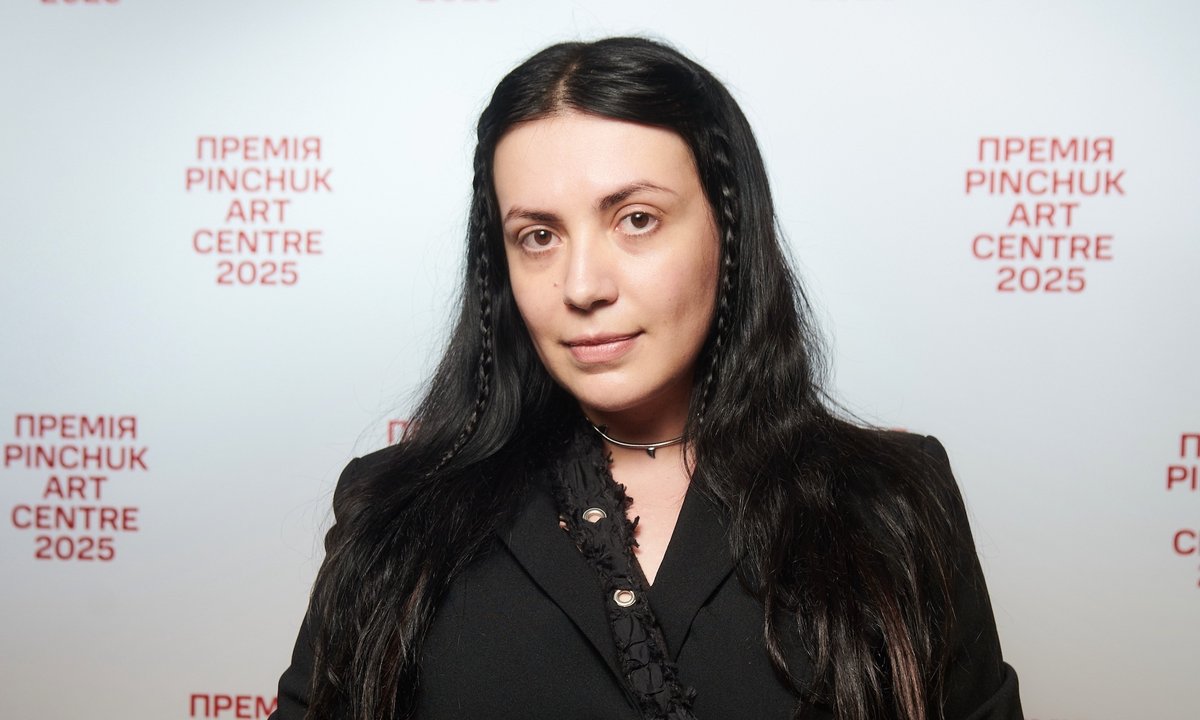
Lesia Vasylchenko, a Kyiv-born artist, has won the 2025 PinchukArtCentre Prize, receiving 400,000 Ukrainian hryvnia (about $10,000). Her winning installation includes two video works: one reflecting on the shelling during Russia's full-scale invasion of Ukraine, and another using AI to compress 30 years of sunrises into a single event. At the awards ceremony held on 18 June in Kyiv—a day after a deadly Russian drone attack killed at least 28 people—Vasylchenko announced she would donate the entire prize to support the Armed Forces of Ukraine. Special prizes were awarded to painter Kateryna Aliinyk and artist Yevhen Korshunov, each receiving 100,000 hryvnia and additional support.

Pussy Riot and FEMEN protest at the Russian Pavilion at the Venice Biennale. "Blood is the true language of Russia"

Le Pussy Riot e le FEMEN in protesta al Padiglione russo alla Biennale di Venezia. “Il sangue è il vero linguaggio della Russia”

On May 6, 2026, during the preview days of the 61st Venice Biennale, Pussy Riot and FEMEN staged a joint protest outside the Russian Pavilion. Led by Nadya Tolokonnikova, the activists denounced Russia's participation in the Biennale as a form of political normalization while the war in Ukraine continues. The action included chants and slogans such as "Russia kills, Biennale exhibits. Blood is Russia's art," and targeted the Russian ambassador present inside the pavilion. The protest was unannounced and caught Biennale security off guard, drawing a crowd of journalists, visitors, and art professionals.

‘Every child wants to find joy’: the scheme designing playground equipment for disaster zones

Photographer Alexander Meininger, inspired by his children and the war in Ukraine, has launched the charity Playrise. The organization designs and produces flatpack, modular playground equipment made from iroko hardwood for children living in refugee camps and disaster zones. Its first set will be sent to the Aysaita refugee camp in Ethiopia next month.

Jury for Venice Biennale's art prize resigns after refusing to recognise Israeli, Russian artists

The international jury of the 61st Venice Biennale art exhibition resigned just over a week before the May 9 prize ceremony, after announcing they would not consider artists from countries whose leaders face International Criminal Court charges—an apparent reference to Russia and Israel. The jury included president Solange Farkas, Zoe Butt, Elvira Dyangani Ose, Marta Kuzma, and Giovanna Zapperi. In response, the Biennale established two Visitors’ Lions to be awarded by ticket-holder vote, postponed the awards to November 22, and reaffirmed that all national participations remain eligible, effectively reinstating Russian and Israeli artists.

Anti-Russia Protests Spread Beyond the Biennale and Into Venice

Protests against the reopening of the Russian pavilion erupted at the Venice Biennale and spread across the city on the second day of the 61st edition. Visual artist Shalva Nikvashvili, who grew up in post-Soviet Georgia, began a silent performance wearing a muzzle-style mask and carrying a chair, holding a sign reading “La Biennale di Venezia” and “violence.” Shortly after, a group of about 20 protesters led by Pussy Riot co-founder Nadya Tolokonnikova gathered outside the Russian pavilion, chanting against Vladimir Putin, waving Ukrainian flags, and releasing a pink smoke flare. The protests followed the Biennale's decision to allow Russia to participate for the first time since its 2022 invasion of Ukraine, despite calls from artists and politicians to exclude the country.

Jury of the Venice Biennale Resigns

Jury der Venedig-Biennale tritt zurück

The entire jury of the Venice Biennale, appointed by artistic director Koyo Kouoh, has resigned with immediate effect. In a statement released on Thursday, the jury members—including chair Solange Oliveira Farkas, Zoe Butt, Elvira Dyangani Ose, Marta Kuzma, and Giovanna Zapperi—cited a prior declaration from April 22 in which they announced they would not award Golden or Silver Lions to artists from countries whose political leadership is currently indicted by the International Criminal Court (ICC) for crimes against humanity. Although no specific countries were named, the move implicitly targets Russia (President Vladimir Putin) and Israel (Prime Minister Benjamin Netanyahu), both subject to ICC arrest warrants. The resignation comes amid escalating tensions over Russia's participation in the Biennale despite EU sanctions, which had already led to a freeze of EU funding and widespread protests.

Venice Biennale previews in chaos, overshadowed by Israeli and Russian participation

The Venice Biennale previews have descended into chaos, with the event overshadowed by controversies surrounding Israeli and Russian participation. Protests and disruptions have marked the lead-up to the prestigious international art exhibition, as demonstrators voice opposition to the inclusion of Israel amid the Gaza conflict and Russia's ongoing war in Ukraine. The situation has created a tense atmosphere, drawing significant media attention and complicating the Biennale's usual celebratory preview period.

Ukrainian installation at Burning Man destroyed by dust storm

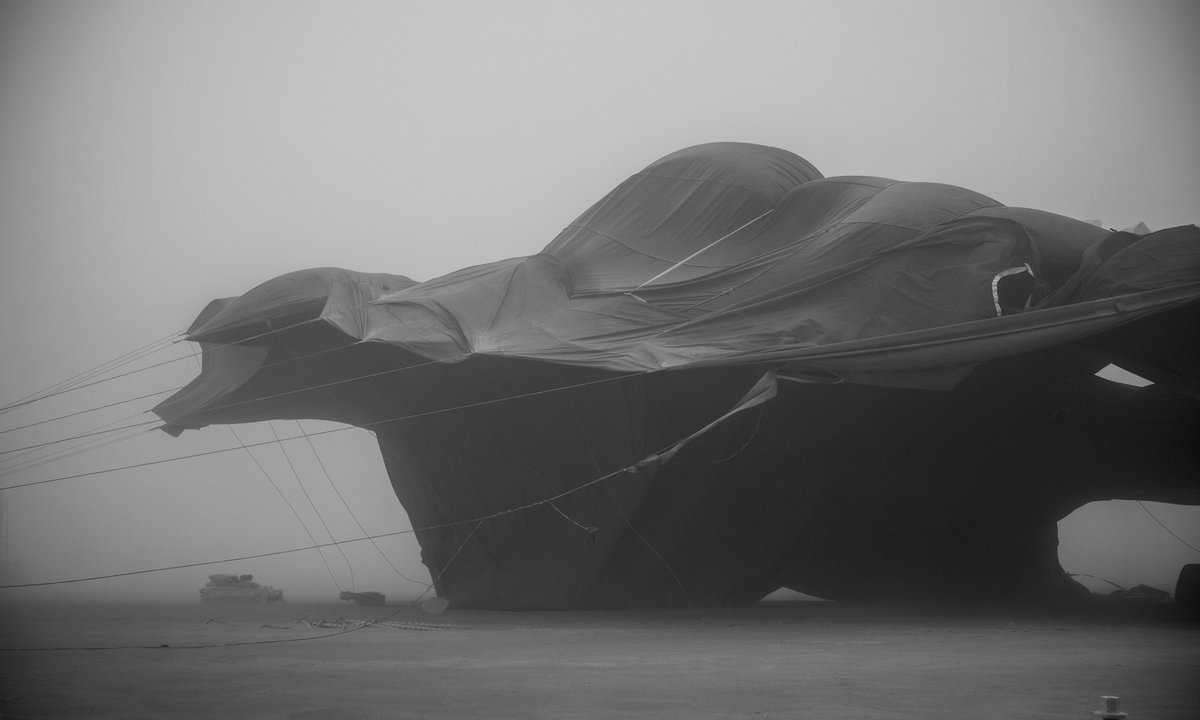
Ukrainian artist Oleksiy Sai's installation *Black Cloud* (2025) was destroyed by a hurricane-force dust storm at the Burning Man festival in Nevada on 24 August, coinciding with Ukrainian Independence Day. The 100-foot-tall, eight-ton inflatable sculpture, funded by private donors from Ukraine and the US, featured strobe lights and a soundscape of missiles and sirens by war veteran DJ Tapolsky. The team behind the work is rebuilding it, and the installation had previously premiered in Kyiv with an edited soundscape to avoid traumatizing residents.

What can a ‘poorly-made’ Stalin sculpture tell us about Putin's Russia?

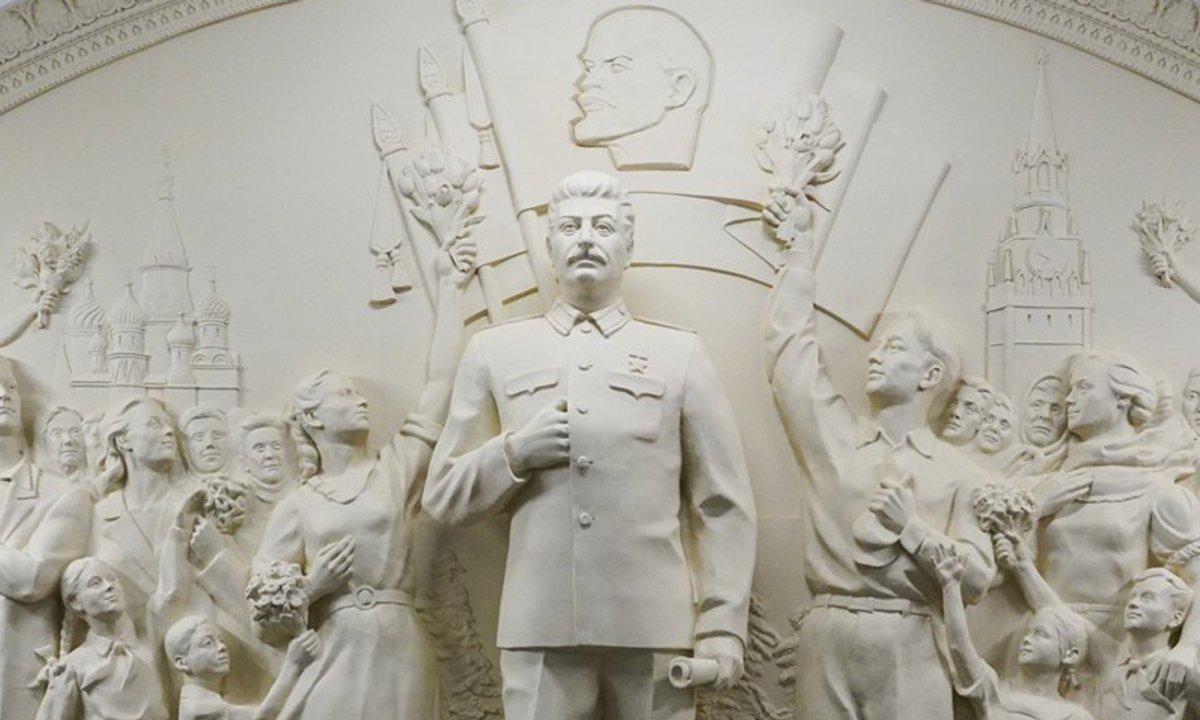
A full-length sculptural relief of Joseph Stalin was reinstalled in Moscow's Taganskaya metro station as part of efforts to restore original designs. The work, a 3D-printed copy of a 1950 original, has been criticized by art historian Elizaveta Likhacheva as poorly made and crudely painted. Visitors have laid flowers at the site, while critics note that over 95 Stalin monuments have been installed under Vladimir Putin's rule, including in occupied Ukrainian territories.