filter_list Showing 11 results for "German" close Clear
search
dashboard All 257 museum exhibitions 119article news 35rate_review review 24candle obituary 23article culture 17article policy 11trending_up market 9person people 7gavel restitution 7article local 5
date_range Range Today This Week This Month All
Subscribe

How the State Supports Provenance Research

Comment l’État soutient la recherche de provenance

The French Ministry of Culture has created two specialized missions to assist museums in researching the provenance of their collections, addressing looted artworks, human remains, colonial acquisitions, and illicit trafficking. The Mission for Research and Restitution of Looted Cultural Property (M2RS), established in 2019, focuses on Nazi-era spoliations (1933-1945) with a budget of €220,000 annually, while the newer Mission "Provenance," launched in 2024 under curator Catherine Chevillot, covers human remains, colonial-era objects, and illicit goods with a €450,000 budget. These missions provide expertise, funding, and coordination with institutions like the Commission for the Restitution of Property and Compensation of Victims of Anti-Semitic Spoliation (CIVS), though most museums still only initiate provenance checks during acquisitions or donations.


Hamburg Culture Prize Renamed After Namesake’s Nazi Ties Emerge

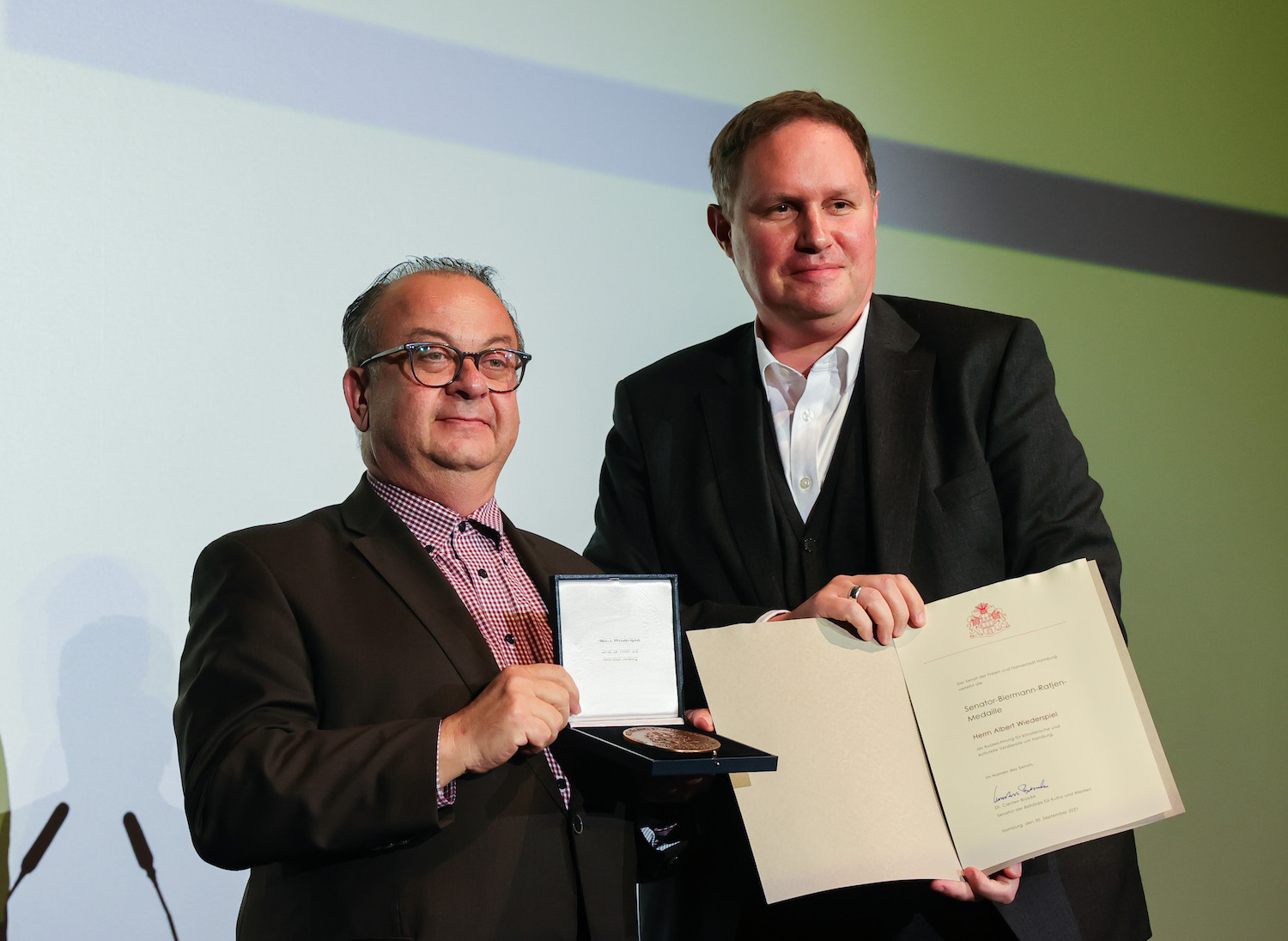
Hamburg's Senator Biermann Ratjen Medal, a culture prize awarded for nearly five decades, is being renamed the Medal for Art and Culture in Hamburg after historian Helmut Stubbe da Luz uncovered evidence that the prize's namesake, Hans Harder Biermann-Ratjen, confirmed his Nazi Party membership in a 1943 application. Biermann-Ratjen, who later served as Hamburg's senator for culture, had been deemed not to have been a member during post-war de-Nazification, but the new research prompted the city to rebrand the award.

What the renovation of the Pergamon Museum costs

Was die Sanierung des Pergamonmuseums kostet

The Pergamon Museum in Berlin is undergoing a major renovation with a total budget of €1.5 billion for both construction phases, including cost risks. The Federal Office for Building and Regional Planning (BBR) has announced that current projections indicate the overall costs will not be exceeded. Phase A, which includes the hall housing the famous Pergamon Altar, is expected to open on June 4, 2027, with a potential cost increase of up to 5% over the originally approved €489 million. Phase B, covering the Ishtar Gate and Babylonian Processional Way, has seen its cost forecast reduced by €27 million to €722.4 million, with an additional €295.6 million set aside for risks and price increases. The museum will fully reopen only in 2037.

In Venice, the Wagner Museum changes status

À Venise, le Musée Wagner change de statut

The Wagner Museum in Venice, currently a discreet institution housed within the Casino di Venezia in the Ca' Vendramin Calergi palace on the Grand Canal, is set to join the network of the Fondazione dei Musei Civici di Venezia (MUVE) by 2027. An agreement signed in March 2025, after thirty years of discussions, between MUVE, the Casino, and the Richard Wagner Association will make the museum the fourteenth institution under MUVE's management, alongside the Museo Correr, Ca' Pesaro, and the Museo Fortuny. The museum, established in 1995 in the rooms where Richard Wagner stayed and died in 1883, holds significant collections including the Josef Lienhart and Walter Just collections, making it one of the most important private Wagnerian collections outside Bayreuth, Germany.

Sachsen-Anhalt schützt Kunst und Kultur per neuem Gesetz

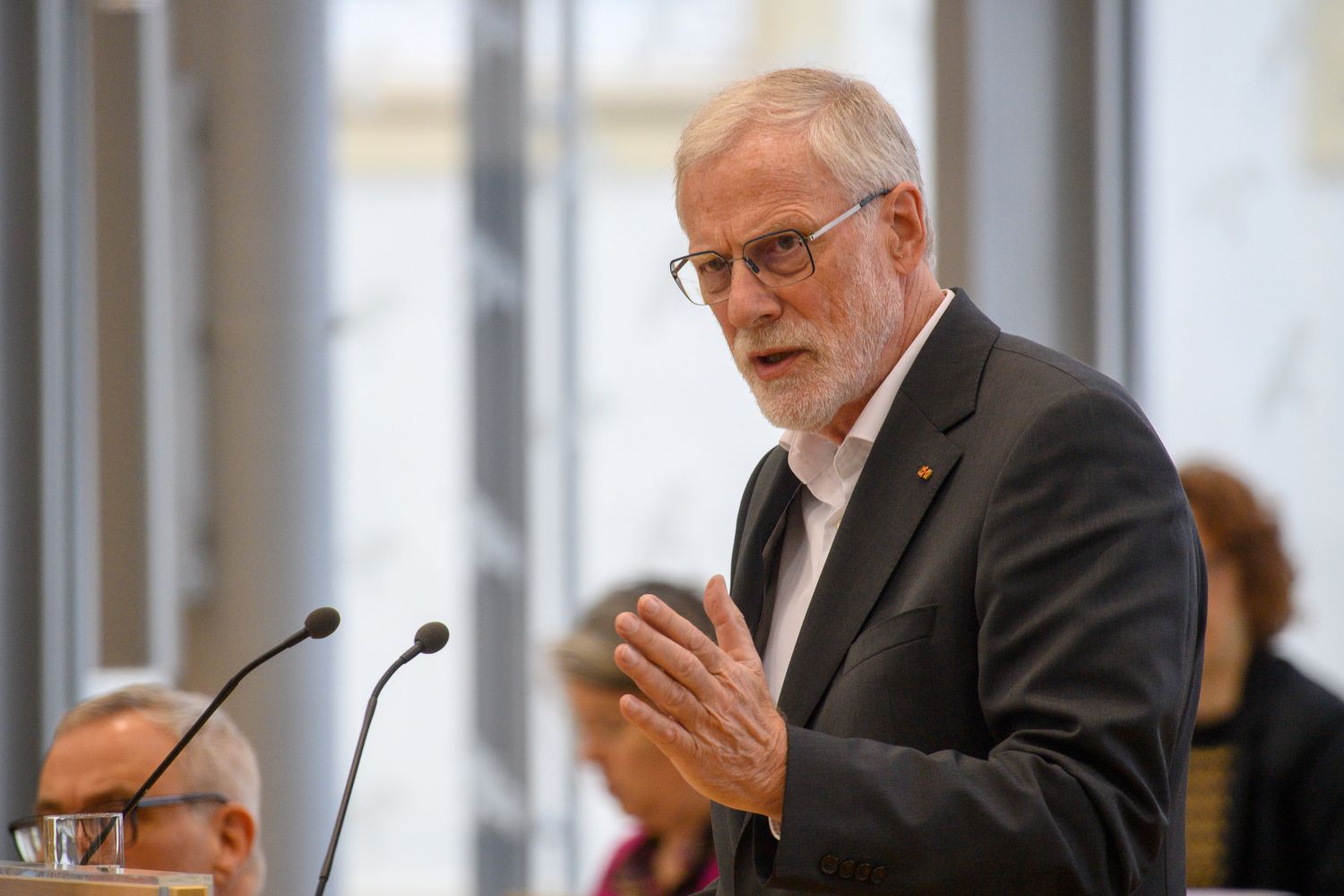
Sachsen-Anhalt has enshrined support for art and culture as a state objective in a new law, passed by the state parliament in Magdeburg with the exception of the AfD faction, which abstained. Culture Minister Rainer Robra (CDU) framed the law as fulfilling a promise from 1989, defining what constitutes art and culture in the state, including their roles in education and as an economic factor, and aiming to make cultural structures resilient against future attacks on artistic freedom.

Hamburg Culture Prize No Longer Named After Biermann-Ratjen

Hamburger Kulturpreis heißt nicht mehr nach Biermann-Ratjen

The Hamburg Senate has renamed the Senator-Biermann-Ratjen Medal, a prestigious cultural award, to the "Medaille für Kunst und Kultur in Hamburg" (Medal for Art and Culture in Hamburg). The decision follows a 2024 review of historical records revealing that Hans Harder Biermann-Ratjen (1901–1969), the former culture senator for whom the medal was named, was a member of the Nazi Party (NSDAP). Historian Helmut Stubbe da Luz presented evidence in June 2024 that Biermann-Ratjen had disclosed his NSDAP membership in a 1943 application to the Reich Literature Chamber when seeking to publish a novel.

NRW will Verbot für Handel mit Holocaust-Dokumenten

The German state of North Rhine-Westphalia (NRW) is introducing a legislative bill to ban the commercial trade of personal Holocaust documents and artifacts, such as letters from concentration camps, Gestapo cards, and yellow stars. The initiative follows international outrage over a planned auction in Neuss in November 2025, which was halted at the last moment; around 460 objects from that auction were transferred to the Auschwitz-Birkenau Foundation. The bill, to be presented at the Bundesrat session on May 8, aims to prohibit the sale of items directly linked to Nazi victims, while exempting museums, archives, and research institutions.

Berlins Kultursenatorin tritt ab

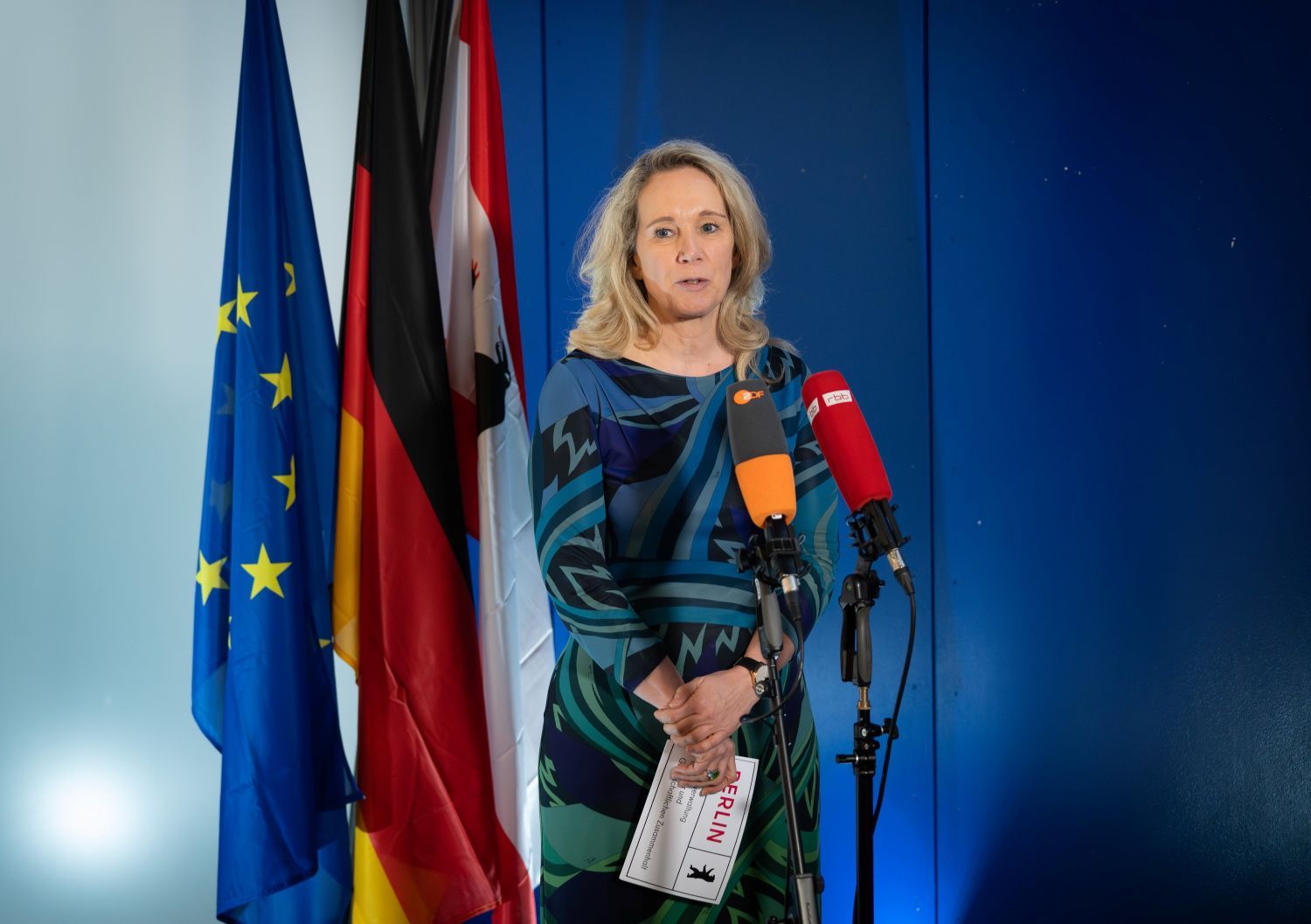
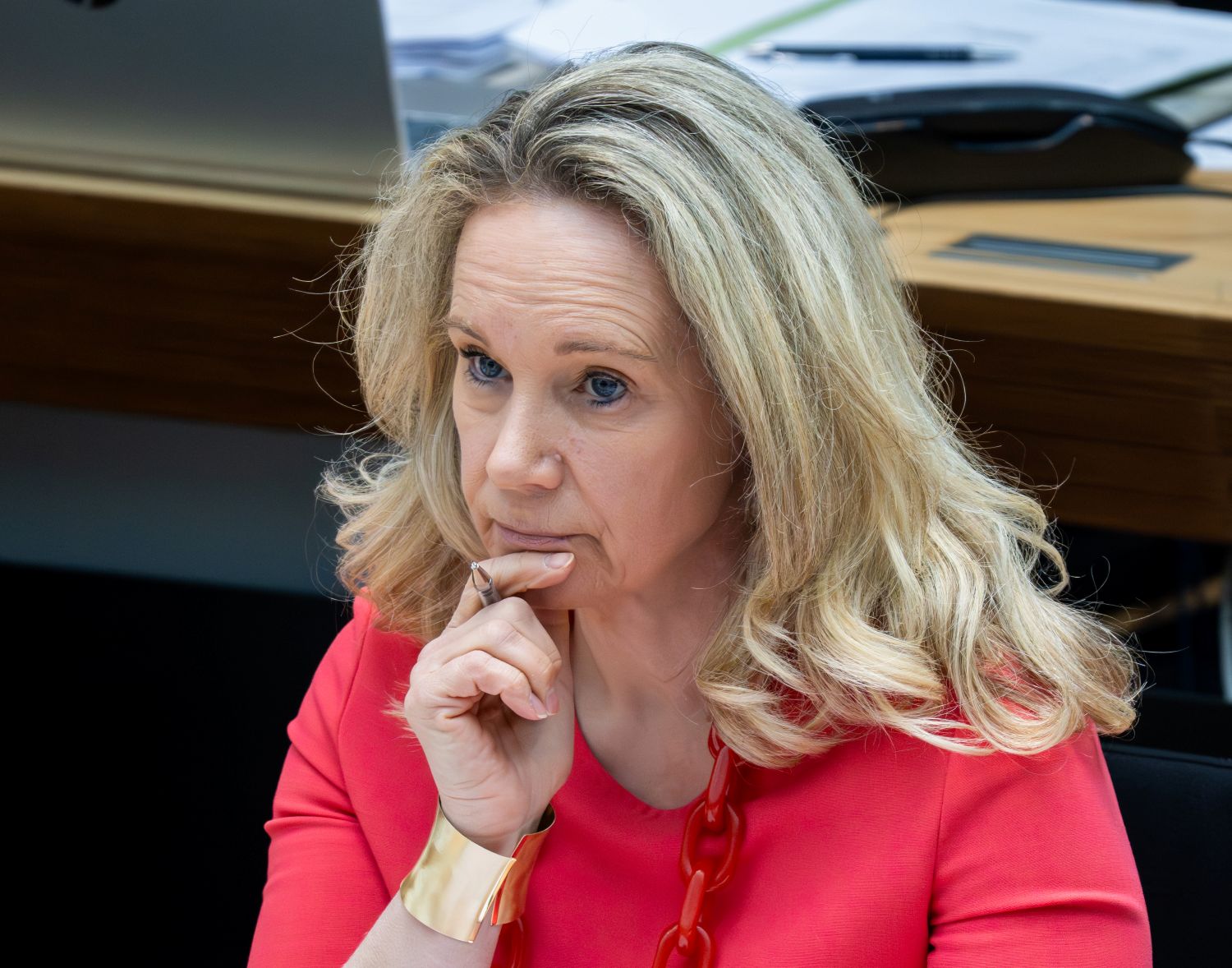
Berlin's Senator for Culture, Sarah Wedl-Wilson, has resigned after less than a year in office, following a damning report from the Berlin Court of Audit. The report found that the allocation of €2.6 million in funding for 13 projects aimed at combating antisemitism was 'evidently unlawful,' citing a lack of proper criteria, arbitrary project selection, and violations of budget regulations. Wedl-Wilson stated she stepped down to prevent damage to the fight against antisemitism, and Governing Mayor Kai Wegner accepted her resignation, vowing to reform the funding system. The opposition has accused CDU politicians of exerting improper influence to push through the projects.

Culture Senator under pressure due to Court of Audit report

Kultursenatorin wegen Rechnungshofberichts unter Druck

Berlin's Court of Audit has issued a scathing report accusing Culture Senator Sarah Wedl-Wilson (independent) of serious legal violations in the allocation of €2.6 million in anti-Semitism prevention grants for 2025. The audit found that the selection process was arbitrary, lacked transparent criteria, and violated state budget regulations. Six of the 13 funded projects—receiving €2 million—were deemed ineligible for the specific budget line, and some recipients were newly founded entities that were not properly vetted. The report warns that the grants may need to be repaid.

Associations Join Warning Against AfD Cultural Policy

Vereine schließen sich Warnung vor AfD-Kulturpolitik an

Nearly 30 cultural institutions in the German state of Saxony-Anhalt have issued a warning against the cultural policy proposals of the far-right Alternative for Germany (AfD) party, which is leading in polls ahead of state elections. The state network of cultural support associations, representing around 680 member groups, has now joined this warning, stating the AfD's plans amount to a restriction of artistic freedom and the instrumentalization of culture according to nationalist guidelines.

Cultural Observatories: Dinosaurs or Subjects Capable of Interpreting the Present?

Osservatori culturali. Dinosauri o soggetti in grado di interpretare il presente?

The Cultural Observatory of Canton Ticino has published a study on cultural observatories worldwide, including a map and list of surveyed organizations. The analysis reveals that cultural observatories are not a global phenomenon but are concentrated mainly in Europe and South America, with occasional presence in North America (especially Canada and Hispanic-oriented organizations in the US). Africa, Asia, and Oceania are almost entirely absent from the map. The study also highlights a high rate of inactive observatories: among the top 10 countries by active observatories, only Germany shows an effective activity ratio. Spain has 26 active observatories out of about 45 total, while Italy has 11 active out of over 20 inactive. The research defines observatories as non-profit organizations that combine cultural and statistical expertise to deepen and transfer knowledge about the cultural sector, and classifies as inactive those with no recent activity on web or social channels.