filter_list Showing 15 results for "Photo" close Clear
search
dashboard All 2974 museum exhibitions 1586article local 510article news 229article culture 223trending_up market 135person people 120rate_review review 59candle obituary 51article policy 41gavel restitution 15article event 4article gallery 1
date_range Range Today This Week This Month All
Subscribe

dealer michael ward charged by manhattan da

Manhattan District Attorney Alvin Bragg has charged veteran New York antiquities dealer Michael Ward with criminal facilitation following an investigation into the illicit trade of cultural property. Ward, who operated his Upper East Side gallery for nearly forty years, was convicted in September for his role in facilitating the sale of stolen artifacts, including a 1st-century gilded bronze plaque. Court documents reveal a broader pattern of misconduct involving 40 objects stolen from Italy, Greece, and Turkey, with a total value reaching into the millions.
South Carolina’s International African American Museum Officially Acquires Earliest Known Daguerreotypes of Enslaved Americans

South Carolina’s International African American Museum Officially Acquires Earliest Known Daguerreotypes of Enslaved Americans

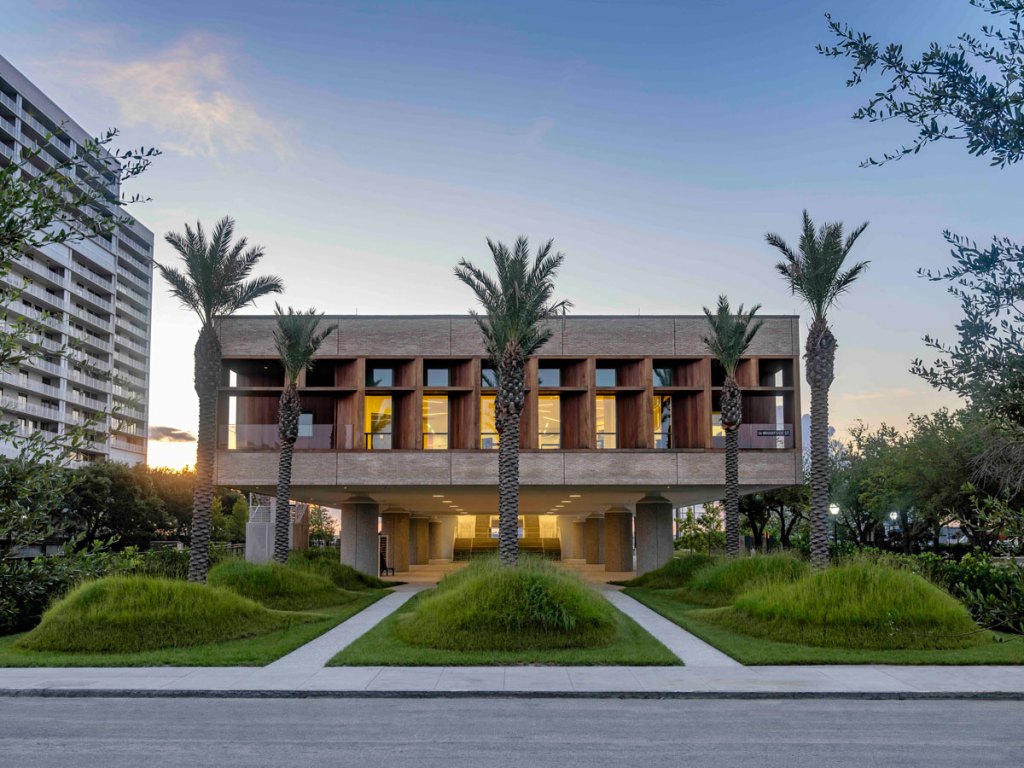
The International African American Museum in Charleston, South Carolina, has officially acquired the "1850 Daguerreotypes," the earliest known photographs of enslaved Americans. The set of 15 images, taken by J.T. Zealy, depicts seven enslaved individuals—Alfred, Delia, Drana, Fassena, Jack, Jem, and Renty—and had been held by Harvard University until a recent legal settlement. Harvard had owned the daguerreotypes since they were commissioned in 1850 by natural historian Louis Agassiz.

fort worth police return photographs seized from sally mann exhibition

Fort Worth police have returned photographs by Sally Mann that were seized from the Modern Art Museum of Fort Worth in January. The artworks were taken from the group exhibition “Diaries of Home” following complaints from locals and elected officials who characterized Mann’s work as “grossly inappropriate” and “child porn.” The seizure sparked national condemnation, with the National Coalition Against Censorship (NCAC), the Foundation for Individual Rights and Expression (FIRE), and the American Civil Liberties Union of Texas (ACLU of Texas) intervening to demand the works’ return. Charges against the museum were dropped, and the photographs have now been returned, bringing closure to the investigation.

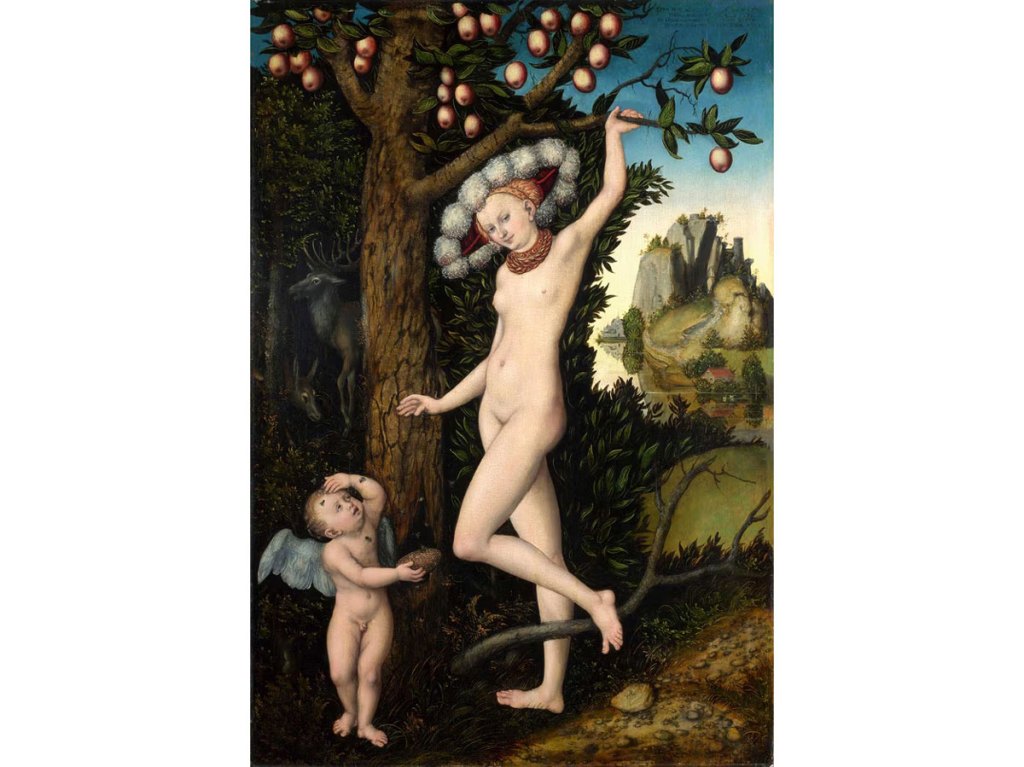
A Lucas Cranach the Elder Masterpiece Once Hung in Hitler’s Munich Apartment

A Lucas Cranach the Elder painting, *Cupid complaining to Venus* (1526–27), once hung in Adolf Hitler's Munich apartment, according to a report by the Art Newspaper. The work was identified in a 1940s photograph published in a 1978 furniture catalog and later in a 2023 article by art historian Birgit Schwarz, who confirmed Hitler's ownership via a 2006 discovery of an album at the Library of Congress. After World War II, American journalist Patricia Lochridge took the painting from a warehouse in Berchtesgaden and smuggled it to the US. The National Gallery in London acquired it in 1963 from A. Silberman Galleries, which falsely claimed it came from the 1909 auction buyer's heir; it had actually been purchased from Lochridge.

Famous Cranach painting spotted in rare photograph of Hitler’s apartment

A rare photograph from the early 1940s reveals that Lucas Cranach the Elder's painting *Cupid complaining to Venus* (1526-27), now a masterpiece in the National Gallery, London, once hung in Adolf Hitler's private Munich apartment. The image, previously published in Germany by provenance expert Birgit Schwarz, appears for the first time in an English-language publication. The painting was acquired by the National Gallery in 1963 from E. and A. Silberman Galleries in New York, which provided a false provenance. It had been taken from a warehouse of recovered art in 1945 by American journalist Patricia Lochridge, who smuggled it into the United States.

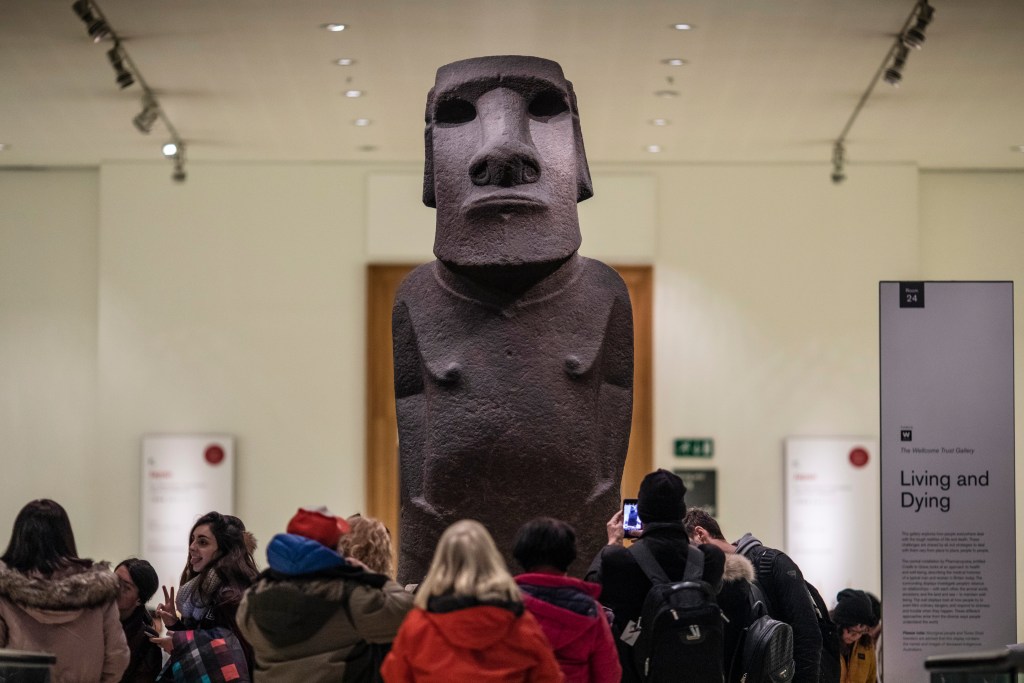
eastern island head not stolen archaeologist

Archaeologist Mike Pitts has challenged the prevailing narrative surrounding the removal of Hoa Hakananaiʻa, the iconic Easter Island moai held by the British Museum. Drawing on a newly discovered 1869 eyewitness account from the Army and Navy Gazette and a rare historical photograph, Pitts argues that the statue's excavation was a collaborative effort involving hundreds of Indigenous Rapa Nui people rather than a simple act of imperial theft. The evidence suggests the British crew traded tobacco for assistance and were guided to the statue's location by the islanders.

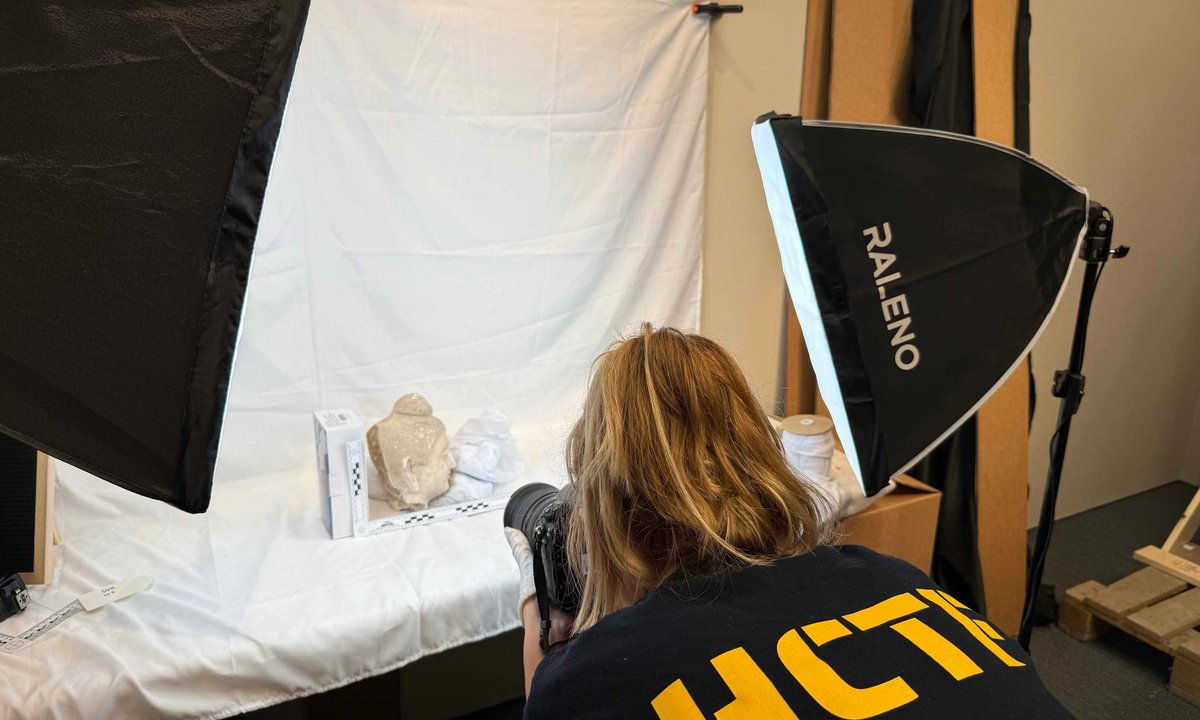
Meet the global taskforce working to recover stolen cultural heritage

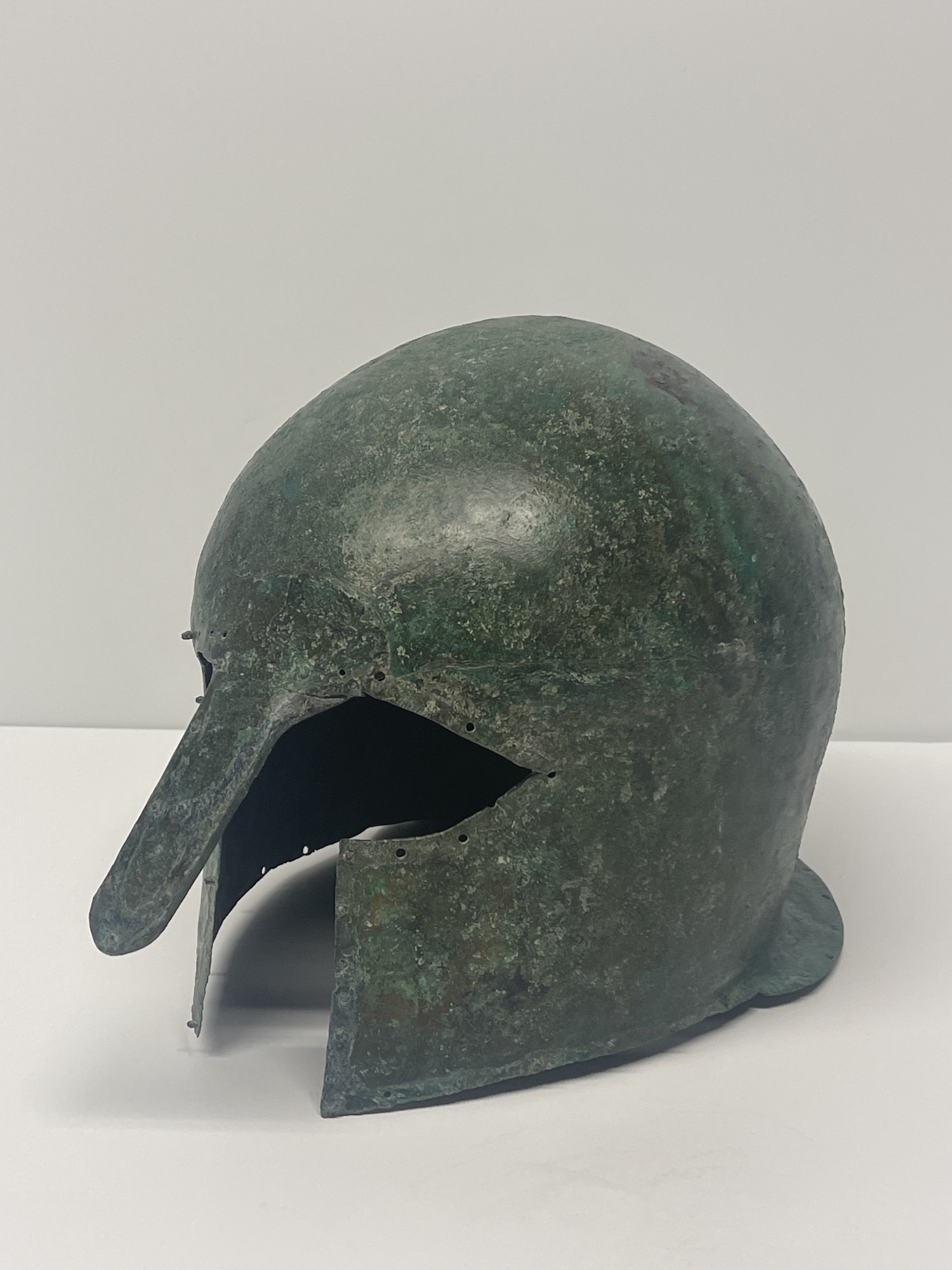
The London Metropolitan Police's Art and Antiques Unit, in collaboration with the Heritage Crime Task Force (HCTF) of the Organisation for Security and Co-operation in Europe (OSCE), is processing over 300 recovered cultural artefacts. The objects—including statues, frescoes, chainmail armour, and stucco heads—were voluntarily handed over by an individual who had kept them for over a decade. Experts are conducting forensic analysis, photography, and archaeological assessment to determine authenticity and origin, with initial findings suggesting items from Cambodia's Angkor Period, the Gandhara region of Pakistan and Afghanistan, the Indus Valley civilisation, and possibly a mosque in Syria or Iraq.

harvard cedes early images of enslaved americans legal settlement

Harvard University has transferred ownership of fifteen daguerreotypes from around 1850, considered the earliest surviving photographs of enslaved African Americans, to the International African American Museum in Charleston, South Carolina. The settlement ends an eight-year legal dispute with Tamara Lanier, who claimed the images depict her ancestors, Renty and Delia, and argued they were taken without consent for the discredited biologist Louis Agassiz. The Massachusetts courts had previously ruled that ownership remained with the photographer, but allowed Lanier to pursue emotional distress claims over Harvard's continued use of the images in marketing materials.

Barcelona museum refuses to return Sijena murals to monastery

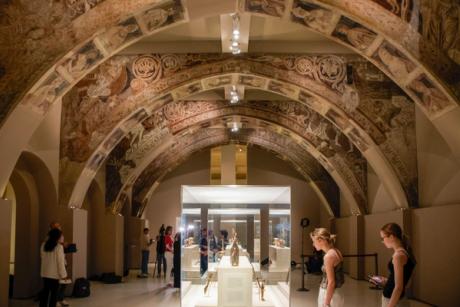
The Museu Nacional d’Art de Catalunya (MNAC) in Barcelona is refusing to comply with a Spanish Supreme Court order to return the 12th-century Sijena murals to their original monastery in Aragón. Tensions escalated after the museum hosted a listening party for pop star Rosalía in the same hall where the Romanesque masterpieces are housed, leading to accusations from the municipality of Villanueva de Sijena that the museum is endangering the fragile works. MNAC director Pepe Serra has dismissed these concerns as scientifically unfounded, sparking threats of a defamation lawsuit from local officials.

chinese vase sale cancelled french court

A French court ordered Galerie Kraemer in Paris to return €2.8 million ($3.25 million) to collector Sheikh Hamad bin Abdullah Al Thani over a Chinese vase, citing serious doubts about the 18th-century dating of its gilded bronze mounts. The vase, which sold for €815 in Brazil 20 years ago, passed through a Paris flea market and three antique dealers before Laurent Kraemer purchased it for €180,000. Sheikh Hamad bought the vase in 2012 but later had it examined after Galerie Kraemer faced multiple fake furniture cases. Expert Sébastien Evain deemed the dating highly improbable, while gallery-commissioned experts Gilles Perrault and Guy Kalfon, who only saw photographs, defended the 18th-century attribution. The court annulled the sale, and the gallery plans to appeal.

forged polish painting returns to the national museum in poznan poland

A painting long attributed to Polish Realist painter Józef Pankiewicz and held by the National Museum in Poznań has been revealed as a forgery. The work, titled 'Vegetable Market at Żelaznej Bramy Square in Warsaw' and dated 1888, was awarded a silver medal at the 1889 Universal Exposition in Paris and acquired by the museum in 1948. In 2017, scholar Michał Haake noticed discrepancies between the museum's version and historical reproductions, prompting an investigation. Conservators removed overpainting and found that the canvas, pigments, and composition differed from the original, with Pankiewicz's signature added after completion. The forgery, now attributed to an unidentified early 20th-century artist, is back on display alongside a photo of the original in the exhibition 'Succumb to Illusion.' The original painting has been missing since 1890.

egyptian antiquities trafficker jfk airport prison sentence

Egyptian doctor Ashraf Omar Eldarir has been sentenced to six months in prison by U.S. District Judge Rachel P. Kovner for smuggling hundreds of ancient Egyptian artifacts into the United States. Eldarir was arrested in 2019 after importing over 600 artifacts without declaring them on customs forms, including a polychrome relief, Roman limestone pieces, gold amulets, and wooden tomb model figures dating to 1900 BCE. The largest seizure of smuggled antiquities at JFK Airport occurred in January 2020, when customs officers found 590 artifacts wrapped in bubble wrap and foam, with loose sand and dirt indicating recent excavation. Eldarir pleaded guilty to four counts of smuggling and used fake provenances—including forged documents and photoshopped photographs—to sell artifacts at U.S. auction houses.

UK Heritage Department feared ‘mass restitutions’ when Stone of Scone was returned to Scotland

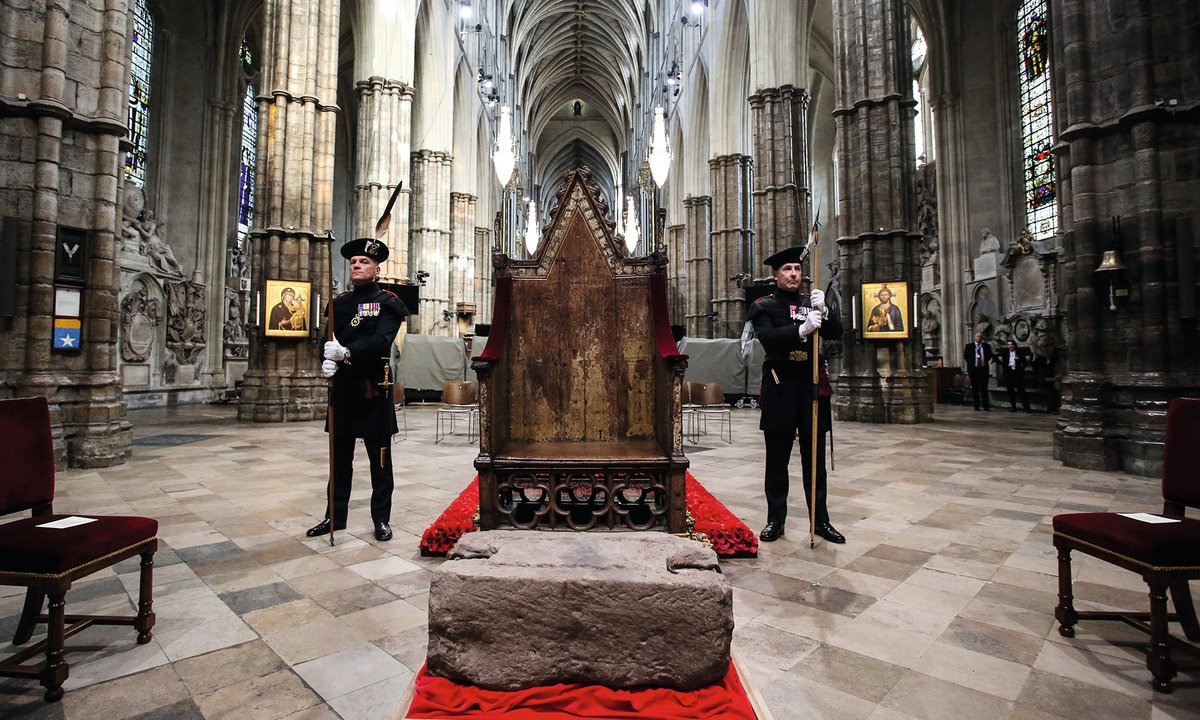
Newly released UK government files reveal that in 1996, the Department of National Heritage strongly opposed Prime Minister John Major's decision to return the 13th-century Stone of Scone to Scotland. The department's cultural property unit head, Lynn Gates, warned that the return would set a 'precedent to mass restitution,' triggering claims from Greece for the Parthenon Marbles, Egypt for the Rosetta Stone and Sphinx's Beard fragment, and Nigeria for the Benin Bronzes, with fears of further demands from Ethiopia, India, Pakistan, and other nations. The internal memo criticized Major for failing to consult the department before agreeing to the transfer from Westminster Abbey.

smithsonians national museum of asian art returns three looted sculptures to india

The Smithsonian's National Museum of Asian Art announced it will return three looted bronze sculptures to India: "Shiva Nataraja" (ca. 990), "Somaskanda" (12th century), and "Saint Sundarar with Paravai." Provenance research linked the works to art dealers known for trafficking looted antiquities. The museum partnered with the Photo Archives of the French Institute of Pondicherry in 2023, finding the bronzes had been photographed in Tamil Nadu temples between 1956 and 1959 and removed in violation of Indian laws. This follows the museum's December return of three Khmer-period sculptures to Cambodia, also determined to be looted.

protest sparks over sijena murals

A small protest of fewer than 50 demonstrators, organized by the Catalan National Assembly and joined by former Catalan president Laura Borràs and ANC president Lluís Llach, gathered outside the National Art Museum of Catalonia (MNAC) on Monday morning as Aragonese technicians arrived to inspect a set of contested 13th-century Romanesque murals. The murals, originally from the Sijena Monastery, were ordered returned by Spain’s Supreme Court after more than a decade of litigation, concluding that the original religious order never lawfully transferred ownership after the works were removed in 1936 following a fire during the Spanish Civil War. The inspection team, led by restorer Natalia Martínez de Pisón, began with less fragile sections using photogrammetry to assess transport viability, while MNAC officials warn that moving the more delicate frescoes could cause irreversible damage and plan to formally contest the execution order on conservation grounds.