search
dashboard All 5115 museum exhibitions 2768article local 776article culture 377article news 358trending_up market 322person people 148article policy 122rate_review review 106candle obituary 97gavel restitution 37article school 2article museums 1article architecture 1
date_range Range Today This Week This Month All
Subscribe

Karla Knight’s Cosmic Conspiracies

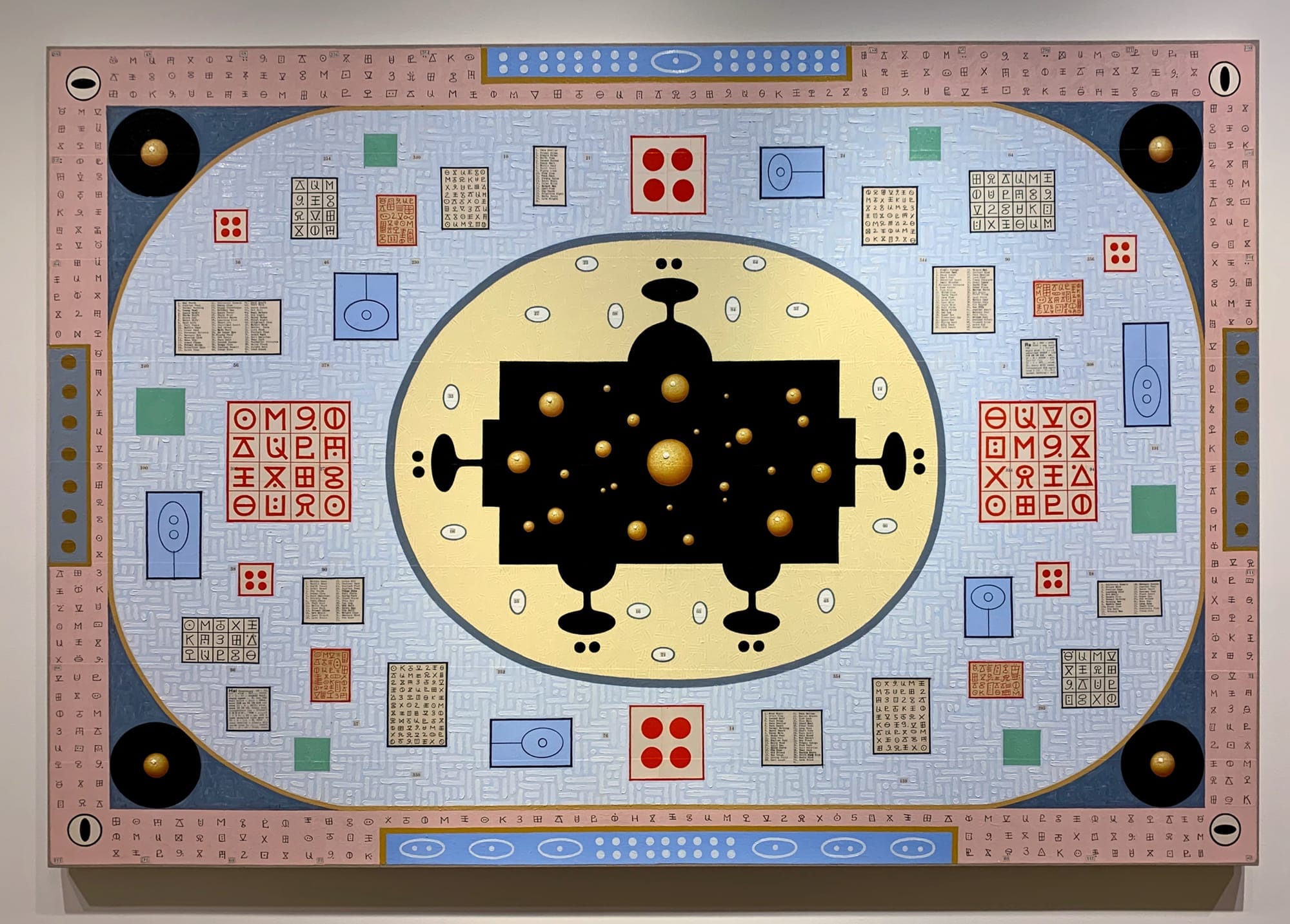
Karla Knight's exhibition "Orbit" at Andrew Edlin Gallery presents her game-like paintings and tapestries filled with cryptic symbols, cosmic diagrams, and celestial imagery. Works such as "Orbiter 2" (2024–25) and "Feelers" (2025–26) feature irregular black devices, floating spheres, and rows of arcane script, inviting viewers to decode what appear to be blueprints for extraterrestrial systems or maps of hidden dimensions. Knight employs meticulous grids, bold primary colors, and textile techniques to render the paranormal as strangely normal.
Between Tropes and Treats at NADA New York

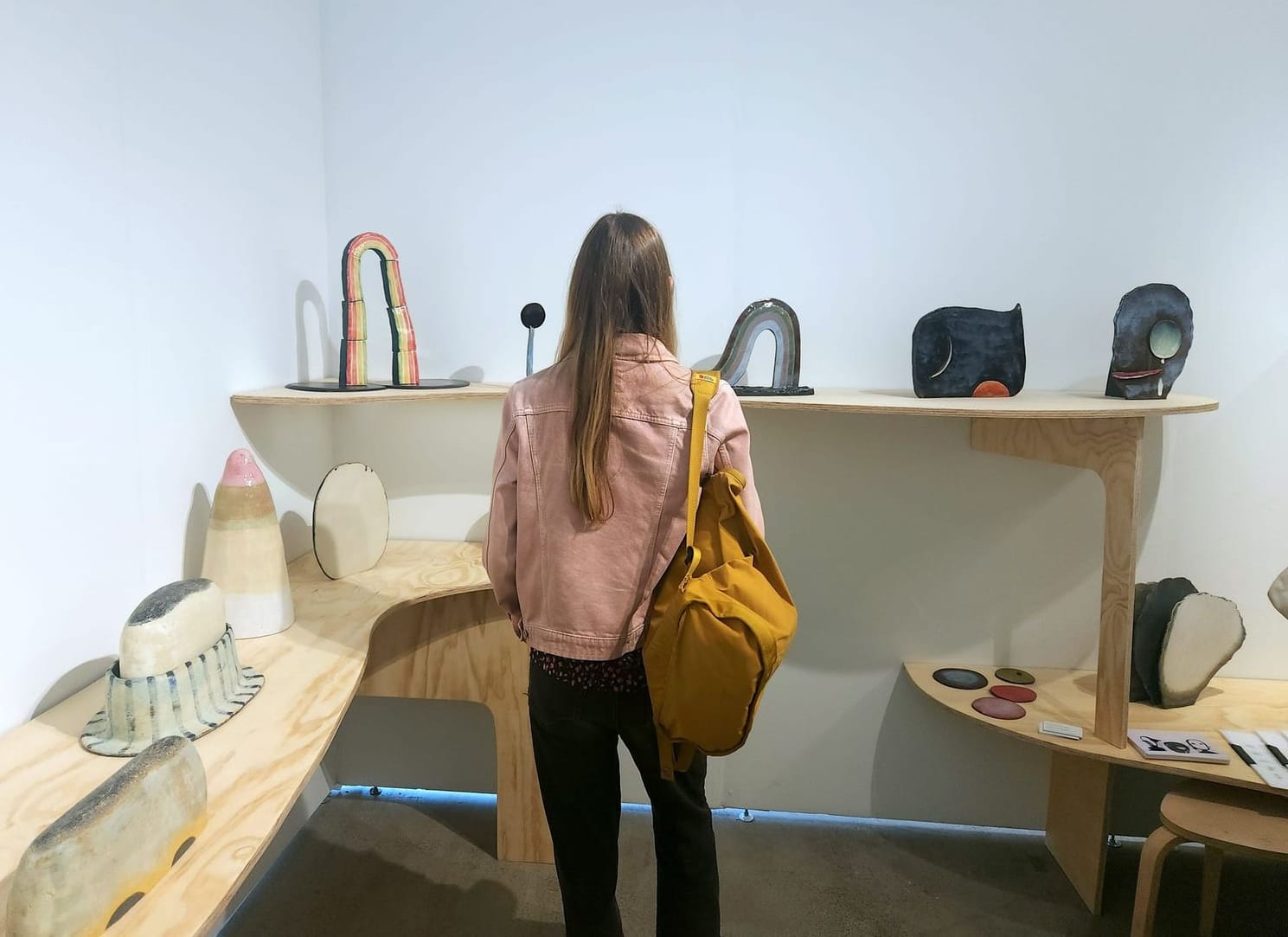
The 12th annual New Art Dealers Alliance (NADA) fair opened at the Starrett-Lehigh Building in Manhattan, featuring a wide array of contemporary works. Critic Rhea Nayyar notes that while many booths felt interchangeable due to prevalent trends like zany sculptures, shiny materials, and kitschy vibrancy, several standout pieces offered genuine engagement. Highlights include Elena Roznovan's maternal ephemera embedded in concrete with bondage tape, Kelly Tapia-Chuning's deconstructed serapes addressing colonial violence, and Niniko Morbedadze's folkloric illustrations.

Lynette Yiadom-Boakye: Many A Moonlit Caveat

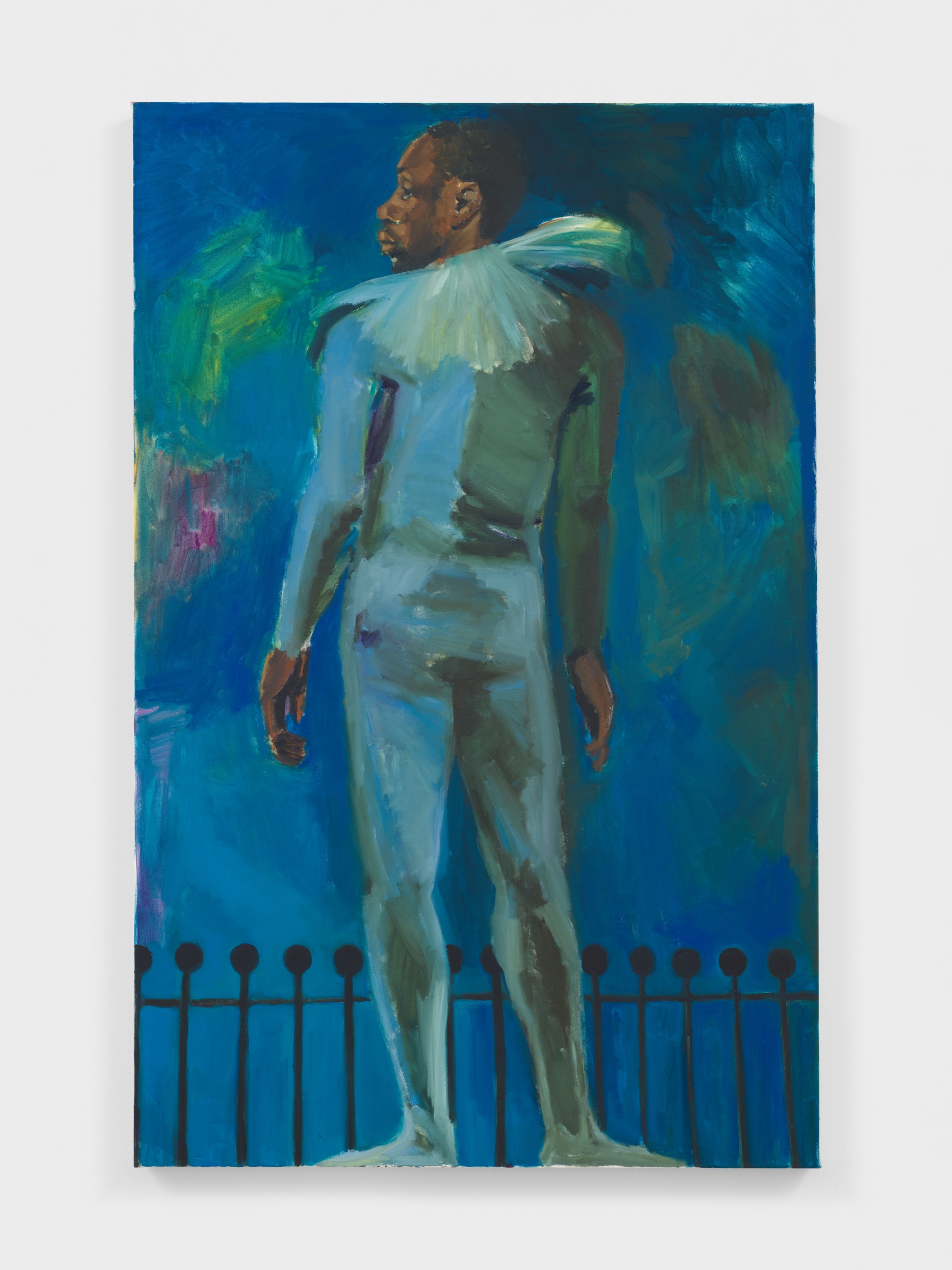
Lynette Yiadom-Boakye's latest exhibition, "Many A Moonlit Caveat," opens at Jack Shainman Gallery across both its New York locations from April 24 to July 31, 2026. The show features new oil paintings, including the prose poem "Wake-Keeper" (2026) and "The Honour Between Thieves" (2025), which depict fictional figures in states of repose and tension, blending gothic symbolism with romanticism. The review highlights Yiadom-Boakye's narrative depth and refusal to impose clear moral content, inviting viewers to re-read her transgressive imagery.

The Politics of In-action: Review of In-action: Viennese Actionism and the Passivities of Performance Art

Caroline Lillian Schopp's new book *In-action: Viennese Actionism and the Passivities of Performance Art* (2025) offers a revisionist history of Viennese Actionism, a movement retroactively named in 1970 by Peter Weibel and Valie Export. Schopp introduces the term "in-action" to describe a politics of artistic action that emphasizes intimacy, hesitation, and vulnerability rather than the violent or liberatory extremes typically associated with the movement. She expands the canon to include women artists such as Anna Brus, Hanel Koeck, and Ingrid Wiener, and reexamines the work of Rudolf Schwarzkogler, whose death was mythologized as a suicide by self-castration but was actually a fall from a window. Through close readings of photographs, Schopp argues that Schwarzkogler's performances were characterized by passivity and "in-sincerity," challenging the dominant narrative of actionism as aggressive or heroic.

Martha Cooper Captures How Urban Youth Made New York

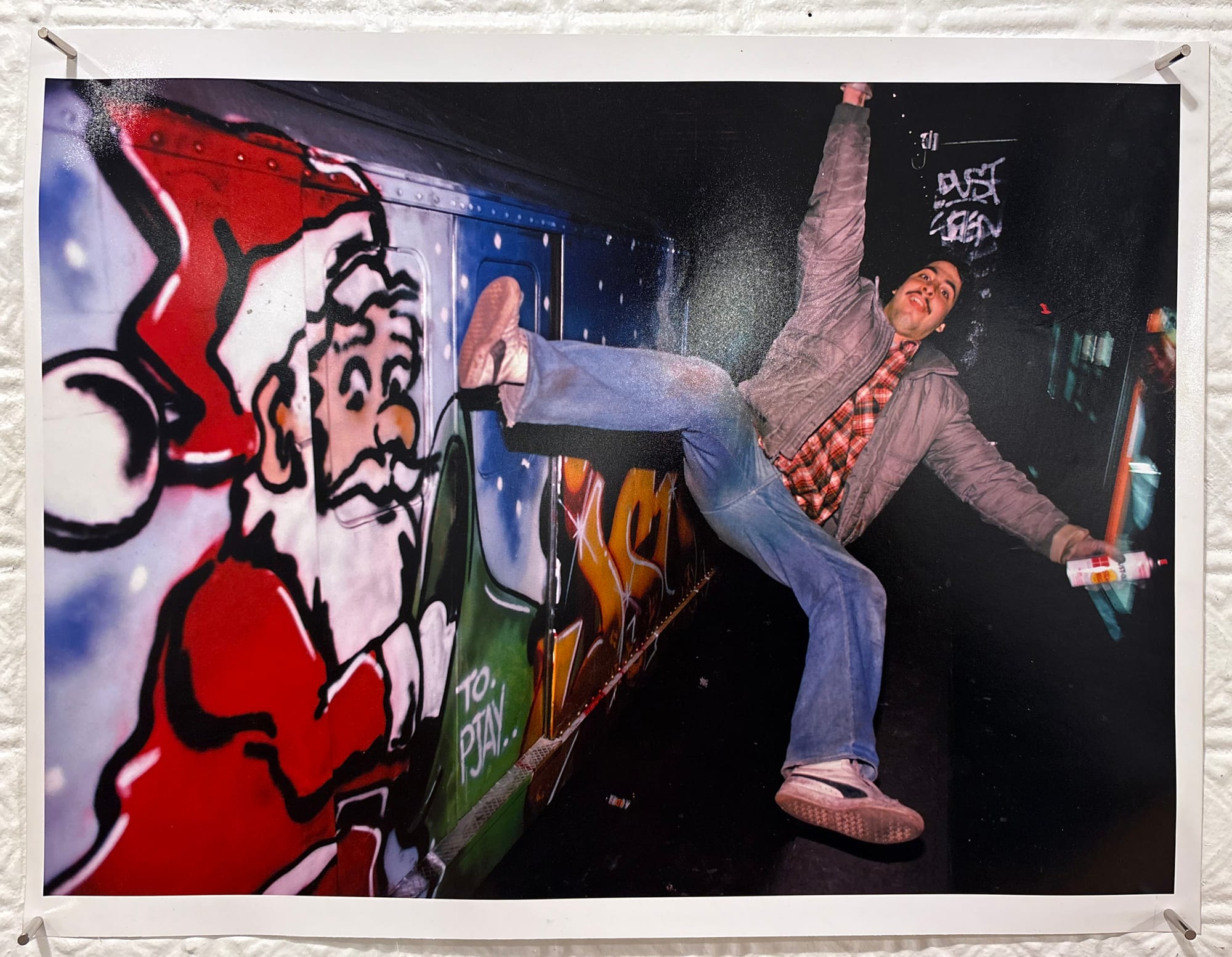
The article reviews the Bronx Documentary Center's exhibition "Martha Cooper: Streetwise," which surveys Cooper's career from the late 1970s through the 2010s, focusing on her iconic photographs of New York City's graffiti and breaking culture in the early 1980s. The exhibition includes images from New York, Baltimore, Tokyo, and Soweto, highlighting Cooper's documentation of urban youth, street play, and the physical relationship between inhabitants and the city, such as spray-painting subway cars and dancing on flattened boxes.

Haegue Yang’s Constellations for a Divided Korea

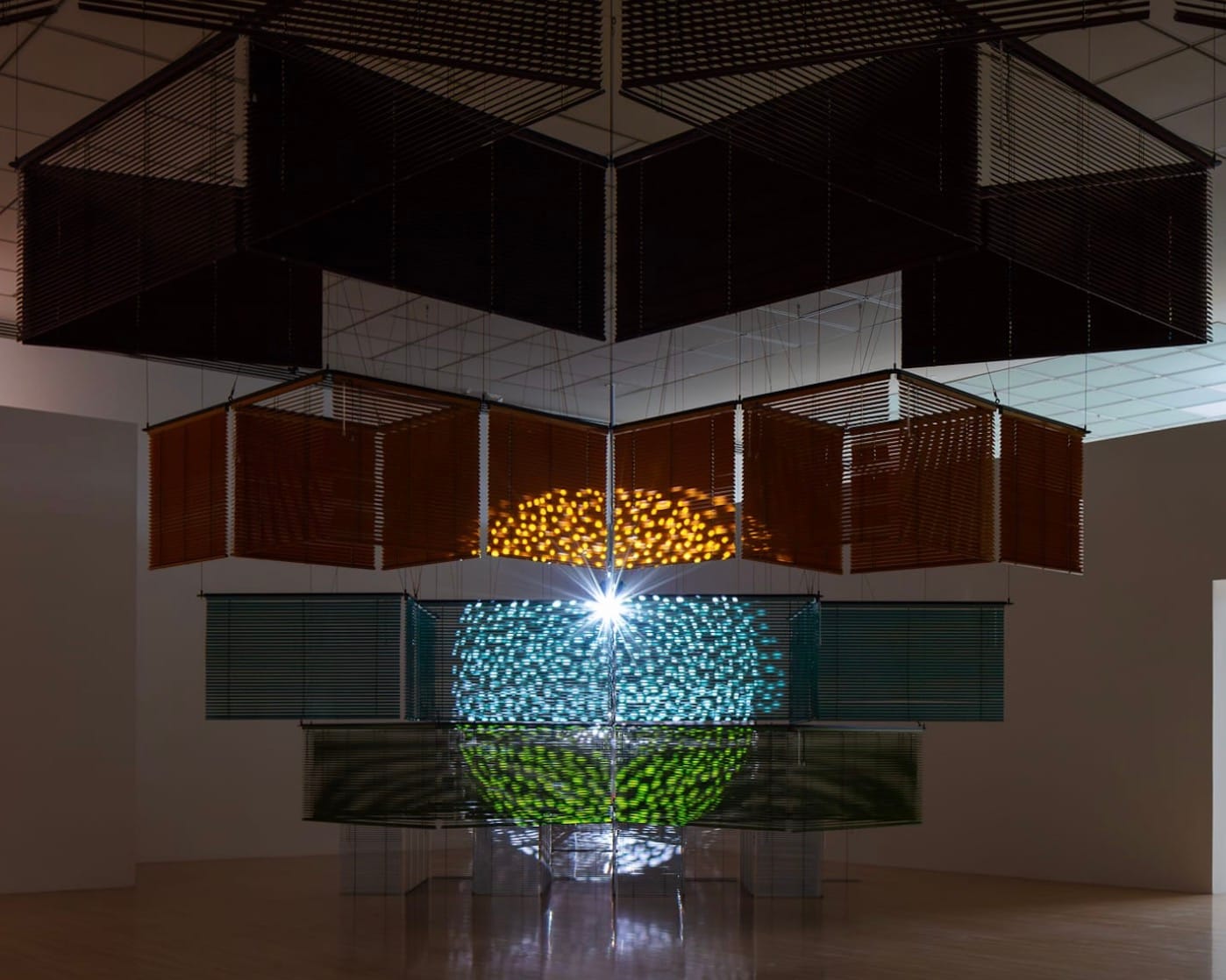
Haegue Yang's exhibition "Star-Crossed Rendezvous" at the Museum of Contemporary Art in Los Angeles features two large-scale Venetian blind installations that explore themes of division, exile, and reunification. The works draw on the arbitrary 1945 division of Korea by U.S. military officers and the life of composer Isang Yun, who was tortured and imprisoned by South Korean authorities. One installation mirrors and inverts a cube of white blinds inspired by Sol LeWitt, while the other uses colored blinds, projections, and Yun's "Double Concerto" to create a fragmented, shadow-filled meditation on longing and separation.

A New Richard Avedon Documentary Lets Him Down

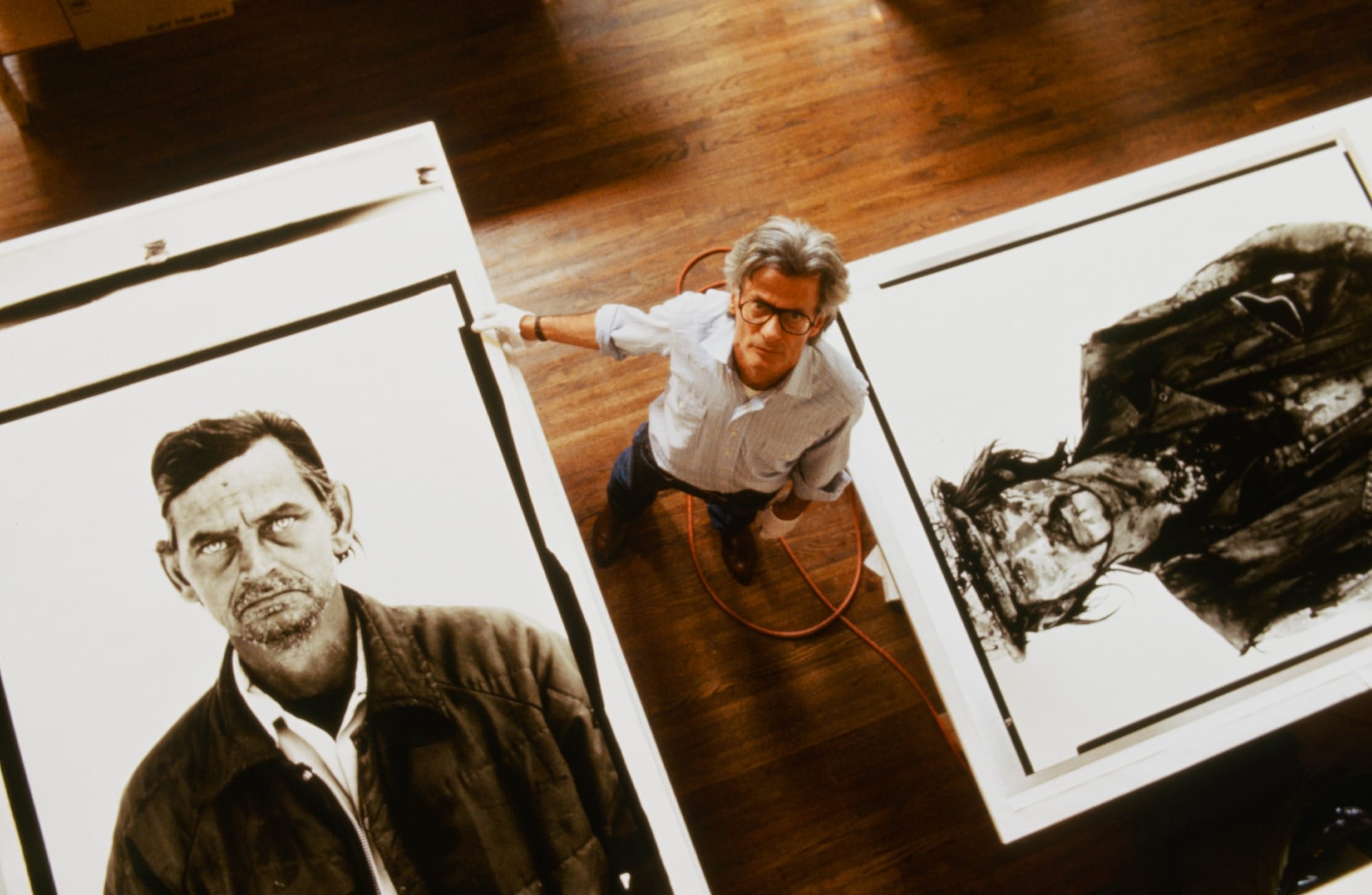
A new documentary titled "Avedon" (2026), directed by Ron Howard, premiered at the Cannes Film Festival. The film offers a conventional tour of the life of famed photographer Richard Avedon, relying on talking-head interviews and behind-the-scenes anecdotes rather than delving into the artistic process or the deeper implications of his work. The review criticizes Howard's approach as hackwork, noting that the documentary misses opportunities to explore Avedon's insights on image culture, his influence on cinema, and the technical evolution of his photography.

Death as Performance

Der Tod als Performance

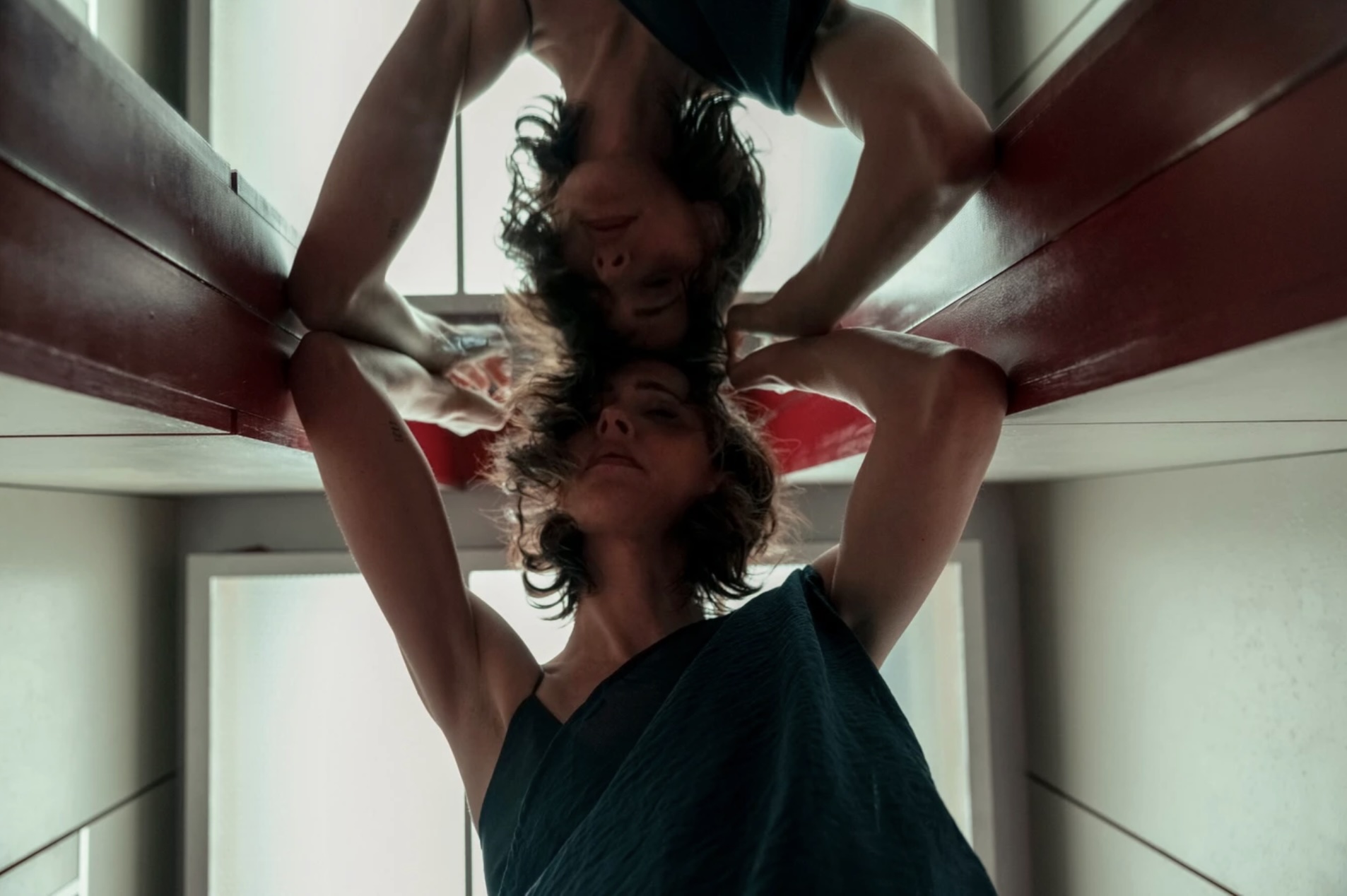
The article reviews Maria Martínez Bayona's debut sci-fi comedy film "The End of It," which premiered in competition at the Cannes Film Festival. The film follows Claire, a 250-year-old artist who, in a future where medical advances have eliminated death, decides to stage her own suicide as a radical art performance. The story critiques a world obsessed with synthetic rejuvenation and explores themes of mortality, authenticity, and the commodification of art.

Adrian Ghenie: Roman Campagna | Exhibition review

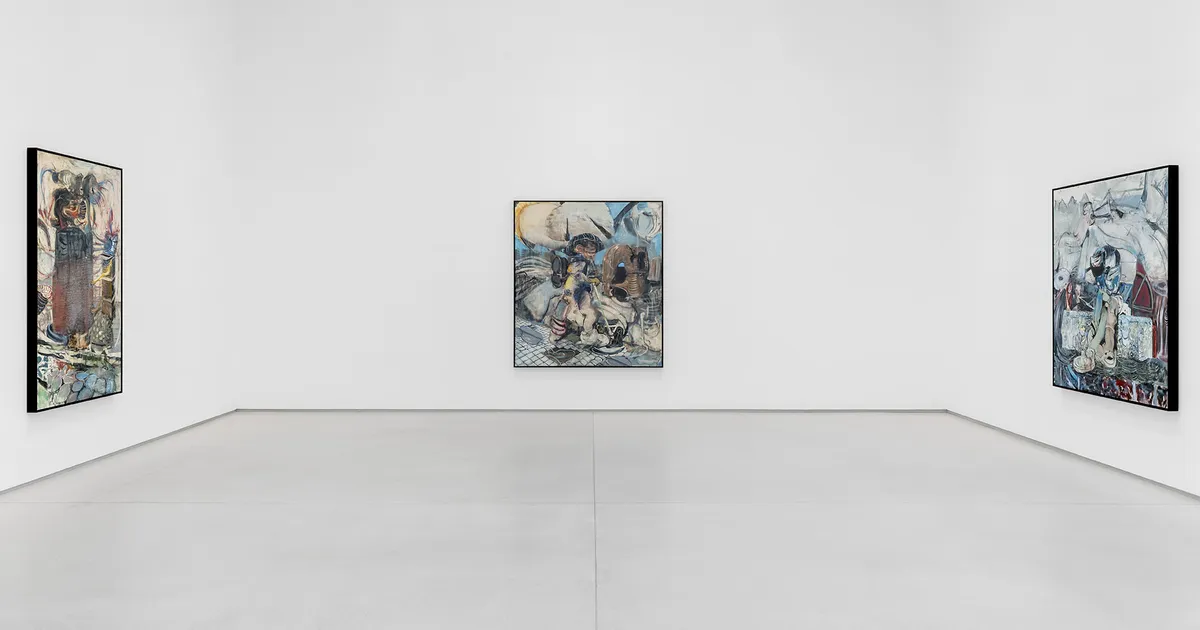
Adrian Ghenie's exhibition "Roman Campagna" at a Paris gallery presents a series of paintings and charcoal drawings that subvert the romantic cliché of an artist's transformative encounter with Rome. Ghenie populates landscapes inspired by the Appian Way with grotesque, alien-headed figures hunched over smartphones, urinating on monuments, or weeping at sunsets, using brown and grey tones punctuated by bright colors. The works reference Francis Bacon and William S. Burroughs, and include direct allusions to Bacon's reinterpretation of van Gogh's self-portrait, as well as a copy of a Pompeii mosaic. The show also features large charcoal drawings on paper that reveal Ghenie's process of constructing his contemporary, alienated figures.

Carole Harris’ Origin Story in “This Side of the River” at MOCAD

The article reviews Carole Harris's solo exhibition "This Side of the River" at the Museum of Contemporary Art Detroit (MOCAD), curated by Abel Gonzalez Fernandez. The show features twenty fiber pieces and archival materials spanning from 1966 to the present, tracing Harris's creative evolution and her responses to Detroit's social and urban changes. It highlights early works like "Potpourri" (1976) and "Black Jack" (1976) from her 1977 debut at Gallery 7, a Black Power-era space founded by Charles McGee, and later pieces such as "Down the Road a Piece" (2003) that mark her shift toward improvisational, abstract compositions.

CUANDO LOS OBJETOS HABLAN. MUSEO HECHIZO, DE JUAN JOSÉ SANTOS

Juan José Santos's book "Museo hechizo" (Metales Pesados, 2025) challenges the perceived neutrality of the Western museum, presenting it as an institution shaped by colonial logics of classification, extraction, and representation. The essay centers on the concept of "lo hechizo"—understood as both artisanal precariousness and disruptive enchantment—and explores small, community-based Latin American museum experiences that operate from precarity, reciprocity, and care. Santos argues that the museum is a space of conflict where voices, narratives, and ways of constructing history are contested, and he proposes thinking of the museum through its minor, situated, and alternative forms in Latin America.

Simeon Barclay review – shut out by the gates of a drab modern Britain

Simeon Barclay's exhibition in Southampton presents a sharp, pop-cultural critique of exclusion and belonging in modern Britain, featuring works that incorporate Star Wars Imperial Guards, taxidermy pigeons, locked enclosures, and football scarves with Romelu Lukaku's face. The show, described by Barclay as "a lament of sorts, to access and loss," comes shortly after his nomination for the Turner Prize and makes a strong case for why he should win.

What Would Orwell Think of the Mormon ‘Animal Farm’?

A new 3D-animated adaptation of George Orwell's 'Animal Farm' has been released, directed by Andy Serkis and featuring a star-studded voice cast including Glenn Close, Woody Harrelson, Kathleen Turner, and Seth Rogen. The film is backed by Angel Studios, a Mormon-run company based in Provo, Utah, known for family-friendly content. The adaptation adds a modern father-son plot between a pig named Lucky and Napoleon, introduces an evil corporation CEO, and replaces Orwell's bleak ending with a happy one where the animals blow up a hydroelectric dam. ArtReview critic Travis Diehl describes the film as 'sheer propaganda' and 'horrifying,' noting its marketing campaign included a fictional glue product called Boxer's Glue.

‘My Year in Paris with Gertrude Stein’ by Deborah Levy, Reviewed

Deborah Levy’s latest novel, *My Year in Paris with Gertrude Stein*, follows a first-person narrator who travels to Paris to research the American writer and collector Gertrude Stein. The narrative slips between the early twentieth century and the autumn of Donald Trump’s 2024 reelection, using stream-of-consciousness prose and liquid metaphors to blur past and present. The narrator’s research into Stein’s role in shaping modernity becomes a vehicle for exploring her own sense of helplessness and lack of agency in a hyperconnected, war-weary present.

Gabrielle Goliath Sounds a Call to Action in Venice

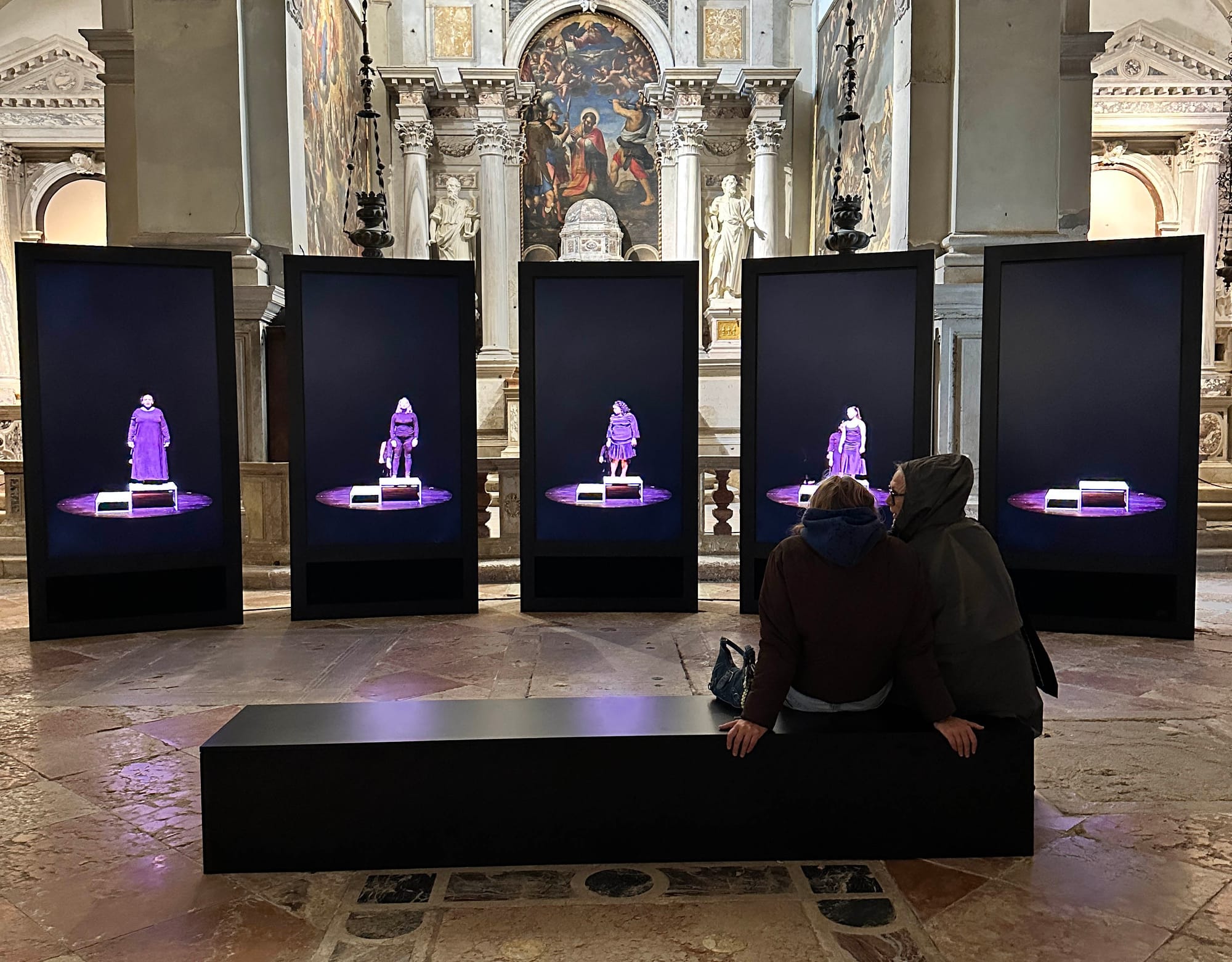
Gabrielle Goliath’s exhibition "Elegy" is presented as South Africa’s unofficial pavilion at the 61st Venice Biennale, after the country’s Culture Minister Gayton McKenzie overrode an independent committee’s selection of Goliath, citing her proposed inclusion of a memorial for Palestinians killed in Gaza. The installation features three video works in which singers sound a single note in tribute to victims of violence: a South African femicide victim, two women killed in Germany’s colonial genocide in Namibia, and Palestinian poet Heba Abunada. The show occupies the Chiesa di Sant'Antonin in Venice, curated with Ingrid Masondo, after a legal challenge against McKenzie was dismissed.

The Ukrainian Pavilion’s Deer Seen Around the World

Zhanna Kadyrova's concrete sculpture "The Origami Deer" (2019) is prominently displayed at the entrance to the Giardini during the 61st Venice Biennale, part of her project "Security Guarantees" in the Ukrainian Pavilion. Originally installed in Pokrovsk, eastern Ukraine, the work was removed in 2024 as Russian forces advanced, then traveled through Vienna, Warsaw, Prague, Berlin, and Paris before reaching Venice—a journey mirroring the displacement of millions of Ukrainians. The sculpture, shaped like a deer and evoking folded paper, references the 1994 Budapest Memorandum, in which Russia, the UK, and US guaranteed Ukraine's security in exchange for its nuclear disarmament—guarantees that proved worthless after Russia's invasions.

Are LACMA’s New David Geffen Galleries Worth Visiting?

The article reviews the newly opened David Geffen Galleries at the Los Angeles County Museum of Art (LACMA), designed by Swiss architect Peter Zumthor and opened in April 2026 after six years of construction at a cost of roughly $724 million. The galleries break from traditional museum organization by mixing artworks from different time periods and cultures side by side, aiming to encourage visitors to make their own connections rather than following a chronological or regional narrative. However, the reviewer—an art historian with a PhD from UCLA—finds the experience confusing at times, noting that the lack of clear structure can feel disorienting, and that behind-the-scenes practical needs still impose a quiet organization. The building itself is visually striking and photogenic, but inside, many galleries are dimly lit to protect artworks, creating a contradiction between the open exterior and the enclosed interior. The architecture sometimes competes with the art, raising questions about whether the building enhances or overshadows the collection.

Split decision: The Art Museum’s missed opportunity with its new ‘Rocky’ exhibition | Opinion

The Philadelphia Museum of Art's new exhibition, "Rising Up: Rocky and the Making of Monuments," celebrates the 50th anniversary of the film *Rocky* and highlights Philadelphia's boxing history, including figures like Joe Frazier and Bernard Hopkins. However, the author, a street reporter who wrote a book about people running the museum steps, argues the exhibit missed a key opportunity by focusing on the Rocky statue and monuments rather than centering on the film's transformative power and the iconic steps-running ritual that has drawn visitors for decades.

Can collections alone define an exhibition’s identity and meaning?

The article critiques a recent exhibition at the Moco Museum in Barcelona that juxtaposes works by Salvador Dalí, Jeff Koons, CJ Hendry, Jean-Michel Basquiat, and Banksy, questioning whether a museum's collection alone can define an exhibition's identity and meaning. The author argues that the organizers' approach, which mixes disparate artistic movements and genres without critical coherence, reflects a narrow Catalan notion of contemporaneity and a condescending attitude toward viewers. Specific works discussed include CJ Hendry's enlarged doll 'Jojo' and Banksy's 'Happy Choppers (Crude Oil)', with the author noting that Banksy's street art loses its impact when displayed in a gallery setting.

A Velvet Ant, a Flower and a Bird

The article reviews 'A Velvet Ant, a Flower and a Bird,' an exhibition at the Potter Museum of Art at the University of Melbourne, guest curated by Chus Martínez. Running from February 19 to June 6, 2026, the show explores cognition beyond humans, featuring works like Joan Jonas's 'Merlo' (1974) and a progression from flowers to velvet ants to birds across the museum's three levels. The review, written by art writing students Chelsea Hopper and Rex Butler, critically examines the exhibition's lofty curatorial themes and its invitation to reimagine art as a secular pilgrimage.

Body as Device. Guide and Reflection on the Performances of the Venice Biennale

Corpo come dispositivo. Guida e riflessione sulle performance della Biennale di Venezia

The article analyzes the role of performance art at the 2026 Venice Biennale, arguing that performance is no longer a rediscovered genre but a structurally institutionalized primary form of experience production. It examines how the body reemerges not as an alternative to image-based works but as an internal interruption of the artwork system, preventing closure and reintroducing instability. Key pavilions are discussed: Austria's Florentina Holzinger with "Sancta" draws on 1970s radical performance and feminist body art, creating an immersive environment of continuous movement; Belgium's Miet Warlop with "IT NEVER SSST" engages post-dramatic theater and postmodern dance repetition; Japan's Ei Arakawa-Nash with "Grass Babies, Moon Babies" activates Gutai avant-garde legacies through viewer interaction with soft dolls.

Ecuador Pavilion: Tawna & Oscar

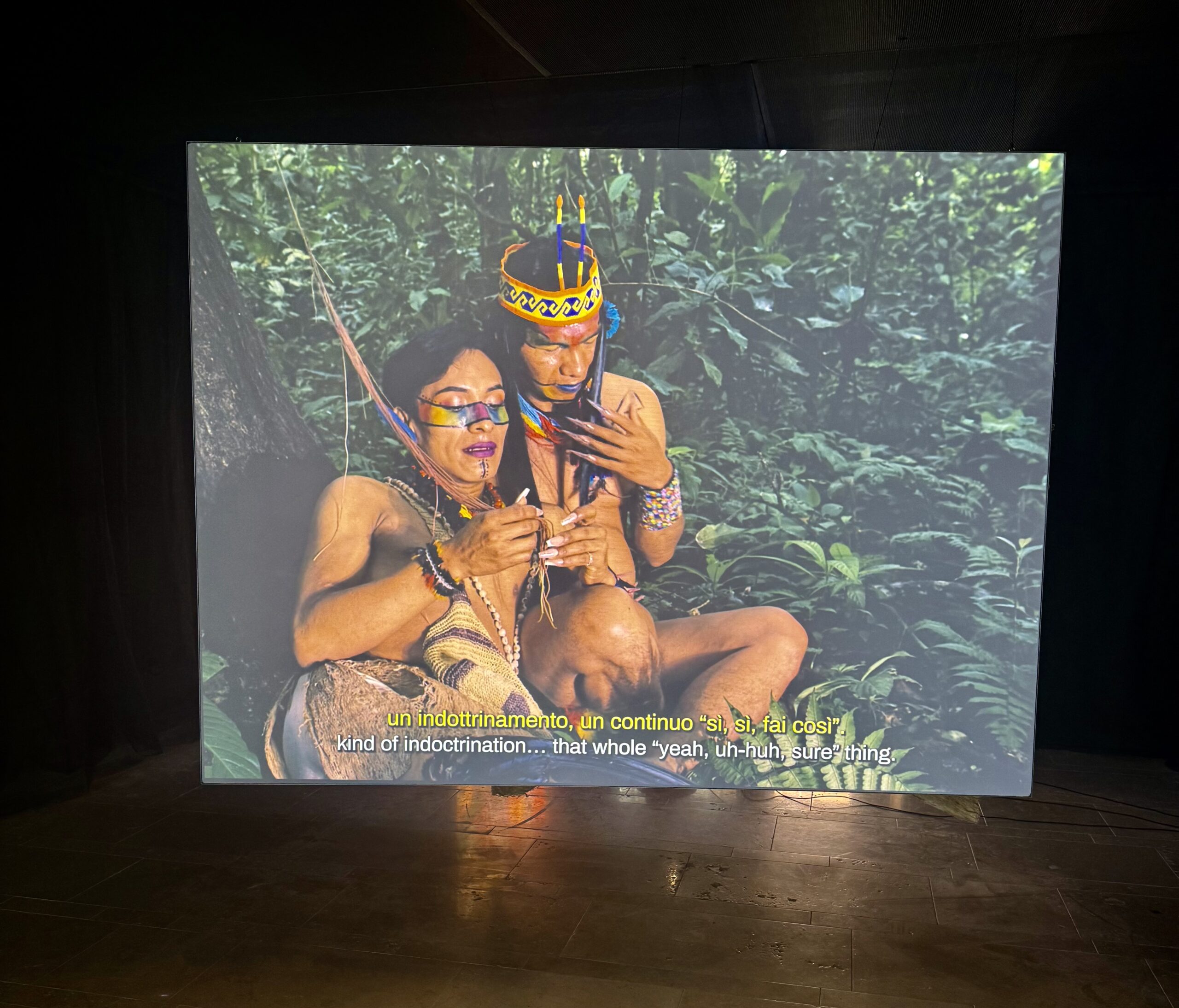
The article reviews the Ecuador Pavilion at the Venice Biennale, featuring the collaborative work of Tawna & Oscar, specifically the video piece 'Llaki' (2026) by the Tawana Collective. The author describes the pavilion as an emotionally explosive experience that accumulates memory, grief, tenderness, and politics rather than offering a conventional explanatory exhibition. The review highlights how the film resists Western narrative structures, instead inviting viewers to listen and feel its atmosphere, much like rain on different surfaces.

Criminal review – homelessness show delivers a rage-making punch in the gut

The article reviews "Criminal: An Untold Story of Homelessness, Resistance and Survival," an installation at London's Museum of Homelessness. The show features works by Romany Gypsy poet and artist Gemma Lees, including a caravan installation with china decorated with hostile Sun newspaper headlines about Gypsy and Traveller encampments, and festive bunting printed with historical state proscriptions against nomadic communities dating from the Egyptians Act of 1530 to the 2022 Police, Crime, Sentencing and Courts Act. The exhibition, set largely in the garden of the museum's new home at Finsbury Park's Manor House Lodge, explores how homeless people and nomadic communities have been criminalized over 400 years.

Performance Cuts Through the Noise at the Venice Biennale

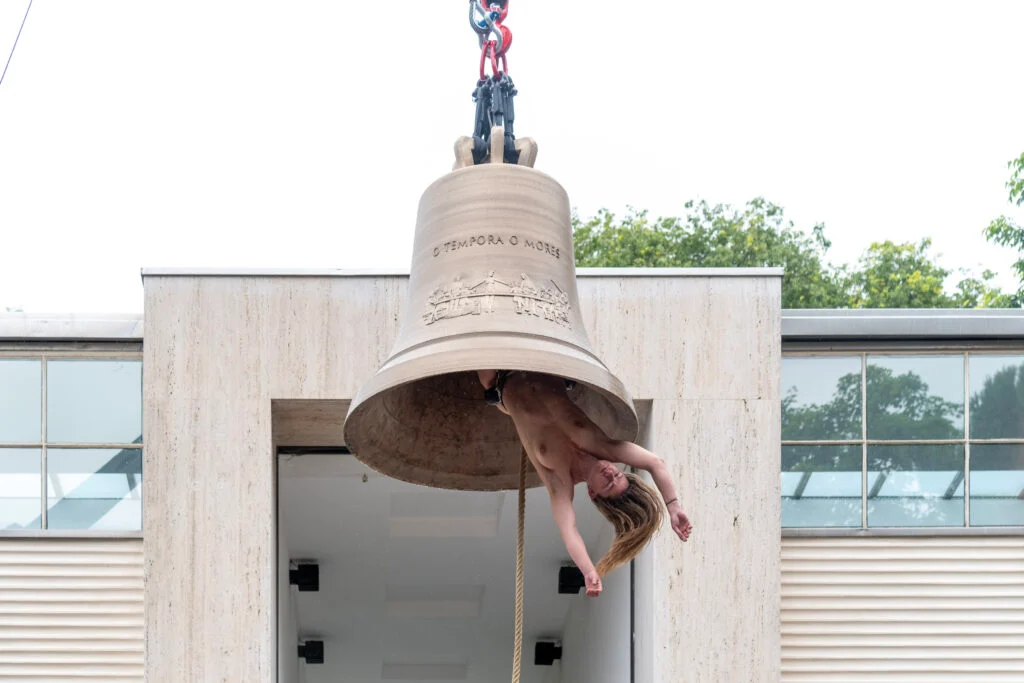
Florentina Holzinger and Miet Warlop have transformed the Austrian and Belgian pavilions at the 2026 Venice Biennale into immersive, performance-driven spectacles. Holzinger's "SEA WORLD VENICE" floods the Austrian pavilion with water and urine, featuring jet-skiing, suspended performers, and participatory toilets, while Warlop's "IT NEVER SSST" turns the Belgian pavilion into a chaotic arena of tile-throwing, chanting, and dancing. Both works demand sustained attention amid a fraught Biennale marked by the death of artistic director Koyo Kouoh, canceled pavilions, boycotts, and a jury resignation.

The Christophers review – Ian McKellen and Michaela Coel are the double act of the year

Steven Soderbergh's new film "The Christophers" is a London-set movie about contemporary art, starring Ian McKellen as Julian Sklar, a once-dominant but now outmoded English painter, and Michaela Coel as Lori Butler, a former art student hired as his assistant. The plot revolves around a series of hidden paintings called "The Christophers" that Julian's grasping adult children want to find and potentially forge for profit. The film is described as fast, literate, and funny, with McKellen and Coel delivering a compelling double act.

Huet Lost in the Clouds

Huet perdu dans les nuages

The Musée de la vie romantique in Paris has reopened after a major renovation, but its inaugural exhibition, focused on the 19th-century painter Paul Huet (1803-1869), has been met with harsh criticism. The show examines Huet's depictions of skies and compares his work to contemporaries, yet the reviewer finds it neither a proper retrospective nor a coherent thematic exhibition. The cramped galleries, uneven selection of works, cluttered hanging, and garish scenography are all faulted, with many comparative pieces outshining Huet's own paintings.

‘Patchwork Dolls’ by Ysabelle Cheung, Reviewed

Ysabelle Cheung, a Hong Kong-based writer and gallerist, has published her debut short story collection *Patchwork Dolls*. The book contains ten speculative fiction stories exploring themes of inherited ritual, ecological unease, diaspora, and bodily transformation. Set across Hong Kong and North America, the narratives employ second-person perspectives and experimental structures, including a choose-your-own-adventure tale about vanishing books and a story where an app tracks a dead twin's ghost. The collection examines how technology enables new forms of consumption and cannibalization, both literal and metaphorical, while food and memory anchor the characters' experiences of dislocation and haunting.

‘My Father’s Shadow’: Now You See Me

Clive Chijioke Nwonka reviews Akinola Davies Jr.'s film *My Father's Shadow* (2025), a semi-autobiographical story of two adolescent brothers traveling through Lagos with their estranged father during the 1993 Nigerian presidential elections. The film, selected for the Cannes Official Selection, employs a metaphysical narrative style rooted in the Nigerian oral tradition, blending literal and spiritual worlds to explore diasporic identity, memory, and cultural preservation.

‘The Bed Trick’ by Izabella Scott, Reviewed

Izabella Scott's book *The Bed Trick* examines a British rape case in which Gayle Newland was convicted for pretending to be a man named Kai during a two-year relationship with a woman identified as Miss X. Drawing on court transcripts, Scott explores the legal concept of 'fraud vitiates consent' and traces the historical bed-trick trope from medieval folktales to *The Rocky Horror Picture Show*, questioning how much deception invalidates sexual consent.

Why is contemporary art afraid of the present?

Warum fürchtet sich die Gegenwartskunst vor der Gegenwart?

The article critiques the 2024 Whitney Biennial, which emphasizes themes of compassion, vulnerability, and community. It argues that the exhibition feels like a capitulation to reality, failing to confront the rise of contemporary fascism and the political urgency of the present moment.