filter_list Showing 37 results for "Body" close Clear
search
dashboard All 970 museum exhibitions 630article culture 68article news 57article local 52person people 39rate_review review 37candle obituary 34trending_up market 27article policy 20gavel restitution 5article event 1
date_range Range Today This Week This Month All
Subscribe

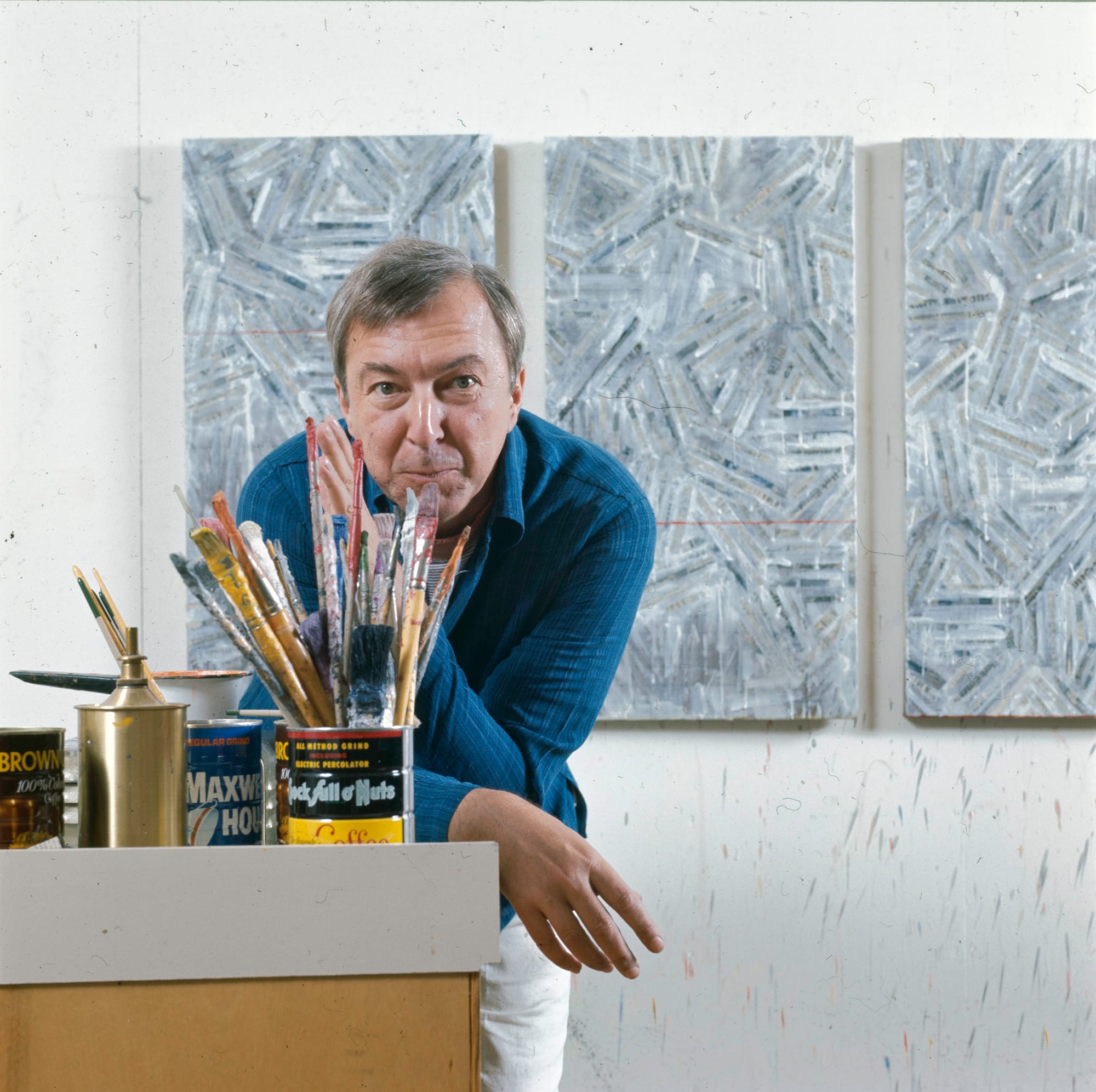
Jasper Johns Keeps Looking

Jasper Johns’s latest exhibition at Gagosian, 'Between the Clock and the Bed,' serves as a profound meditation on the artist's career-long investigation into the 'things the mind already knows.' By revisiting his signature motifs—including flags, targets, and crosshatch patterns—the show highlights Johns’s rejection of Abstract Expressionist spontaneity in favor of a deliberate, analytical process using encaustic and collage. The works document a transformation where familiar symbols are rendered into a complex visual language that bridges the gap between memory and physical presence.

The Robots Were Never the Problem

The New Museum has reopened with 'New Humans: Memories of the Future,' a massive survey featuring over 150 contributors including Hito Steyerl, Precious Okoyomon, and H.R. Giger. Spanning 13 sections across the museum's new 5,500 square-meter extension, the exhibition traces the intersection of art, technology, and the human body from the early 20th century to the present. It juxtaposes interwar European works, such as Hannah Höch’s photomontages and Bauhaus ballets, with contemporary installations like Simon Denny’s sculpture of an Amazon worker's cage.

What ‘Costume Art’ Gets Wrong About the Body

The Metropolitan Museum of Art's Costume Institute spring exhibition, featuring nearly 400 objects, pairs garments and ensembles with Western figurative artworks from the museum's permanent collection in dyadic, associative displays. The show eschews traditional art-historical timelines and context in favor of visual and thematic parallels—comparing, for example, Rudi Gernreich's Pubikini with an Egyptian statuette, or Ying Gao's sound-responsive dress with a David Hockney drawing. The exhibition is sponsored by Jeff and Lauren Sánchez Bezos.

what are the 10 best works of art in new york museums let the debate begin

Artnet News critic Christian Viveros-Fauné has published a personal list of the ten best works of art in New York museums, sparking debate among readers. The selection includes iconic pieces such as Giovanni Bellini's *St. Francis in the Desert* at the Frick Collection, Gerhard Richter's *October 18, 1977* at MoMA, Paul Cézanne's *The Card Players* at the Metropolitan Museum of Art, James Rosenquist's *F-111* at MoMA, Diego Velázquez's *Juan de Pareja* at the Met, and Pablo Picasso's *Les Demoiselles d'Avignon* at MoMA, among others.

alex da corte modern art museum of fort worth review

Alex Da Corte's mid-career survey, "The Whale," is on view at the Modern Art Museum of Fort Worth, featuring works that repurpose pop-cultural icons like Disney villains and Mariah Carey to explore themes of erasure and violence. The exhibition includes pieces such as *A Time to Kill* (2016), which obliquely references the 2016 Pulse nightclub shooting through an inverted Elsa standee, and *The Great Pretender* (2021), which removes Lily Tomlin from a TIME magazine cover to comment on queer erasure.

Tracey Emin’s Cult of the Self

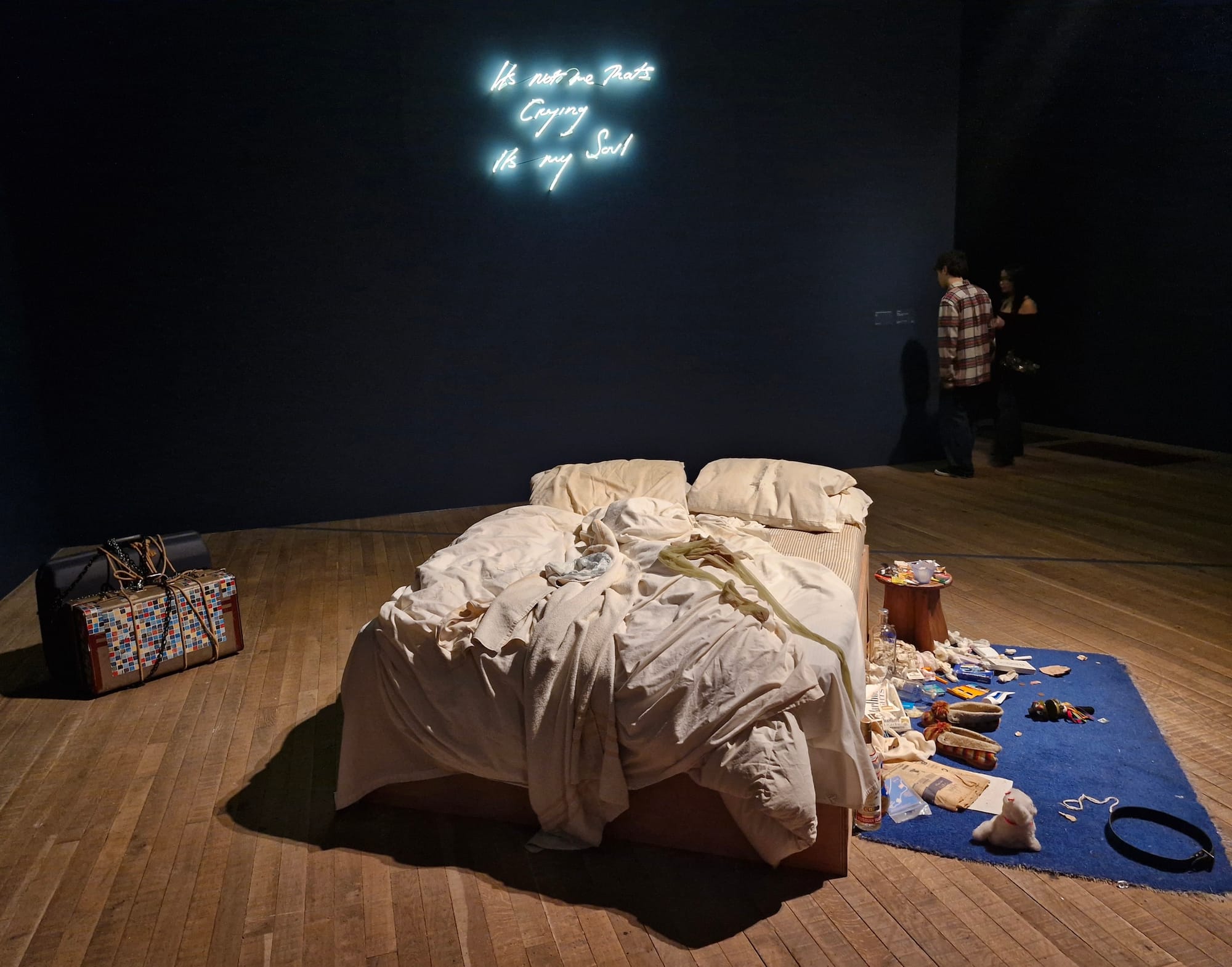
A major retrospective of Tracey Emin's work, "A Second Life," is on view at Tate Modern in London. The exhibition presents the artist's deeply personal and confessional body of work, including iconic pieces like "My Bed" and "Exorcism of the Last Painting I Ever Made," which chronicle intimate experiences of love, trauma, and self-exploration through text, objects, and raw imagery.

pierre huyghe las foundation

Pierre Huyghe has unveiled his most ambitious project to date in Berlin, a major exhibition titled 'Liminals' staged at the cavernous Halle am Berghain. Commissioned by the LAS Art Foundation as part of its 'Sensing Quantum' program, the installation features a massive 50-minute film projected in a former electrical station, accompanied by a droning, atmospheric soundscape. The work continues Huyghe’s exploration of AI-driven systems and 'unworlding,' attempting to create a space that transcends human subjectivity through bio-technological environments.

Anne Hardy’s Hollow Humanoids

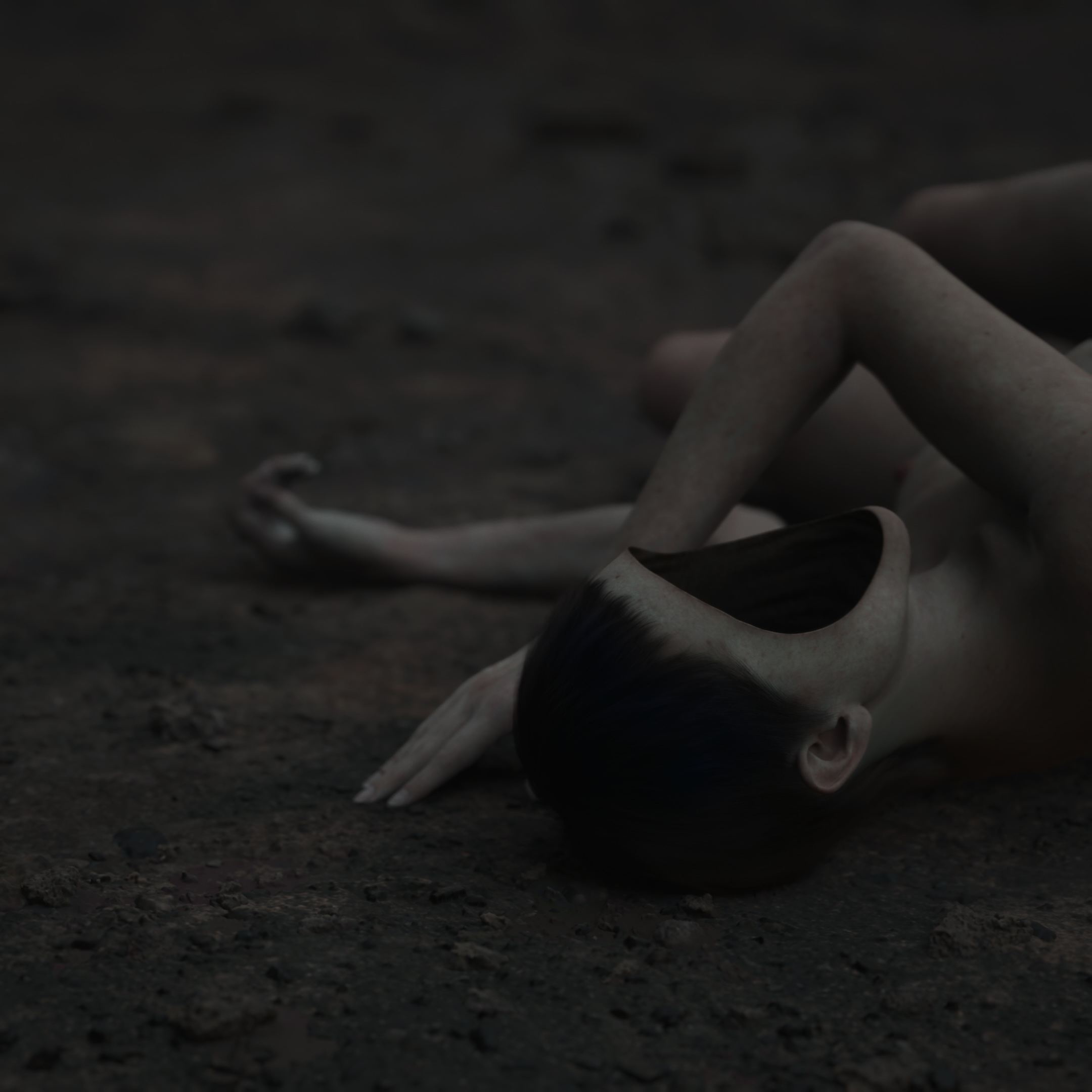
British artist Anne Hardy presents a suite of floor-based installations and assemblage sculptures titled "Interloper" at Visual. The exhibition features a series of "Beings"—twisted, life-size humanoid entities constructed from rusted wire, crushed cans, soil, and the artist’s own cast body parts and clothing. These figures, often posed in yoga-like positions or meditative stances, appear as hollow, faceless outlines that blend a sense of vitality with physical disintegration.

Notes from New York: Rotting Meat

Artist Jen Liu’s solo exhibition 'Pound of Flesh' at Silverlens New York explores the dehumanizing nature of digital labor through visceral imagery of raw meat. The show features paintings where human consciousness is replaced by butcher-shop cuts and an animated video based on Liu’s research into microworkers—individuals who perform repetitive, low-paid tasks to train AI models. By juxtaposing the biological reality of the body with the clinical extraction of data, Liu highlights the physical and psychological toll of the 'Agentic Age.'

Comment | EJ Hill's New York performance personifies the art of endurance

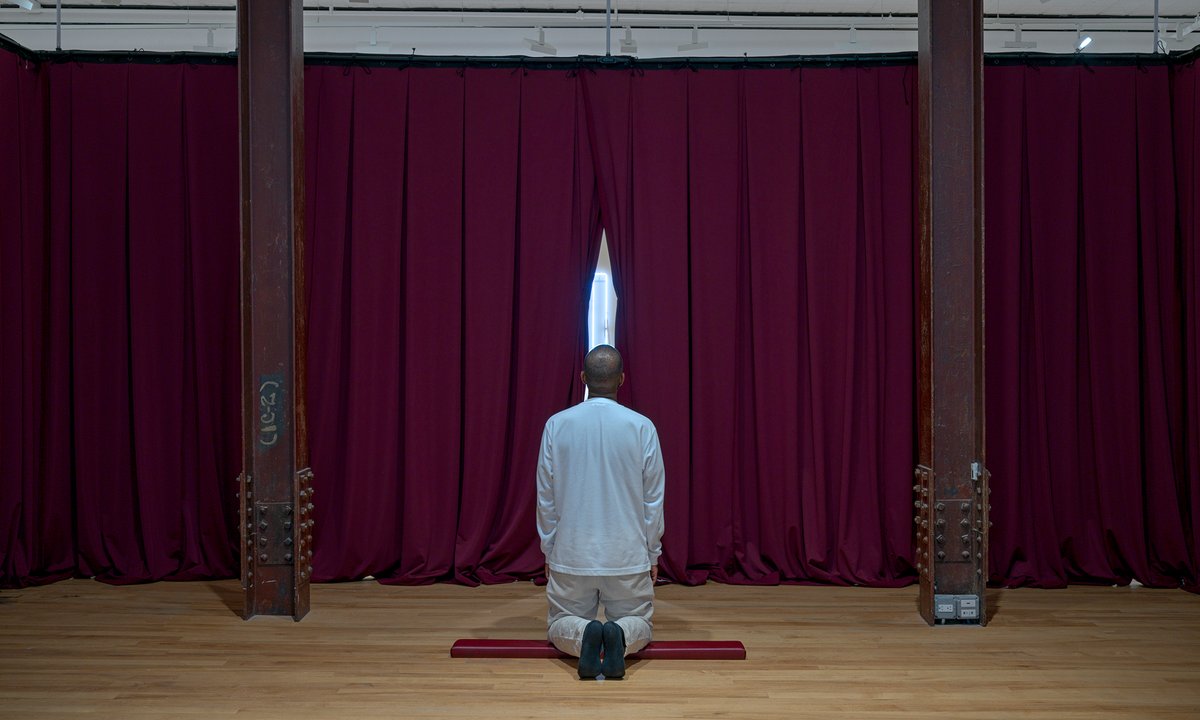
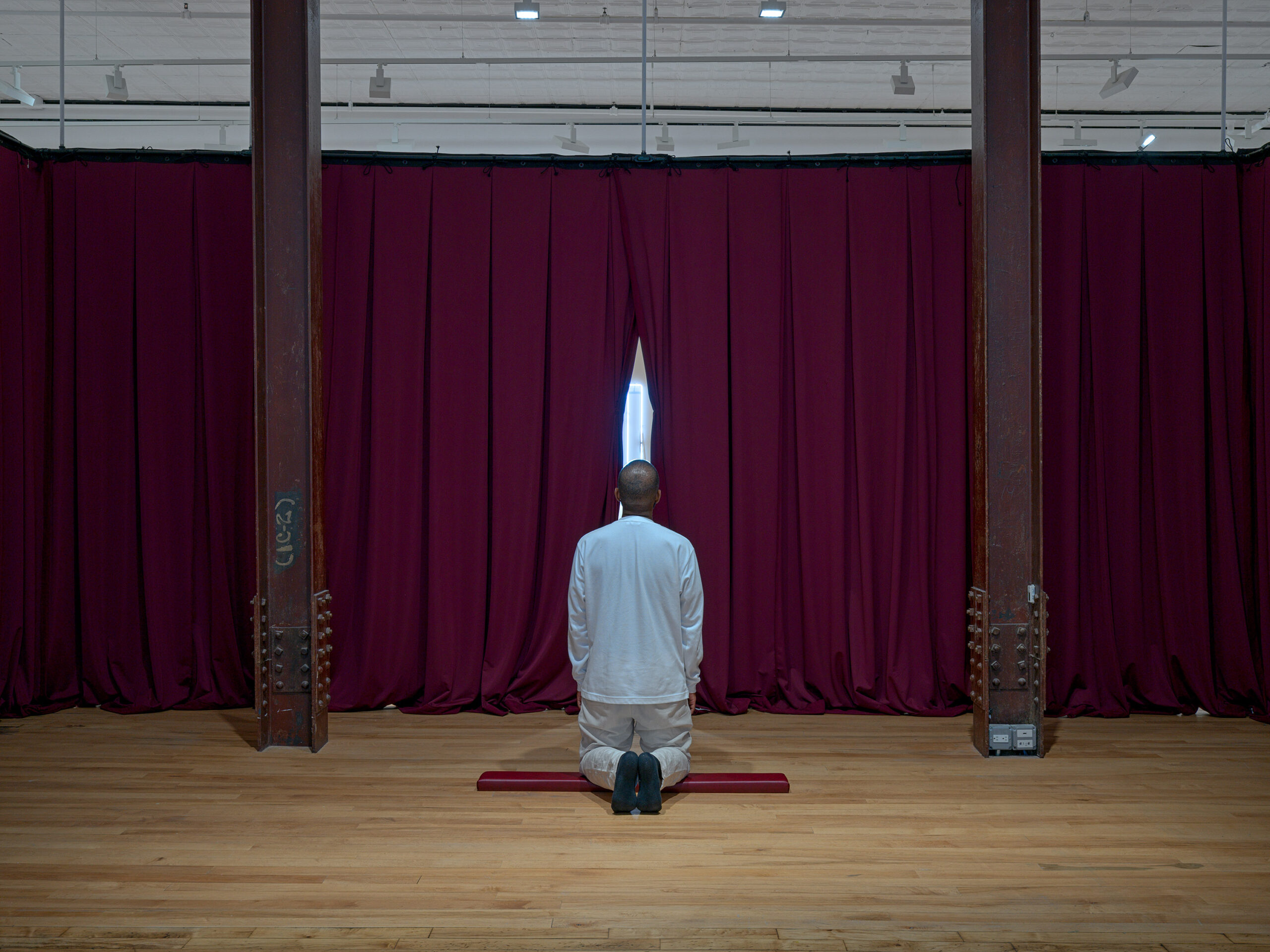
EJ Hill is performing 'Yearning for an Absolute' (2025), the centerpiece of his solo show at 52 Walker in New York, where he kneels on a church kneeler for eight continuous hours each day without food, water, or breaks. The performance runs from June 25 to September 13, totaling 56 days across 12 weeks, and completes a "performance triptych" with his earlier works from 2016 and 2018. Hill describes it as far more grueling than anything he has done before, experiencing widespread physical pain and mental challenges.

Exhibition Review: “Alan Davie: Paintings, 1959 - 1971” at A Hug from the Art World, Chelsea (long-term viewing, by appointment)

A Hug from the Art World in Chelsea is presenting a long-term exhibition of Scottish Abstract Expressionist Alan Davie (1920–2014), focusing on his work from 1959 to 1971. Gallery founder Adam Cohen, who discovered a Davie painting in his father Frank Cohen's collection, curated the show to highlight what he considers Davie's most influential period, when his style evolved into a psychedelic, complex visual language amid the rise of Pop Art and Minimalism.

p staff david zwirner review

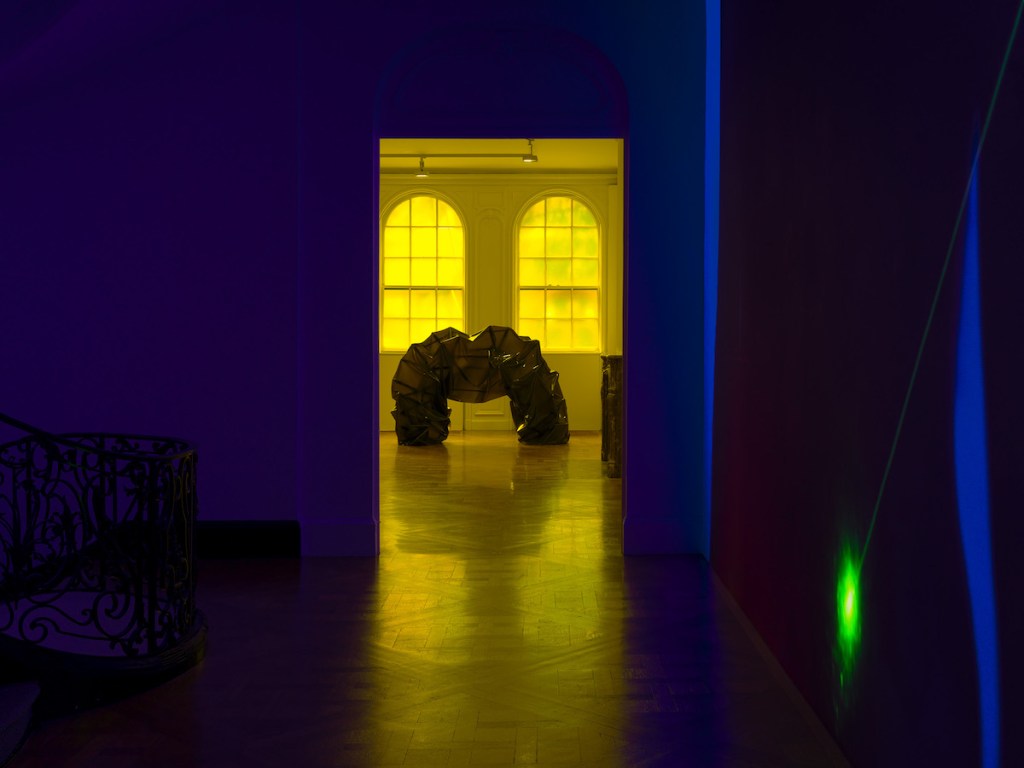
P. Staff's current exhibition at David Zwirner in New York transforms the gallery's Upper East Side townhouse into a haunting, body-centric experience. The show features a new video titled *Penetration* (2025), split across three floors, depicting a person with a laser beamed at their bare stomach, alongside sculptures with wood spikes under latex drapes and ambient sounds of a beating heart. The installation evokes a dread of having a body, with jaundiced yellow window films and disjointed sensory elements creating an uncomfortable, dysphoric atmosphere.

blank space book review cultrure over men

W. David Marx's book "Blank Space: A Cultural History of the Twenty-First Century" argues that 21st-century culture has stagnated, blaming the Internet and its economies for a lack of innovation. The book cites critics like Jason Farago and Alex Ross who lament the death of monoculture and the failure of the Internet's promised diversity, while Marx himself longs for a past era of linear artistic progress defined by -isms like Realism and Cubism. However, the review criticizes Marx's framework as rooted in a 19th-century positivist fallacy, noting that art history has never been a clean linear progression and that overlooked artists—such as Hilma af Klint and Hector Hyppolite—have always complicated the canon.

Mary Frank Creates Her Own Pantheon

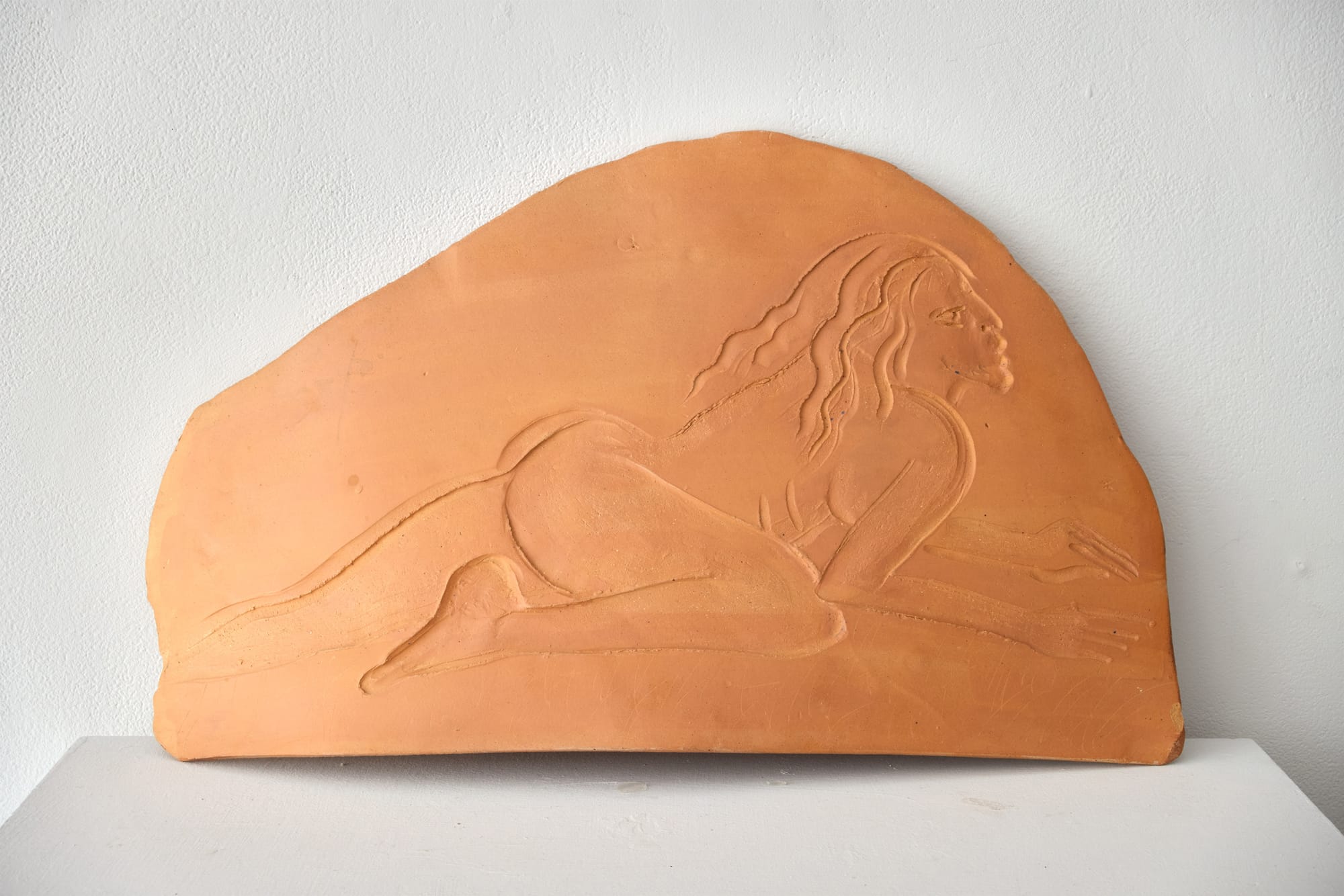
Mary Frank, an artist in her early 90s known for mythologically rooted sculpture and works on paper, is the subject of a focused exhibition at Steven Harvey Fine Art Projects in New York. Curated by Steven Harvey, the show presents 11 sculptures in wood, bronze, and ceramic from 1958 to 1985, alongside five works on paper, including a monotype and an oil-on-paper piece. Frank’s work, influenced by her study with Martha Graham, centers on self-sustaining female figures that embody agency, tenderness, and survival, often rendered in ceramic slabs or carved wood.

Steve DiBenedetto’s Cosmic Sense of the Absurd

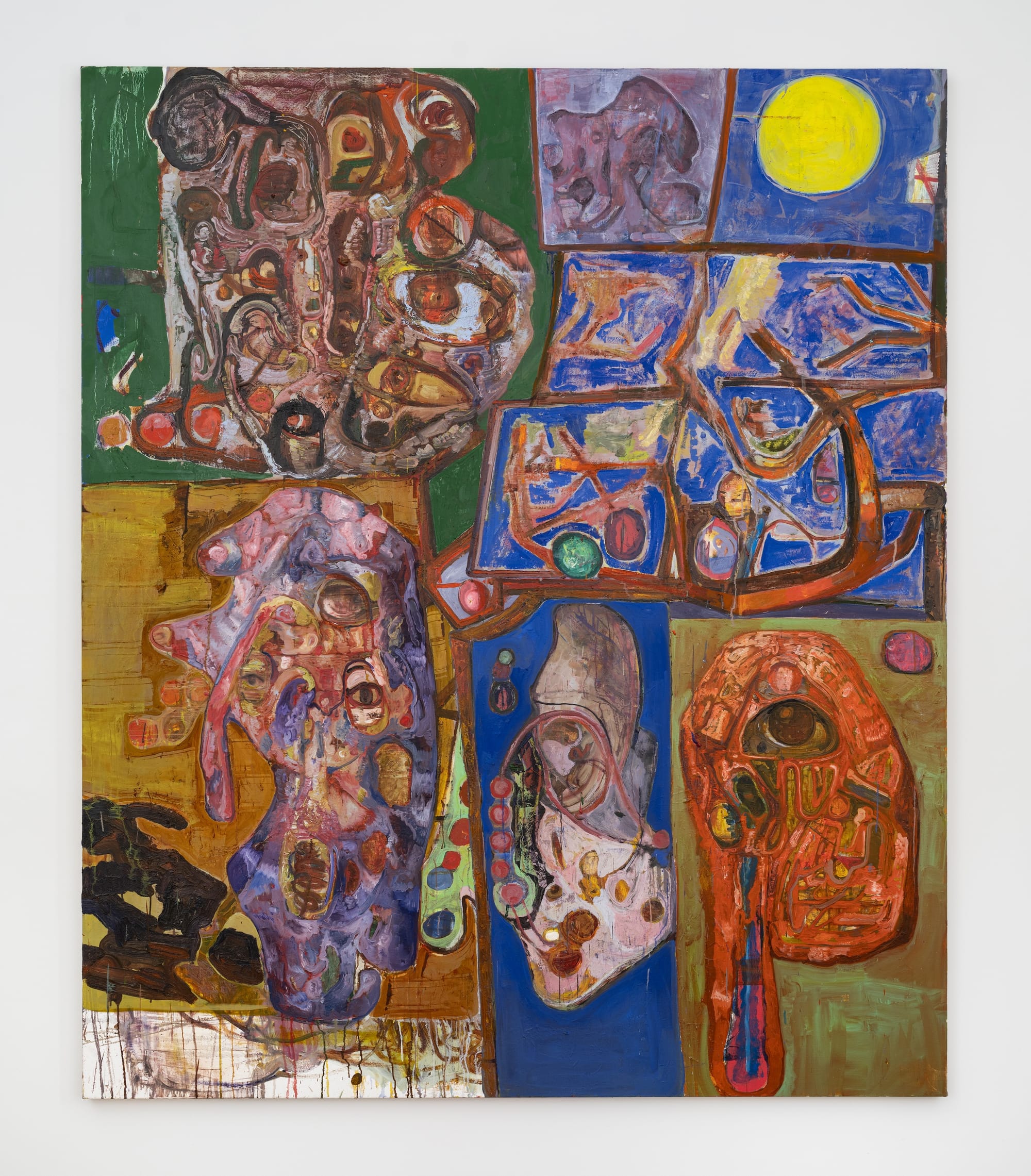
Artist Steve DiBenedetto presents a new body of work in his solo exhibition, "Spiral Architect," at Derek Eller Gallery. The show features 17 paintings ranging from large-scale canvases to intimate works, all characterized by a restless movement between abstraction and figuration. DiBenedetto utilizes a process-heavy technique of adding, scraping, and reworking oil paint to create dense, visionary landscapes filled with octopi, cellular forms, and Rube Goldberg-esque machinery.

David Novros’s Portable Murals

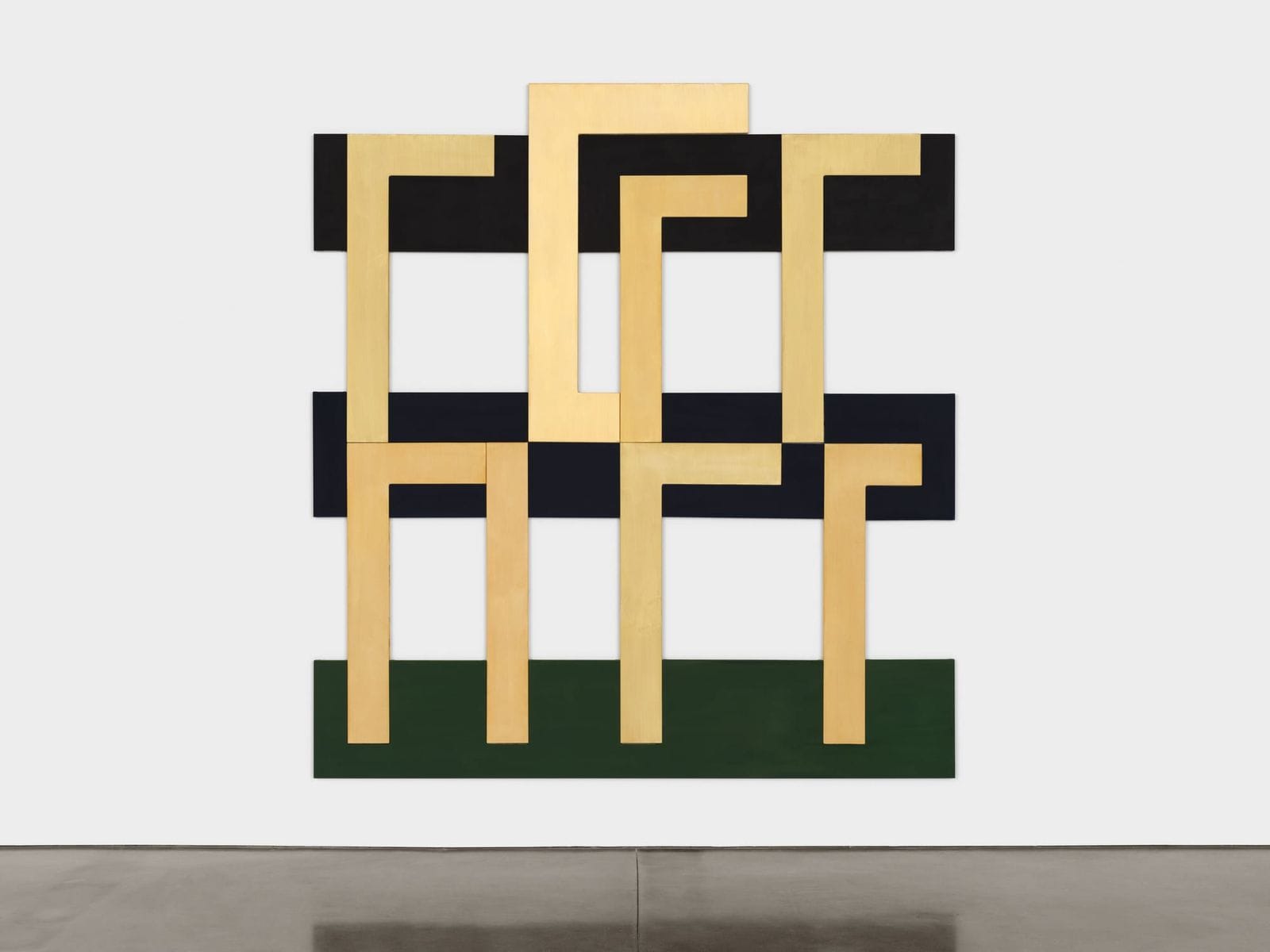
David Novros’s latest exhibition at Paula Cooper Gallery showcases his "portable murals," intricate multi-paneled paintings that challenge the traditional concept of art as a mere object on a wall. Utilizing oil and murano on canvas, Novros assembles monochromatic, L-shaped, and horizontal panels with precise intervals that incorporate the gallery wall into the composition. These works are designed to be experienced kinesthetically, responding to shifting natural light and the viewer's physical movement through the space.

art ej hill kate zambreno review

EJ Hill's new endurance performance, "Yearning for an Absolute" (2025), is on view at 52 Walker in Tribeca through September 13, 2025. For the duration of the exhibition, the 40-year-old Black queer artist kneels every day, all day, within a red velvet enclosure, referencing Catholic devotional practices, saintly mortifications, and his own history of durational works like "Excellentia, Mollitia, Victoria" (2018) at the Hammer Museum's "Made in LA" biennial. The installation also includes red leather kneelers for sale, framed kneeler pad paintings marked with the artist's indentations, and a neon rectangle reminiscent of Dan Flavin's church installation.

Art for Our Age of Chaos

The article reviews two major New York exhibitions opening in 2026: the Whitney Biennial at the Whitney Museum of American Art, featuring over fifty artists, and "New Humans: Memories of the Future" at the newly expanded New Museum, with over a hundred artists. Both shows are described as enormous and defiant, responding to a distracted public and financial pressures. The reviewer notes that both exhibitions juxtapose large-scale immersive works with tiny, intimate pieces, and finds the Whitney Biennial lacking urgency, while preferring the New Museum's historical narrative about technology and modernity.

Is there really an energy transformation in Marina Abramović's exhibition in Venice?

Nella mostra di Marina Abramović a Venezia c’è davvero una trasformazione di energia?

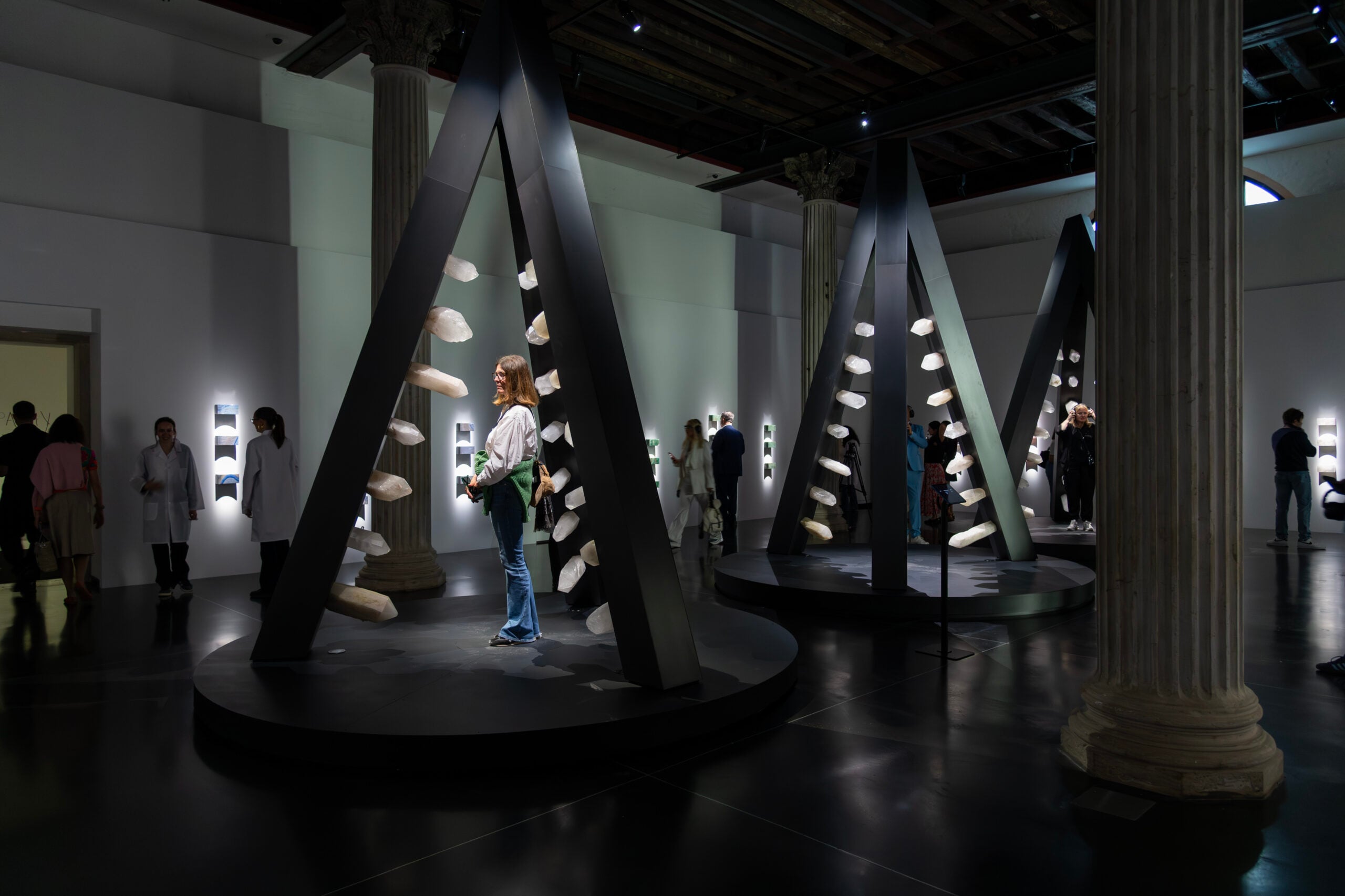
At the Gallerie dell'Accademia in Venice, Marina Abramović's exhibition "Transforming Energy" opens to the public from May 9 to September 30, 2026, as part of the 2026 Venice Biennale. The show is designed as an experiential device that moves beyond traditional exhibition formats, inviting viewers to determine their own presence through a sequence of rooms built around relationships between body, materials, and time. Crystals and locks of hair function not as decoration but as presences to be inhabited, demanding radical attention rather than spectacular participation. During the press conference, Abramović and curator Shai Baitel insisted that the materials, especially the crystals, possess real energy capable of directly affecting the viewer's body and perception, not merely as metaphor but as an active condition.

Hans Holbein Painted the Human

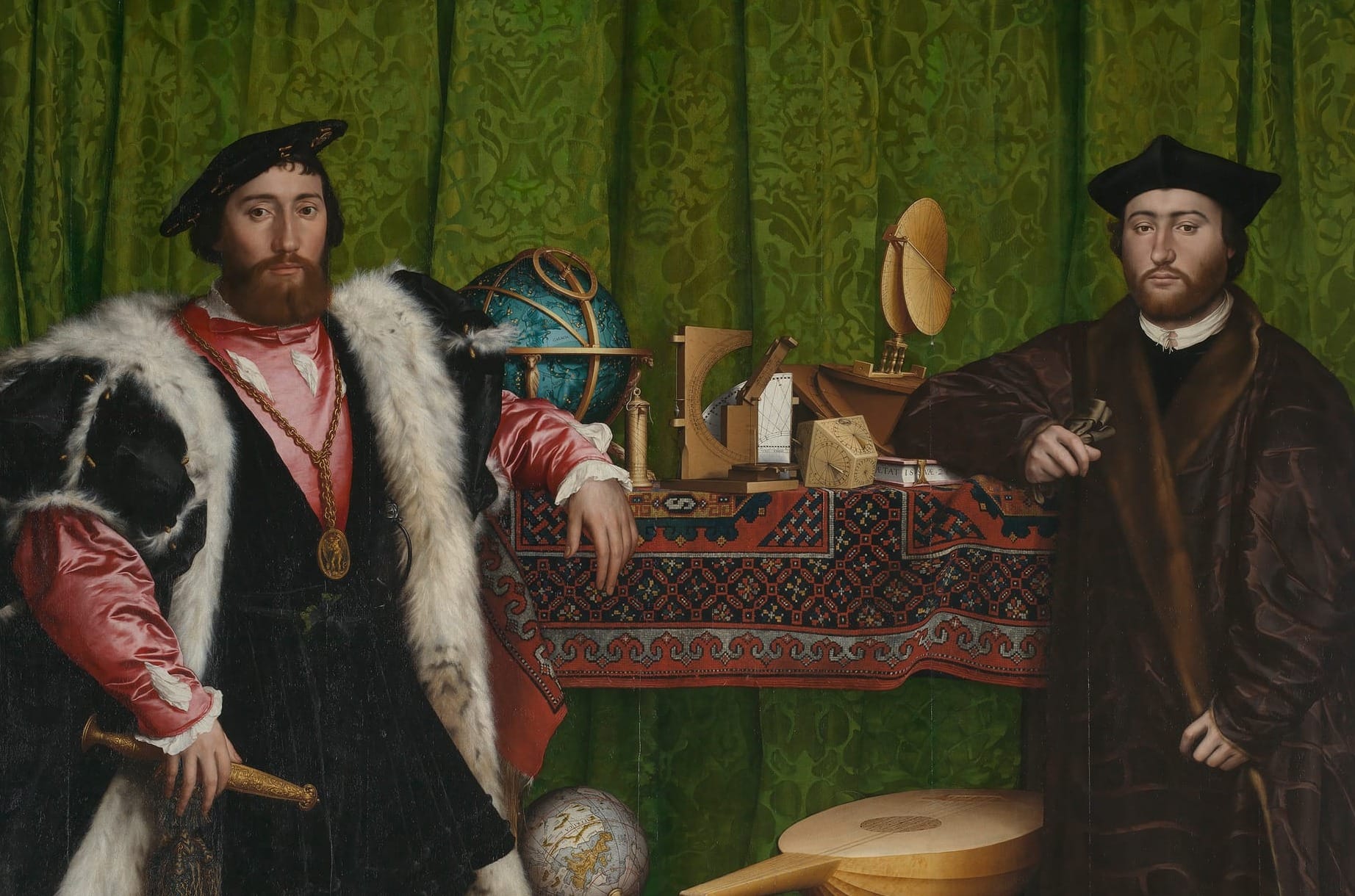
A new book, 'Holbein: Renaissance Master' by Elizabeth Goldring, published by Yale University Press and the Paul Mellon Centre, offers a comprehensive scholarly examination of the 16th-century German painter Hans Holbein the Younger. The review focuses on Holbein's masterful portraiture, particularly his depictions of opposing Tudor-era figures like Sir Thomas More and Thomas Cromwell, which are highlighted as embodying the era's complex political and religious tensions through their visual presentation at the Frick Collection in New York.

Theresa Hak Kyung Cha Made Human Again

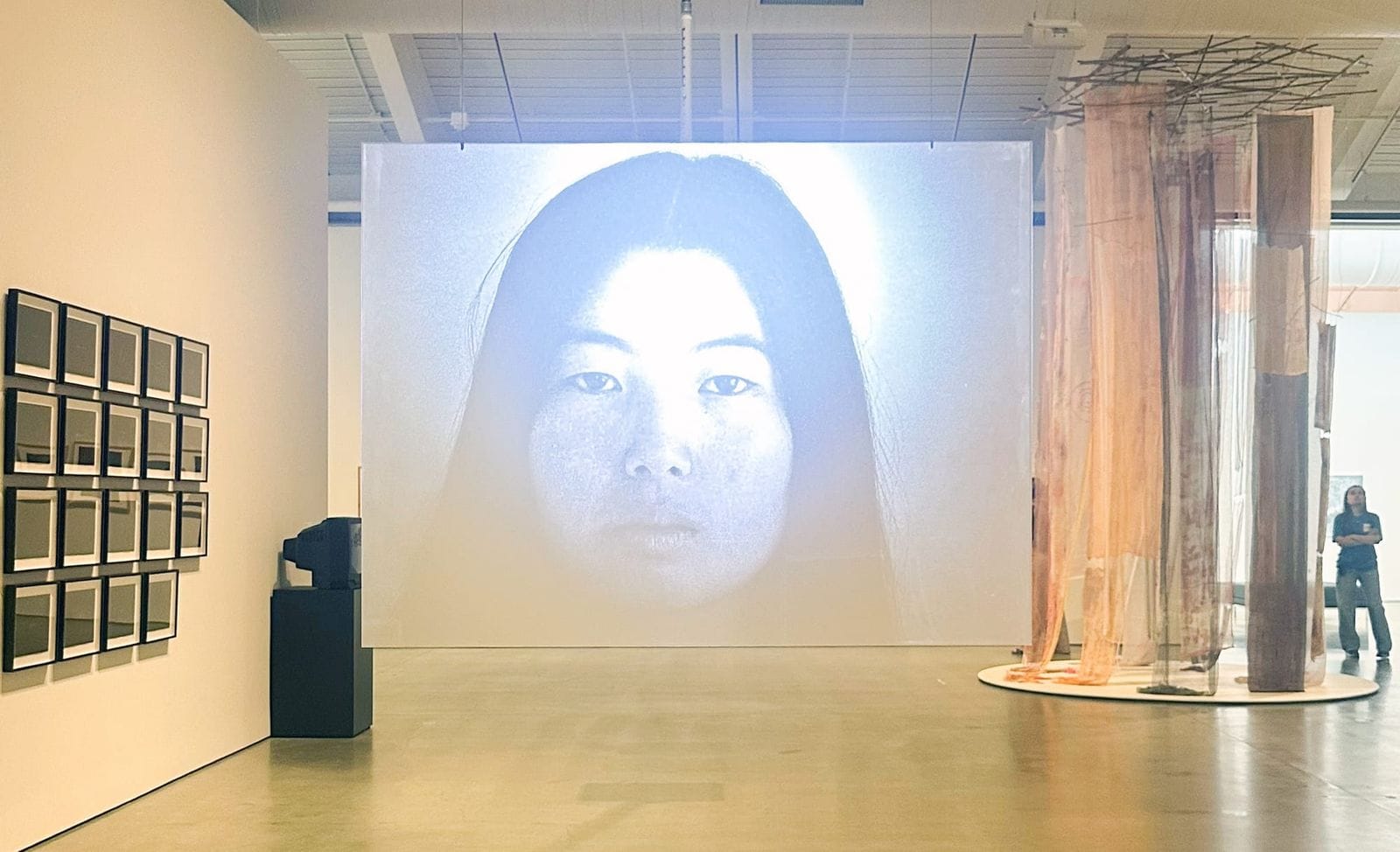
The Berkeley Art Museum and Pacific Film Archive (BAMPFA) is hosting "Theresa Hak Kyung Cha: Multiple Offerings," a comprehensive exhibition that draws from the artist’s complete archives. The show highlights Cha’s multidisciplinary practice, spanning film experiments, performance documentation, and her signature linguistic explorations. By pairing finished artworks with archival materials and personal ephemera, the exhibition reveals a playful, puckish side of the artist that is often obscured by the tragic circumstances of her death and the heavy themes of exile and dislocation in her work.

david rimanelli willem de kooning cosey fanni tutti

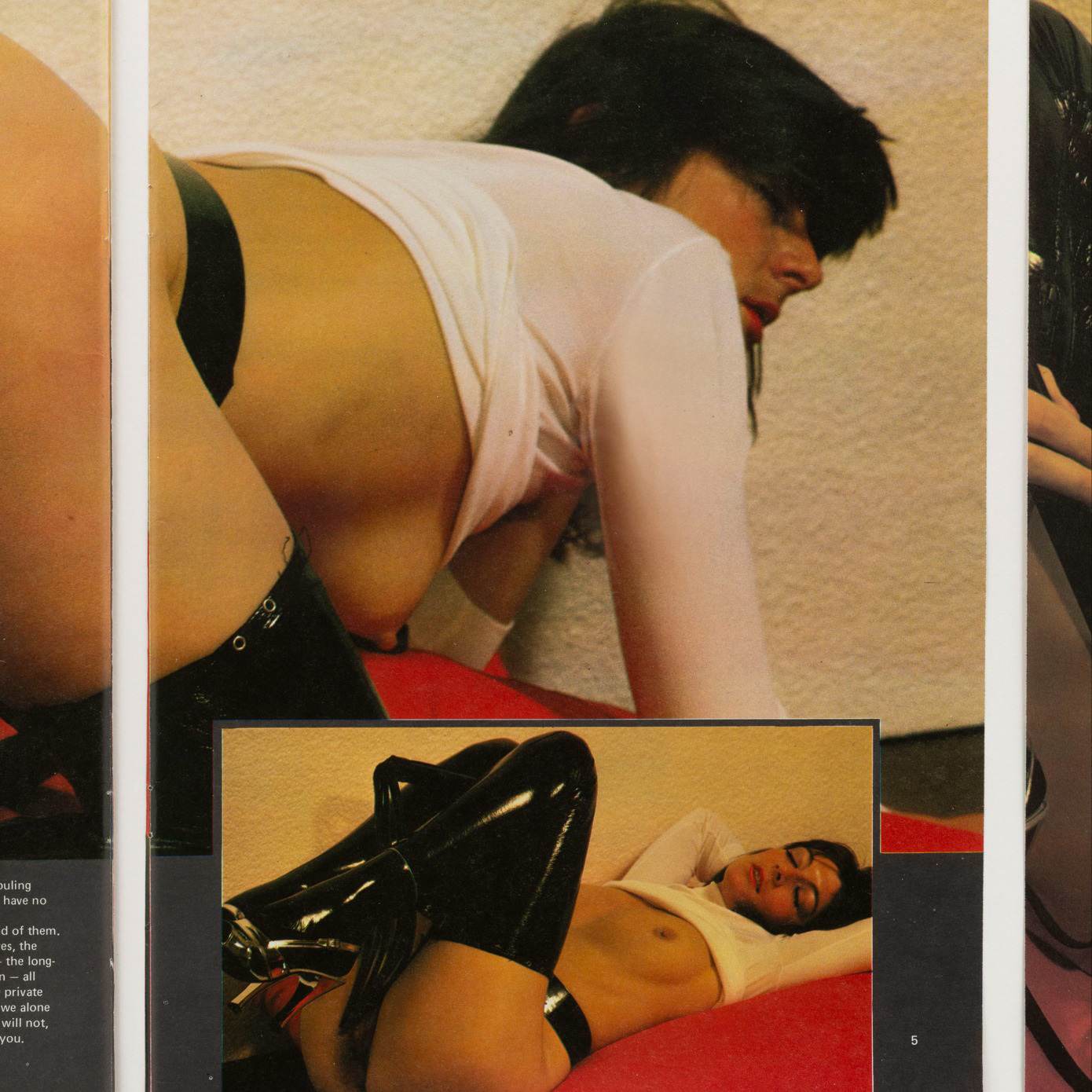
Art critic David Rimanelli reviews Willem de Kooning's exhibition "Endless Painting" at Gagosian's 555 West 24th Street location, curated by Cecilia Alemani, running through June 24, 2025. The show spans de Kooning's career from 1944 to his final phase, though notably omits his black-and-white oil-and-enamel paintings from the late 1940s. Rimanelli expresses ambivalence, finding the show dreary and pointless despite the high caliber of individual works, and critiques the press release's focus on fragmented body parts. Separately, Johanna Fateman reviews Cosey Fanni Tutti's exhibition at Maxwell Graham, highlighting her controversial 1970s series "Magazine Actions" (1972–80), on view through June 28, 2025.

bianca censori peformance art bio pop

Australian architect Bianca Censori, known globally for her fashion and marriage to rapper Kanye West, debuted her first performance art piece titled "BIO POP" in Seoul. The 14-minute silent performance, staged over two days, features Censori baking a cake in a kitchen before pushing it to a living room filled with contortionists resembling her. The work is the first of seven planned performances over seven years, with future installments including "CONFESSIONAL (THE WITNESS)" and "BIANCA IS MY DOLL BABY (THE IDOL)."

New biography offers well-crafted story of Louise Bourgeois’s rich life

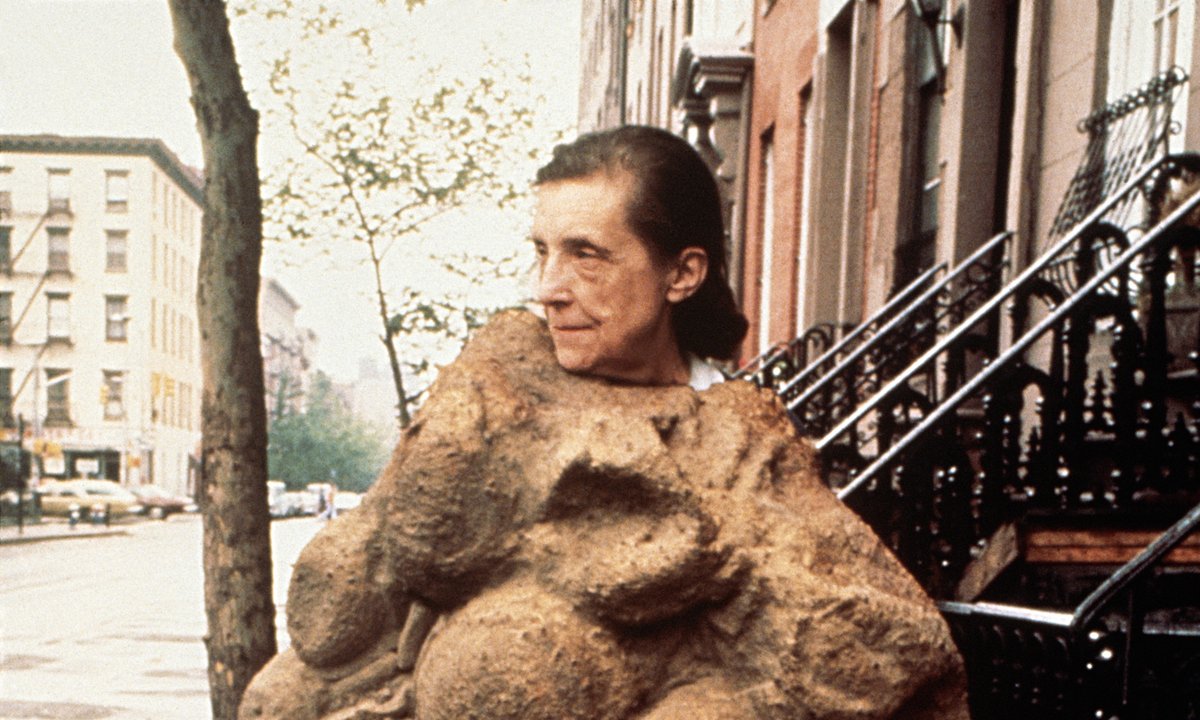
Marie-Laure Bernadac’s new biography, 'Knife-Woman: The Life of Louise Bourgeois', provides a comprehensive look at the French-American artist’s prolific career and traumatic upbringing. The book explores how Bourgeois transformed childhood wounds—specifically her father’s infidelity and psychological cruelty—into a radical body of work spanning sculpture, installation, and textiles. From her early encouragement by Fernand Léger to her late-career fame with the 'Maman' spider sculptures, the biography traces her evolution from a painter to a boundary-defying sculptor who utilized materials ranging from latex to marble.

"She's Like the Wind"

The article reviews "She's Like the Wind," an annual all-female group exhibition at Deep Space gallery in Jersey City, featuring works by artists Delilah Ray Miske, Leigh Cunningham, and SarahGrace. Miske's painting "Lemon Lime Toe of God" shows only a woman's leg and foot, while Cunningham's oil paintings present figures as blurred forms seen through a translucent curtain, and SarahGrace's textile works depict headless female nudes with suggestive titles like "Provoke" and "Dominate." The show marks a departure from the gallery's typically family-friendly, sex-averse programming.

Review: Thomias Radin, Echoes of KA at Esther Schipper, Berlin

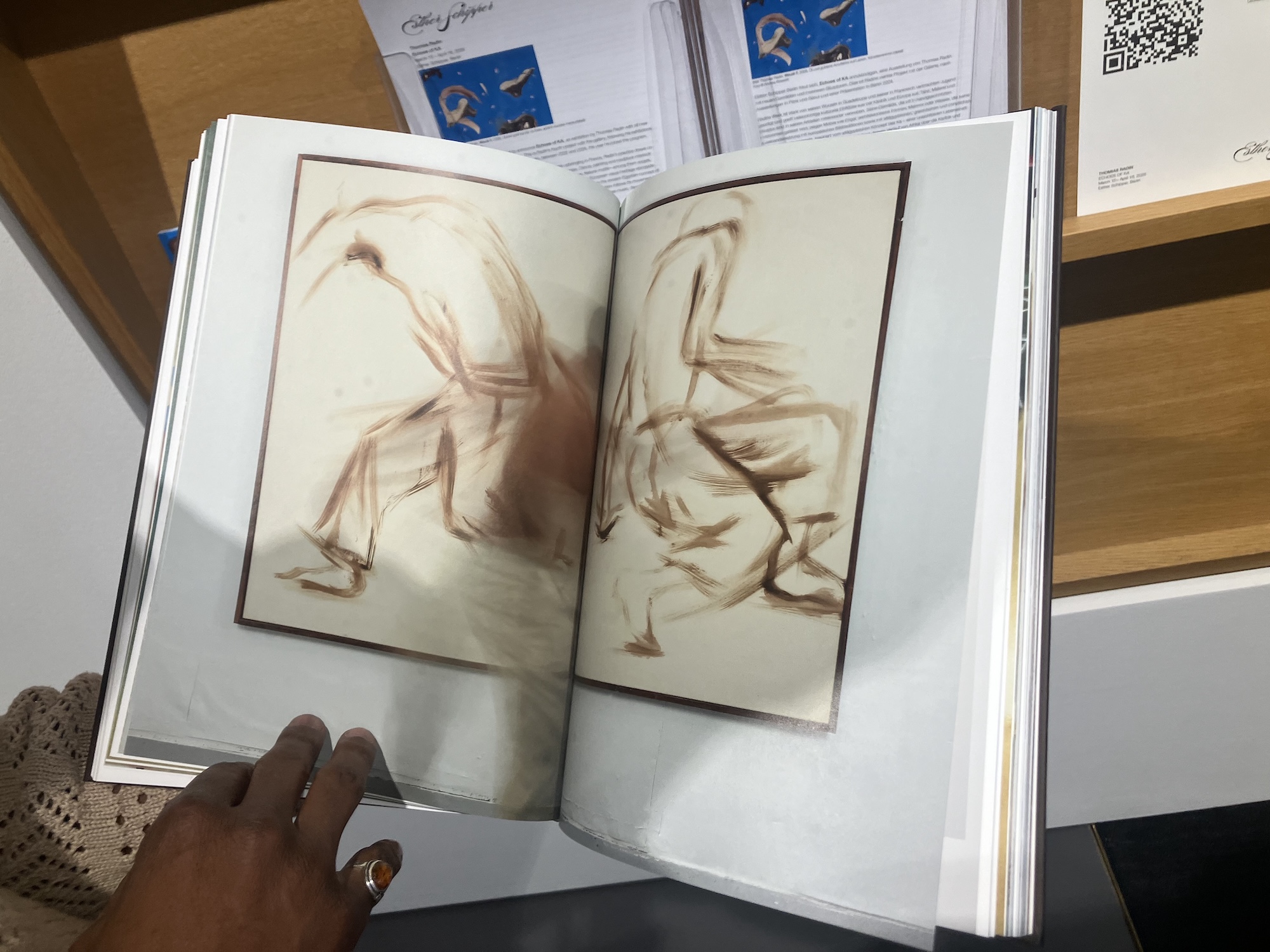
Thomias Radin’s fourth solo exhibition at Esther Schipper in Berlin, titled "Echoes of Ka," presents a multidisciplinary environment blending painting, woodwork, and installation. The Guadeloupe-born artist draws heavily from Caribbean embodied knowledge, dance philosophy, and the ancient Egyptian concept of 'Ka'—a vital life force—to transform the gallery into a choreographed 'secret garden.' The works, characterized by vibrant colors and gestural oil paintings on raw linen, are informed by Radin’s collaboration with dance scholar Léna Blou and his own practice of improvisation.

Anki King’s Nordic Noir

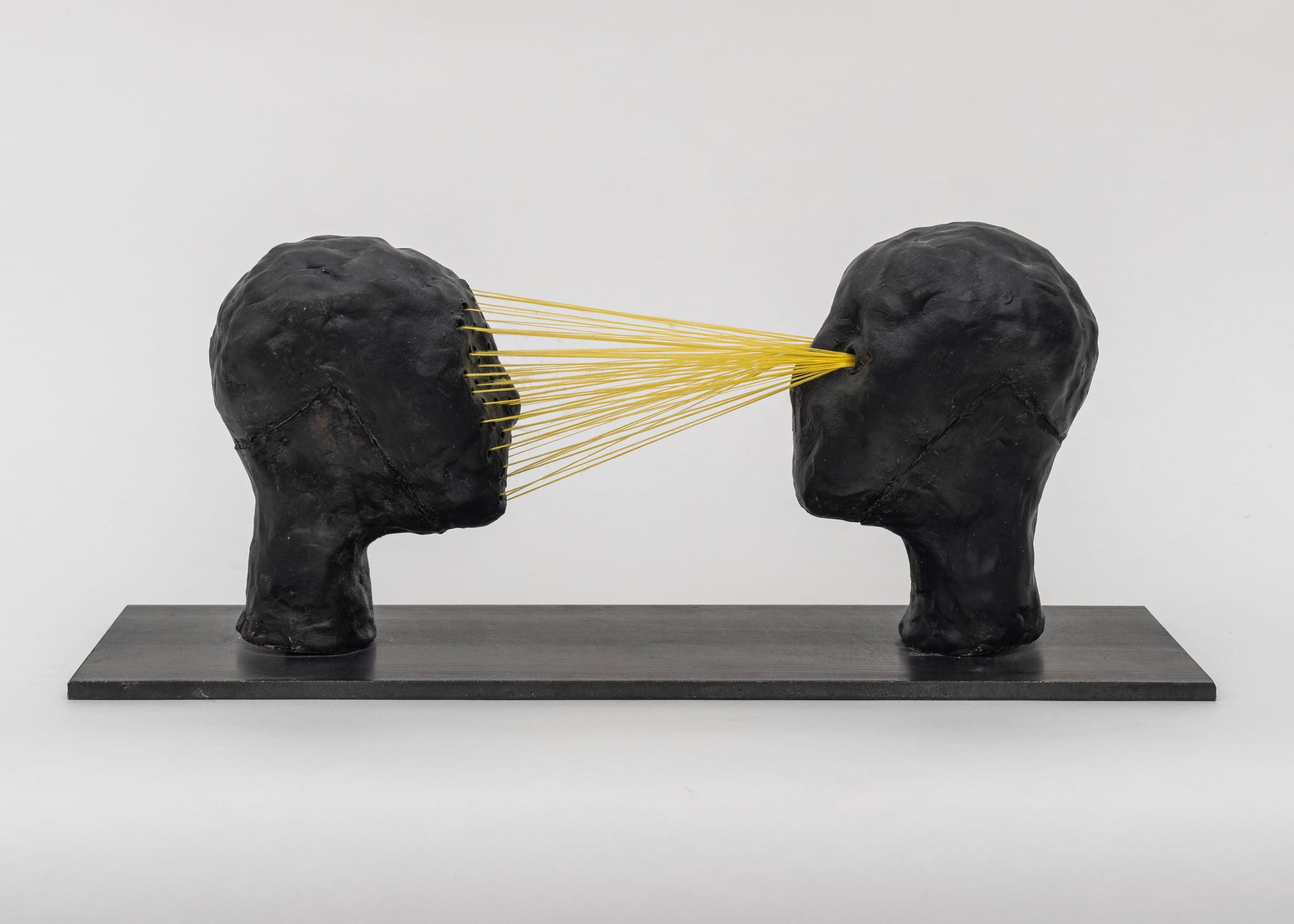
Anki King's solo exhibition at the Lace Mill in Kingston, New York, presents 40 works from 2015-2026 that explore themes of isolation and miscommunication through a moody, Nordic-inspired palette. The Norwegian-born, New York-based artist employs a distinctive visual language of featureless, long-limbed figures and recurring motifs like threaded ceramic heads and figures with leafless branches.

What Did Happen or What Might Have Happened or What Can Never Happen. Dustin Hodges by Nick Angelo

Dustin Hodges presents a new body of work across two exhibitions, "Barley Patch" at 15 Orient in New York and "Barley Patch 2" at Sebastian Gladstone in Los Angeles. The artist utilizes thin layers of pigment, color glazing, and distemper on linen to create compositions that superimpose cartoon motifs, such as black crows and characters from the "Arthur" series, over complex grids. His process involves a cyclical layering that drives a wedge between the logic of the image and the materiality of painting, resulting in works that feel both choreographed and visceral.

Seba Calfuqueo and the Colonized Body

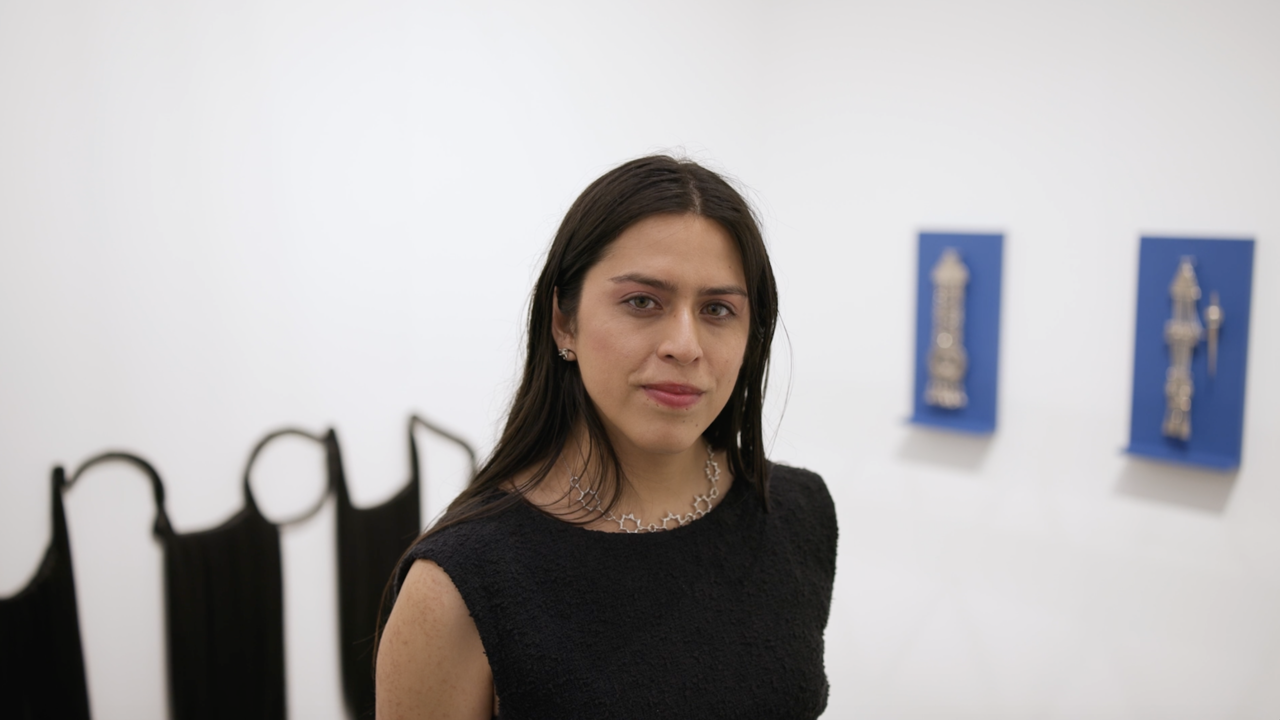
Andrew Durbin reviews national pavilions at the 2026 Venice Biennale, critiquing the US presentation as vacuous while praising incisive and moving installations from Britain and Germany. The review highlights Seba Calfuqueo's work in the context of colonized bodies, though the article's main focus is on the comparative quality of the pavilions.

Body as Device. Guide and Reflection on the Performances of the Venice Biennale

Corpo come dispositivo. Guida e riflessione sulle performance della Biennale di Venezia

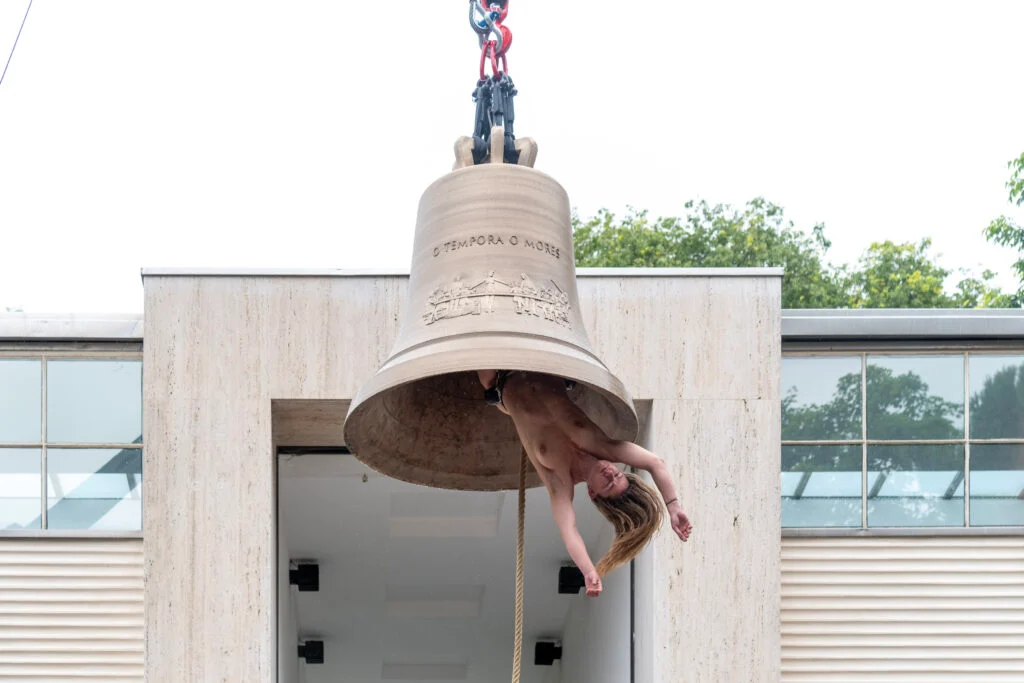
The article analyzes the role of performance art at the 2026 Venice Biennale, arguing that performance is no longer a rediscovered genre but a structurally institutionalized primary form of experience production. It examines how the body reemerges not as an alternative to image-based works but as an internal interruption of the artwork system, preventing closure and reintroducing instability. Key pavilions are discussed: Austria's Florentina Holzinger with "Sancta" draws on 1970s radical performance and feminist body art, creating an immersive environment of continuous movement; Belgium's Miet Warlop with "IT NEVER SSST" engages post-dramatic theater and postmodern dance repetition; Japan's Ei Arakawa-Nash with "Grass Babies, Moon Babies" activates Gutai avant-garde legacies through viewer interaction with soft dolls.