filter_list Showing 41 results for "EAC" close Clear
dashboard All 2424 museum exhibitions 994trending_up market 331article local 311article news 307article culture 181person people 100article policy 86rate_review review 41gavel restitution 35candle obituary 35article event 3
date_range Range Today This Week This Month All
Subscribe

worst artworks we saw around the world in 2022 2219621

Artnet News editors compiled a list of the worst artworks they encountered in 2022, including a chaotic performance by Poncili Creación at NADA Miami, an overproduced Danish Pavilion installation by Uffe Isolotto at the Venice Biennale, and a Paul Cézanne painting at the Barnes Foundation that disappointed a critic. The article offers subjective, critical takes on these works, describing the NADA performance as bizarre and jolting, the Danish pavilion as graphic and lacking a powerful message, and the Cézanne as a disappointment within an otherwise memorable museum visit.
best new york art criticism critics table

Cultured magazine's critics roundup highlights several notable New York art exhibitions. Cameron Rowland's "Properties" at Dia Beacon is examined as a landmark Land art installation that uses contractual relations to address racial capitalism, with works available only for rent or loan. Other shows include Feliciano Centurión's "Sol naciente" at Ortuzar, Joshua Caleb Weibley's "Game Transfer Phenomena" at Chart, Ian Miyamura's debut at Bureau, and Laura Owens's new show at Matthew Marks Gallery, each reviewed for their conceptual and aesthetic innovations.

Michael Armitage in Venice, monumental and disturbing. What the exhibition at Palazzo Grassi looks like

Michael Armitage is the subject of a major solo retrospective at Palazzo Grassi in Venice, marking his largest exhibition in Europe to date. Organized by the Pinault Collection, the show features monumental paintings that blend African identity, local Kenyan chronicles, and mythological narratives. Armitage’s work is noted for its physical scale and its ability to transform the chaos of human affairs into a syncretic epic, utilizing traditional materials like Lubugo bark cloth to ground his contemporary subjects.

art guide new york exhibitions

The article reviews the joint exhibition "Hunks" at Bureau gallery in New York, featuring works by painter Julia Rommel and photographer Lucas Blalock. Rommel's post-minimalist abstract paintings, created through folding and stapling canvases, explore color and texture with a personal touch, while Blalock's digitally manipulated photographs blend studio effects and surreal editing. The show runs through February 21, 2026, at the gallery's 112 Duane Street location.

joseph beuys daniel spaulding honigpumpe 1234776979

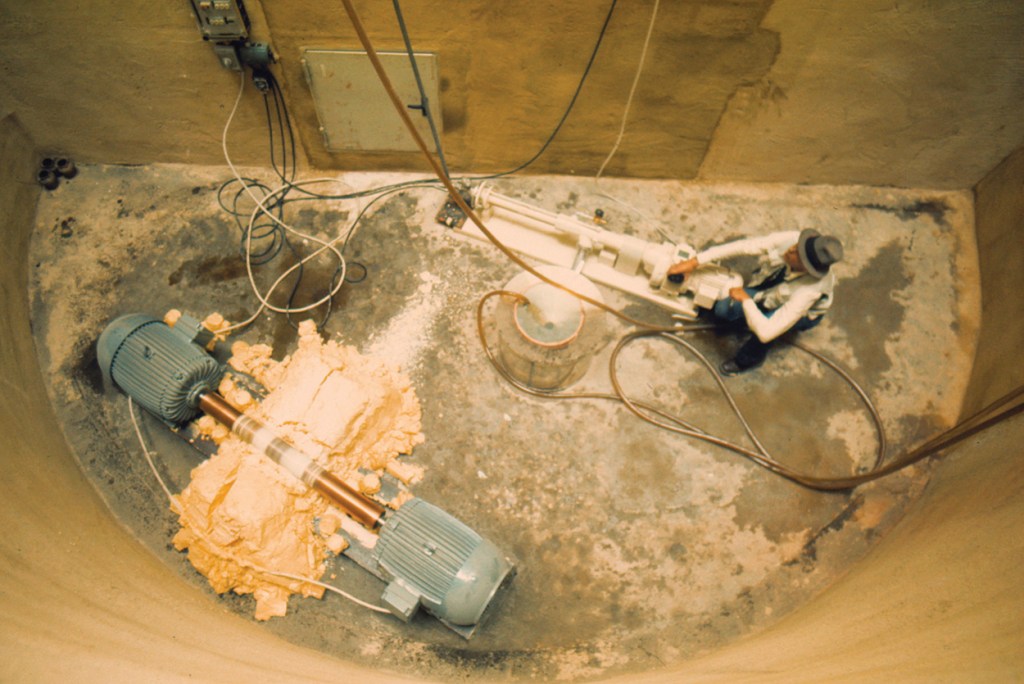
Joseph Beuys remains one of the most polarizing figures in 20th-century art, a former Nazi soldier who reinvented himself as a shamanic healer and a founding member of the Green Party. A new monographic study by art historian Daniel Spaulding, 'Joseph Beuys and History', re-evaluates the artist's legacy by confronting his refusal to apologize for his wartime past and his use of ambiguous materials like fat and felt. Spaulding argues that Beuys’s work should be read through the lens of 'bad faith,' where his utopian slogans masked a deep, unresolved engagement with the horrors of the Holocaust.

carol bove guggenheim museum retrospective review 1234775914

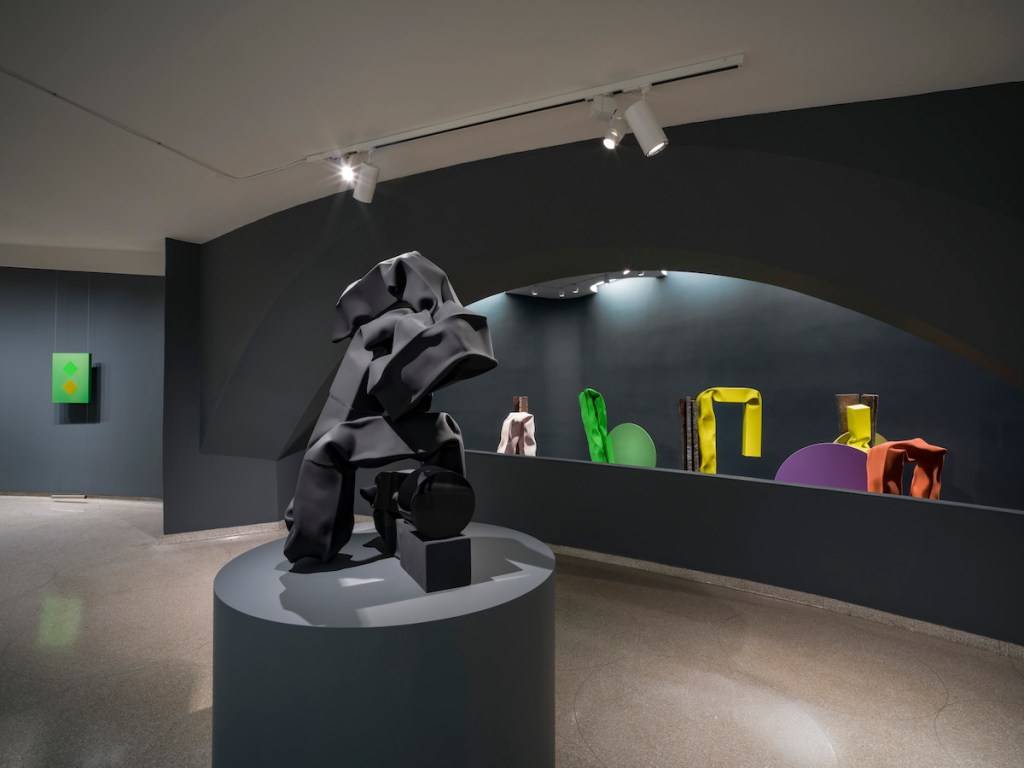
The Solomon R. Guggenheim Museum has launched a major retrospective of Carol Bove, filling the iconic Frank Lloyd Wright rotunda with approximately 100 works spanning her career. The exhibition showcases Bove’s evolution from her early assemblages of driftwood, peacock feathers, and vintage books to her more recent large-scale, brightly colored steel sculptures. A defining feature of the show is Bove’s inclusion of "para-artworks"—pieces by other artists such as Lionel Ziprin, Agnes Martin, and Arnaldo Pomodoro—integrated into her own installations to highlight the influences and histories that inform her practice.

art criticism cameron rowland anne imhof

The article reviews several notable art events and exhibitions from 2025, beginning with Cameron Rowland's controversial work "Replacement" at the Palais de Tokyo in Paris, where the French flag was replaced with the flag of Martinique, leading to the artwork being deemed potentially illegal. It also covers Johanna Fateman's review of Rowland's "Properties" at Dia Beacon, Ross Simonini's reflection on Joseph Beuys and the Eaton fire in Los Angeles, John Vincler's critiques of Cady Noland at Gagosian and Nicole Eisenman at 52 Walker, and Fateman's year-end roundup including figures like Anne Imhof, Laura Owens, and Jack Whitten.

Martin Parr: Global Warning review – the great photographer in all his gluttonous, giddy glory

A major retrospective exhibition of photographer Martin Parr's work, titled 'Global Warning,' has opened at the Jeu de Paume museum in Paris. The show, which Parr helped plan before his death in December 2023, is on track to become the museum's most visited exhibition, showcasing his signature saturated, ironic, and unflinching observations of global tourism and consumerism.

Why Felix Gonzalez-Torres’s Go-Go Dancer Piece Remains Subversive

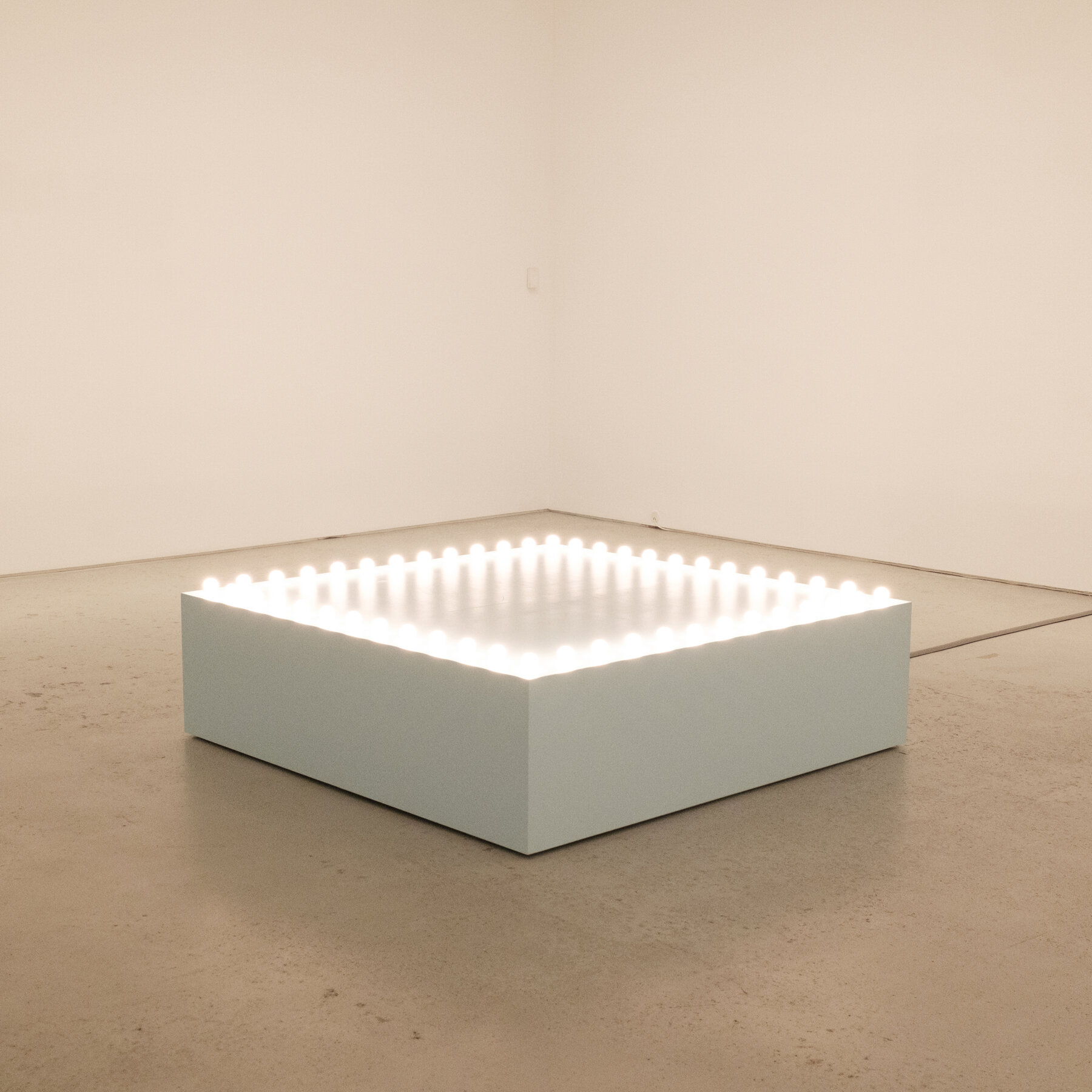
The New York Times examines the enduring power of Felix Gonzalez-Torres's 1991 performance piece "Untitled" (Go-Go Dancing Platform), in which a go-go dancer performs on a pedestal for a brief, scheduled period each day. The work, currently on view at the Art Institute of Chicago, uses the dancer's absence as a central component, creating a poignant metaphor for queer presence and loss.

Comment | EJ Hill's New York performance personifies the art of endurance

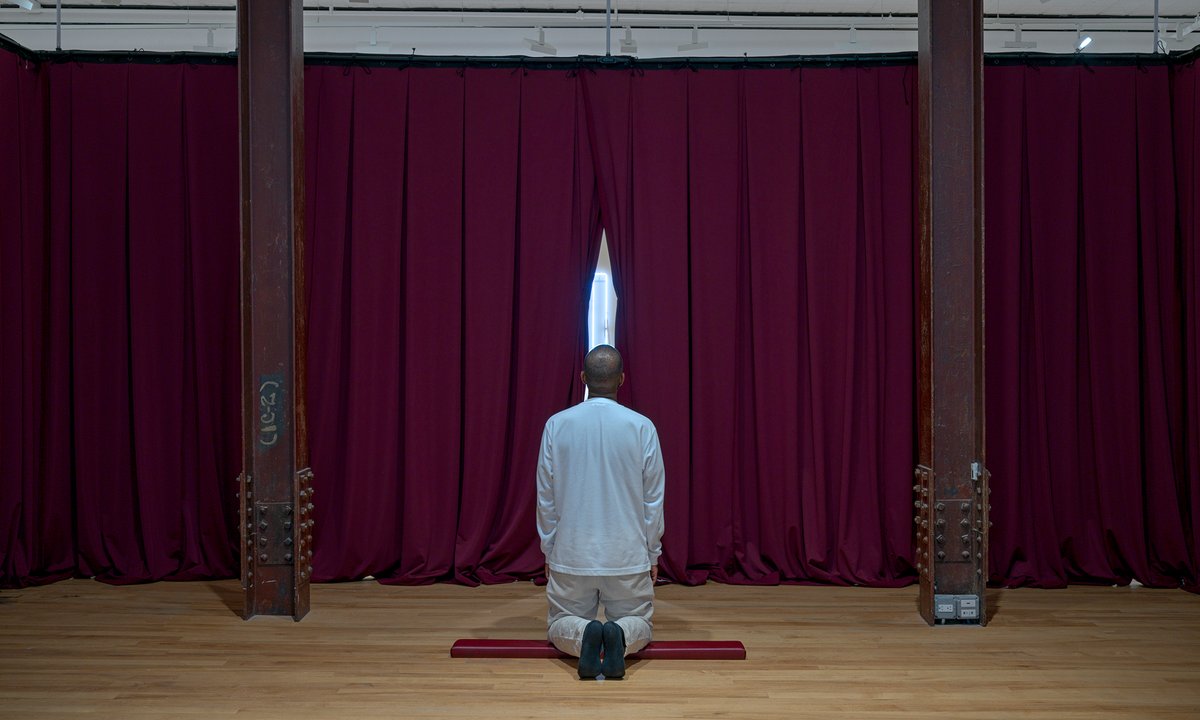
EJ Hill is performing 'Yearning for an Absolute' (2025), the centerpiece of his solo show at 52 Walker in New York, where he kneels on a church kneeler for eight continuous hours each day without food, water, or breaks. The performance runs from June 25 to September 13, totaling 56 days across 12 weeks, and completes a "performance triptych" with his earlier works from 2016 and 2018. Hill describes it as far more grueling than anything he has done before, experiencing widespread physical pain and mental challenges.

Leah Ki Yi Zheng’s Personal I Ching

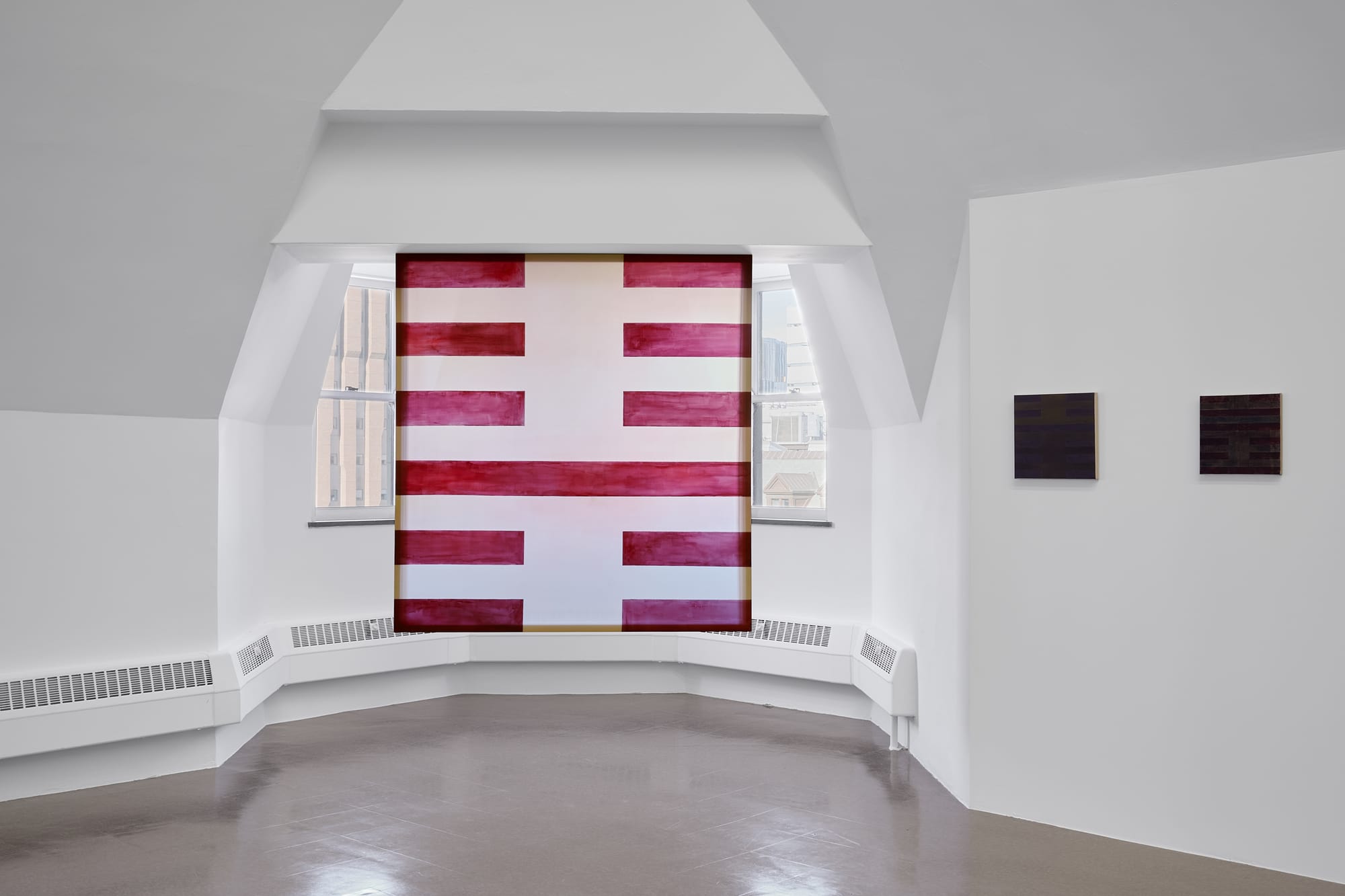
Artist Leah Ke Yi Zheng's exhibition "Change, I Ching (64 Paintings)" at the Renaissance Society in Chicago presents a series of oil and acrylic paintings on silk, each depicting one of the 64 hexagrams from the ancient Chinese divination text, the I Ching. The artist physically altered the gallery's architecture to control light and create a specific viewing rhythm, synthesizing materials and techniques from Chinese ink painting traditions with Western geometric abstraction and oil painting.

Alice Tippit’s Mischievous Erotics

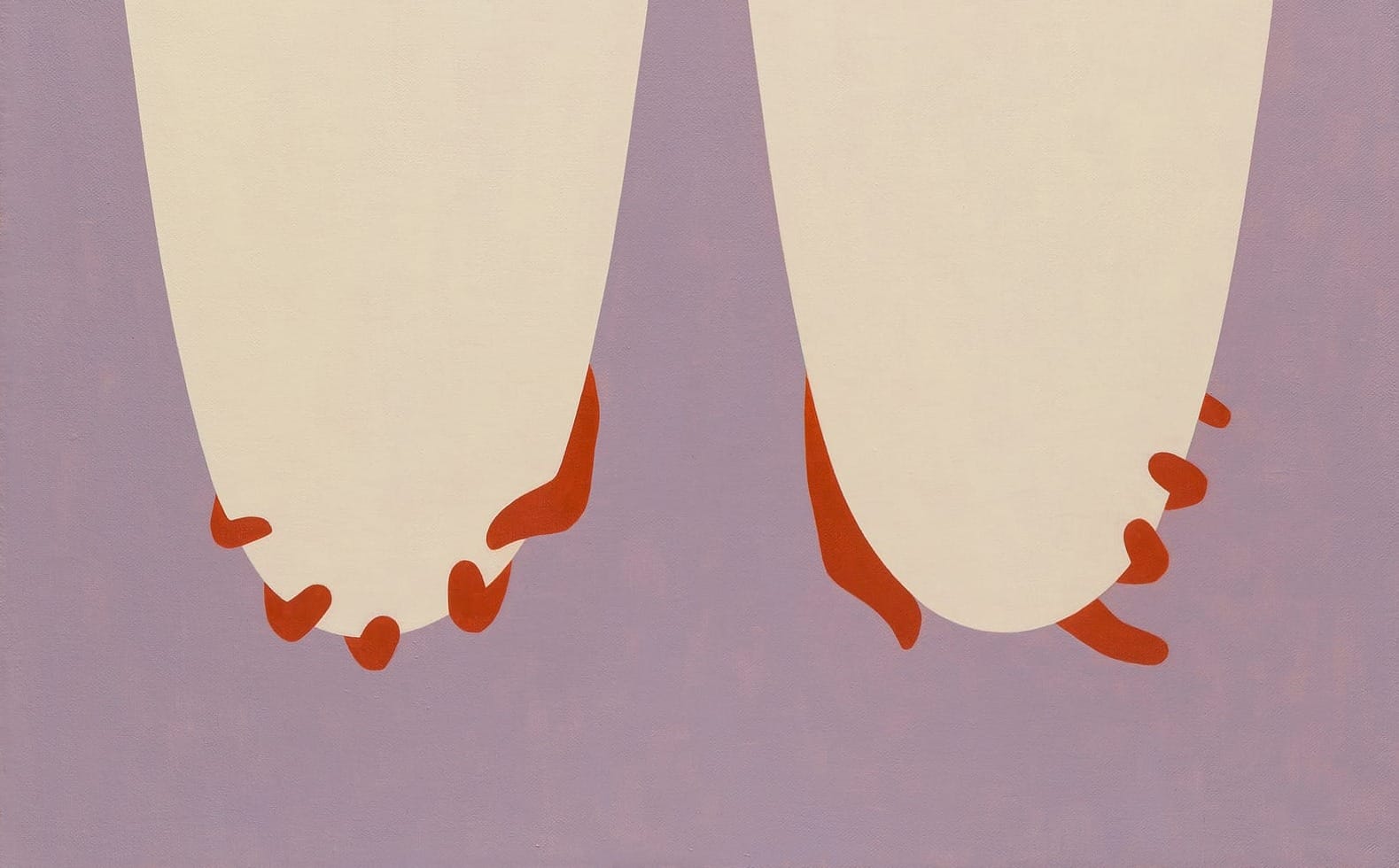
Alice Tippit's solo exhibition "Rose Obsolete" at the DePaul Art Museum in Chicago features 23 small oil paintings, three murals, a neon sign, word drawings, and a series of 46 notepad drawings. The works toggle between multiple interpretations—snakes and smiles, blouses and pears, curtains and bodies—inviting viewers to see shifting forms like a psychological test. Tippit, born in 1975 near Kansas City and based in Chicago since 2006, paints each oil work in a single day without tape, achieving sharp edges and subtle layering that reward close looking.

Big Crisis, Small Gestures

Große Krise, kleine Gesten

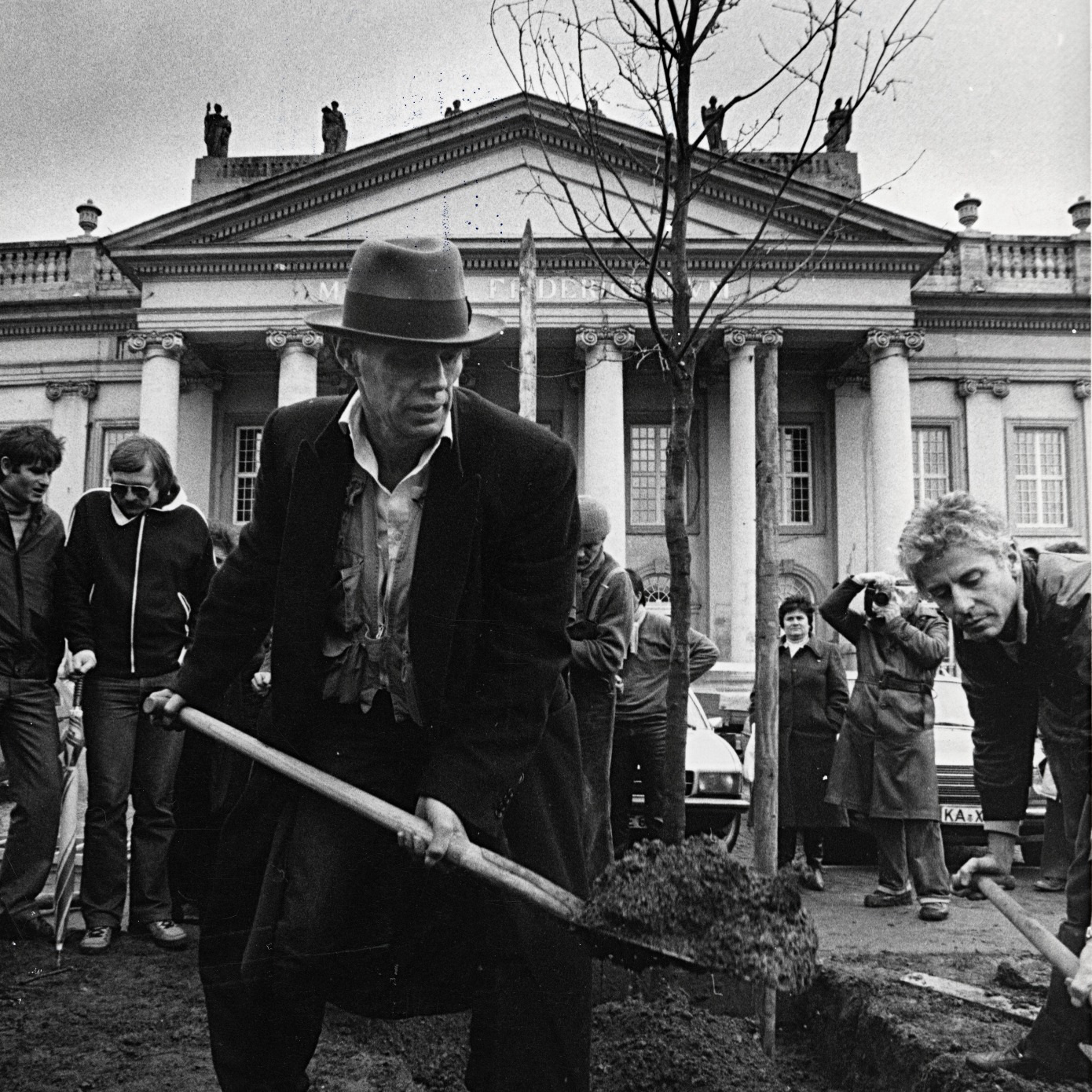
The article reviews the second edition of the Klima Biennale Wien, which opened in early April in Vienna. It notes that while the biennale aims to address the urgent triple crisis of climate change, biodiversity loss, and pollution, its execution falls short. The exhibition features symbolic works such as a beached whale, a broken boat, and a compostable SUV sculpture, but these motifs feel repetitive and lack the necessary impact. The author contrasts these with historical precedents like Menashe Kadishman's 1978 Venice Biennale installation and Joseph Beuys' "7000 Eichen" (1982), arguing that the themes of nature and sustainability are not new, only the urgency has intensified.

whitney biennial 2026 systems infrastructure andrea fraser carmen de monteflores emilie gossiaux david johnson 1234775255

The 2026 Whitney Biennial, curated by Marcela Guerrero and Drew Sawyer, moves beyond the traditional geographic borders of the United States to explore 'the greater United States.' Drawing inspiration from historian Daniel Immerwahr, the exhibition features artists from occupied territories, military outposts, and nations impacted by American intervention, including Okinawa, Chile, and Palestine. The show shifts the focus from identity politics to the material reality of infrastructure, examining how global systems of finance, energy, and empire operate and often fail.

2026 whitney biennial critics conversation 1234775478

The 82nd edition of the Whitney Biennial has opened at the Whitney Museum of American Art, curated by Marcela Guerrero and Drew Sawyer. Featuring 56 artists from diverse global backgrounds, the exhibition explores themes of American empire, human-nonhuman relationships, and the impact of infrastructure. Early critical reactions highlight a pervasive sense of "horror" and bodily disturbance, with works utilizing AI, sculpture, and painting to address grief, war, and societal transformation.

Beacons in a Grim World

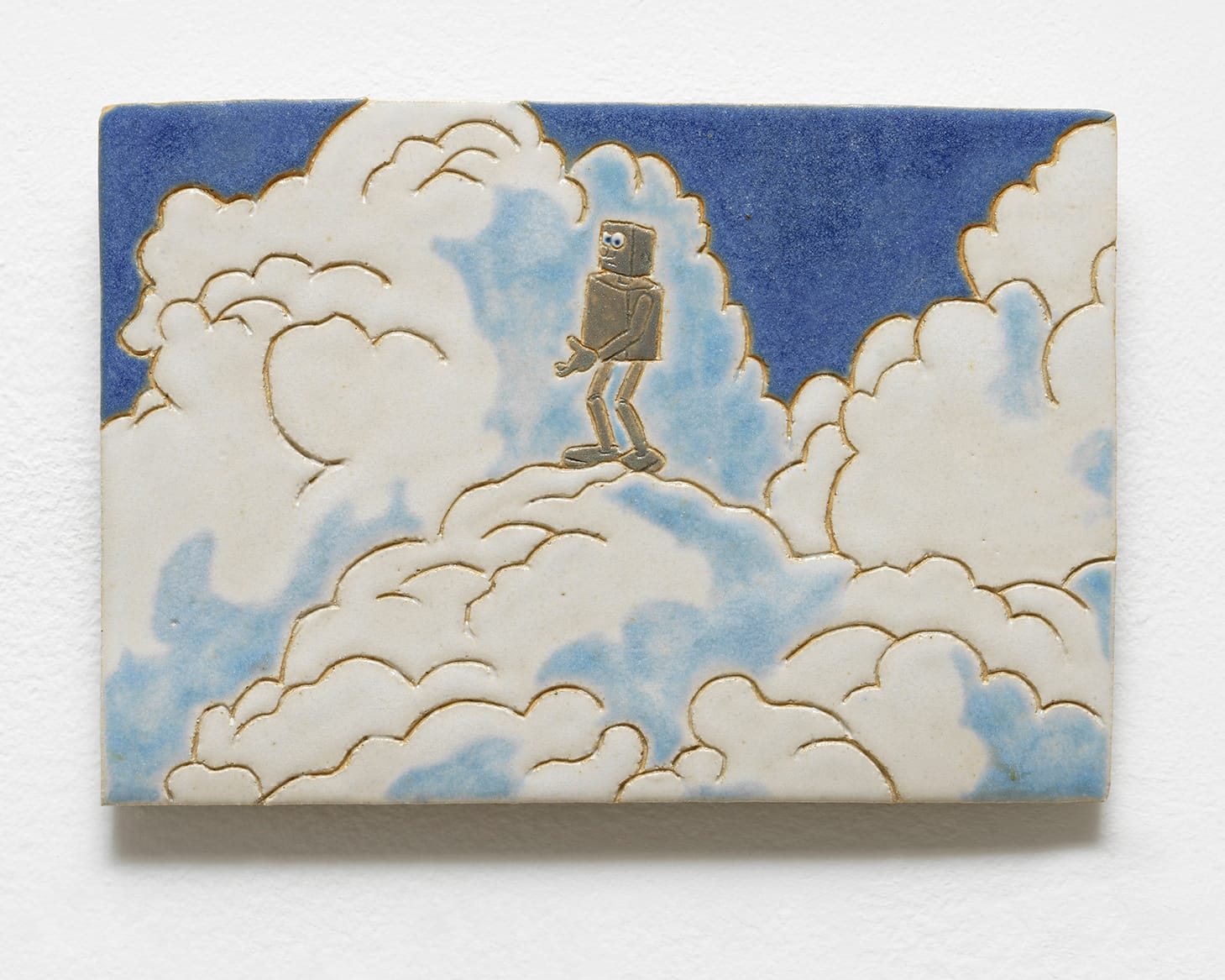
Two concurrent solo exhibitions at Alexander Berggruen Gallery feature the work of artists Kevin McNamee-Tweed and Tajh Rust. McNamee-Tweed presents enigmatic, tenderly absurd ceramic scenes, while Rust debuts in New York with figurative paintings that explore perception and Black identity through portraits of leisure and experimental silvered glass works.

art doron langberg paintings israel

The article reviews Doron Langberg's exhibition "Landscapes" at Jeffrey Deitch in New York, featuring large-scale oil-on-linen paintings that reflect on the artist's identity as a Jewish Israeli painter after October 7, 2023, and the subsequent conflict in Gaza. The works depict three personally significant locations: Yokneam in Israel, Drohobych in Ukraine (where the artist's father survived the Holocaust), and a queer beach community on Fire Island. Langberg's accompanying statement asserts that Palestinians deserve justice and liberation, framing painting as a means to confront atrocity.

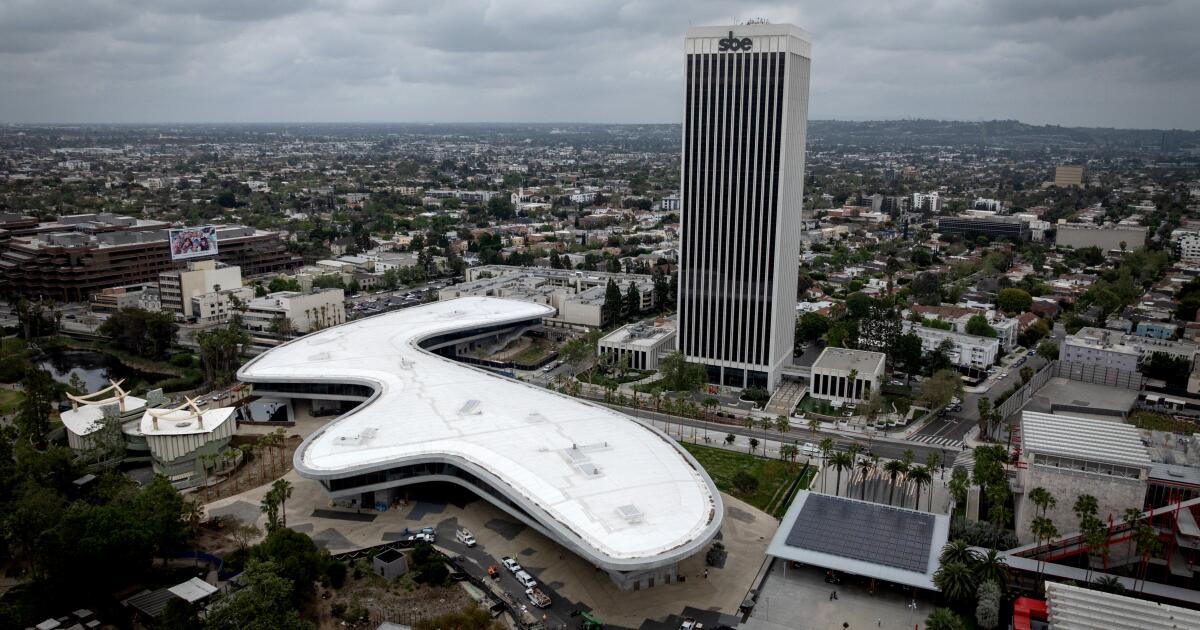
Review: The new LACMA is divisive. It’s also ambitious, disorienting — and radically alive

The Los Angeles County Museum of Art (LACMA) has unveiled its $724-million David Geffen Galleries, a massive concrete structure designed by Swiss architect Peter Zumthor that spans Wilshire Boulevard. Replacing several older pavilions, the new building rejects traditional museum conventions like white-cube galleries and encyclopedic organization in favor of a sinuous, organic form that emphasizes light, atmosphere, and a visceral connection to the surrounding landscape.

What We Loved (And Didn’t) in “Greater New York”

The article presents a critical review of the 2026 "Greater New York" exhibition at MoMA PS1, a massive survey featuring over 150 works by more than 50 artists. The Hyperallergic editorial team highlights specific artists and works they loved, disliked, or found puzzling, offering a curated list of around 20 standout pieces. The review includes detailed commentary on individual works by artists like Dean Millien, the collective Red Canary Song, and Kameron Neal, capturing the diverse and often contentious reactions the show provokes.

Chelsea Exhibition Reviews: Rosebud Contemporary, Paula Cooper, Fredericks & Freiser, Berry Campbell and more

This article reviews several Chelsea gallery exhibitions, focusing on Mary Ann Unger's monumental sculpture show 'Across the Bering Strait' at Berry Campbell, which features her hydrocal-over-steel works exploring themes of feminism, anthropology, and the natural world. It also covers 'En Route' at Rosebud Contemporary, a group exhibition of abstract painters Rifka Milder, Meg Hitchcock, and Ketta Ioannidou, each reflecting on artistic journeys through their work.

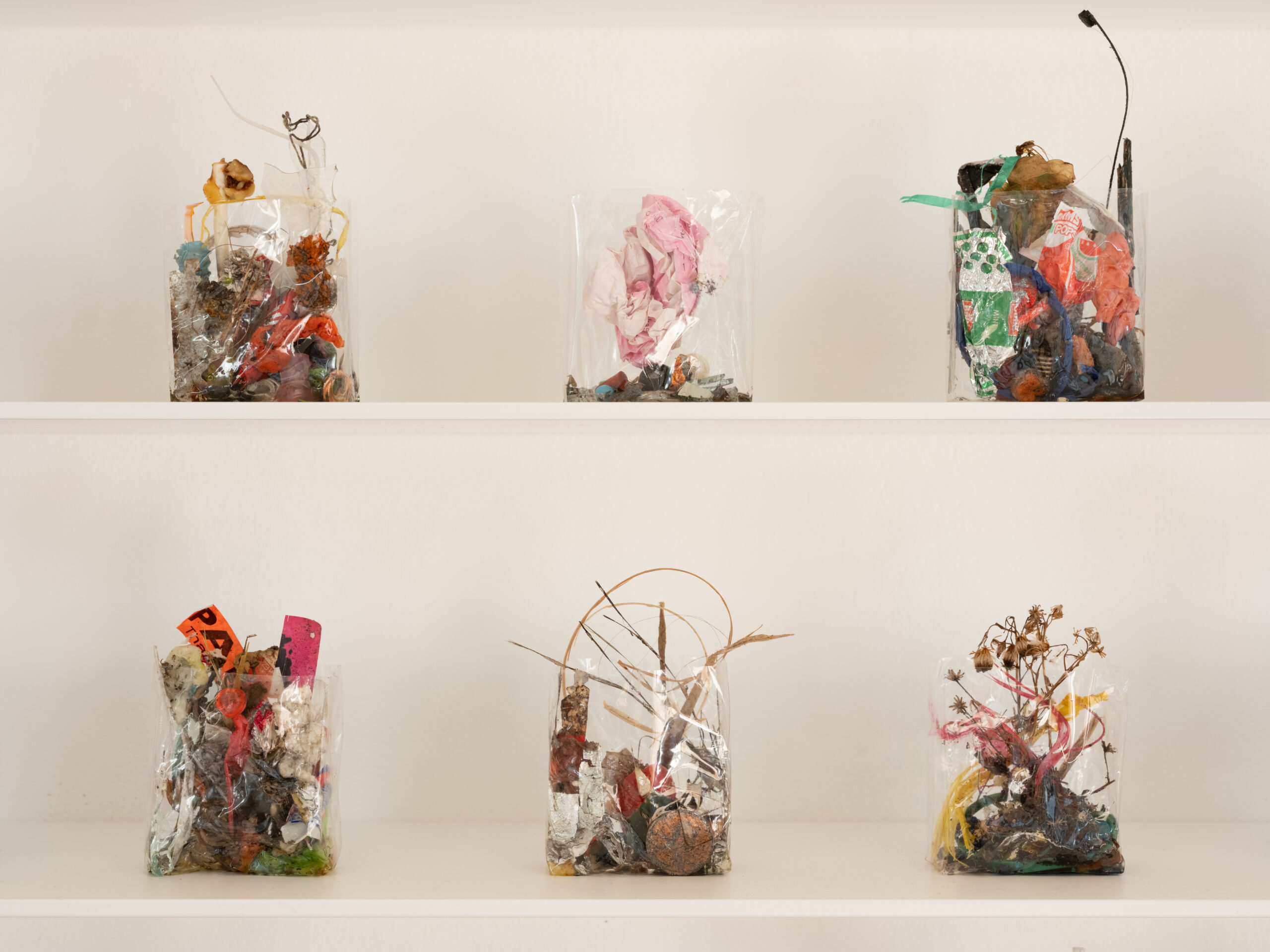
art yuji agematsu judd foundation review

The article reviews Yuji Agematsu's exhibition at the Judd Foundation in New York, where 366 of his "zips"—small assemblages of found objects collected during daily walks and arranged in cigarette cellophane sleeves—were displayed on open aluminum shelves in grids representing each day of 2024. The show ran through August 30, 2025, and marked a departure from previous presentations of Agematsu's work, which had been enclosed in acrylic cases; here, the zips were left exposed, with a fan causing plant matter to sway, making the work feel more alive and immediate.

The Tensions Seething Beneath the Surface of the 2026 Whitney Biennial

The 2026 Whitney Biennial has quickly generated a consensus among critics, prompting a deeper analysis of its underlying themes. The exhibition features a notable tension between works exploring artificial intelligence, such as Zach Blas's maximalist installation and Cooper Jacoby's emotionally resonant sculptures, and a contrasting trend of delicate, nostalgic art focused on domesticity and ecology, exemplified by artists like Kelly Akashi and Jasmin Sian.

What Do Danh Vo’s Curated Collections Add Up To?

The article reviews the exhibition 'Danh Vo: Untitled' at the Pirelli HangarBicocca in Milan, which presents a collection of objects curated and arranged by the artist. The show features a diverse array of items, including a 17th-century Flemish painting, a meteorite, a taxidermied peacock, and personal memorabilia, all displayed without explanatory labels in a large, warehouse-like space.

The Big Review

Tate Britain has launched a major survey dedicated to the visionary artist and poet William Blake, marking one of the most comprehensive exhibitions of his work in London. The show brings together his intricate watercolors, prints, and prophetic books, offering a deep dive into his unique mythological universe and radical political views.

February Book Bag: from Tracey Emin’s conversations about painting to a catalogue of Lucian Freud’s drawings

The article presents a selection of recently published art books, highlighting new releases on artists Tracey Emin, Beatriz González, and Lucian Freud, as well as a second volume on Arab Modernist artists. It details the content of each book, including personal reflections, career overviews, and connections to upcoming exhibitions.

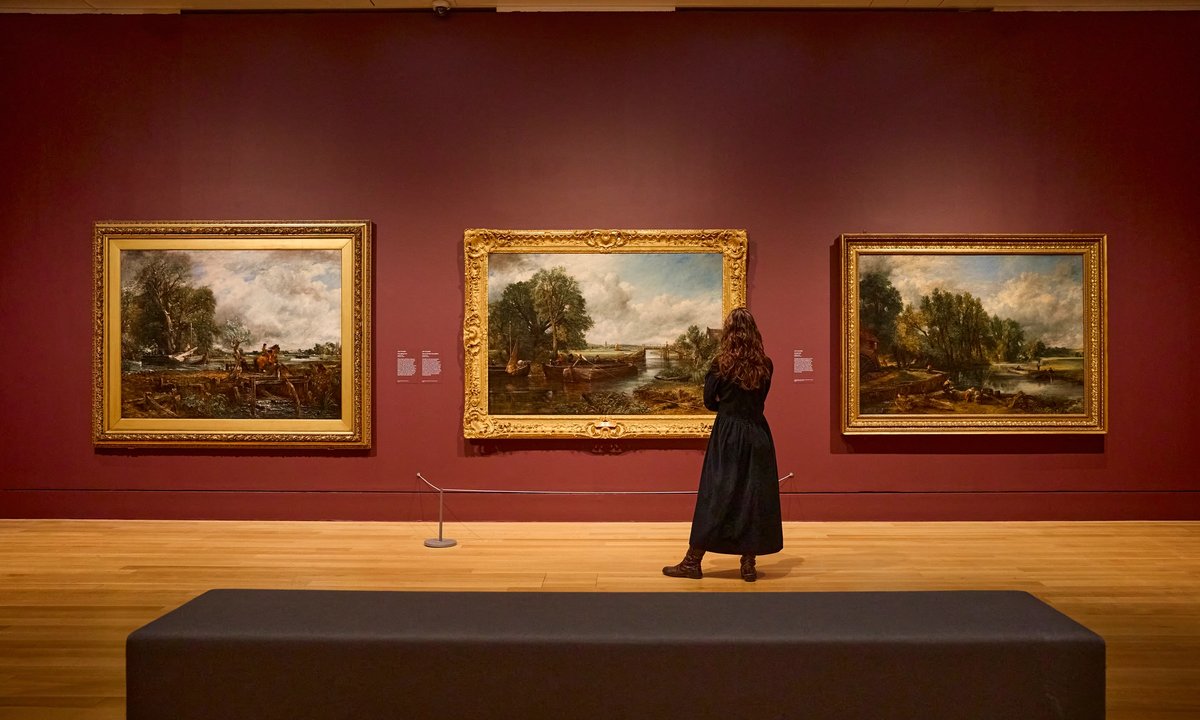
Comment | Tate Britain’s Turner and Constable show got me thinking about Marxist art history

The author recounts traveling from Scotland to London to see Tate Britain's exhibition "Turner and Constable: Rivals and Originals," despite costly and slow train travel. The article also covers the Old Master sales at Sotheby's, Christie's, and Bonhams, noting mixed results: a Flemish triptych sold for £5.7m, a Hans Eworth portrait set a record at £3.2m, and a Gerrit Dou fetched £3.8m, while a Panini capriccio lost value since 2005.

Fight Club Denounces the System From Within the System

Cameroonian artist Pascale Marthine Tayou's first major institutional exhibition in Brazil, "Knockout!," has opened at the Pinacoteca de São Paulo's Pina Luz building. The show spans over 25 years of Tayou's career, featuring installations, sculptures, and paintings across seven rooms. Each room is themed around a historical international conference—including the Berlin Conference of 1884, Yalta, San Francisco, Rome, Rio de Janeiro, Bandung, and a fictional Avignon conference—using these as political and historical axes to critique colonial power structures and global inequality.

In “Discipline,” Larissa Pham Explores Predatory Art-World Mentorship

Larissa Pham’s debut novel, Discipline, follows Christina, a young writer and former painter grappling with the psychological aftermath of a formative affair with her art professor, Richard. Set against the backdrop of a book tour for her own autofictional novel, the narrative uses Christina’s observations of art—ranging from Helen Frankenthaler to Edward Hopper—to slowly peel back the layers of a relationship defined by power imbalances and predatory mentorship.

Ayotunde Ojo Maps Interiority Under the Public Gaze

The article, a critic's guide review by Andrew Durbin, contrasts the US national pavilion presentation at an unspecified biennial with those of Britain and Germany. The US presentation is described as vacuous and lacking in meaning, while the British and German installations are praised for being incisive and moving. The review critically examines the thematic and conceptual approaches of each national pavilion, highlighting a disparity in artistic depth and engagement.

National Pavilions Review: Who’s Afraid of Meaning?

Andrew Durbin reviews national pavilions at a major biennial, contrasting a vacuous US presentation with incisive and moving installations from Britain and Germany. The review critiques the lack of meaningful content in the US pavilion while praising the depth and emotional resonance of the British and German contributions.