filter_list Showing 11 results for "Eli" close Clear
search
dashboard All 260 museum exhibitions 139article local 32article culture 21trending_up market 20article news 19rate_review review 11article policy 8person people 6gavel restitution 2candle obituary 2
date_range Range Today This Week This Month All
Subscribe

Hulda Guzmán review – lizards and ghosts gather for an art freakout in the rainforest

Hulda Guzmán's first institutional exhibition in Europe, "Please Awake – Asked Nature Kindly," is on view at Turner Contemporary in Margate, UK. The show features the Dominican artist's ultra-colorful, psychedelic jungle paintings that blend art historical references—from Japanese ukiyo-e prints to pointillism and symbolism—with personal mythology, demons, spirits, and lush tropical landscapes. The works are drawn from her life in the Dominican rainforest, where she lives and works in a studio built by her architect father.
Fantastic visions and cosmic rhythms: how Whistler is making me see – and hear – differently

The article explores how the James McNeill Whistler exhibition at Tate in London prompts a reconsideration of the relationship between music and visual art. Whistler titled his works using musical terms like "Arrangement," "Symphony," and "Nocturne," arguing that painting should be abstract and independent of narrative, much like instrumental music. The exhibition, reviewed by Jonathan Jones, highlights Whistler's radical art-for-art's-sake philosophy, which influenced composer Claude Debussy, whose orchestral Nocturnes were directly inspired by Whistler's paintings of light and atmosphere.

Yu Ji’s Democratic Play

Yu Ji's solo exhibition at PPOW, New York, titled "Origin of the Tiger," presents sculptures and collages created after a residency she organized in Phnom Penh that offered art education to children. The show features works like reed mats with snail shells, a Sony Trinitron looping video, collaged drawings incorporating Cambodian children's art, and composite sculptures such as chairs with concrete knee casts and a figure inspired by a misattributed sixth-century Krishna statue. The exhibition draws on a Khmer folktale about transformation and includes audio of children reciting the story, though the children appear more as muses than collaborators.

Lionel Wendt: The Politics of the Male Nude

ArtReview publishes an essay by Qingyuan Deng analyzing the first US solo exhibition of Lionel Wendt's photographs at American Art Catalogues in Manhattan's West Village. The show presents Wendt's haunting gelatin silver prints of male nudes, still lifes, and solarized images, positioning him as a canonical figure of South Asian modernism. Deng argues that while the exhibition correctly identifies homoerotic desire in Wendt's work, it over-relies on queer theory's framework of opacity and fails to fully address the political radicality of Wendt's practice under British colonial rule in Ceylon, where homosexuality was criminalized under the 1883 Penal Code.

Karla Knight’s Cosmic Conspiracies

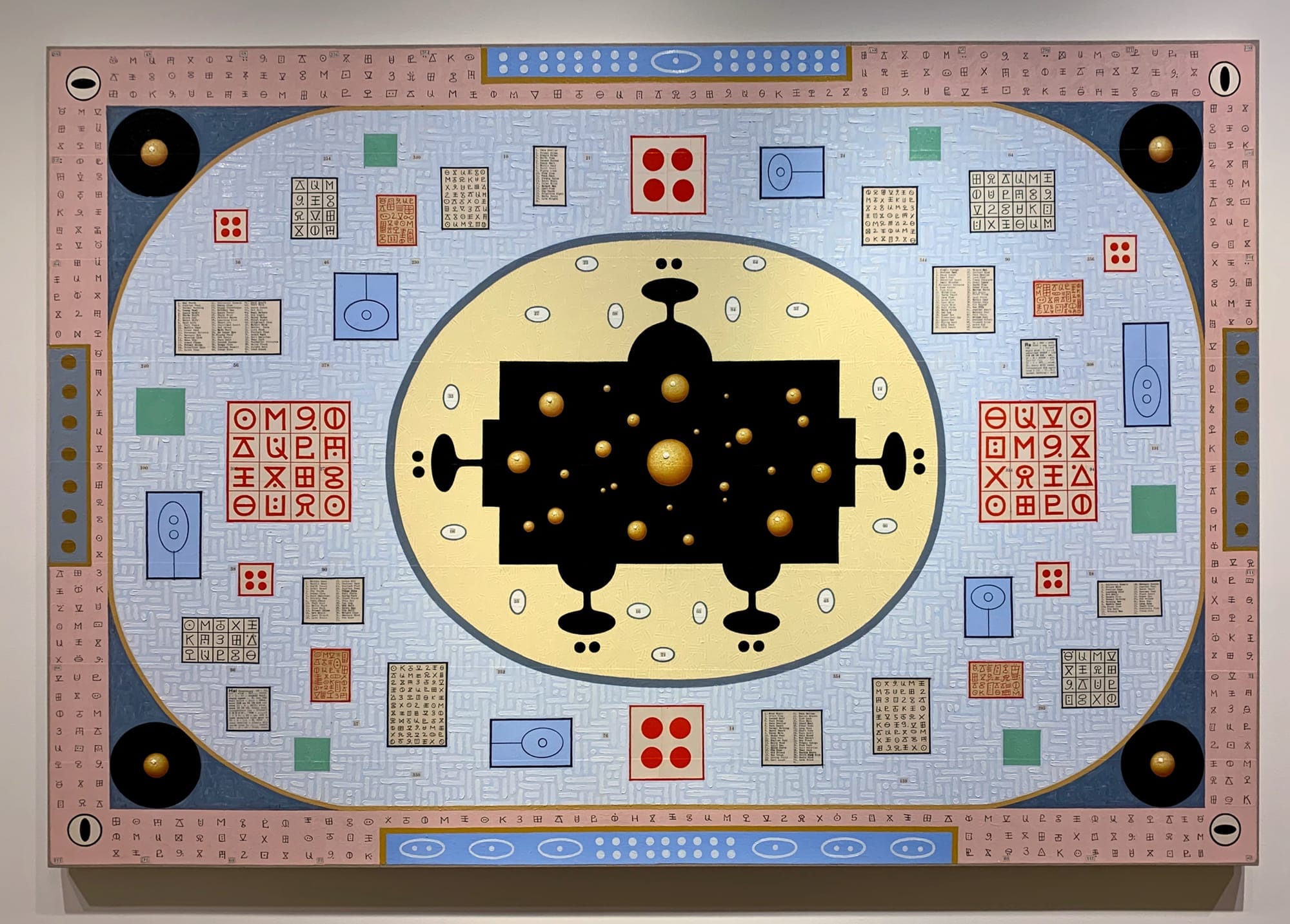
Karla Knight's exhibition "Orbit" at Andrew Edlin Gallery presents her game-like paintings and tapestries filled with cryptic symbols, cosmic diagrams, and celestial imagery. Works such as "Orbiter 2" (2024–25) and "Feelers" (2025–26) feature irregular black devices, floating spheres, and rows of arcane script, inviting viewers to decode what appear to be blueprints for extraterrestrial systems or maps of hidden dimensions. Knight employs meticulous grids, bold primary colors, and textile techniques to render the paranormal as strangely normal.

Death as Performance

Der Tod als Performance

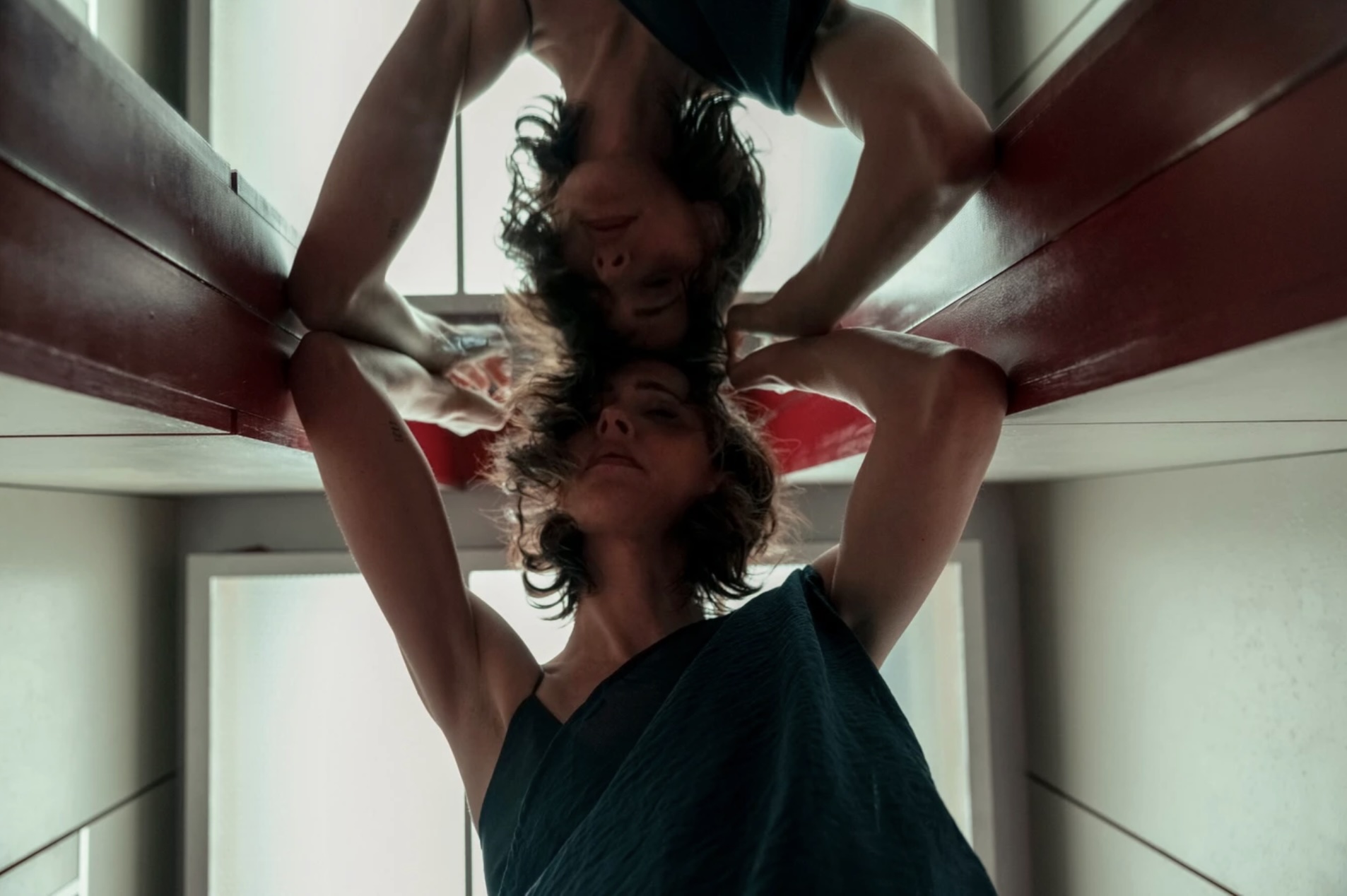
The article reviews Maria Martínez Bayona's debut sci-fi comedy film "The End of It," which premiered in competition at the Cannes Film Festival. The film follows Claire, a 250-year-old artist who, in a future where medical advances have eliminated death, decides to stage her own suicide as a radical art performance. The story critiques a world obsessed with synthetic rejuvenation and explores themes of mortality, authenticity, and the commodification of art.

Criminal review – homelessness show delivers a rage-making punch in the gut

The article reviews "Criminal: An Untold Story of Homelessness, Resistance and Survival," an installation at London's Museum of Homelessness. The show features works by Romany Gypsy poet and artist Gemma Lees, including a caravan installation with china decorated with hostile Sun newspaper headlines about Gypsy and Traveller encampments, and festive bunting printed with historical state proscriptions against nomadic communities dating from the Egyptians Act of 1530 to the 2022 Police, Crime, Sentencing and Courts Act. The exhibition, set largely in the garden of the museum's new home at Finsbury Park's Manor House Lodge, explores how homeless people and nomadic communities have been criminalized over 400 years.

Performance Cuts Through the Noise at the Venice Biennale

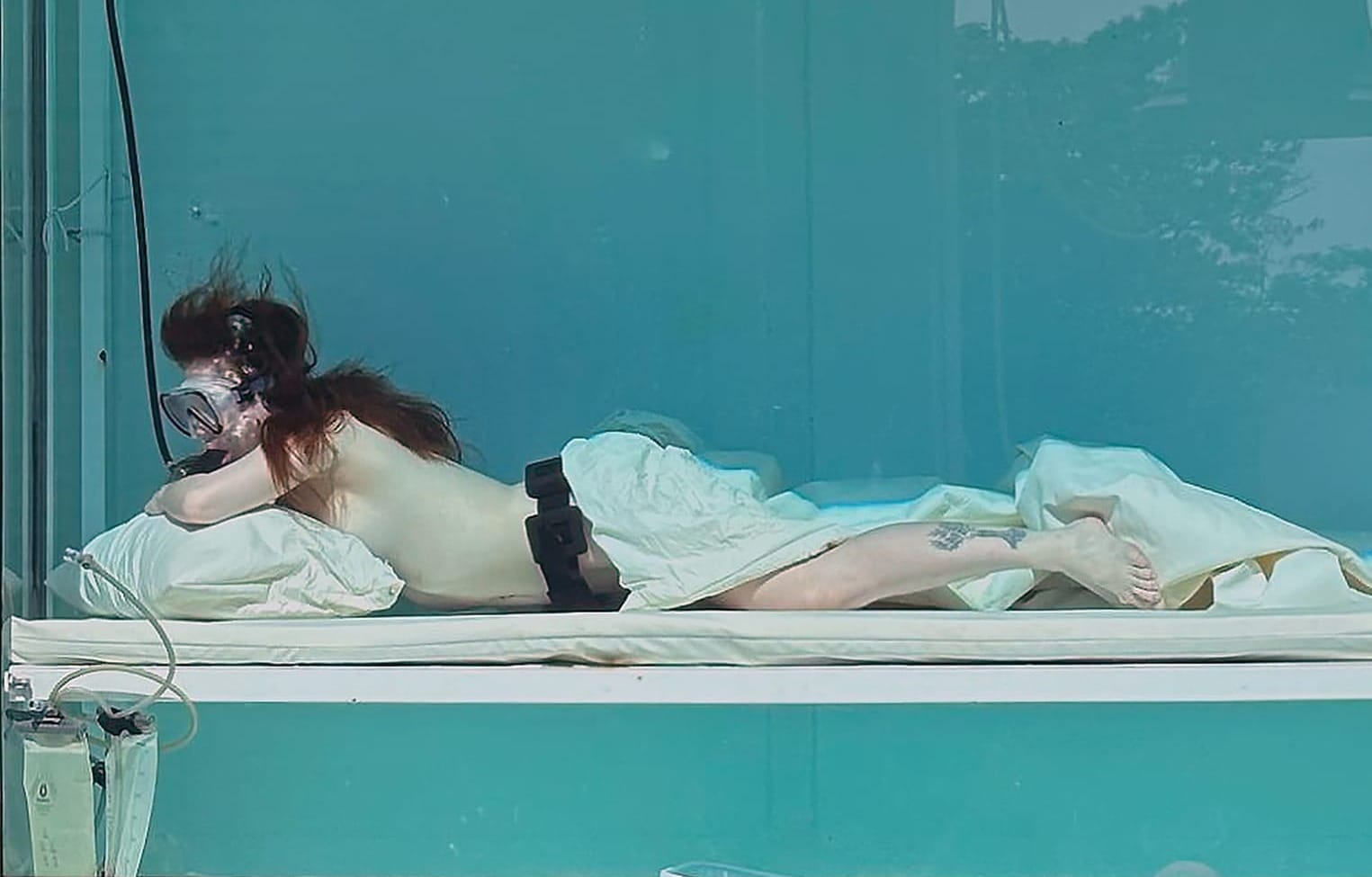
Florentina Holzinger and Miet Warlop have transformed the Austrian and Belgian pavilions at the 2026 Venice Biennale into immersive, performance-driven spectacles. Holzinger's "SEA WORLD VENICE" floods the Austrian pavilion with water and urine, featuring jet-skiing, suspended performers, and participatory toilets, while Warlop's "IT NEVER SSST" turns the Belgian pavilion into a chaotic arena of tile-throwing, chanting, and dancing. Both works demand sustained attention amid a fraught Biennale marked by the death of artistic director Koyo Kouoh, canceled pavilions, boycotts, and a jury resignation.

For Ceija Stojka, Memory Is Survival

The article reviews the exhibition "Ceija Stojka: Making Visible" at the Drawing Center in New York, showcasing over 50 paintings and drawings by the late Romani-Austrian artist. Stojka, a child survivor of the Holocaust, documented both the atrocities she endured and the tender, everyday beauty of Romani life, using acrylic, sand, and paper to convey memories of her family's traveling wagon and natural landscapes. The show highlights her self-taught practice and outsider perspective, featuring works from the 1990s alongside her memoirs, which were posthumously translated in 2022.

Un grand spectacle, un petit récit

The article reviews the latest immersive exhibition at the Atelier des Lumières in Paris, titled "Renaissance. De Vinci, Raphaël, Michel-Ange." Set in a former foundry, the show uses 360-degree projections, lasers, and artificial fog to create a technically impressive visual spectacle. However, the narrative focuses solely on three Renaissance masters—Leonardo da Vinci, Raphael, and Michelangelo—leaving the historical and artistic context underexplored. The critic notes that the 50-minute presentation includes long contemplative pauses without commentary, which weakens its educational potential.

Ghosts in a Postcard Idyll

Geister im Postkartenidyll

Kôji Fukada's film "Nagi Notes" premieres in competition at the Cannes Film Festival, following Yoriko (Takako Matsu), a sculptor and farmer living a quiet, self-sufficient life in the rural Japanese town of Nagi. Her routine is disrupted when her old friend Yuri (Shizuka Ishibashi), an architect, arrives to model for a sculpture, stirring buried emotions and past conflicts. The film explores the slow, delicate process of creating art and the psychological tensions between the two women, set against the backdrop of Nagi's idyllic but symbolically flat landscape.