
filter_list Showing 6 results for "History" close Clear
dashboard All 211 museum exhibitions 143article local 20article culture 15candle obituary 12article news 11rate_review review 6person people 2trending_up market 1article policy 1
date_range Range Today This Week This Month All
Subscribe

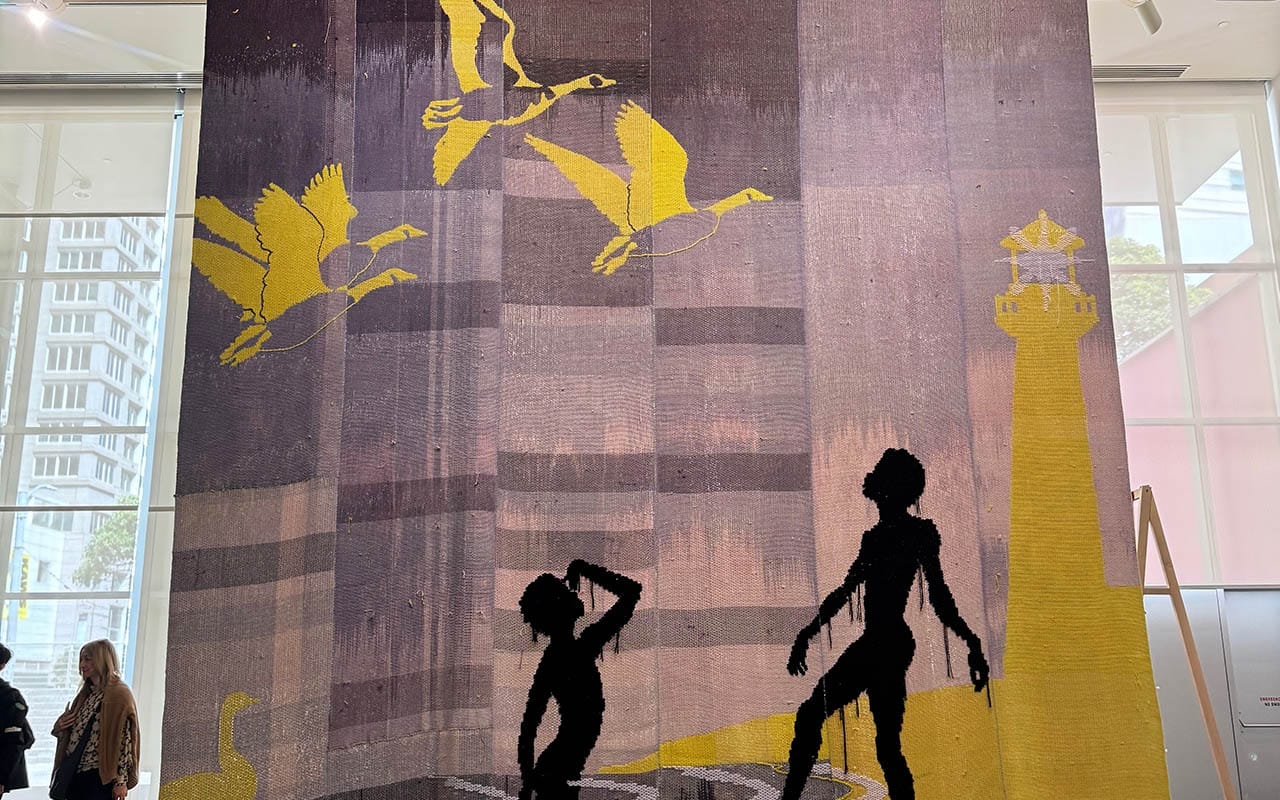
Diedrick Brackens’s Tapestries Beckon the Light of Freedom

Diedrick Brackens presents his first solo exhibition in the Bay Area, "gather tender night," at Yerba Buena Center for the Arts in San Francisco. Guest-curated by Eungie Joo, the show features 15 tapestries from 2020 onward and three new works from 2026, including the immersive installation "clearing (2026)." Brackens, a Black queer artist and CCA professor, uses hand-dyed cotton and acrylic yarn to weave narratives of personal memory, myth, and the natural world, drawing from West African weaving, California fiber art, European tapestry, and Gee's Bend quilting. His approach, influenced by the "sloppy craft" ethos of his mentor Josh Faught, embraces unfinished edges and visible process as acts of refusal against polished traditions.

The Many Forms of Marcel Duchamp

The New Yorker's Hilton Als reviews "Marcel Duchamp," a major retrospective at the Museum of Modern Art (MoMA) in New York, running through August 22, 2026. Curated by Matthew Affron, Michelle Kuo, and Ann Temkin, it is the first North American retrospective of Duchamp's work since 1973, organized in collaboration with the Philadelphia Museum of Art. The exhibition spans MoMA's entire sixth floor, showcasing Duchamp's shape-shifting practice—from iconic works like "Nude Descending a Staircase (No. 2)" (1912) and "Bicycle Wheel" (1951) to his readymades and conceptual pieces—emphasizing his rejection of commodification and embrace of intellectual freedom, play, and queer sensibilities.

In "Dancing the Revolution," Puerto Rico Pushes Back

The article reviews "Dancing the Revolution," a multi-genre collective exhibition at the Museum of Contemporary Art Chicago that explores the music of dancehall and reggaetón, their roots, history, and evolution, and their inextricable link to colonial oppression. The show is inspired by the massive 2019 protests in Puerto Rico against then-Governor Ricardo Rosselló, where music and dance were used as forms of resistance, drawing on centuries of Black Atlantic protest in the Caribbean.

WORDS WORDS WORDS at Everard Read shows the power of words in contemporary art

The article reviews 'WORDS, WORDS, WORDS,' an exhibition at Everard Read Gallery's CIRCA space in South Africa, which explores the role of language in contemporary visual art. Curated with a focus on how words are bent, repeated, fragmented, and reassembled, the show features works by South African artists including Willem Boshoff and Luca Evans, who engage with conceptual art traditions from Dada to Barbara Kruger. Boshoff's braille-inset wooden piece 'Planet of Echinus' questions inclusion and exclusion in language, while Evans' work riffs on Joseph Kosuth's iconic text pieces using ancient wood-inlay techniques.

Patchwork Lost – A Critique of the Princeton University Art Museum’s American Art Wing

The article critiques the newly opened American art wing at the Princeton University Art Museum, arguing that its curatorial approach prioritizes contemporary social justice narratives over historical accuracy and national pride. The author contends that the exhibition presents a fragmented, politicized view of American history, highlighting slavery and racial injustice while omitting or minimizing the contributions of Princeton alumni to the nation's founding, such as James Madison and John Witherspoon. Specific examples include the inclusion of a 2022 revisionist painting of the Signing of the Constitution and selective signage that emphasizes marginalized figures while ignoring male patriots.

Zurbarán review: Even the godless will be enraptured by this drama

The article reviews a major exhibition of 17th-century Spanish painter Francisco de Zurbarán, highlighting his dramatic religious works such as a stark crucifixion, a depiction of St. Peter crucified upside down, and a series of saintly princesses. It notes the exhibition's effective hanging, the artist's use of vivid color and theatrical lighting, and includes recently attributed works like a mysterious giant head. The review emphasizes the blend of high drama, emotion, and Catholic piety in Zurbarán's paintings, as well as his still lifes that rival those of Velázquez.