filter_list Showing 15 results for "History" close Clear
dashboard All 214 museum exhibitions 145article local 19article culture 15candle obituary 12article news 11rate_review review 7trending_up market 2person people 2article policy 1
date_range Range Today This Week This Month All
Subscribe

The Defining Themes of Today’s Biennial Art

The article analyzes the defining themes and styles of the past four years in the international biennial circuit, based on a survey of 130 biennials. It identifies a core group of artists who appeared most frequently, including Ali Eyal, Apichatpong Weerasethakul, Carolina Caycedo, Kapwani Kiwanga, and Tuan Andrew Nguyen, among others. Many of these artists are also featured in the upcoming 61st Venice Biennale curated by the late Koyo Kouoh. The piece categorizes their work under two broad themes: "Post-Colonial Post-Conceptualism," which involves poetic engagement with colonial history and artifacts, and "Families and Networks," where artists explore personal and political family histories.

7 Books We’re Looking Forward to in May

ARTnews has published a list of seven art books to look forward to in May 2026, covering a wide range of topics from contemporary theory and AI imagery to historical biographies and the Venice Biennale. Featured titles include Dena Yago's collected writings 'That Figures,' Victoria Johnson's biography of Frederic Church 'Glorious Country,' Trevor Paglen's 'How to See Like a Machine,' Nicholas Fox Weber's 'Anni Albers: A Life,' Massimiliano Gioni's 'High Waters: An Oral History of the Venice Biennale,' Rennie McDougall's 'Nonstop Bodies: How Dance Shaped New York City,' and Paul Elie's 'Last Supper: Art, Faith, Sex and Controversy in the 1980s.'

A brush with... Andrew Cranston—podcast

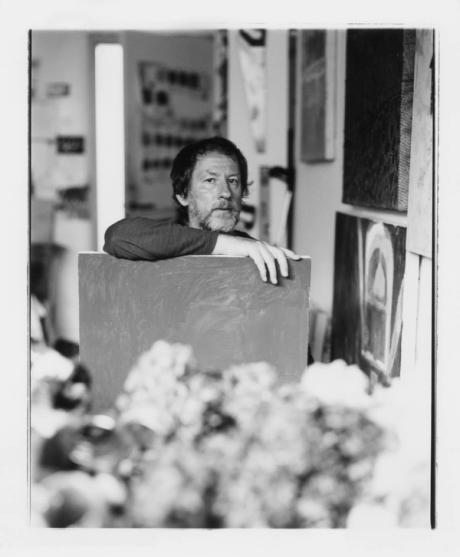
This episode of 'A brush with...' podcast features Scottish painter Andrew Cranston, born in 1969 in Hawick. Cranston discusses how his work draws on personal experiences—childhood memories, family recollections, and recent rituals—filtered through the painting process. His pictures are rich with references to art history, cinema, poetry, and television, and he often paints on the covers of old hardback books. The conversation covers his influences (Pieter Bruegel the Elder, Paul Klee, Pierre Bonnard, Winifred Nicholson, writers Hugh MacDiarmid and Elizabeth Bishop, filmmakers Nicholas Roeg and Dennis Potter), his studio life, and his answer to 'what is art for?' The episode is sponsored by Bloomberg Connects.

Isabel Nolan’s Work Challenges Everything We Think We Know About Creativity

Artist Isabel Nolan recently discovered she has aphantasia, a rare neurological condition that prevents her from visualizing mental images. Despite this, Nolan has built a successful career creating abstract sculptures, drawings, and tapestries, and her work is featured in the Irish Pavilion at the Venice Biennale. Her exhibition, "Dreamshook," explores themes of imagination versus reality and draws inspiration from late medieval history and the printer Aldo Manuzio.

Expanded Vocabulary: Revisiting Deborah Kass’ Studio

The article recounts the author's visit to Deborah Kass's Brooklyn studio, which she shares with her wife, artist Patricia Cronin. The visit was prompted by logistical issues related to the author's exhibition "Social Minimalism" (2025). During the visit, the author and Kass revisited themes central to Kass's work over three decades: the exclusion of women from art history, Jewish identity, queer voice, lesbian subjectivity, and postwar American art. The conversation also touched on Kass's series including the Warhol Project, Feel Good Paintings, No Kidding, and the large painting/sculpture installation "Everybody" (2019), which was recently featured in a conversation between Kass and Titus Kaphar in Interview magazine.

Martin Schongauer in 2 Minutes

Martin Schongauer en 2 minutes

Martin Schongauer (c. 1445–1491), the Alsatian painter, draftsman, and engraver, is celebrated as the greatest German copperplate engraver before Albrecht Dürer and one of the first artists to achieve pan-European fame in his lifetime. The article outlines his life and career, from his early training in his father's goldsmith workshop in Colmar to his studies at the University of Leipzig and travels through Flanders, where he absorbed the influence of Rogier van der Weyden and Dirk Bouts. It highlights his 116 copper engravings, signed with the monogram 'M+S', which elevated engraving to a high art and circulated from Spain to Bohemia, inspiring Dürer and the young Michelangelo. Key works discussed include the painting 'La Vierge au buisson de roses' (1473) and the engraving 'La Tentation de saint Antoine' (c. 1470–1475).

27 Best Museums in the World for Art, History, and Cultural Wonders

This article from Travel + Leisure lists 27 of the best museums in the world, covering art, history, science, and culture. Featured institutions include the Louvre in Paris, the Metropolitan Museum of Art in New York, the Vatican Museums, the National Museum of China in Beijing, the National Gallery and Tate Modern in London, the Natural History Museum in London, the Griffin Museum of Science and Industry in Chicago, and Miraikan in Tokyo. The piece highlights iconic artworks such as the Mona Lisa, Venus de Milo, and the Sistine Chapel ceiling, as well as notable architectural features like I.M. Pei's glass pyramid at the Louvre.

Primitivism to Reinvent Art

Le primitivisme pour réinventer l’art

Philippe Dagen has published the third and final volume of his series on primitivism, covering the period from World War II to the late 1970s. The book traces how Western artists, from Barnett Newman and Jackson Pollock to members of the CoBrA movement and figures like Jean Dubuffet, Lucio Fontana, and Yayoi Kusama, engaged with so-called "primitive" art from Africa, Oceania, and the Americas, often as a means of rejecting or redefining modern civilization. Dagen also examines the intellectual debates surrounding primitivism, including the critiques of colonized peoples who refused the label "primitive," and the shifting attitudes of thinkers like Claude Lévi-Strauss, Michel Leiris, and Aimé Césaire.

"There are no minor or feminine arts." Domitilla Dardi explains this in her new book

“Non esistono arti minori o femminili”. Ce lo spiega Domitilla Dardi nel suo nuovo libro

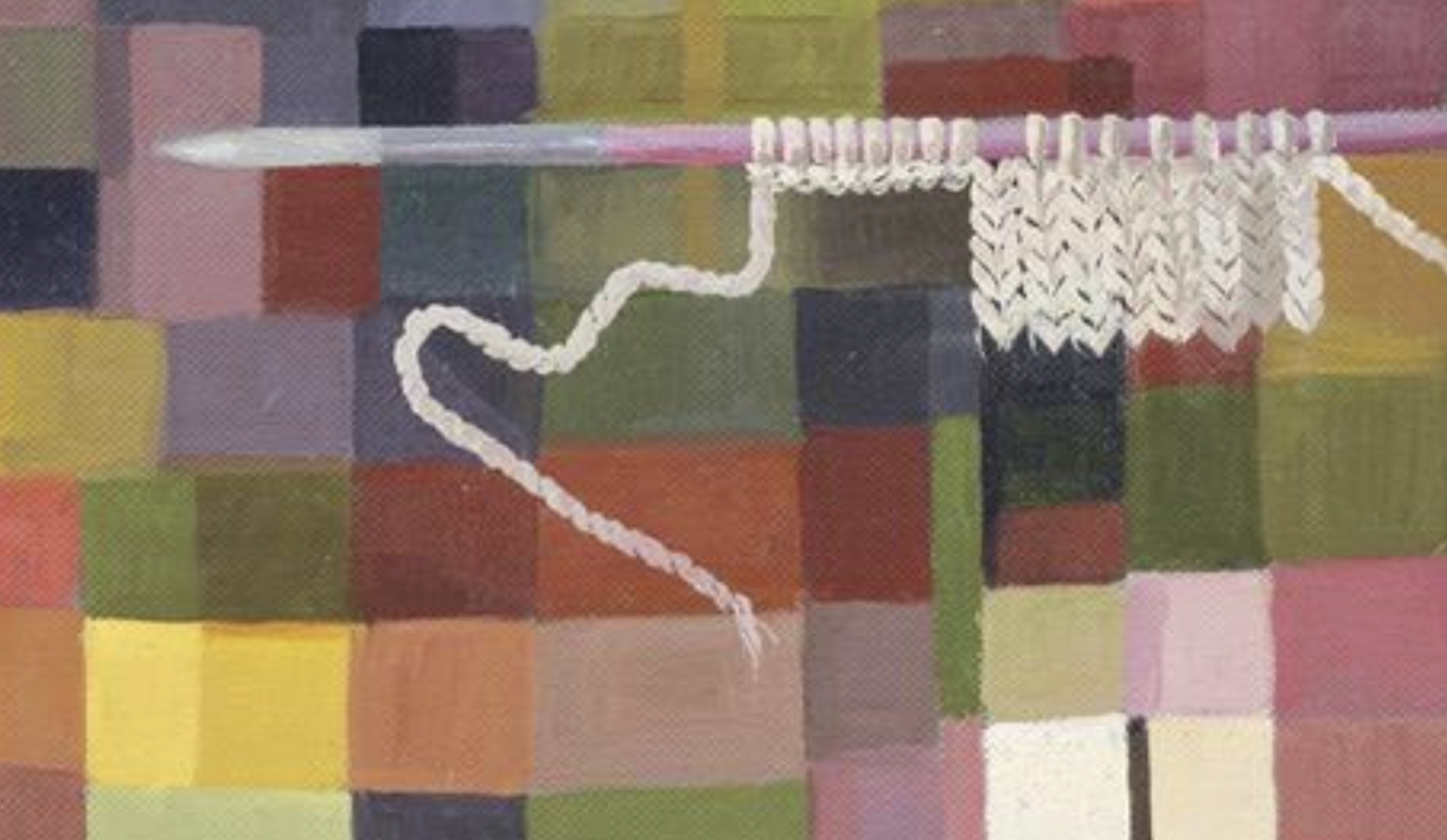
Domitilla Dardi's new book "Cucire Universi" (published by Einaudi) presents a counter-history of design, focusing on techniques traditionally dismissed as "feminine" and "minor"—such as sewing, ceramics, cooking, and knitting. The book argues that these practices have been systematically undervalued by official art histories, yet have contributed significantly to technologically advanced research fields. Dardi uses real historical figures like Emily Dickinson to illustrate how women's creative and scientific talents were channeled into these marginalized domains, and she calls for overcoming the dualistic view that separates art from craft.

GEORGE FEBRES: TRANSLATION, IRONY, AND LIBERATION. AN ECUADORIAN ARTIST IN THE DIASPORA

The article examines the life and work of George Febres (1943–1996), an Ecuadorian artist who spent most of his career in the United States, primarily in New Orleans. Febres’s practice blends Pop Art, Neo-Surrealism, and Southern US culture with his experiences as a migrant and queer subject, using bilingualism and ironic tropical imagery to create a hybrid, irreverent body of work. Despite his significance, no works by Febres exist in Ecuadorian public collections, and no major retrospective has been held in his home country, reflecting a broader erasure of queer narratives from national art history.

When archaeology was dominated by men | Letters

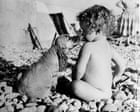
A reader named Elke Bachler writes a letter to The Guardian challenging a sentence in a review of Thomas Laqueur's book *The Dog's Gaze*. The review described a prehistoric scene as showing "a boy and a dog" standing together in wonder before cave art. Bachler argues there is no evidence the child was a boy, noting that archaeology has historically been dominated by men who interpreted evidence through contemporary gender roles.

Forgers, One-Way Mirrors of the Art Market

Les faussaires, miroirs sans tain du marché de l’art

Anthropologist Monique Jeudy-Ballini has published a new book, "Peintres de l’ombre. Les faussaires à l’œuvre," in which she examines art forgers through an ethnographic lens. Drawing on autobiographical accounts, published interviews, and expert writings—including those of notorious forgers Wolfgang Beltracchi, Eric Hebborn, and Guy Ribes—she explores the motivations and practices of these clandestine figures, arguing that their work involves not only technical skill but also the creation of elaborate narratives and pedigrees for their forgeries. The book is part of the Ethnologiques series edited by Philippe Descola and published by Éditions Mimésis.

An Art Historian’s Riotous Novel Melds Medieval Art with Monica Lewinsky

Julia Langbein's new novel *Dear Monica Lewinsky*, published by Doubleday, follows translator Jean Dornan as she revisits a traumatic relationship with a professor from her youth, set against the backdrop of the 1998 Monica Lewinsky scandal. The story interweaves medieval art, particularly the 13th-century *Golden Legend*, with Lewinsky's public shaming, as Jean prays to Lewinsky for guidance and is visited by a haloed version of her. Langbein, an art historian with a PhD from the University of Chicago, draws on her expertise to explore themes of humiliation, self-estrangement, and collective experience.

In the Studio with Jevon Brown

Artist Jevon Brown, a Miamian of Bahamian, Jamaican, and Black Southern descent, discusses his multidisciplinary practice in an interview conducted in his Miami Beach apartment and studio. Brown works across textiles, silkscreen printing, fashion, and photography to explore cultural identity, belonging, queerness, and history. He describes how memories of Miami sunsets, family members like his uncle (a sneakerhead and hat collector), and ancestral references inform his creative process. Key works discussed include the "HAIREtage" series (2025), which uses materials like burlap and raffia to connect contemporary streetwear culture with African and Caribbean spirituality, and his inclusion in the exhibition "Material, Material World" at David Castillo Gallery.

Exploring Shekhawati: Rajasthan’s open-air art gallery of frescoed havelis

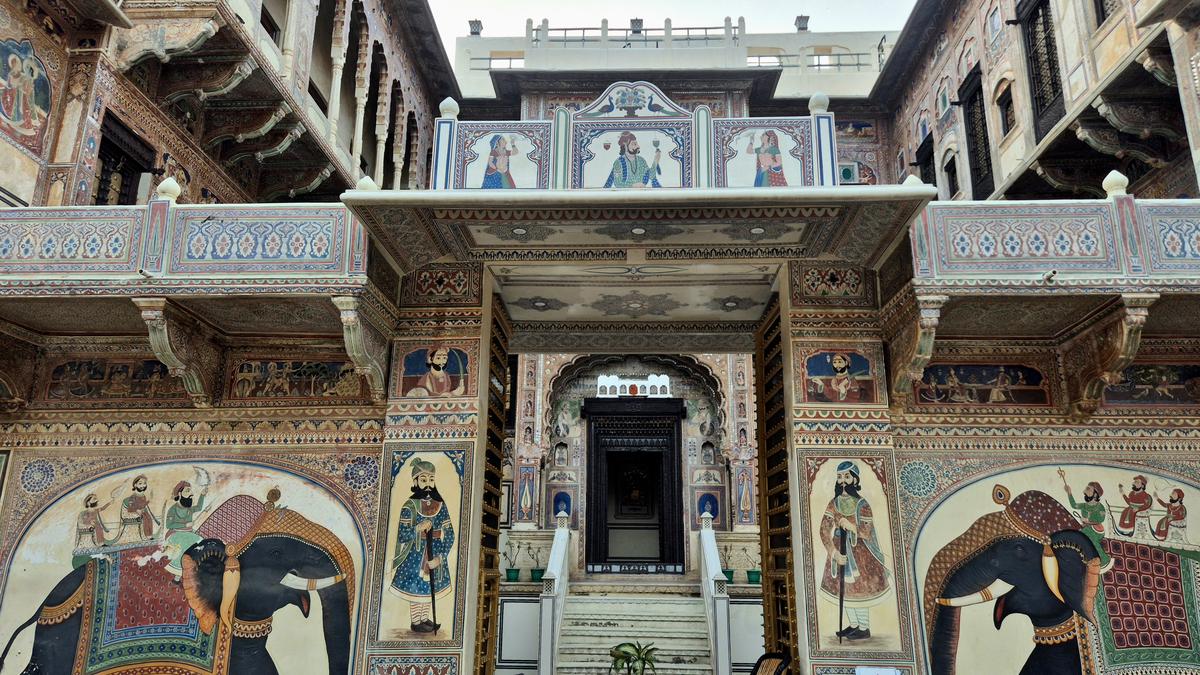
The article explores the Shekhawati region of northern Rajasthan, India, known as the world's largest open-air art gallery. It focuses on the 18th–20th century merchant havelis (mansions) hand-painted with intricate frescoes, many of which are now being restored as heritage hotels. The author recounts a personal stay at Malji Ka Kamra, a restored haveli in Mandawa, describing its blend of Italianate and Rajput architecture and the overwhelming frescoes covering every surface, depicting portraits, floral motifs, and scenes of daily life.