filter_list Showing 48 results for "the Guardian" close Clear
search
dashboard All 48 museum exhibitions 20article culture 10rate_review review 6article news 4candle obituary 4trending_up market 2gavel restitution 1article local 1
date_range Range Today This Week This Month All
Subscribe

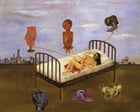
‘This is mine, I own it’: how Tracey Emin and Frida Kahlo inspired me to make meaning out of pain

The article is a personal essay by a writer who, after undergoing a colectomy in 2023, found inspiration in Tracey Emin's unflinching self-portraiture following her 2020 cancer diagnosis. The author describes taking her own post-surgery photographs, echoing Emin's mantra "This is mine, I own it," and reflects on Emin's current work, including the Tate Modern exhibition and paintings like "I watched Myself die and come alive" (2023) and "Barbed Wire Stitches" (2024). The essay also connects Emin's approach to that of Frida Kahlo, whose retrospective is upcoming at Tate.

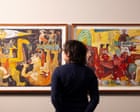
From Normal to Ania Magliano: your complete entertainment guide to the week ahead

The Guardian's weekly entertainment guide includes a section on art exhibitions, highlighting two shows opening in the UK. Godfried Donkor's solo exhibition at Firstsite in Colchester runs from 22 May to 30 August, weaving stories of resistance from Boudicca to Yaa Asantewaa through collage, painting, and textile. Delcy Morelos's installation at the Barbican in London, running until 31 July, fills the space with huge mounds of earth, clay, and spices to create immersive environments based on Andean and Amazonian knowledge. The guide also mentions Phantasmagoria at the Henry Moore Institute in Leeds, exploring video games and digital art.

‘I couldn’t believe we weren’t falling over ourselves for it’: Asia-Pacific art finally conquers Britain

The Victoria and Albert Museum (V&A) in London has opened "Rising Voices: Contemporary Art from Asia, Australia and the Pacific," a major exhibition produced in partnership with the Queensland Art Gallery | Gallery of Modern Art (QAGOMA) in Brisbane. Featuring over 70 works never before exhibited in the UK, the show draws from QAGOMA's Asia Pacific Triennial of Contemporary Art (APT), which began in 1993. Highlights include Michael Parekōwhai's sculpture of a Māori bouncer, Montien Boonma's terracotta bell installation, and Takahiro Iwasaki's intricate wooden model. The exhibition is the first APT survey to be held outside Australia and Chile, arriving after years of planning by V&A exhibitions director Daniel Slater.

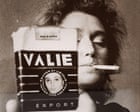
Renowned feminist artist and film-maker Valie Export dies aged 85

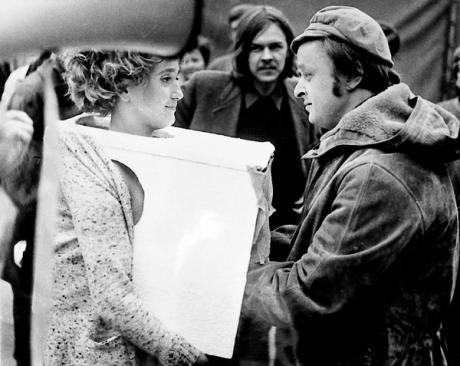
Valie Export, the Austrian performance artist and film-maker known for her provocative feminist works that challenged the male gaze, has died at age 85. Her foundation announced she died in Vienna on Thursday, three days before her 86th birthday. Export gained notoriety in the late 1960s for low-budget performances such as "Tapp und Tastkino" (1968), where she invited shoppers to touch her bare breasts through a tiny curtain strapped to her chest. She also co-founded the Austrian Filmmakers Cooperative, participated in documenta (1977, 2007) and the Venice Biennale (1980), and was a professor of multimedia and performance at the Academy of Media Arts in Cologne.

Queer eyes in focus, sculpture hits pay dirt and Whistler’s world – the week in art

This week's art roundup from The Guardian highlights a major exhibition of James McNeill Whistler at Tate Britain, showcasing the American artist's impact on Victorian Britain with avant-garde influences from Paris and Japan. Other notable exhibitions include "Gender Stories" at the Walker Art Gallery in Liverpool, featuring works by David Hockney and Grayson Perry; Delcy Morelos's earthy sculptures at the Barbican Centre; and Henry Moore's sculptures at Kew Gardens. The article also covers news of a Nazi-looted portrait found in the home of a Dutch SS leader's family, protests at the Venice Biennale over Israel's inclusion, and the unveiling of Zineb Sedira's film installation at Tate Britain.

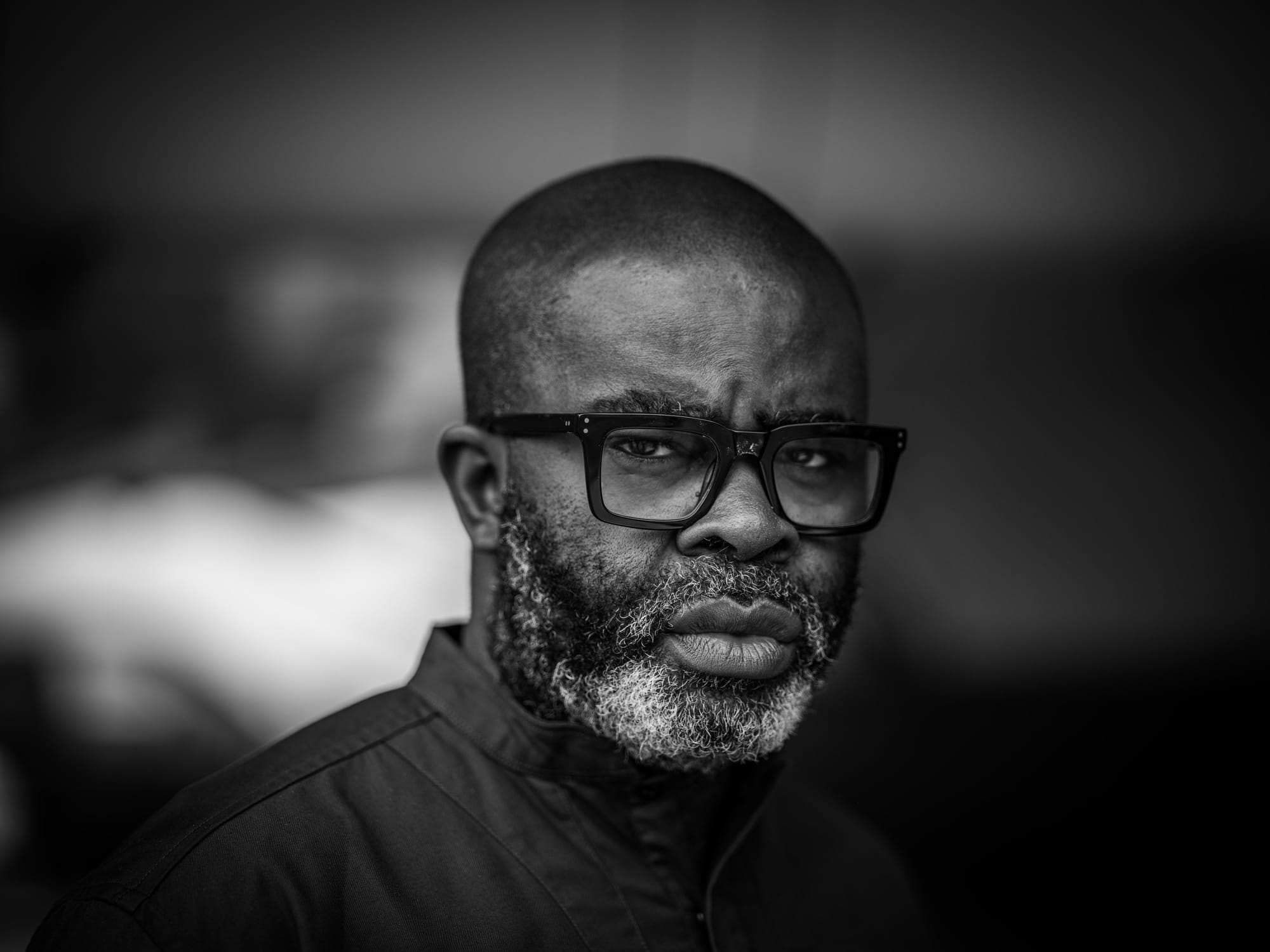
Thousands Decry Right-Wing “Smear Campaign” Against Misan Harriman

Over 97,000 people have filed complaints with the UK's Independent Press Standards Organisation against right-wing news outlets, including the Telegraph, for articles characterizing Misan Harriman's social media posts as antisemitic. Harriman, a photographer, human rights activist, and chair of London's Southbank Centre, has rejected the accusations, stating he has long championed marginalized communities and that the backlash stems from his criticism of Israel's actions in Gaza. An open letter supporting Harriman has been signed by 245 figures, including Tracey Emin, Greta Thunberg, and Mark Ruffalo, while the Telegraph published two articles scrutinizing his Instagram activity, prompting calls from Labour MP David Taylor for his removal from the board.

Queer art, bowler hats and an Annie Hall script: inside Diane Keaton’s archive as treasures go on sale

Diane Keaton is auctioning a vast archive of personal effects through Bonhams, including a massive collage she created over decades, clothing, scripts, and art. The sales, titled "Diane Keaton: The Architecture of an Icon," span multiple categories—from her menswear-inspired wardrobe to her photographic works and home design objects. Highlights include her original Annie Hall script, a sequined Gucci suit, and works by artists like David Wojnarowicz. The auction will be held live in New York City on 8 June, with previews in West Hollywood.

Naked jetskiers, giant bells and a celebrity seagull! Venice Biennale’s wildest moments – in pictures

The Guardian presents a photo essay capturing the most eccentric and memorable moments from the 61st Venice Biennale, running until 22 November 2026. Photographer David Levene documents installations including a concrete 'Origami Deer' evacuated from war-torn Pokrovsk, Ukraine, by artist Zhanna Kadyrova; a seagull that became a minor celebrity after nesting outside the Polish pavilion; and the Holy See pavilion's immersive sound installation curated by Hans Ulrich Obrist and Ben Vickers. Other highlights include the Egyptian pavilion's touch-and-smell 'Silence Pavilion' and a Polish pavilion film featuring deaf and hearing singers.

The art world remembers Valie Export, Austrian pioneer of feminist performance art

VALIE EXPORT, the Austrian pioneer of feminist performance art, died on 14 May, three days before her 86th birthday. Her death was confirmed by her representative, Thaddaeus Ropac. Born Waltraud Lehner in Linz in 1940, she developed a radical artistic language centered on the female body, known for works such as *Tap and Touch Cinema* (1968–1971) and *Body Configurations* (1972–1976). Tributes have poured in from artists, writers, and institutions, including the Neue Nationalgalerie in Berlin and the Belvedere Museum in Vienna, where director Stella Rollig noted their ongoing collaboration on the exhibition *Feminist Futures Forever*.

Behold! Nina Simone’s chewing gum! Inside the show celebrating extreme pop fandom

The Guardian reports on 'Holy Pop,' a new exhibition at London's Somerset House that celebrates extreme pop fandom through personal shrines and collections. The show features photographer Alice Hawkins's Dolly Parton shrine, including leaves from Parton's garden and hair extensions, alongside artifacts from fans of Prince, the Spice Girls, George Michael, Marc Bolan, and others. Curated by Tory Turk, the exhibition includes visual art by Graham Dolphin and Tox26, as well as films and photos of fans visiting stars' graves and impromptu memorials.

‘I can use it, I can abuse it’: Tony Albert spent decades collecting racist ‘Aboriginalia’. Now he wants to turn yours into art

Tony Albert, a 45-year-old artist of Girramay, Yidinji, and Kuku-Yalanji heritage, has spent decades collecting thousands of objects he terms 'Aboriginalia'—kitsch, caricatured, and often racist depictions of Aboriginal people created by non-Indigenous Australians. His solo exhibition 'Not a Souvenir' opens at the Museum of Contemporary Art (MCA) in Sydney on 21 May, showcasing over 3,000 items from his collection alongside transformed artworks. The MCA is inviting the public to donate additional Aboriginalia items to Albert's collection, which is housed in his Brisbane studio.

‘America’s Mona Lisa’: how chance, genius and cheap paint made the masterpiece Whistler’s Mother

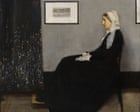
James Abbott McNeill Whistler's iconic painting of his mother, Anna, known as 'Whistler’s Mother' or 'Arrangement in Grey and Black No 1', is returning to London for the first time in nearly two generations as part of a Tate Britain exhibition. The article recounts how the portrait was painted in 1871 in Whistler's Chelsea studio during a low point in his career, using cheap paint and a used canvas after a young sitter canceled. The author, who restored the painting for the Musée d'Orsay, details the work's accidental genesis, Whistler's radical minimalist aesthetic, and the initial critical confusion it caused.

‘Surfers say, that board is so sick!’ The French artist redesigning the surfboard like you’ve never seen before

French designer and musician Lucas Lecacheur is creating wildly unconventional yet functional surfboards and skateboards, including a split board resembling crab pincers, a stingray-like shape, and a Brutalist board. Currently in Australia for Melbourne Design Week, Lecacheur is living and working out of At The Above gallery in Fitzroy, where he is crafting new boards like the cowboy boot-nosed Château Rouge. His designs, made with traditional materials like fiberglass, push the boundaries of surfboard norms while remaining rideable.

Fantastic visions and cosmic rhythms: how Whistler is making me see – and hear – differently

The article explores how the James McNeill Whistler exhibition at Tate in London prompts a reconsideration of the relationship between music and visual art. Whistler titled his works using musical terms like "Arrangement," "Symphony," and "Nocturne," arguing that painting should be abstract and independent of narrative, much like instrumental music. The exhibition, reviewed by Jonathan Jones, highlights Whistler's radical art-for-art's-sake philosophy, which influenced composer Claude Debussy, whose orchestral Nocturnes were directly inspired by Whistler's paintings of light and atmosphere.

Winston Churchill: The Painter review – We will daub them on the beaches

The Guardian reviews "Winston Churchill: The Painter," an exhibition of nearly 60 paintings by the former British prime minister, curated by Xavier Bray and Lucy Davis. The show assembles works from across the UK and private collections, depicting scenes from Churchill's travels, stately homes, and leisure moments, painted as an amateur Sunday painter for stress relief rather than artistic acclaim. The review notes Churchill's use of techniques borrowed from Walter Sickert, including projectors and monochrome underlayers, and describes his style as charmingly amateurish with a vivacity in seascapes but weakness in figures and architectural luminosity.

James McNeill Whistler review – a luscious, seductive blockbuster for the painter who scandalised Britain

Tate Britain has opened a major retrospective dedicated to James McNeill Whistler, the American painter who scandalized Victorian Britain. The exhibition centers on his iconic work *Arrangement in Grey and Black No. 1* (commonly known as *Whistler's Mother*), lent by the Musée d'Orsay, and traces his evolution from raw realist scenes of London's docks to radical, abstract celebrations of color and pattern. It includes a reconstruction of *The Peacock Room* and highlights his rivalry with critic John Ruskin, who accused him of 'flinging a pot of paint in the public's face.'

Let’s dress like a Mark Rothko! How gen Z fell for the king of colour field paintings

Mark Rothko, the abstract expressionist known for his color field paintings, is experiencing a cultural resurgence among Generation Z on social media platforms like TikTok and Instagram. Videos inspired by his work amass hundreds of thousands of views, with creators styling outfits based on his canvases, assigning his paintings to personality archetypes, and comparing his palettes to dream pop bands like the Cocteau Twins. The Rothko Chapel in Houston, Texas, has also seen a wave of curious young visitors drawn to the meditative, confrontational experience of his art.

‘Depraved in all the right ways’: why forgotten no wave visionary Gordon Stevenson is about to take off

The article profiles Gordon Stevenson, a forgotten visionary of the no wave movement in late-1970s New York, who was an artist, jewelry designer, musician, and filmmaker best known for the notorious film *Ecstatic Stigmatic*. Decades after his death from AIDS, a storage unit full of his lost work has been discovered, including jewelry, mail-art collaborations with Ray Johnson, and clues to a surviving print of his film. His family has also recovered hundreds of letters he wrote to his parents, chronicling his life in downtown New York and his experiences as one of the city's first AIDS patients. The piece traces his journey from a small town in Georgia, where he met his wife Mirielle Cervenka (who later renamed Exene Cervenka), to their punk-era jewelry brand LHOOQ and his lasting influence on gothic fashion.

After dinosaurs, it’s spot the dog! But can a child really learn anything in a gallery?

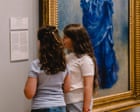
Neil Osborne and his three-year-old daughter Daisy visit the National Museum Cardiff (NMC), where they explore both dinosaur exhibits and art galleries. Daisy, like many toddlers, engages with paintings by describing what she sees—calling a JMW Turner seascape "a fish." The article follows the author as she investigates whether children under five can learn from art in museums, speaking with parents and Catrin Rowlands, head of learning at NMC. NMC is one of 15 UK museums participating in Mini Wonders, a fully funded program by Art Fund and Nesta that offers eight-week courses for families from disadvantaged backgrounds, providing digital cameras and scrapbooks to encourage repeated museum visits and school readiness.

Printmaking skills of Manet, Van Gogh and more celebrated in Bath show

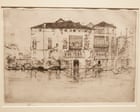
An exhibition titled *Beyond Impressionism* at the Holburne Museum in Bath showcases over 50 prints by artists such as Édouard Manet, Vincent van Gogh, Paul Gauguin, James McNeill Whistler, Henri de Toulouse-Lautrec, and Pablo Picasso. The show, running from 23 May to 13 September, highlights how impressionist, post-impressionist, and cubist painters revived printmaking in the late 19th and early 20th centuries, elevating it from commercial reproduction to a respected artistic medium. Works are drawn from public collections including the Courtauld Gallery and Ashmolean, as well as private collections.

‘You look at it and you just feel better’: this year’s Photoville festival highlights

The 15th annual Photoville festival in New York features over 90 photographic exhibits, ranging from whimsical subjects like cosmic-looking apples in "Old Apples" to hard-hitting reportage on wildfires, water access inequalities, and ICE's impact on communities. Notable exhibits include "Special Girls," showcasing 1990s photos of trans women from the Remsen Wolff archive, and "Point of View," pairing self-portraits by Dutch college students with Rijksmuseum artworks. Other highlights include Lexi Parra's "The Avillas," documenting a family after a matriarch's self-deportation, and "Puppies Behind Bars," a photo series on incarcerated men raising service dogs at Green Haven prison.

The Netherlands is confronting its history of Nazi occupation – but many stolen objects remain unreturned

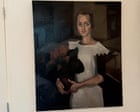
Arthur Brand, a Dutch art detective, was contacted by a man who discovered that his family descended from Hendrik Seyffardt, a high-ranking Nazi collaborator, and that a painting looted from Jewish art dealer Jacques Goudstikker remained in their possession. The painting, Toon Kelder's *Portrait of a Young Girl*, had hung in a relative's home near Utrecht for years. The family, who changed their name after WWII, handed the painting to Brand after the story broke in Dutch media, expressing shame and outrage over the silence surrounding their history.

‘It smells like my ranch!’ Diva of dirt Delcy Morelos and her amazing 30-tonne earthworks

The article profiles Colombian artist Delcy Morelos and her immersive earthwork installations, focusing on two major works: 'The Womb Space' in Mexico City, which has drawn over 60,000 visitors in its final month, and 'Origo', a new 24-metre-wide outdoor pavilion opening at the Barbican in London. Morelos creates vast soil sculptures sourced from specific regions, evoking sensory experiences of smell, touch, and memory, and invites visitors to contemplate their connection to the earth. The piece includes her reflections on Andean cosmovision, the sacredness of nature, and her 14-year artistic inquiry into soil as a humble yet life-sustaining material.

‘Her crotchless trousers are etched in my brain for ever’: Valie Export remembered by the artists she influenced

Valie Export, the pioneering Austrian feminist artist known for provocative performances like *Tapp-und-Tastkino* (1968) and *Genital Panic* (1969), is remembered by four artists she influenced: Peaches, Florentina Holzinger, Joan Jonas, and Candice Breitz. Each shares personal reflections on Export's radical use of the female body as a political weapon, her confrontational public interventions, and her legacy of civil disobedience against patriarchal structures.

‘We can all coexist’: artist Es Devlin uses selfies to unite UK in portrait of a nation

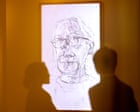
Artist Es Devlin has created a new installation at the National Portrait Gallery in London titled 'A National Portrait for the National Portrait Gallery,' made in collaboration with Google Arts & Culture Lab. The work invites people across the UK to upload selfies, which are transformed into charcoal-and-chalk-style portraits using an AI model trained on Devlin's own hand-drawn works. These portraits then appear on a constantly evolving projected carousel, blending and dissolving into one another. Devlin, known for designing visual worlds for Beyoncé, Adele, and the London Olympics closing ceremony, describes the piece as a non-verbal space for coexistence amid national division.

Most famous image of JMW Turner not a self-portrait, says expert

Dr James Hamilton, a leading Turner expert, has claimed that the most famous portrait of JMW Turner—long believed to be a self-portrait and featured on the UK £20 banknote—is actually by the painter John Opie. Hamilton argues that the work, dated around 1799, was mistakenly included in the Turner Bequest after the artist's death in 1851, when his studio was in disarray and the attribution was never properly verified. He points to stylistic evidence, including Opie's characteristic use of dramatic light and shadow, and calls on Tate Britain to reattribute the painting.

Rene Matić wins 2026 Deutsche Börse Photography Foundation Prize

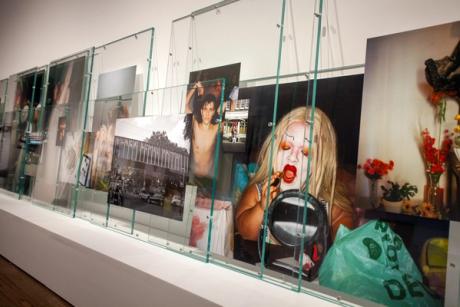
Rene Matić has won the 2026 Deutsche Börse Photography Foundation Prize, becoming the first British winner in over a decade. The announcement was made at The Photographers’ Gallery in London on May 14, 2025, where Matić received £30,000 for their exhibition *AS OPPOSED TO THE TRUTH*, which uses photography, installation, and sound to explore identity and belonging. Matić was nominated for the show at the Center for Contemporary Arts Berlin (CCA Berlin) and is also a recent Turner Prize nominee. The prize exhibition runs at The Photographers’ Gallery until June 7, alongside works by fellow shortlisted artists Jane Evelyn Atwood, Weronika Gęsicka, and Amak Mahmoodian.

Jackson Pollock painting sells for record $181m at Christie’s in New York

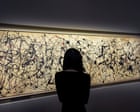
Jackson Pollock's painting *Number 7A, 1948* sold for a record $181.2 million at Christie’s in New York, becoming the fourth most expensive work ever sold at auction. The sale also saw record prices for works by Constantin Brâncuși, Mark Rothko, and Joan Miró, with Brâncuși's bronze head *Danaïde* fetching $107.6 million and Rothko's *No 15 (Two Greens and Red Stripe)* selling for $98.4 million.

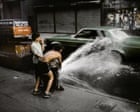
You can spray that again! New York drenched in colour – in pictures

The Guardian published a photo essay featuring Harry Gruyaert's vibrant street photography of New York City, spanning over 50 years. The Belgian Magnum photographer captures the city's energy through bold color and candid moments—children playing in fire hydrants, yellow cabs, neon-lit diners, and diverse neighborhoods. The images are accompanied by text from French filmmaker Cédric Klapisch, who provides fictional vignettes that blur reality and imagination.

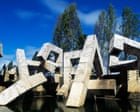
A skateboarder’s lament: the dismantling of San Francisco’s iconic and divisive fountain

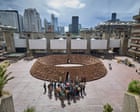
San Francisco's Vaillancourt Fountain, a controversial concrete sculpture and centerpiece of Embarcadero Plaza since 1971, caught fire during its dismantling in early May 2025 after the city voted to potentially replace it with a grassy park. Designed by artist Armand Vaillancourt, the fountain was a landmark for the city's skateboarding scene in the 1980s and 1990s, but fell into disrepair and became a flashpoint in debates over modernist public art. The removal, costing $4 million for storage and assessment, was mourned by skateboarders and preservationists who saw it as a loss of cultural and architectural heritage.