filter_list Showing 675 results for "Arm" close Clear
search
dashboard All 675 museum exhibitions 419article local 68article news 56article culture 49trending_up market 27rate_review review 25candle obituary 11article policy 10person people 5gavel restitution 5
date_range Range Today This Week This Month All
Subscribe

How the State Supports Provenance Research

Comment l’État soutient la recherche de provenance

The French Ministry of Culture has created two specialized missions to assist museums in researching the provenance of their collections, addressing looted artworks, human remains, colonial acquisitions, and illicit trafficking. The Mission for Research and Restitution of Looted Cultural Property (M2RS), established in 2019, focuses on Nazi-era spoliations (1933-1945) with a budget of €220,000 annually, while the newer Mission "Provenance," launched in 2024 under curator Catherine Chevillot, covers human remains, colonial-era objects, and illicit goods with a €450,000 budget. These missions provide expertise, funding, and coordination with institutions like the Commission for the Restitution of Property and Compensation of Victims of Anti-Semitic Spoliation (CIVS), though most museums still only initiate provenance checks during acquisitions or donations.
Nude Performance at MFA Boston Confronts One of Art’s Oldest Tropes

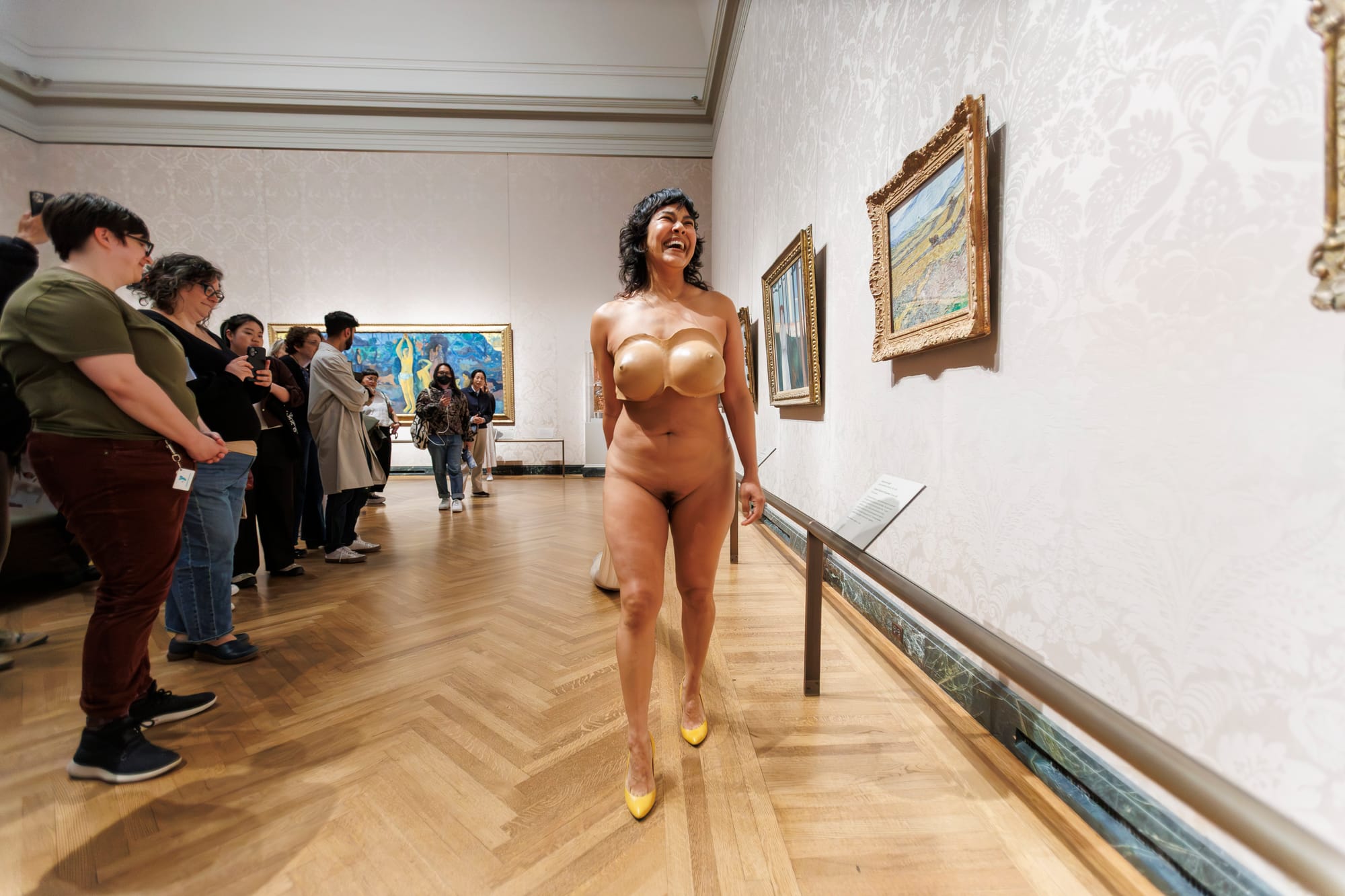
Artist Xandra Ibarra staged her performance "Nude Laughing" (2014–) at the Museum of Fine Arts Boston on April 16, appearing nude except for a breastplate and yellow heels while dragging a nylon stocking stuffed with blonde wigs and fake breasts. She moved through the galleries, laughing hysterically, and ultimately collapsed in front of Paul Gauguin's painting "Where Do We Come From? What Are We? Where Are We Going?" (1897–98). The performance was part of the exhibition "Subvert, Repair, Reclaim: Contemporary Artists Take Back the Nude," which features 12 artists critiquing racial, gender, and power hierarchies in Western art history. The event sparked heated debate on the museum's Instagram, with hundreds of commenters arguing about its legitimacy and obscenity.

May First Friday 2026: 20+ events, exhibition openings in Lancaster city this Friday

Lancaster city's May First Friday 2026 features over 20 events, including exhibition openings, concerts, and performances. Highlights include a new exhibition 'Hybrids' by artist Jeremy Waak at Curio Gallery & Creative Supply, the Demuth Museum's 'Demuth Invitational: American Reflections' tied to the U.S. 250th anniversary, and the Lancaster Living Poetry Museum II with performers embodying poets at venues like the Lancaster Public Library and Lancaster Art Vault. Other offerings include salsa dancing at Binns Park, works by York County painters at The Framing Concept, and a show inspired by Yayoi Kusama at Friendship Heart Gallery + Market.

Seen in Venice, Bought in Venice

"In Venedig gesehen, in Venedig gekauft"

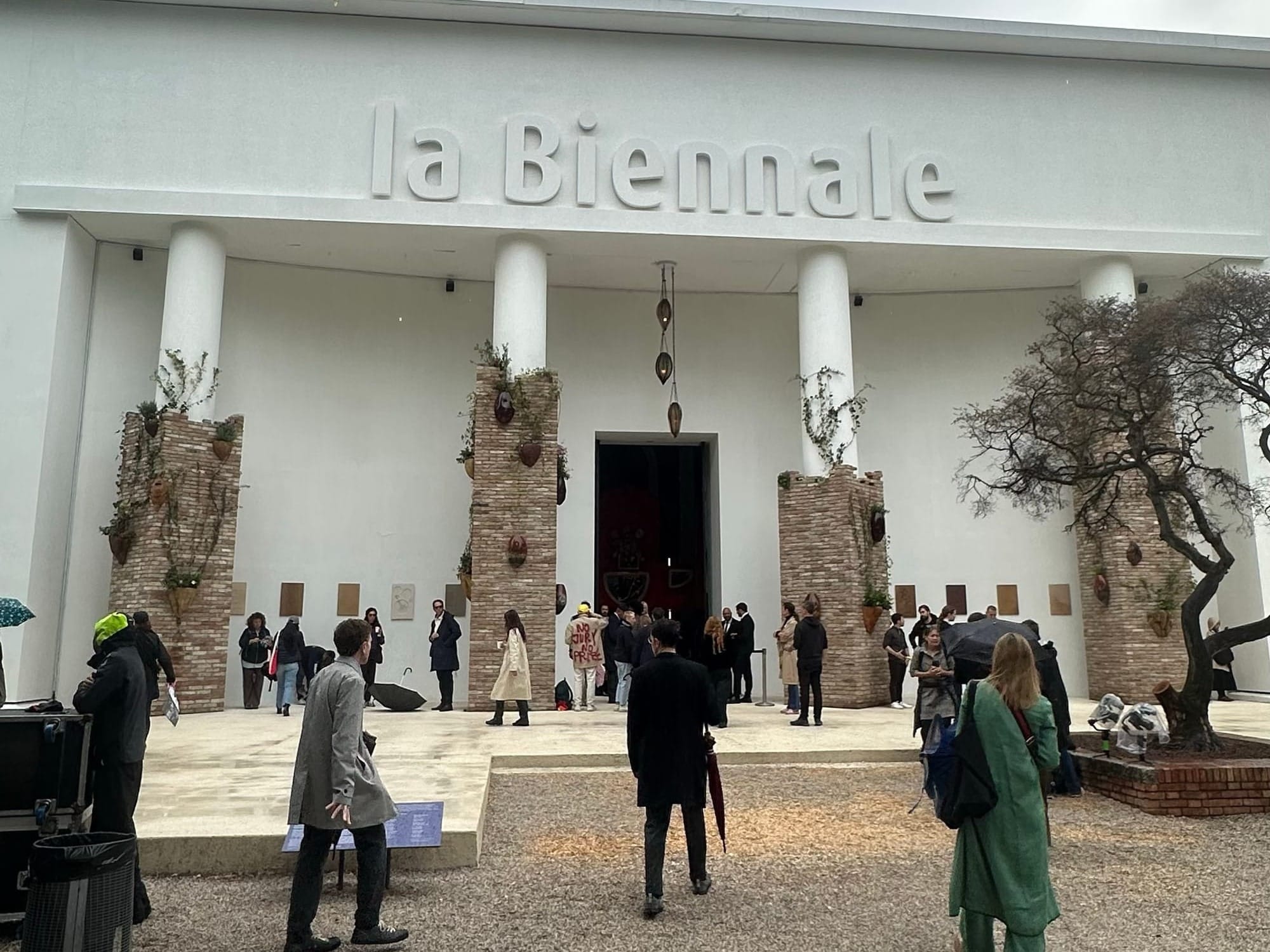
The article reports on multiple developments surrounding the Venice Biennale. Iran has withdrawn from the Biennale, citing political and economic crises, with logistical challenges such as no flights or postal service making participation nearly impossible. Artist Anish Kapoor has called for the exclusion of the United States from the Biennale, criticizing its "abhorrent policy of hate" and "ongoing warmongering." A memorial installation by Derrick Adams for the late curator Koyo Kouoh, who was set to lead the main exhibition, will be displayed near the Arsenale. Additionally, the Biennale faces a funding cut from the EU due to Russia's continued participation despite the Ukraine war, leading to the resignation of the jury and the culture minister's withdrawal.

Our Favorites of the Main Exhibition

Unsere Favoriten der Hauptausstellung

The article highlights standout artists from the main exhibition of the Venice Biennale, focusing on those whose works range from quiet observations of daily life to broader explorations of identity, memory, and community. Among them is Billie Zangewa, a Malawian-born artist based in Johannesburg, who uses raw silk to stitch intimate domestic scenes such as a morning in a bathrobe or a child in arms, transforming overlooked moments into tactile, narrative artworks.

Wer vertritt wen in Venedig?

What We Throw Away Does Not Disappear

Was wir wegwerfen, verschwindet nicht

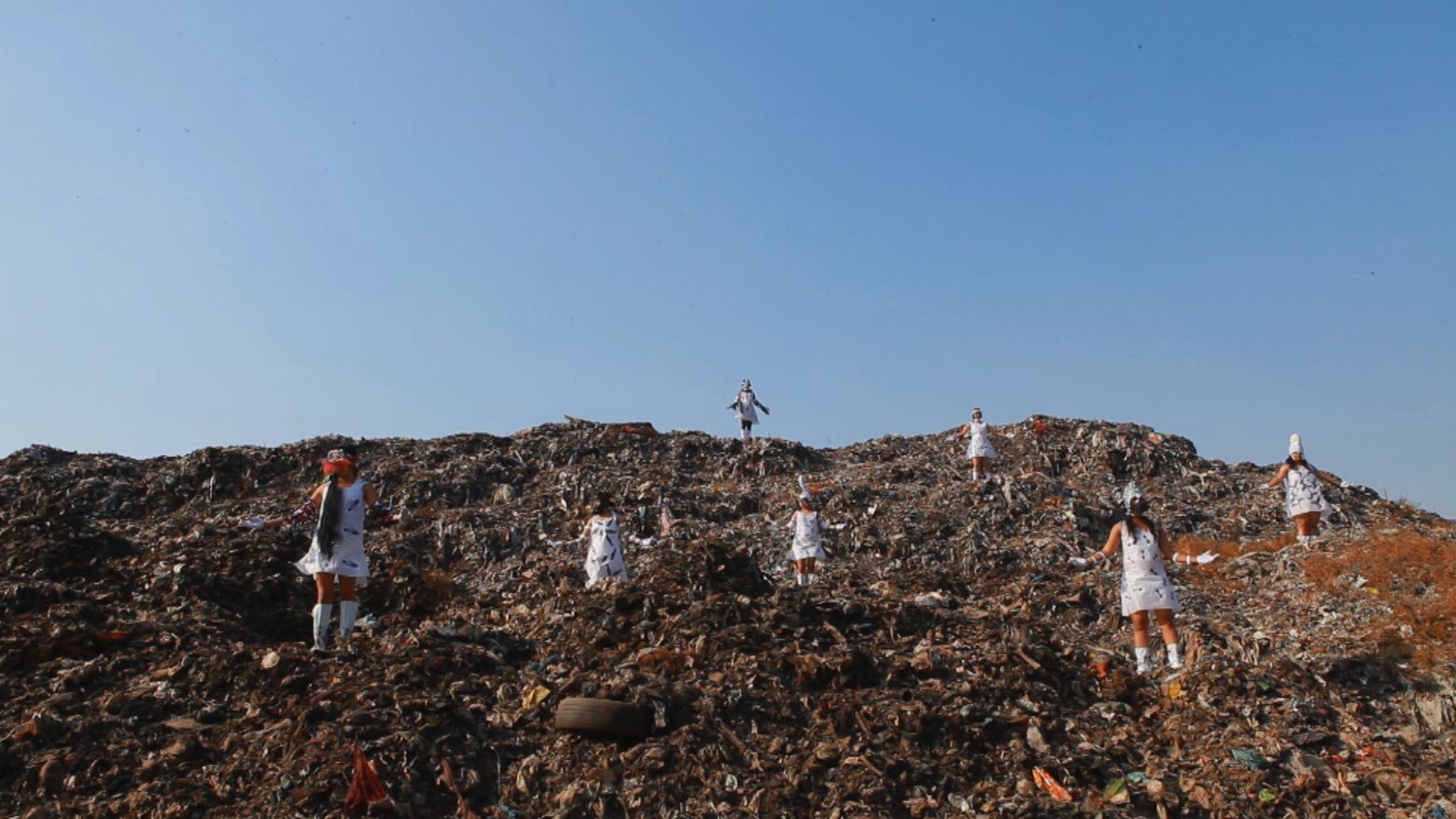
The Museum Ostwall at the Dortmunder U in Dortmund has opened a new exhibition titled "Müll – die globalen Wege des Abfalls" ("Waste – The Global Paths of Garbage"), curated by Christina Danick and Michael Griff. Featuring around 50 international artworks from the 20th and 21st centuries, including two newly commissioned pieces, the show uses art to explore waste as material, motif, and aesthetic strategy. Key works include Kader Attia's "Los de Arriba y Los de Abajo," which addresses power imbalances through the lens of garbage in Hebron, and historical pieces by César Baldaccini, Arman, and HA Schult. The exhibition also highlights contemporary issues such as e-waste, global waste trafficking, and the environmental impact of industrial nations on the Global South.

Venice Biennale 2026: The Pavilions Not to Be Missed

Biennale de Venise 2026 : les pavillons à ne surtout pas manquer

The 61st Venice Biennale, curated by Koyo Kouoh as an invitation to slow down and reconnect with emotions, features a constellation of contemplative and powerful proposals across the city. Notable national pavilions include the Holy See transforming a monastic garden into an immersive sound experience by Soundwalk Collective, Canada exploring colonial heritage through giant water lilies by Abbas Akhavan, and Austria electrifying the Giardini with radical performances by Florentina Holzinger. Other highlights include Spain dissecting collective memory through postcards, Poland imagining new forms of language between human and underwater worlds, and India's pavilion exploring notions of home.

Quelques œuvres choisies au gré des 6 salles d’exposition

The article presents a thematic tour through six exhibition rooms dedicated to still life painting, focusing on works by Giorgio Morandi and Pablo Picasso. Each room explores a different conceptual angle: the grammar of objects in Morandi's metaphysical still lifes, the poetic dimension of Picasso's cubist compositions, contemporary vanitas motifs, the anti-Albertian nature of the genre, the interplay of presence and erasure, and the dislocation of form in Morandi's etchings. The exhibition draws on art historical references from Norman Bryson and Cesare Brandi to frame the evolution of still life from tradition to radical abstraction.

‘What Color is Your Sky Today?’: The Becoming of the Image

Armineh Negahdari, a Bordeaux-based artist, presents her first institutional solo exhibition in France at the Fondation Louis Vuitton's Open Space series. Titled 'What Color is Your Sky Today?': The Becoming of the Image, the show features a new body of drawings that use charcoal, pastel, and oil paint to explore unstable morphologies between human, vegetal, and animal forms. The works resist narrative closure, emphasizing drawing as an event rather than representation, with lines that accumulate, falter, and begin again. The exhibition is on view at Gallery 8 until 30 August 2026.

Venice Biennale’s Visitor Lions Face Artist Boycott

‘How can nudity be so provocative?’ Florentina Holzinger on rocking Venice with naked jetskiers, human bells and urine divers

Florentina Holzinger, an Austrian dancer and choreographer known for provocative, physically extreme performances, is representing Austria at the Venice Biennale with a new work titled *Seaworld Venice*. The piece features naked performers on a barge in the lagoon, including a woman suspended upside down inside a cast-iron bell hoisted by a crane, a guitarist rocking at a vertiginous height, and a vocalist screaming like Yoko Ono. Holzinger’s previous opera *Sancta* included a climbing wall, nuns on roller skates, and a pregnant pope on a robot arm, and has toured European opera houses for two years.

‘Touch the earth lightly’: the Australian home that floats above the landscape

The article profiles the Ball-Eastaway House, a home designed by pioneering Australian architect Glenn Murcutt in 1983 for artist Sydney Ball and his partner Lynne Eastaway. Located on a 10-hectare block of dry sclerophyll forest northwest of Sydney, the house is elevated on 14 steel columns sunk into a sandstone rock shelf, allowing it to float above the landscape and minimize its environmental impact. Murcutt, who later won the Pritzker Prize, incorporated sustainable design features such as natural ventilation, a gutter system inspired by eucalypt leaf patterns, and a structure that can be dismantled without trace.

Fire erupts at San Francisco's Vaillancourt Fountain during its dismantling

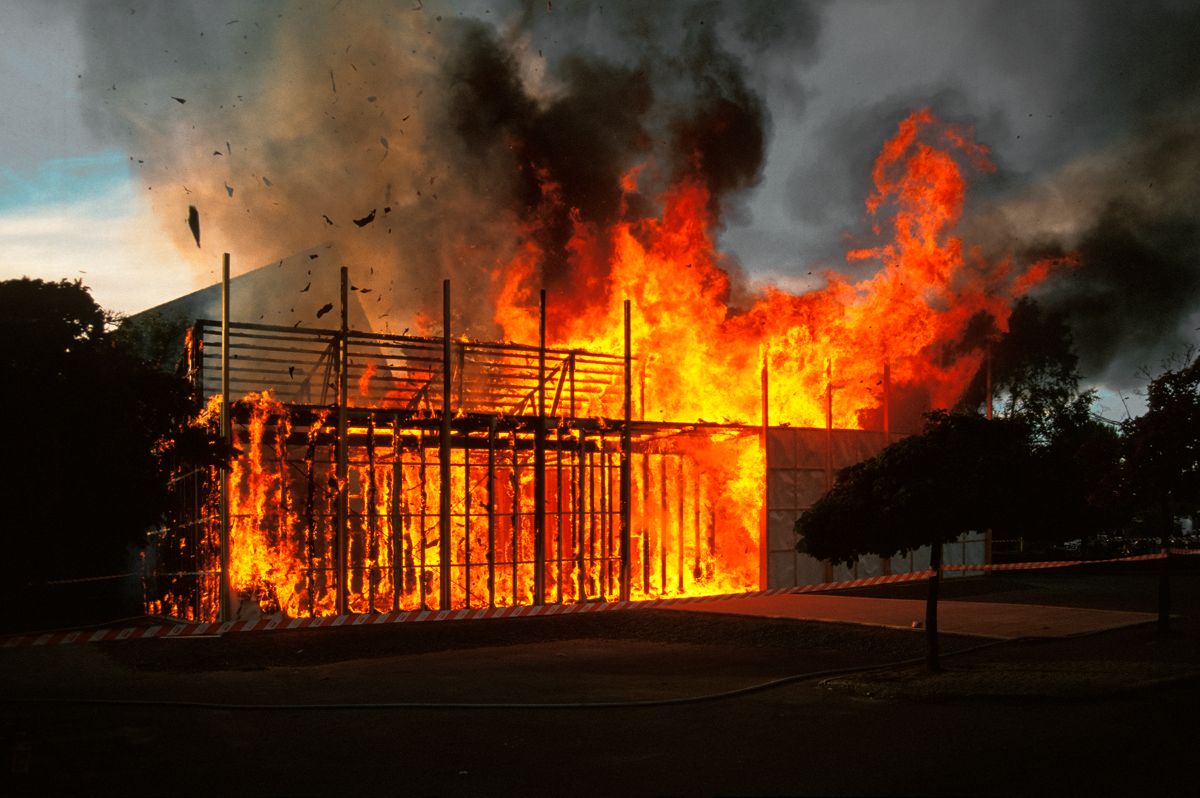
A fire broke out at San Francisco's Vaillancourt Fountain on May 4, 2025, as construction crews used torches to dismantle the 1971 Brutalist structure, igniting debris inside its steel tubes. The San Francisco Arts Commission confirmed the fire was quickly extinguished with no major damage, but the incident has raised concerns about safety protocols, as workers were reportedly not wearing protective gear against potential lead or asbestos exposure, and no public warnings were posted. The dismantling proceeded after a California appeals court denied a request from the local coalition Friends of the Plaza to halt the removal, which the city justified citing asbestos and structural risks.

Venice Biennale strike sees more than 15 pavilions temporarily or partially close

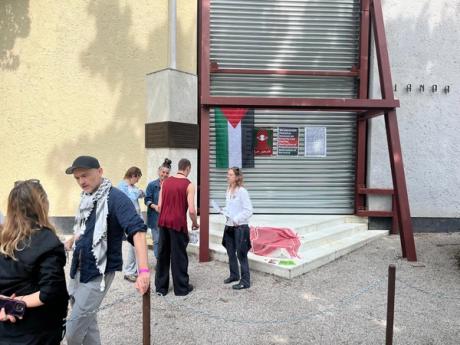
On 8 May, more than 15 national pavilions at the Venice Biennale temporarily or partially closed in a coordinated strike organized by the Art Not Genocide Alliance (ANGA). The protest opposes Israel’s participation in the event, which organizers say normalizes what they call genocide and exploits precarious labor. Participating countries include Austria, Lebanon, Slovenia, Egypt, Poland, and the Netherlands, whose artist Dries Verhoeven stood outside his shuttered pavilion with a Palestinian flag. Some pavilions, like Japan’s, remained open but suspended interactive elements. The strike follows earlier controversies, including the resignation of the prize jury and an open letter demanding the Israeli pavilion’s cancellation.

Not Just the Biennale: What to See in Venice in Spring 2026 Among Galleries, Independent Spaces, and Special Projects

Non solo Biennale: cosa vedere a Venezia nella primavera 2026 tra gallerie, spazi indipendenti e progetti speciali

The article highlights a curated selection of exhibitions to see in Venice during spring 2026, beyond the main shows of the 61st Venice Biennale. It features projects in galleries, independent spaces, and historic venues, including a group show titled "Waves" at Casa Sanlorenzo with works by Alexander Calder and Lucio Fontana, a video installation by Ieva Lygnugarytė at Oratorio dei Crociferi, a Judy Chicago survey at Galleria Alberta Pane, a solo show by Hanna Rochereau at Mare Karina, and a Barry X Ball retrospective at the Abbey of San Giorgio Maggiore.

Dozens of Venice Biennale Artists Stage ‘Drone’ Perfomance in Protest of Israel’s Participation

On the opening day of the Venice Biennale, around 60 artists and dozens of other participants staged a protest titled “Solidarity Drone Chorus” at the Giardini entrance, humming a viral song by Gazan composer Ahmed “Muin” Abu Amsha to sonically occupy the space. The action, organized by artists in the main exhibition over several months, protested Israel’s participation in the Biennale and expressed support for Palestine, with participants wearing T-shirts bearing the names and artworks of Gazan and Palestinian artists, many of whom have been killed. The protest follows an open letter from the Art Not Genocide Alliance demanding Israel’s exclusion.

Genuine Fake Premium Economy review – brilliantly obnoxious millennial rage at a rigged financial world

The exhibition "Genuine Fake Premium Economy" at a London gallery features works by American artists Jenna Bliss, Buck Ellison, and Jasmine Gregory, all born in the mid-1980s. Their pieces—including Bliss's shaky videos of New York's financial district, Ellison's fictional bank advertisements pairing classical paintings with cynical taglines, and Gregory's luxury watch ads stripped of watches—collectively express millennial rage at a rigged financial system and the aftermath of the 2008 crash.

Family of Nonagenarian Sculptor Is Fighting to Halt Demolition of Iconic Brutalist Fountain in Downtown San Francisco

The family of 96-year-old Quebecois sculptor Armand Vaillancourt is fighting to halt the demolition of his 710-ton concrete fountain, known as Québec Libre! or the Vaillancourt Fountain, in San Francisco’s Embarcadero Plaza. The city began dismantling the 1971 public artwork this week, citing a planned plaza renovation, and the disassembly is expected to cost $4 million. Vaillancourt’s son Alexis and the group Friends of the Plaza have filed an appellate petition challenging the city’s use of an emergency exemption under the California Environmental Quality Act, arguing that the fountain’s disrepair does not constitute a sudden emergency requiring immediate action.

Read a book, flip off a Nazi: when reading meant resistance – in pictures

A new exhibition at Poster House in New York, titled "Reading Under Fire: Arming Minds & Hearts During Wartime," showcases vintage posters from World War I and World War II that promoted reading and book donations to support troops. The posters, drawn from the collections of the American Library Association, the YMCA, and other organizations, encouraged the public to supply soldiers with reading material as a form of morale-boosting and education. The exhibition runs until 1 November and is curated by Molly Guptill Manning.

In Tuscany, an Artistic Sculpture Hub Thrives

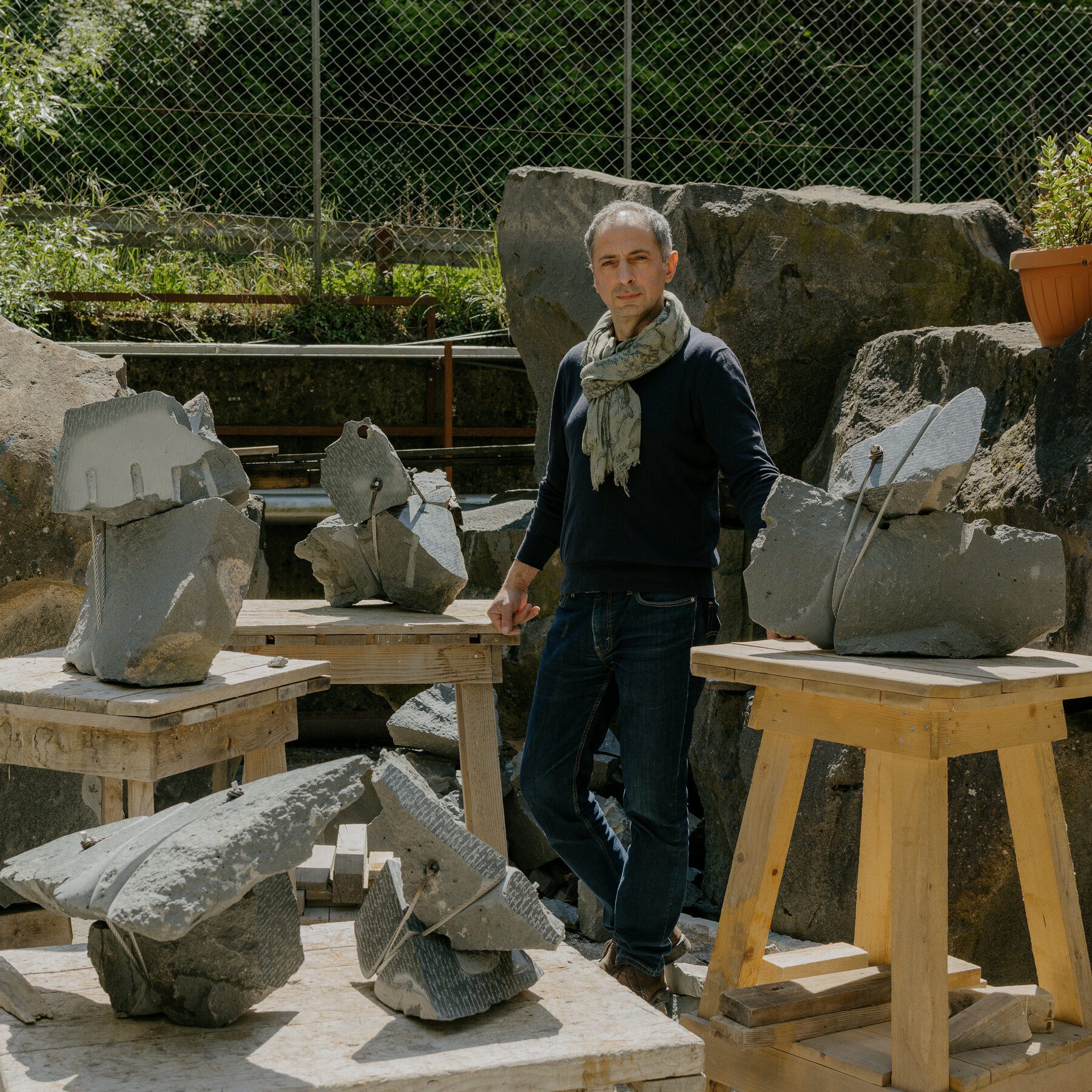
The article profiles Pietrasanta, a small town in Tuscany, Italy, that has evolved into a thriving international sculpture hub. It traces the town's artistic lineage back to Michelangelo, who sourced marble from local quarries in 1518, and highlights how today a dense network of workshops, foundries, and craftspeople attracts artists from around the world. The local government has established the Fondazione Centro Arti Visive di Pietrasanta to promote the town as a year-round art center, not just a seasonal destination. The piece features the Armenian-born artist Mikayel Ohanjanyan, who has seven sculptures on display in the town.

For the Painter Michael Armitage, Art Comes With a ‘Sense of Responsibility’

The New York Times profiles Kenyan British painter Michael Armitage, who is currently exhibiting his paintings and studies in Venice. The article explores his artistic practice, his deep connection to his Kenyan roots, and his recent relocation to Indonesia, which has influenced his work and perspective.

Dries Verhoeven on Representing the Netherlands at the 61st Venice Biennale

Dries Verhoeven will represent the Netherlands at the 61st Venice Biennale (2026) with a new work titled *The Fortress*, installed in the Dutch Rietveld Pavilion in the Giardini. The 25-minute performance piece transforms the sunlit pavilion into a darkened bunker, featuring a raw vocal composition using only false vocal cords. Verhoeven describes the work as a meditation on transition and self-preservation, reflecting a Western society caught between its enlightened self-image and a dark vision of the future. The piece responds to geopolitical unrest outside the Biennale grounds and is designed to be melancholic and confrontational, contrasting with the main exhibition's theme, *In Minor Keys*.

Pavel Brǎila on Representing Moldova at the 61st Venice Biennale

Pavel Brǎila is representing Moldova at the 61st Venice Biennale with an installation titled "Echoes of Harmony and Silent Cries" (2026), featuring flying carpets that fill the pavilion space at Santa Veneranda. In an interview with ArtReview, Brǎila explains that the work was driven by the constant presence of war in the news—Ukraine, Israel and Gaza, and other conflicts—and evolved into a sound installation as the propellers of the carpets created a minor-key resonance. He describes his first visit to the Biennale 25 years ago as a festive art festival, but now sees the platform as a crucial opportunity to represent his country's voice and express his urgent feelings about the world.

San Francisco’s Vaillancourt Fountain Catches Fire During Controversial Removal

San Francisco's Vaillancourt Fountain, a Brutalist concrete structure at Embarcadero Plaza since 1971, caught fire on Wednesday morning as workers used blow torches to disassemble it. The fire ignited rubber tubing and debris inside the sculpture's cantilevered arms, producing smoke that forced the temporary evacuation of nearby paddle board courts. The fountain is being removed to make way for a $32.5 million redevelopment of the plaza and playground into a five-acre park.

Arsenale Review: Where Voices Resist Erasure

At the 2026 Venice Biennale's Arsenale, critic Andrew Durbin reviews national pavilions, finding the US presentation vacuous and lacking meaning, while praising the British and German pavilions for their incisive and moving installations that resist erasure. The review highlights a stark contrast in curatorial ambition and political engagement among the participating nations.

Off-Site Exhibitions Review: The Politics of Listening

Andrew Durbin reviews the national pavilions at an unnamed biennial, contrasting a vacuous US presentation with incisive and moving installations from Britain and Germany. The review critiques the lack of meaningful engagement in the US pavilion while praising the depth and emotional resonance of the British and German contributions.

Ayotunde Ojo Maps Interiority Under the Public Gaze

The article, a critic's guide review by Andrew Durbin, contrasts the US national pavilion presentation at an unspecified biennial with those of Britain and Germany. The US presentation is described as vacuous and lacking in meaning, while the British and German installations are praised for being incisive and moving. The review critically examines the thematic and conceptual approaches of each national pavilion, highlighting a disparity in artistic depth and engagement.

National Pavilions Review: Who’s Afraid of Meaning?

Andrew Durbin reviews national pavilions at a major biennial, contrasting a vacuous US presentation with incisive and moving installations from Britain and Germany. The review critiques the lack of meaningful content in the US pavilion while praising the depth and emotional resonance of the British and German contributions.

Nikita Kadan Questions Whether War Ever Ends

Ukrainian artist Nikita Kadan, in an interview with Frieze, reflects on his practice and the ongoing psychological and physical toll of war, questioning whether conflict ever truly ends. He discusses his recent works, which grapple with the persistent state of war in Ukraine, the transformation of urban spaces, and the collective trauma that outlasts active hostilities.