filter_list Showing 202 results for "Israeli" close Clear
search
dashboard All 202 article news 114museum exhibitions 38article policy 22article culture 14gavel restitution 5rate_review review 3trending_up market 2candle obituary 2article local 2
date_range Range Today This Week This Month All
Subscribe

Foreign Office Reprimands Goethe-Institut for Exhibition

Auswärtiges Amt rügt Goethe-Institut für Ausstellung

The German Foreign Office has formally reprimanded the Goethe-Institut for its involvement in an exhibition in Vilnius, Lithuania, featuring Palestinian-American artist Basma al-Sharif. The ministry stated that events organized by German cultural intermediaries must leave no doubt about the government's firm rejection of antisemitism and hatred of Israel, and demanded greater care in planning and conceptualizing such events with partners. The exhibition, "Bells and Cannons - Contemporary Art in Times of Militarization," was a collaboration between the Goethe-Institut Vilnius, the Contemporary Art Centre Vilnius, and the Berlin Academy of Arts.
Israeli Pavilion artist issued legal warnings before Biennale jury resignation

Belu-Simion Fainaru, the artist representing Israel at the 2026 Venice Biennale, issued legal warnings to the Biennale, the Italian Ministry of Culture, and the Italian Prime Minister’s office after the Golden Lion jury announced it would not consider pavilions from countries whose leaders are charged with crimes against humanity by the International Criminal Court, including Israel and Russia. Fainaru’s legal threats cited alleged antisemitism and nationality-based discrimination. Shortly after, the Biennale jury resigned, prompting organizers to postpone the awards ceremony to the closing day and replace the Golden and Silver Lions with two 'Visitors’ Lions' voted on by attendees, with all national participations eligible.

Political Fallout Rocks Venice Biennale Prize System

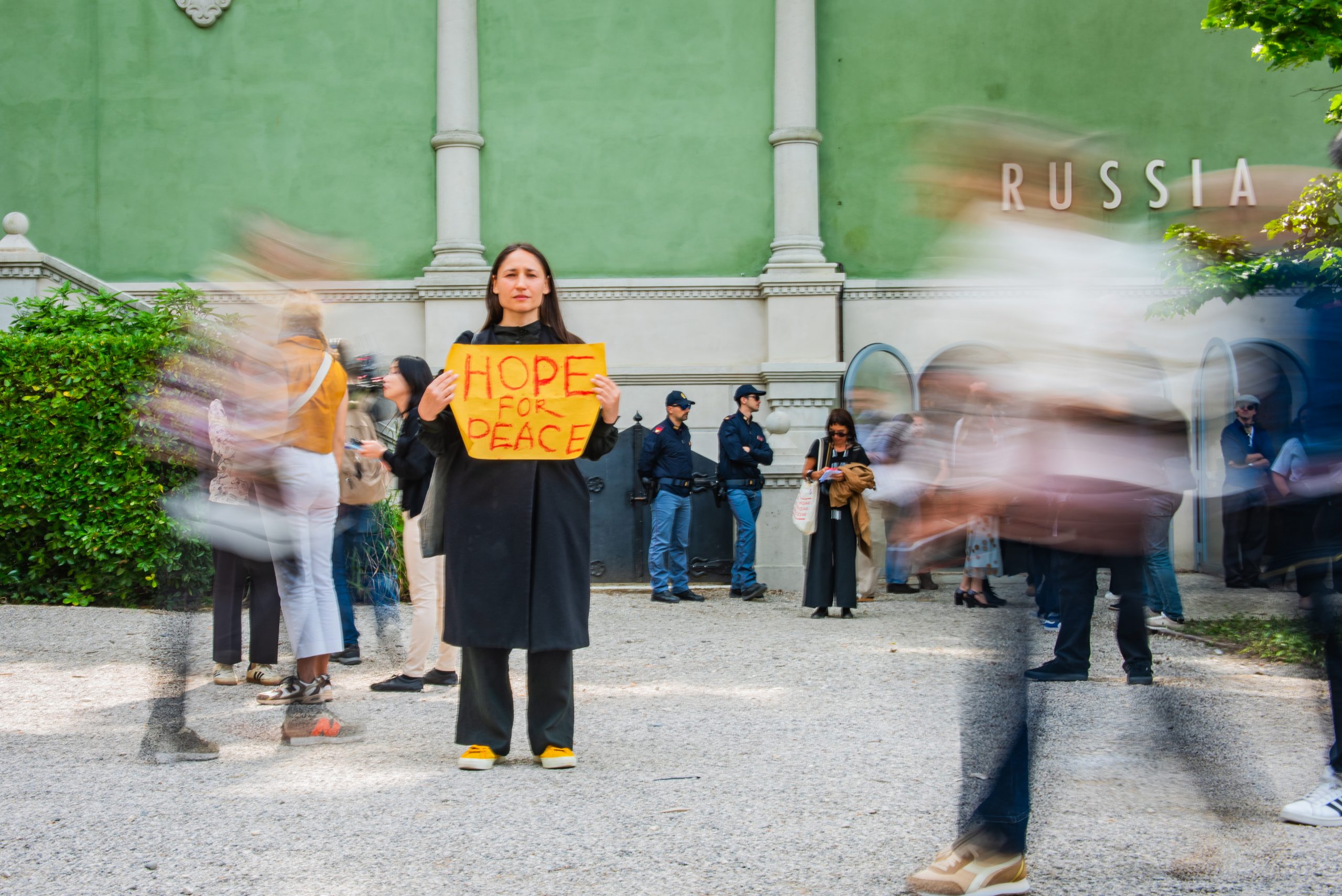
Dozens of artists participating in the 2026 Venice Biennale have withdrawn from consideration for the newly created Visitor Lion awards, replacing the traditional Gold and Silver Lion prizes. A total of 57 artists from the main exhibition and 22 national pavilions signed a statement published on e-flux on May 9, acting in solidarity with the five-person prize jury that resigned on April 30 over the continued participation of Russia and Israel. The jury had objected to awarding prizes to artists from countries whose leaders face International Criminal Court charges, including Russian president Vladimir Putin and Israeli prime minister Benjamin Netanyahu. In response, the Biennale organizers postponed the awards ceremony to November 22 and introduced visitor voting, a move they described as consistent with openness and dialogue. Meanwhile, the Russian Pavilion, which returned after lending its space to Bolivia in 2024, faced protests, closure after previews, and a €2 million funding pull by the European Union for the 2028 Biennale.

Lithuanian, Latvian, and Estonian Pavilions Stage Pro-Ukraine Procession During Venice Biennale

On May 6, 2026, the Lithuanian, Latvian, and Estonian pavilions at the Venice Biennale organized a procession in solidarity with Ukraine, walking approximately one and a half miles from the Lithuanian Pavilion in the Fucina del Futuro to the Estonian pavilion. The action honored Ukrainian cultural workers creating under war conditions and those who have died. It is one of several political protests at the contentious 2026 Biennale, including demonstrations by Pussy Riot and FEMEN at the Russian pavilion, a "Solidarity Drone Chorus" opposing Israel's inclusion, and a planned 24-hour strike by the Art Not Genocide Alliance.

The Biennale Isn’t a Court. Tell That to the Protesters.

Pietrangelo Buttafuoco, president of the Venice Biennale, defended the decision to allow Russia to reopen its pavilion for the first time since its 2022 invasion of Ukraine, stating that the Biennale is "not a court; it is a garden of peace." The move has sparked widespread backlash, including threats to pull €2.3 million in EU funding. Protests have erupted on the ground, with Pussy Riot and FEMEN staging a theatrical demonstration outside the Russian Pavilion, setting off smoke flares and chanting slogans. Separately, around 60 artists performed a "Solidarity Drone Chorus" to protest Israel's participation, and the Art Not Genocide Alliance has called for a 24-hour strike and rallies across Venice. The Russian Pavilion will be open only during press preview days due to EU sanctions, with video projections visible from outside for the rest of the Biennale's run.

Major protests take place at Venice Biennale previews

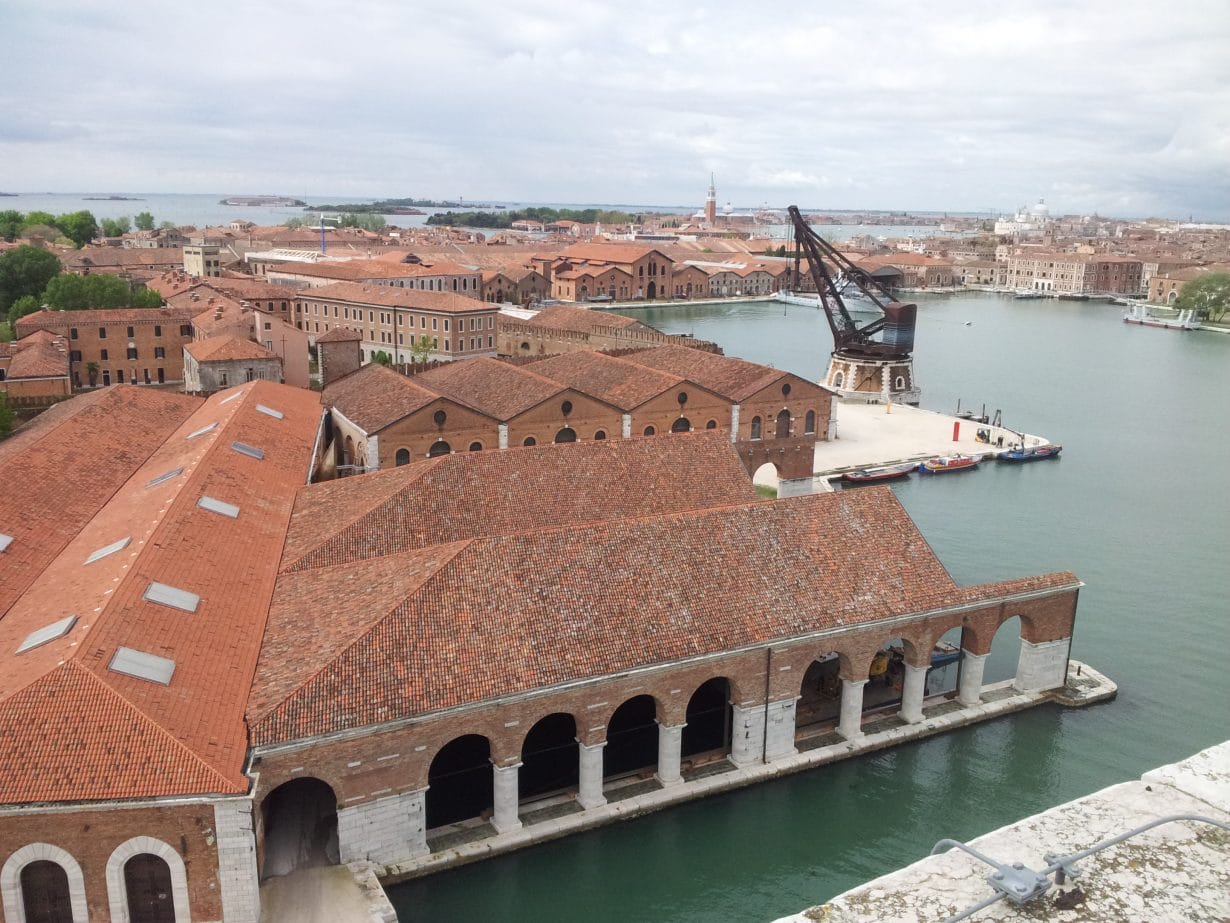
Major protests erupted during the preview days of the Venice Biennale, with multiple demonstrations targeting the Israeli and Russian pavilions. On Wednesday, the Art Not Genocide Alliance (ANGA) held a large protest outside the temporary Israeli pavilion in the Arsenale, attended by over 200 people calling for its closure. Separately, the Solidarity Drone Chorus performed a sound composition by Gazan artist Ahmed Muin, with 60 artists wearing T-shirts bearing names of artists from Gaza. Meanwhile, Pussy Riot and FEMEN protested Russian participation, forcing the Russian pavilion to shut its doors. These actions follow the resignation of the entire Golden Lion jury days before the opening, after they stated they would not consider pavilions from countries whose leaders are charged with crimes against humanity by the ICC—widely seen as a reference to Russia and Israel.

In Protest of Israeli Pavilion, Activists and Unions Plan Strike on Venice Biennale’s Opening Day

The Art Not Genocide Alliance (ANGA) has announced a 24-hour strike and rally on May 8, the day before the 2026 Venice Biennale opens to the public, in protest of the Israeli Pavilion. ANGA, formed in opposition to Israel's inclusion in the 2024 Biennale, refers to the current Israeli presentation—featuring Haifa-based artist Belu-Simion Fainaru—as the "Genocide Pavilion." Over 200 artists, curators, and culture workers have signed an open letter demanding Israel's exclusion, and a separate action called Solidarity Drone Chorus involved 60 artists. ANGA is collaborating with local labor and culture organizations including Biennalocene, Vogliamo Tutt'altro, S.a.L.E. Docks, and Mi Riconosci.

banksys walled off hotel in bethlehem reopens for the first time since october 7 attacks 1234766810

Banksy's Walled Off Hotel in Bethlehem has reopened for the first time since the October 7 attacks on Israel and the subsequent war in Gaza. The hotel, which opened in 2017 across from the West Bank barrier, functions as a guesthouse, museum, art gallery, bookstore, and spray-paint shop, with nearly every window facing the 30-foot-high concrete wall. Manager Wisam Salsaa described the reopening as a symbol of hope and a cultural platform carrying the narrative of Palestine, featuring more than 20 original Banksy works and accommodation ranging from $70 bunk beds to a $495 presidential suite.

family says firm funding its legal battle for stolen paintings sought control of lawsuits 1234749202

The son of late Palestinian businessman Uthman Khatib, Prince Castro Ben Leon, is suing LitFin Capital, the Prague-based litigation funder that financed his family's legal battle to recover 135 Russian avant-garde paintings allegedly stolen by Israeli Russian Mozes Frisch. The paintings, attributed to El Lissitzky, Kazimir Malevich, and Wassily Kandinsky, are valued at $323 million. A Paris court secured the works in January after they were seized from Paris-based authenticators ArtAnalysis, which had been holding them for Frisch. Castro claims LitFin is now refusing to pay legal bills unless it gains control of the lawsuits, violating their funding agreement. LitFin denies the allegations, stating it has always honored its contractual obligations.

aichi triennale protests israel matching program 1234751985

The Aichi Triennale in Japan has become embroiled in controversy over the Aichi-Israel Matching Program, a business initiative linking local companies with Israeli startups. Protesters, including several participating artists, have signed an open letter demanding the program's cancellation, accusing it of normalizing alleged human rights abuses. The triennial's curator, Hoor Al-Qasimi, has publicly criticized Israel's military actions in Gaza, and one organizing committee member, Hideyuki Tomita, has resigned amid the backlash.

brian eno calls out microsoft israeli military 2647939

Brian Eno, the English musician and artist who composed the iconic startup sound for Windows 95, has publicly called out Microsoft for its business relationship with the Israeli Ministry of Defense amid the ongoing war in Gaza. In an open letter titled “Not in My Name” posted to Instagram, Eno expressed dismay that the company he once associated with a promising technological future is now providing cloud and AI services to the Israeli military, which he and human rights organizations accuse of committing genocide and war crimes. He urged Microsoft to suspend all services that contribute to violations of international law and announced he would donate his original fee for the Windows 95 chime to Gaza victims.

Several Venice Biennale pavilions shut in protest over inclusion of Israel

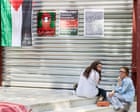
Several national pavilions at the 2026 Venice Biennale shut down during the final preview day in a strike organized by the Art Not Genocide Alliance (Anga) protesting Israel's inclusion due to its war in Gaza. Pavilions from Belgium, the Netherlands, Austria, Japan, Macedonia, and Korea closed entirely, while others like Britain, Spain, France, Egypt, Finland, and Luxembourg partially closed or reopened later. Artists in the main exhibition added Palestinian flags and posters reading "Palestine is the future of the world." The Israeli pavilion was closed for a private event, and earlier in the week Pussy Riot staged a protest at the Russian pavilion.

Pussy Riot protest at Venice Biennale forces Russian pavilion to briefly close

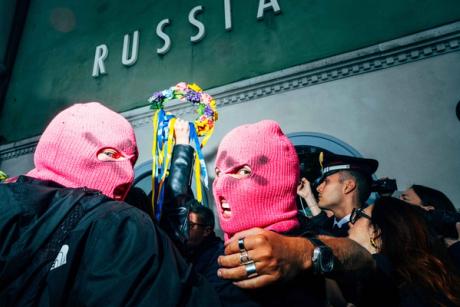
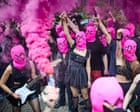
On the second day of the Venice Biennale preview, the activist group Pussy Riot staged a chaotic protest at the Russian pavilion, forcing it to temporarily close. Wearing pink balaclavas and carrying flares, about 40 activists—including members of Femen—gathered outside the pavilion, shouting slogans like "Blood is Russia's Art" and attempting to enter before being pushed back by police. Founding member Nadya Tolokonnikova led the protest, condemning Europe for allowing Russian participation despite the war in Ukraine. Separately, the Art Not Genocide Alliance (Anga) demonstrated outside the Israeli pavilion, which was locked from inside, over Israel's war in Gaza.

Dark clouds, protests and resignations dampen start of 61st Venice Biennale

The 61st Venice Biennale opened under grey skies and rain, with political tensions overshadowing the art world's premier event. The Russian pavilion, absent for two editions due to the Ukraine war, reappeared with a party atmosphere, though the Italian ministry of culture confirmed it would not be open to the public. The Ukrainian culture minister called Russia's symbolic presence powerful. The Iranian pavilion withdrew without explanation, and a protest by 60 artists from the In Minor Keys show marched through the Giardini humming in solidarity against Israel's participation. Over 200 artists, including Lubaina Himid and Alfredo Jaar, signed an open letter demanding the Israeli pavilion's cancellation. The event also proceeded without its curator, Koyo Kouoh, who died in May 2025; her curatorial team delivered the exhibition following her plans.

Anish Kapoor says US’s ‘politics of hate’ should exclude it from Venice Biennale

Anish Kapoor has called for the United States to be excluded from the Venice Biennale, citing the country's "abhorrent politics of hate" and "incessant warmongering." His comments follow the resignation of the five-member international jury, who stepped down in protest over the inclusion of Israel and Russia. Kapoor praised the jury's decision as "courageous" but argued they should have also targeted the US. The US pavilion, featuring artist Alma Allen and his exhibition "Call Me the Breeze," has faced scrutiny over perceived Trump administration interference and a delayed selection process. Meanwhile, the Israeli and Russian pavilions remain flashpoints, with over 200 participants signing a letter demanding the cancellation of the Israeli pavilion, and the Russian pavilion closed to the public but viewable through windows.

Venice Biennale Jury Bars Israel and Russia from Official Prizes

The international jury of the 61st Venice Biennale announced on April 23 that it will not consider the Israeli and Russian pavilions for official prizes, including the Golden Lion for national participation. The five-member, all-women panel—comprising Solange Farkas, Zoe Butt, Elvira Dyangani Ose, Marta Kuzma, and Giovanna Zapperi—said it would exclude countries whose leaders are currently charged with crimes against humanity by the International Criminal Court, a criterion that applies to Israel and Russia due to ICC arrest warrants for Benjamin Netanyahu and Vladimir Putin. The decision comes amid mounting controversy over the Biennale's decision to host both pavilions, with Russia returning after its artists withdrew in 2022 over the Ukraine invasion and Israel reopening after its 2024 pavilion remained closed pending a Gaza ceasefire. The European Commission had also threatened to suspend a €2 million grant over the Russian pavilion's reopening.

Venice Biennale opening marked by protests

The 2026 Venice Biennale opened for professionals on Tuesday amid a series of protests, with more planned throughout the week. Around 60 artists from the exhibition "In Minor Keys" gathered at the Giardini for a collective action called "Solidarity Drone Chorus," inspired by Gazan composer Ahmed Muin's "Drone Song," to draw attention to genocide and war in Palestine. The Art Not Genocide Alliance (ANGA) organized a 24-hour strike for Friday 8 May, protesting Israel's participation. Pussy Riot staged a protest outside the Russian pavilion, and the Latvian pavilion launched a campaign against Russia's involvement. The protests follow a highly politicized lead-up, including calls for boycotts of the Russian, Israeli, and US pavilions, EU funding cuts over Russia's participation, and the resignation of the Biennale jury.

Strike Rocks Venice Biennale Ahead of Public Opening as Pavilions Close

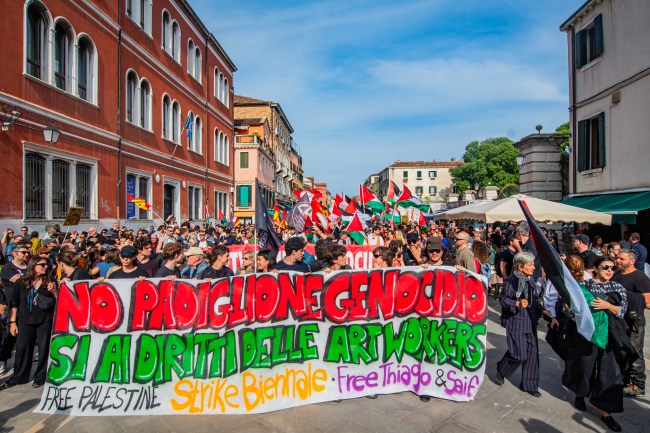
Thousands of protesters marched through Venice to demonstrate against Israel's presence at the Venice Biennale, leading many national pavilions to close in solidarity. Pavilions from Austria, Belgium, Egypt, Japan, the Netherlands, South Korea, and over a dozen other countries shut fully or partially, with some displaying signs reading "We Stand with Palestine." The Israeli pavilion remained closed for its exhibition opening, and armed police clashed with protesters. The main exhibition, curated by Koyo Kouoh, stayed open initially but the Arsenale closed by late afternoon with riot police outside. The 24-hour strike, organized by Art Not Genocide Alliance (ANGA) and Italian activist groups, was described as the largest protest in Biennale history.

An Urgent Call From Artists and Curators of the 61st International Art Exhibition of La Biennale di Venezia 2026

A group of seventy-four artists and curators participating in the 61st Venice Biennale have issued an urgent letter to the institution's leadership, including director Pietrangelo Buttafuoco. The signatories are protesting the decision to relocate the Israeli Pavilion to the Arsenale, placing it in close proximity to the central exhibition, "In Minor Keys," which was conceived by the late curator Koyo Kouoh. The group argues that this relocation violates Kouoh’s curatorial vision of radical solidarity and introduces a threatening military and police presence into the exhibition space.

Art Show in London Canceled Over Allegations of Antisemitism from Pro-Israel Group

An exhibition by artist Matthew Collings at Delta House Gallery in London was canceled after UK Lawyers for Israel raised allegations of antisemitism. The show, titled "Drawings Against Genocide," had previously been displayed in Margate, where a review in the Telegraph described the works as "dripping with Jew-hate." One drawing depicted Sotheby's owner Patrick Drahi eating babies alive, while others showed Jews with horns or standing on skulls. Tom Berglund, chairman of Pineapple Corporation, which owns Delta House, said the exhibition was arranged without consultation and expressed hope for resolution in the Middle East. Collings defended the work on Instagram, arguing it satirizes the use of art to whitewash what he called "Zionist atrocity."

Venice Biennale’s jury resigns

The entire jury of the 61st Venice Biennale, presided by Brazilian curator Solange Farkas and comprising four other curators, resigned just nine days before the exhibition's scheduled opening on 9 May 2026. The jury had announced it would not award prizes to countries whose leaders are charged with crimes against humanity by the International Criminal Court, a move widely understood to target Israel and Russia. In response, the Biennale's organisers cancelled the prize-giving ceremony and will instead award Golden Lions via a popular vote among ticketholders. The row escalated further when the Israeli representative, sculptor Belu-Simion Fainaru, accused the jury of discrimination and threatened legal action, prompting intervention from Italy's culture ministry.

At this year's Venice Biennale, a clash of politics and art exposes the need for a rethink

The 2026 Venice Biennale is plagued by controversy and structural issues. Curator Koyo Kouoh died of cancer in 2025, leaving her team to execute the main exhibition "In Minor Keys" without her. The Biennale's jury resigned after refusing to judge entries from countries charged with war crimes, and media coverage during preview week focused on protests against the Israeli and Russian pavilions rather than the art. The sprawling exhibition features 96 national pavilions and 110 artists, with works ranging from Daniel Lind-Ramos's found-material figures to María Magdalena Campos-Pons's tribute to Toni Morrison and Kouoh.

Lebanon’s Art Scene Is Living in ‘War Mode’

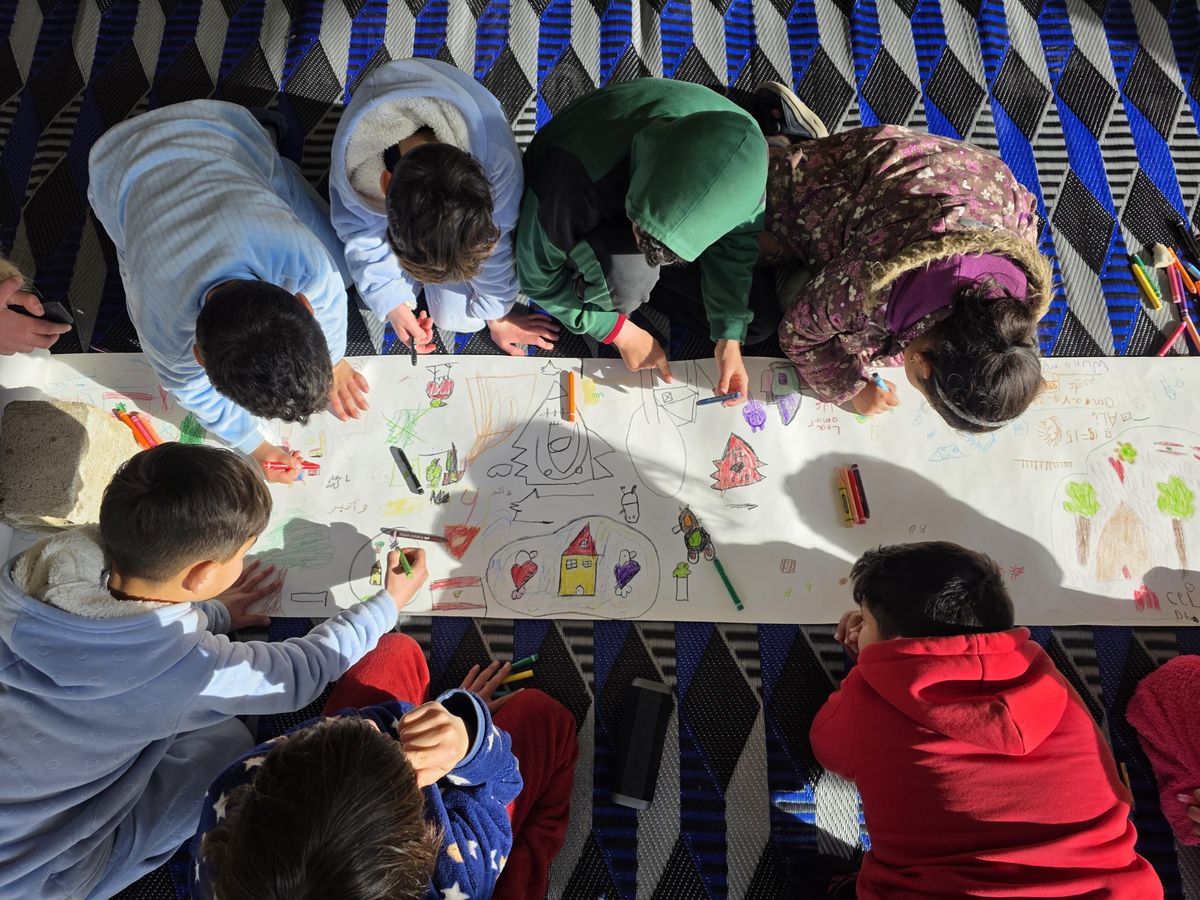
On April 8, 2025, a wave of Israeli airstrikes across Lebanon killed 357 people and injured over 1,200, a day now known as 'Black Wednesday.' Amid the violence, Lebanese artist Abed Al Kadiri, who grew up during Lebanon's civil war and Israeli occupation, has been working with displaced children in shelters, using art to help them process trauma. He collects their drawings and plans to combine them with sketches by other artists reflecting their own war experiences, creating concertina-style books to be exhibited and sold to raise funds for over 1.1 million displaced people.

Venice Biennale jury resigns in latest politically charged controversy at art exhibition

The entire jury of the Venice Biennale has resigned, including president Solange Farkas and members Zoe Butt, Elvira Dyangani Ose, Marta Kuzma, and Giovanna Zapperi. The jury had announced it would not consider for prizes countries charged with crimes against humanity by the International Criminal Court, a stance that would affect Israel and Russia, both of which have national pavilions at the exhibition. As a result, the Biennale will not award several jury prizes, including the Golden Lion for best national pavilion and best artist in the group show, replacing them with visitor-voted awards.

An open letter to La Biennale di Venezia calls out inaction in the face of global atrocities

A group of 74 artists and curators invited to the 61st Venice Biennale have issued an open letter to the institution's president, Pietrangelo Buttafuoco. The signatories are protesting the decision to relocate the Israeli Pavilion to the Arsenale, placing it in close proximity to the central exhibition 'In Minor Keys' curated by the late Koyo Kouoh. The letter demands the exclusion of official delegations from countries accused of war crimes—specifically Israel, Russia, and the United States—and accuses the Biennale of complicity through its silence on global atrocities.

Order and chaos in contemporary Israeli art

Basia Monka profiles three contemporary Israeli artists—Ariel Hacohen, Jessica Moritz, and others—who, despite diverse backgrounds and mediums, share a common drive to explore order and chaos through repetition in their work. Hacohen, a 2024 Rappaport Prize laureate, uses photography, video, and sculpture to blend archaeology, history, and memory, with current exhibitions at the Haifa Museum of Art and Tel Aviv Museum of Art. The article presents each artist's answers to three questions about inspiration, the definition of art, and what makes their work unique.

Two years on from 7 October attacks, Israeli museum directors are in ‘complete isolation’

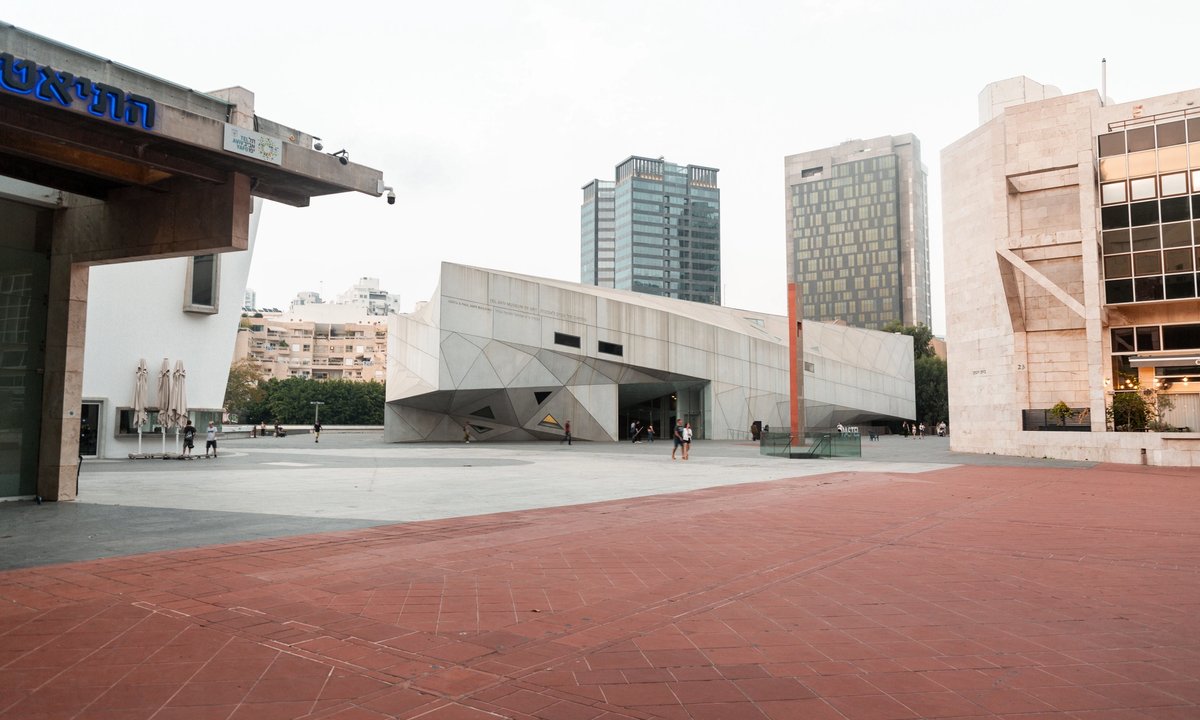
Two years after the 7 October 2023 attacks, Israeli museum directors report feeling isolated from the international art world. Tania Coen-Uzzielli, director of the Tel Aviv Museum of Art, says most international collaborations were put on hold, delayed, or cancelled. The museum, which has a history of political activism, closed partially during protests against judicial reforms and has taken a public stance to end the war and suffering in Gaza. Meanwhile, the Tel Aviv-Yafo City Museum, which opened just after the attacks, shifted to documenting wartime reality and supporting artists, but has received no direct support from international colleagues. The National Library of Israel repeatedly deinstalled and secured its collections during Iranian missile attacks, reopening when safe.

Ruth Orkin: Women on the Move | Exhibition

The National Museum of Women in the Arts is presenting "Ruth Orkin: Women on the Move," an exhibition of 21 vintage photographs by the mid-20th-century American photographer Ruth Orkin (1921–1985). Drawn from the museum's collection, the show highlights Orkin's depictions of women in diverse settings—from Hollywood celebrities and Broadway stars to Women's Army Auxiliary Corps members, tourists in Europe, and families in an Israeli kibbutz. Orkin, who was barred from joining the cinematographers' union due to her gender, turned her narrative eye to photography, often collaborating with her subjects to invert the conventional male gaze. The exhibition runs from December 12, 2025, to April 19, 2026.

Letter calls on Judy Chicago and Pussy Riot's Nadya Tolakonnikova to cancel Tel Aviv exhibition

More than 50 artists and cultural figures, many based in Israel, have signed a letter urging American artist Judy Chicago and Pussy Riot co-founder Nadya Tolokonnikova to cancel their collaborative exhibition "What if women ruled the world?" at the Tel Aviv Museum of Art. The show, which opened last week, features a digital quilt responding to the titular question. The letter, seen by The Art Newspaper, argues that holding the exhibition in Israel makes the artists "complicit" in what the signatories describe as genocide in Gaza, citing a recent UN commission finding. Tolokonnikova stated she is not involved in the ongoing project, while Chicago declined to comment. The museum defended the exhibition as a space for reflection and dialogue, not an endorsement of any political position.

Israeli art spaces and workers join nationwide strike and protests, calling for hostage deal and end to war in Gaza

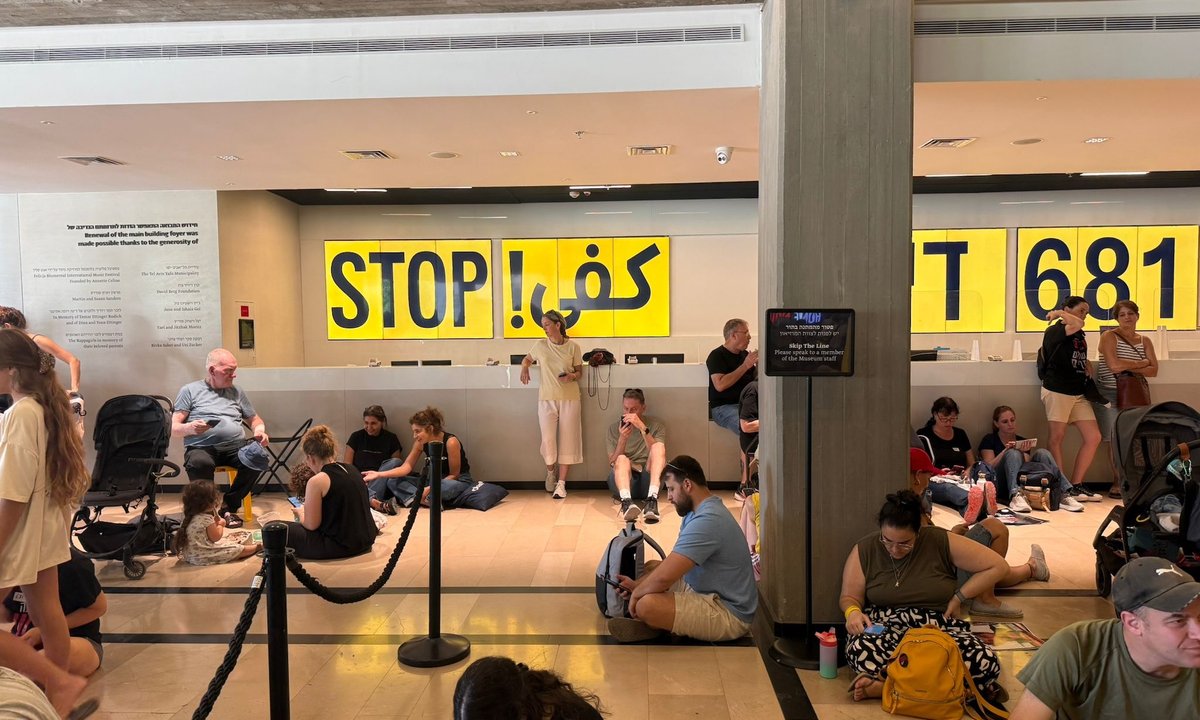
On 17 August, a nationwide strike and protests swept across Israel, with organizers estimating 2.5 million participants demanding a hostage deal and an end to the war in Gaza. Israeli art spaces and workers joined the action: the Tel Aviv Museum of Art closed operationally but opened its lobby to protesters and projected Michal Rovner's video work *Signaling (2024)* on its façade; the Israel Museum illuminated its Shrine of the Book in yellow; the Bezalel Academy of Arts and Design and Shenkar College also struck, while the Mishkan Museum of Art ceased activities in solidarity.