filter_list Showing 293 results for "Germany" close Clear
search
dashboard All 293 museum exhibitions 108article news 39article policy 27rate_review review 22trending_up market 22candle obituary 22gavel restitution 21person people 13article culture 11article local 8
date_range Range Today This Week This Month All
Subscribe

Cultural Institutions Warn Against AfD's Cultural Policy Plans

Kulturinstitutionen warnen vor AfD-Plänen zur Kulturpolitik

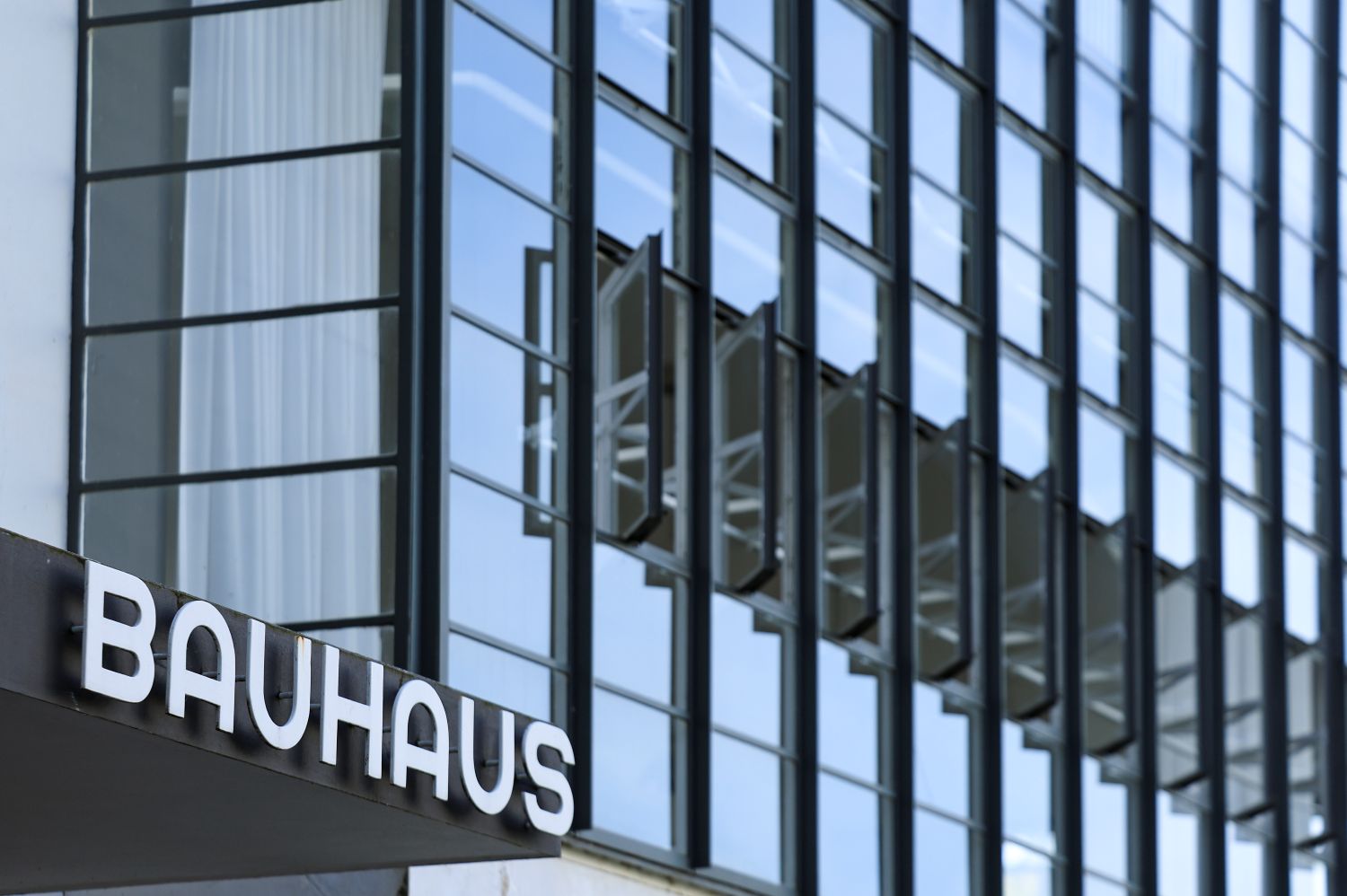
Nearly 30 cultural institutions in Saxony-Anhalt, including the Bauhaus Dessau Foundation and the Saxony-Anhalt Museum Association, have issued a joint warning against the AfD party's new government program. The political platform proposes a "patriotic cultural policy" that would prioritize funding for art contributing to "German identity" while criticizing the state's focus on modernism and the Bauhaus as a "sign of identity disorder." The institutions argue these plans threaten artistic freedom, pluralism, and the democratic culture of remembrance regarding Germany's Nazi past.
The Humboldt Forum is Already Under Fire

"Das Humboldt Forum wird schon beschossen"

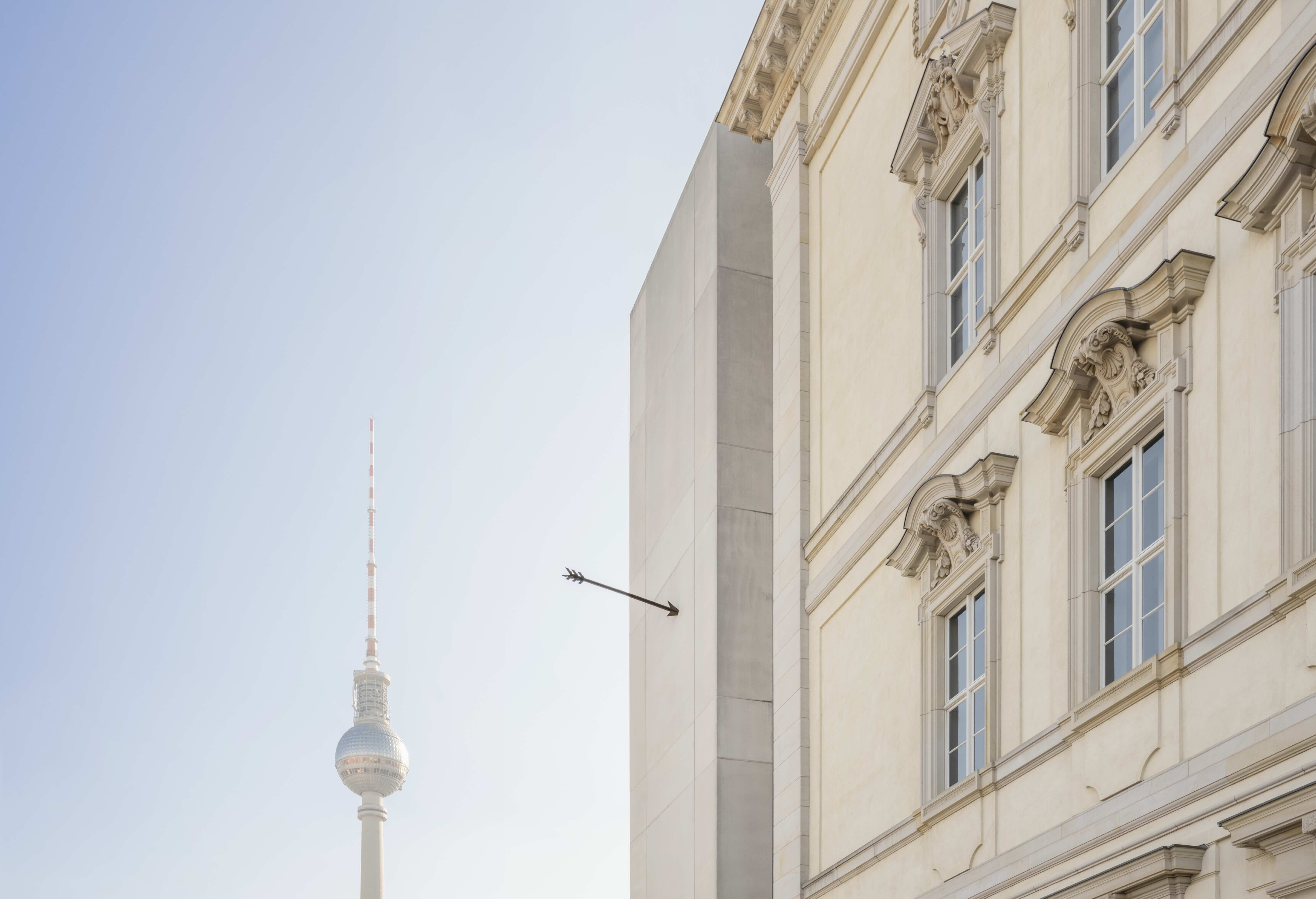
The architectural firm J. Mayer H. and partners Jürgen Mayer H. and Hans Schneider have won the eighth 'Kunst-am-Bau' competition for Berlin’s Humboldt Forum. Their winning installation, titled "Südpfeil" (South Arrow), features a 3.6-meter-long abstract arrow embedded high in the building's facade. The work references the 19th-century discovery of 'Pfeilstörche'—migratory storks that returned to Europe with African arrows in their bodies—which provided the first scientific proof of global migration routes.

Activist glues herself to museum display case

Aktivistin klebt sich an Museumsvitrine

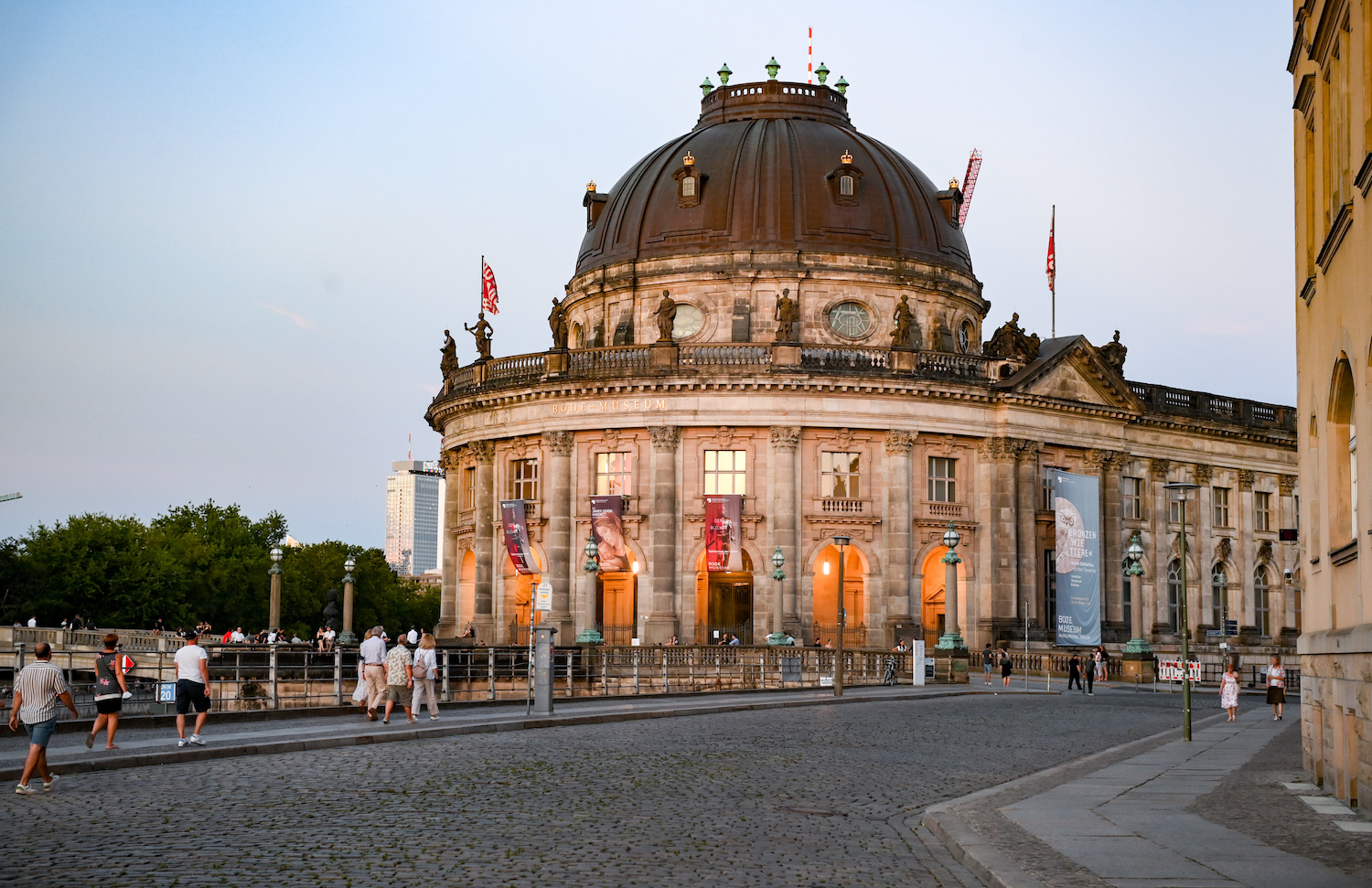
A protester from the activist group Neue Generation glued herself to a display case in the Coin Cabinet of the Bode-Museum on Berlin's Museum Island. Dressed as Federal Minister for Economic Affairs Katherina Reiche, the activist targeted the museum to protest the minister's perceived lack of independence from corporate interests. Police were called to the scene to remove the woman, and the Prussian Cultural Heritage Foundation confirmed that while the glass case was targeted, no historical artifacts were damaged.

À Berlin, le Musée de Pergame rouvrira partiellement en 2027

Berlin's Pergamon Museum, closed since October 2023, will partially reopen in June 2027, with only the north wing and central section accessible. The renovation and expansion project, launched in 2012, has faced repeated delays and its budget has ballooned to €1.5 billion. The partial reopening coincides with the bicentenary of Berlin's Museum Island and will bring back the Pergamon Altar, unseen for over a decade, along with redesigned permanent exhibitions for the Museum of Islamic Art and the Museum of the Ancient Near East. However, major attractions like the Ishtar Gate and the Market Gate of Miletus will remain closed until the 2030s, with full museum completion now estimated between 2037 and 2043.

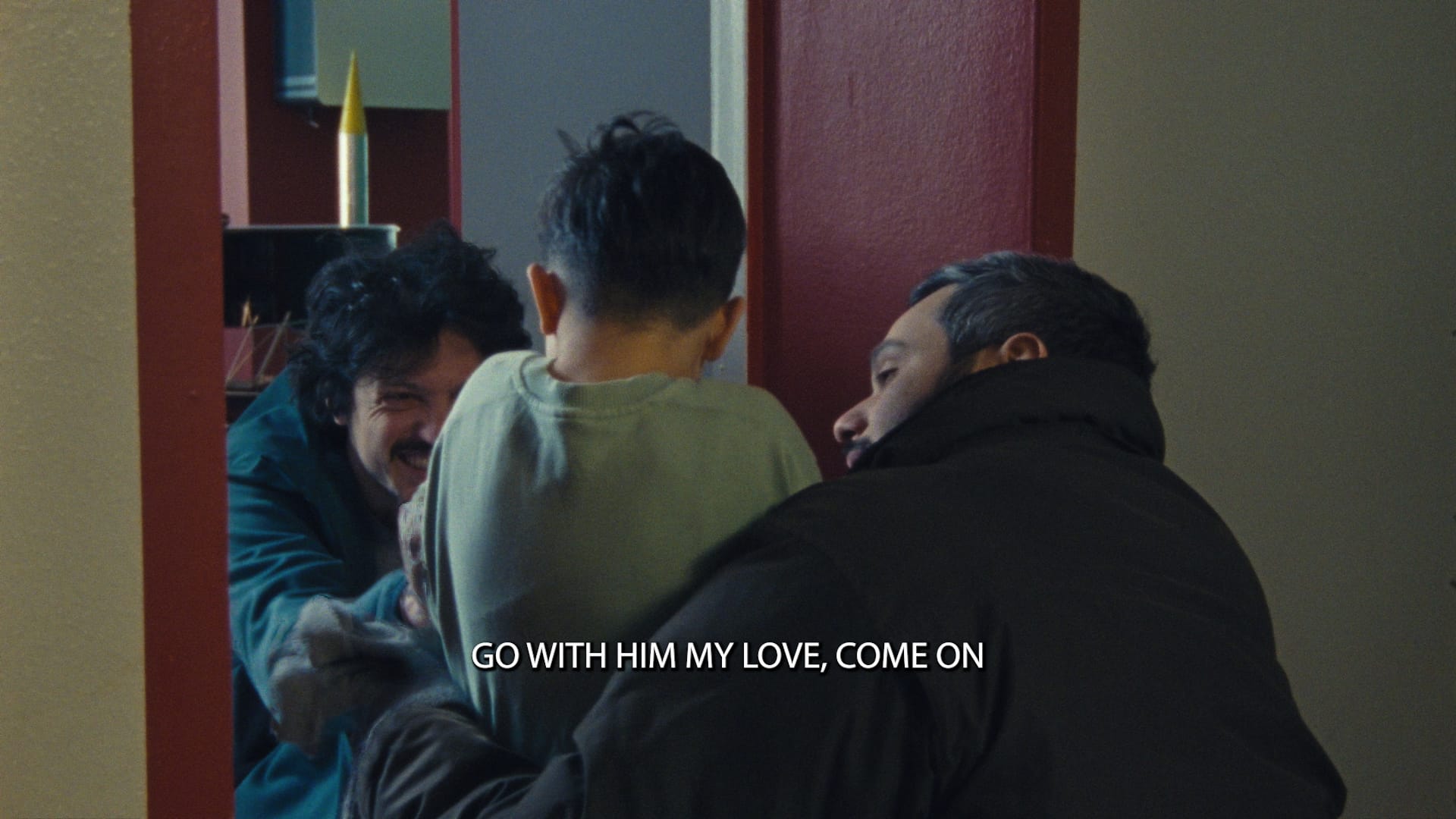
When a Palestinian Artist Asserts Her Own Humanity

Palestinian artist Basma al-Sharif faced a coordinated smear campaign and threats after being invited to screen her film "Morgenkreis" at the Kunstakademie Düsseldorf. The controversy erupted not over the film's content, but over her social media posts referencing Palestinian resistance and historical injustices, leading to demands from public officials and advocacy groups to cancel the event.

Are Tattoos Art?

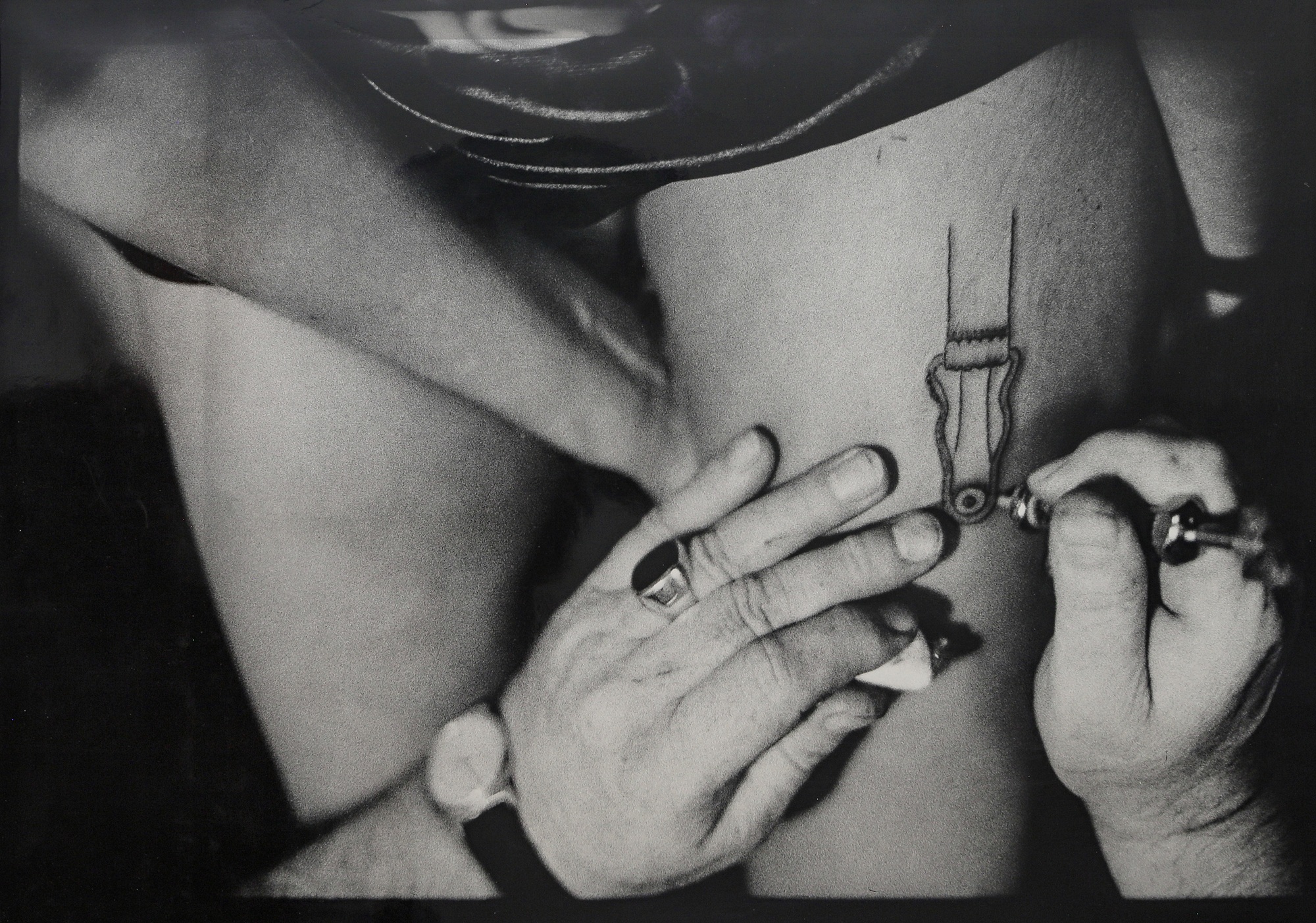
Sind Tattoos Kunst?

A group exhibition at the Opelvillen in Rüsselsheim, Germany, titled "Unter die Haut. Tattoos im Blick," explores tattooing as an art form, centering on the work of tattoo artist and photographer Herbert Hoffmann. The show traces the evolution of tattoos from post-war working-class culture to contemporary pop culture, featuring Hoffmann's photographs alongside works by contemporary artists David Schiesser, Michele Servadio, and Sarah Dubná, who bridge tattooing with drawing, painting, and printmaking. The exhibition is a partner project with "Mishpocha" at the Jewish Museum Frankfurt and includes shared photographic positions by Sandra Mann and Jan Zappner.

How Art Libraries Make Art Accessible

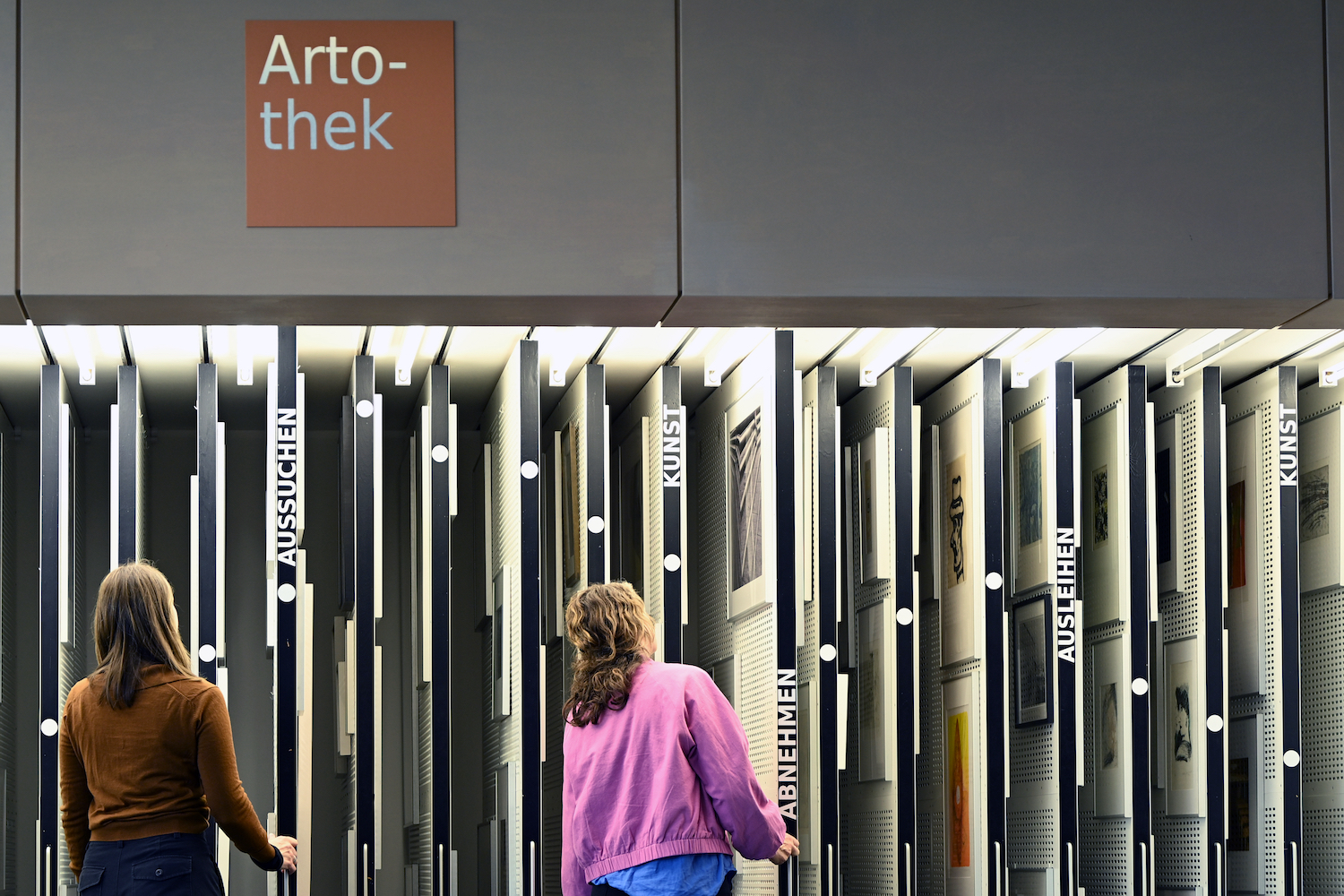
Wie Artotheken Kunst zugänglich machen

Artotheken, or art libraries, are public institutions that lend artworks to anyone with a library card, making art accessible beyond the traditional museum or gallery system. In Germany, over 100 such artotheken exist, often housed in public libraries, art associations, or museums. The Amerika-Gedenkbibliothek in Berlin, for example, has a collection of 2,000 works, with around 300 currently on loan to homes, doctors' offices, and law firms. The lending process is informal: borrowers can eat, drink, and even touch the works, and transport by bus or bike is encouraged. A jury selects up to 15 new works annually, and the collection includes major names like Roy Lichtenstein and Niki de Saint Phalle, though most users choose pieces based on personal connection rather than prestige.

Federal President praises Emder Kunsthalle: 'Extraordinary quality'

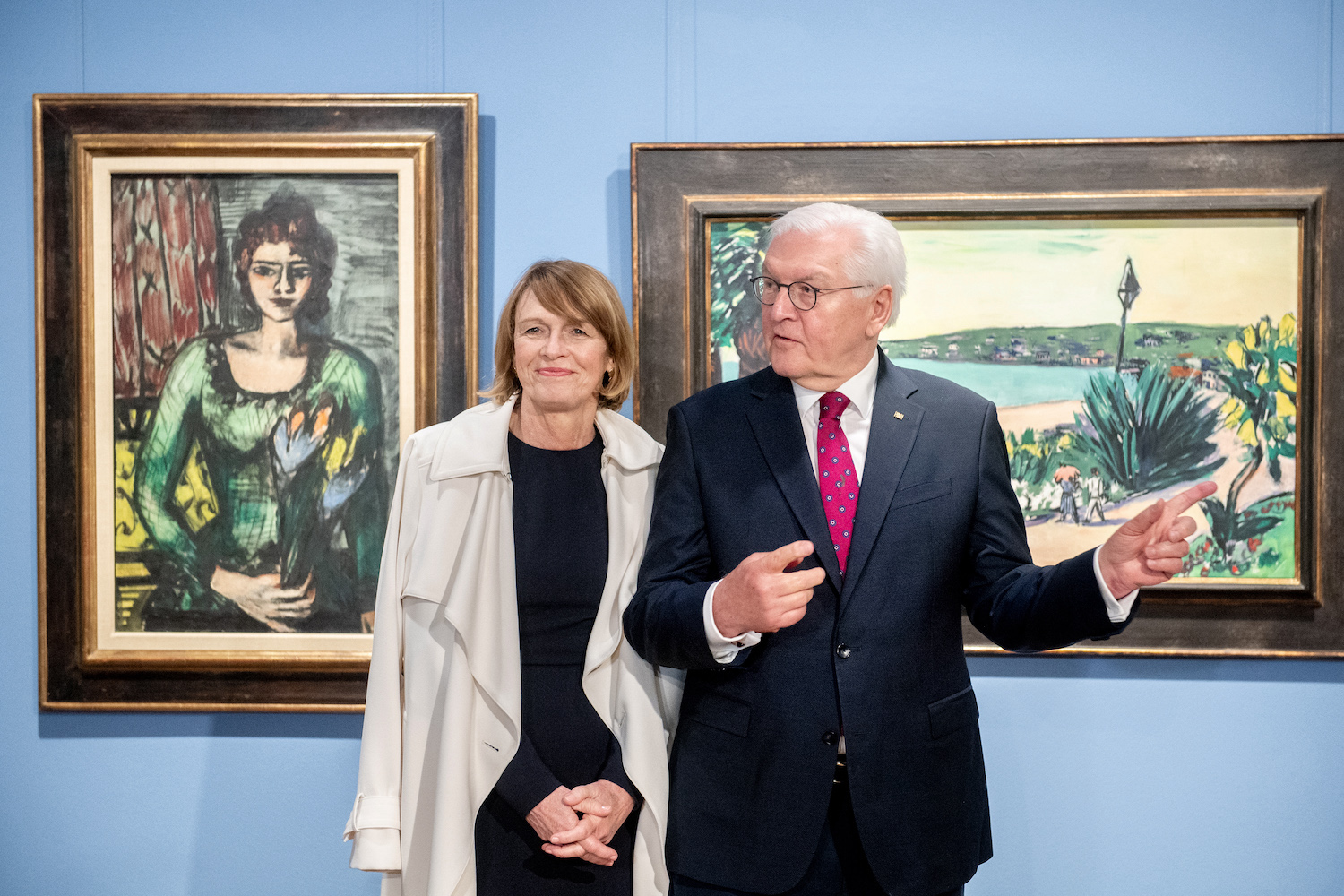
Bundespräsident lobt Emder Kunsthalle: "Außerordentliche Qualität"

German President Frank-Walter Steinmeier praised the Emder Kunsthalle on its 40th anniversary, calling its collection of "extraordinary quality." The museum was founded in 1986 by Henri Nannen, the late founder of Stern magazine, and his wife Eske Nannen. Steinmeier spoke at a ceremony attended by 500 guests, including his wife Elke Büdenbender and Lower Saxony's Minister President Olaf Lies. The anniversary exhibition "Bilder, die wir lieben" (Pictures We Love) showcases 200 works from the collection, which has grown to around 1,700 pieces, including pieces by Gabriele Münter, Paula Modersohn-Becker, Max Beckmann, and Franz Marc.

An Era Ends When the Illusions Underlying It Are Exhausted

"Eine Ära endet, wenn die ihr zugrunde liegenden Illusionen erschöpft sind"

A media roundup covers several art world stories. The Art Newspaper reports that the ongoing Middle East conflict is unsettling the Gulf art market, causing fair postponements and shaking Dubai's image as a stable luxury hub, though galleries emphasize they continue to work. Meanwhile, the search for a new director for Germany's Kulturstiftung Dessau-Wörlitz continues after a protracted legal battle, with applications open until May 31. The New Yorker presents a reading of Johannes Vermeer's quiet scenes as fragile refuges from a violent historical context, while the Berliner Zeitung critiques the global commercialization of Frida Kahlo into a licensed brand.

Kunsthalle Mainz Facing the End?

Kunsthalle Mainz vor dem Aus?

The Kunsthalle Mainz is facing potential closure by the end of the year following the withdrawal of funding by the Mainzer Stadtwerke. The crisis is compounded by the departure of director Stefanie Böttcher, who is moving to the Kunsthalle Kiel, and the fact that her position has not been advertised for replacement. Despite its international reputation and successful recent exhibitions, such as the current Britta Marakatt-Labba retrospective, the institution lacks a secured financial future and a leadership succession plan.

Why Do the Women Have to Be Naked?

"Warum müssen die Frauen nackt sein?"

A series of cultural controversies highlight growing tensions between artistic freedom and political pressure. In Germany, cultural minister Wolfram Weimer faces criticism for opaque funding decisions and alleged interference in jury processes, with critics arguing this undermines artistic freedom and free speech. Simultaneously, the European Media Art Festival in Osnabrück defends filmmaker Basma al-Sharif against accusations of antisemitism, illustrating how cultural funding can become a test of political ideology.

Alison Roman’s Top Picks from the Frieze Viewing Room

Andrew Durbin reviews the national pavilions at the Venice Biennale, contrasting a vacuous US presentation with incisive and moving installations from Britain and Germany. The review highlights the thematic and emotional depth of the British and German pavilions while critiquing the lack of meaning in the US entry.

Rewiring the System: Jean Katambayi Mukendi.

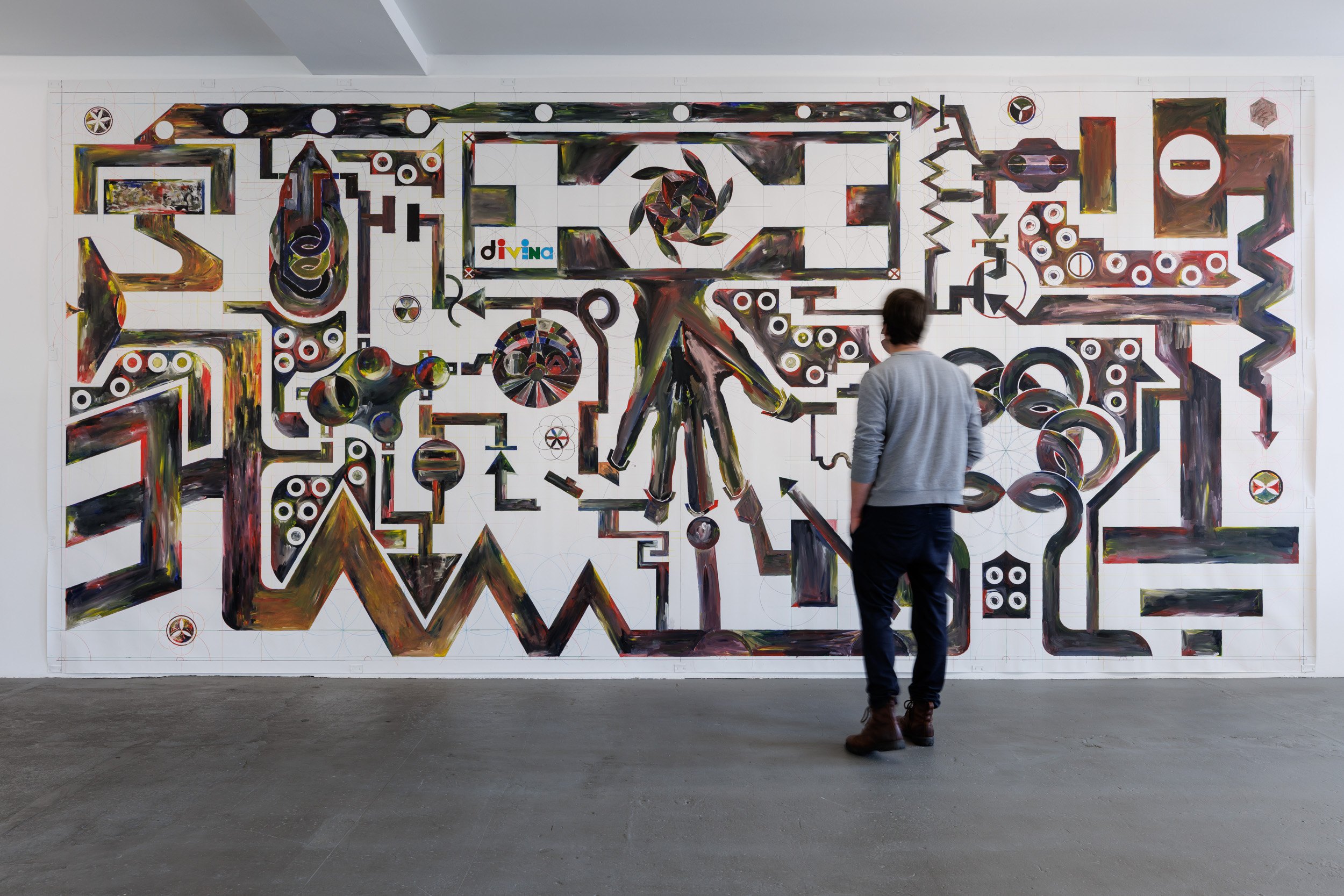
Congolese artist Jean Katambayi Mukendi presents his first solo exhibition in Germany, 'Ratio,' at the KW Institute for Contemporary Art in Berlin. The exhibition features drawings, sculptural installations, and works made from recycled materials that examine technological systems, energy infrastructures, and mineral extraction.

Henrike Naumann, Sculptor Set to Represent Germany at Venice Biennale, Dies at 41

henrike naumann sculptor dead germany venice biennale

The German art world is mourning the death of sculptor Henrike Naumann, who passed away in Berlin at age 41 following a brief battle with cancer. Naumann was a rising star known for her immersive installations that utilized furniture and domestic objects to explore the complex sociopolitical legacy of East Germany and the psychological tensions of reunification. Her death comes just months before she was scheduled to represent Germany at the 2024 Venice Biennale.

hitler paintings art market industry hbo

This week's episode of HBO's *Industry* features a watercolor of Neuschwanstein Castle signed "A. Hitler," reflecting the real-world market for Adolf Hitler's amateur paintings. The show uses the artwork as a symbol of inherited wealth and moral ambiguity, mirroring actual auction sales—such as a 2015 Nuremberg sale where a group of Hitler watercolors fetched roughly €400,000, with one version of Neuschwanstein selling for €100,000 to an anonymous Chinese buyer. These works continue to circulate legally in Germany as long as they omit Nazi symbols.

south africa venice biennale investigation

South Africa withdrew its national pavilion from the Venice Biennale after Culture Minister Gayton McKenzie claimed a foreign power attempted to purchase artist Gabriele Goliath's work *Elegy*, which addresses femicide, anti-queer violence, the war in Gaza, and Germany's colonial genocide in Namibia. McKenzie deemed the financial interest a use of "proxy power." New reporting from Daily Maverick reveals that the alleged foreign party was Qatar Museums, a state-owned network, which had expressed interest in acquiring the work but never committed to a purchase. The minister's decision has sparked political backlash, with South Africa's public protector processing a formal complaint against McKenzie, and Goliath's team accusing him of censorship and deflection.

puzzle roman fresco london

Archaeologists from the Museum of London Archaeology (MOLA) have uncovered one of the largest collections of painted Roman wall plaster ever found in London at a development site in Southwark. The fragments, which shattered into thousands of pieces, were discovered in a pit and took three months to reassemble by senior building material specialist Han Li, who described it as assembling "the world's most difficult jigsaw puzzle." The plaster includes rare evidence of a painter's signature, unusual Greek alphabet graffiti, and a crying face graffito, along with vibrant yellow panel designs featuring birds, fruit, flowers, and lyres.

germany settles century long restitution over royal artifacts

Germany’s federal government, along with the states of Berlin and Brandenburg, has reached a settlement with the descendants of the House of Hohenzollern, ending a nearly century-long legal dispute over ownership of 27,000 artworks. The collection includes a portrait by Lucas Cranach the Elder and an 18th-century table service commissioned by Emperor Frederick II. Wolfram Weimer, Germany’s new Minister of State for Culture, announced the deal in Berlin, confirming the works will remain in public museums such as the Prussian Cultural Heritage Foundation and the German Historical Museum.

Emma the joke-telling robot cracks up the care home: Paula Hornickel’s best photograph

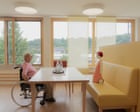
Photographer Paula Hornickel captured a moment between an elderly care home resident named Waltraud and a social robot named Emma in Albershausen, Germany. The robot, designed for companionship in settings with staff shortages, engages residents in conversation, tells jokes, and discusses topics like favorite flowers, simulating social interaction.

Sung Tieu on Representing Germany at the 61st Venice Biennale

Sung Tieu, who is co-representing Germany at the 61st Venice Biennale alongside Henrike Naumann, responds to a questionnaire from ArtReview about her plans for the German Pavilion. She describes her inspiration as her mother and childhood home, a site built for foreign contract workers in the GDR that later became a refuge for the diaspora. Tieu states that her work relates to the Biennale theme "In Minor Keys" through the lens of Gehrenseestrasse, a concrete record of collective memory. She also expresses skepticism about the Biennale's importance, noting that the German Pavilion's fascist architecture compels artists to work against it, and that national pavilions reveal how much work remains in undoing nationalism.

Seven Shows to Catch Across the US This May

Art critic Andrew Durbin reviews national pavilion presentations at the Venice Biennale, contrasting a vacuous US exhibition with incisive and moving installations from Britain and Germany. The review highlights the disparity in thematic depth and emotional resonance among the three pavilions.

‘Afterimages’: What Does It Mean to See Through Overload?

Andrew Durbin reviews the national pavilions at the Venice Biennale, contrasting a vacuous US presentation with incisive and moving installations from Britain and Germany. The article critiques the lack of meaningful engagement in the US pavilion while praising the depth and emotional resonance of the British and German contributions.

‘In Minor Keys’ Review: Its Best Moments Live in the Institutions Koyo Kouoh Built

Andrew Durbin reviews the national pavilions at the 2026 Venice Biennale, contrasting a vacuous US presentation with incisive and moving installations from Britain and Germany. The review highlights how the best moments of the exhibition live in the institutions built by curator Koyo Kouoh, who organized the Biennale's main exhibition.

Frieze’s Christine Messineo Takes a Tour of Chelsea

Andrew Durbin reviews national pavilions at the Venice Biennale, contrasting a vacuous US presentation with incisive and moving installations from Britain and Germany. The review highlights the disparity in thematic depth and emotional resonance among the three pavilions.

Jerald Cooper’s Top Picks from Frieze New York 2026

Andrew Durbin reviews the national pavilions at the 2026 Venice Biennale, contrasting a vacuous US presentation with incisive and moving installations from Britain and Germany. The article critiques the lack of meaning in the American pavilion while praising the depth and emotional resonance of the British and German contributions.

Off-Site Exhibitions Review: The Politics of Listening

Andrew Durbin reviews the national pavilions at an unnamed biennial, contrasting a vacuous US presentation with incisive and moving installations from Britain and Germany. The review critiques the lack of meaningful engagement in the US pavilion while praising the depth and emotional resonance of the British and German contributions.

‘YBA & BEYOND’ Exports British Cool

Frieze critic Andrew Durbin reviews the national pavilions at the Venice Biennale, contrasting a vacuous US presentation with incisive and moving installations from Britain and Germany. The British pavilion, titled 'YBA & BEYOND,' exports British cool by showcasing works from Young British Artists and their successors, while the German pavilion offers a deeply resonant experience. The US pavilion is criticized for lacking meaningful content, raising questions about curatorial direction and national representation.

Seba Calfuqueo and the Colonized Body

Andrew Durbin reviews national pavilions at the 2026 Venice Biennale, critiquing the US presentation as vacuous while praising incisive and moving installations from Britain and Germany. The review highlights Seba Calfuqueo's work in the context of colonized bodies, though the article's main focus is on the comparative quality of the pavilions.

Arsenale Review: Where Voices Resist Erasure

At the 2026 Venice Biennale's Arsenale, critic Andrew Durbin reviews national pavilions, finding the US presentation vacuous and lacking meaning, while praising the British and German pavilions for their incisive and moving installations that resist erasure. The review highlights a stark contrast in curatorial ambition and political engagement among the participating nations.

Ariel West Probes Our Desire for Oil

Andrew Durbin reviews the national pavilions at the 2026 Venice Biennale, contrasting a vacuous US presentation with incisive and moving installations from Britain and Germany. The review critiques the US pavilion for lacking meaningful content, while praising the British and German contributions for their depth and emotional resonance.