filter_list Showing 359 results for "Thor" close Clear
search
dashboard All 359 museum exhibitions 164article news 51article culture 50rate_review review 24article local 24gavel restitution 11article policy 10trending_up market 9candle obituary 8person people 8
date_range Range Today This Week This Month All
Subscribe

Art Around Town

A comprehensive listing of current and upcoming visual art exhibitions, events, and installations in Athens, Georgia, is provided. The guide includes shows at venues ranging from the Georgia Museum of Art and the Lamar Dodd School of Art galleries to local breweries, coffee shops, and community centers. Featured exhibitions highlight work by students, local members, and established artists like Beverly Buchanan and Julie Green, alongside new murals and public art projects.
DHM main building likely closed until 2031

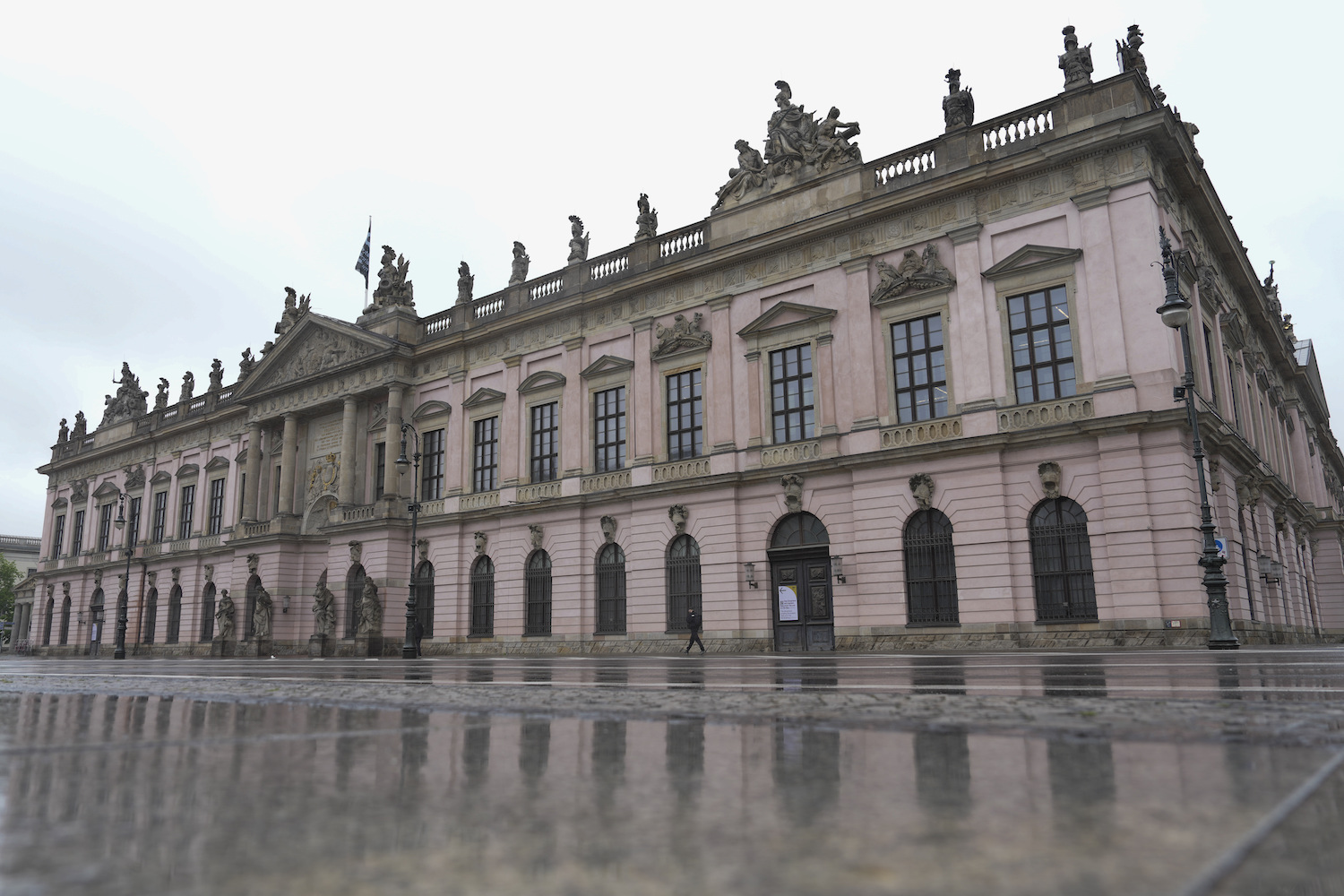
DHM-Hauptbau wohl bis 2031 dicht

The German Historical Museum (DHM) in Berlin will remain without its main building, the Zeughaus on Unter den Linden, until at least 2031 due to further delays in its renovation. Museum director Raphael Gross announced that a binding timeline from the property owner and the federal construction authority is not expected until 2027, and a reopening before 2031 is unrealistic. In the meantime, the museum is using its modern Pei-Bau wing to host a new exhibition titled "Objekte. Geschichte. Geschichten," featuring around 200 highlights from its collection of one million objects, including a samurai armor once gifted to Adolf Hitler and objects from a refugee shelter.

Károly Ferenczy, Elusive Inventor of Hungarian Modernity at the Petit Palais

Károly Ferenczy, insaisissable inventeur de la modernité hongroise au Petit Palais

The Petit Palais in Paris is presenting a major exhibition dedicated to Károly Ferenczy, a pivotal figure in Hungarian modernism. The show features works like his 1896 painting 'Le Sermon sur la montagne,' exploring his role within the Nagybánya artists' colony and his synthesis of plein air painting with a European artistic education.

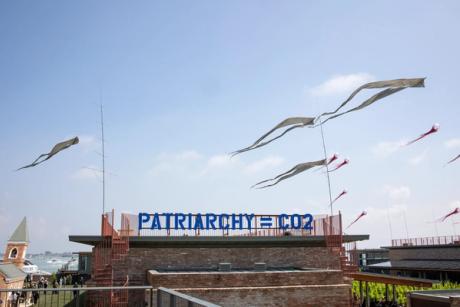
Boats and trains, not planes: reflections on a greener—but sometimes greenwashed—Venice Biennale

The article recounts the author's train journey from London to Venice for the 61st Venice Biennale, highlighting the environmental benefits and pleasant experience of traveling by rail versus flying, despite higher costs and longer duration. It then focuses on the Biennale's central exhibition "In Minor Keys" curated by the late Koyo Kouoh, which foregrounds environmental themes through works that engage with earth, nature, and ecological stakes, featuring artists like Otobong Nkanga, Célia Vasquez Yui, Theo Eshetu, Linda Goode Bryant, and Annalee Davis.

Photographer Giles Duley brings images of historic and current wars into dialogue in Manhattan pop-up show

British photographer Giles Duley has opened a pop-up exhibition titled "Distortion/Memory/Resilience" in a 77th-floor penthouse at Sutton Tower in Manhattan, running from 12 to 24 May. The show features haunting war photography alongside installations—Youth, Childhood, and Memory—that draw parallels between historic and current conflicts. Duley, who lost both legs and an arm after stepping on a landmine in Afghanistan, uses a camera obscura, children's art from war zones, and side-by-side images of injured children from the London Blitz and Beirut to create an immersive experience. The exhibition is presented by the luxury tower's developer and includes benefit dinners hosted by Duley.

Political Fallout Rocks Venice Biennale Prize System

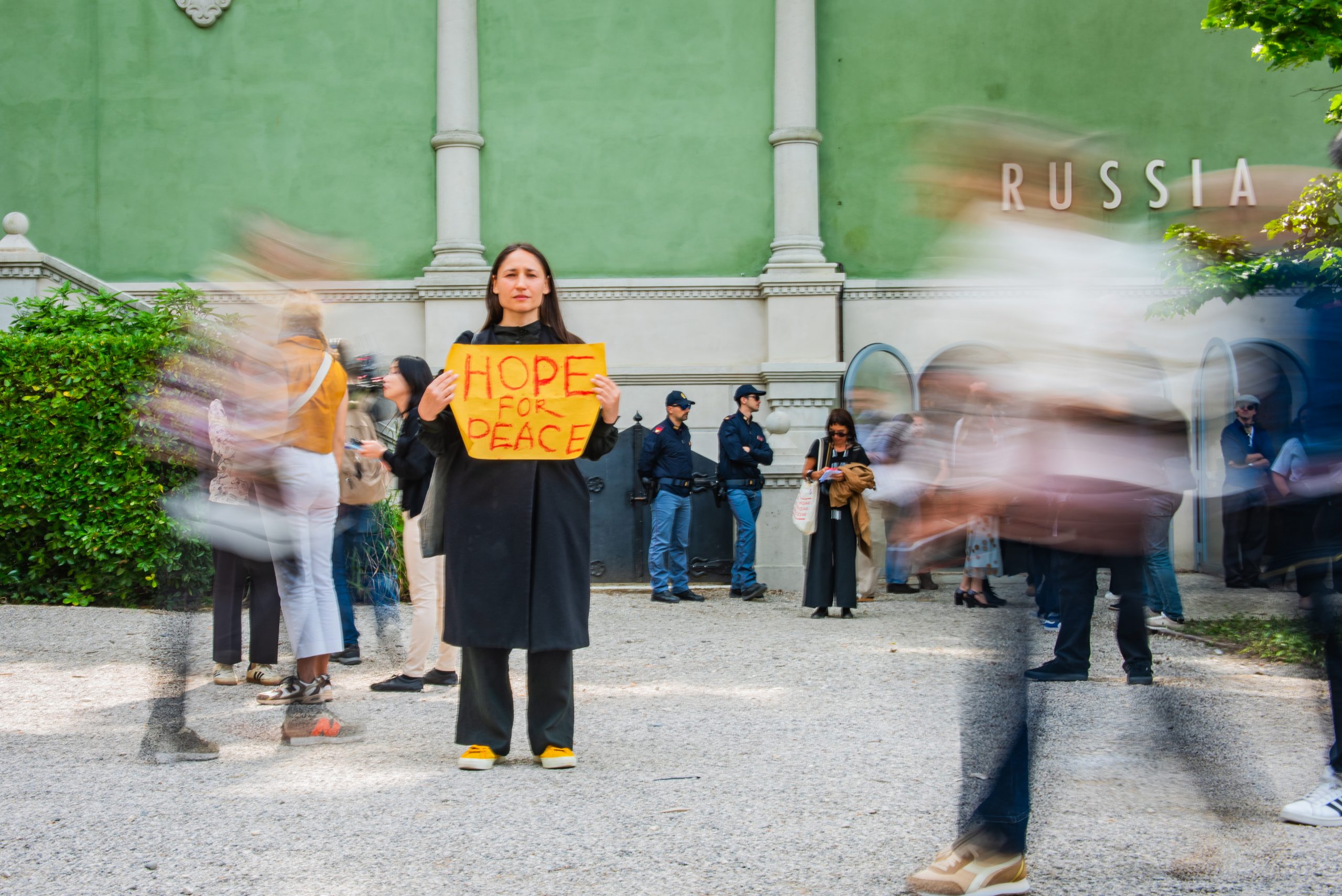
Dozens of artists participating in the 2026 Venice Biennale have withdrawn from consideration for the newly created Visitor Lion awards, replacing the traditional Gold and Silver Lion prizes. A total of 57 artists from the main exhibition and 22 national pavilions signed a statement published on e-flux on May 9, acting in solidarity with the five-person prize jury that resigned on April 30 over the continued participation of Russia and Israel. The jury had objected to awarding prizes to artists from countries whose leaders face International Criminal Court charges, including Russian president Vladimir Putin and Israeli prime minister Benjamin Netanyahu. In response, the Biennale organizers postponed the awards ceremony to November 22 and introduced visitor voting, a move they described as consistent with openness and dialogue. Meanwhile, the Russian Pavilion, which returned after lending its space to Bolivia in 2024, faced protests, closure after previews, and a €2 million funding pull by the European Union for the 2028 Biennale.

Putin ‘Won’ the Venice Biennale, Quips Italian Culture Minister

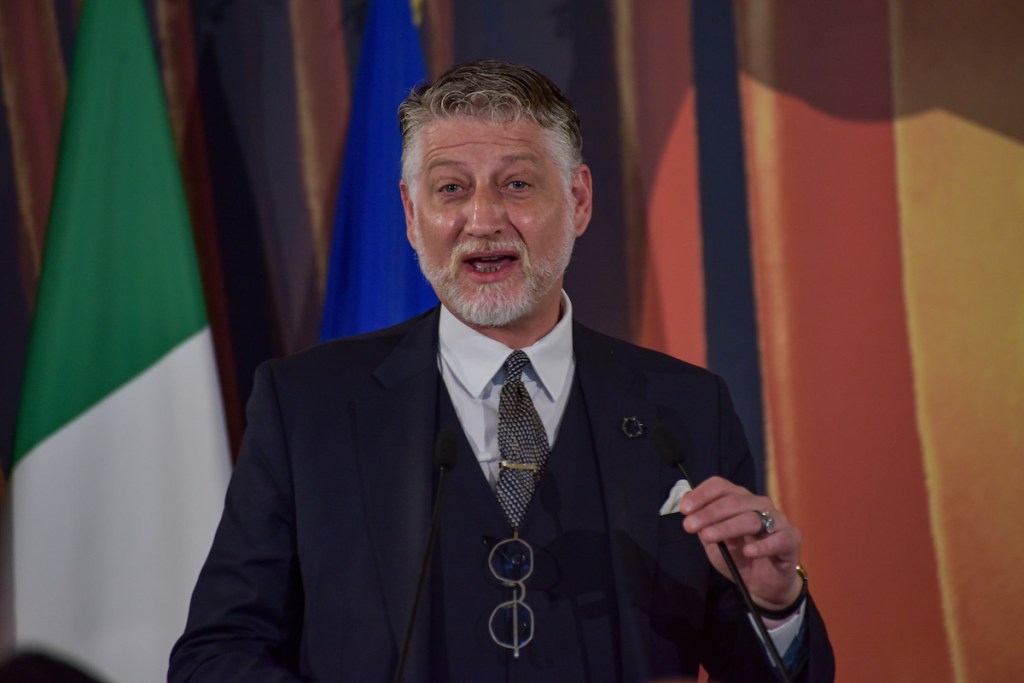
Italian Culture Minister Alessandro Giuli stated that Russian President Vladimir Putin "won" the 2024 Venice Biennale, criticizing Russia's controversial return to the event. Giuli, who repeatedly denounced Russia's presence, told Corriere della Sera that Russian artists in the pavilion cannot express dissent against their regime. The Biennale faced widespread calls to remove Russia, with the EU threatening to withhold a €2 million grant, but organizers argued they lacked legal authority to exclude the country. Protests by Pussy Riot and FEMEN marked the pavilion's opening, while the Biennale's jury resigned en masse after announcing that nations charged with crimes against humanity would be ineligible for Golden Lions.

Drained, Drowning, and Decay: The Best National Pavilions at the Venice Biennale

The 2026 Venice Biennale is defined by themes of ruin and decay, with standout national pavilions exploring bodily, infrastructural, and archaeological collapse. The Slovenian Pavilion features the Nonument Group repurposing materials from past Biennales into a ruin of a mosque for Bosnian Muslim soldiers from World War I. Syria presents its first national pavilion since the Civil War, with Sara Shamma invoking Palmyra, destroyed by ISIS. Germany's pavilion, titled "Ruin," features works by Henrike Naumann (who died in February) and Sung Tieu, questioning the pavilion's fascist architecture and nationalist residue. The Austrian Pavilion, curated by Florentina Holzinger, offers a visceral performance titled "Sea World." The Biennale is also marked by the abrupt resignation of its five-member jury, who refused to consider nations charged with crimes against humanity, leading to awards being chosen by public vote. Additionally, the main exhibition "In Minor Keys" was affected by the death of its curator, Koyo Kouoh.

Keith Haring Before the End of the World

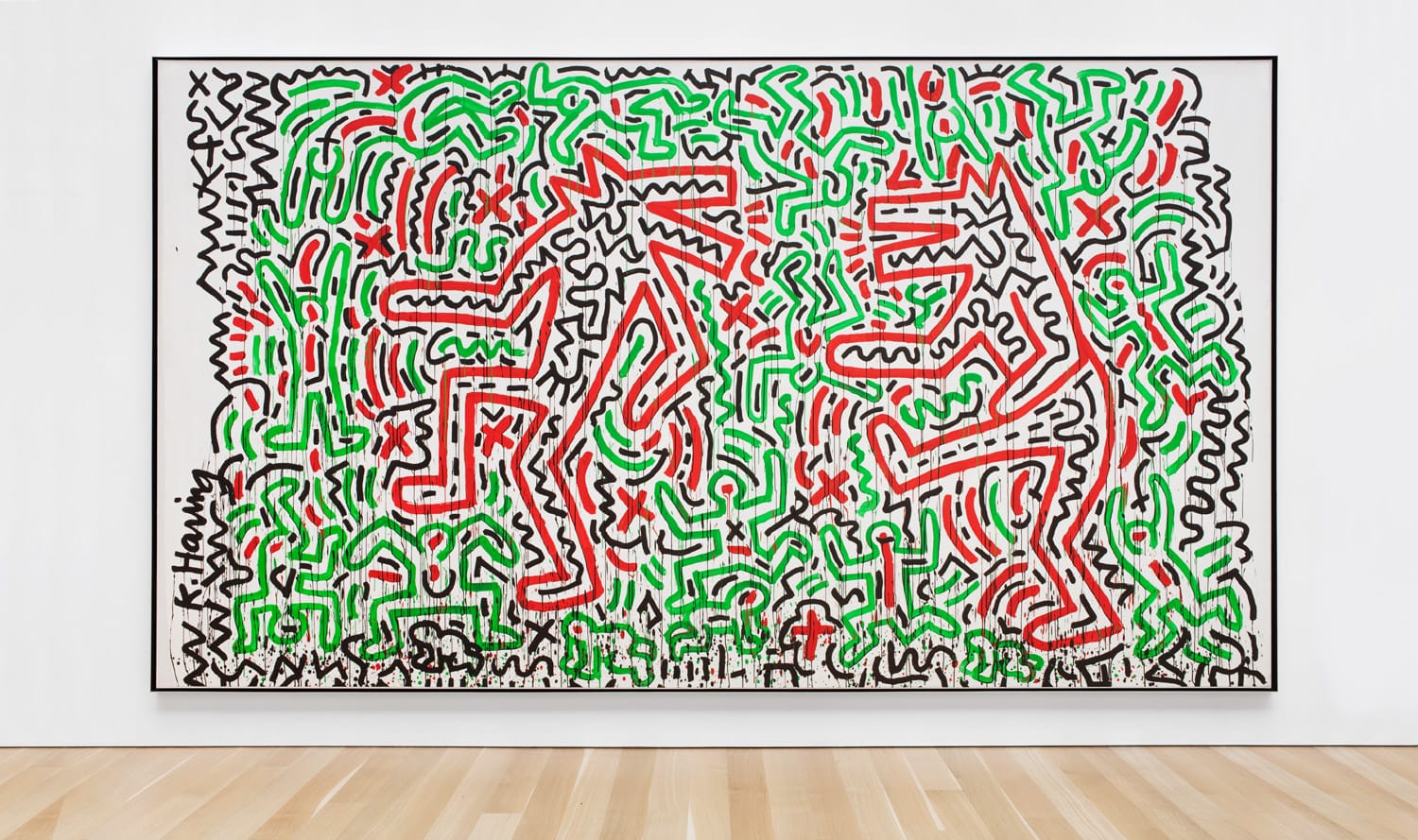
The article reviews Keith Haring's early work from 1980 to 1983, currently on view at the Brant Foundation in New York. The author reflects on initially dismissing Haring's graffiti-inspired style as trite and playful, but now sees darker, prophetic themes in pieces featuring apocalyptic imagery, UFOs, nuclear power, and mindless obedience to higher powers. The exhibition, curated by Dieter Buchhart and Anna Karina Hofbauer, runs through May 31.

Venice Diary Day 2: “In Minor Keys” Is a Major Statement on Perseverance and Play

The article is a diary entry from the 2026 Venice Biennale, focusing on the exhibition "In Minor Keys" curated by the late Koyo Kouoh. The author describes an emotional experience, beginning with a poem by Refaat Alareer on the Arsenale wall, and highlights works by Guadalupe Maravilla, Alexa Kumiko Hatanaka, and others that address themes of perseverance, healing, and survival. Maravilla's sculptures reference a child kidnapped by ICE, while Hatanaka's linocuts explore bipolar disorder as an adaptive trait. The show also features artist-led collectives like Denniston Hill and fierce pussy, emphasizing institution-building and world-making.

Venice Diary Day 1: At the Giardini, Artists Refuse to Make Fascism Cozy

Henrike Naumann's posthumous installation at the German Pavilion, which retains its 1938 Nazi-era fascist architecture, refuses to make the space 'cozy' by adorning windows with violently ripped domestic fabrics. The 2026 Venice Biennale is the first under president Pietrangelo Buttafuoco, associated with neo-fascist politics, and is overshadowed by controversy over his 'neutrality' policy allowing all countries to participate despite human rights concerns. The exhibition jury initially announced it would not consider pavilions from countries whose leaders are charged with crimes against humanity, then abruptly quit, leaving the situation unresolved. The US Pavilion features unimpressive blobs by Alma Allen, while the Russian Pavilion offers cut flowers and free vodka, and Andreas Angelidakis responds to fascist aesthetics at the Greek Pavilion.

Comment | The slopification of political art

The article critiques the rise of AI-generated political imagery, such as Donald Trump depicted as Jesus and viral Lego videos of the Iranian Revolutionary Guard Corps, arguing that these shallow, generic visuals fail to provide meaningful or lasting cultural commentary on current conflicts. The author contrasts this with the inventive, humorous resistance seen during the 2013 Gezi Park protests in Istanbul, which later influenced a generation of Turkish artists.

What You Need to Know About the Venice Biennale’s Russian Pavilion Controversy

The Russian pavilion is set to return to the Venice Biennale for the first time since the 2022 invasion of Ukraine, presenting an exhibition titled 'The tree is rooted in the sky.' This has sparked significant controversy, with artists, curators, and politicians from Ukraine and several European nations calling for the pavilion's exclusion, citing the ongoing war and sanctions. The Biennale organizers have refused to remove Russia, stating they lack the authority to exclude a state recognized by Italy and emphasizing the event's role as a neutral space for cultural dialogue.

Has A.I. Solved the Mystery of This El Greco Painting?

New research using artificial intelligence has challenged the long-held belief that El Greco's altarpiece *The Baptism of Christ* was largely painted by his son and workshop assistants. A machine-learning model called Patch, developed by researchers at Western Reserve University, analyzed the painting's microscopic surface texture and found underlying connections suggesting El Greco himself painted the majority of the work, with only a small region at the bottom attributed to other hands.

Pussy Riot protest at Venice Biennale forces Russian pavilion to briefly close

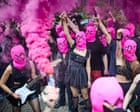
On the second day of the Venice Biennale preview, the activist group Pussy Riot staged a chaotic protest at the Russian pavilion, forcing it to temporarily close. Wearing pink balaclavas and carrying flares, about 40 activists—including members of Femen—gathered outside the pavilion, shouting slogans like "Blood is Russia's Art" and attempting to enter before being pushed back by police. Founding member Nadya Tolokonnikova led the protest, condemning Europe for allowing Russian participation despite the war in Ukraine. Separately, the Art Not Genocide Alliance (Anga) demonstrated outside the Israeli pavilion, which was locked from inside, over Israel's war in Gaza.

‘It has become a symbol of hope’: the epic journey of Ukraine’s origami deer to the Venice biennale

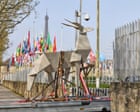
Ukrainian artist Zhanna Kadyrova's concrete origami deer sculpture, originally installed in Pokrovsk in 2018, has been evacuated from the war-torn Donetsk region and transported across Europe to become the centerpiece of Ukraine's national pavilion at the 2026 Venice Biennale. The sculpture, which replaced a Soviet fighter-bomber monument in a local park, was rescued in August 2024 by co-curator Leonid Marushchak amid intensifying Russian attacks, with the help of city authorities and museum staff.

‘The doorbell went at 5am. Six masked men were outside’: Belarus Free Theatre bring totalitarian terror to the Venice Biennale

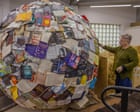
Belarus Free Theatre (BFT), an exiled troupe based in London, is presenting its first major visual art project, titled 'Official. Unofficial. Belarus.', at the Venice Biennale. The installation, masterminded by the founders' daughter Daniella Kaliada, features contributions from former political prisoners, painters, sculptors, composers, and world-renowned chef Rasmus Munk, who created a dish evoking detention under an authoritarian regime. The work includes a giant ball of banned books, surveillance cameras attached to an iron crucifix, and a custom scent of a freshly dug grave, all reflecting the terror of life under Belarusian dictator Alexander Lukashenko.

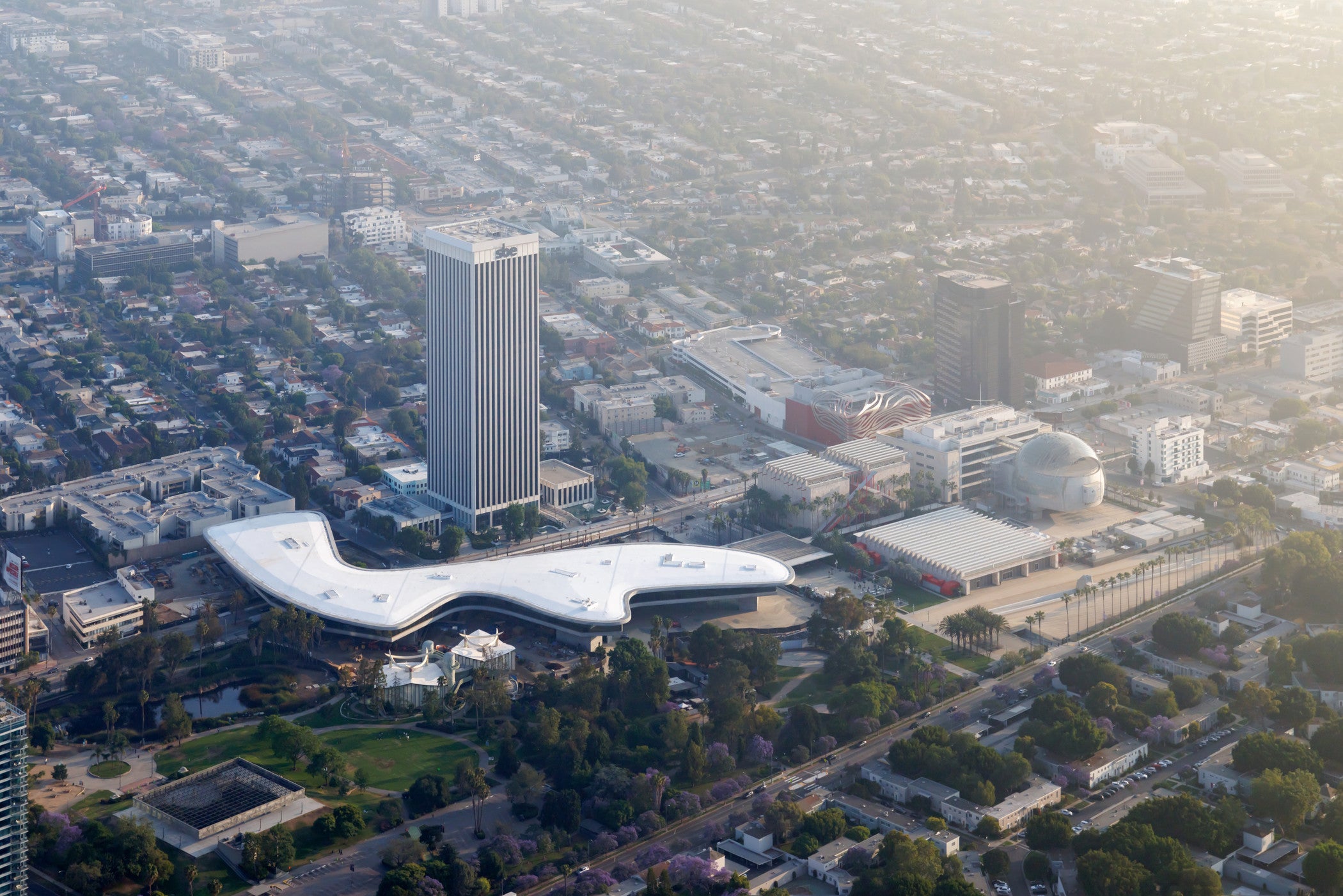
LACMA's David Geffen Galleries invites visitors to get lost and move through art without a set path.

The Los Angeles County Museum of Art (LACMA) has opened its new David Geffen Galleries building to the public. Designed by architect Peter Zumthor, the 900-foot-long structure features a non-linear, single-level layout with abundant natural light, intentionally encouraging visitors to wander without a set path. The inaugural exhibition, organized by 45 curators, abandons traditional art historical categories in favor of a thematic presentation centered on major bodies of water and global trade routes.

Confronting the Uncertain Future Of Image Making and AI — These Houston Photography Exhibitions Keep It Real

Two new photography exhibitions in Houston explore the past and future of image-making. At Moody Gallery, a retrospective titled "MANUAL — The Collaboration of Ed Hill & Suzanne Bloom, 1974-2024" honors the legacy of the groundbreaking photographic duo MANUAL, co-founded by Ed Hill and the late Suzanne Bloom, who passed away in 2025. The show, closing April 25, features works inspired by art history, literature, and nature, including pieces referencing Paul Cézanne and Walt Whitman. Meanwhile, at Rice University's Moody Center for the Arts, the group exhibition "Imaging After Photography" (through May 9) examines the intersection of photography and artificial intelligence, featuring artists like Trevor Paglen, Refik Anadol, and Joan Fontcuberta, and raising questions about bias in datasets and algorithms.

Without Consciousness, No Creativity

"Ohne Bewusstsein keine Kreativität"

Matthias Hornschuh, a speaker at the German Creative Economy Summit in Hamburg, discusses artificial intelligence and its impact on art and creativity in an interview with Monopol. He argues that AI systems lack intentionality and true creativity, describing them as "probability-based imitation" rather than genuine creative tools. Hornschuh warns against the hype surrounding AI, noting that efficiency gains are often overstated and that users can become trapped in unproductive interactions with these systems.

$100 Million Award Made in Suit Over Unlicensed Robert Indiana Art

A New York jury has awarded $100 million in damages to the company that managed artist Robert Indiana's copyrights, ruling that an art publisher produced and sold unlicensed works derived from Indiana's iconic images. The publisher had created derivative pieces based on Indiana's designs without authorization, infringing on the exclusive rights held by the artist's longtime partner.

Adam Budak dismissed as director of MOCAK amid controversy

Adam Budak has been dismissed as director of the Museum of Contemporary Art in Krakow (MOCAK), effective from 12 May, with his employment ending on 30 June. The city of Krakow cited improper performance of duties related to work organization and team management, following an investigation triggered by a complaint signed by 37 employees. Budak disputes the decision, calling it baseless and made under time pressure, and is considering an appeal. Artists including Paulina Ołowska and Robert Knoke have rallied in support, with several artists withdrawing from MOCAK's 2026–27 programme in solidarity.

Somali Artists Take Issue With Nation's First-Ever Venice Biennale Pavilion

Somalia's first-ever national pavilion at the 61st Venice Biennale has sparked controversy, with local cultural organizations accusing organizers of excluding Somalia-based artists. The pavilion, titled SADDEXLEEY, features only diaspora artists—Somali-Swedish painter Ayan Farfah, Somali-Danish poet Asmaa Jama, and Somali-British poet Warsan Shire—while the Somalia Arts Foundation (SAF) and queer collective Warbixinta Cidda have denounced the appointment of Italian co-curator Fabio Scrivanti, citing colonial tensions. SAF founder Sagal Ali and others allege that artists in Somalia were not meaningfully consulted, and that organizers used intimidation tactics against critics. The pavilion's organizers claim it includes Mogadishu-based painter 4C and will host accompanying events, but details remain unconfirmed.

Must-See: Rosa Loy Finds a Durable Form of Togetherness

Rosa Loy, a German painter associated with the New Leipzig School, presents a new body of work at a solo exhibition that explores themes of togetherness, collaboration, and female solidarity through her signature figurative, dreamlike style. The show features large-scale paintings and works on paper that depict pairs or groups of women engaged in shared activities, rendered in muted earth tones with subtle surrealist undertones.

Landmark Exhibition at the Smithsonian American Art Museum Unites U.S. Bicentennial Photography Surveys for the First Time

The Smithsonian American Art Museum will present "Much Here Is Beautiful: Photography Surveys of the U.S. Bicentennial," a landmark exhibition opening September 18, 2026, that brings together for the first time photography surveys created through a federally funded grant program by the National Endowment for the Arts (NEA) around the 1976 U.S. Bicentennial. Featuring 225 photographs by more than 70 photographers, the show draws on the museum's holdings and collections nationwide, including previously unseen works, and places them in the context of federal survey photography dating back to the 19th century.

It’s not all movies: LA’s art, museums and exhibitions are world class

Los Angeles is expanding its cultural offerings with several new and renovated art institutions. The Museum of AI Arts, called Dataland, is set to open this spring at the Grand L.A. complex, created by artist Refik Anadol. It claims to be the world's first museum dedicated to AI art, featuring immersive installations like an Infinity Room with AI-generated scents. Meanwhile, the Natural History Museum completed a $75 million renovation in 2024, adding a 60,000-square-foot wing and displaying a unique green-boned dinosaur named Gnatalie, along with Barbara Carrasco's previously censored mural. The Los Angeles County Museum of Art is opening the David Geffen Galleries on May 4, a 110,000-square-foot space for its permanent collection.

Chiara Camoni on Representing Italy at the 61st Venice Biennale

Chiara Camoni, the artist representing Italy at the 61st Venice Biennale, discusses her upcoming pavilion installation titled "Con te con tutto" in an interview with ArtReview. The single installation will fill the entire Italian Pavilion in the Arsenale, combining existing and new works that incorporate ceramic, stone, plant elements, industrial waste, plastics, and found objects. Camoni emphasizes the choral dimension of her practice, involving family, neighbors, friends, schools, and museum groups in the creative process, thereby expanding the concept of authorship. She notes that her project aligns with the Biennale's curatorial theme "In Minor Keys" by Koyo Kouoh, focusing on monumentality defined not by scale but by reiteration and presence.

‘The Generative Universe’: Keith Tyson returns to LA with new exhibition at Hauser & Wirth

Keith Tyson, the Turner Prize-winning British artist, returns to Los Angeles with his first exhibition in the city since 2009, titled “The Generative Universe,” on view at Hauser & Wirth from May 28 to August 16. The show spans 30 years of his career, featuring paintings, sculptures, drawings, and mixed media works that explore generative systems—artworks created through rule-based structures shaped by mathematics, technology, nature, and the artist's own choices. Central to the exhibition is Tyson's early computer program “Artmachine,” which he developed in the 1990s to generate prompts for his own creative process, contrasting with today's AI image generators that respond to human prompts.

Peter Frankopan unveils BRUSK museum's inaugural exhibition exploring Bruges history

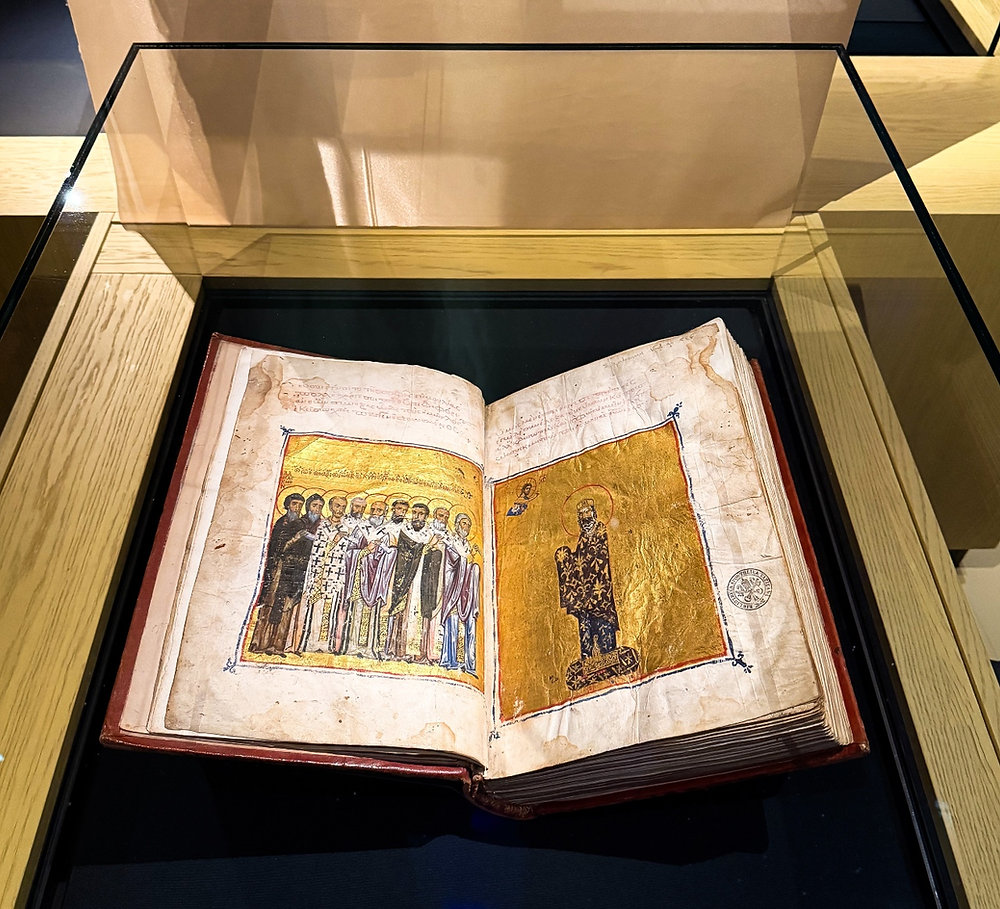
Historian and author Peter Frankopan has curated the inaugural exhibition at BRUSK, a new museum in Bruges, Belgium. Titled "Bigger Picture: Connected worlds of Bruges 900-1550," the show explores the city's medieval role as a global hub for trade, culture, and politics, featuring over 250 objects from 90 lenders worldwide. A rare loan from the Vatican Library—a portrait of Byzantine Emperor Alexios I—is a highlight. The exhibition opens alongside a digital work by Refik Anadol and a fresco by Laure Prouvost.

Discover the Architecture of LACMA’s David Geffen Galleries at These Free Workshops with AIA Los Angeles

LACMA's new David Geffen Galleries, designed by Pritzker Prize-winning architect Peter Zumthor, are now open to the public. The building features a single-floor, sculptural form made of architectural concrete and glass, with natural light and transparency that encourages visitors to explore 6,000 years of art and culture. In collaboration with the American Institute of Architects Los Angeles, LACMA is hosting a series of free workshops on May 15-17, including guided walks, drawing sessions, and landscape tours, to help visitors engage with the building's architecture and design.