filter_list Showing 14 results for "Compromise" close Clear
dashboard All 14 article news 6article policy 3museum exhibitions 2rate_review review 2article culture 1
date_range Range Today This Week This Month All
Subscribe

Chinese art exhibition reflects transformative modern times

Hundreds of visitors attended the opening of 'Forever Tomorrow: Chinese Art Now' at Auckland Art Gallery, the first major survey of Chinese contemporary art on this scale in Auckland. The exhibition features over 60 works by 42 artists, including Ai Weiwei, Xu Zhen, Xiao Lu, and Cao Fei, spanning photography, sculpture, installations, and new media. Key works include Ai Weiwei's 'Dropping a Han Dynasty Urn' and Xu Zhen's monumental sculpture combining Buddhist and Greek motifs. The show runs through an unspecified period and has drawn diverse audiences, including Chinese New Zealanders and previous visitors to China.
Au Louvre, l’ambitieuse restauration du cycle de Marie de Médicis

The Louvre Museum in Paris is undertaking an ambitious restoration of Peter Paul Rubens's monumental cycle of 24 paintings depicting the life of Marie de Médicis. The project, which will take four years and cost €4 million funded by the Société des Amis du Louvre, begins this autumn with the paintings being restored in situ in the Médicis Gallery. The gallery will close in May to prepare the space as a restoration workshop, where two teams of 10–15 restorers will work simultaneously on cleaning, relining, and filling gaps. The last major restoration of the cycle dates to the 1950s, and recent diagnostics revealed yellowed varnish, discordant repaints, and flaking paint layers that risk irreversible loss.

V&A Pulls Catalog Materials Due to Chinese Censorship Laws

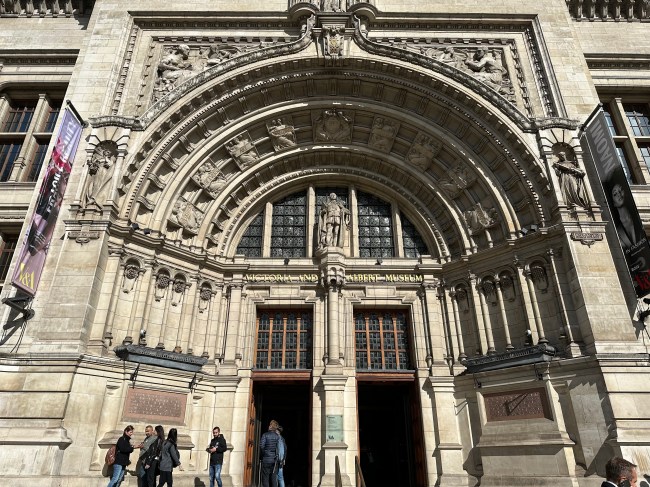
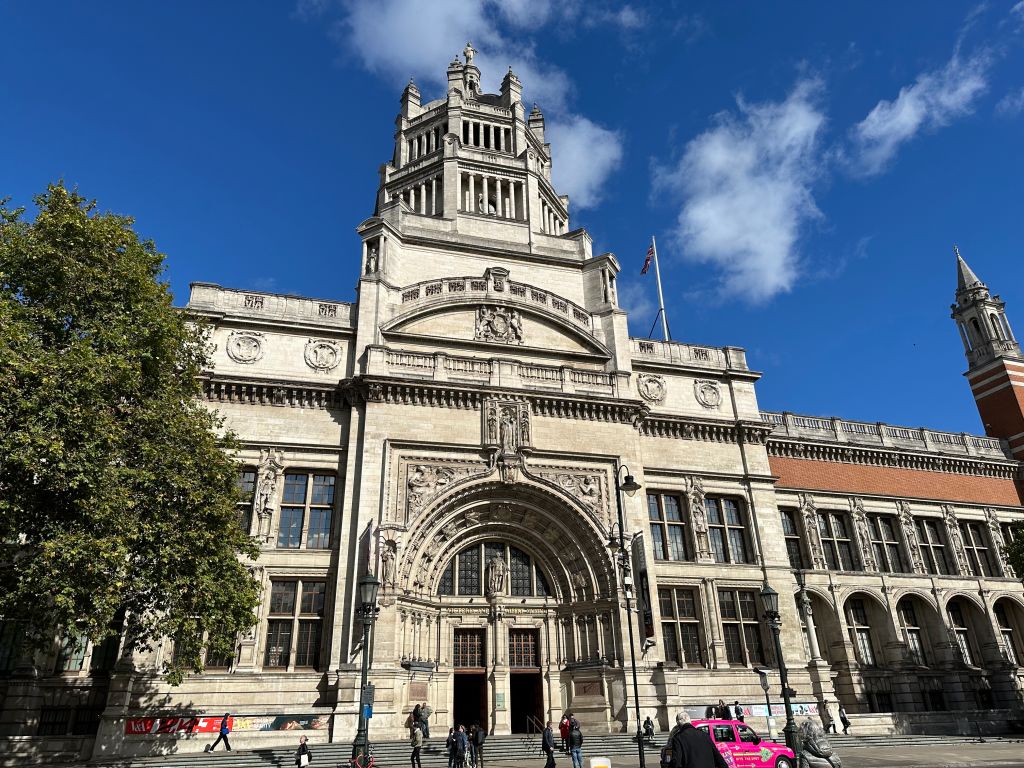
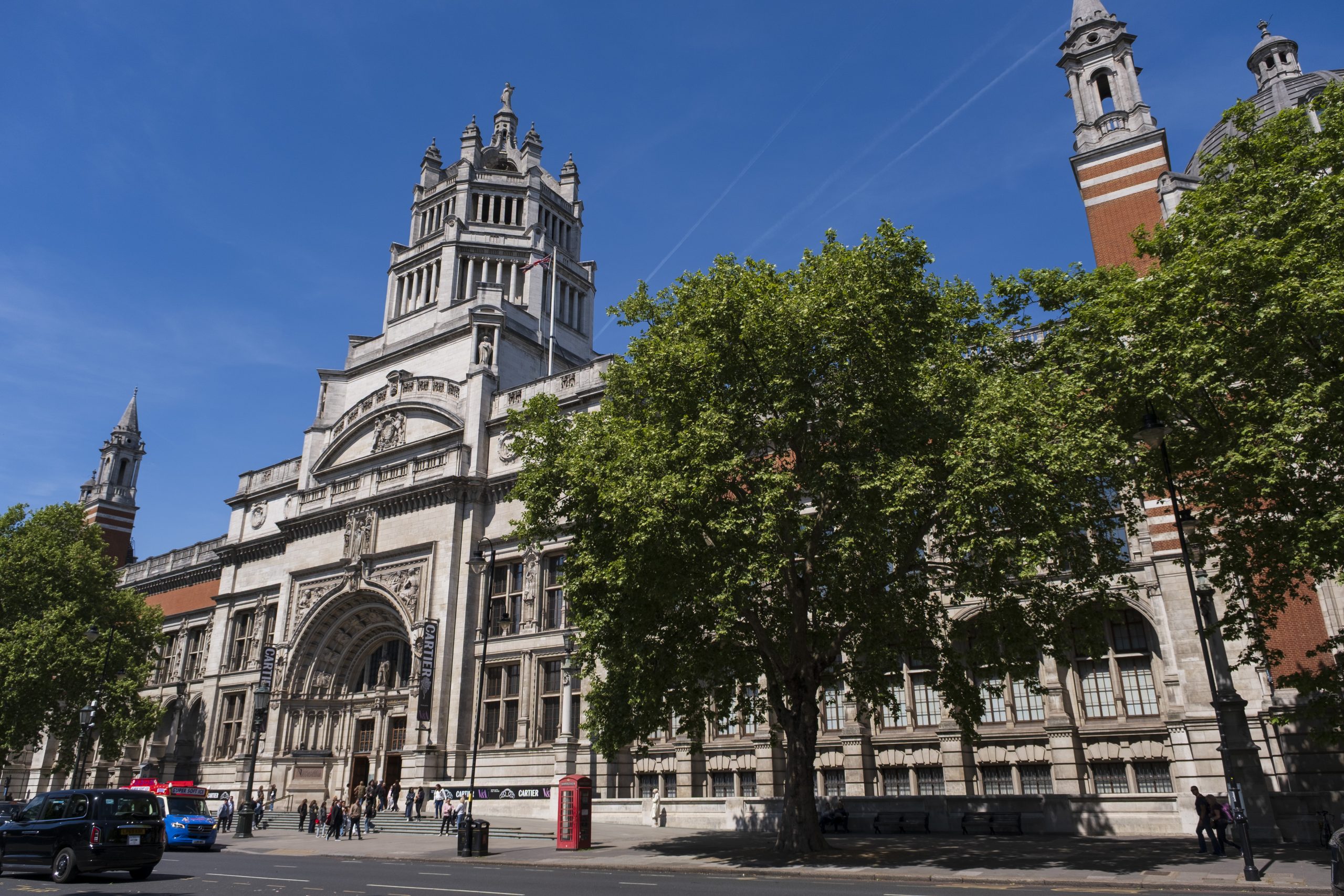
The Victoria and Albert Museum (V&A) in London has admitted to removing maps and images from two exhibition catalogs following censorship demands from a Chinese printing firm. Documents revealed that C&C Offset Printing flagged content in the catalogs for the exhibitions "Music Is Black" and "Fabergé: Romance to Revolution" as violating Chinese law. The censored items included a 1930s map of British trade routes and a photograph of Vladimir Lenin, which the printer claimed could not be produced under Beijing’s strict regulations.

Is Chinese Censorship Reaching Inside Britain’s Museums?

London’s Victoria and Albert Museum (V&A) has come under fire following reports that it altered exhibition catalogues to comply with Chinese government censorship. To reduce production costs, the museum utilized printers in China, which are subject to Beijing’s General Administration of Press and Publication (GAPP) regulations. Consequently, the museum removed historical maps and an image of Vladimir Lenin from publications for the "Music is Black" and "Fabergé: Romance to Revolution" exhibitions after they were flagged by Chinese authorities.

Russian Pavilion Will Be Closed to the Public During Venice Biennale: Report

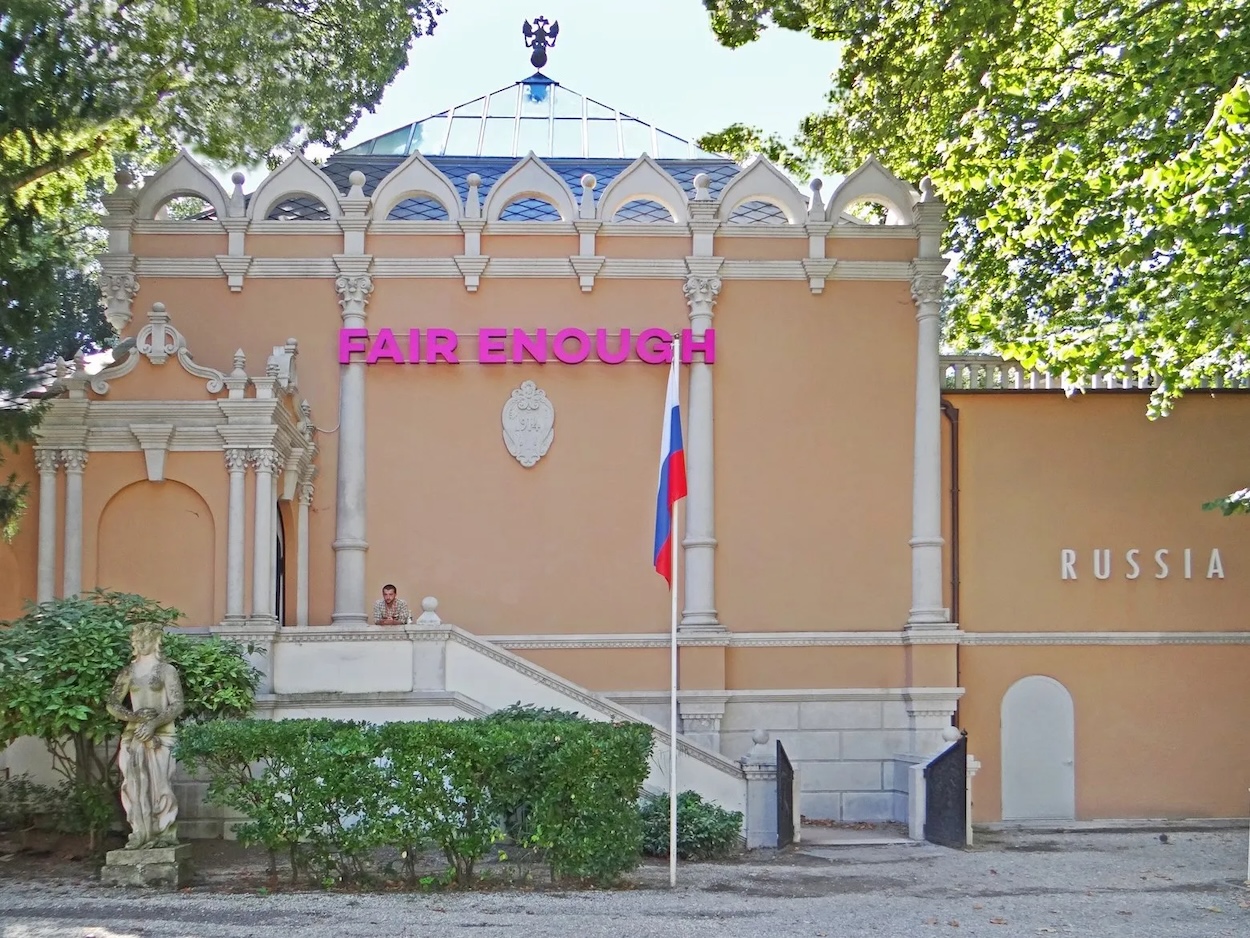
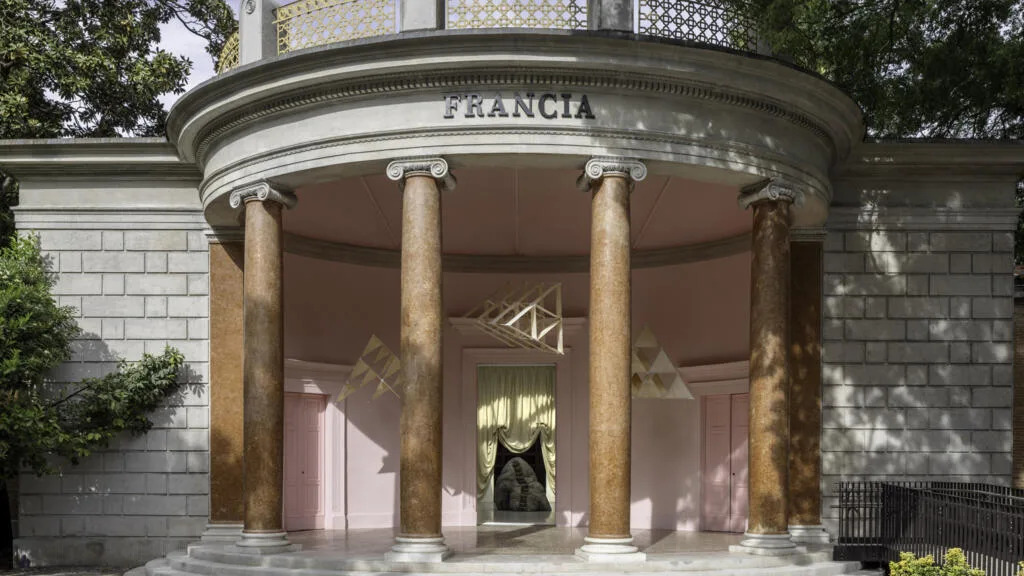
The Russian Pavilion will be closed to the public for most of the 2025 Venice Biennale, opening only during the pre-opening vernissage (May 5–8) for live performances tied to the exhibition “The Tree Is Rooted in the Sky.” After May 9, the pavilion will remain closed, with digital documentation displayed in the windows. The compromise follows weeks of pressure from European cultural and political figures—including Italy’s culture minister—to shutter the pavilion due to Russia’s ongoing war in Ukraine. Plans were confirmed via email correspondence between Biennale Foundation president Pietrangelo Buttafuoco, general director Andrea Del Mercato, and Russian Pavilion commissioner Anastasia Karneeva, as reported by Italian outlets Open and La Repubblica.

V&A Museum Has Acquiesced to Censorship Requests from Chinese Printer: Report

London’s Victoria and Albert Museum (V&A) reportedly complied with censorship demands from its Chinese printing firm, C&C Offset Printing, to alter exhibition catalogues. Internal emails revealed that the museum removed a photograph of Lenin from a Fabergé exhibition book and altered historical maps to align with Chinese government standards after the printers flagged them as "sensitive." Staff noted that while they were aware of contemporary geopolitical sensitivities, the restrictions had expanded to include historical imagery, forcing last-minute editorial changes to avoid production delays.

Blank Spaces. Sung Tieu by Sarah Johanna Theurer

Sung Tieu's installations, characterized by austere, bureaucratic surfaces, explore the hidden architectures of power embedded in everyday systems. The article examines her series of works that deconstruct administrative forms used in asylum procedures, reducing them to blank spaces and quantified grids to expose how institutional power operates through seemingly neutral documents. Her exhibition "In Cold Print" at Nottingham Contemporary physically manifests these themes by using steel fences to control viewer movement, drawing direct parallels between minimalist sculpture and the dehumanizing design of border controls.

Pussy Riot and Topless Activists Rally Against Russian Pavilion at Venice Biennale

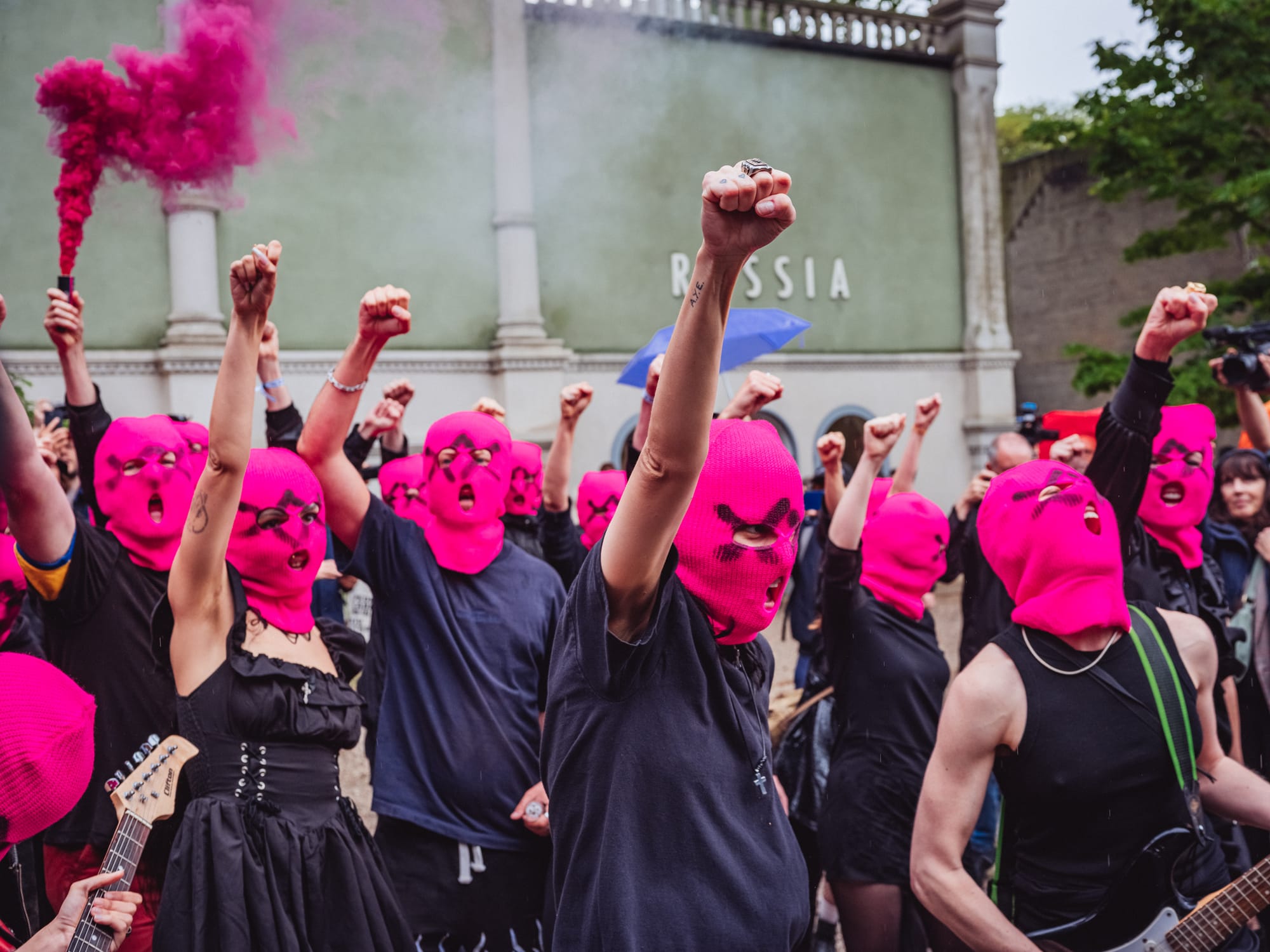
On May 6, 2026, the art collective Pussy Riot and the Ukrainian feminist group FEMEN staged a protest outside the Russian Pavilion at the 61st Venice Biennale. Approximately 50 activists released pink smoke and blue-and-yellow flares evoking the Ukrainian flag, while FEMEN members staged a topless protest with anti-war slogans like “RUSSIA KILLS, BIENNALE EXHIBITS.” Italian police and Biennale security blocked access to the pavilion, and some Pussy Riot activists were tackled after entering. The protest targeted Russia’s participation in the Biennale for the first time since its full-scale invasion of Ukraine in 2022, with activists condemning the event for lending legitimacy to Russian officials and artists aligned with the government.

Russia's 2026 Venice Biennale Will Not Open to the Public, and Other News.

Russia's pavilion at the 2026 Venice Biennale will be closed to the public for nearly the entire run of the exhibition (May 9–November 22), with access limited to a brief preview period for press and invited guests. Instead of physical access, visitors will experience the pavilion's project—titled 'The Tree Is Rooted in the Sky'—via video documentation displayed on exterior screens. The arrangement is widely seen as a compromise shaped by international sanctions and political backlash over Russia's return following its absence after the 2022 invasion of Ukraine. In other news, Matthieu Blazy unveiled his first Chanel cruise collection in Biarritz; San Francisco appointed Matthew Goudeau as its first-ever executive director of arts and culture; the Saudi Arabia Museum of Contemporary Art received a $490 million construction grant from Diriyah Company; and online auction sales grew 8 percent in 2025, generating $423.9 million.

Under pressure, the jury of the 61st Venice Biennale will exclude Russian and Israeli pavilions from the awards

Sous pression, le jury de la 61e Biennale de Venise exclura les pavillons russe et israélien du palmarès

The 61st Venice Biennale, titled "In Minor Keys" and running from May 9 to November 22, 2026, has been embroiled in political controversy after organizers decided to reinstate the Russian pavilion, which had been excluded since Russia's 2022 invasion of Ukraine. Under pressure from the European Commission, which threatened to suspend a €2 million grant, the jury announced it will exclude artists from the Russian and Israeli pavilions from winning prizes, citing that leaders Vladimir Putin and Benjamin Netanyahu face International Criminal Court charges for crimes against humanity. The Russian pavilion will remain closed to the public but open for VIP press previews, while the Israeli pavilion stays open to the public. Italian Culture Minister Alessandro Giuli has refused to attend the opening ceremony in protest.

Grimes joining LinkedIn is artwashing at its most brazen. I should know – I released my new film on there

Artist Alan Warburton critiques the migration of creative professionals to LinkedIn, sparked by musician Grimes' recent pivot to the platform to promote her appearance at an Nvidia tech conference. Warburton, who recently released his AI-focused film 'Image Empire' on the site, describes the move as a desperate response to the 'enshittification' of traditional creative platforms like Twitter and Vimeo, which have been overrun by bots and AI-generated content.

Una delle opere più importante esposte alla Galleria Nazionale di Roma sta ammuffendo

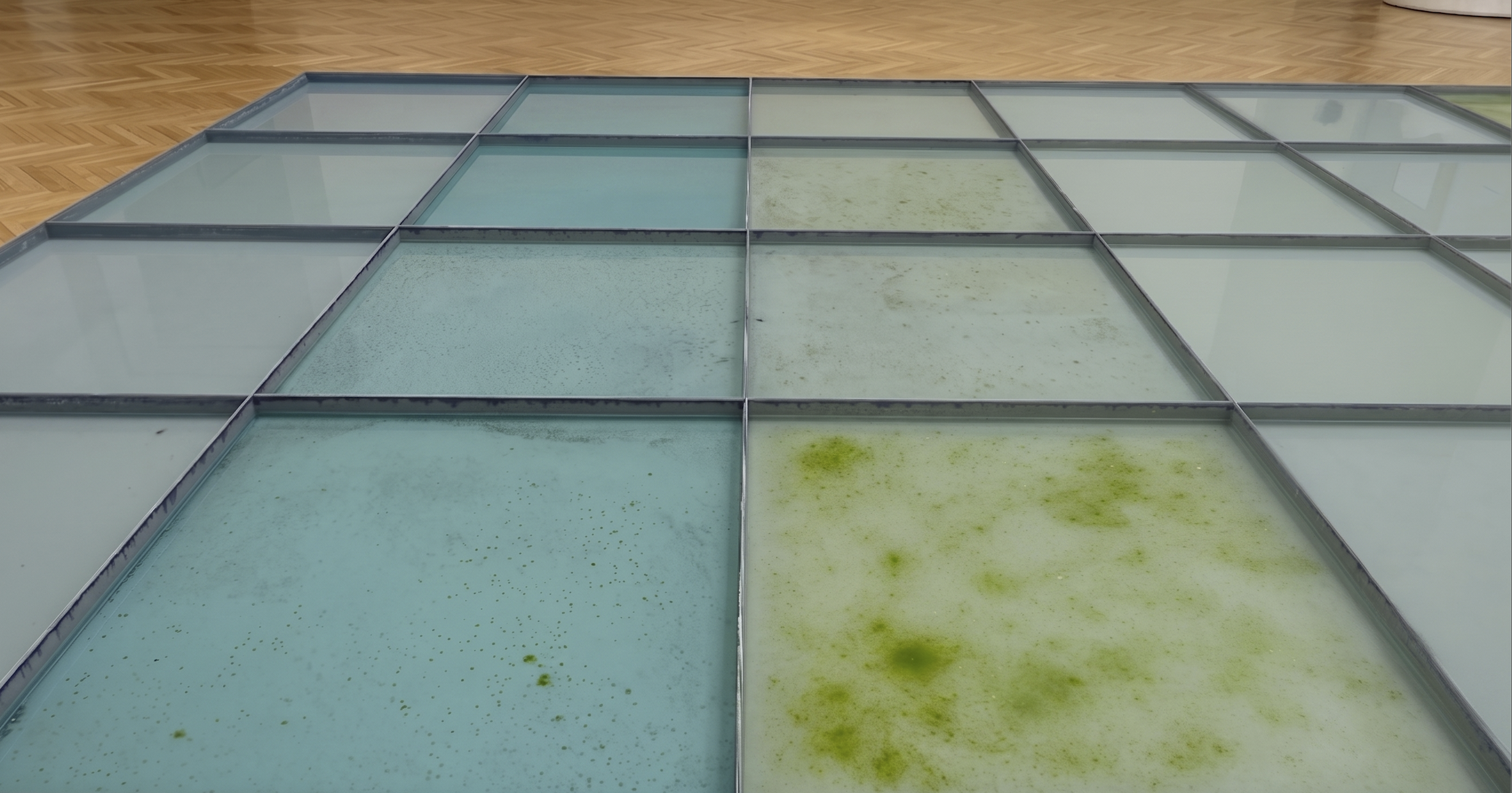
An article by Laura Carlotta Cortoni on Artribune reports that Pino Pascali's iconic 1967 work "32 mq di mare circa" ("32 square meters of sea approximately"), on display at the Galleria Nazionale d'Arte Moderna e Contemporanea (GNAMC) in Rome, is covered in mold, dust, and insects due to a total lack of maintenance. The author describes the installation as resembling a neglected warehouse and notes that visitors unfamiliar with the piece mistake the decay for an intentional environmental statement, creating a critical paradox given Pascali's own series of works titled "Muffe" (Molds).

Venice Biennale opens under shadow of protests over Russia and Israel

The 61st Venice Biennale opened under heavy protest as Russia returns to the event for the first time since its 2022 invasion of Ukraine. Ukrainian feminist collective Femen and Russian punk band Pussy Riot demonstrated outside the Russian pavilion, with activists accusing Russia of using art as a weapon in a hybrid war. Meanwhile, pro-Palestinian protesters gathered outside Israel's pavilion, holding banners reading 'No artwashing genocide' and demanding Israel's exclusion over the war in Gaza. The Biennale's international jury resigned last month, refusing to award prizes to countries led by figures subject to ICC arrest warrants, namely Vladimir Putin and Benjamin Netanyahu. EU foreign policy chief Kaja Kallas called Russia's participation 'morally wrong' and threatened to cut €2 million in funding, while culture ministers from 22 European countries urged organizers to reconsider.

I wanted to hate the new LACMA. Then I went back

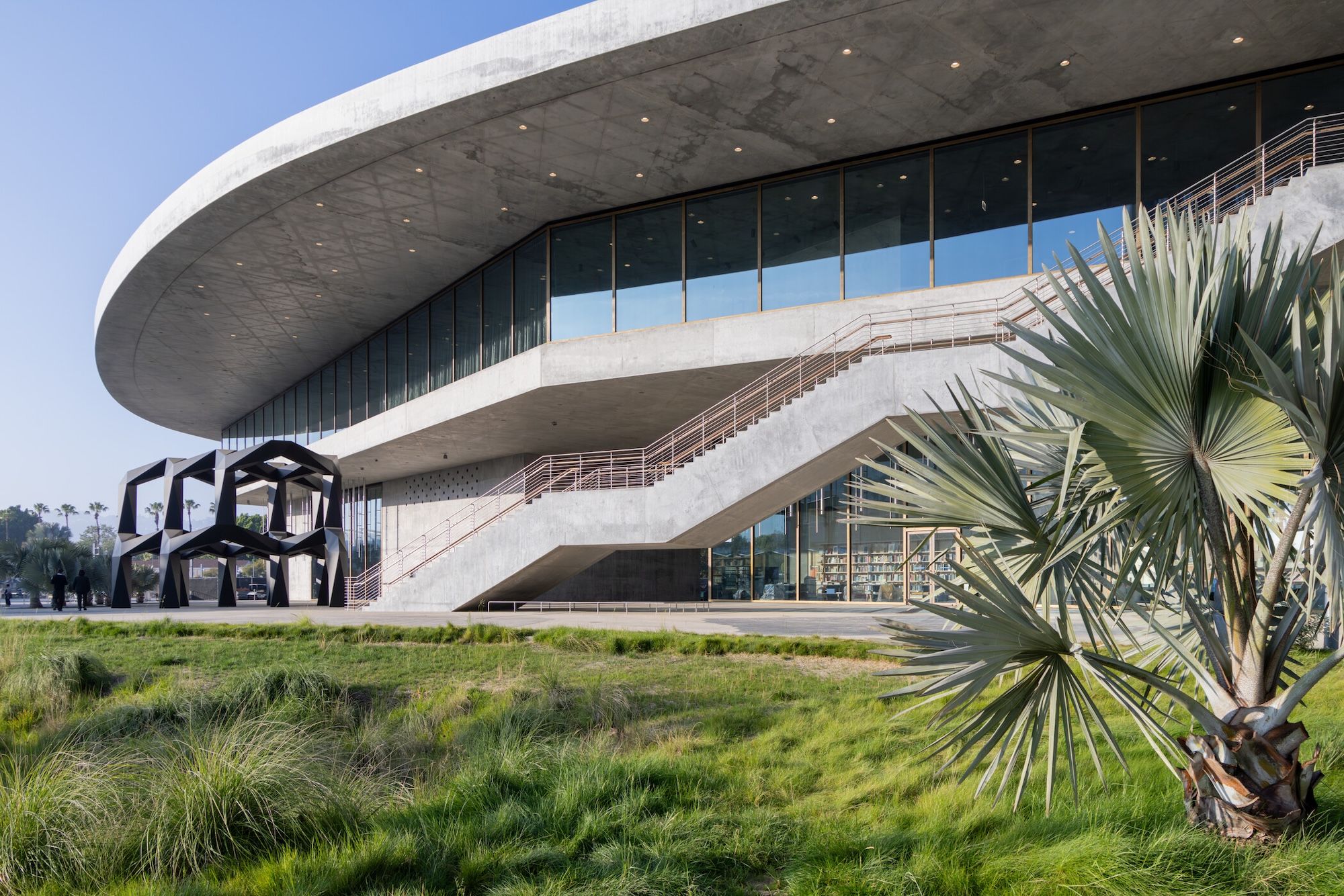
The article describes the author's evolving impression of the newly opened David Geffen wing at the Los Angeles County Museum of Art (LACMA), designed by architect Peter Zumthor. Initially visiting at 11am, the author found the $724 million, 110,000 sq ft building to be a "dismal, dated, inelegant brute," with thick bronze windows, dark concrete slabs, and bunker-like galleries. However, returning at 4pm, the author experienced a transformation: golden afternoon light warmed the concrete, illuminated the interiors, and revealed the building as a "brilliant innovation and true gift to the city." The article details the building's 20-year design evolution, challenges including fossil discoveries on site, and Zumthor's public frustrations with the compromised details.