filter_list Showing 20 results for "US pavilion" close Clear
dashboard All 20 museum exhibitions 9article news 6rate_review review 4trending_up market 1
date_range Range Today This Week This Month All
Subscribe

The Venice Biennale’s Polite Fiction of Being ‘Above the Market’ Is Wearing Thin

The 61st Venice Biennale is underway, with art world figures flocking to Venice for the opening. While the Biennale is officially a non-selling curatorial platform, commercial interests are increasingly visible: galleries are funding artists' projects to recoup investments, auction houses like Christie's are hosting private selling exhibitions (including a 'Ghost Pavilion' at the Ca' Dario Palazzo), and fashion houses such as Bottega Veneta and Chanel are sponsoring events. Sotheby's has pulled support for the U.S. Pavilion, which is now crowdfunding, while Frieze is bankrolling the British Pavilion for a second time.

10 Shows Around Venice Not to Miss During the Biennale

ARTnews has published a guide to 10 exhibitions in Venice worth seeing during the 2026 Biennale, beyond the central show "In Minor Keys" curated by the late Koyo Kouoh and the national pavilions. Highlights include a major survey of Lee Ufan at the San Marco Art Centre (SMAC Venice), organized by the Dia Art Foundation and curated by Jessica Morgan; "Helter Skelter: Arthur Jafa and Richard Prince" at Fondazione Prada, curated by Nancy Spector; and "Strange Rules" at Palazzo Diedo, conceived by Hans Ulrich Obrist with Mat Dryhurst and Holly Herndon, introducing the concept of "Protocol Art." Other venues include the Gallerie dell'Accademia, Pinault Collection, Berggruen Arts & Culture, Fondazione Sandretto Re Rebaudengo, and a three-night-only performance at Teatro Goldoni.

Our pick of the best pavilions at the 61st Venice Biennale

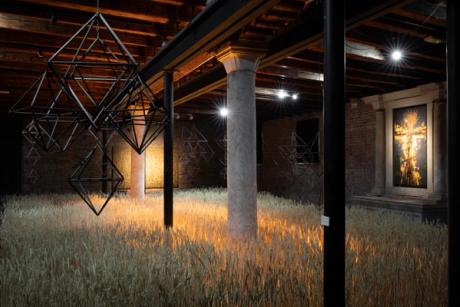
The article highlights standout national pavilions at the 61st Venice Biennale. The Belarus Pavilion features a powerful installation by the Belarus Free Theatre, including a wheat field built by former political prisoners, straw spiders made from prison bars, and a confession booth that runs facial recognition. The Brazil Pavilion presents a joint exhibition by Rosana Paulino and Adriana Varejão, focusing on colonial wounds and trauma through works like Paulino's 'Aracnes' and Varejão's 'Still Life amid Ruin'. The Bosnian Pavilion by Mladen Bundalo invites tactile engagement with themes of diaspora and migration, while the Austrian Pavilion by Florentina Holzinger draws attention with nude performers in water-filled pools.

Alma Allen’s US Pavilion Is One of the Emptiest Shows at the Venice Biennale

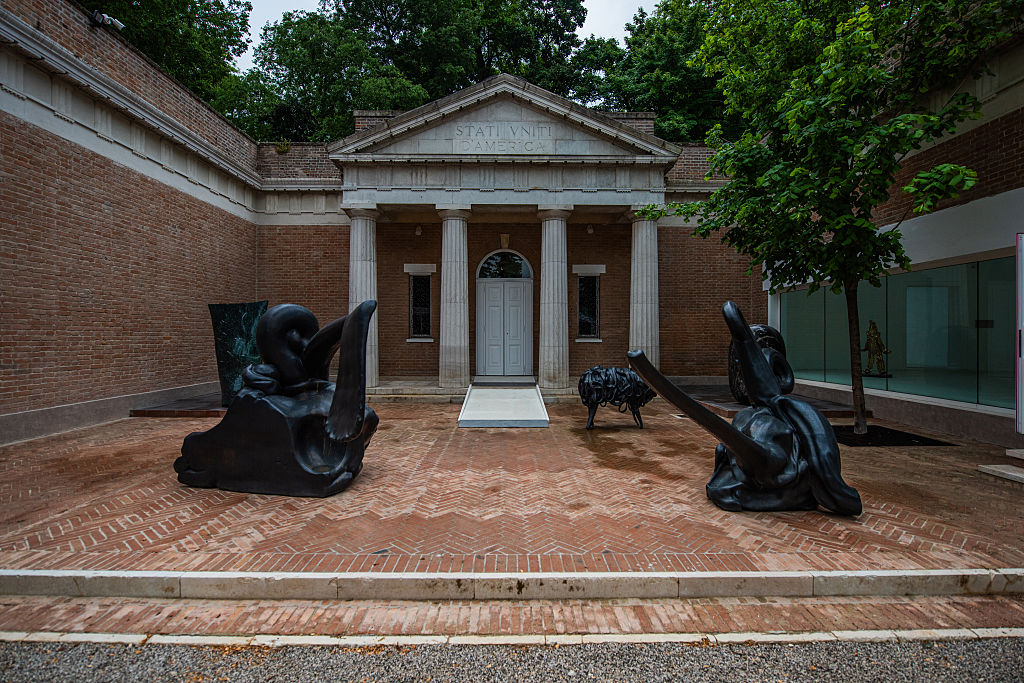
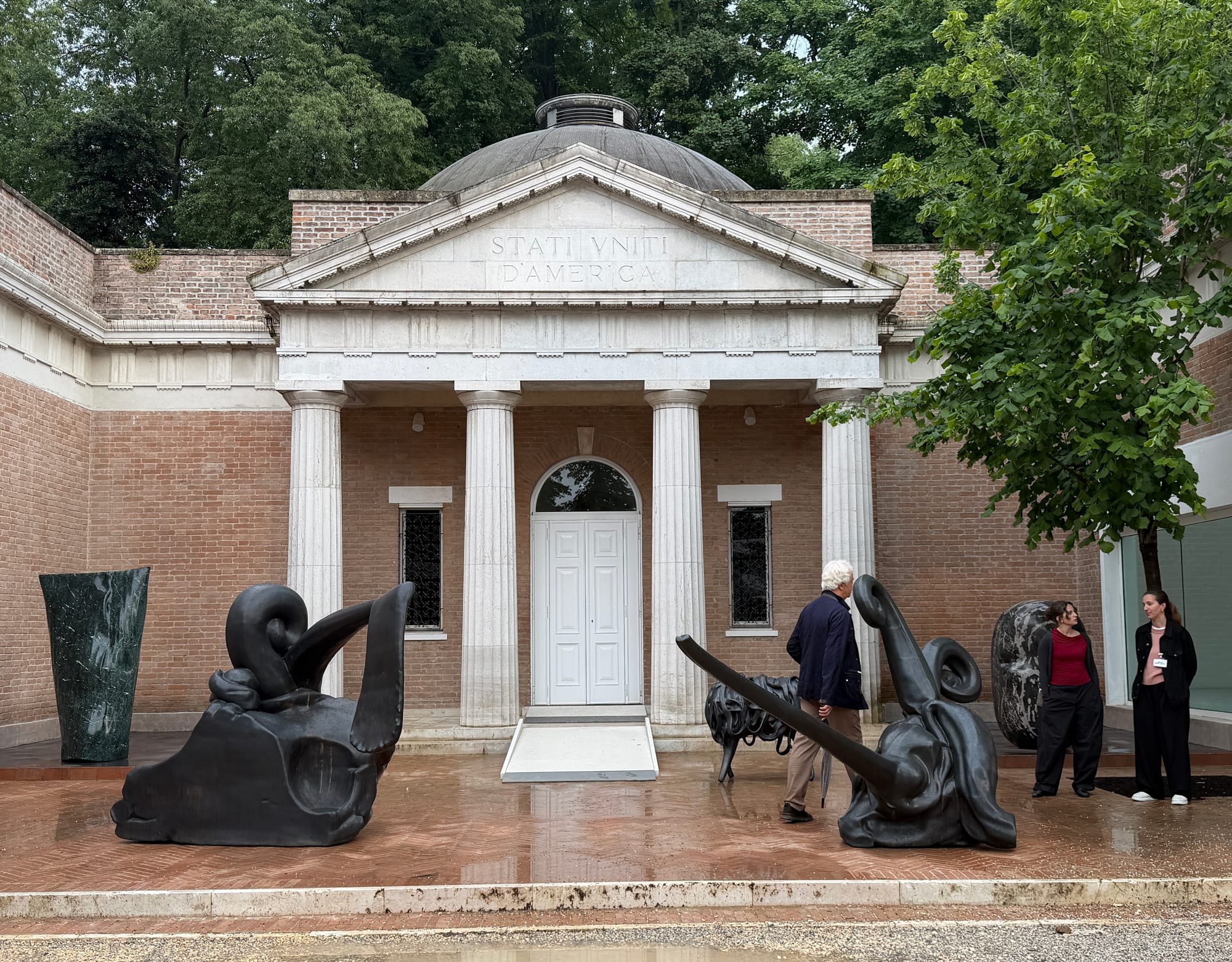
Alma Allen represents the United States at the 2026 Venice Biennale with a subdued, apolitical exhibition inside the US Pavilion. The show features roughly 25 sculptures—mostly in bronze, wood, and stone—many titled "Not Yet Titled," and deliberately avoids overt political messaging. This marks a stark departure from the previous two US pavilions, curated by Simone Leigh (2022) and Jeffrey Gibson (2024), which directly confronted colonialism and empire. The Trump administration’s call for proposals explicitly asked for work that "reflects and promotes American values," and Allen’s presentation has been criticized as safe, unremarkable, and lacking the incisive edge of contemporary American art.

Alma Allen Offers a Quiet Vision in Venice—Even as Questions Swirl the U.S. Pavilion

Alma Allen's exhibition "Call Me the Breeze" has opened at the U.S. Pavilion for the 61st Venice Biennale. The Utah-born sculptor presents a pared-down, whimsical show that contrasts with the bombastic work of his predecessors, grouping new and old pieces to explore themes of conflict, mourning, and transcendence inspired by Hieronymus Bosch's *Visions of the Afterlife*. The exhibition was produced hurriedly over a few months, and Allen, who typically leaves his works untitled, felt compelled to explain his art for the first time in 30 years amid controversy surrounding his commission.

'I wanted to catch the desperation': Dries Verhoeven on turning the Dutch pavilion into a bunker for the Venice Biennale

Artist Dries Verhoeven has transformed the Dutch pavilion at the Venice Biennale into a bunker-like space by covering its iconic glass-and-steel structure with metal shutters. Inside, visitors experience a gradually darkening environment and a raw vocal performance by 13 rotating performers, intended to evoke desperation and confusion about contemporary global crises. The work critiques the modernist ideals of openness and optimism embodied by the pavilion, designed by Gerrit Rietveld in 1953.

The US pavilion's curator on the controversial choice of Alma Allen for the Venice Biennale

The US pavilion at the Venice Biennale has selected Alma Allen, a Utah-born, Mexico-based sculptor, as its representative artist—a controversial and surprising choice given his relative obscurity compared to past pavilion artists. The selection process was unusually fraught: the first artist chosen was dropped before official announcement, and the announcement was delayed by the US government shutdown. The pavilion's curator, Jeffrey Uslip, discusses the exhibition titled "Call Me the Breeze," which will feature Allen's sculptures in stone, bronze, and wood that appear to defy their own weight, emphasizing artistic autonomy despite the State Department's framing of the choice as showcasing "American excellence."

Pussy Riot and FEMEN Join Forces in Punk Protest in Venice: ‘Russia Kills! Biennale Exhibits!’

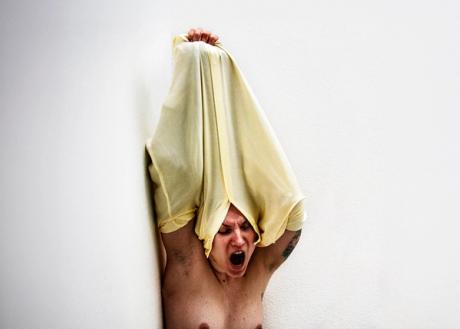
On Wednesday morning, Pussy Riot and FEMEN led a protest outside the Russian Pavilion at the 2026 Venice Biennale, chanting slogans like “Russia kills! Biennale exhibits!” and “Blood is Russia’s art!” Dozens of protesters, some in pink balaclavas and others bare-chested with floral crowns, gathered in the Giardini under light rain, carrying guitars and blasting punk rock and hip-hop. The action was organized by Nadya Tolokonnikova and other Pussy Riot members alongside FEMEN, a Ukrainian-founded women’s movement. They released pink, yellow, and blue smoke, and Tolokonnikova criticized the Biennale for allowing Russian participation while artists who oppose the war in Ukraine are imprisoned. She proposed an alternative exhibition, “Resistance Imprisoned,” currently on view in Strasbourg, featuring incarcerated artists.

Anish Kapoor says US’s ‘politics of hate’ should exclude it from Venice Biennale

Anish Kapoor has called for the United States to be excluded from the Venice Biennale, citing the country's "abhorrent politics of hate" and "incessant warmongering." His comments follow the resignation of the five-member international jury, who stepped down in protest over the inclusion of Israel and Russia. Kapoor praised the jury's decision as "courageous" but argued they should have also targeted the US. The US pavilion, featuring artist Alma Allen and his exhibition "Call Me the Breeze," has faced scrutiny over perceived Trump administration interference and a delayed selection process. Meanwhile, the Israeli and Russian pavilions remain flashpoints, with over 200 participants signing a letter demanding the cancellation of the Israeli pavilion, and the Russian pavilion closed to the public but viewable through windows.

The message behind the US pavilion at the Venice Biennale

The article previews the 61st Venice Biennale, opening May 9 and running through November 22, highlighting early controversies. The five-person Golden Lion jury, led by Brazilian curator Solange Farkas, resigned after declaring they would not consider pavilions from countries under International Criminal Court investigation, targeting the Israel pavilion and its artist Belu-Simion Fainaru. Separately, the US pavilion has drawn scrutiny from the New York Times over its selection process, with commissioner Jenni Parido (a former pet food store owner) tapping curator Jeffrey Uslip and sculptor Alma Allen, bypassing traditional funders like the Ford and Mellon foundations.

A Whole Lot of Nothing at the US Pavilion

The US Pavilion at the 2026 Venice Biennale features sculptor Alma Allen's exhibition "Call Me the Breeze," curated by Jeffrey Uslip. The show presents untitled, amorphous sculptures in bronze, wood, and stone, including Colorado Yule marble. The selection process was controversial: after the Trump administration excluded the National Endowment for the Arts, the State Department initially picked artist Robert Lazzarini and curator John Ravenal, but that plan collapsed. The American Arts Conservancy, a new nonprofit led by Jenni Parido (a former pet food store operator with Mar-a-Lago ties), then took over, hiring Uslip, who approached Barbara Chase-Riboud and William Eggleston before settling on Allen. Donors include businessman John Phelan and fashion designer Tommy Hilfiger.

A sturdy soldier in a sequin dress

"Eine kräftige Soldatin im Paillettenkleid"

Media reviews of the Venice Biennale's opening week offer contrasting takes on the German and US pavilions. Critics describe the German pavilion, curated by Sung Tieu and Henrike Naumann, as a dense, ironic East-West narrative that layers Nazi architecture with DDR prefab construction, creating what Jörg Häntzschel calls a "shockingly seamless symbiosis." The US pavilion, featuring sculptures by Alma Allen, is panned by Maximilíano Durón in ArtNews as politically timid and empty, lacking the clear colonial critiques of previous editions by Simone Leigh and Jeffrey Gibson.

Venice Diary Day 1: At the Giardini, Artists Refuse to Make Fascism Cozy

Henrike Naumann's posthumous installation at the German Pavilion, which retains its 1938 Nazi-era fascist architecture, refuses to make the space 'cozy' by adorning windows with violently ripped domestic fabrics. The 2026 Venice Biennale is the first under president Pietrangelo Buttafuoco, associated with neo-fascist politics, and is overshadowed by controversy over his 'neutrality' policy allowing all countries to participate despite human rights concerns. The exhibition jury initially announced it would not consider pavilions from countries whose leaders are charged with crimes against humanity, then abruptly quit, leaving the situation unresolved. The US Pavilion features unimpressive blobs by Alma Allen, while the Russian Pavilion offers cut flowers and free vodka, and Andreas Angelidakis responds to fascist aesthetics at the Greek Pavilion.

Venice Biennale opening marked by protests

The 2026 Venice Biennale opened for professionals on Tuesday amid a series of protests, with more planned throughout the week. Around 60 artists from the exhibition "In Minor Keys" gathered at the Giardini for a collective action called "Solidarity Drone Chorus," inspired by Gazan composer Ahmed Muin's "Drone Song," to draw attention to genocide and war in Palestine. The Art Not Genocide Alliance (ANGA) organized a 24-hour strike for Friday 8 May, protesting Israel's participation. Pussy Riot staged a protest outside the Russian pavilion, and the Latvian pavilion launched a campaign against Russia's involvement. The protests follow a highly politicized lead-up, including calls for boycotts of the Russian, Israeli, and US pavilions, EU funding cuts over Russia's participation, and the resignation of the Biennale jury.

Venice Biennale Swamped in Protests Ahead of Planned Strike

The Art Not Genocide Alliance (ANGA) has announced a 24-hour strike for Friday, May 8, coinciding with previews of the 2026 Venice Biennale, alongside a protest rally organized by local group Biennalocene and Italian trade unions. Earlier this week, sixty artists staged a sonic protest at the Giardini entrance to draw attention to the plight of those affected by genocide and war in Palestine and elsewhere. The Latvian pavilion has also encouraged attendees to wear a design by artist Krišs Salmanis reading “Death in Venice – Russia go home!” Meanwhile, dissident artists Pussy Riot stormed the Russian pavilion waving Ukrainian flags, and the entire 2026 Biennale jury resigned after the decision to exclude countries whose leaders are charged with crimes against humanity by the International Criminal Court from competing for top prizes.

‘In Minor Keys’ Review: Its Best Moments Live in the Institutions Koyo Kouoh Built

Andrew Durbin reviews the national pavilions at the 2026 Venice Biennale, contrasting a vacuous US presentation with incisive and moving installations from Britain and Germany. The review highlights how the best moments of the exhibition live in the institutions built by curator Koyo Kouoh, who organized the Biennale's main exhibition.

Arsenale Review: Where Voices Resist Erasure

At the 2026 Venice Biennale's Arsenale, critic Andrew Durbin reviews national pavilions, finding the US presentation vacuous and lacking meaning, while praising the British and German pavilions for their incisive and moving installations that resist erasure. The review highlights a stark contrast in curatorial ambition and political engagement among the participating nations.

An outsider artist takes the world's biggest stage with the US Pavilion at the Venice Biennale

U.S. artist Alma Allen, a self-taught sculptor from Utah who works in Mexico, has been selected to represent the United States at the Venice Biennale with his exhibition "Call Me the Breeze" at the U.S. Pavilion. The selection process was fraught and opaque, with institutions declining to bid for the commission due to concerns about administration politics after the open call removed diversity, equity and inclusion language in favor of promoting "American values." A prior proposal for artist Robert Lazzarini fell apart after its institutional sponsor backed out, and Allen's project was quickly assembled with the American Arts Conservancy as sponsor and Jeffrey Uslip as curator. Allen, who has lived outside the critical art world for three decades, created a bronze evil eye for the pavilion's exterior and a headless sheep sculpture as a self-portrait of an outsider.

Culture Workers Announce Venice Biennale Strike in Israeli Pavilion Protest

Cultural workers, unions, and grassroots groups are planning a 24-hour strike on Friday, May 8, at the Venice Biennale to protest Israel's participation amid the ongoing genocide in Gaza. Organized by the Art Not Genocide Alliance (ANGA), the action includes a rally on Viale Garibaldi and calls for a boycott of Israel's "genocide pavilion." Participating groups include Biennaleocene, Sale Docks, Mi Riconosci, Vogliamo Tutt’altro, and several Italian trade unions. The strike follows months of activism, including a letter signed by over 200 event participants, and comes after the Biennale jury resigned over award eligibility rules that initially excluded Israel and Russia.

The Venice Biennale and Its Many Flashpoints: An Explainer

The Venice Biennale, often described as the Olympics of the art world, is set to begin previews on Tuesday amid several controversies. Key flashpoints include the sudden death of a curator, Russia's surprise participation despite ongoing geopolitical tensions, and an unconventional entry from the United States. These developments have intensified scrutiny and debate around the prestigious international exhibition.