filter_list Showing 28 results for "main exhibition" close Clear
dashboard All 28 museum exhibitions 16article news 9rate_review review 3
date_range Range Today This Week This Month All
Subscribe

Alma Allen Flops in Venice

Hyperallergic reports on the 2026 Venice Biennale, with Editor-in-Chief Hakim Bishara criticizing the U.S. pavilion's exhibition of Alma Allen's work as a disappointing departure from the previous editions' profound explorations of Indigenous life and Black sovereignty. Editor-at-Large Hrag Vartanian offers a positive review of the main exhibition "In Minor Keys," while Greta Rainbow covers a poetry procession honoring the late artistic director Koyo Kouoh. Additional stories include a review of the film "The Christophers" about an artist and forger, and news of workers at the American Folk Art Museum picketing for higher wages.
Think you have strong opinions about the 2026 Archibald prize? Check out the portraits that didn’t make the cut | Dee Jefferson

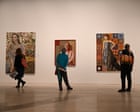
The article explores the annual ritual of the Archibald Prize, Australia's most famous portrait competition, through the lens of the 2026 edition. The author, Dee Jefferson, describes the predictable cycle of public enthusiasm, critical disdain, and media coverage that surrounds the prize, noting recurring trends like brown suits, oversized heads, and the dominance of male artists painting male subjects. The piece highlights specific works in this year's exhibition, including a portrait of musician Keli Holiday by Sindy Sinn that the author finds disorienting, and contrasts the main exhibition with the Salon des Refusés, the showcase of rejected entries, which includes a provocative portrait of Patricia Piccinini by Wendy Sharpe featuring exaggerated anatomy.

What You Should Definitely Avoid in Venice

Was man in Venedig unbedingt vermeiden sollte

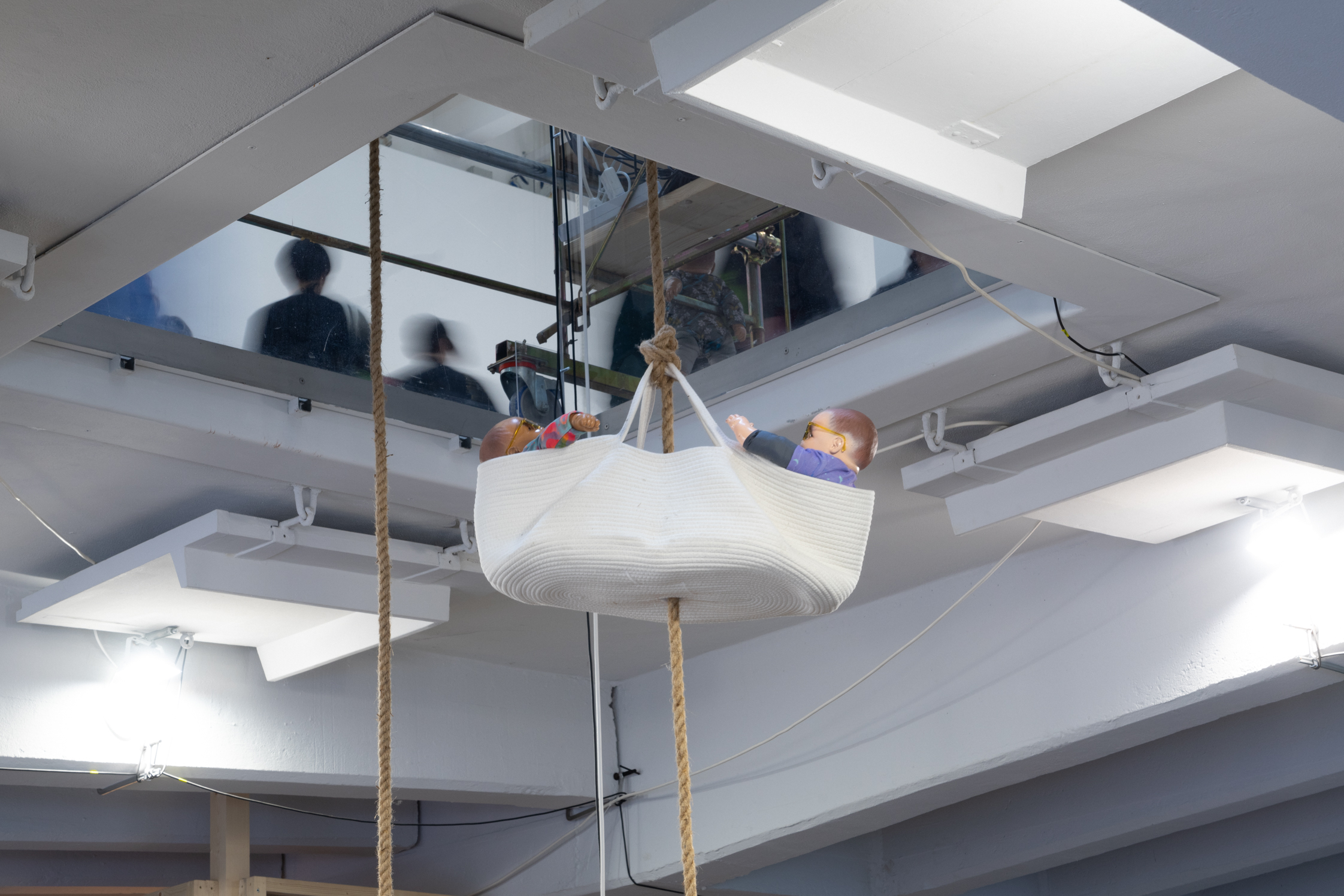
The article humorously critiques the Venice Biennale, highlighting several disappointments. It describes a Japanese pavilion installation by Ei Arakawa-Nash featuring baby dolls for diaper-changing, which a critic dismisses as a male artist over-romanticizing parenthood. Other flops include long queues for the German and Austrian pavilions, underwhelming main exhibition "In Minor Keys," and annoying self-promotional performers outside venues. The piece also laments the presence of loud American collectors and donors who dominate the event.

The 2026 Venice Biennale Is Quintessential Biennial Art

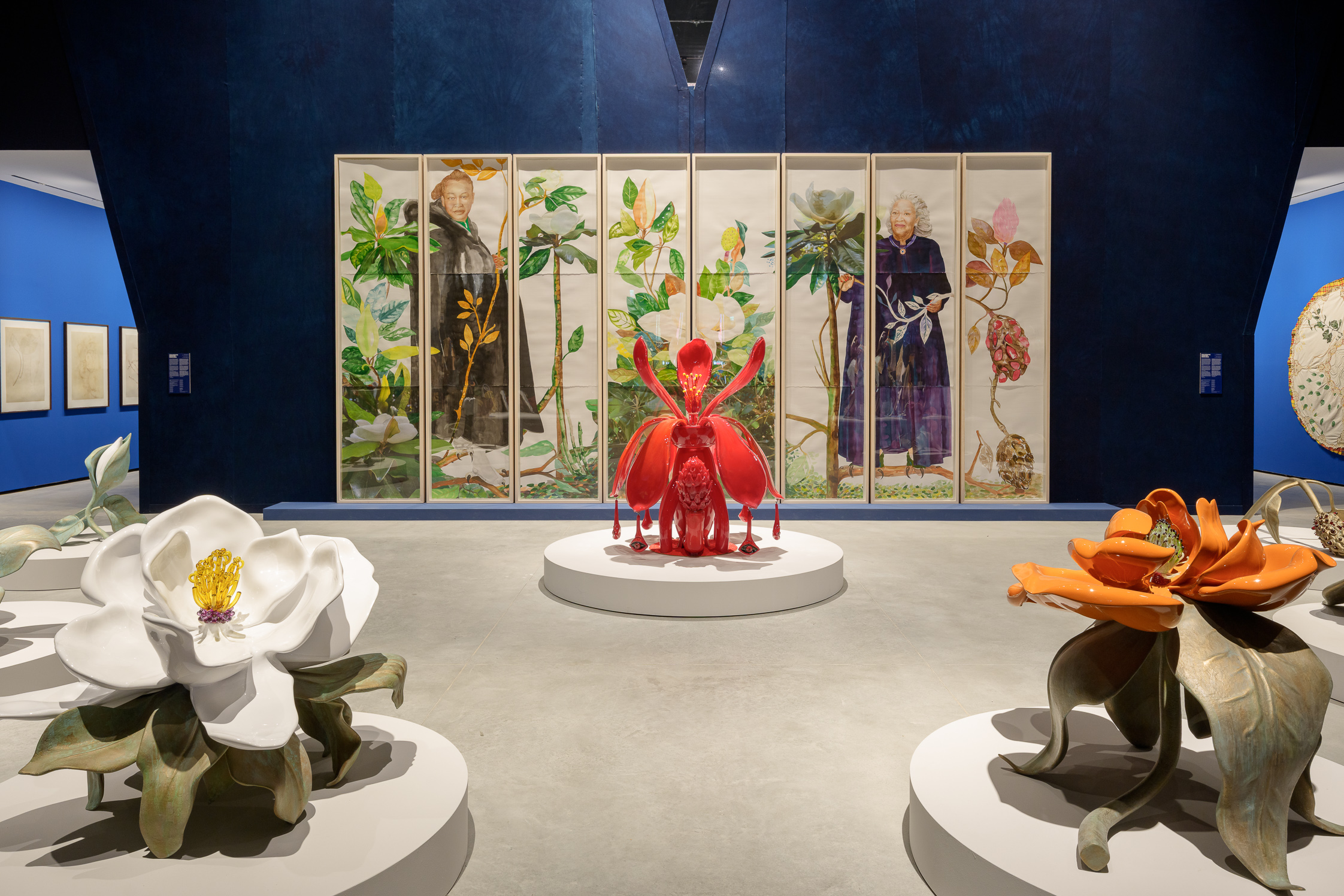
The 61st Venice Biennale, titled "In Minor Keys" and curated by the late Swiss-Cameroonian curator Koyo Kouoh, opened in 2026. The main exhibition at the Arsenale and Giardini features works by artists such as Éric Baudelaire, Maria Magdalena Campos Pons, Mohammed Z. Rahman, Sohrab Hura, and Rose Salane, among others. The exhibition centers on themes of mourning, colonial history, slavery, and healing, with works like Baudelaire's video installation linking the flower trade to the transatlantic slave trade, and a tribute section honoring artists Beverly Buchanan and Issa Samb.

5 Trends Shaping the 2026 Venice Biennale

The 2026 Venice Biennale has opened to the public, featuring the main exhibition 'In Minor Keys' conceived by the late Cameroonian Swiss curator Koyo Kouoh, who died unexpectedly in May 2025. Kouoh, the first African woman appointed to lead the Biennale, had her curatorial team—including Rasha Salti, Marie Hélène Pereira, and Gabe Beckhurst Feijoo—carry forward her vision of art as a 'shared and sustaining force.' The opening was weighted with politics and emotion.

Collateral Events Not to Miss at 61st Venice Biennale

The article highlights several collateral events not to miss at the 61st Venice Biennale, including "The Spirits of Maritime Crossing 2026" at Palazzo Rocca Contarini Corfù, featuring 20 artists from Southeast Asia, Ireland, and Serbia, anchored by Marina Abramović's performance piece "Sea Punishing" (2006). Other notable exhibitions include a seven-decade survey of Korean artist Lee Ufan at San Marco Art Centre, "TURANDOT: To the Daughters of the East" at ACP Palazzo Franchetti featuring 11 female artists from Central Asia, Li Yi-Fan's "Screen Melancholy" at Palazzo delle Prigioni, and Nalini Malani's "Of Woman Born" at Magazzini del Sale.

Venice Biennale Special 2026—podcast

This episode of The Art Newspaper's podcast is a Venice Biennale special, covering the opening week of the 2026 edition. Host Ben Luke, along with Louisa Buck and Jane Morris, reviews the main exhibition "In Minor Keys," curated by the late Koyo Kouoh and realized by five collaborators. The podcast features interviews with artists Gabrielle Goliath, whose work for the South African pavilion was cancelled and is instead staged in a Venice church, and Lubaina Himid, showing in the British pavilion. It also includes conversations with writer Saidiya Hartman and Daniella Kaliada of Belarus Free Theatre about their collateral projects. The episode concludes with a focus on two restored Tintoretto paintings at the Basilica of San Giorgio Maggiore, funded by Save Venice.

As Her Venice Biennale Opens, Koyo Kouoh Foundation Launches in Memory of Late Curator

The Koyo Kouoh Foundation has launched in Basel, Switzerland, coinciding with the opening of the 2026 Venice Biennale, which features the late curator Koyo Kouoh's main exhibition "In Minor Keys." The foundation aims to continue Kouoh's work supporting contemporary African cultural production globally, including plans for the Koyo Kouoh Prize and a permanent home for the Koyo Kouoh Collection. It is led by her partner, saxophonist Philippe Mall, and includes board members such as artist Alfredo Jaar, curator Adrienne Edwards, and former Kunstmuseum Basel director Josef Helfenstein.

Here’s Why the Venice Biennale Main Show Lost One Artist During the Planning Stages

The Venice Biennale's main exhibition, curated by the late Koyo Kouoh, originally included 111 artists when announced in February, but now lists only 110. ARTnews reveals that the removed artist is Bodys Isek Kingelez, a Congolese sculptor known for his colorful cardboard "extreme maquettes" of fantastical cities. A Biennale spokesperson stated that works initially considered for Kingelez were ultimately unavailable. Kingelez, who died in 2015, was to be one of the few deceased artists in the show, alongside figures like Marcel Duchamp and Issa Samb.

A Time of Transition

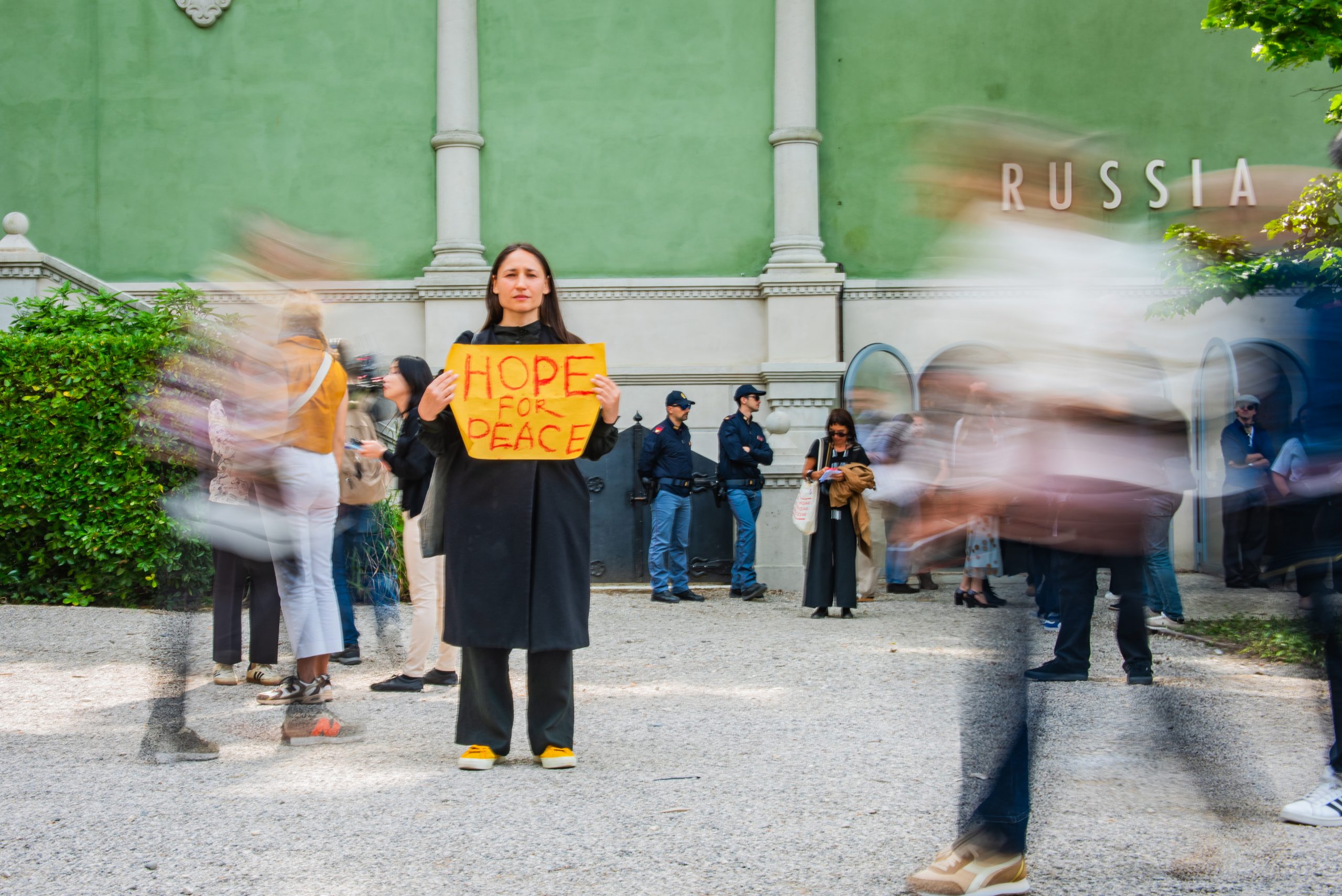
During the preview week of the 61st Venice Biennale, escalating protests targeted the national pavilions of Israel and Russia, with demonstrations by Pussy Riot, ANGA (Art Not Genocide Alliance), and Baltic pavilions. A major protest on May 8 drew over 3,000 people in solidarity with Palestine, and 27 national pavilions—including Austria, the Netherlands, France, and Japan—staged a strike, the first at the Biennale since 1968. The Golden Lion jury resigned after declaring they would not consider countries under ICC investigation (Israel and Russia), and the Biennale administration replaced the prize with a visitors' award, from which half the artists in the main exhibition have withdrawn.

Review: The Good, The Bad and The Venice Biennale

The article reviews the 2024 Venice Biennale, focusing on controversies over Russia's and Israel's participation. Protests erupted during opening week, leading the EU to cut funding and the International Jury to resign. As a result, awards like the Golden Lion and Silver Lion will be decided by public vote, with many pavilions and artists withdrawing in protest. The main exhibition, curated under the theme 'Minor Keys,' features standout works by Alfredo Jaar and Carrie Schneider, alongside national pavilions like Austria's provocative entry by Florentina Holzinger.

Koyo Kouoh’s Legacy Shapes the 2026 Venice Biennale

Koyo Kouoh, the first African woman to curate the Venice Biennale, was appointed curator of the 2026 edition and began shaping the main exhibition titled 'In Minor Keys' in October 2024. She died of cancer in May 2025 at age 57, but the Biennale organizers have committed to realizing her vision. The exhibition features 111 artists, collectives, and organizations from cities including Nairobi, New Orleans, Kingston, New Delhi, Beirut, and Bangkok, many of them her longtime collaborators. Kouoh was also the founder of Raw Material Company in Dakar and executive director and chief curator of the Zeitz Museum of Contemporary Art Africa (MOCAA) in Cape Town.

Across Venice, Artists Defy Censorship to Mourn and Memorialize Gaza

The 2026 Venice Biennale, titled “In Minor Keys,” features numerous artworks that mourn and memorialize the destruction of Gaza, despite censorship pressures. The main exhibition opens with a poem by slain Palestinian poet Refaat Alareer, and includes works by artists such as Theo Eshetu, Mohammed Joha, Manuel Mathieu, and Avi Mograbi that directly or indirectly address the conflict. Outside the official Biennale, South African artist Gabrielle Goliath’s performance series “Elegy” was censored by her country’s culture minister after she proposed a version honoring murdered Palestinian poet Hiba Abu Nada, leading her to present the work independently at a church in Venice.

10 Highlights You Shouldn't Miss in Venice

10 Highlights, die Sie in Venedig nicht verpassen sollten

The article presents ten must-see highlights of the 61st Venice Biennale, curated by the editors of Monopol magazine. It covers the main exhibition at the Arsenale, national pavilions, and collateral events, including Sandra Knecht's beehouse installation, Isabel Nolan's Irish Pavilion exploring dreams and late medieval humanism, Chiara Camoni's Italian Pavilion blending ceramics and found materials, and Asim Waqif's bamboo construction in the Indian Pavilion. Other featured works include a church filled with surveillance cameras and the new Fondazione Dries Van Noten.

What to See at the 2026 Venice Biennial

The 2026 Venice Biennale, opening May 9 and running through November 22, features a main exhibition titled "In Minor Keys" organized by the late Koyo Kouoh, alongside 99 national pavilions. The event spans the Giardini and Arsenale sites, with concurrent shows across the city, including a group exhibition at the Fondazione Dries Van Noten, Melissa McGill's installation "Marea" at Corte Nova, Illy's artist-designed espresso cups at Giardini Reali, and a solo exhibition of Hernan Bas's paintings at Ca' Pesaro International Gallery of Modern Art.

Venice in Crisis Mode

Venedig im Krisenmodus

The 61st Venice Biennale has opened under extraordinary circumstances, marked by political protests, a jury resignation, and canceled awards. The Biennale's jury resigned en masse after announcing they would exclude Israeli and Russian contributions from their decisions, leading to the cancellation of the Golden Lion awards and a crisis over the international competition's legitimacy. A newly introduced audience prize also faced boycotts from artists in solidarity. Protests, closed pavilions, and pro-Palestinian actions dominated the preview days, with artists pasting protest posters directly onto their works, reflecting heightened tensions.

Venice Biennale Artists Decline Consideration for Golden Lions Chosen by Public Vote

Nearly half of the artists in the main exhibition of the Venice Biennale have signed a statement declining consideration for the Golden Lion awards, in solidarity with the jury that resigned last month. The statement, published by e-flux, includes prominent names such as Alfredo Jaar, Tuan Andrew Nguyen, Otobong Nkanga, and Walid Raad, as well as national pavilion representatives from France, Lithuania, and the Netherlands. The Biennale had planned to replace the jury-selected Golden Lions with "Visitor Lions" decided by public vote, but the artists' refusal marks an unprecedented protest within the exhibition.

Drained, Drowning, and Decay: The Best National Pavilions at the Venice Biennale

The 2026 Venice Biennale is defined by themes of ruin and decay, with standout national pavilions exploring bodily, infrastructural, and archaeological collapse. The Slovenian Pavilion features the Nonument Group repurposing materials from past Biennales into a ruin of a mosque for Bosnian Muslim soldiers from World War I. Syria presents its first national pavilion since the Civil War, with Sara Shamma invoking Palmyra, destroyed by ISIS. Germany's pavilion, titled "Ruin," features works by Henrike Naumann (who died in February) and Sung Tieu, questioning the pavilion's fascist architecture and nationalist residue. The Austrian Pavilion, curated by Florentina Holzinger, offers a visceral performance titled "Sea World." The Biennale is also marked by the abrupt resignation of its five-member jury, who refused to consider nations charged with crimes against humanity, leading to awards being chosen by public vote. Additionally, the main exhibition "In Minor Keys" was affected by the death of its curator, Koyo Kouoh.

Political Fallout Rocks Venice Biennale Prize System

Dozens of artists participating in the 2026 Venice Biennale have withdrawn from consideration for the newly created Visitor Lion awards, replacing the traditional Gold and Silver Lion prizes. A total of 57 artists from the main exhibition and 22 national pavilions signed a statement published on e-flux on May 9, acting in solidarity with the five-person prize jury that resigned on April 30 over the continued participation of Russia and Israel. The jury had objected to awarding prizes to artists from countries whose leaders face International Criminal Court charges, including Russian president Vladimir Putin and Israeli prime minister Benjamin Netanyahu. In response, the Biennale organizers postponed the awards ceremony to November 22 and introduced visitor voting, a move they described as consistent with openness and dialogue. Meanwhile, the Russian Pavilion, which returned after lending its space to Bolivia in 2024, faced protests, closure after previews, and a €2 million funding pull by the European Union for the 2028 Biennale.

Several Venice Biennale pavilions shut in protest over inclusion of Israel

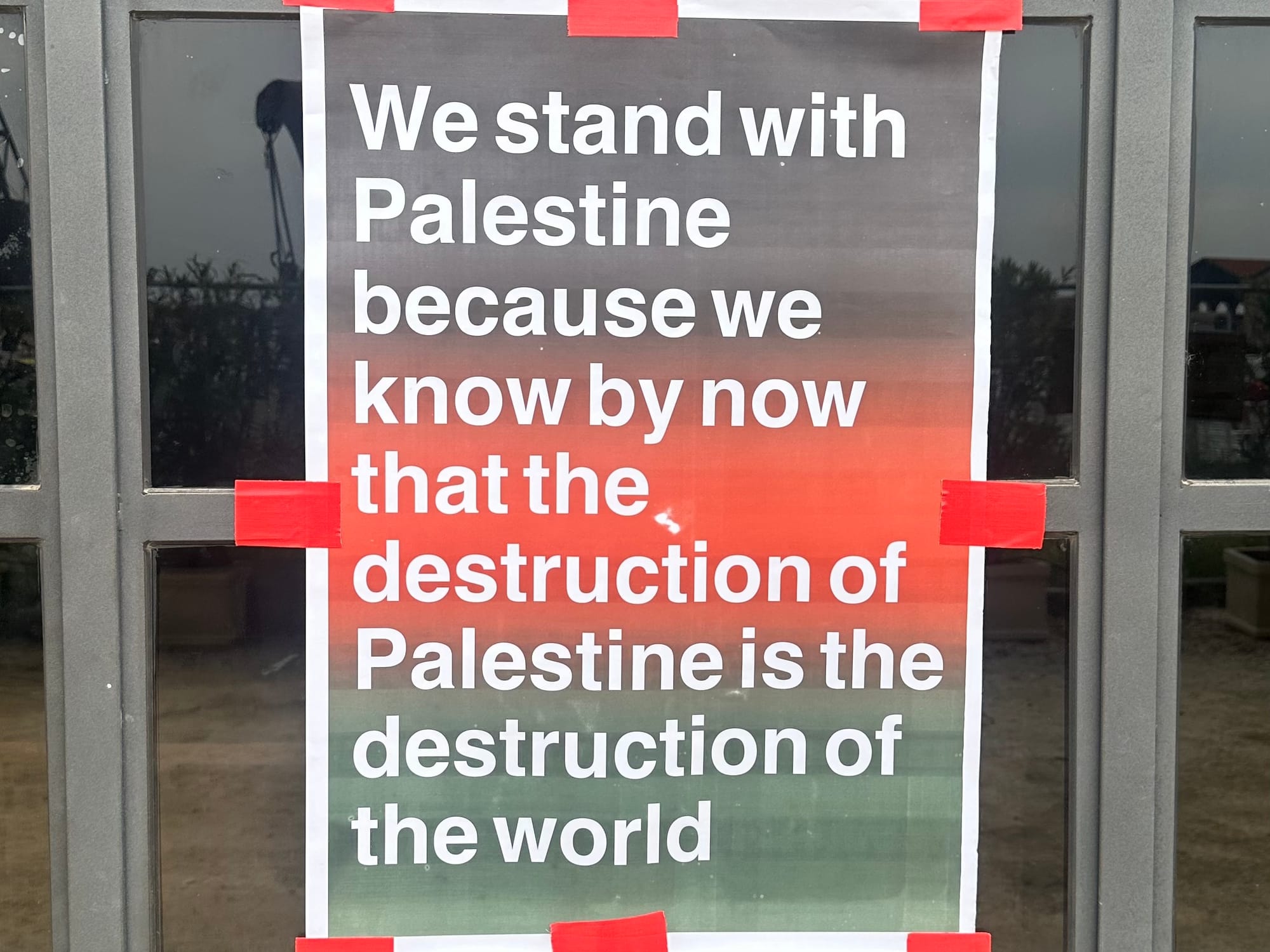
Several national pavilions at the 2026 Venice Biennale shut down during the final preview day in a strike organized by the Art Not Genocide Alliance (Anga) protesting Israel's inclusion due to its war in Gaza. Pavilions from Belgium, the Netherlands, Austria, Japan, Macedonia, and Korea closed entirely, while others like Britain, Spain, France, Egypt, Finland, and Luxembourg partially closed or reopened later. Artists in the main exhibition added Palestinian flags and posters reading "Palestine is the future of the world." The Israeli pavilion was closed for a private event, and earlier in the week Pussy Riot staged a protest at the Russian pavilion.

Strike Rocks Venice Biennale Ahead of Public Opening as Pavilions Close

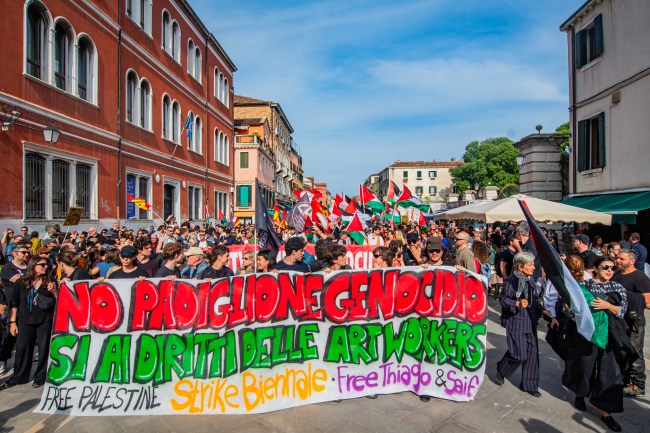
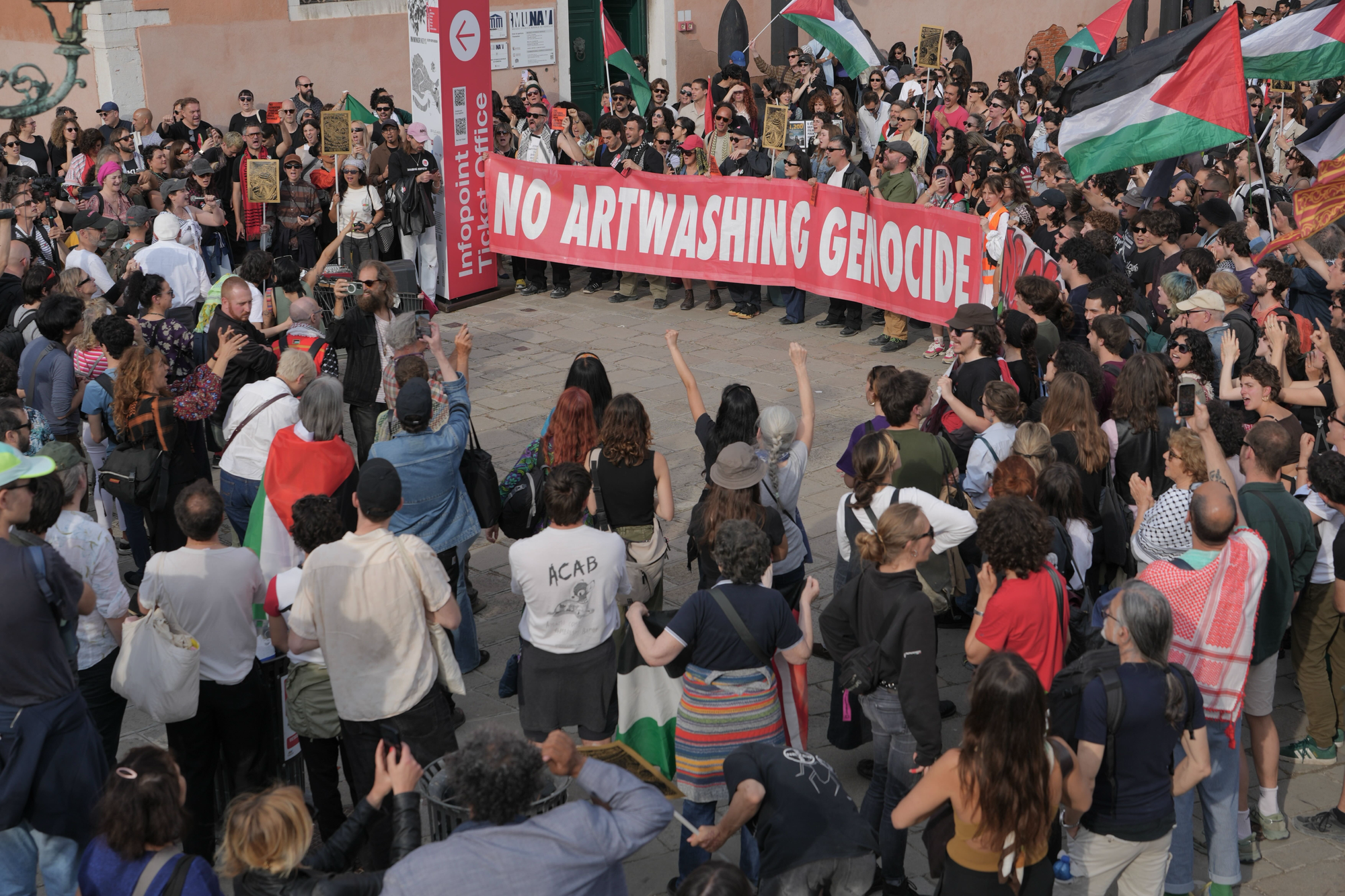
Thousands of protesters marched through Venice to demonstrate against Israel's presence at the Venice Biennale, leading many national pavilions to close in solidarity. Pavilions from Austria, Belgium, Egypt, Japan, the Netherlands, South Korea, and over a dozen other countries shut fully or partially, with some displaying signs reading "We Stand with Palestine." The Israeli pavilion remained closed for its exhibition opening, and armed police clashed with protesters. The main exhibition, curated by Koyo Kouoh, stayed open initially but the Arsenale closed by late afternoon with riot police outside. The 24-hour strike, organized by Art Not Genocide Alliance (ANGA) and Italian activist groups, was described as the largest protest in Biennale history.

Historic Strike Disrupts Biennale as Thousands March in Venice

On May 8, 2026, artists and cultural workers staged the first strike in the 131-year history of the Venice Biennale, disrupting the pre-opening of the international exhibition. At least 27 of the 100 national pavilions were partially or fully shut down, and thousands marched through Venice to the Arsenale, which was barricaded by Italian riot police. The strike, organized by the Art Not Genocide Alliance (ANGA) and local activist groups, was a 24-hour action for Palestine and workers' rights, with some artists altering or draping their works in the main exhibition, "In Minor Keys."

Artists Pay Tribute to Koyo Kouoh in Poetry Caravan at Venice Biennale

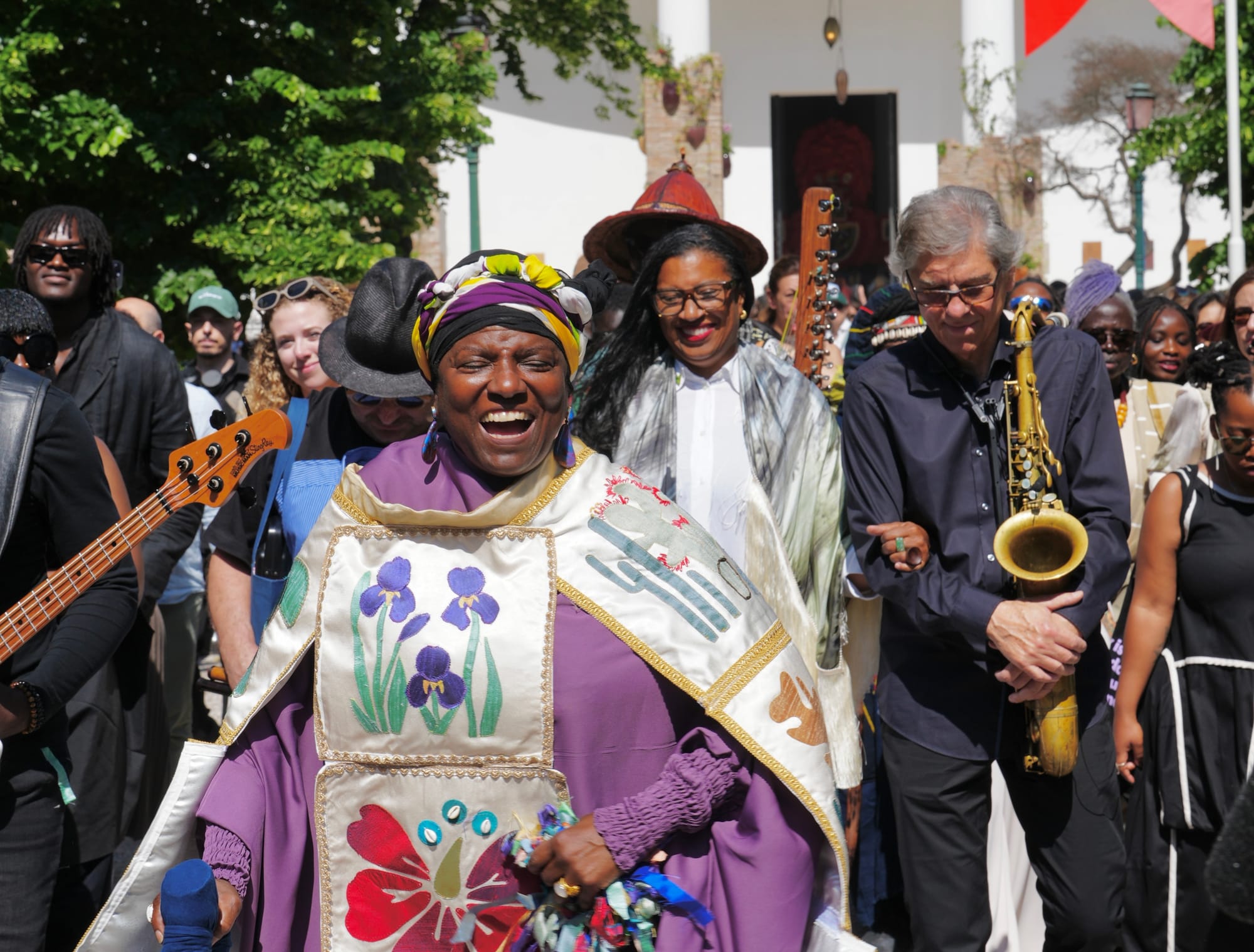
At the Venice Biennale on May 7, 2026, Cuban artist María Magdalena Campos-Pons led a poetry caravan across seven locations in the Giardini to honor Koyo Kouoh, the late curator of the Biennale's main exhibition "In Minor Keys," who died of cancer at age 57 in 2025. The procession, inspired by a 1999 voyage Kouoh took with nine African poets from Dakar to Timbuktu, featured performances by poets Natalie Diaz, Robin Coste Lewis, Batool Abu Akleen, and Anne Waldman, kora player Saliou Cissokho, and Kouoh's husband, Swiss saxophonist Philippe Mall, who played a composition dedicated to her. The event was organized by a team of Kouoh's assistants and advisers, including Marie Hélène Pereira, who served as stand-in lead of the 2026 Biennale.

"Hier darf laut gelacht werden"

During the opening week of the Venice Biennale, multiple reports detail controversies surrounding the Israeli and Russian pavilions. According to Hyperallergic, artist Belu-Simion Fainaru of the Israeli pavilion threatened legal action against the Biennale after the jury sought to exclude Israel and Russia from prizes over alleged human rights violations, citing antisemitism and nationality-based discrimination. This may have prompted the jury's sudden resignation. Meanwhile, taz reports that Russia's pavilion is a macabre 'dance of death' blending techno and political denial, while Israel's pavilion faces a 'silent boycott' and social ostracism. Zeit describes protests by Pussy Riot and Femen outside the Russian pavilion as a defining image, with activists chanting 'blood sticks to the art of this country.'

6 Artworks That Define the 2026 Venice Biennale’s Main Exhibition

The 2026 Venice Biennale's main exhibition opens this week, curated by Koyo Kouoh—the first African woman to hold the role—who was announced in 2024 but passed away suddenly in 2025. The article highlights six artworks that define her curatorial vision, which connected the international art world to artists and institutions from Africa and the Global South.

Dozens of Pavilions Close During Strike at 61st Venice Biennale

On May 8, 2026, a 24-hour strike organized by the Art Not Genocide Alliance (ANGA) and several Italian activist groups brought the 61st Venice Biennale to a standstill. Approximately 27 of the 100 national pavilions closed fully or partially in solidarity with protesters demanding Israel’s exclusion from the event, including those of Austria, Belgium, France, Great Britain, Japan, South Korea, and Ukraine. Over 3,500 people marched through Venice, with speakers including artist Gabrielle Goliath and curator Caroline Dumalin. The main exhibition, "In Minor Keys," curated by the late Koyo Kouoh, closed by late afternoon, and riot police were stationed outside the Arsenale. The Israeli pavilion, already shuttered during previews, remained closed.

Dries Verhoeven on Representing the Netherlands at the 61st Venice Biennale

Dries Verhoeven will represent the Netherlands at the 61st Venice Biennale (2026) with a new work titled *The Fortress*, installed in the Dutch Rietveld Pavilion in the Giardini. The 25-minute performance piece transforms the sunlit pavilion into a darkened bunker, featuring a raw vocal composition using only false vocal cords. Verhoeven describes the work as a meditation on transition and self-preservation, reflecting a Western society caught between its enlightened self-image and a dark vision of the future. The piece responds to geopolitical unrest outside the Biennale grounds and is designed to be melancholic and confrontational, contrasting with the main exhibition's theme, *In Minor Keys*.

‘In Minor Keys’: discover the themes that define the 61st Venice Biennale exhibition

The 61st Venice Biennale's main exhibition, 'In Minor Keys', curated by the late Koyo Kouoh, has opened after her sudden passing in 2025. Kouoh had fully planned the exhibition before her death, and a team of seven realized her vision. The show features 110 artists, including Wangechi Mutu, Nick Cave, Alfredo Jaar, and emerging talents like Ranti Bam. It opens with a poem by Refaat Alareer and an installation by Khaled Sabsabi, setting a contemplative tone amid themes of mourning, grief, and healing. The exhibition also highlights minority perspectives, including Caribbean and Central American artists, and confronts colonial histories through works like Florence Lazar's film on a hurricane-exposed necropolis.