
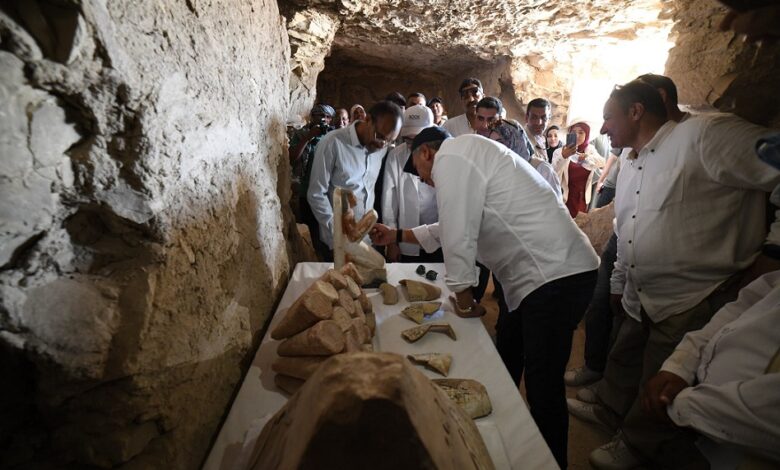
An Egyptian archaeological mission excavating at the Abu El-Naga necropolis near Luxor has uncovered a cache of ten well-preserved painted wooden coffins hidden in the courtyard shaft of the tomb of Baki. The coffins span multiple periods, including the 18th Dynasty, the Ramesside period, and the Late Period, with inscriptions naming individuals such as Merit, a chantress of the god Amun, and Padi-Amun, a priest in the Temple of Amun. The team also discovered the tomb of a purification priest named A-Shafi-Nakhtu, decorated with funerary scenes, and a burial site containing over 30 mummified cats from the Ptolemaic Period. The discoveries were announced by Egypt's Supreme Council of Antiquities, with the excavation season beginning in November 2025.
The findings matter because they provide new insights into the administrative and religious structures of ancient Egypt, as the owners of the tombs and their titles are not mentioned in previous historical sources. The well-preserved coffins and inscriptions add to the understanding of burial practices and social hierarchies across different dynasties, while the mummified cats highlight the cultural significance of animals in Ptolemaic-era rituals. This discovery enriches the archaeological record of Luxor's Abu El-Naga site, a key necropolis that continues to yield important artifacts.