
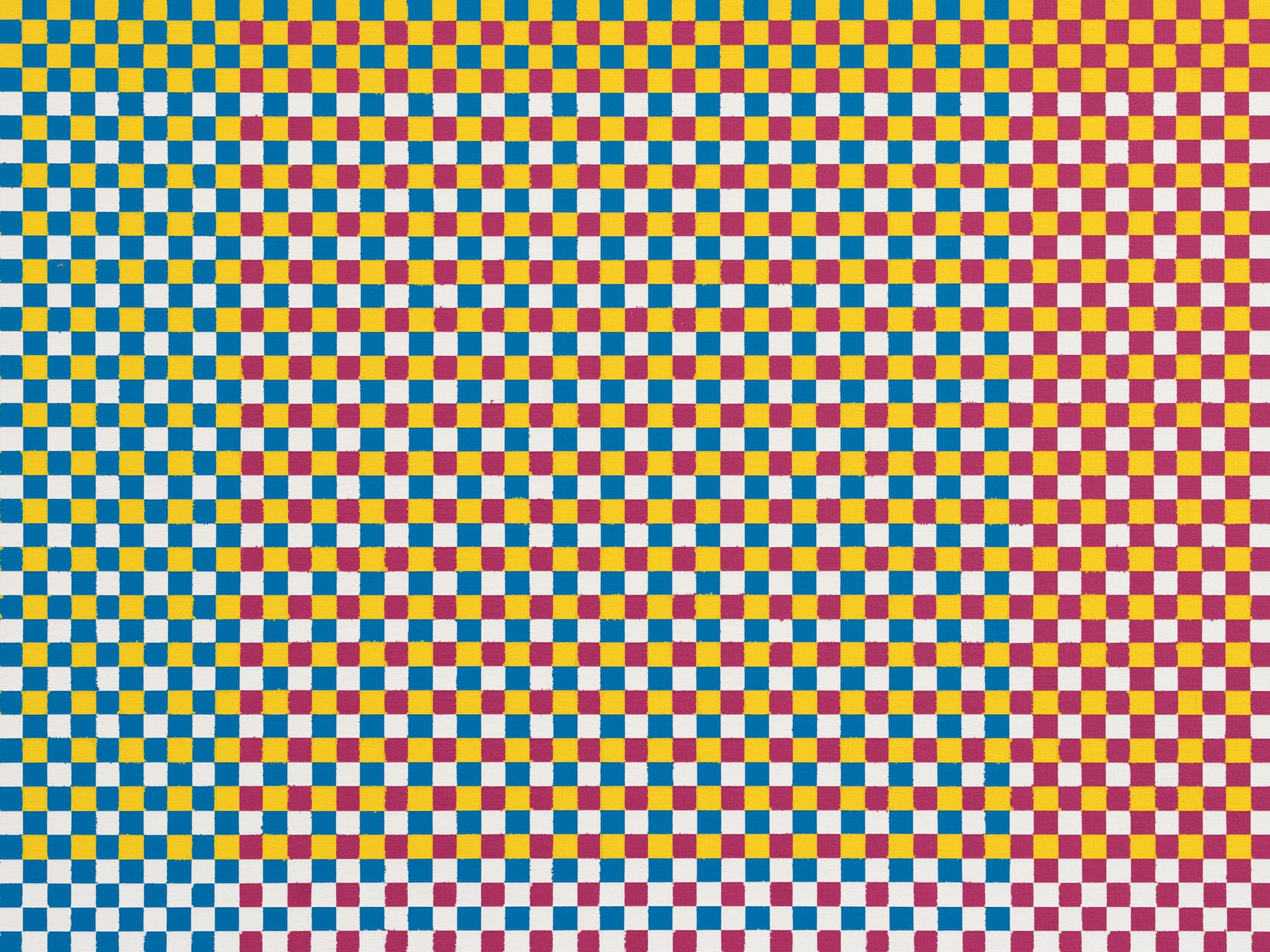
Hyperallergic reviews Sanford Wurmfeld's exhibition "Squares 1971–74" at Ceysson & Bénétière in New York, featuring six paintings and one study from 1971 to 1974. The show highlights Wurmfeld's methodical exploration of color through gridded compositions of one-inch squares, using a limited palette of four hues to create optical interactions that shift as the viewer looks. Wurmfeld, who was the youngest artist in MoMA's 1968 "Art of the Real" exhibition, has long operated under the radar of the New York art world.
The review matters because it brings attention to an underrecognized artist whose rigorous, non-illusionistic approach to color distinguishes him from better-known Op Art contemporaries like Bridget Riley and Julian Stanczak. By emphasizing the temporality of looking and the subjectivity of visual experience, Wurmfeld's work challenges the viewer's perception and refuses to offer comforting stability, pushing the legacy of artists like Josef Albers and Ad Reinhardt into new territory.