filter_list Showing 12 results for "ARCH" close Clear
dashboard All 262 museum exhibitions 166article local 26article news 21article culture 12article policy 9rate_review review 6trending_up market 6gavel restitution 6candle obituary 5person people 5
date_range Range Today This Week This Month All
Subscribe

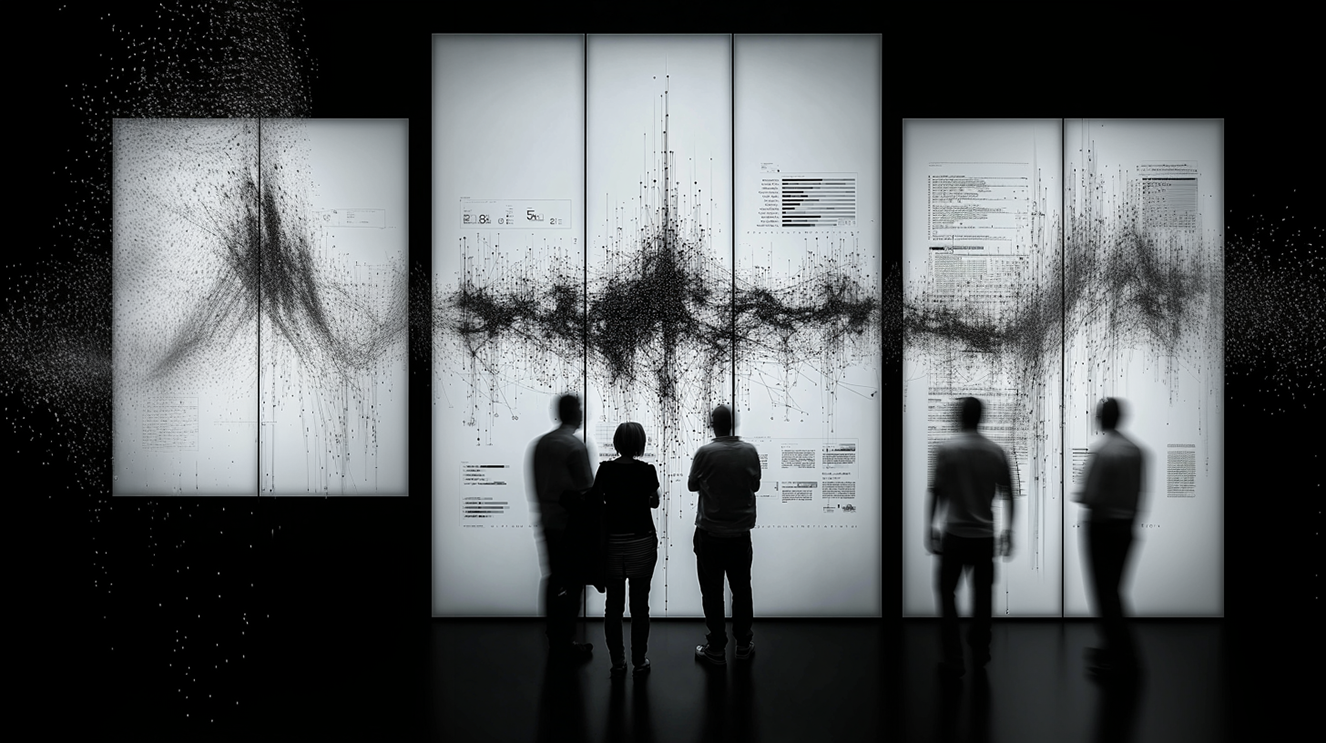
The Defining Themes of Today’s Biennial Art

The article analyzes the defining themes and styles of the past four years in the international biennial circuit, based on a survey of 130 biennials. It identifies a core group of artists who appeared most frequently, including Ali Eyal, Apichatpong Weerasethakul, Carolina Caycedo, Kapwani Kiwanga, and Tuan Andrew Nguyen, among others. Many of these artists are also featured in the upcoming 61st Venice Biennale curated by the late Koyo Kouoh. The piece categorizes their work under two broad themes: "Post-Colonial Post-Conceptualism," which involves poetic engagement with colonial history and artifacts, and "Families and Networks," where artists explore personal and political family histories.
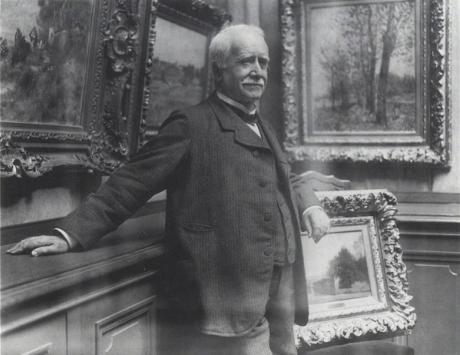
Harnessing the winds of societal change: how art dealers have been able to shape taste for centuries

Valentina Castellani, a former Gagosian director, has authored a new book titled *Trading Beauty: Art Market Histories from the Altar to the Gallery* (out 1 May). The book traces how art dealers have historically leveraged societal changes—political, economic, and social—to reshape taste and market structures. Castellani begins in the Middle Ages, when art was made only on commission for patrons like the Catholic church and monarchies, and moves through key shifts such as the Dutch Republic's first open art market in the 17th century, which gave rise to the professional art dealer. She highlights dealers like Paul Durand-Ruel, Joseph Duveen, and Leo Castelli who capitalized on anti-establishment energy, new wealth, and post-war consumer culture to bring avant-garde art to the forefront.

Sur Arte Radio et dans une expo, l’enquête d’Adrianna Wallis sur les traces de sa grand-mère peintre spoliée par les nazis

Artist Adrianna Wallis (born 1981) discovers that her paternal grandmother, painter Diane Esmond (1910–1981), was a victim of Nazi looting during World War II. After being contacted by historians Patricia Helletzgruber and Sophie Juliard, Wallis learns that much of Esmond's work was systematically destroyed by the ERR, the Nazi organization responsible for art theft in occupied countries. This revelation sparks a personal investigation that becomes a podcast for Arte Radio titled "Il restera la gravité," blending documentary, autobiographical inquiry, and sound installation. Wallis delves into archives, examining microfilms and lists that detail 46 of Esmond's paintings—each methodically described and declared destroyed, such as "Woman in blue evening dress: annihilated."

27 Best Museums in the World for Art, History, and Cultural Wonders

This article from Travel + Leisure lists 27 of the best museums in the world, covering art, history, science, and culture. Featured institutions include the Louvre in Paris, the Metropolitan Museum of Art in New York, the Vatican Museums, the National Museum of China in Beijing, the National Gallery and Tate Modern in London, the Natural History Museum in London, the Griffin Museum of Science and Industry in Chicago, and Miraikan in Tokyo. The piece highlights iconic artworks such as the Mona Lisa, Venus de Milo, and the Sistine Chapel ceiling, as well as notable architectural features like I.M. Pei's glass pyramid at the Louvre.

Beyond the prompt: when the medium is generative AI, the artist becomes a systemic director

Oltre il prompt: quando il medium è l’AI generativa l’artista diventa regista sistemico

The article argues that as AI-generated images become more spectacular, the role of the artist is often misunderstood as merely writing prompts. Instead, the author contends that the most significant generative artworks are systems—predetermined rule-based environments where the artist designs the conditions for images to emerge. Works like Hans Haacke's "Condensation Cube" (1963-1965) and Refik Anadol's "Unsupervised" (2022) exemplify this shift from object to process, where the artwork is the behavior or architecture itself.

GEORGE FEBRES: TRADUCCIÓN, IRONÍA Y LIBERACIÓN. UN ARTISTA ECUATORIANO EN LA DIÁSPORA

George Febres (Guayaquil, 1943 – New Orleans, 1996) was an Ecuadorian artist whose work blended pop art, neo-surrealism, and Southern U.S. culture, shaped by his experience as a migrant and queer individual. The article traces his life from a privileged but unstable childhood in Ecuador to his migration to the United States, where he was drafted during the Vietnam War and eventually settled in New Orleans. Febres used bilingualism and ironic appropriation of tropical imagery to create a hybrid, irreverent body of work that challenges the official historiography of Ecuadorian art.

Forgers, One-Way Mirrors of the Art Market

Les faussaires, miroirs sans tain du marché de l’art

Anthropologist Monique Jeudy-Ballini has published a new book, "Peintres de l’ombre. Les faussaires à l’œuvre," in which she examines art forgers through an ethnographic lens. Drawing on autobiographical accounts, published interviews, and expert writings—including those of notorious forgers Wolfgang Beltracchi, Eric Hebborn, and Guy Ribes—she explores the motivations and practices of these clandestine figures, arguing that their work involves not only technical skill but also the creation of elaborate narratives and pedigrees for their forgeries. The book is part of the Ethnologiques series edited by Philippe Descola and published by Éditions Mimésis.

Beyond the Sagrada Família: These 6 Surprising Places in Barcelona Reveal a Lesser-Known Gaudí

Au-delà de la Sagrada Família, ces 6 lieux étonnants à Barcelone qui révèlent un Gaudí méconnu

Beaux Arts Magazine highlights six lesser-known architectural works by Antoni Gaudí in Barcelona, beyond his famous Sagrada Família. The article features Casa Vicens (1883–1885), his first private commission; Torre Bellesguard (1900–1909), a medieval-inspired tower with panoramic views; Casa Calvet (1897), a residential building with textile-themed details; and the Finca Güell and Palau Güell, experimental projects for his patron Eusebi Güell. These sites showcase Gaudí's organic style, fusion of nature and architecture, and influences from Japanese, Arabic, and Catalan Gothic traditions, with several recently opened to the public.

Ada: My Mother the Architect review – illuminating profile of brilliant builder balances work and family

Architect-turned-filmmaker Yael Melamede directs a documentary portrait of her mother, Israeli architect Ada Karmi-Melamede, who co-designed the Supreme Court of Israel building in Jerusalem in the early 1990s with her brother Ram Karmi and later created Ben Gurion Airport. The film explores Karmi-Melamede's architectural philosophy of "architecture of the ground and of the sky," her departure from her brother's brutalism, and a painful family split when she left her husband and children in New York after being denied tenure at Columbia University.

‘A constant quiet terror’: Getting lost in Irish folklore – in pictures

Maria Lax's photobook *Stray Sod* draws on Irish folklore and archival accounts from the Irish National Archives to explore the phenomenon of the 'stray sod'—enchanted patches of earth said to disorient and lead travelers astray, especially at night. Her images reimagine rural Irish landscapes as sites of sudden confusion, where familiar landmarks vanish and fog or mist descends, evoking a sense of 'constant quiet terror'.

Black Designers as Fine Artists: Fashion Meets Sculpture

The article from Ebony.com explores the intersection of fashion and fine art, highlighting how Black designers are increasingly being recognized as fine artists whose work bridges clothing design and sculpture. It profiles several contemporary Black designers who create garments that function as sculptural objects, exhibited in galleries and museums rather than solely on runways. The piece examines how these creators challenge traditional boundaries between fashion and art, using materials and techniques that elevate their work into the realm of fine art.

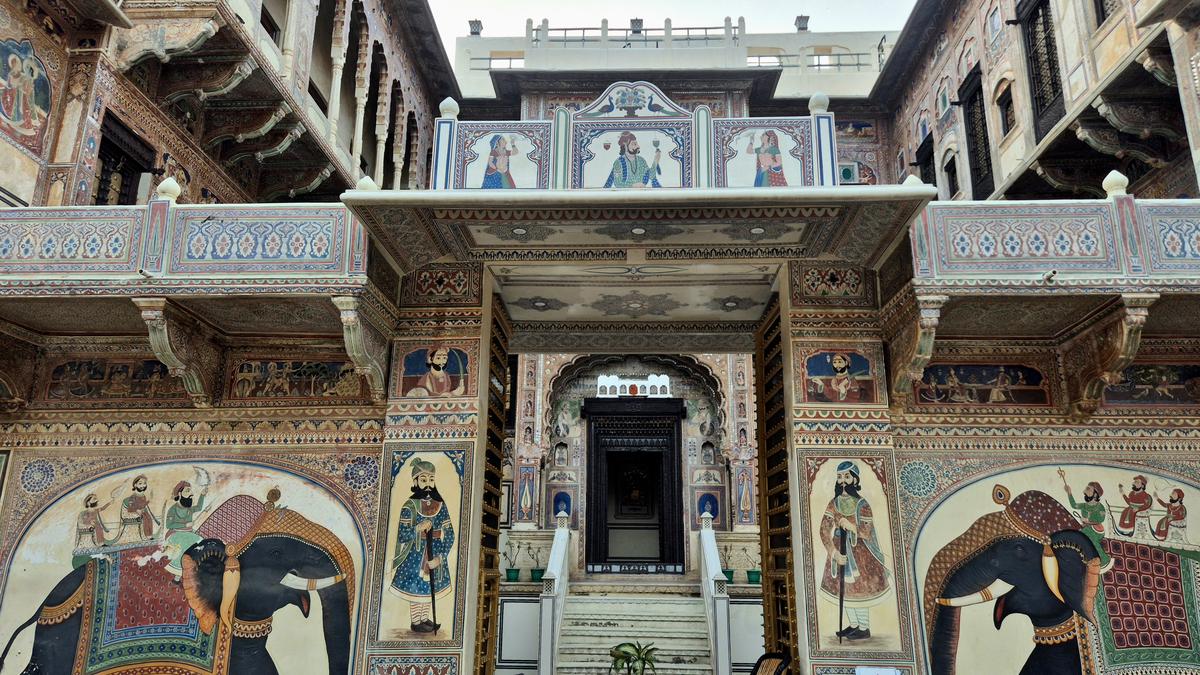
Exploring Shekhawati: Rajasthan’s open-air art gallery of frescoed havelis

The article explores the Shekhawati region of northern Rajasthan, India, known as the world's largest open-air art gallery. It focuses on the 18th–20th century merchant havelis (mansions) hand-painted with intricate frescoes, many of which are now being restored as heritage hotels. The author recounts a personal stay at Malji Ka Kamra, a restored haveli in Mandawa, describing its blend of Italianate and Rajput architecture and the overwhelming frescoes covering every surface, depicting portraits, floral motifs, and scenes of daily life.