filter_list Showing 17 results for "Invisible" close Clear
search
dashboard All 188 museum exhibitions 135article culture 17article news 9article local 7person people 6candle obituary 5trending_up market 3rate_review review 3article policy 2gavel restitution 1
date_range Range Today This Week This Month All
Subscribe

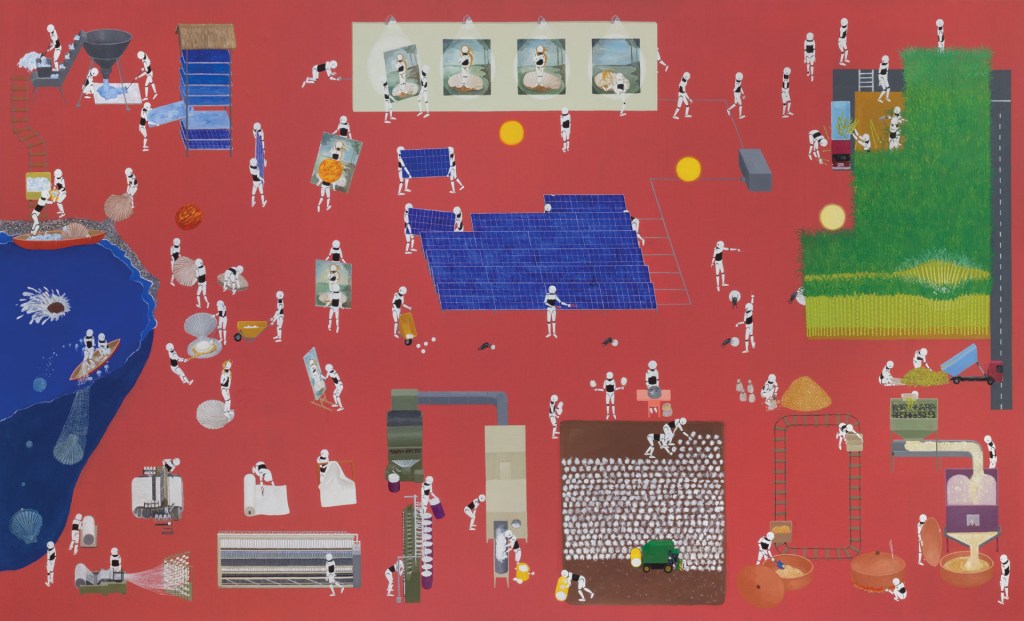
The 21st Century’s Biggest Art Trend is Not a Style. But Once You See It, You’ll Notice It Everywhere.

The article traces the evolution of "systems art," a term coined by critic Jack Burnham in 1968 to describe art that uses rules, seriality, and repetition to mirror and reveal the growing protocols of the Cold War era. It highlights early practitioners like Kenneth Noland, Robert Morris, Dan Flavin, and notably Hans Haacke and Adrian Piper, who shifted from atmospheric systems (e.g., Haacke's *Condensation Cube*) to social systems (e.g., Haacke's *Shapolsky et al. Manhattan Real Estate Holdings*). The piece argues that systems thinking has become unavoidable in contemporary life—from algorithms to systemic racism—and that art remains a crucial tool for making these invisible systems legible.

julie curtiss motherhood pumping painting

Artnet News journalist Annie Armstrong recounts her emotional experience at Art Basel Miami Beach, where she desperately sought to see Julie Curtiss's painting "Mary With the Medela" (2024), a portrait of a woman using a breast pump. As a new mother balancing work and pumping, Armstrong felt a deep personal connection to the work but arrived at the White Cube booth moments after it had been sold and removed from view, leaving her in tears.

Story of enslaved boy featured in 1748 Joshua Reynolds portrait emerges in new study

A research project by the National Trust, the National Gallery in London, and Royal Museums Greenwich has uncovered new details about the identity of an enslaved boy known only as “Jersey,” who appears in a 1748 portrait by Sir Joshua Reynolds. The painting, which hangs at Saltram in Devon, depicts Jersey with his enslaver, naval officer and MP Paul Henry Ourry. Through admiralty records, muster books, and baptismal certificates, researchers identified the boy as “Boston Jersey,” later baptised as George Walker, and found evidence of his naval service and possible path to freedom.

Trevor Paglen’s New Book Says AI Is Rewriting What Images Do

Artist Trevor Paglen has published a new book, *How to See Like a Machine: Images After AI*, which argues that generative AI and computer vision are fundamentally changing how images function in culture. Drawing on his decade-long practice, Paglen contends that images are no longer merely representations for human interpretation but have become operational tools—'activations' that trigger automated responses and shape reality. He cites examples such as surveillance cameras at grocery stores, the Samsara navigation system in trucks, and the ImageNet database to illustrate how machine vision systems normalize surveillance in service of capital, a phenomenon he terms 'machine realism.'

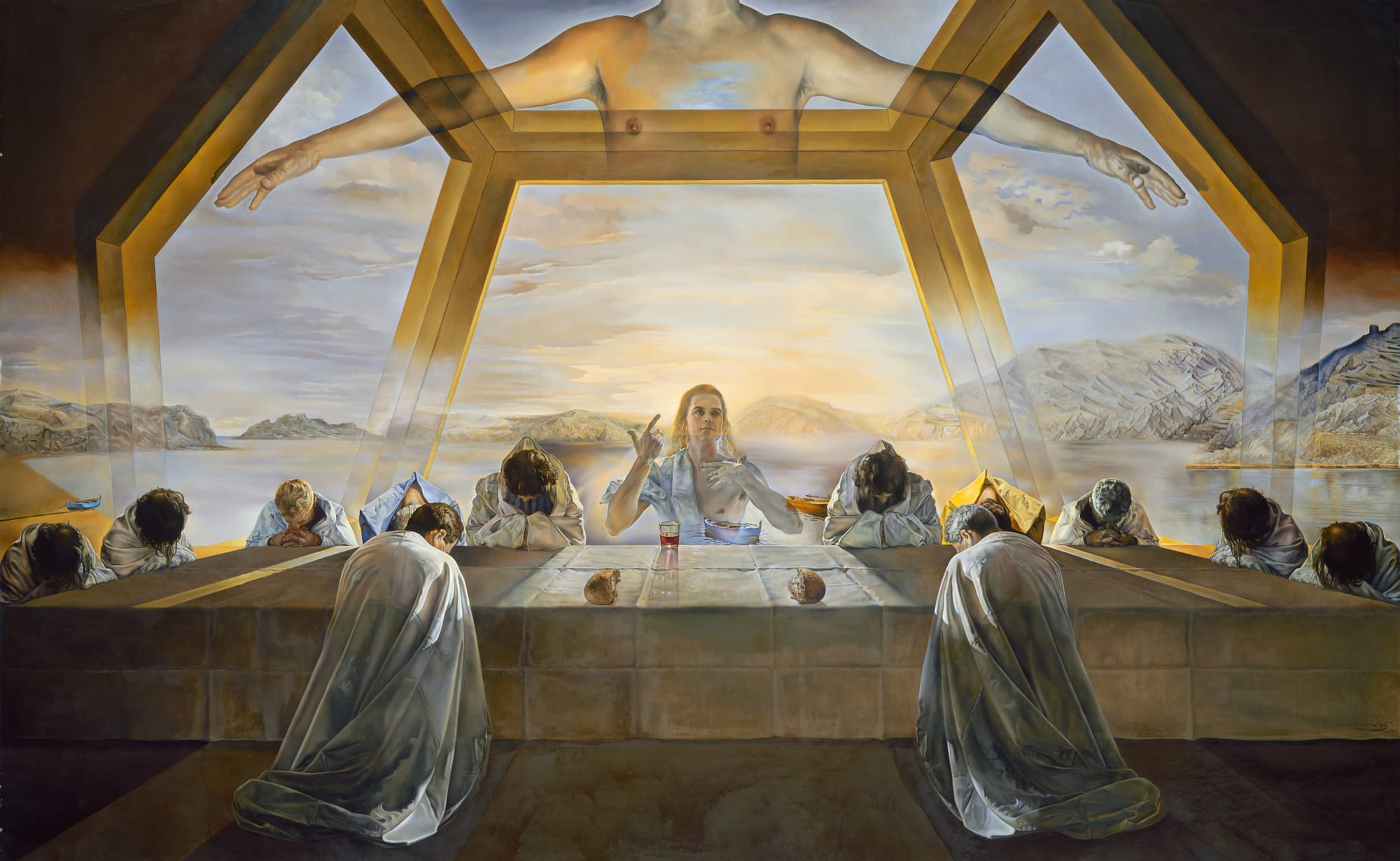
Salvador Dalí’s Frustrating Vision of the Divine

A feature article examines Salvador Dalí's controversial religious painting "Christ of Saint John of the Cross" (1951), which was physically attacked by vandals on two separate occasions—once with a rock in 1961 and later with an air rifle. The painting, part of Dalí's "Nuclear Mysticism" phase, depicts a floating, unblemished Christ from an aerial perspective, based on a drawing by the mystic St. John of the Cross and modeled by a Hollywood stunt double.

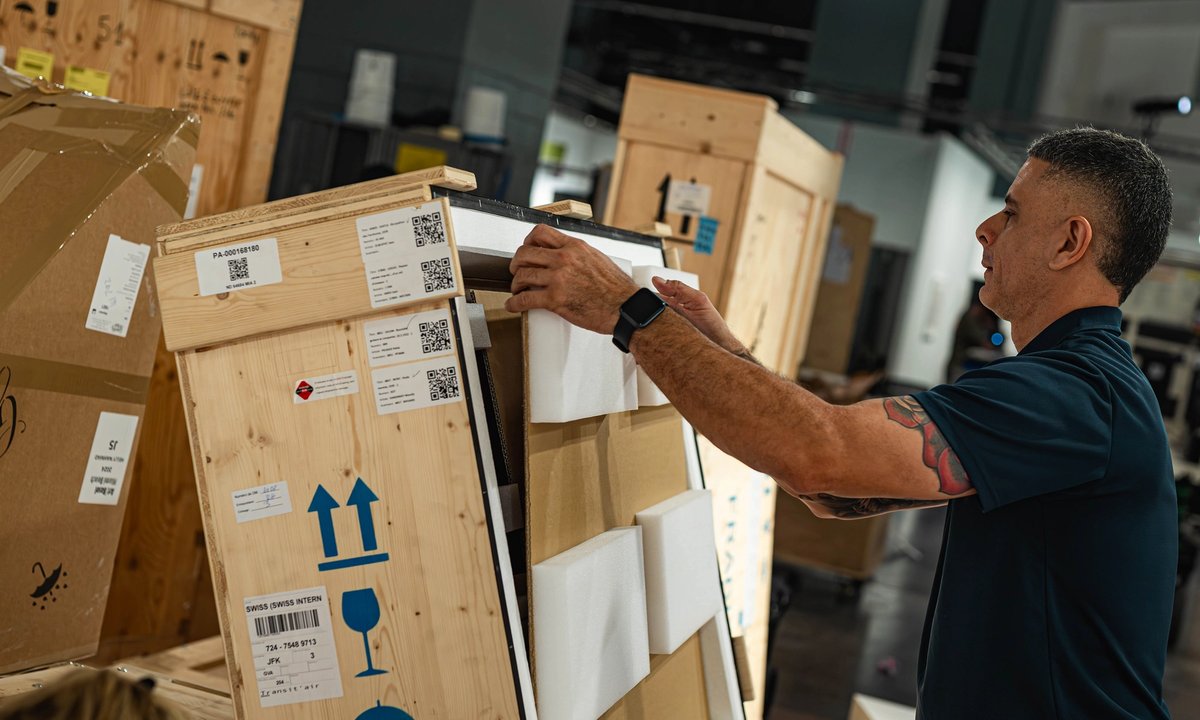
‘Like a carefully choreographed performance’: meet the logistics professionals who bring art fairs to life

Art fairs appear serene on the surface, but behind the scenes, logistics professionals work frantically to ship, install, and present hundreds of artworks. The article shares dramatic installation tales from galleries and shippers, including Gianpietro Carlesso's heavy sculpture at Frieze Sculpture 2020, a Calder Stegosaurus transported for Art Basel Miami Beach 2013, and Mandy El-Sayegh's immersive booth installation at Frieze London 2023. These stories highlight the challenges of tight schedules, extreme weather, and complex installations that require structural engineers, cranes, and overnight work.

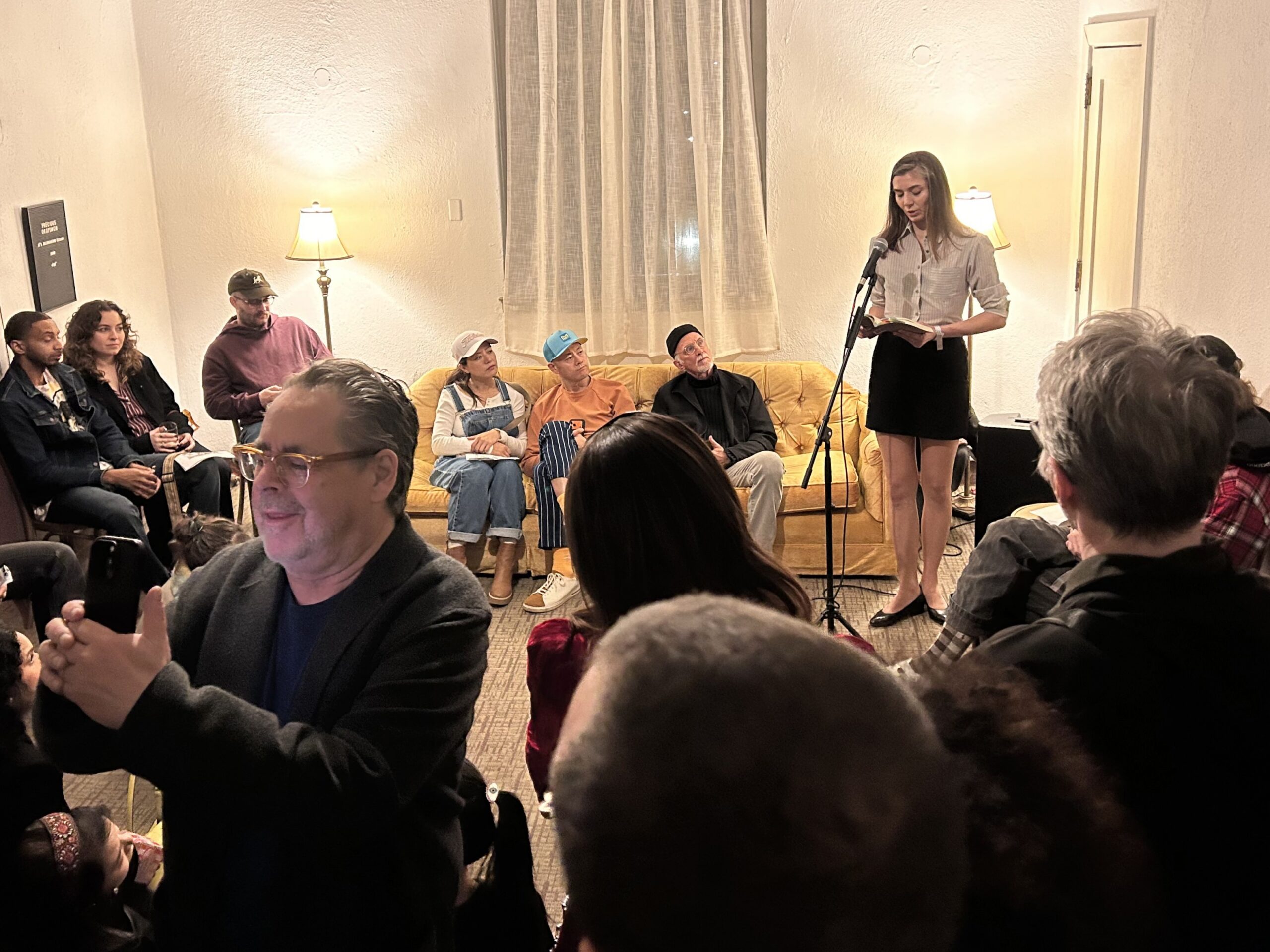
art juliana halpert frieze los angeles 2026

Juliana Halpert, writing for Cultured's Critics' Table, offers a local perspective on Los Angeles's busy February art scene, contrasting the global art-fair circuit with four distinctive local exhibitions. She visits Tanya Brodsky's "Stories of the City" at Campbell Hall school in Studio City, where Brodsky's sculptures engage with Italo Calvino's *Invisible Cities*; the Julia Stoschek Foundation; Amanda Ross-Ho's show; and Rita McBride's exhibition. Halpert uses Calvino's metaphor of Eutropia—a city whose inhabitants cycle through identical suburbs—to critique the repetitive nature of art fairs like Art Basel and Frieze, which travel from city to city with little variation.

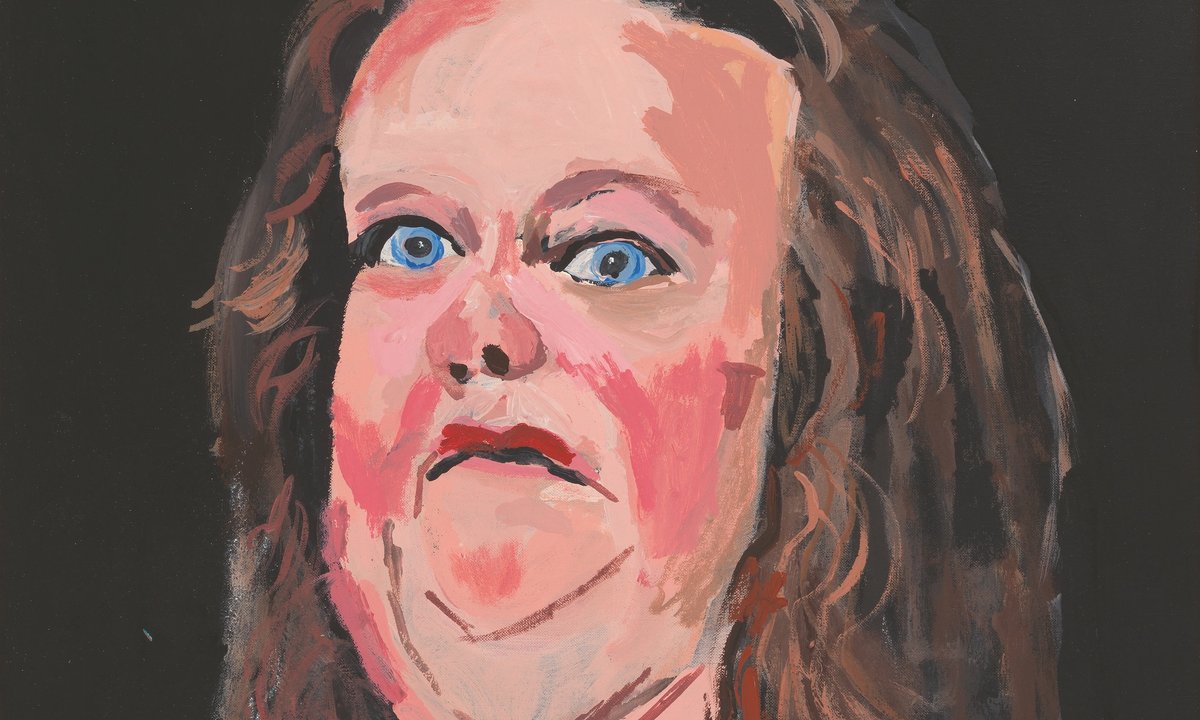
July Book Bag: from a monograph of Vincent Namatjira’s headline-grabbing portraits to a book of Chinese art heists

This article presents a roundup of five new art books released in July, covering a diverse range of topics. The featured titles include a monograph on Vincent Namatjira, whose unflattering portrait of mining billionaire Gina Rinehart sparked controversy at the National Gallery of Australia; a study of Palestinian embroidery in contemporary art by Joanna Barakat; a guide to New York City monuments of Black Americans by David Felsen; and a true-crime investigation into Chinese art heists by Ralph Pezzullo.

Social Malpractice in the Age of Cultural Compliance

Artist Ed Woodham reflects on the evolution and co-option of socially engaged art, using his own projects like 'The Keepers' protests and the Art in Odd Places initiative as examples. He describes a troubling trend where the language and strategies of social practice art, once used to challenge systems, are now being adopted by developers, corporations, and institutions for branding, place-making, and community engagement initiatives that often operate within the very economic structures driving displacement and eroding public space.

Documentary chronicles decades of work by New York ‘maintenance artist’ Mierle Laderman Ukeles

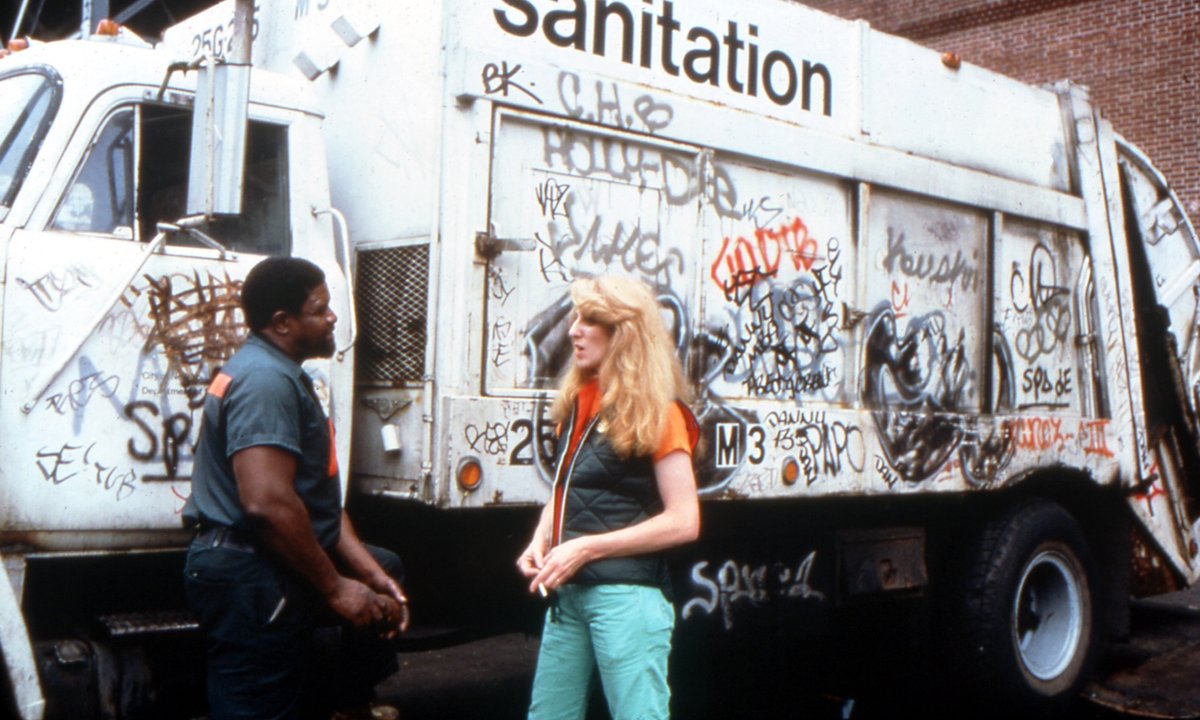
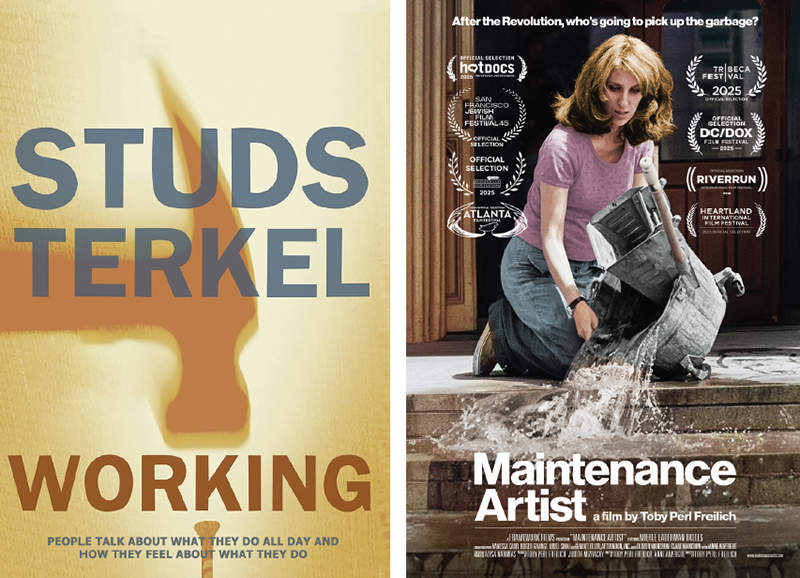
A new feature-length documentary titled "Maintenance Artist" will premiere at the Tribeca Film Festival on June 8, chronicling the decades-long career of 86-year-old New York artist Mierle Laderman Ukeles. The film, directed by Toby Perl Freilich, traces Ukeles's pioneering concept of 'maintenance art'—reclaiming everyday tasks like diaper-changing, floor-washing, and garbage-collecting as artistic acts. It covers her unpaid role as artist in residence of the New York City Department of Sanitation, her 1970s performance shaking hands with 8,500 sanitation workers, and her first major retrospective at the Queens Museum in 2016-17.

Photography Is…

The article 'Photography Is...' from Glasstire is a conceptual piece that presents the title as a prompt, leaving the definition of photography open-ended. The text consists solely of the title and source, functioning as a minimalist statement or an invitation for reader interpretation.

‘Maintenance Artist’ Highlights Mierle Laderman Ukeles’ Radical, Caring Approach to Public Art

A new documentary titled 'Maintenance Artist,' premiering at the Tribeca Film Festival, profiles New York City artist Mierle Laderman Ukeles, who has served as artist-in-residence at the city's Department of Sanitation since 1977. The film traces her radical practice, which began with her 1969 'Manifesto for Maintenance Art' and includes performances like 'Touch Sanitation Performance' (1980), where she shook hands with all 8,500 sanitation workers, thanking each for keeping the city alive. Ukeles' work elevates overlooked labor—trash collection, street-cleaning—as a form of public art.

hard truths curator invisibility

The article, presented as an advice column by consultants Chen & Lampert in ARTnews, addresses two anonymous letters from art-world professionals. The first letter is from a curator at a major museum who feels underpaid, invisible, and constrained by an ethics policy that prevents freelance work, while colleagues at smaller institutions enjoy more freedom. The second letter is from a veteran graphic designer and illustrator, active since the 1960s, who laments losing commercial clients to younger, cheaper talent using AI and smartphones. The consultants respond with sharp, critical advice: they tell the curator to consider collective action with colleagues to push for institutional reform, and advise the designer to leverage their legacy and experience rather than accept obsolescence.

Around North America, Community Members Are Stitching Nearly 11,000 Birds

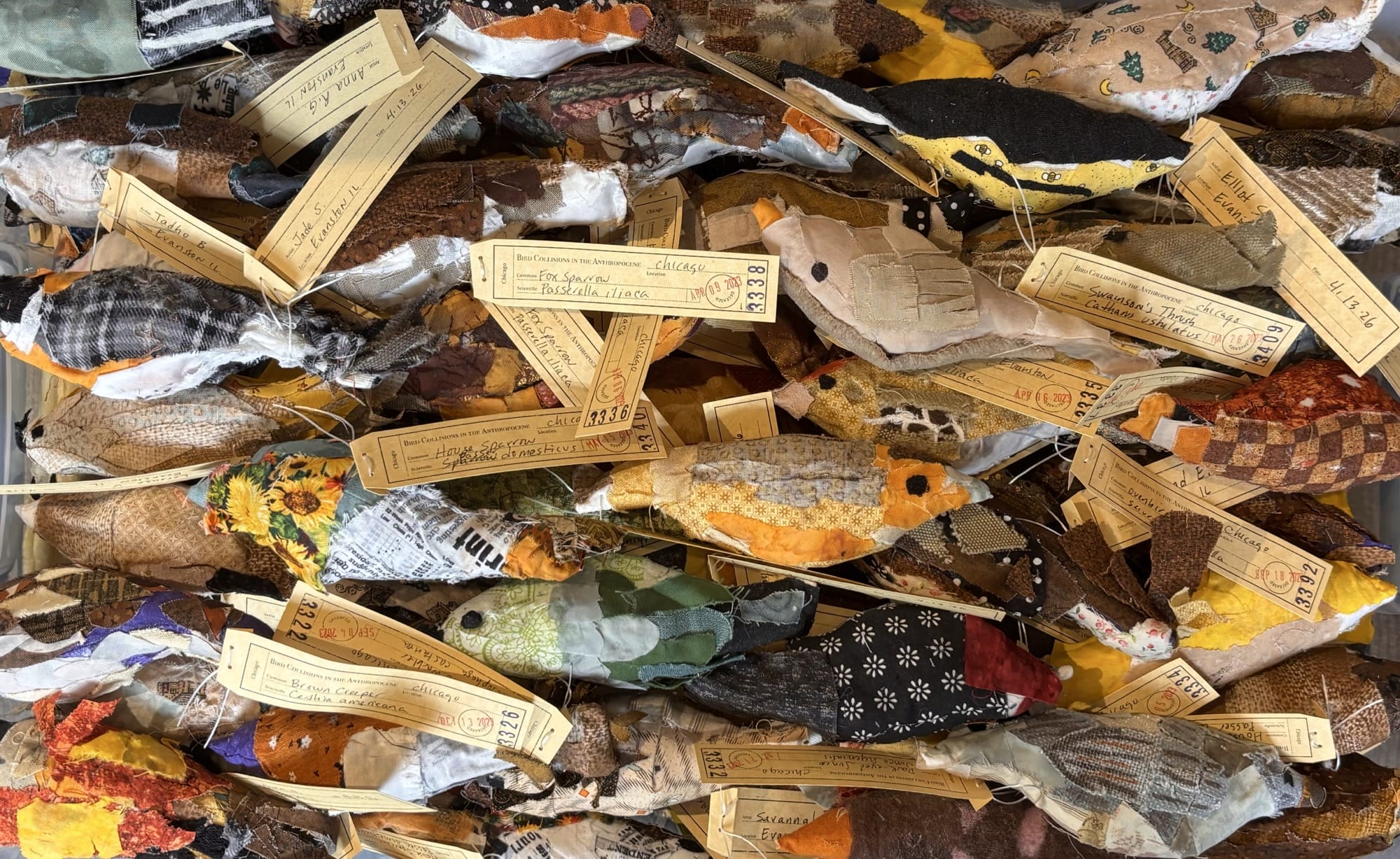
Artist and educator Holly Greenberg launched the multi-year project "Bird Collisions in the Anthropocene" in 2024 after learning about a mass bird collision at Chicago's McCormick Place Lakeside Center in October 2023, where nearly 1,000 birds died in a single night. Using data from the Chicago Field Museum and ornithologist Dave Willard, Greenberg focuses on the 10,863 birds found dead after hitting Chicago buildings in 2023 alone. The project involves community members stitching nearly 11,000 fabric birds to raise awareness and educate the public about preventing window collisions, which kill an estimated one billion birds annually across North America.

The Art of Performing Maintenance

This article explores the work of artist Mierle Laderman Ukeles, who in 1969 wrote her "Manifesto for Maintenance Art" after experiencing a crisis of meaning following the birth of her first child. She proposed that routine maintenance tasks—like cleaning, cooking, and laundry—could be redefined as art when performed in public, particularly in museums. The article traces her early exhibitions at the Wadsworth Athenaeum, where she swept and mopped as performance, and her later projects interviewing passersby on New York City sidewalks and embedding herself in a Manhattan office building, where she invited workers to declare their maintenance tasks art.

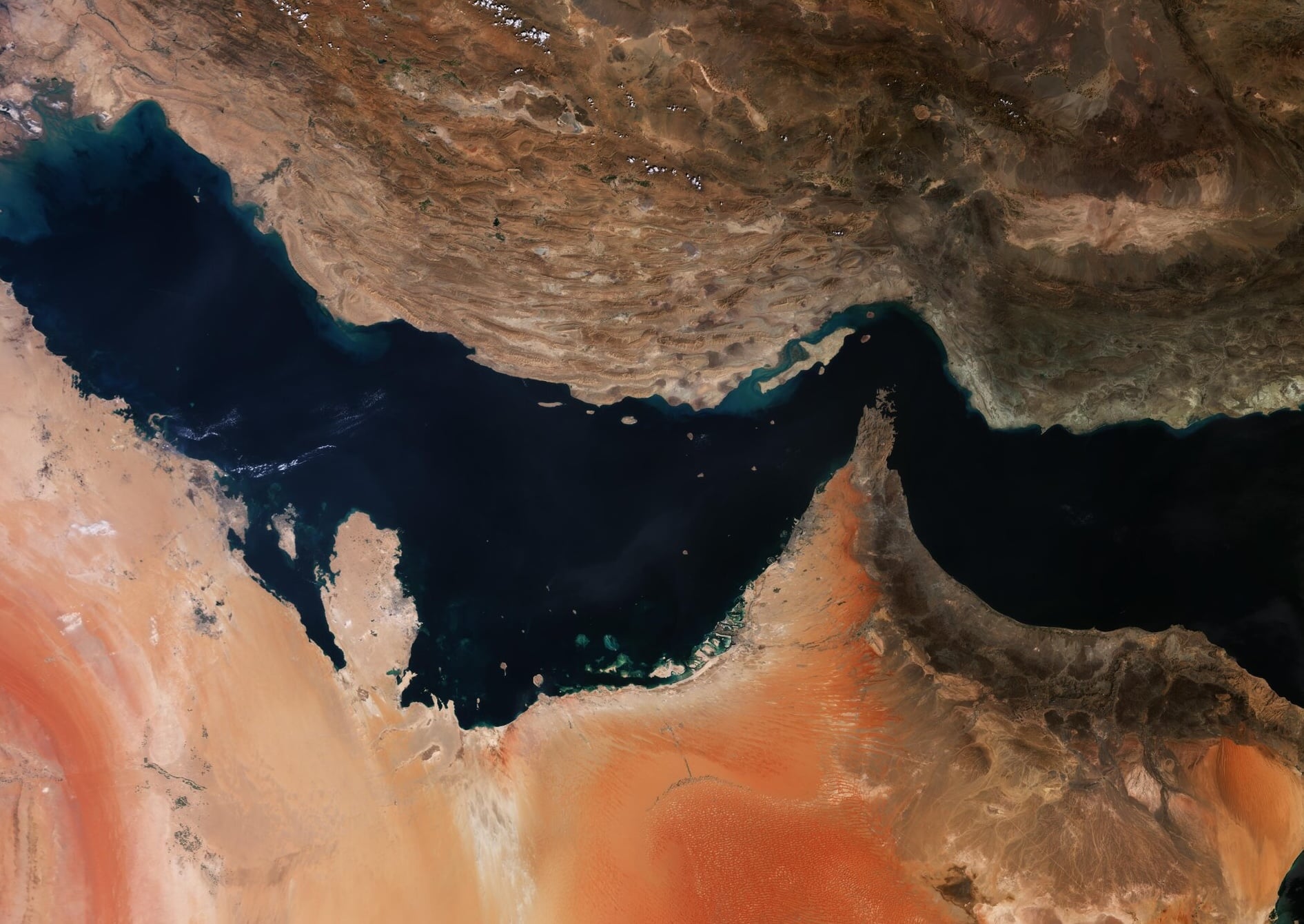
Beyond Weapons: Social Strength as True Defense in the Persian Gulf

Oltre le armi. La forza sociale come vera difesa nel Golfo Persico

Journalist and observer perspectives highlight that Iran’s geopolitical resilience against international military pressure stems from its vibrant middle class and deep-rooted historical identity rather than just its arsenal. Observations from travels across Iranian cities like Tehran, Shiraz, and Isfahan reveal a society deeply engaged with its own culture, frequenting museums, cafes, and archaeological sites despite political isolation and a lack of foreign tourism.

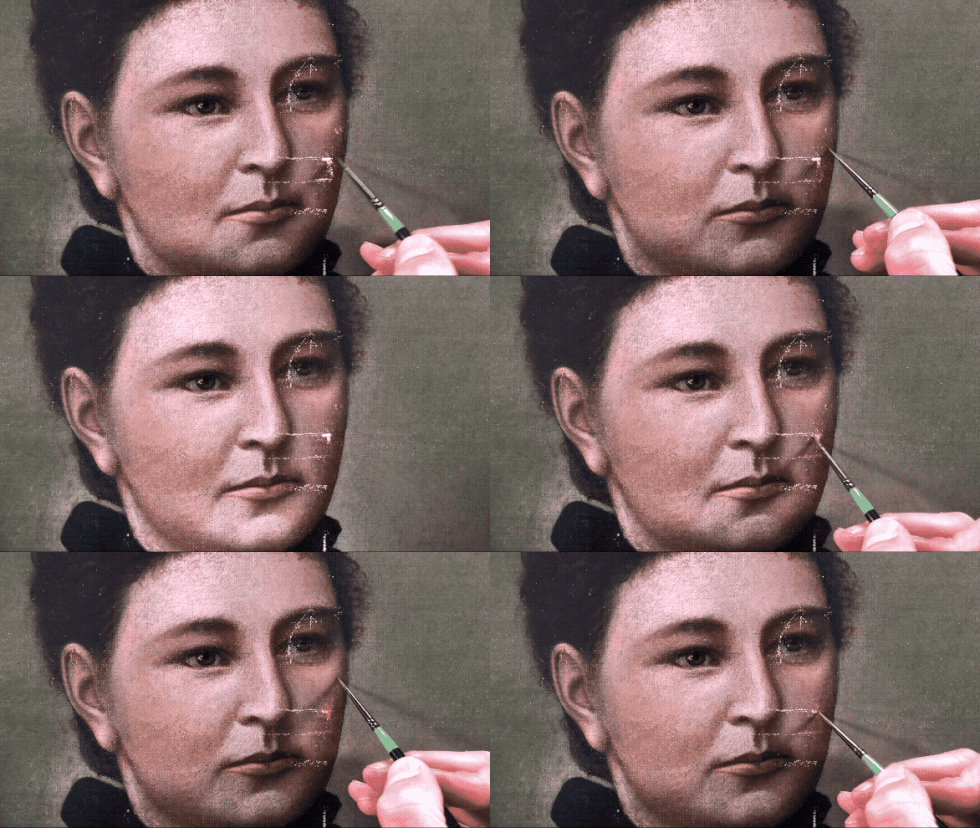
Baumgartner Restoration Painstakingly Brings a Neglected Portrait Back to Life

Art conservator Julian Baumgartner, who runs Baumgartner Fine Art Restoration in Chicago, received an anonymous portrait that arrived severely damaged—folded inside a mangled parcel with substantial creases, tears, and worn-away paint. Using reversible, archival materials and meticulous attention to detail, Baumgartner painstakingly restored the neglected painting, giving it a second chance at life.