filter_list Showing 12 results for "Bates" close Clear
search
dashboard All 36 museum exhibitions 12article culture 7rate_review review 3article news 3candle obituary 3article local 2article policy 2trending_up market 2person people 1gavel restitution 1
date_range Range Today This Week This Month All
Subscribe

At the Venice Biennale, the Thrill of Victory, the Agony of Defeat

The article reports on the opening of the 61st Venice Biennale, highlighting the central exhibition "In Minor Keys" conceived by the late Koyo Kouoh, along with national pavilions and collateral events. It notes standout contributions from artists such as Alvaro Barrington, Kaloki Nyamai, Florentina Holzinger, Ei Arakawa-Nash, Li Yi-Fan, and Dries Verhoeven, while describing the American pavilion as lackluster and the overall commercial offerings as uneven. The text also covers performances and exhibitions featuring nudity and body horror, including Tino Sehgal's "The Kiss" and Maja Malou Lyse's video with the collective DIS.
Ralph Lemon: The Physical Traces of Racism

Ralph Lemon's exhibition at Paula Cooper Gallery presents 13 black-and-white photographs and three short videos focusing on sites in the Mississippi Delta connected to the 1955 lynching of Emmett Till. Rather than dramatizing the incident, Lemon records physical traces of the locations—such as Bryant's Grocery and Meat Market, the barn where Till was killed, the Tallahatchie River, and a funeral home—capturing dilapidated buildings and landscapes that suggest history slipping away. The show includes the titular video "From Out of Space" (2018–21), which offers closeups and drone footage of these sites, creating a meditative, detective-like examination of memory and erasure.

Gabrielle Goliath’s "Elegy" Comes to Venice

South African artist Gabrielle Goliath’s installation "Elegy" was initially censored by South Africa’s Culture Minister Gayton McKenzie, who blocked it from the country’s pavilion at the Venice Biennale over its focus on Palestinian grief. After public outcry and support from several organizations, the work was instead installed in a Venice church, where critic Aruna D’Souza describes it as "hauntingly beautiful and achingly tender." The article also covers related news: a smear campaign against British-Nigerian photographer Misan Harriman for his Palestinian solidarity, and a list of summer art books.

MFA's Nude Exhibition Challenges Art History's Gender Norms

The Museum of Fine Arts, Boston, has opened a new exhibition that challenges traditional gender norms in art history, featuring a dozen artists who disrupt the conventional nude. The show includes Xandra Ibarra's performance "Nude Laughing," where she paraded naked through the museum's European galleries, and works by Betty Tompkins, whose "Fuck Paintings" and "Women Words Painting" series confront misogyny and the male gaze. The exhibition juxtaposes these contemporary pieces with historical works like Jean-Léon Gérôme's "Moorish Bath" to highlight entrenched racial and gender hierarchies in art.

There Is No Separation. In Conversation with Alice Maher   by Frank Wasser

Alice Maher, one of several Irish artists at the 61st Venice Biennale, presents three works in the Arsenale as part of the group exhibition “In Minor Keys,” curated by the late Koyo Kouoh. Her presentation includes a reconstructed 1996 installation *Les Filles d’Ouranos*, a new series of drawings and sculptures titled “The Sibyls” (2025), and a collaborative textile piece *The Map* (2021) made with Rachel Fallon. In a conversation with Frank Wasser, Maher discusses the political conditions surrounding this year’s Biennale, including institutional resignations, debates over national representation, and the inclusion of the Israeli and Russian pavilions.

‘It’s like a Ouija board – I listen to the painting’: the supernatural art of Sanya Kantarovsky

Russian-born, New York-based artist Sanya Kantarovsky presents his new exhibition "Basic Failure" at Venice's Institute of Sciences, Letters and Arts, timed to coincide with the Venice Biennale. The show features his signature dishevelled, otherworldly figures—including a pallid boy with a cigarette, a child spinning in innocence, and a glass bust of a young boy with a dead spider under its eye—that explore tension, alienation, and the supernatural. Kantarovsky describes his process as listening to the painting like a Ouija board, and the exhibition includes works that confound narrative expectations, such as a scruffy toy panda and a recreation of Antonello Gagini's 16th-century sculpture.

Lenz Geerk’s Theatre of the Mind: painting as regulation of appearance

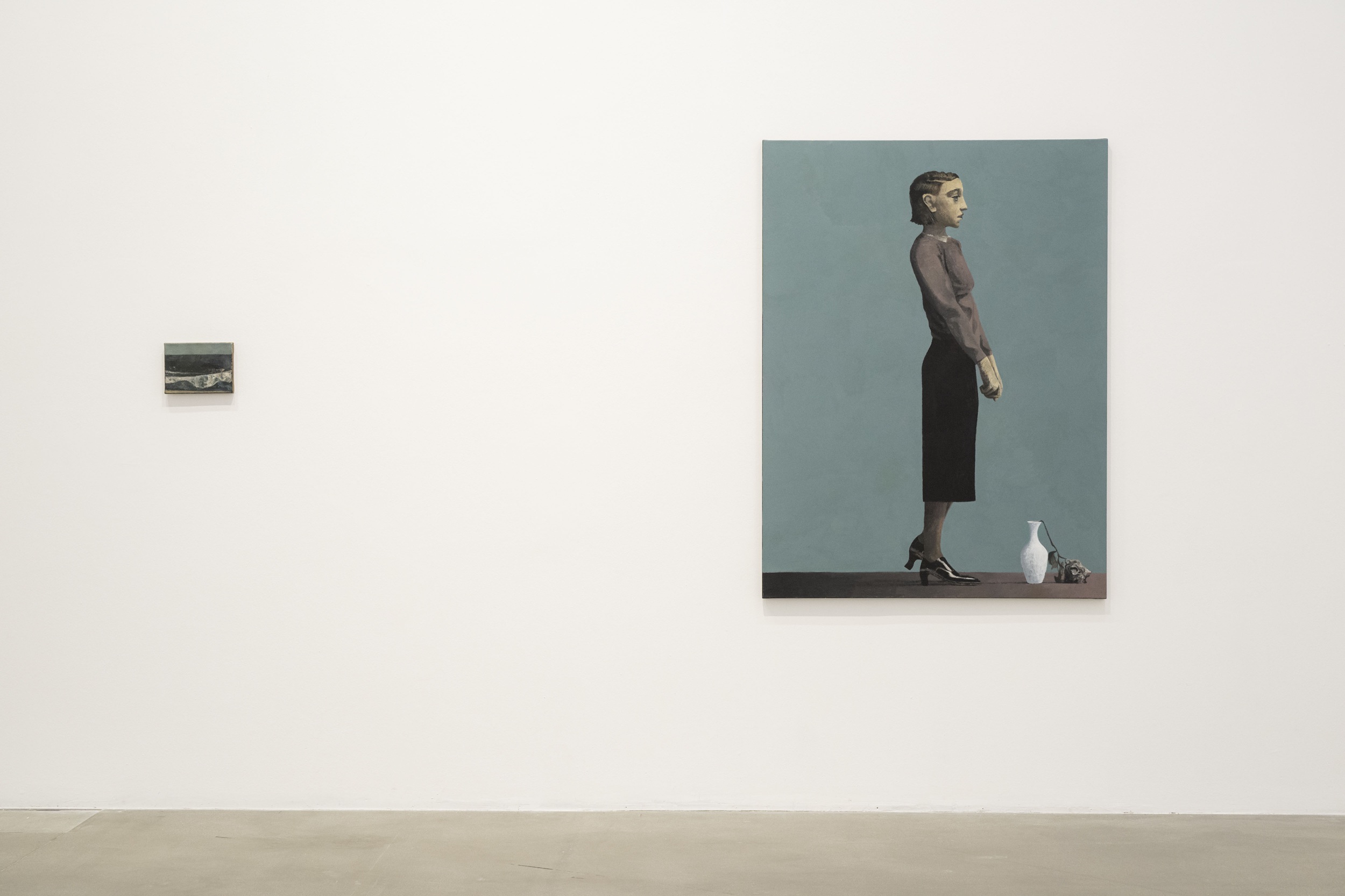
Fondazione Sandretto Re Rebaudengo in Turin presents "Theatre of the Mind," the first Italian institutional solo exhibition by German-born painter Lenz Geerk. The show features recent works from 2022 to 2024, exploring painting as a perceptual device where figures, objects, and domestic interiors exist in unstable, unresolved configurations. Installation views by Giorgio Perrottino accompany the exhibition, which runs at the foundation's space.

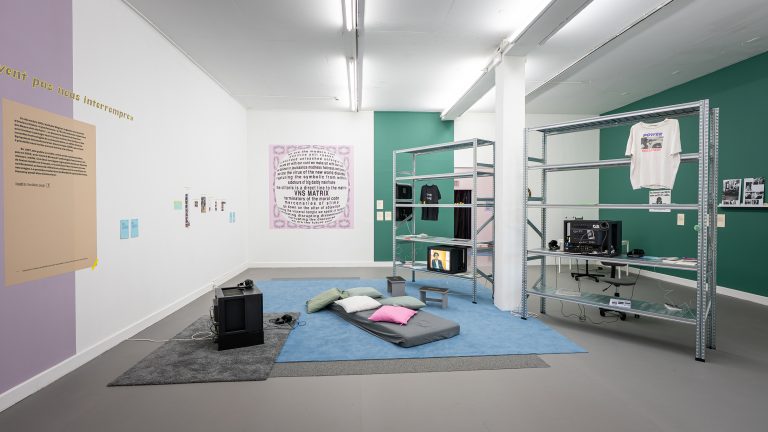
“Magnanrama. Portraits, Networks, and News of Nathalie Magnan” at Villa Arson, Nice

Mousse Magazine reports on the exhibition “Magnanrama. Portraits, Networks, and News of Nathalie Magnan” at Villa Arson in Nice, which celebrates the life and work of Nathalie Magnan (1956-2016). Magnan was a media theorist, filmmaker, cyberfeminist, educator, webmistress, hacktivist, and interdisciplinary figure who navigated the internet and the high seas, contributing to the history of thought, technology, feminism, and LGBTQI+ struggles. The show presents portraits, networks, and news related to her legacy, positioning her as a mediator and artist despite her reluctance to use that term.

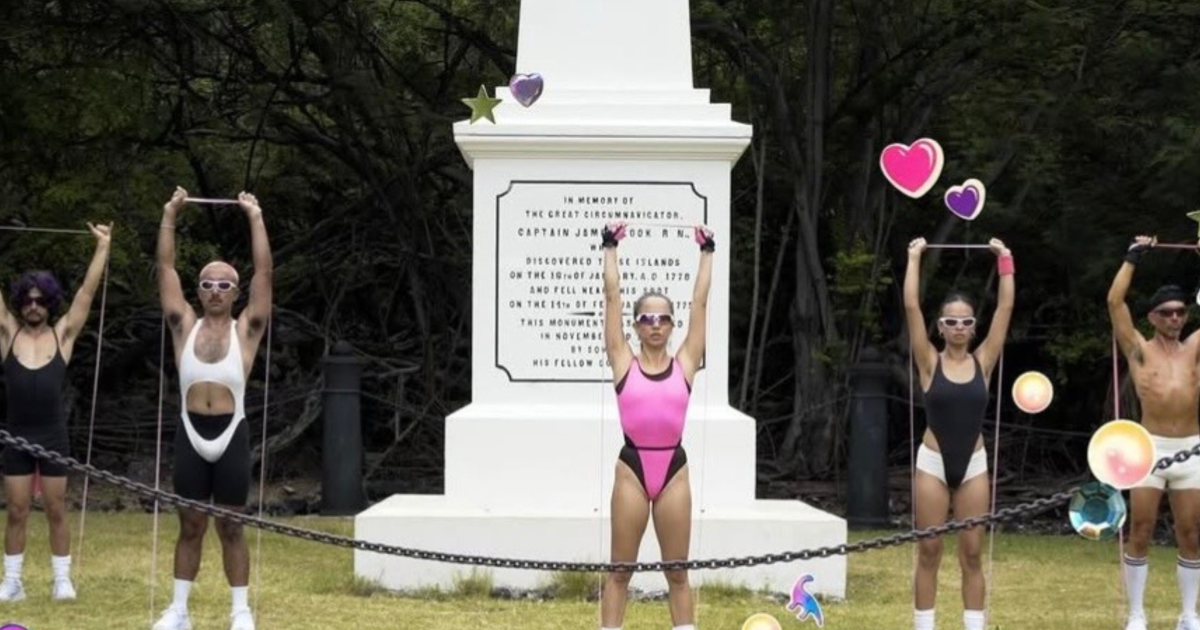
Meet the Hawaiʻi creatives behind a workout video featured in a New York art exhibition

A satirical workout video titled "20 minute workout" created by the Hawaiʻi-based artist initiative kekahi wahi is featured at the Whitney Biennial in New York. The video shows dancers in spandex stretching in front of the Captain Cook Monument at Kealakekua Bay on Hawaiʻi Island, set to electronic music. The project was part of a larger effort to reimagine public space and challenge commemorative monuments in Hawaiʻi, drawing on the energy of debates over Confederate statues in the continental U.S.

Between Ritual and Institution: Andrea Canepa's Interventions in Spain

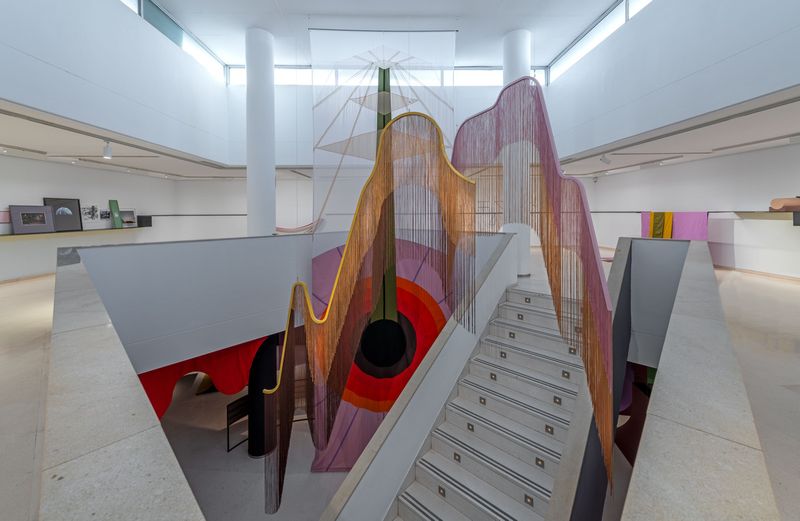
ENTRE EL RITO Y LA INSTITUCIÓN: LAS INTERVENCIONES DE ANDREA CANEPA EN ESPAÑA

Andrea Canepa, a Peruvian artist born in 1980, has installed "Fardo" at the Palacio de Cristal in Madrid's Parque del Retiro, running from January 13, 2026 to January 1, 2027. The work wraps the building's perimeter in a printed fabric bearing patterns from Paracas funerary textiles, a pre-Columbian culture from southern Peru. Created during the palace's ongoing restoration (which began in 2023), the installation challenges the building's colonial history—it was built for the 1887 Exhibition of the Philippine Islands—by introducing indigenous visual and ritual references. Canepa also presented "Entre lo profundo y lo distante" at the IVAM in Valencia until April 12, 2026, which uses Andean huacas (sacred spaces) to propose a non-linear relationship between time, body, and space. Both works transform passive contemplation into active, bodily participation, using ritual as a means to reorganize the exhibition experience.

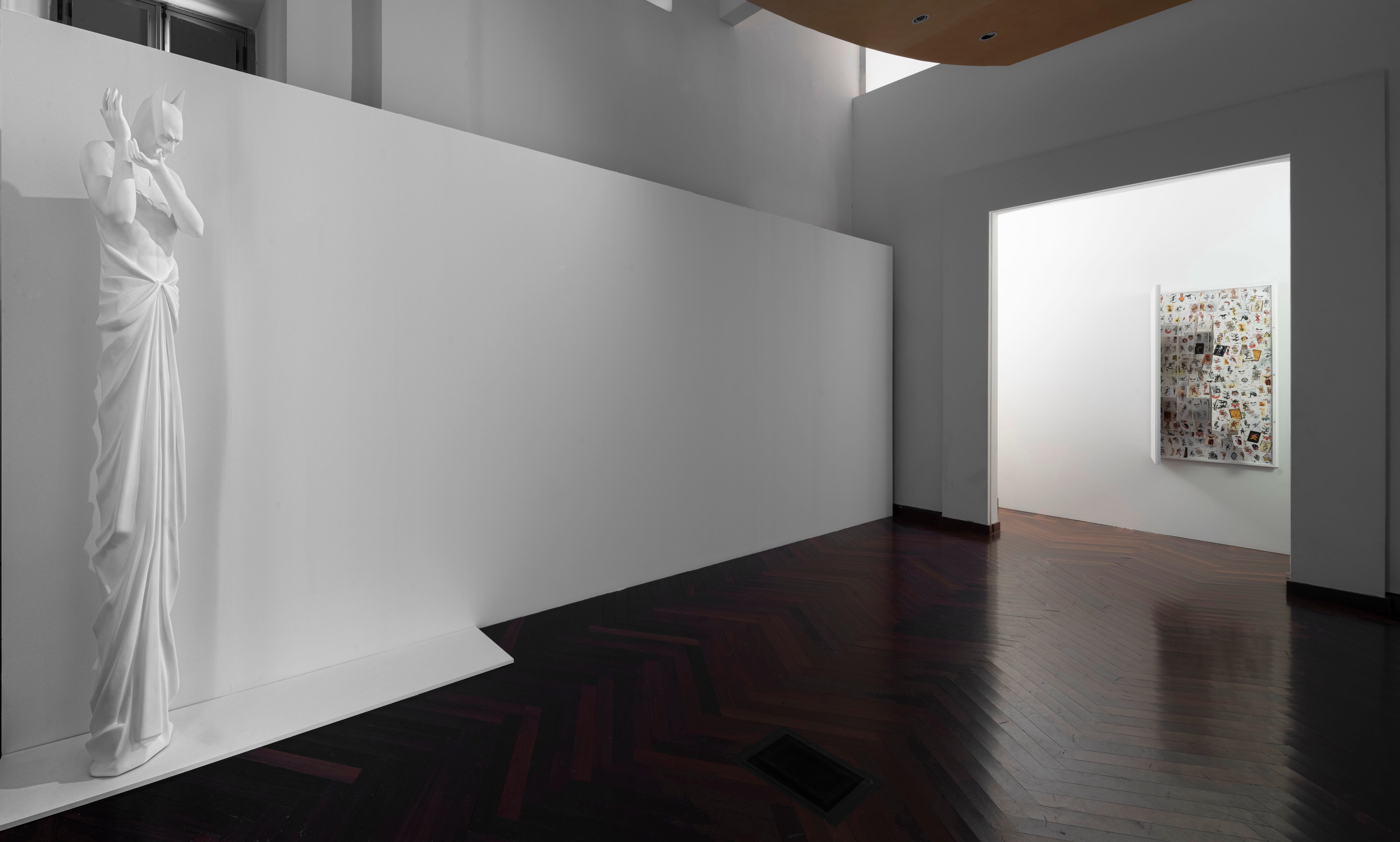
Between heroes, anti-heroes and pure humanity: an exhibition in Rome becomes a metaphor for the current crisis

Tra eroi, antieroi e pura umanità una mostra a Roma diventa metafora della crisi attuale

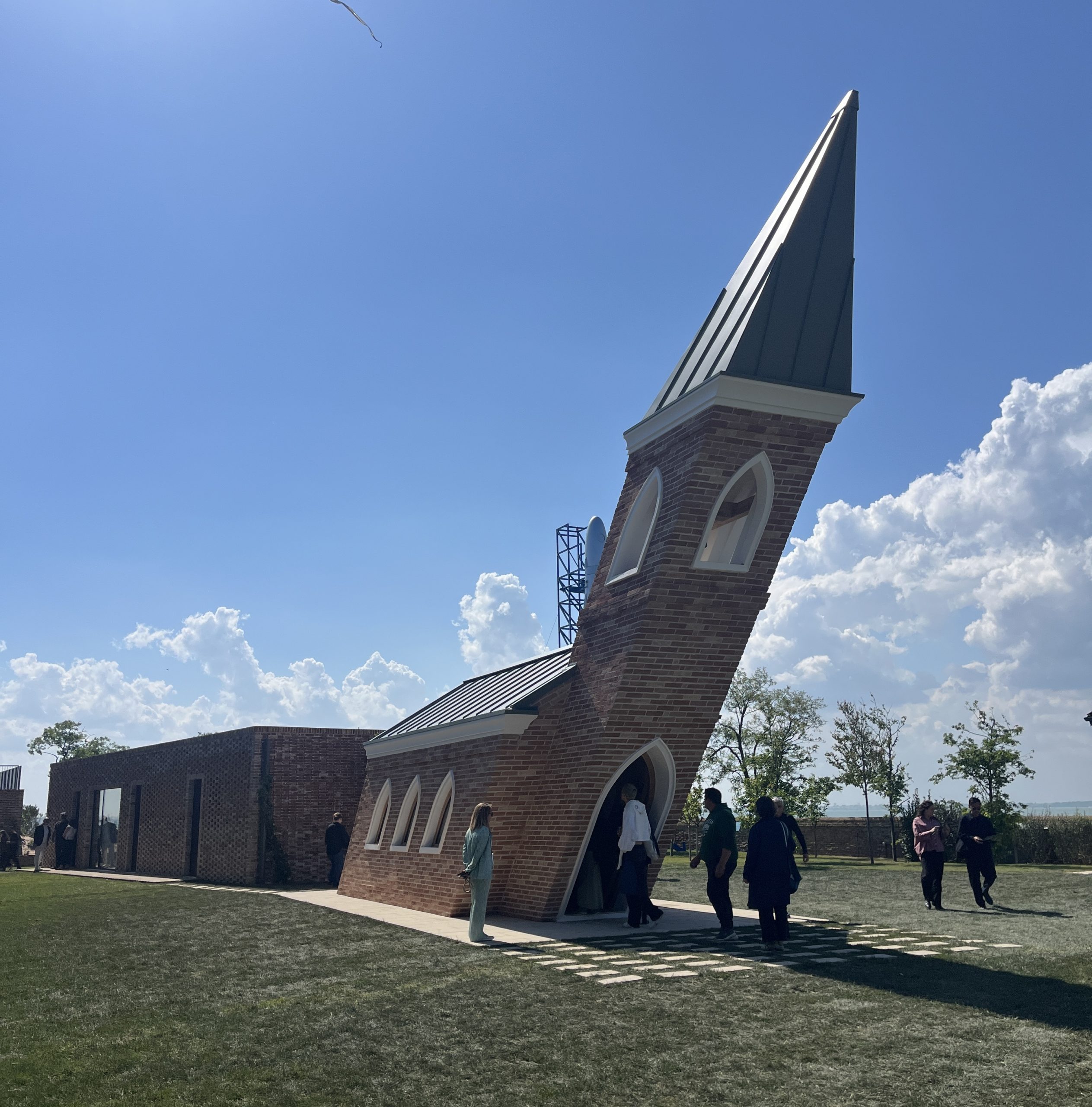
The Museo di Roma Palazzo Braschi in Rome is hosting "It's Happening Again," a solo exhibition by artist Adrian Tranquilli, curated by Studio Stefania Miscetti and running until May 24. The show presents new works including the monumental sculpture "Endsong" (2025), a black monolith inspired by Kubrick's "2001: A Space Odyssey" covered in hundreds of Joker faces, and a large pop-up book titled "My Little White Book" (2026). Tranquilli's pieces, often built from playing cards, explore themes of power, fragility, and the instability of cultural symbols.

Baby dolls, whale songs and swimming in urine: The Venice Biennale’s must-see national pavilions

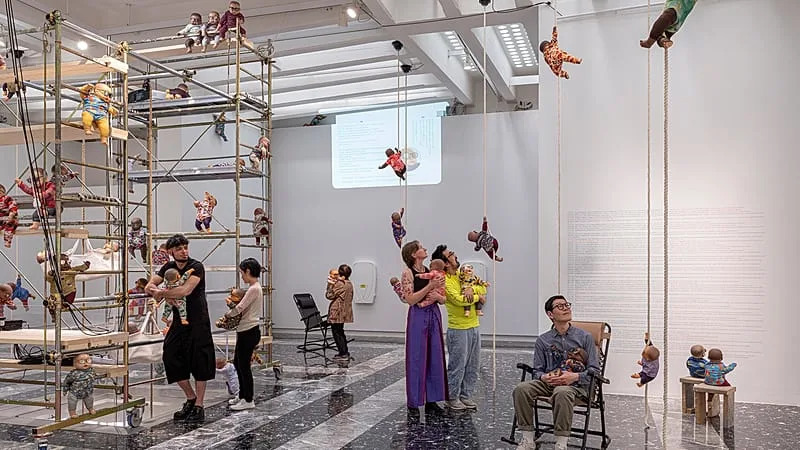
The 61st Venice Biennale, themed 'In Minor Keys' by late curator Koyo Kouoh, has been marked by political protests against Russia and Israel's participation, pavilion closures, and threats to funding. Despite this tense atmosphere, several national pavilions quietly embody Kouoh's vision of nurture, intimacy, and reflection. Highlights include the Japan Pavilion's 'Grass Babies, Moon Babies' by Ei Arakawa-Nash, where visitors carry and care for baby dolls, and the Polish Pavilion's 'Liquid Tongues' by Bogna Burska and Daniel Kotowski, an immersive sound installation exploring Deaf culture and marginalized communication.