filter_list Showing 16 results for "Raum" close Clear
search
dashboard All 404 museum exhibitions 248article culture 31rate_review review 28article news 27article local 25candle obituary 16person people 12trending_up market 10article policy 5gavel restitution 2
date_range Range Today This Week This Month All
Subscribe

Georg Baselitz obituary

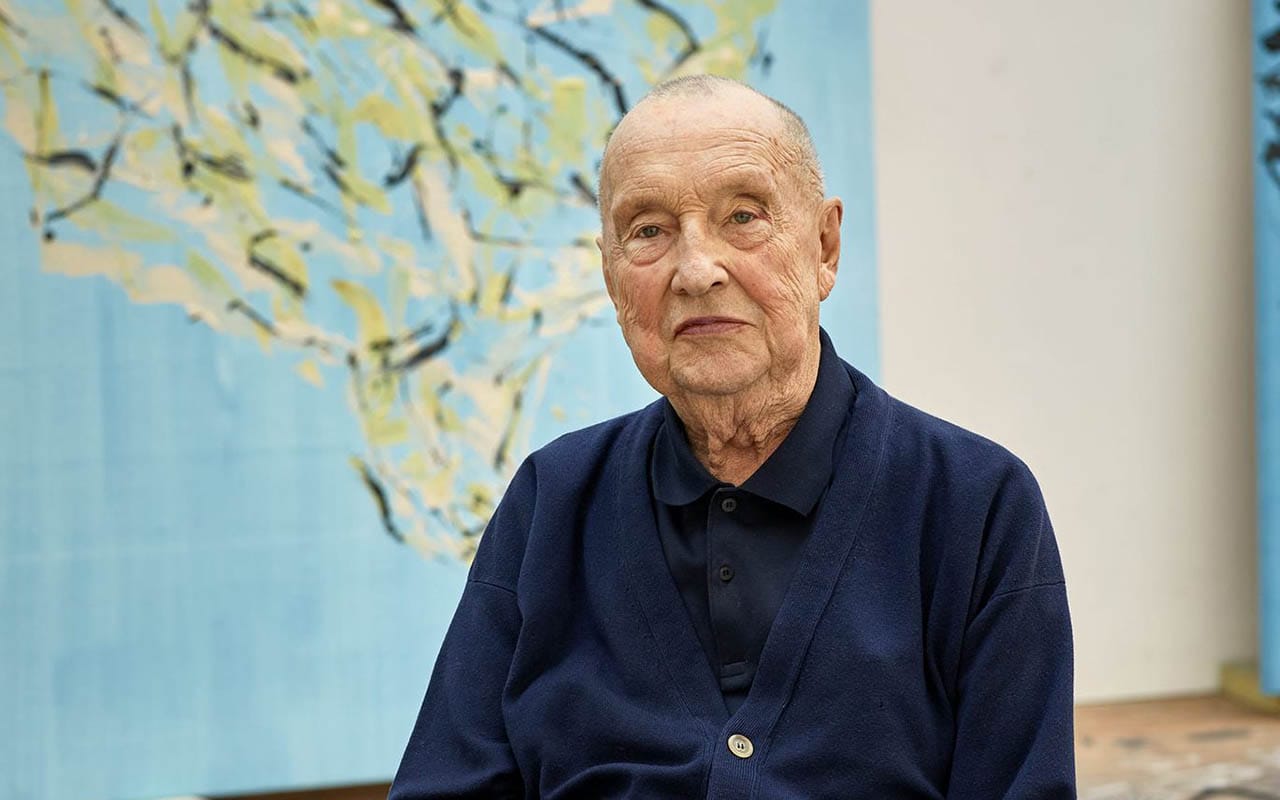
Georg Baselitz, the German painter and sculptor known for his provocative, expressionistic works and his iconic upside-down paintings, has died at the age of 88. The article traces his life from his childhood in war-torn Germany, through his early career as a rebellious artist in divided Berlin, to his rise as an international art star. It highlights his 1961 manifesto poster "Pandemonium I," his rejection of American abstraction, and his controversial 1963 exhibition that was raided by police for its explicit content.

gunther uecker zero artist dead

Günther Uecker, the German postwar artist known for hammering nails into canvases to create abstract works, died at age 95. His death was announced by his New York gallery, Lévy Gorvy Dayan, after he had been hospitalized in Düsseldorf. Uecker was a core member of the avant-garde ZERO group, founded in 1957 by Otto Piene and Heinz Mack, and his nail-based abstractions—applied to surfaces from canvases to lightboxes and TV sets—defined his practice from the 1950s onward. He participated in major exhibitions including Documenta and MoMA's 1965 "The Responsive Eye," and continued working daily in his Düsseldorf studio into his 90s.

arnulf rainer dead

Arnulf Rainer, the Austrian artist known for his relentless experimentation and his signature "overpaintings" (Übermalungen), died on December 18 at age 96 at his home in Austria. His death was confirmed by his gallery, Thaddaeus Ropac. Over seven decades, Rainer produced abstract works tied to the Art Informel movement, layering dense pigment over existing images—first his own, then works by artists like Emilio Vedova. He also created "blind drawings" and overpainted photographic self-portraits in series such as "Face Farces" and "Body Poses." His career included major exhibitions at Documenta, the Venice Biennale, the Guggenheim Museum, and the Centre Pompidou, and he taught at the Academy of Fine Arts in Vienna from 1981 to 1995.

Georg Baselitz, artist who turned painting upside down, 1938–2026

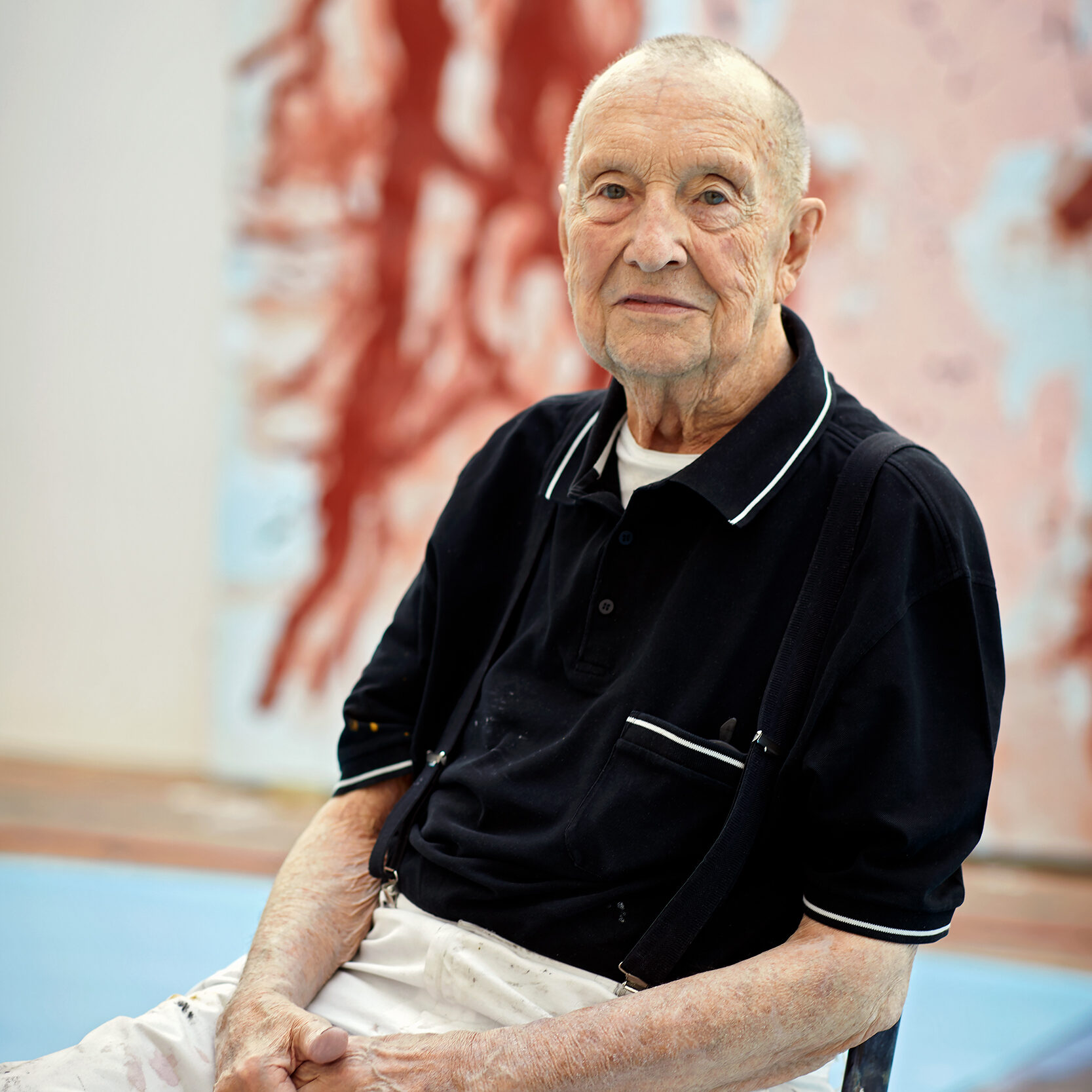
Georg Baselitz, the German painter, sculptor, and printmaker known for turning his canvases upside down, has died at age 88. Born Hans-Georg Kern in Saxony in 1938, he witnessed the bombing of Dresden as a child, an experience that shaped his artistic vision. Expelled from art school in East Berlin, he moved to West Berlin and adopted the name Baselitz. His first solo exhibition in 1963 was deemed obscene and confiscated. In 1969, he created his first upside-down painting, which became his signature. He rose to international prominence as a neo-expressionist in the late 1970s and 80s, represented Germany at the Venice Biennale in 1980, and continued working until his death. A recent series of his paintings will be shown at the Fondazione Giorgio Cini in Venice from May to September 2026.

Georg Baselitz, Lion of German Neo-Expressionism, Dead at 88

Georg Baselitz, the influential German Neo-Expressionist painter, printmaker, and sculptor, died on April 30 at age 88. His death was announced by Thaddaeus Ropac gallery, his longtime representative. Born Hans-Georg Kern in 1938 in Saxony, Baselitz was profoundly shaped by his childhood experience of war and the destruction of Nazi Germany. He was expelled from art school in East Berlin for "socio-political immaturity," moved to West Berlin, and adopted his pseudonym from his hometown. His first solo exhibition in 1963 was raided by police for obscenity, cementing his reputation as a provocateur. Known for his upside-down figures and fierce brushwork, he created series such as "Heroes" and "Fracture" that addressed trauma, violence, and the psychic toll of postwar life.

German artist Georg Baselitz dies aged 88

German artist Georg Baselitz has died at age 88, as confirmed by the Thaddaeus Ropac gallery. Known for his expressive paintings and sculptures, Baselitz rose to prominence in the 1960s after a scandal over sexually symbolic works led to a high-profile court case. He pioneered painting canvases upside down from 1969 onward, a technique he used to grapple with German history and collective guilt. His work spanned six decades and included notable sculptures, such as a wooden figure at the 1980 Venice Biennale that appeared to perform a Nazi salute, which he later clarified was inspired by an African artifact. Baselitz achieved international acclaim in the 1980s and became one of Germany's highest-priced living artists, alongside Gerhard Richter.

Nicholas Pope, sculptor whose career came in two acts, 1949–2026

Nicholas Pope, a British sculptor known for his organic, post-minimalist works, has died at age 76. His career unfolded in two distinct acts: an early phase in the 1970s producing roughly-hewn wooden columns like *Oak Tree Column* (1973) and *Drooping Column* (1975), which earned him a spot in the British Pavilion at the 1980 Venice Biennale, followed by a decades-long hiatus after contracting viral encephalitis in Tanzania. He later returned to sculpture with brighter, brasher works in ceramic, glass, and felt, including *The Apostles Speaking in Tongues Lit By Their Own Lamps* (1993–96) and collaborations like *The Conundrum of the Chalices of the Seven Deadly Sins and Seven Virtues* (2015) with James Maskrey.

George Baselitz, Purveyor of the Tortured Male Genius Myth, Dies at 88

Georg Baselitz, the influential German Neo-Expressionist painter known for his emotionally charged, often violent works and his controversial statements about women artists, has died at age 88. His final paintings will be shown in the exhibition "Eroi d’Oro" at the Fondazione Giorgio Cini in Venice starting May 6. Baselitz rose to prominence with his "Heroes" series of monumental male soldiers and his signature "upside down" paintings, which forced viewers to focus on painterly gesture over representation. He was a key precursor to Germany's Neue Wilde movement and confronted Germany's World War II trauma in works that combined expressionistic brutality with Wagnerian grandeur.

Georg Baselitz – a life in pictures

Georg Baselitz, the German painter known for his raw, expressive works and inverted imagery, has died at age 88. Born in 1938 in Deutschbaselitz, he lived through Nazi Germany and East German communist rule, experiences that deeply shaped his art. The Guardian's obituary traces his life through photographs, from his early years to major exhibitions at Thaddaeus Ropac, White Cube, and the Serpentine, highlighting key works such as 'Das Grosse Pathos' (1966) and his 2024 series 'A Confession of My Sins'.

In His Last Interview, Georg Baselitz Unpacks His New Nudes, Identity Art, and Being a Lifelong Outsider

Georg Baselitz, the influential German painter known for his inverted, upside-down works, gave his final interview before his death on April 30 at age 88. In the conversation, he discussed his upcoming exhibition "Eroi d’Oro [Heroes of Gold]" at the Fondazione Giorgio Cini in Venice, featuring monumental gold-primed canvases depicting nude portraits of himself and his wife Elke. Baselitz reflected on his lifelong outsider status, his refusal to follow artistic movements, and the controversial nature of his work, including his 1963 painting that led to an obscenity trial.

art georg baselitz artist venice death

Georg Baselitz, the influential German painter known for his inverted, upside-down artworks, has died at age 88 on April 30. The news was announced by his longtime gallery, Thaddaeus Ropac, via an obituary written by Robert Isaf. Baselitz gave his final spoken interview weeks before his death, discussing his upcoming exhibition “Eroi d’Oro [Heroes of Gold]” at the Fondazione Giorgio Cini in Venice, which opened May 6. The show features monumental gold-primed canvases with inverted portraits of himself and his wife Elke, which he described as a summary of his career and a reflection on art history.

Thomas Zipp, artist with a sideways sense of history, 1966–2026

German artist Thomas Zipp, known for his dark, punk-infused explorations of history and science, has died at age 60. Throughout a career spanning painting, sculpture, and immersive scenographic installations, Zipp blended a Dadaist sensibility with a deep interest in politics, neuroscience, and the nuclear age. His work often challenged viewers with complex, opaque environments, such as his notable 2013 Venice Biennale installation that transformed a palazzo into a psychological sanatorium.

Arnulf Rainer, a revolutionary figure in postwar Austrian art, has died aged 96

Arnulf Rainer, a revolutionary figure in postwar Austrian art, has died at age 96. His death on 18 December was confirmed by his gallery Thaddaeus Ropac, which described him as one of the most influential artists of the post-war period. Born in 1929 in Baden, Austria, Rainer emerged as a leading figure of the Austrian avant-garde, known for his gestural paintings confronting the atrocities of the Holocaust and Hiroshima, and for his experimental self-portraiture. He was a founding member of Galerie nächst St Stephan in postwar Vienna, a vital hub for artists seeking alternatives to the conservative art world. His signature Übermalungen (overpaintings) involved painting over photographs and self-portraits with aggressive gestures, dense black strokes, and erasures, creating charged works where violence and vulnerability coexist.

Georg Baselitz, grande figure de l’art allemand, est mort à l’âge de 88 ans : retour sur sa vie et son œuvre

Georg Baselitz, one of Germany's most significant post-war artists, has died at age 88. Born Hans-Georg Kern in 1938, he grew up in Nazi-era Saxony and later rejected his father's ideology, fleeing to West Berlin in 1957. Known for his provocative, expressionist works and signature upside-down paintings, Baselitz challenged artistic conventions with brutalist techniques—attacking wood with chainsaws and axes—and created scandalous pieces like "Die große Nacht im Eimer" (1962–1963), which was banned from exhibition. His career included major retrospectives at the Musée d'Art Moderne de la Ville de Paris (2011) and Centre Pompidou (2021), and commissions for the Reichstag.

‘In every drop of paint he slurped, you see the Holocaust’: the genius and torments of Georg Baselitz

Georg Baselitz, the German painter and sculptor known for his provocative confrontations with Nazi history, has died. Born in 1938, he was one of the last living artists with direct childhood memories of the Third Reich. His early works, such as *Die große Nacht im Eimer* (1961) and his upside-down German eagles, deliberately shocked postwar West Germany by depicting obscene, shameful images of a society trying to forget the Holocaust. He famously exhibited a zombie Hitler woodcarving at the 1980 Venice Biennale alongside Anselm Kiefer, insisting on confronting rather than ignoring the Nazi heritage of the German Pavilion.

georg baselitz dies at 88, pioneer of inverted painting and postwar german art

Georg Baselitz, the influential German painter known for his inverted figures and raw, expressive style, has died at age 88. A pioneer of postwar German art, Baselitz gained international fame in the 1960s by turning his canvases upside down, forcing viewers to focus on form and paint rather than narrative. His work often grappled with the trauma of Nazi Germany and the divided nation's identity, making him a central figure in the Neo-Expressionist movement.