filter_list Showing 12 results for "Lysis" close Clear
search
dashboard All 366 article news 90article culture 75trending_up market 70museum exhibitions 62rate_review review 29gavel restitution 12article policy 11person people 8article local 7candle obituary 2
date_range Range Today This Week This Month All
Subscribe

battle over 1800 paintings attributed to russian modernist masters intensifies after litigation funder raises authenticity concerns

A legal battle over a collection of 1,800 paintings attributed to Russian modernist masters has escalated after the litigation funder backing the claimants, LitFin, raised concerns it may have been misled about the works' authenticity. The funder is now in a dispute with the claimants, the family of the late Palestinian collector Uthman Khatib, over halted payments and control of the lawsuits, which seek the return of the paintings or $323 million from Israeli-Russian businessman Mozes Frisch, who is accused of stealing them.
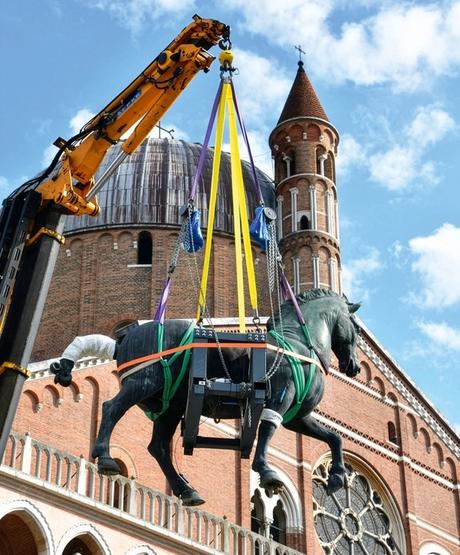
One of Donatello’s most important bronze statues is being restored: should it ever be shown outdoors again?

Donatello's monumental 1453 bronze equestrian statue, Gattamelata, has been moved from its outdoor plinth in Padua to a nearby indoor hall for a major €1 million restoration. This marks only the third time the statue has been moved indoors in nearly 600 years, prompted by severe corrosion known as "bronze cancer" and structural concerns about its stone pedestal. The restoration is funded by two American non-profit organizations, Friends of Florence and Save Venice.

Dürer ‘copy’ at London’s National Gallery is the real thing, expert claims

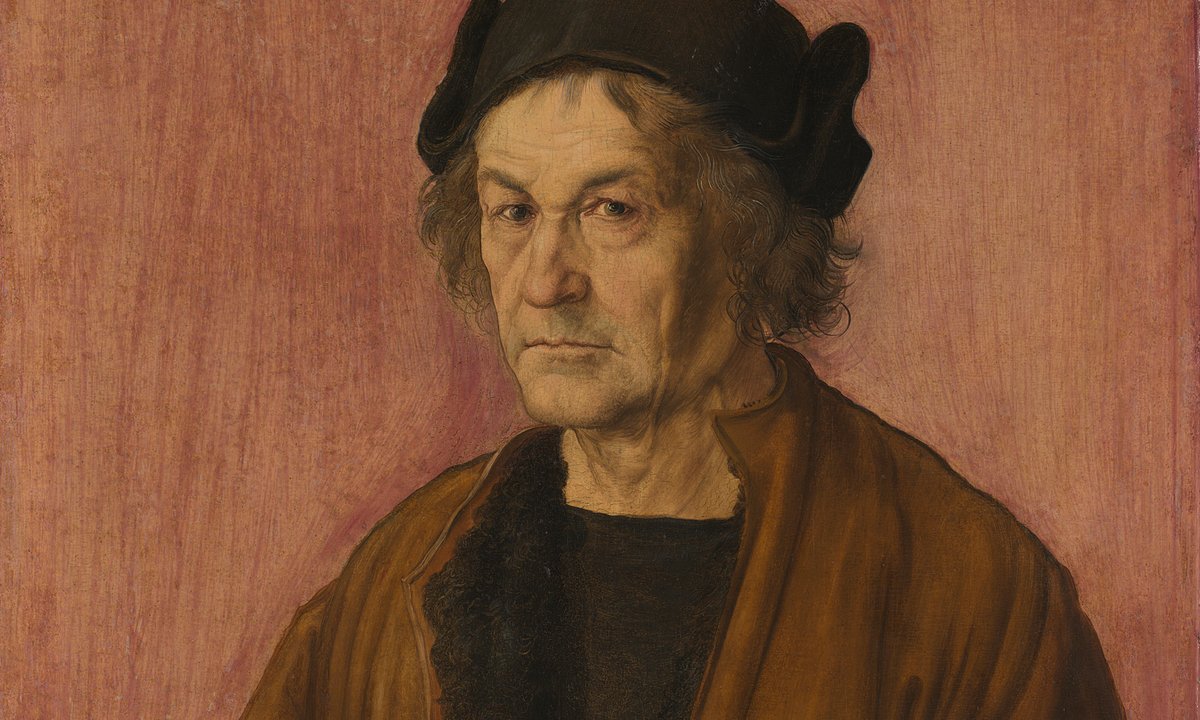
A German scholar, Christof Metzger, has published a new catalogue raisonné claiming that a portrait of Albrecht Dürer's father held by London's National Gallery is an authentic work by the master, painted in 1497. This directly challenges the gallery's long-standing position that the painting is a later copy made after a lost original.

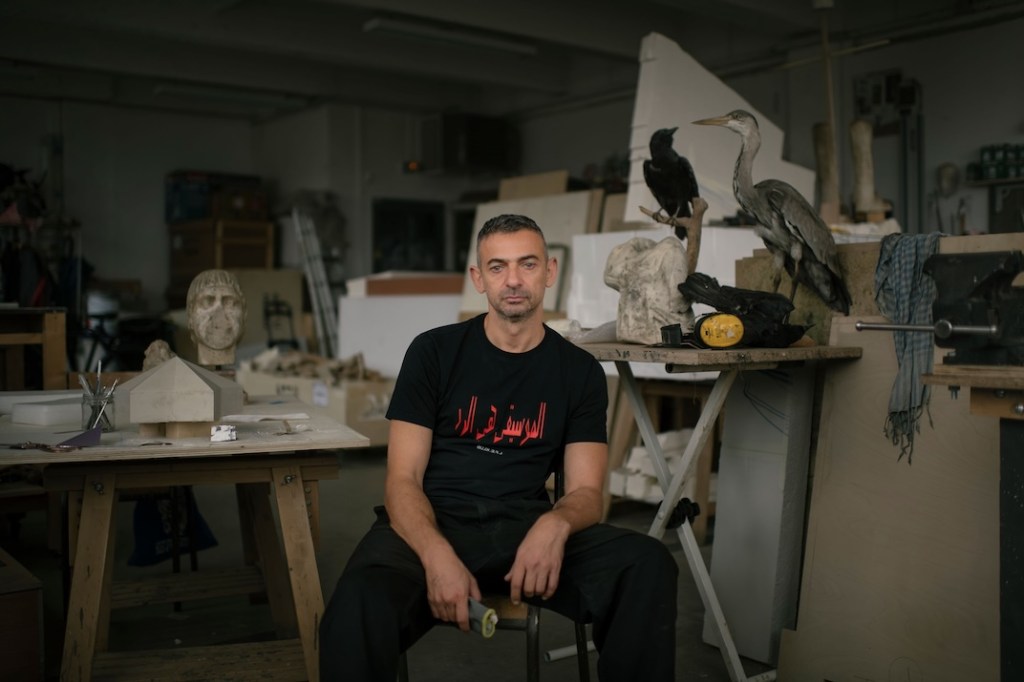
Lebanese Artist Ali Cherri Files War Crimes Complaint Against Israel After 2024 Beirut Bombing

Lebanese artist Ali Cherri, with the International Federation for Human Rights (FIDH), has filed a civil complaint in France seeking an investigation into an Israeli airstrike on a Beirut residential building in November 2024. The strike killed seven civilians, including Cherri's parents. The complaint, supported by forensic analysis from Forensic Architecture and Amnesty International, alleges the attack used munitions documented as being employed by the Israeli air force and targeted a civilian object, potentially constituting a war crime.

family says firm funding its legal battle for stolen paintings sought control of lawsuits

The son of late Palestinian businessman Uthman Khatib, Prince Castro Ben Leon, is suing LitFin Capital, the Prague-based litigation funder that financed his family's legal battle to recover 135 Russian avant-garde paintings allegedly stolen by Israeli Russian Mozes Frisch. The paintings, attributed to El Lissitzky, Kazimir Malevich, and Wassily Kandinsky, are valued at $323 million. A Paris court secured the works in January after they were seized from Paris-based authenticators ArtAnalysis, which had been holding them for Frisch. Castro claims LitFin is now refusing to pay legal bills unless it gains control of the lawsuits, violating their funding agreement. LitFin denies the allegations, stating it has always honored its contractual obligations.

faked artworks japan wolfgang beltracchi

A painting long attributed to Moïse Kisling, titled *Kiki de Montparnasse* and held by Japan's Yamada Bee Company Group, has been identified as a forgery by notorious art forger Wolfgang Beltracchi. The discovery, reported by NHK, follows a wave of Beltracchi-linked fakes uncovered in Japanese museums and collections, including a purported Marie Laurencin portrait in Tokyo and a forgery of Heinrich Campendonk's *Girl with Swan* at the Museum of Art, Kochi. Beltracchi admitted to forging the Kisling around 1990, claiming he studied the artist deeply.

In This Nazi-Era Restitution Dispute, the Focus Turns to a Missing Cow

A family is seeking restitution of a painting they believe is a lost Rubens work, looted by Nazis during World War II. However, an expert has cast doubt on the claim, arguing the painting is a copy because it lacks a distinctive detail found in the original: a urinating cow. The dispute has shifted focus to this missing element, complicating the family's efforts to recover the artwork.

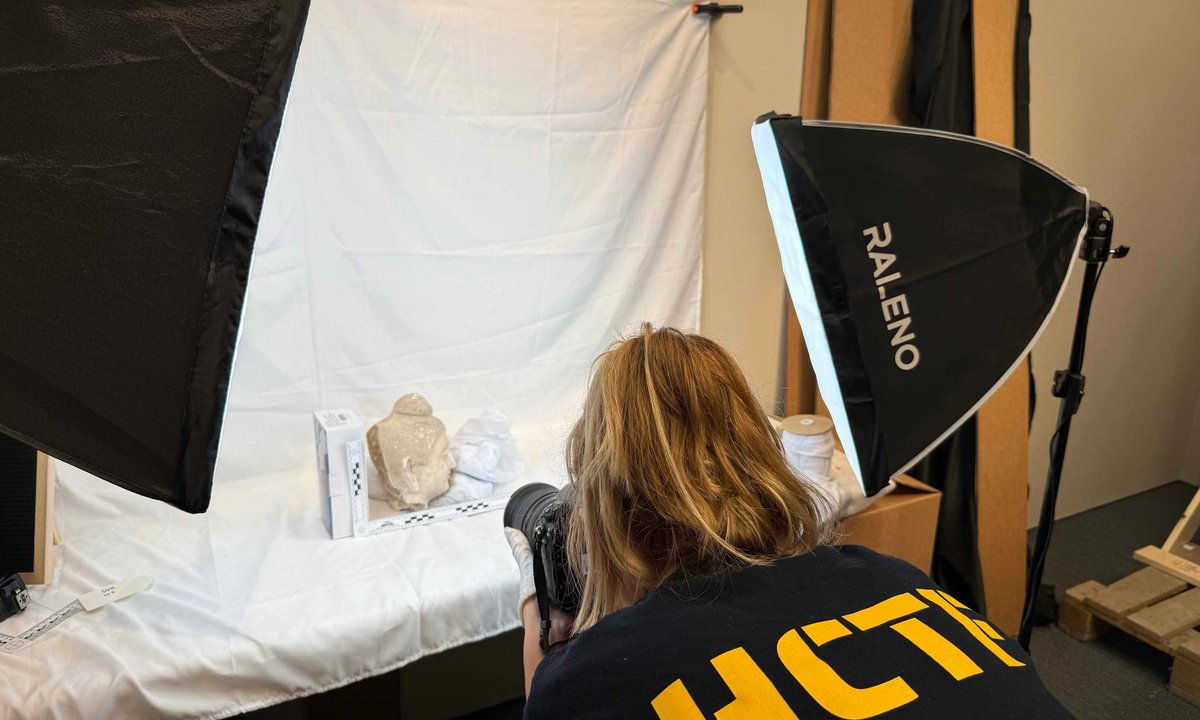
Meet the global taskforce working to recover stolen cultural heritage

The London Metropolitan Police's Art and Antiques Unit, in collaboration with the Heritage Crime Task Force (HCTF) of the Organisation for Security and Co-operation in Europe (OSCE), is processing over 300 recovered cultural artefacts. The objects—including statues, frescoes, chainmail armour, and stucco heads—were voluntarily handed over by an individual who had kept them for over a decade. Experts are conducting forensic analysis, photography, and archaeological assessment to determine authenticity and origin, with initial findings suggesting items from Cambodia's Angkor Period, the Gandhara region of Pakistan and Afghanistan, the Indus Valley civilisation, and possibly a mosque in Syria or Iraq.

1815, a Key Year for the Question of Art Restitution at the Heart of an Enlightening Book

1815, année clé de la question des restitutions d’œuvres d’art au cœur d’un ouvrage éclairant

Art historian Bénédicte Savoy has released a new book, "1815, le temps du retour," which examines the massive wave of art restitutions following the collapse of the Napoleonic Empire. Between 1794 and 1811, French revolutionary and imperial forces seized thousands of artworks and cultural objects from across Europe to fill the Louvre under the guise of creating a universal museum. After Napoleon's defeat in 1815, the subsequent return of these works sparked a global debate involving intellectuals and politicians regarding national identity, cultural property, and the legal status of looted heritage.

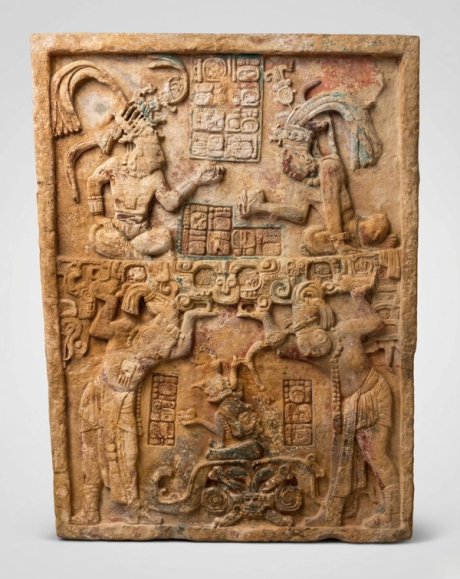
Guatemala stakes claim to stone lintel by 'the Michelangelo of the pre-Columbian era' that was repatriated to Mexico

A Maya stone lintel, dating from AD600-AD900 and depicting a ritual scene associated with the ruler Cheleew Chan K'inich, was repatriated to Mexico on April 16 after being turned over to the Mexican consulate in New York by an unnamed US businessman. However, hours after the ceremony, experts determined the lintel actually originated from Guatemala's Petén Basin. Guatemala's cultural ministry, led by minister Luis Méndez Salinas, has formally requested the object's return through diplomatic channels, citing technical analysis and consultations with archaeologists.

forged polish painting returns to the national museum in poznan poland

A painting long attributed to Polish Realist painter Józef Pankiewicz and held by the National Museum in Poznań has been revealed as a forgery. The work, titled 'Vegetable Market at Żelaznej Bramy Square in Warsaw' and dated 1888, was awarded a silver medal at the 1889 Universal Exposition in Paris and acquired by the museum in 1948. In 2017, scholar Michał Haake noticed discrepancies between the museum's version and historical reproductions, prompting an investigation. Conservators removed overpainting and found that the canvas, pigments, and composition differed from the original, with Pankiewicz's signature added after completion. The forgery, now attributed to an unidentified early 20th-century artist, is back on display alongside a photo of the original in the exhibition 'Succumb to Illusion.' The original painting has been missing since 1890.

Man who pocketed tiles from medieval priory as boy returns them 60 years later

Simon White, now 68, returned three fragments of medieval clay tiles he took as a nine-year-old from Wenlock Priory in Shropshire during a family outing in the late 1960s. The tiles, dating from the late 13th to early 14th century, were discovered in an old toffee tin during a house move. White contacted English Heritage, which confirmed the provenance using family diaries and historical analysis. One fragment features a previously unknown dragon motif, exciting medievalists.