filter_list Showing 14 results for "Display" close Clear
search
dashboard All 531 museum exhibitions 297article local 142article news 27trending_up market 15article culture 14rate_review review 14gavel restitution 9article policy 8person people 3candle obituary 2
date_range Range Today This Week This Month All
Subscribe

What ‘Costume Art’ Gets Wrong About the Body

The Metropolitan Museum of Art's Costume Institute spring exhibition, featuring nearly 400 objects, pairs garments and ensembles with Western figurative artworks from the museum's permanent collection in dyadic, associative displays. The show eschews traditional art-historical timelines and context in favor of visual and thematic parallels—comparing, for example, Rudi Gernreich's Pubikini with an Egyptian statuette, or Ying Gao's sound-responsive dress with a David Hockney drawing. The exhibition is sponsored by Jeff and Lauren Sánchez Bezos.

The Met’s Costume Institute Needs an Art History Lesson

The Metropolitan Museum of Art's Costume Institute spring exhibition, "Costume Art," pairs fashion with artworks from the Met's collection, including ancient Greek statues and Andy Warhol screenprints, alongside garments by designers from Charles James to CFGNY. Curator Andrew Bolton aims to suggest that fashion can expand understanding of art, but the show's juxtapositions often feel vague and sloppy, with only occasional resonant pairings like a Jean Paul Gaultier shirt and Joe Brainard drawing linked by queer artist lineage.

Handpicked review – delightful dancing dahlias and petals so pillowy you can feel them

The Guardian reviews "Handpicked," an exhibition at Kettle's Yard in Cambridge that brings together over 40 artists from the 20th century to the present, all sharing a floral passion. The show features works by Rory McEwen, Vanessa Bell, Cedric Morris, Christopher Wood, Tirzah Garwood, Celia Paul, Gluck, and Caroline Walker, among others, displayed on white and leaf-green walls inspired by the fresh flowers and floral paintings in the neighboring house. The review highlights specific pieces, such as McEwen's exquisite tulip watercolor and Garwood's poignant painting from the last year of her life, noting the technical variety and emotional depth across the exhibition.

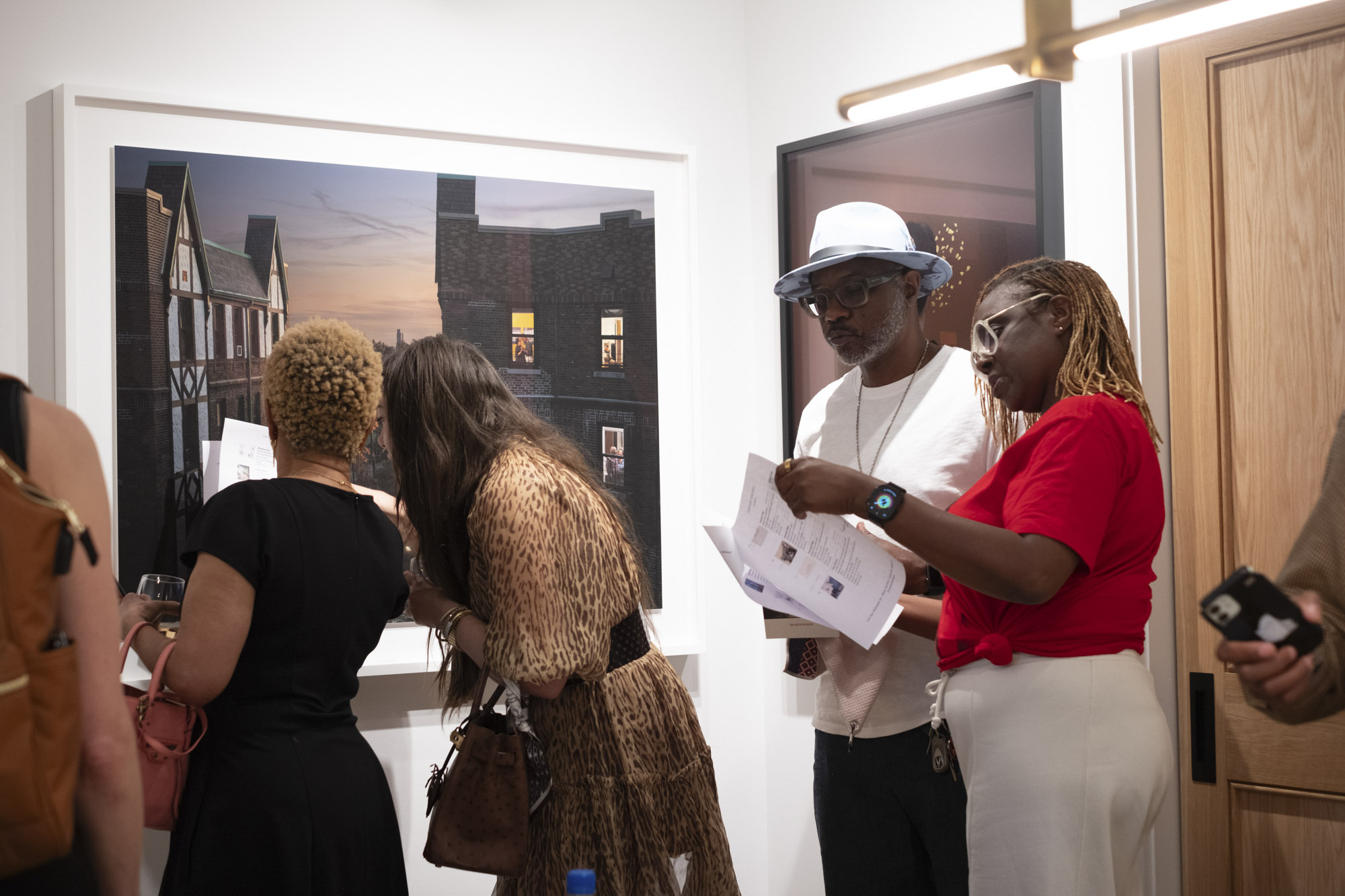
When the story has already been told -- ‘Gordon Parks: The South in Color’ at Jackson Fine Art

Gordon Parks: The South in Color, curated by Dawoud Bey, is on view at Jackson Fine Art in Atlanta through June 13. The exhibition celebrates the 20th anniversary of The Gordon Parks Foundation and the 70th anniversary of Parks’ 1956 Life magazine feature on segregation in the South. The show presents a broader selection of Parks’ photographs than the original magazine spread, including iconic works like In-Home Barbershop, Shady Grove, Alabama, 1956. The article, written by a photographer and writer for ArtsATL, reflects on the experience of seeing Parks’ work in person and contrasts the gallery presentation with the editorial framing of the Life feature.

Édouard Glissant’s Museum-as-Archipelago

The article reviews the exhibition "The Earth, the Fire, the Water, and the Winds: For a Museum of Errantry with Édouard Glissant" at the Center for Art, Research and Alliances (CARA) in New York, the first U.S. showing of works from the personal collection of Martinician philosopher and writer Édouard Glissant. Curated from his archive, the exhibition features artists such as Roberto Matta, Wifredo Lam, Etel Adnan, Irving Petlin, Antonio Seguí, Öyvind Fahlström, Jack Whitten, and Mel Edwards, reflecting Glissant's friendships and intellectual exchanges across Europe, Africa, and the Americas. Highlights include Antonio Seguí's large pastel works from his Titanic series.

Roses and Thorns of Greater New York

The article is a digest of recent art news, with a primary focus on critical reviews of the 2026 "Greater New York" exhibition at MoMA PS1. Hyperallergic's editorial team provides mixed assessments of the works in the massive quinquennial survey of local artists. The piece also covers American-French sculptor Barbara Chase-Riboud's decision to decline an invitation to represent the United States at the 61st Venice Biennale, citing the problematic nature of the pavilion's commissioning entity.

Inside LACMA’s Eye-Popping New Home, How Do You Find the Art?

The Los Angeles County Museum of Art (LACMA) has opened its new David Geffen Galleries building, a major architectural project designed to be a glamorous cultural beacon. The building itself is a striking landmark, but the exhibition spaces within present significant challenges for the display of art, creating a complex, maze-like environment for visitors.

Mounting Rene Matić’s snapshots in Perspex isn’t really enough to make them interesting | Charlotte Jansen

Rene Matić, at 29, became the youngest winner of the £30,000 Deutsche Börse Photography Foundation prize, nominated for their solo exhibition "As Opposed to the Truth" at CCA Berlin. A smaller version of that show is now at the Photographers’ Gallery in London. Matić was also the youngest Turner Prize nominee last year. The article critiques Matić's work, praising their 2022 piece "Upon This Rock" for exploring masculinity, fatherhood, and British identity, but dismissing much of their other output—like the snapshot installation "Feelings Wheel"—as immature, mediocre, and reliant on display gimmicks rather than photographic substance.

The tiniest event can tear a hole. Sara MacKillop by Margaret Kross

Sara MacKillop's exhibition "The Cutaway View" at Good Weather in Chicago presents sculptures made from humble analog materials like blank wall calendars, empty shopping bags, and gift wrapping. The London-based artist alters these objects with minimal interventions—such as surgically cut holes in shopping bags to accommodate vinyl records—drawing attention to the ephemera and texture of retail culture. Her series "Calendar Houses" (2021–ongoing) uses archive boxes and wall calendars to create miniature modernist dwellings that critique systems of order and self-optimization.

Zurbarán at the National Gallery is more agony than ecstasy

The article reviews the exhibition 'Zurbarán' at the National Gallery in London, arguing that the show fails to capture the spiritual intensity and emotional power of the Spanish Baroque painter's work. It criticizes the curatorial choices, suggesting the display feels flat and lacks the ecstatic religious fervor that defines Zurbarán's best paintings, leaving viewers with a sense of agony rather than transcendence.

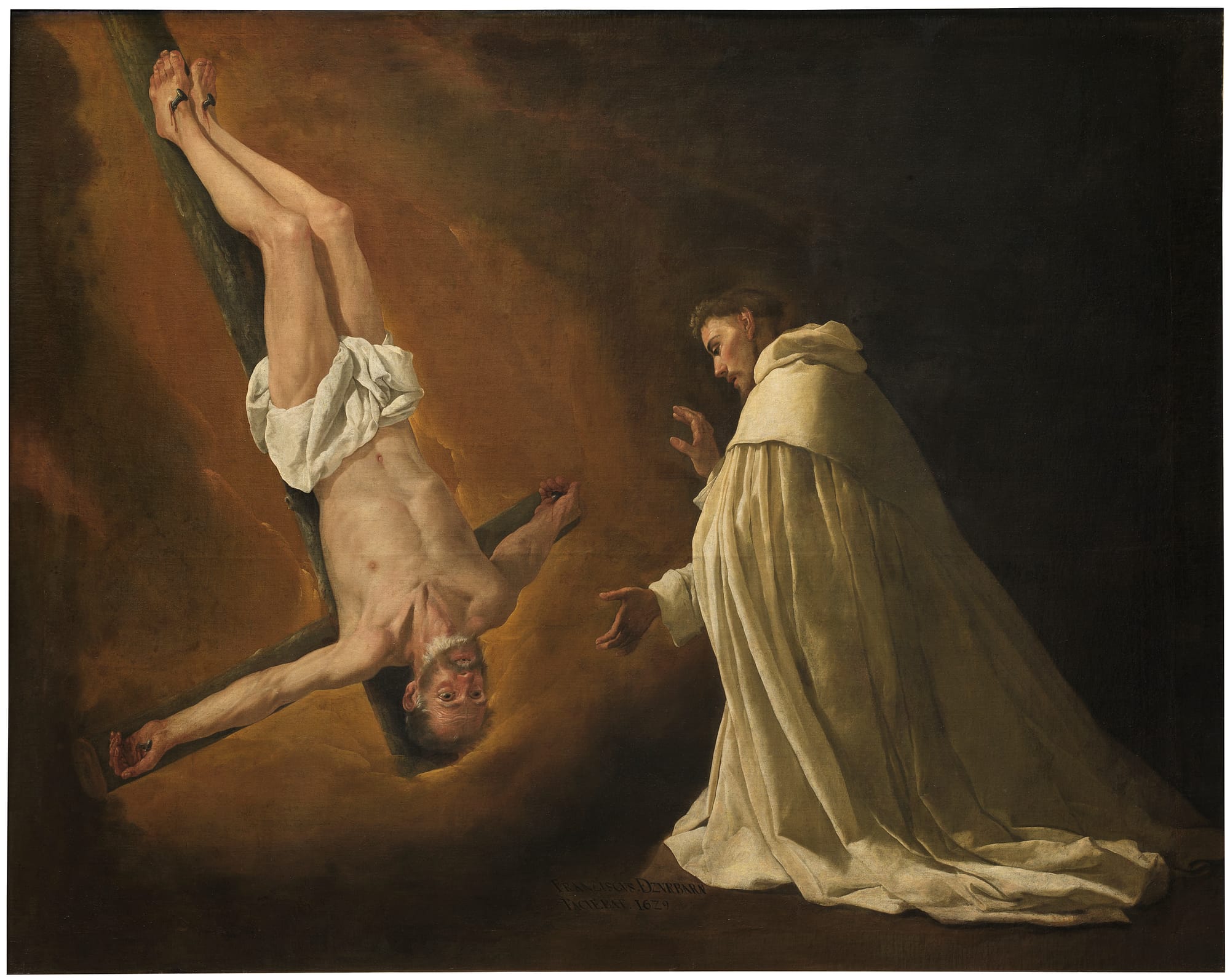
Did Zurbarán Believe What He Painted?

An exhibition of Francisco de Zurbarán's 17th-century religious paintings at London's National Gallery prompts a critic to question whether the artist's personal faith influenced his artistic skill. The show features monumental works from Spanish churches and monasteries, displayed dramatically against black walls, including crucifixion scenes, monks, and saints. The critic notes that no personal records of Zurbarán survive—only contracts—leaving his beliefs unknown, and compares him to Agnolo Bronzino, who painted pious scenes but wrote obscene verses. A small painting of a crucified Christ with a painter, possibly a self-portrait of Bronzino, is presented as ambiguous evidence of faith.

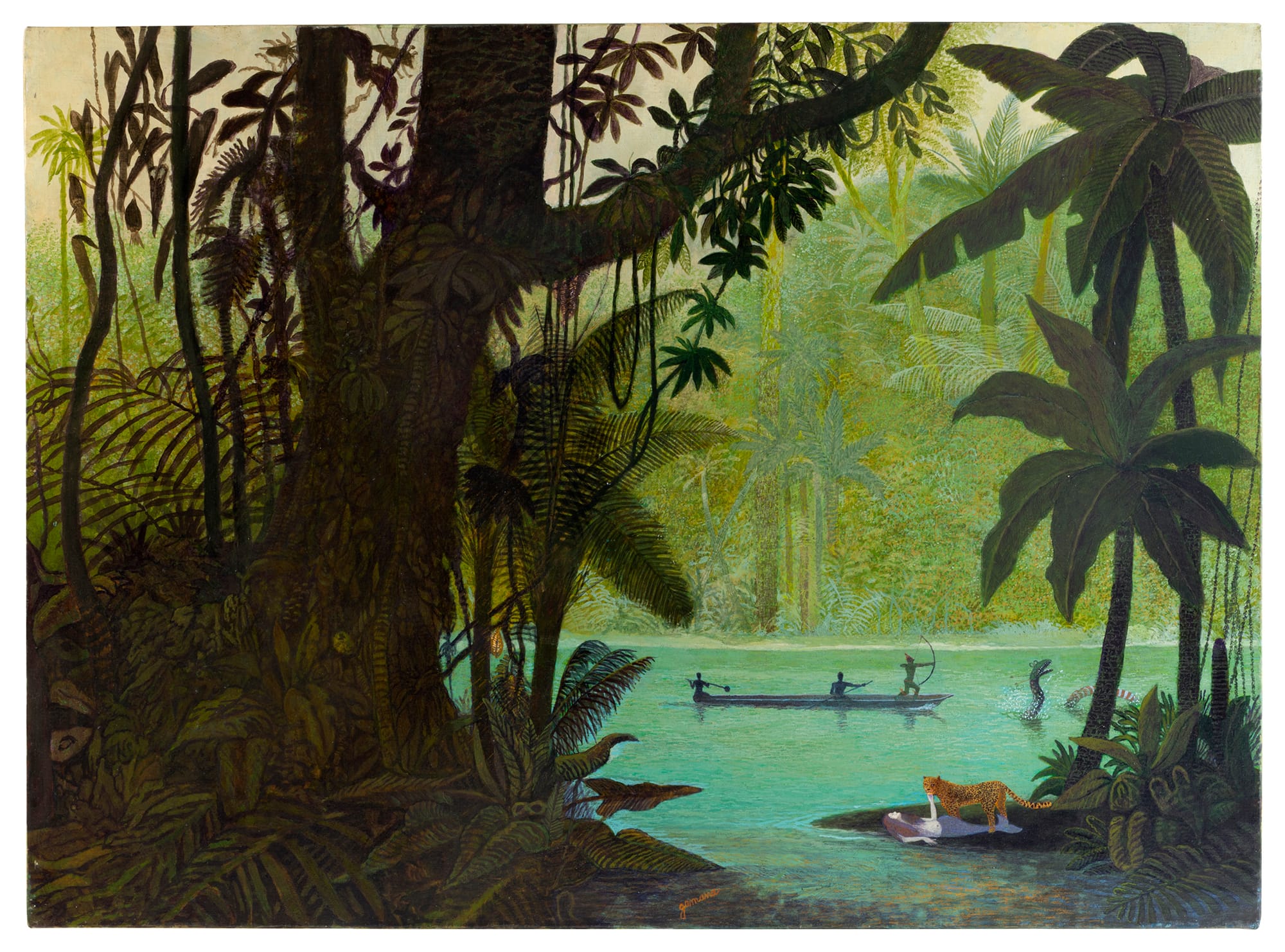
CUANDO LOS OBJETOS HABLAN. MUSEO HECHIZO, DE JUAN JOSÉ SANTOS

Juan José Santos's book "Museo hechizo" (Metales Pesados, 2025) challenges the perceived neutrality of the Western museum, presenting it as an institution shaped by colonial logics of classification, extraction, and representation. The essay centers on the concept of "lo hechizo"—understood as both artisanal precariousness and disruptive enchantment—and explores small, community-based Latin American museum experiences that operate from precarity, reciprocity, and care. Santos argues that the museum is a space of conflict where voices, narratives, and ways of constructing history are contested, and he proposes thinking of the museum through its minor, situated, and alternative forms in Latin America.

The Ukrainian Pavilion’s Deer Seen Around the World

Zhanna Kadyrova's concrete sculpture "The Origami Deer" (2019) is prominently displayed at the entrance to the Giardini during the 61st Venice Biennale, part of her project "Security Guarantees" in the Ukrainian Pavilion. Originally installed in Pokrovsk, eastern Ukraine, the work was removed in 2024 as Russian forces advanced, then traveled through Vienna, Warsaw, Prague, Berlin, and Paris before reaching Venice—a journey mirroring the displacement of millions of Ukrainians. The sculpture, shaped like a deer and evoking folded paper, references the 1994 Budapest Memorandum, in which Russia, the UK, and US guaranteed Ukraine's security in exchange for its nuclear disarmament—guarantees that proved worthless after Russia's invasions.

"Dispossessions in the Americas" Confronts the Colonialism That Invades All Territory

The article reviews "Dispossessions in the Americas," a group exhibition at Wrightwood 659 in Chicago curated by Jonathan D. Katz and Eduardo Carrera. Featuring works from 1960 to 2025, the show examines colonial legacies in the Americas, focusing on the forced dispossession of land, culture, and language from indigenous, Afro-descendant, queer, and trans communities. The review critically questions how a polished, architecturally prestigious venue can coherently display art about socially voiceless communities without falling into voyeurism or fetishization of pain.