filter_list Showing 25 results for "ING" close Clear
dashboard All 1235 museum exhibitions 648article local 214article news 114trending_up market 64article culture 63person people 37article policy 30candle obituary 28rate_review review 25gavel restitution 12
date_range Range Today This Week This Month All
Subscribe

Notes from New York: The World in a Convex Mirror

The article reviews the sixth edition of MoMA PS1's quinquennial survey 'Greater New York 2026,' which coincides with the institution's 50th anniversary. It highlights works by artists such as Covey Gong, Win McCarthy, Mekko Harjo, and Sophie Friedman-Pappas, noting how the exhibition's themeless structure and use of reflective surfaces create a hall of distorted reflections. The show includes 53 emerging and midcareer artists, mostly millennials, and is accompanied by a block party and gala rather than a dedicated commemorative exhibition like FORTY (2016).
Édouard Glissant’s Museum-as-Archipelago

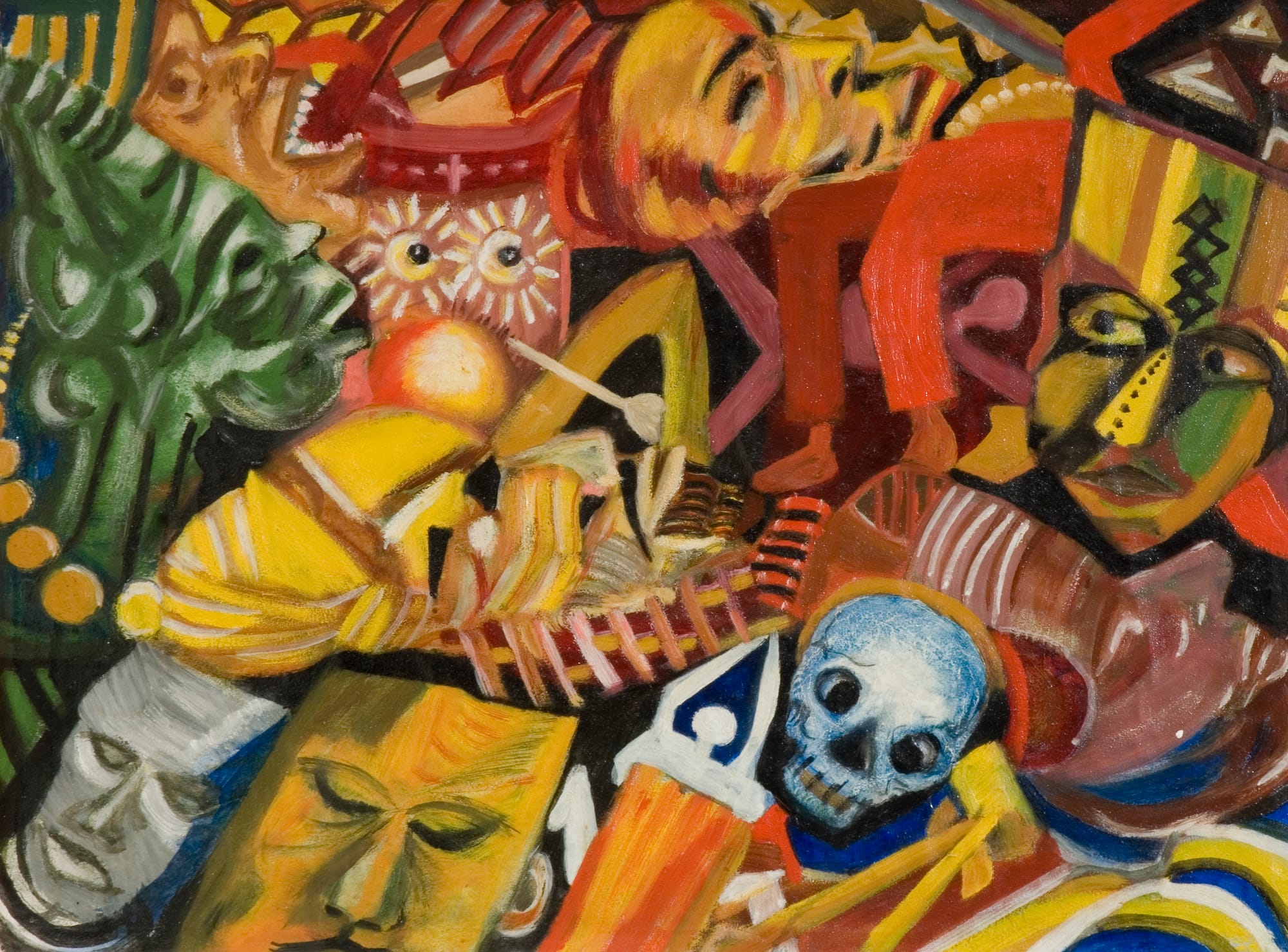
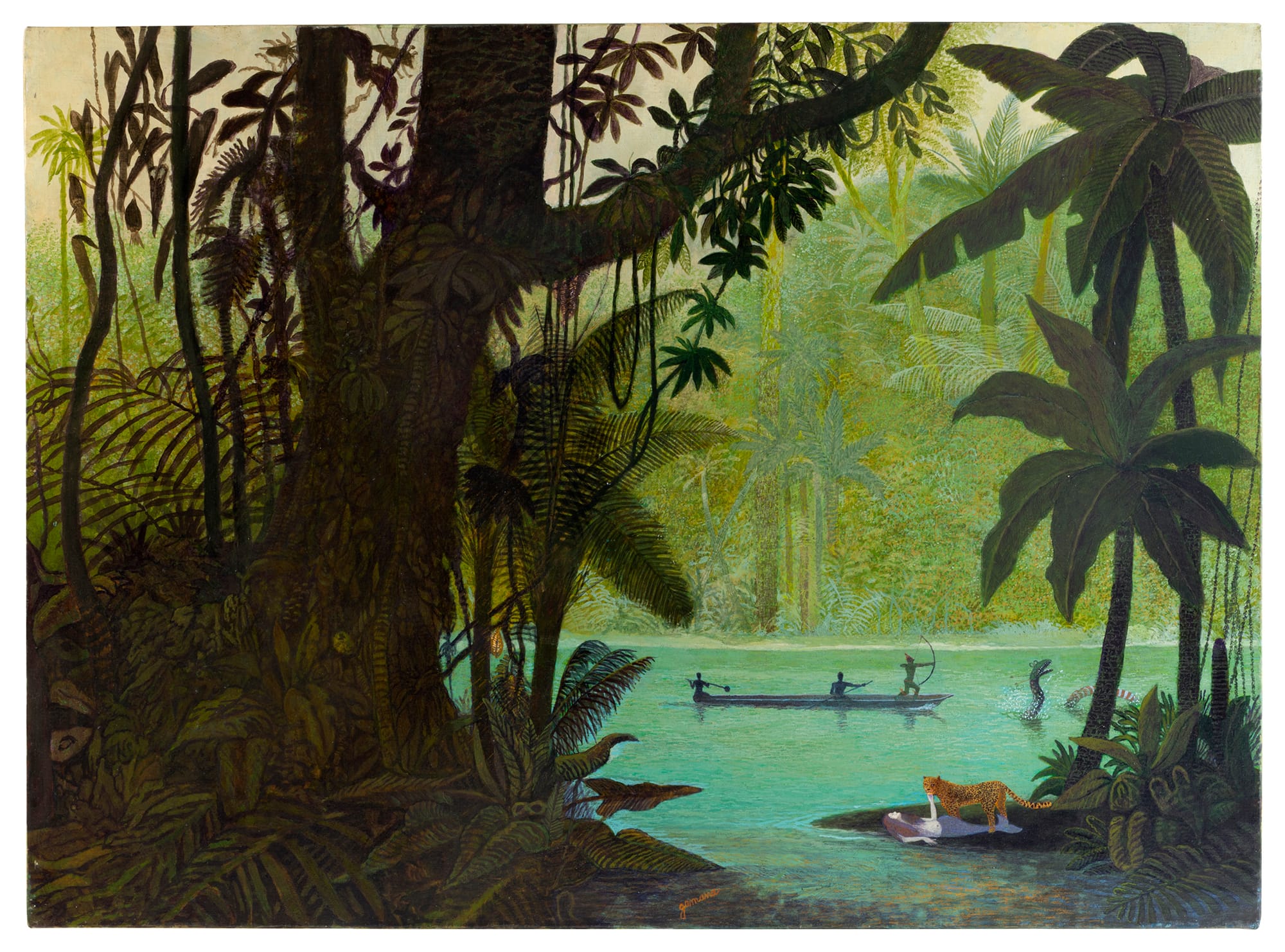
The article reviews the exhibition "The Earth, the Fire, the Water, and the Winds: For a Museum of Errantry with Édouard Glissant" at the Center for Art, Research and Alliances (CARA) in New York, the first U.S. showing of works from the personal collection of Martinician philosopher and writer Édouard Glissant. Curated from his archive, the exhibition features artists such as Roberto Matta, Wifredo Lam, Etel Adnan, Irving Petlin, Antonio Seguí, Öyvind Fahlström, Jack Whitten, and Mel Edwards, reflecting Glissant's friendships and intellectual exchanges across Europe, Africa, and the Americas. Highlights include Antonio Seguí's large pastel works from his Titanic series.

Diedrick Brackens’s Tapestries Beckon the Light of Freedom

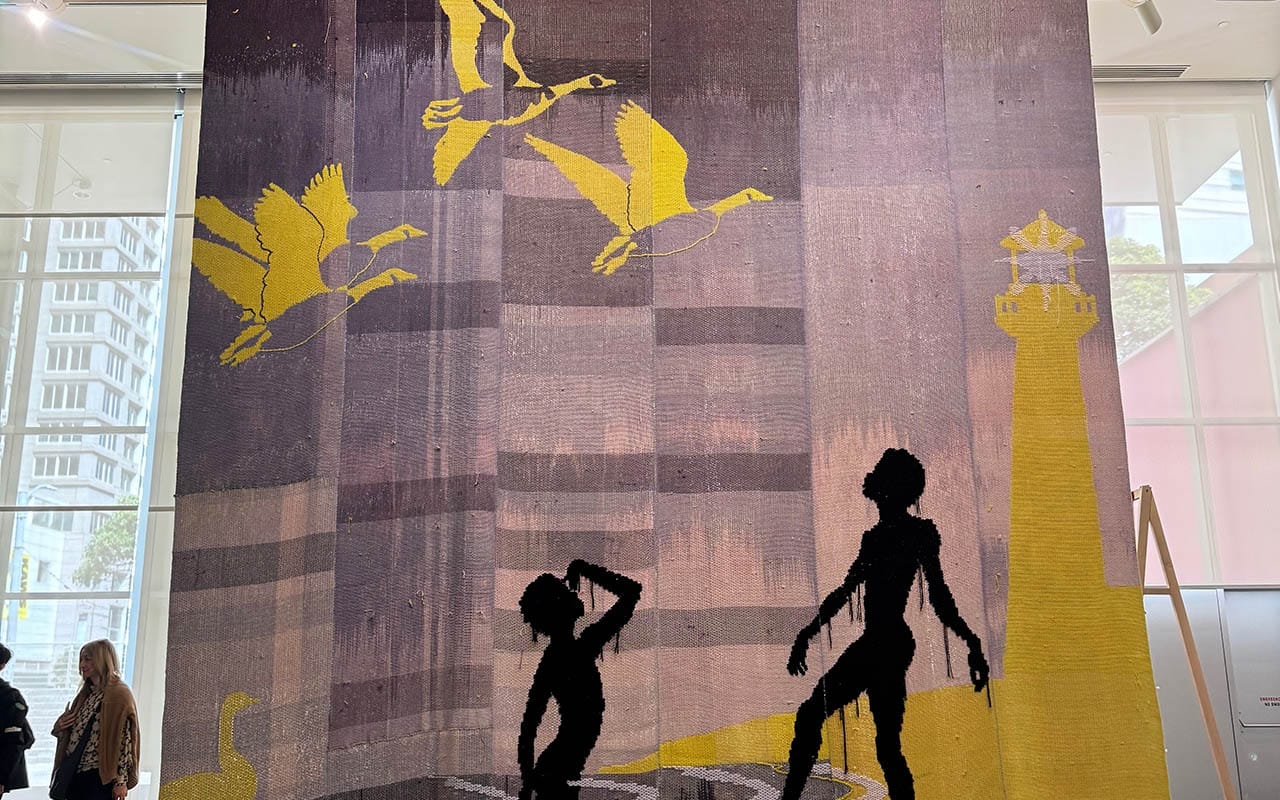
Diedrick Brackens presents his first solo exhibition in the Bay Area, "gather tender night," at Yerba Buena Center for the Arts in San Francisco. Guest-curated by Eungie Joo, the show features 15 tapestries from 2020 onward and three new works from 2026, including the immersive installation "clearing (2026)." Brackens, a Black queer artist and CCA professor, uses hand-dyed cotton and acrylic yarn to weave narratives of personal memory, myth, and the natural world, drawing from West African weaving, California fiber art, European tapestry, and Gee's Bend quilting. His approach, influenced by the "sloppy craft" ethos of his mentor Josh Faught, embraces unfinished edges and visible process as acts of refusal against polished traditions.

Zurbarán review – ecstatic visions, primitive surrealism … and the finest loincloths ever painted

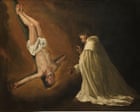
The Guardian reviews a major exhibition of 17th-century Spanish painter Francisco de Zurbarán, highlighting his visionary and surrealist qualities. The show features works such as "The Apparition of Saint Peter to Saint Peter Nolasco" (1629), newly attributed paintings including a giant mask, and iconic pieces like "The Crucified Christ" and "Saint Serapion," all drawn from collections including the Prado and the National Gallery, London. The review emphasizes Zurbarán's ability to paint supernatural subjects with naturalistic conviction, his exquisite rendering of fabrics—especially loincloths—and his influence on modern artists like Salvador Dalí.

Salon review – like getting to know fascinating guests at a fabulous party

The article reviews a salon-style exhibition curated by Matthew Higgs, director of New York's White Columns gallery, at an unnamed gallery space. The show features 43 paintings by a diverse group of artists including Denzil Forrester, Andrew Cranston, Kaye Donachie, Merlin James, Margot Bergman, Gillian Carnegie, Bill Lynch, and Adam Keay, arranged around mismatched chairs facing white windows painted on the walls. The reviewer describes moving through the space, engaging with individual works, and highlights the eclectic, unthemed curation that prioritizes personal taste and conversation over academic or political messaging.

What’s Left to Learn from Marcel Duchamp?

The article examines Marcel Duchamp's enduring influence on contemporary art, focusing on his readymades such as "Fountain" (1917) and "Bicycle Wheel" (1913/1951). It notes that a major survey co-organized by the Museum of Modern Art and the Philadelphia Museum of Art, 70 years after Duchamp predicted his true public would emerge in 50 to 100 years, reaffirms his status as the most influential artist of the past century. The piece discusses how Duchamp's practice of selecting and presenting ordinary objects as art—from a urinal to a snow shovel—once shocked the art world but now seems quaint compared to later works like Maurizio Cattelan's taped banana.

The Many Forms of Marcel Duchamp

The New Yorker's Hilton Als reviews "Marcel Duchamp," a major retrospective at the Museum of Modern Art (MoMA) in New York, running through August 22, 2026. Curated by Matthew Affron, Michelle Kuo, and Ann Temkin, it is the first North American retrospective of Duchamp's work since 1973, organized in collaboration with the Philadelphia Museum of Art. The exhibition spans MoMA's entire sixth floor, showcasing Duchamp's shape-shifting practice—from iconic works like "Nude Descending a Staircase (No. 2)" (1912) and "Bicycle Wheel" (1951) to his readymades and conceptual pieces—emphasizing his rejection of commodification and embrace of intellectual freedom, play, and queer sensibilities.

The Revolutionary Tapestry of Nigerian Modernism

The exhibition "Nigerian Modernism" at Tate Modern in London is the first show of its kind in the UK, surveying how Nigerian artists forged a postcolonial identity across the 20th century. It features works by pioneers such as Aina Onabolu, Benedict Enwonwu, and members of the radical Zaria Art Society, including Uche Okeke, Jimo Akolo, and Clara Etso Ugbodaga-Ngu, highlighting their break from British artistic traditions and embrace of local visual heritage.

Ruminations on Rashid Johnson’s “A Poem for Deep Thinkers”

The article is a reflective review of Rashid Johnson's exhibition "A Poem for Deep Thinkers" at the Modern Art Museum of Fort Worth. The author describes standing before Johnson's work "Falling Man" (2016), a piece incorporating broken mirrors, burned wood, and personal objects like a copy of Harry Haywood's "Black Bolshevik" and shea butter, which prompts meditations on visibility, identity, and Frantz Fanon's "Black Skin, White Masks." The review also examines Johnson's large-scale installation "Antoine's Organ" (2016/2026), which fills a gallery typically reserved for Ellsworth Kelly's minimalist canvases, transforming the space with scaffolding, plants, books, and video monitors.

Losing Frida Kahlo in "The Making of an Icon"

The article critiques the Museum of Fine Arts, Houston's (MFAH) exhibition "Frida: The Making of an Icon," arguing that it perpetuates a fetishized, commercialized view of Frida Kahlo by focusing on her biography—her marriage to Diego Rivera, her affairs, her accident—rather than her artistic skill. The author contrasts this with a visit to the Museo de Arte Moderno (MAM) in Mexico City, where the exhibition "Relatos modernos. Obras emblemáticas de la Colección Gelman Santander" presents Kahlo's work alongside other Mexican masters in a quiet, understated manner that allows viewers to appreciate her technical abilities without overwhelming narrative.

Genuine Fake Premium Economy review – brilliantly obnoxious millennial rage at a rigged financial world

The exhibition "Genuine Fake Premium Economy" at a London gallery features works by American artists Jenna Bliss, Buck Ellison, and Jasmine Gregory, all born in the mid-1980s. Their pieces—including Bliss's shaky videos of New York's financial district, Ellison's fictional bank advertisements pairing classical paintings with cynical taglines, and Gregory's luxury watch ads stripped of watches—collectively express millennial rage at a rigged financial system and the aftermath of the 2008 crash.

Nancy Holt review – cosmic thrills as the universe’s hidden power is unleashed

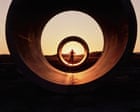
The Guardian reviews a major UK exhibition of land artist Nancy Holt (1938-2014) at Goodwood in West Sussex, the largest show of her work to date. The exhibition features two large outdoor installations—Ventilation System, a metallic tubular structure resembling building lungs, and Hydra’s Head, six concrete pools arranged like the Hydra constellation in a chalk quarry—alongside indoor photographs, diagrams, and light works. The review praises the cosmic scale and bodily connection of the outdoor pieces but finds the indoor works less effective at conveying Holt’s themes of universal vastness and interconnectedness.

What I learned from Tracey Emin about regeneration

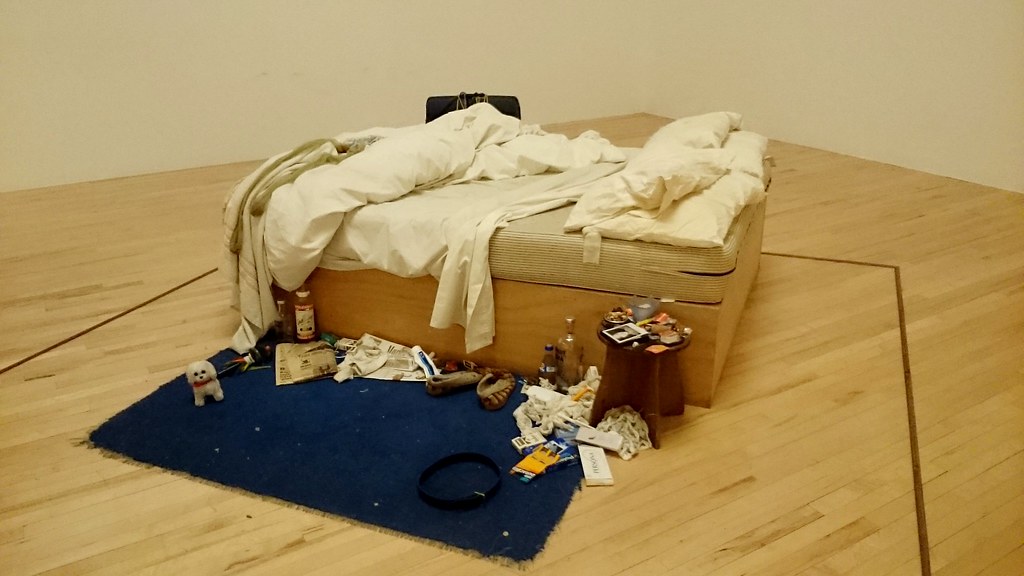
The article reviews Tracey Emin's exhibition "A Second Life" at Tate Modern, describing the author's initial lack of aesthetic connection to the artworks—finding the paintings derivative and neon signs tacky—but ultimately being moved by the exhibition's emotional force and the artist's refusal to disguise pain, humiliation, and grief. The author notes the crowded galleries, the predominantly female audience responding with visceral emotion, and highlights the film "How It Feels" as the most impactful piece, in which Emin discusses her traumatic abortion and its effect on her self-perception.

The Mysterious Life of Fluxus Dame Alison Knowles

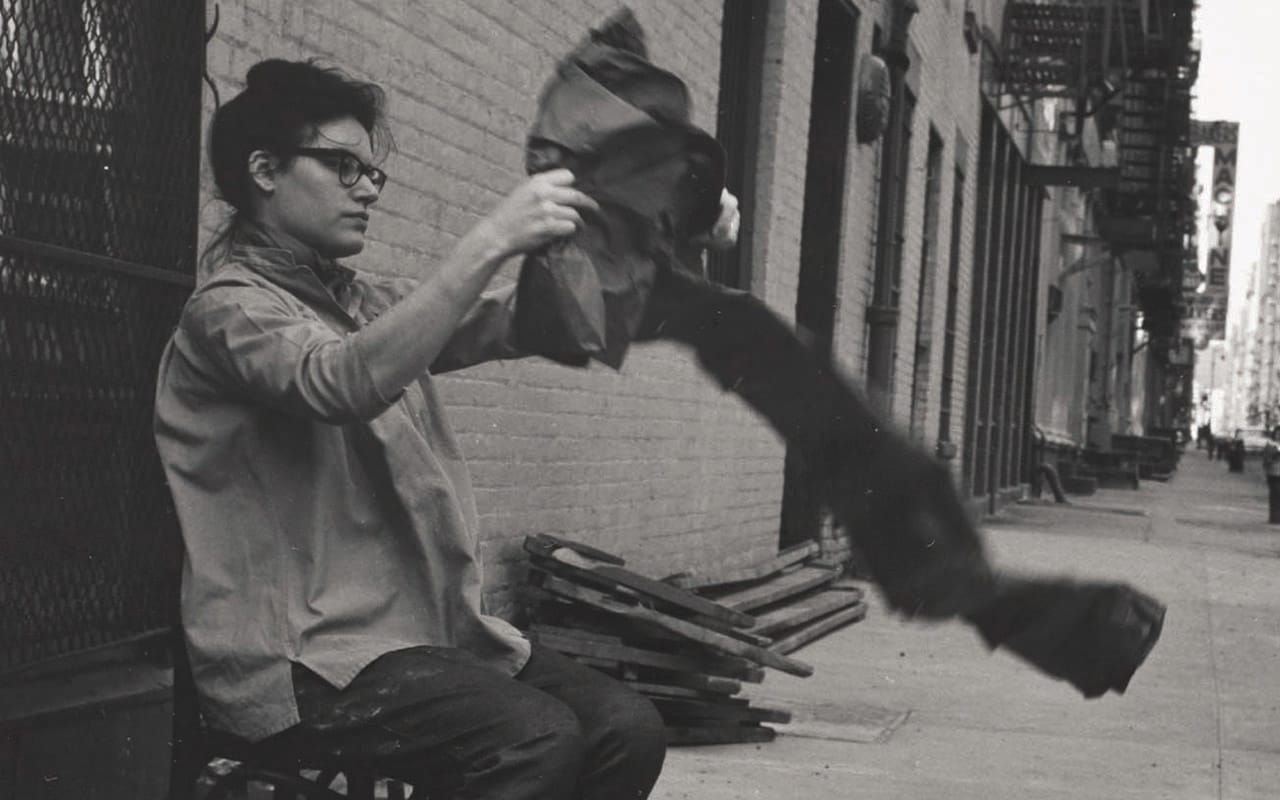
A new book, "Performing Chance: The Art of Alison Knowles In/Out of Fluxus" by art historian Nicole L. Woods, is the first major study of the late Fluxus artist Alison Knowles, who died last fall at age 92. The book focuses on the first two decades of her career (1958–1975), analyzing key works such as her 1962 performance "Proposition #2: Make a Salad" at London's Institute of Contemporary Arts, and her shift from painting to experimental, ephemeral art after being exiled to a basement by Josef Albers at Syracuse University.

Sung Tieu and the Art of Difficulty

Sung Tieu, a Vietnamese-born German artist, is the subject of a critical feature in Frieze that examines her work's engagement with difficulty—both in terms of the complex political and historical themes she tackles and the challenging formal qualities of her installations. The article highlights her recent projects, including works shown at the Venice Biennale, which address issues of surveillance, migration, and Cold War legacies through meticulous research and unconventional materials.

In "Dancing the Revolution," Puerto Rico Pushes Back

The article reviews "Dancing the Revolution," a multi-genre collective exhibition at the Museum of Contemporary Art Chicago that explores the music of dancehall and reggaetón, their roots, history, and evolution, and their inextricable link to colonial oppression. The show is inspired by the massive 2019 protests in Puerto Rico against then-Governor Ricardo Rosselló, where music and dance were used as forms of resistance, drawing on centuries of Black Atlantic protest in the Caribbean.

WORDS WORDS WORDS at Everard Read shows the power of words in contemporary art

The article reviews 'WORDS, WORDS, WORDS,' an exhibition at Everard Read Gallery's CIRCA space in South Africa, which explores the role of language in contemporary visual art. Curated with a focus on how words are bent, repeated, fragmented, and reassembled, the show features works by South African artists including Willem Boshoff and Luca Evans, who engage with conceptual art traditions from Dada to Barbara Kruger. Boshoff's braille-inset wooden piece 'Planet of Echinus' questions inclusion and exclusion in language, while Evans' work riffs on Joseph Kosuth's iconic text pieces using ancient wood-inlay techniques.

Patchwork Lost – A Critique of the Princeton University Art Museum’s American Art Wing

The article critiques the newly opened American art wing at the Princeton University Art Museum, arguing that its curatorial approach prioritizes contemporary social justice narratives over historical accuracy and national pride. The author contends that the exhibition presents a fragmented, politicized view of American history, highlighting slavery and racial injustice while omitting or minimizing the contributions of Princeton alumni to the nation's founding, such as James Madison and John Witherspoon. Specific examples include the inclusion of a 2022 revisionist painting of the Signing of the Constitution and selective signage that emphasizes marginalized figures while ignoring male patriots.

The tiniest event can tear a hole. Sara MacKillop by Margaret Kross

Sara MacKillop's exhibition "The Cutaway View" at Good Weather in Chicago presents sculptures made from humble analog materials like blank wall calendars, empty shopping bags, and gift wrapping. The London-based artist alters these objects with minimal interventions—such as surgically cut holes in shopping bags to accommodate vinyl records—drawing attention to the ephemera and texture of retail culture. Her series "Calendar Houses" (2021–ongoing) uses archive boxes and wall calendars to create miniature modernist dwellings that critique systems of order and self-optimization.

"She's Like the Wind"

The article reviews "She's Like the Wind," an annual all-female group exhibition at Deep Space gallery in Jersey City, featuring works by artists Delilah Ray Miske, Leigh Cunningham, and SarahGrace. Miske's painting "Lemon Lime Toe of God" shows only a woman's leg and foot, while Cunningham's oil paintings present figures as blurred forms seen through a translucent curtain, and SarahGrace's textile works depict headless female nudes with suggestive titles like "Provoke" and "Dominate." The show marks a departure from the gallery's typically family-friendly, sex-averse programming.

Zurbarán review: Even the godless will be enraptured by this drama

The article reviews a major exhibition of 17th-century Spanish painter Francisco de Zurbarán, highlighting his dramatic religious works such as a stark crucifixion, a depiction of St. Peter crucified upside down, and a series of saintly princesses. It notes the exhibition's effective hanging, the artist's use of vivid color and theatrical lighting, and includes recently attributed works like a mysterious giant head. The review emphasizes the blend of high drama, emotion, and Catholic piety in Zurbarán's paintings, as well as his still lifes that rival those of Velázquez.

Jule Korneffel Captures the Weight of the Pre-Dawn Sky at Spencer Brownstone Gallery, NYC

Jule Korneffel's third solo exhibition at Spencer Brownstone Gallery in New York, titled 'In Search of Lost Light,' presents a series of paintings that capture the quiet, liminal moments just before dawn. Using artist-mixed natural pigments, Korneffel shifts from her previous twilight-focused work to explore the anticipation of daylight, with pieces like the titular painting (2025) standing out for its playful, musical composition. The show also includes a mural in the gallery's back patio that blends colors into a grey neutral tone reminiscent of early-morning skies.

Rome and its visions in contemporary photography: from Carbone to De Angelis, to Hervé Gloaguen

Roma e le sue visioni nella fotografia contemporanea: da Carbone a De Angelis, fino a Hervé Gloaguen

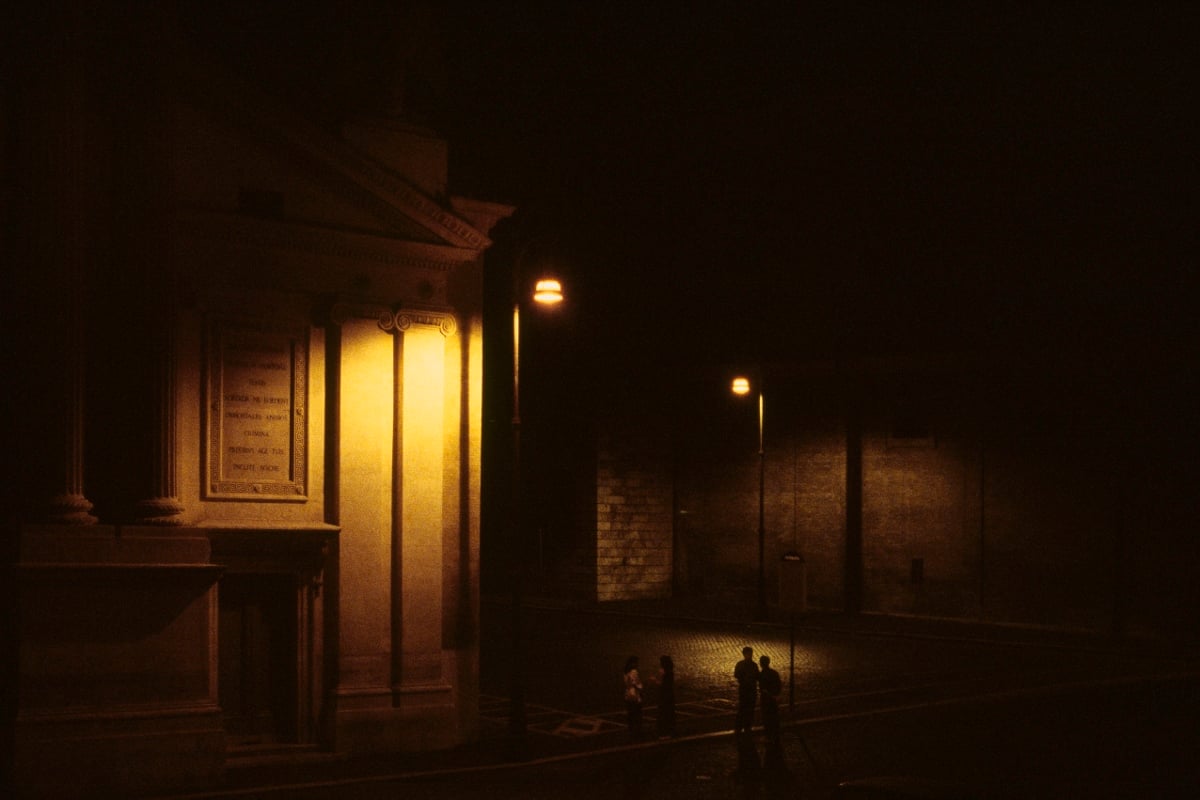
The article critiques a recent trend in contemporary photography of Rome, exemplified by a 2020 exhibition at the Mattatoio (Nuove produzioni 2020 per la collezione Roma) that presented black-and-white images reducing the urban landscape to a dark, lifeless mass. The author contrasts this with a personal photograph of a horse taken during the Covid-19 pandemic, which captures Rome's periphery with warmth and specificity, and praises the 2024 exhibition "Roma 1975, città, volti e storie dell'anno giubilare" featuring photojournalist Fabio De Angelis's rediscovered work as a vital counterpoint.

In an exhibition in Naples it is possible to get lost without urgency in an unstable balance. The review

In una mostra a Napoli è possibile perdersi senza urgenza in un equilibrio instabile. La recensione

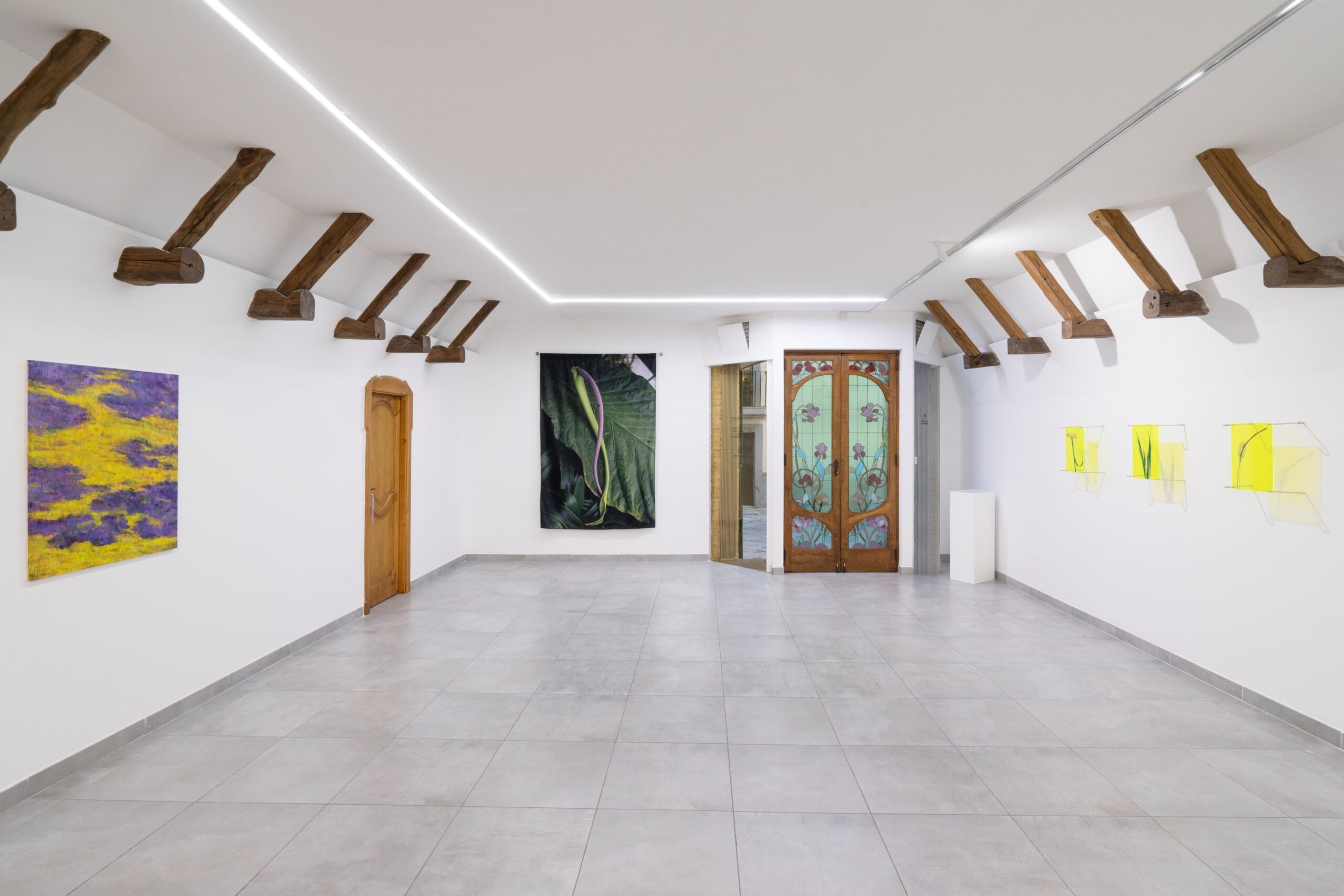
The exhibition "A Gentle Collapse," curated by Marta Ferrara at Andrea Nuovo Home Gallery in Naples, explores the contemporary psychic state through a spatial and perceptual construction. Featuring works in photography, painting, engraving, and installation, the show creates a sense of instability, with meaning emerging gradually through shifts between familiar and altered forms. Artists include Dorottya Vékony, Matteo Silverii, Flora Villaumié, and Zoë Pelikan, whose works engage with themes of genetic engineering, serial accumulation, and subtle disorientation across two gallery levels.

Zurbarán at the National Gallery is more agony than ecstasy

The article reviews the exhibition 'Zurbarán' at the National Gallery in London, arguing that the show fails to capture the spiritual intensity and emotional power of the Spanish Baroque painter's work. It criticizes the curatorial choices, suggesting the display feels flat and lacks the ecstatic religious fervor that defines Zurbarán's best paintings, leaving viewers with a sense of agony rather than transcendence.