filter_list Showing 20 results for "Nathan" close Clear
search
dashboard All 613 museum exhibitions 281trending_up market 73article news 69article local 63article culture 55person people 29rate_review review 20candle obituary 13article policy 5gavel restitution 5
date_range Range Today This Week This Month All
Subscribe

here are 6 of the worst art works we saw all year

Artnet News published a year-end roundup of the worst artworks of 2023, as selected by its writers and editors. The list includes Meta's AI-art chatbot experiments on Instagram, which cloned celebrity likenesses into cringe-worthy avatars like Snoop Dogg's 'The Dungeon Master' and Kendall Jenner's 'Billie,' alongside Refik Anadol's 'Unsupervised' at MoMA, criticized as shallow tech spectacle. Other entries include a poorly received Picasso-themed exhibition and additional works deemed ill-conceived or badly executed.

robert longo pace gallery review

Artist Robert Longo presents a new exhibition at Pace Gallery, featuring his signature large-scale, hyperrealistic drawings that address themes of brutality, conflict, and protest. The show is a revised version of a 2023 exhibition at the Milwaukee Art Museum, with works based on media images of events such as the war in Ukraine, Black Lives Matter protests, and migrant crises. The article critically examines several pieces, including "Untitled (Ferguson Police, August 13, 2014)" and "Untitled (Refugees at Mediterranean Sea, Sub-Saharan Migrants, July 25, 2017)," arguing that Longo's manipulations of source photographs result in melodramatic and dishonest representations.

What ‘Costume Art’ Gets Wrong About the Body

The Metropolitan Museum of Art's Costume Institute spring exhibition, featuring nearly 400 objects, pairs garments and ensembles with Western figurative artworks from the museum's permanent collection in dyadic, associative displays. The show eschews traditional art-historical timelines and context in favor of visual and thematic parallels—comparing, for example, Rudi Gernreich's Pubikini with an Egyptian statuette, or Ying Gao's sound-responsive dress with a David Hockney drawing. The exhibition is sponsored by Jeff and Lauren Sánchez Bezos.

Desperate, Scared, But Social at UC Irvine Langson Orange County Museum of Art

The group exhibition "Desperate, Scared, But Social" at the UC Irvine Langson Orange County Museum of Art (Langson IMCA) explores the complexities of contemporary social dynamics and collective anxiety. The show brings together diverse artistic perspectives to examine how individuals navigate a landscape defined by political instability, environmental concerns, and the pervasive influence of digital connectivity.

Alex Heilbron at as-is

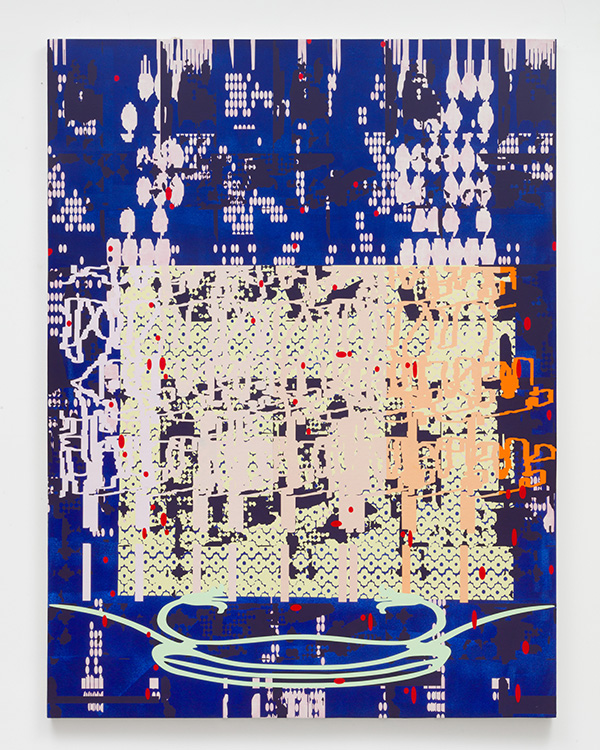
Artist Alex Heilbron presents a solo exhibition at the Los Angeles gallery as-is. The show is featured as a lead review in the February 2026 issue of Contemporary Art Review LA, highlighting Heilbron's continued exploration of painting and visual language within the Southern California art scene.

Devin Troy Strother at ArtCenter

The article is a table of contents for Issue 42 of Contemporary Art Review LA, which includes a review of an exhibition by artist Devin Troy Strother at ArtCenter. The review, written by Janelle Zara, is listed among other reviews, interviews, and features in the publication's November 2025 issue.

Todd Gray Reframes Black Diasporic History

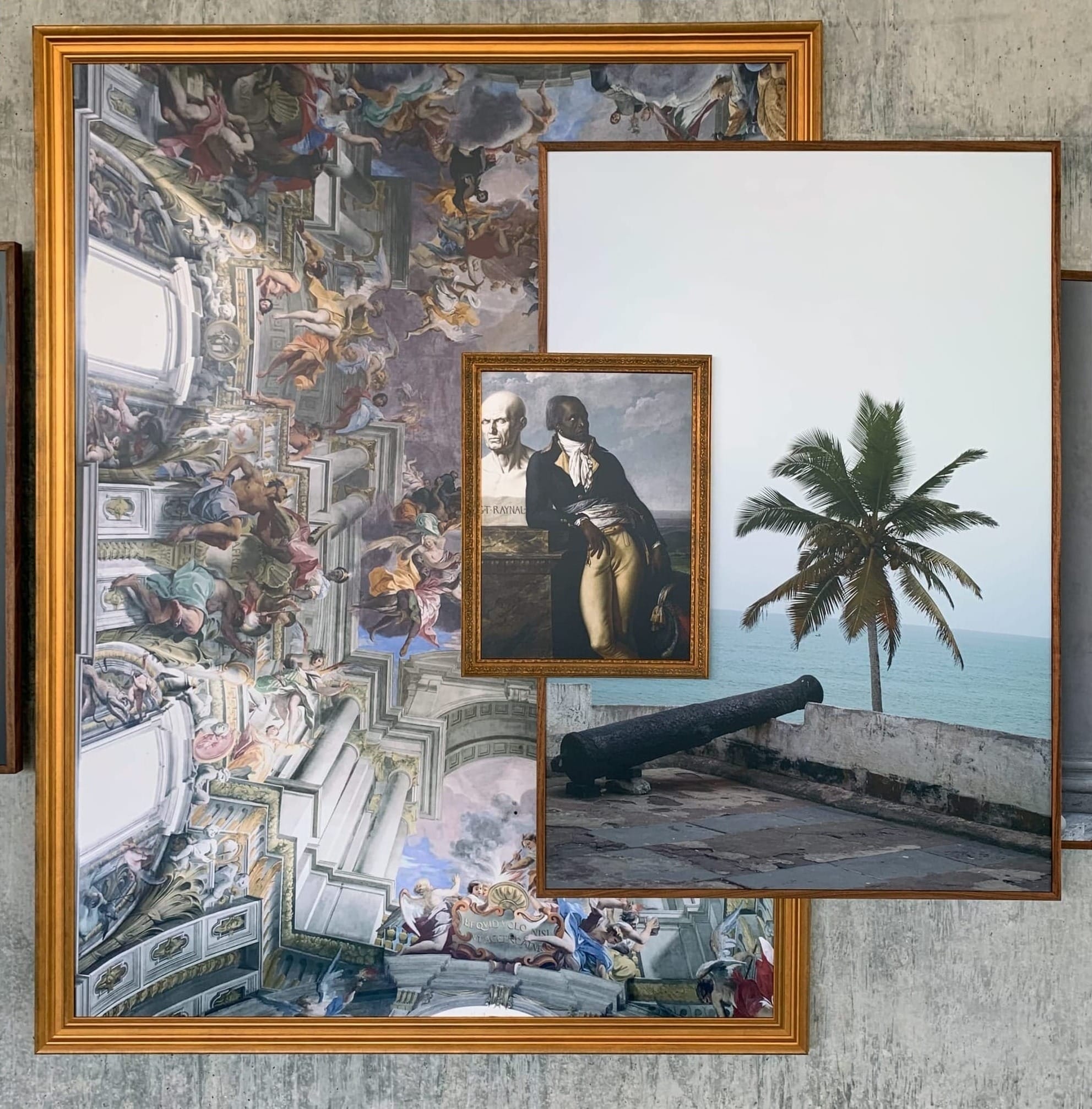
Todd Gray's exhibition "Portals" at Perrotin in Los Angeles features multi-paneled photo assemblages that juxtapose images of slavery with European art, architecture, and formal gardens, exploring the evolution of Black history and identity. The show coincides with the opening of his commissioned installation "Octavia's Gaze" (2025) at the new David Geffen Galleries of the Los Angeles County Museum of Art. Gray's works incorporate his own photographs alongside sources like Hubble Space Telescope imagery, creating layered visual puzzles that invite viewers to find connections and ask questions about African diasporic identity.

Fantastic visions and cosmic rhythms: how Whistler is making me see – and hear – differently

The article explores how the James McNeill Whistler exhibition at Tate in London prompts a reconsideration of the relationship between music and visual art. Whistler titled his works using musical terms like "Arrangement," "Symphony," and "Nocturne," arguing that painting should be abstract and independent of narrative, much like instrumental music. The exhibition, reviewed by Jonathan Jones, highlights Whistler's radical art-for-art's-sake philosophy, which influenced composer Claude Debussy, whose orchestral Nocturnes were directly inspired by Whistler's paintings of light and atmosphere.

James McNeill Whistler review – a luscious, seductive blockbuster for the painter who scandalised Britain

Tate Britain has opened a major retrospective dedicated to James McNeill Whistler, the American painter who scandalized Victorian Britain. The exhibition centers on his iconic work *Arrangement in Grey and Black No. 1* (commonly known as *Whistler's Mother*), lent by the Musée d'Orsay, and traces his evolution from raw realist scenes of London's docks to radical, abstract celebrations of color and pattern. It includes a reconstruction of *The Peacock Room* and highlights his rivalry with critic John Ruskin, who accused him of 'flinging a pot of paint in the public's face.'

Zurbarán review – ecstatic visions, primitive surrealism … and the finest loincloths ever painted

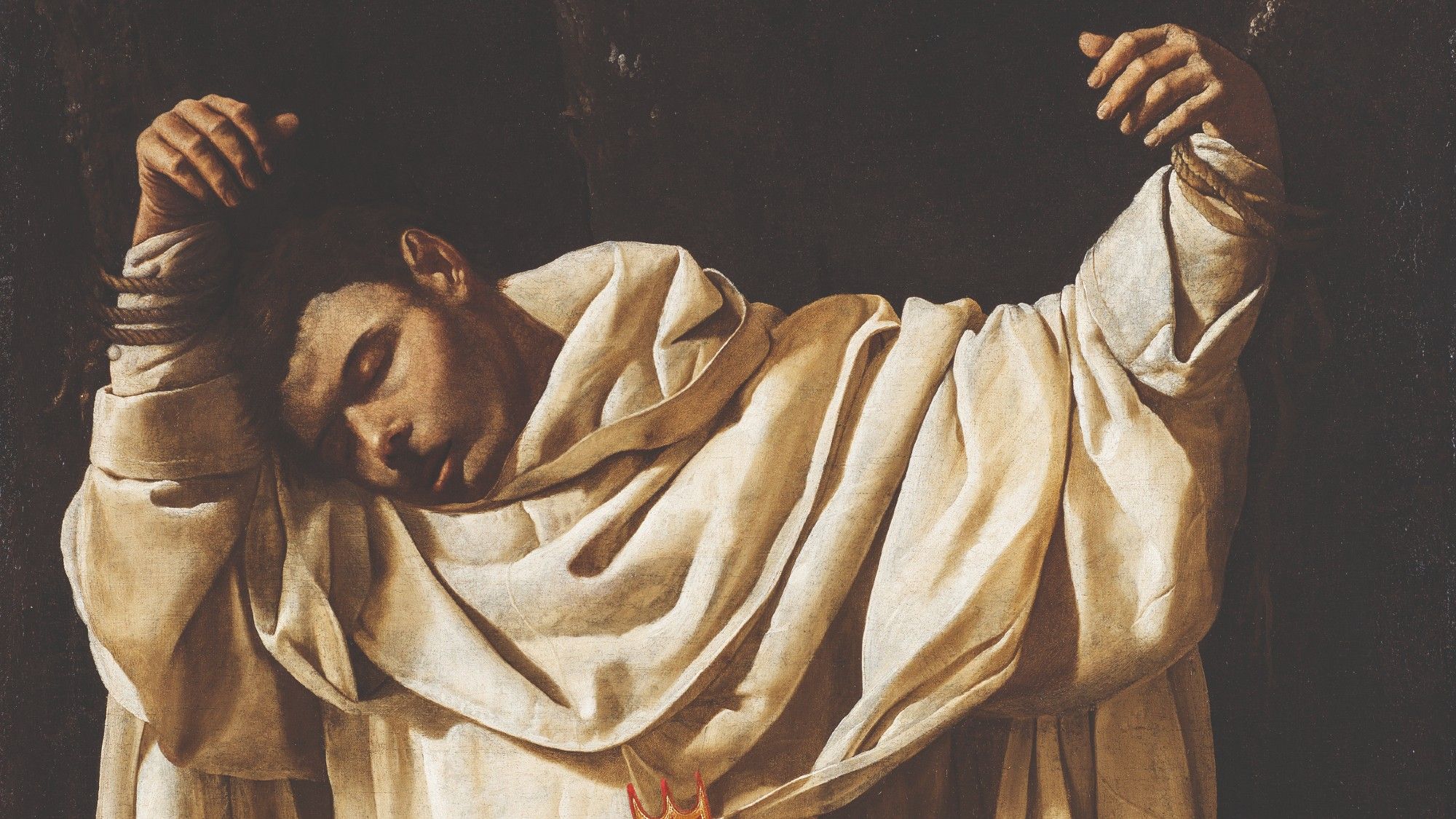
The Guardian reviews a major exhibition of 17th-century Spanish painter Francisco de Zurbarán, highlighting his visionary and surrealist qualities. The show features works such as "The Apparition of Saint Peter to Saint Peter Nolasco" (1629), newly attributed paintings including a giant mask, and iconic pieces like "The Crucified Christ" and "Saint Serapion," all drawn from collections including the Prado and the National Gallery, London. The review emphasizes Zurbarán's ability to paint supernatural subjects with naturalistic conviction, his exquisite rendering of fabrics—especially loincloths—and his influence on modern artists like Salvador Dalí.

2026 whitney biennial critics conversation

The 82nd edition of the Whitney Biennial has opened at the Whitney Museum of American Art, curated by Marcela Guerrero and Drew Sawyer. Featuring 56 artists from diverse global backgrounds, the exhibition explores themes of American empire, human-nonhuman relationships, and the impact of infrastructure. Early critical reactions highlight a pervasive sense of "horror" and bodily disturbance, with works utilizing AI, sculpture, and painting to address grief, war, and societal transformation.

rashid johnson guggenheim museum retrospective review

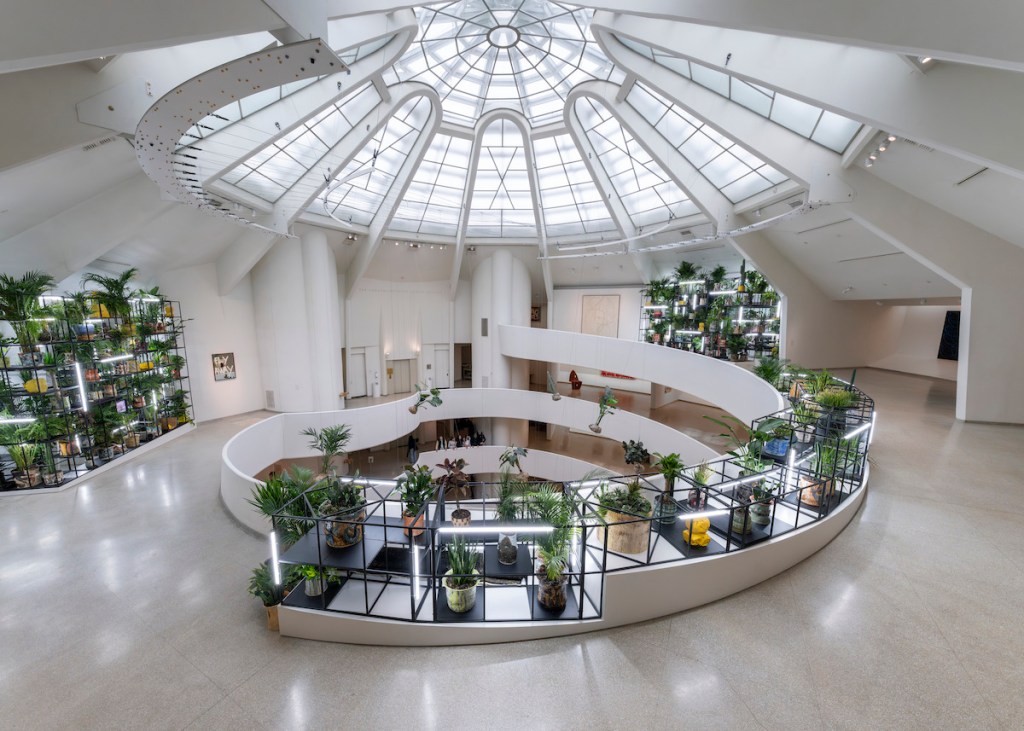
Rashid Johnson's mid-career retrospective, "Rashid Johnson: A Poem for Deep Thinkers," has opened at the Solomon R. Guggenheim Museum in New York, filling the rotunda with paintings, sculptures, photographs, and films. Curated by Naomi Beckwith and Andrea Karnes, with Faith Hunter, the exhibition includes Johnson's well-known "Anxious Men" works alongside lesser-seen films like *Threeness* (2005), which challenge viewers' expectations. The show features recurring target motifs, as seen in the outdoor sculpture *Black Steel in the Hour of Chaos* (2008), and explores themes of looking, being looked at, and the fluidity of Black identity.

Frida-Mania Hits MoMA

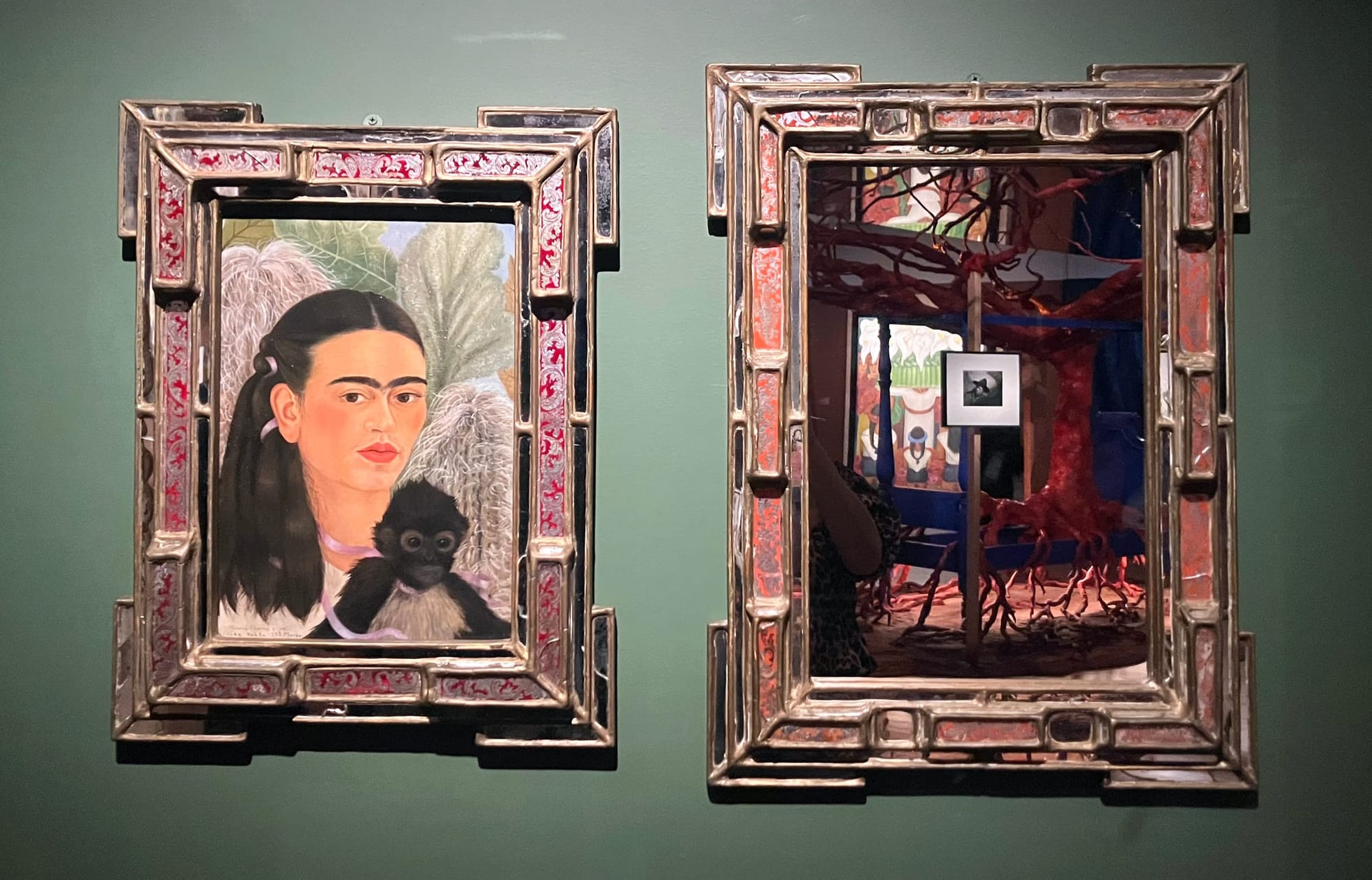
The Museum of Modern Art (MoMA) has opened the exhibition 'Frida and Diego: The Last Dream,' a collaboration with the Metropolitan Opera tied to its upcoming production of the opera 'El Último Sueño de Frida y Diego.' The show, designed by stage and costume designer Jon Bausor, transplants theatrical elements like a tree-of-life set model and blue tarp drapes into the gallery, alongside a reshuffling of key Kahlo and Rivera works from MoMA's collection.

Post-Mortemism: An Autopsy of “Nigerian Modernism: Art and Independence” at Tate Modern.

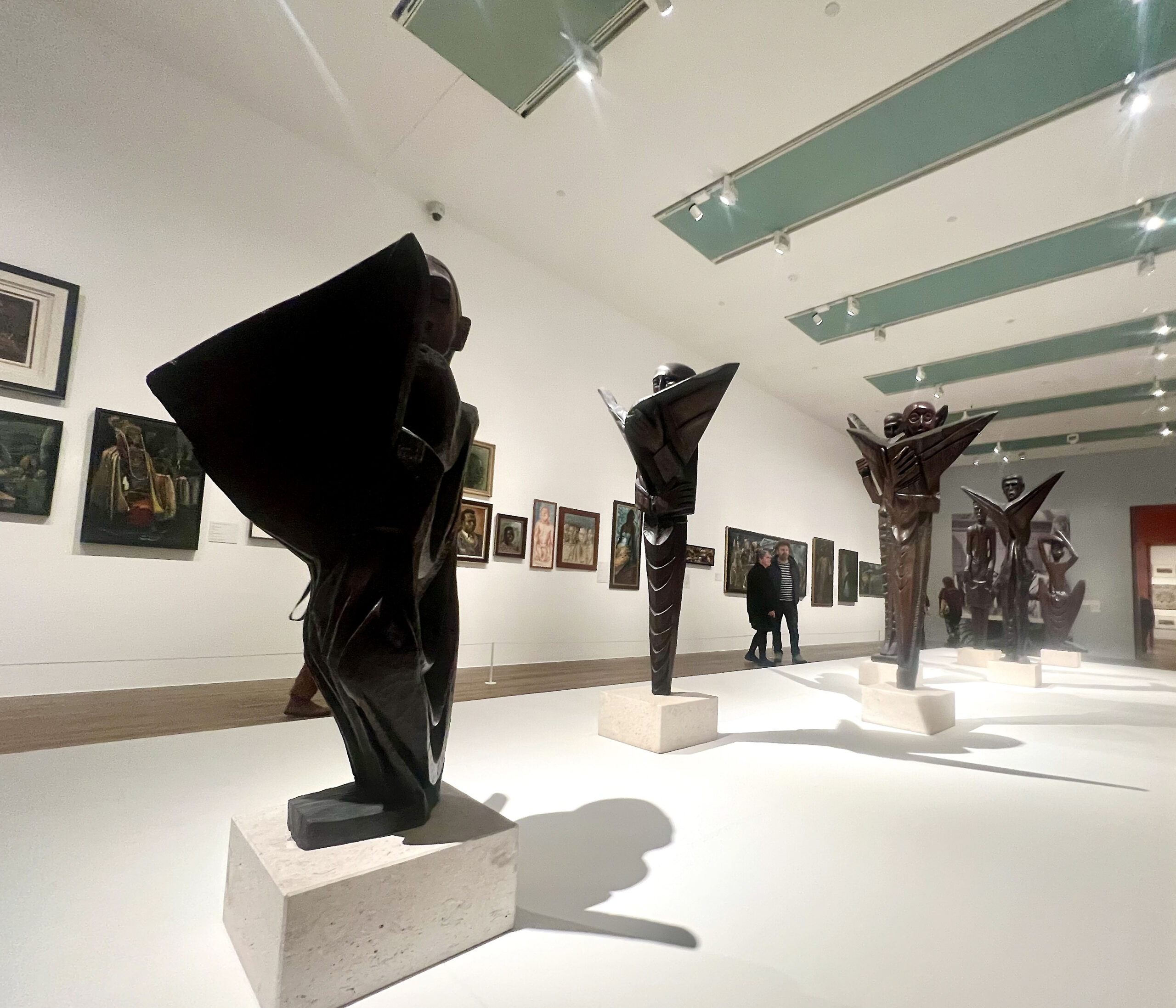
A critical essay by Ayọ̀ Akínwándé performs a forensic 'autopsy' of the Tate Modern exhibition 'Nigerian Modernism: Art and Independence.' The review dissects the show's structure, arguing it fails in its curatorial framework by isolating Nigerian artists within a regional category, using ethnographic display methods, relying on incomplete research, and excluding key artists and historical context.

Zurbarán: a ‘magnificently choreographed’ showing of the Spanish ‘genius’

The article reviews the first-ever British exhibition dedicated to Spanish Baroque painter Francisco de Zurbarán, held at the National Gallery in London. The show brings together 40 works from collections spanning Seville to San Diego, featuring his hyper-real religious paintings and radiant still lifes, described as a 'magnificently choreographed' trawl through his oeuvre. Critics praise the exhibition for its dramatic lighting and revelatory presentation, though some note uneven quality in his later works.

Surprised by Jack: A Review of “Jack Whitten: The Messenger” at MoMA in New York

The Museum of Modern Art in New York is hosting "Jack Whitten: The Messenger," the largest survey ever mounted of the late abstract artist Jack Whitten, who died in 2018. The exhibition features 175 works spanning his sixty-year career, from early quasi-representational pieces to his innovative "slab" paintings made with a custom squeegee device and his later "tesserae" works that mimic glass tiles using acrylic paint. The show includes archival audio of Whitten discussing his creative process, which blended philosophy, craft, and science, and is curated by MoMA's Michelle Kuo, who knew Whitten personally.

Black.2; Family Values; Studio Exhibition

Amelia Winata reviews three concurrent group exhibitions in Melbourne galleries: 'Black.2' at Void_Melbourne (15 Nov–20 Dec 2025), 'Family Values' at Futures (6 Dec–20 Dec 2025), and 'Studio Exhibition' at Haydens (6 Dec 2025). The article opens with a metaphor comparing the gallery-goer's experience to the rescue ship Carpathia navigating icebergs, reflecting the glut of end-of-year group shows in Melbourne's commercial spaces. Winata visits each space, describing the deco-chic building housing Void_, the formalist black-themed works by artists like Nick Devlin, Elvis Richardson, Sarah Goffman, and Suzie Idiens, and the broader context of Melbourne's gallery scene.

Patchwork Lost – A Critique of the Princeton University Art Museum’s American Art Wing

The article critiques the newly opened American art wing at the Princeton University Art Museum, arguing that its curatorial approach prioritizes contemporary social justice narratives over historical accuracy and national pride. The author contends that the exhibition presents a fragmented, politicized view of American history, highlighting slavery and racial injustice while omitting or minimizing the contributions of Princeton alumni to the nation's founding, such as James Madison and John Witherspoon. Specific examples include the inclusion of a 2022 revisionist painting of the Signing of the Constitution and selective signage that emphasizes marginalized figures while ignoring male patriots.

"Dispossessions in the Americas" Confronts the Colonialism That Invades All Territory

The article reviews "Dispossessions in the Americas," a group exhibition at Wrightwood 659 in Chicago curated by Jonathan D. Katz and Eduardo Carrera. Featuring works from 1960 to 2025, the show examines colonial legacies in the Americas, focusing on the forced dispossession of land, culture, and language from indigenous, Afro-descendant, queer, and trans communities. The review critically questions how a polished, architecturally prestigious venue can coherently display art about socially voiceless communities without falling into voyeurism or fetishization of pain.

In "Dancing the Revolution," Puerto Rico Pushes Back

The article reviews "Dancing the Revolution," a multi-genre collective exhibition at the Museum of Contemporary Art Chicago that explores the music of dancehall and reggaetón, their roots, history, and evolution, and their inextricable link to colonial oppression. The show is inspired by the massive 2019 protests in Puerto Rico against then-Governor Ricardo Rosselló, where music and dance were used as forms of resistance, drawing on centuries of Black Atlantic protest in the Caribbean.