filter_list Showing 8 results for "Sur" close Clear
dashboard All 314 museum exhibitions 143article news 48article local 45trending_up market 24article culture 17article policy 12candle obituary 10rate_review review 8gavel restitution 4person people 3
date_range Range Today This Week This Month All
Subscribe

Notes from New York: The World in a Convex Mirror

The article reviews the sixth edition of MoMA PS1's quinquennial survey 'Greater New York 2026,' which coincides with the institution's 50th anniversary. It highlights works by artists such as Covey Gong, Win McCarthy, Mekko Harjo, and Sophie Friedman-Pappas, noting how the exhibition's themeless structure and use of reflective surfaces create a hall of distorted reflections. The show includes 53 emerging and midcareer artists, mostly millennials, and is accompanied by a block party and gala rather than a dedicated commemorative exhibition like FORTY (2016).
Zurbarán review – ecstatic visions, primitive surrealism … and the finest loincloths ever painted

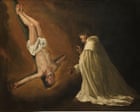
The Guardian reviews a major exhibition of 17th-century Spanish painter Francisco de Zurbarán, highlighting his visionary and surrealist qualities. The show features works such as "The Apparition of Saint Peter to Saint Peter Nolasco" (1629), newly attributed paintings including a giant mask, and iconic pieces like "The Crucified Christ" and "Saint Serapion," all drawn from collections including the Prado and the National Gallery, London. The review emphasizes Zurbarán's ability to paint supernatural subjects with naturalistic conviction, his exquisite rendering of fabrics—especially loincloths—and his influence on modern artists like Salvador Dalí.

What’s Left to Learn from Marcel Duchamp?

The article examines Marcel Duchamp's enduring influence on contemporary art, focusing on his readymades such as "Fountain" (1917) and "Bicycle Wheel" (1913/1951). It notes that a major survey co-organized by the Museum of Modern Art and the Philadelphia Museum of Art, 70 years after Duchamp predicted his true public would emerge in 50 to 100 years, reaffirms his status as the most influential artist of the past century. The piece discusses how Duchamp's practice of selecting and presenting ordinary objects as art—from a urinal to a snow shovel—once shocked the art world but now seems quaint compared to later works like Maurizio Cattelan's taped banana.

The Revolutionary Tapestry of Nigerian Modernism

The exhibition "Nigerian Modernism" at Tate Modern in London is the first show of its kind in the UK, surveying how Nigerian artists forged a postcolonial identity across the 20th century. It features works by pioneers such as Aina Onabolu, Benedict Enwonwu, and members of the radical Zaria Art Society, including Uche Okeke, Jimo Akolo, and Clara Etso Ugbodaga-Ngu, highlighting their break from British artistic traditions and embrace of local visual heritage.

Nancy Holt review – cosmic thrills as the universe’s hidden power is unleashed

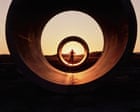
The Guardian reviews a major UK exhibition of land artist Nancy Holt (1938-2014) at Goodwood in West Sussex, the largest show of her work to date. The exhibition features two large outdoor installations—Ventilation System, a metallic tubular structure resembling building lungs, and Hydra’s Head, six concrete pools arranged like the Hydra constellation in a chalk quarry—alongside indoor photographs, diagrams, and light works. The review praises the cosmic scale and bodily connection of the outdoor pieces but finds the indoor works less effective at conveying Holt’s themes of universal vastness and interconnectedness.

What I learned from Tracey Emin about regeneration

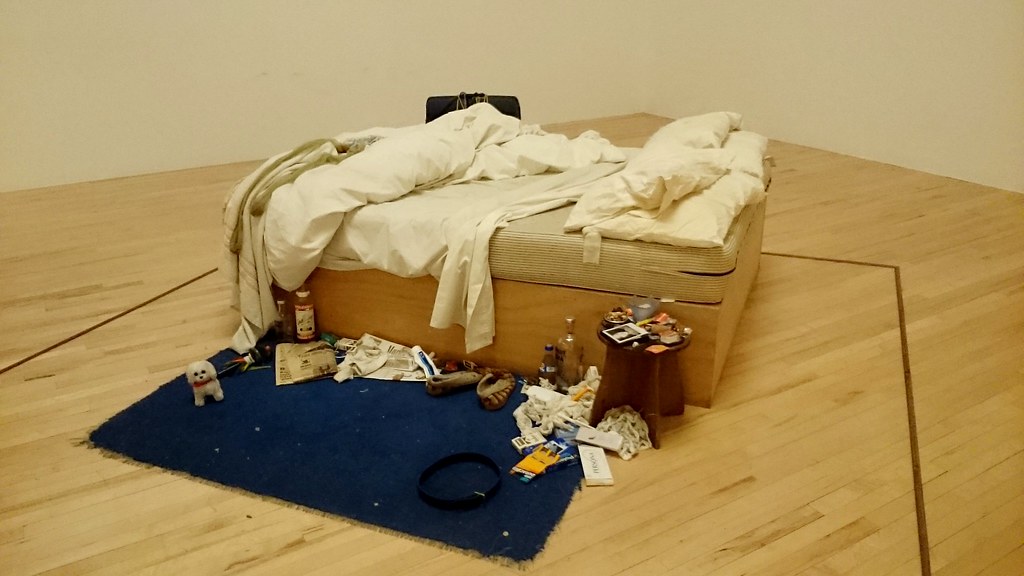
The article reviews Tracey Emin's exhibition "A Second Life" at Tate Modern, describing the author's initial lack of aesthetic connection to the artworks—finding the paintings derivative and neon signs tacky—but ultimately being moved by the exhibition's emotional force and the artist's refusal to disguise pain, humiliation, and grief. The author notes the crowded galleries, the predominantly female audience responding with visceral emotion, and highlights the film "How It Feels" as the most impactful piece, in which Emin discusses her traumatic abortion and its effect on her self-perception.

Sung Tieu and the Art of Difficulty

Sung Tieu, a Vietnamese-born German artist, is the subject of a critical feature in Frieze that examines her work's engagement with difficulty—both in terms of the complex political and historical themes she tackles and the challenging formal qualities of her installations. The article highlights her recent projects, including works shown at the Venice Biennale, which address issues of surveillance, migration, and Cold War legacies through meticulous research and unconventional materials.

The tiniest event can tear a hole. Sara MacKillop by Margaret Kross

Sara MacKillop's exhibition "The Cutaway View" at Good Weather in Chicago presents sculptures made from humble analog materials like blank wall calendars, empty shopping bags, and gift wrapping. The London-based artist alters these objects with minimal interventions—such as surgically cut holes in shopping bags to accommodate vinyl records—drawing attention to the ephemera and texture of retail culture. Her series "Calendar Houses" (2021–ongoing) uses archive boxes and wall calendars to create miniature modernist dwellings that critique systems of order and self-optimization.