filter_list Showing 500 results for "Bates" close Clear
search
dashboard All 500 museum exhibitions 183article news 122article culture 70article policy 32rate_review review 26trending_up market 20person people 15article local 13candle obituary 11gavel restitution 8
date_range Range Today This Week This Month All
Subscribe

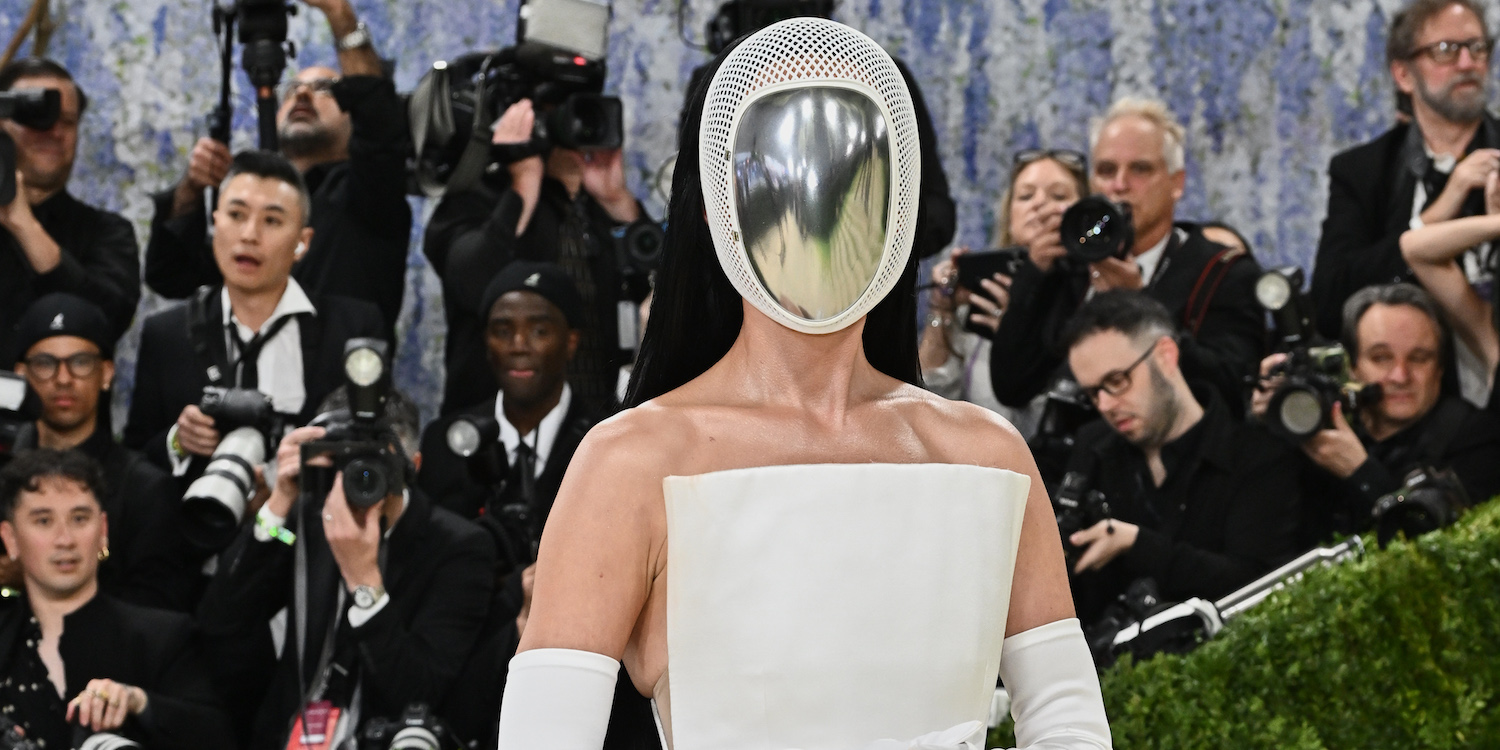
Stars feiern Mode und Kunst bei Met-Gala

The Met Gala, hosted by Anna Wintour at the Metropolitan Museum of Art in New York, raised millions for the museum's Costume Institute. This year's event featured celebrities like Beyoncé, Nicole Kidman, and Heidi Klum, with a dress code of "Fashion is Art." Beyoncé and Kidman brought their daughters for the first time, while Klum dressed as a stone statue. The gala opened the "Costume Art" exhibition and was co-sponsored by Jeff Bezos and Lauren Sánchez Bezos, drawing protests over Bezos's involvement.

The Humboldt Forum is Already Under Fire

"Das Humboldt Forum wird schon beschossen"

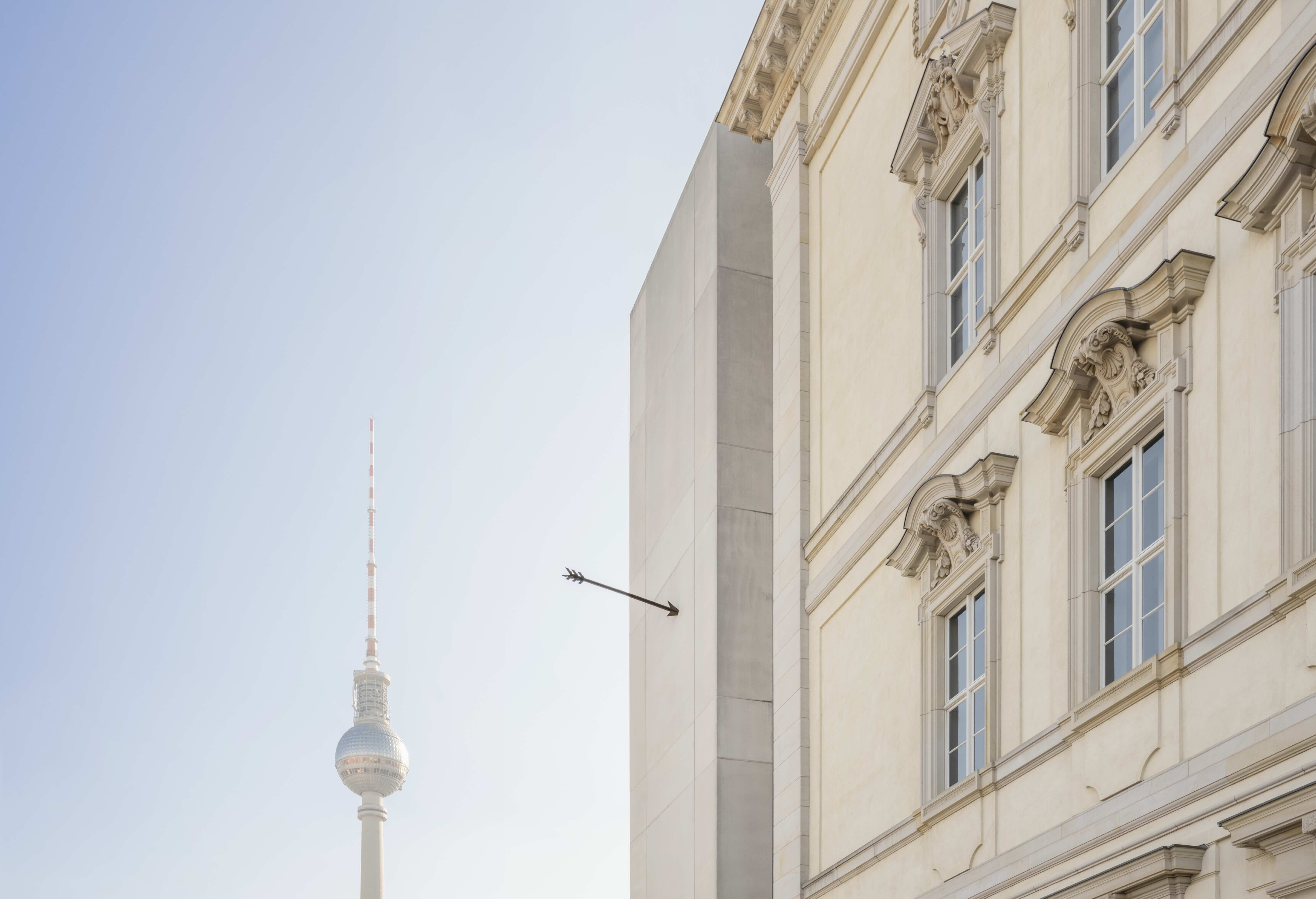
The architectural firm J. Mayer H. and partners Jürgen Mayer H. and Hans Schneider have won the eighth 'Kunst-am-Bau' competition for Berlin’s Humboldt Forum. Their winning installation, titled "Südpfeil" (South Arrow), features a 3.6-meter-long abstract arrow embedded high in the building's facade. The work references the 19th-century discovery of 'Pfeilstörche'—migratory storks that returned to Europe with African arrows in their bodies—which provided the first scientific proof of global migration routes.

Sylvie Retailleau explains how she saved the Palais de la Découverte

Sylvie Retailleau explique comment elle a sauvé le Palais de la Découverte

Sylvie Retailleau, a physicist, former president of Paris-Saclay University, and former Minister of Higher Education, has been president of Universcience since January 2026. In an interview, she explains how the Palais de la Découverte, housed within the Grand Palais, nearly disappeared during the Grand Palais renovation. Intense debates over whether to dedicate the renovated space entirely to classical culture threatened the science museum. Retailleau negotiated a compromise: the Palais de la Découverte ceded one gallery (1,200 m²) to the Grand Palais for about €30 million in revenue over ten years and is lending another gallery (350 m²) until June 2030 for Centre Pompidou exhibitions. In return, Universcience gains full control of the programming for the Palais des Enfants. The Palais de la Découverte is set to reopen in March 2027.

Forgers, One-Way Mirrors of the Art Market

Les faussaires, miroirs sans tain du marché de l’art

Anthropologist Monique Jeudy-Ballini has published a new book, "Peintres de l’ombre. Les faussaires à l’œuvre," in which she examines art forgers through an ethnographic lens. Drawing on autobiographical accounts, published interviews, and expert writings—including those of notorious forgers Wolfgang Beltracchi, Eric Hebborn, and Guy Ribes—she explores the motivations and practices of these clandestine figures, arguing that their work involves not only technical skill but also the creation of elaborate narratives and pedigrees for their forgeries. The book is part of the Ethnologiques series edited by Philippe Descola and published by Éditions Mimésis.

How the State Supports Provenance Research

Comment l’État soutient la recherche de provenance

The French Ministry of Culture has created two specialized missions to assist museums in researching the provenance of their collections, addressing looted artworks, human remains, colonial acquisitions, and illicit trafficking. The Mission for Research and Restitution of Looted Cultural Property (M2RS), established in 2019, focuses on Nazi-era spoliations (1933-1945) with a budget of €220,000 annually, while the newer Mission "Provenance," launched in 2024 under curator Catherine Chevillot, covers human remains, colonial-era objects, and illicit goods with a €450,000 budget. These missions provide expertise, funding, and coordination with institutions like the Commission for the Restitution of Property and Compensation of Victims of Anti-Semitic Spoliation (CIVS), though most museums still only initiate provenance checks during acquisitions or donations.

In love with trees, sculptor Lélia Demoisy elevates nature through hybridization

Amoureuse des arbres, la sculptrice Lélia Demoisy sublime la nature par l’hybridation

Lélia Demoisy, a French sculptor born in 1991, creates hybrid works that blend wood with animal elements, such as a yew wood sculpture covered in fox fur or a suspended skeleton made from naturally curved thuya branches. She lives in a small village in the Yvelines region, where she works with wood and metal herself, often sourcing materials locally, and recently participated in the Maif pour le vivant committee as the only artist on the jury.

According to an AI, El Greco would actually be the sole author of the 'Baptism of Christ' in Toledo, long considered a workshop work

Selon une IA, Greco serait en réalité l’unique auteur du « Baptême du Christ » de Tolède, longtemps considéré comme une œuvre d’atelier

A new study published in Science Advances uses an AI tool called Patch to analyze the monumental painting "Le Baptême du Christ" (1608–1614) by El Greco, long believed to be a workshop piece completed by his son Jorge Manuel Theotocópuli. By mapping the 3D microtopography of the brushstrokes and comparing them with El Greco's authenticated "Christ on the Cross" at the Cleveland Museum of Art, the AI found consistent painterly gestures across the entire work, suggesting the master himself painted it despite tremors from neurological disorders in his old age.

Hundreds Protest Israel’s “Genocide Pavilion” at Venice Biennale

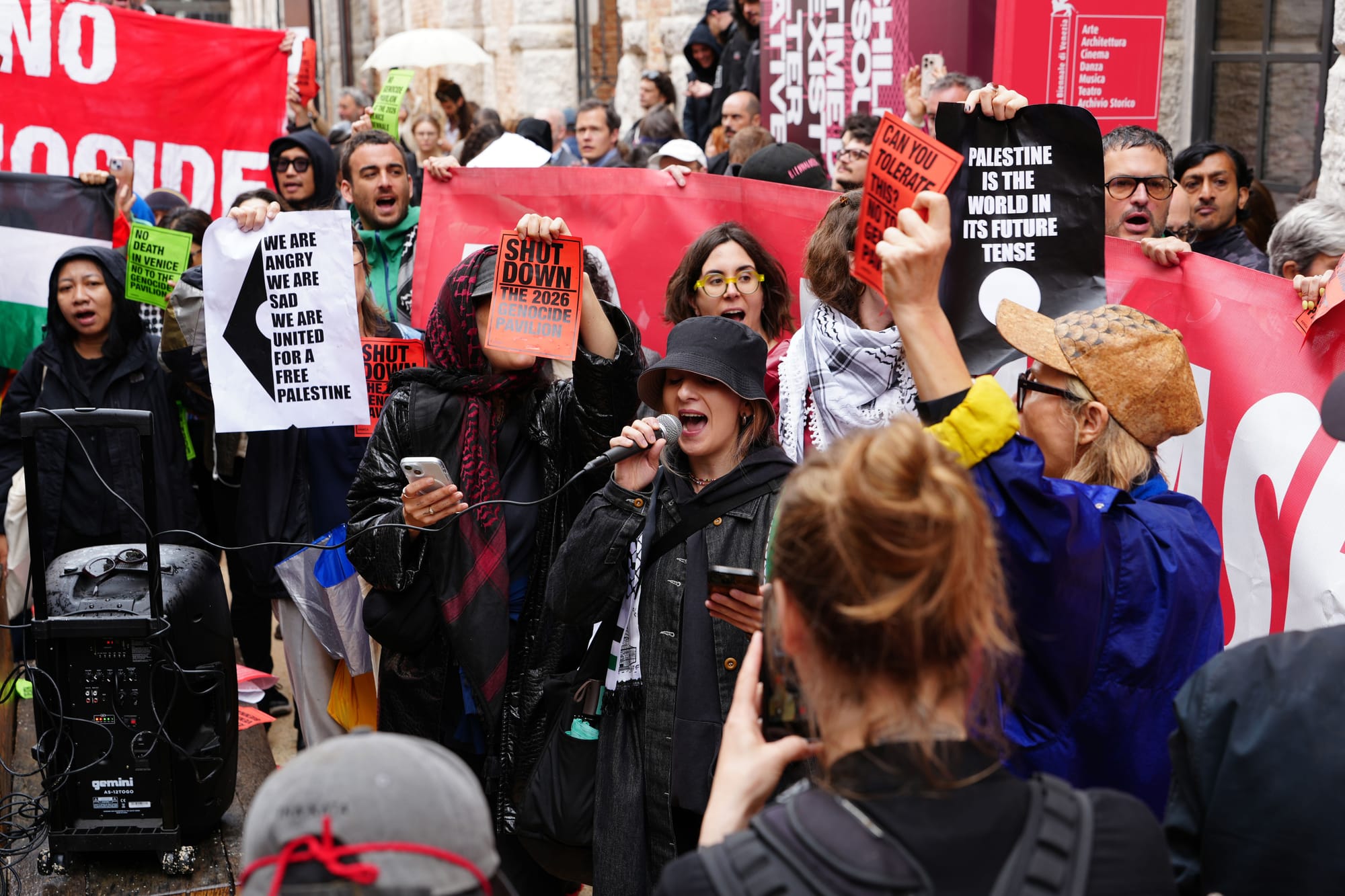
On May 6, 2026, the first day of previews at the Venice Biennale, hundreds of pro-Palestine activists led by the Art Not Genocide Alliance (ANGA) blocked the entrance to the Israeli pavilion, demanding its immediate closure. Protesters waved Palestine flags and banners reading "No Artwashing Genocide" and "No Genocide Pavilion at Biennale," chanting accusations of genocide against Israel. The demonstration temporarily shut down access to Belu-Simion Fainaru's exhibition "Rose of Nothingness" for about half an hour. The protest followed a letter signed by over 200 artists urging the Biennale to exclude Israel, which instead moved the pavilion to an alternative location in the Arsenale due to renovations. Separately, Pussy Riot and FEMEN rallied outside the Russian pavilion, which will only open during preview days due to sanctions. Venice cultural workers plan a 24-hour strike on May 8 in solidarity with Palestinians, potentially disrupting the Biennale's schedule.

Culture Workers Announce Venice Biennale Strike in Israeli Pavilion Protest

Cultural workers, unions, and grassroots groups are planning a 24-hour strike on Friday, May 8, at the Venice Biennale to protest Israel's participation amid the ongoing genocide in Gaza. Organized by the Art Not Genocide Alliance (ANGA), the action includes a rally on Viale Garibaldi and calls for a boycott of Israel's "genocide pavilion." Participating groups include Biennaleocene, Sale Docks, Mi Riconosci, Vogliamo Tutt’altro, and several Italian trade unions. The strike follows months of activism, including a letter signed by over 200 event participants, and comes after the Biennale jury resigned over award eligibility rules that initially excluded Israel and Russia.

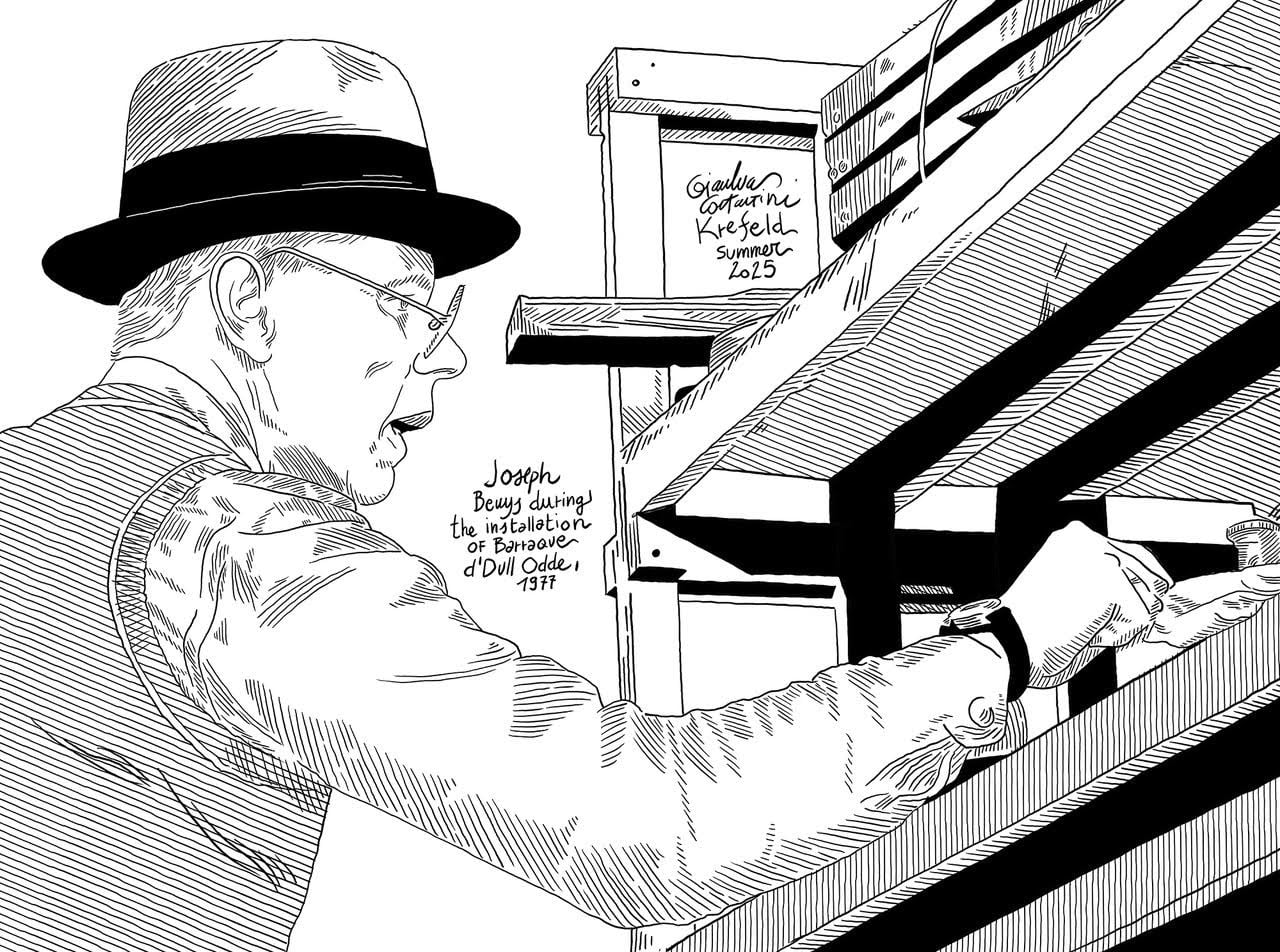
Where did the great artist Joseph Beuys live? The comic story by Gianluca Costantini

Dove viveva il grande artista Joseph Beuys? Il racconto a fumetti di Gianluca Costantini

In the summer of 2022, the author visited Düsseldorf and discovered that Joseph Beuys's former home at Drakeplatz 4 in Oberkassel was for sale, but the city's cultural department declined to purchase it. Beuys lived and worked there from 1961 until his death in 1986, using the space as both a residence and studio. The article recounts the intimate details of family life there, including how Beuys painted the main room white for his wife Eva's photography, and how the family navigated the blend of private life and artistic practice. Two years later, the Brunhilde Moll Foundation acquired the house and opened it to the public, though it was closed for renovations when the author returned. The house now displays about sixty works from Beuys's creative period and will host artist residencies and events.

Stimmung: sakral

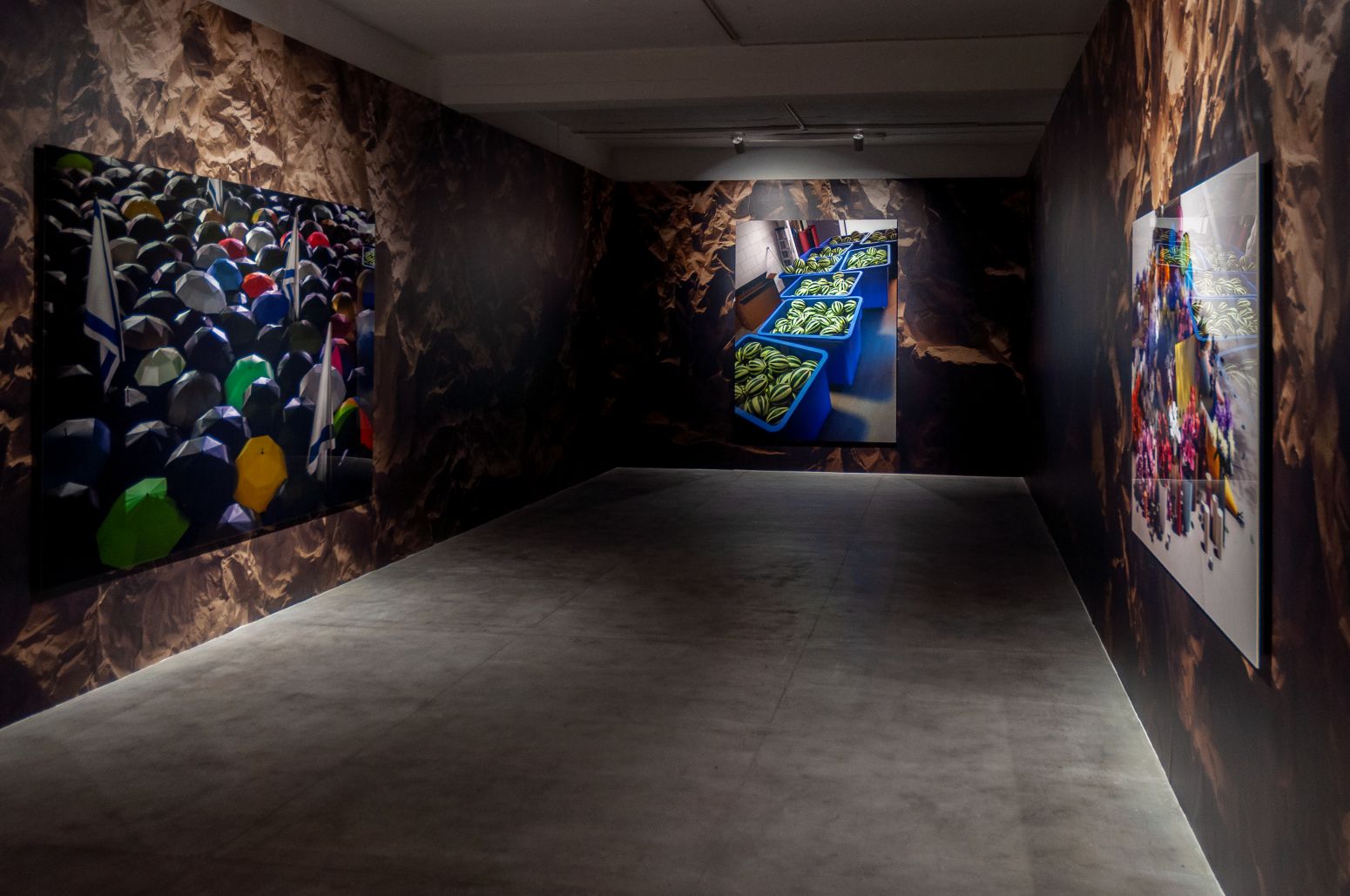
The Anozero Biennale in Coimbra, Portugal, opens at the former Santa Clara convent, blending religious imagery with anarchist ideas. Artists including Taryn Simon and Nan Goldin present works that explore utopian visions of community and reciprocity within the monastery's walls.

"Gesundheitseffekt der Künste auf biologischer Ebene"

A roundup of art news covers multiple stories: Stefan Trinks criticizes Berlin's 'MuseumsMeileMitte' as a symptom of urban and cultural misdevelopment, where museums are co-opted by real estate marketing. At the Venice Biennale, the German Pavilion by Henrike Naumann and Sung Tieu explores East German identity and post-reunification trauma, while Patti Smith performed a 'sonic prayer' at the Vatican Pavilion curated by Hans Ulrich Obrist and Ben Vickers. A study from University College London suggests regular arts engagement may slow biological aging.

I'm a punk artist, I don't give a damn

"Ich bin Punk-Künstlerin, ich geb einen Scheiß drauf"

During the opening week of the Venice Biennale, the Russian activist and Pussy Riot member Nadya Tolokonnikova staged a protest against the Russian pavilion, wearing pink balaclavas and chanting slogans like "Blood is Russia's Art." Meanwhile, Florentina Holzinger's Austrian pavilion, subtitled "I Live in Your Piss," drew massive crowds with its scatological installations and extreme performances, causing wait times of up to two and a half hours. German media critics have widely covered the Biennale's heightened political tone, with debates over boycotts of Russia and Israel, and the tension between art and activism.

"Hier darf laut gelacht werden"

During the opening week of the Venice Biennale, multiple reports detail controversies surrounding the Israeli and Russian pavilions. According to Hyperallergic, artist Belu-Simion Fainaru of the Israeli pavilion threatened legal action against the Biennale after the jury sought to exclude Israel and Russia from prizes over alleged human rights violations, citing antisemitism and nationality-based discrimination. This may have prompted the jury's sudden resignation. Meanwhile, taz reports that Russia's pavilion is a macabre 'dance of death' blending techno and political denial, while Israel's pavilion faces a 'silent boycott' and social ostracism. Zeit describes protests by Pussy Riot and Femen outside the Russian pavilion as a defining image, with activists chanting 'blood sticks to the art of this country.'

A sturdy soldier in a sequin dress

"Eine kräftige Soldatin im Paillettenkleid"

Media reviews of the Venice Biennale's opening week offer contrasting takes on the German and US pavilions. Critics describe the German pavilion, curated by Sung Tieu and Henrike Naumann, as a dense, ironic East-West narrative that layers Nazi architecture with DDR prefab construction, creating what Jörg Häntzschel calls a "shockingly seamless symbiosis." The US pavilion, featuring sculptures by Alma Allen, is panned by Maximilíano Durón in ArtNews as politically timid and empty, lacking the clear colonial critiques of previous editions by Simone Leigh and Jeffrey Gibson.

"Eine Idee, die gut ist, kann fast alles verändern"

Henrike Naumann's final major artistic project, the German Pavilion at the Venice Biennale, is completed posthumously by friends after her death from cancer at age 41. Meanwhile, the sudden death of curator Koyo Kouoh at 57 has left her team to finish the central exhibition "In Minor Keys" for the Biennale, opening May 9. The US Pavilion is openly crowdfunding for its 2026 presentation by sculptor Alma Allen, citing opaque funding under the Trump administration. Israel's foreign ministry has accused the Venice Biennale jury of boycotting its artist Belu-Simion Fainaru by excluding countries whose leaders face International Criminal Court charges.

How Much Change Can Society Endure?

Wie viel Veränderung hält die Gesellschaft aus?

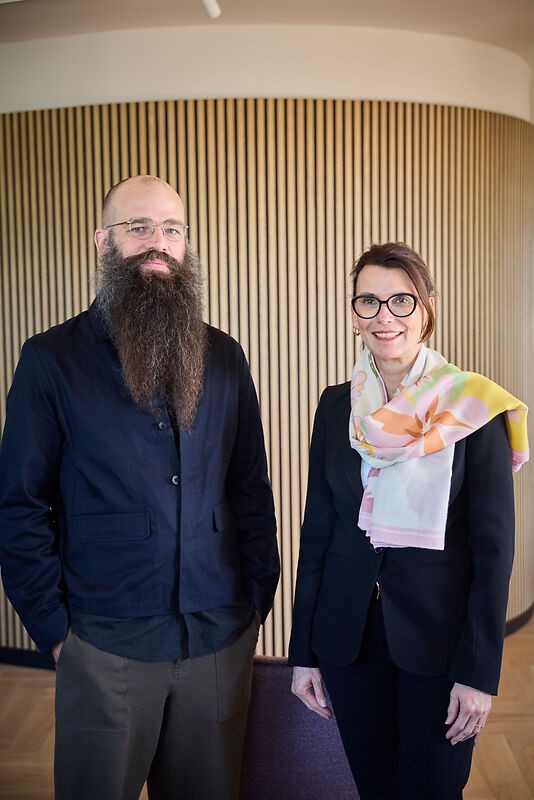
Artist Julius von Bismarck and SPD politician Rita Schwarzelühr-Sutter engaged in a deep dialogue about the societal transition from a fossil-fuel-based to a post-fossil society. During a live podcast hosted by Monopol editor-in-chief Elke Buhr at the BMW Foundation in Berlin, von Bismarck challenged traditional notions of environmental protection, arguing that the very concept of "nature" should be abolished to foster a new relationship with the world. The discussion bridged the gap between artistic radicalism and political pragmatism, touching on existential threats, global inequality, and the role of technology like AI.

Why Do the Women Have to Be Naked?

"Warum müssen die Frauen nackt sein?"

A series of cultural controversies highlight growing tensions between artistic freedom and political pressure. In Germany, cultural minister Wolfram Weimer faces criticism for opaque funding decisions and alleged interference in jury processes, with critics arguing this undermines artistic freedom and free speech. Simultaneously, the European Media Art Festival in Osnabrück defends filmmaker Basma al-Sharif against accusations of antisemitism, illustrating how cultural funding can become a test of political ideology.

Alison Roman’s Top Picks from the Frieze Viewing Room

Andrew Durbin reviews the national pavilions at the Venice Biennale, contrasting a vacuous US presentation with incisive and moving installations from Britain and Germany. The review highlights the thematic and emotional depth of the British and German pavilions while critiquing the lack of meaning in the US entry.

CUANDO LOS OBJETOS HABLAN. MUSEO HECHIZO, DE JUAN JOSÉ SANTOS

Juan José Santos's book "Museo hechizo" (Metales Pesados, 2025) challenges the perceived neutrality of the Western museum, presenting it as an institution shaped by colonial logics of classification, extraction, and representation. The essay centers on the concept of "lo hechizo"—understood as both artisanal precariousness and disruptive enchantment—and explores small, community-based Latin American museum experiences that operate from precarity, reciprocity, and care. Santos argues that the museum is a space of conflict where voices, narratives, and ways of constructing history are contested, and he proposes thinking of the museum through its minor, situated, and alternative forms in Latin America.

SOL HENARO: “BAJAR LA VELOCIDAD ES POLÍTICO Y, AUNQUE CUESTA MUCHO, HAY QUE SEGUIR INTENTÁNDOLO”

Sol Henaro, director of the Museo Universitario del Chopo in Mexico City, argues in an interview for Artishock Revista that museums must resist neoliberal pressures to accelerate production, spectacularize content, and convert cultural experience into immediate consumption. She advocates for the museum as a space of plurality, deceleration, and critical thought, emphasizing the need for horizontal, careful practices that allow for dissent and coexistence. The interview is part of a series on International Museum Day featuring directors from Latin American and Ibero-American institutions.

“Magnanrama. Portraits, Networks, and News of Nathalie Magnan” at Villa Arson, Nice

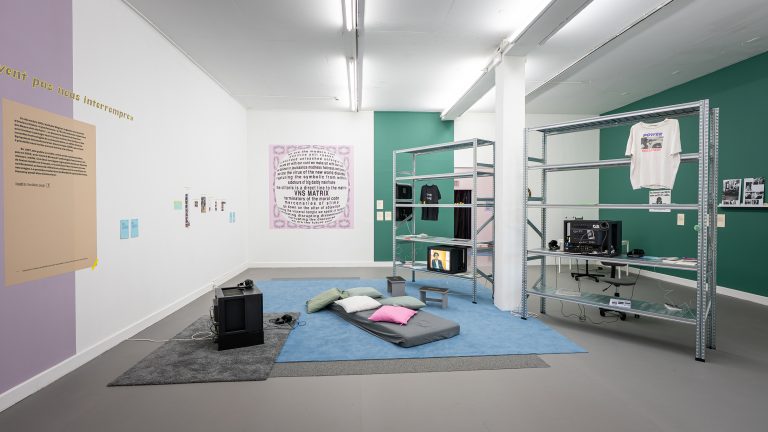
Mousse Magazine reports on the exhibition “Magnanrama. Portraits, Networks, and News of Nathalie Magnan” at Villa Arson in Nice, which celebrates the life and work of Nathalie Magnan (1956-2016). Magnan was a media theorist, filmmaker, cyberfeminist, educator, webmistress, hacktivist, and interdisciplinary figure who navigated the internet and the high seas, contributing to the history of thought, technology, feminism, and LGBTQI+ struggles. The show presents portraits, networks, and news related to her legacy, positioning her as a mediator and artist despite her reluctance to use that term.

artists new technology new museum

DEMO2025, the annual festival from NEW INC (the New Museum's incubator for cutting-edge culture), is hosting a public event at Water Street Projects in Lower Manhattan featuring on-site augmented reality experiments and new models of collective storytelling. To mark the festival, CULTURED asked several NEW INC alumni—including Idris Brewster, Mindy Seu, Stephanie Dinkins, LaJuné McMillian, and the MSCHF Collective—to share which technological developments they find most concerning as artists and which offer the most potential. Their responses address surveillance, attention economies, extractive systems, and the promise of radical alternatives rooted in collectivity and world-building.

Dozens of Pavilions Close During Strike at 61st Venice Biennale

On May 8, 2026, a 24-hour strike organized by the Art Not Genocide Alliance (ANGA) and several Italian activist groups brought the 61st Venice Biennale to a standstill. Approximately 27 of the 100 national pavilions closed fully or partially in solidarity with protesters demanding Israel’s exclusion from the event, including those of Austria, Belgium, France, Great Britain, Japan, South Korea, and Ukraine. Over 3,500 people marched through Venice, with speakers including artist Gabrielle Goliath and curator Caroline Dumalin. The main exhibition, "In Minor Keys," curated by the late Koyo Kouoh, closed by late afternoon, and riot police were stationed outside the Arsenale. The Israeli pavilion, already shuttered during previews, remained closed.

The Most Provocative Performance in Venice

Florentina Holzinger, a performance artist known for extreme feminist works involving nudity, bodily fluids, and physical endurance, is representing Austria at the 2026 Venice Biennale with a pavilion titled “Seaworld Venice.” Opening May 9, the installation transforms the Austrian Pavilion in the Giardini into an underwater theme park and a functioning sewage treatment plant, where audience urine collected from portable toilets is cleaned and recycled into the tanks. The work explores themes of the human body, ecology, and Venice’s own struggles with sinking infrastructure and mass tourism.

winston churchill statue vandalized

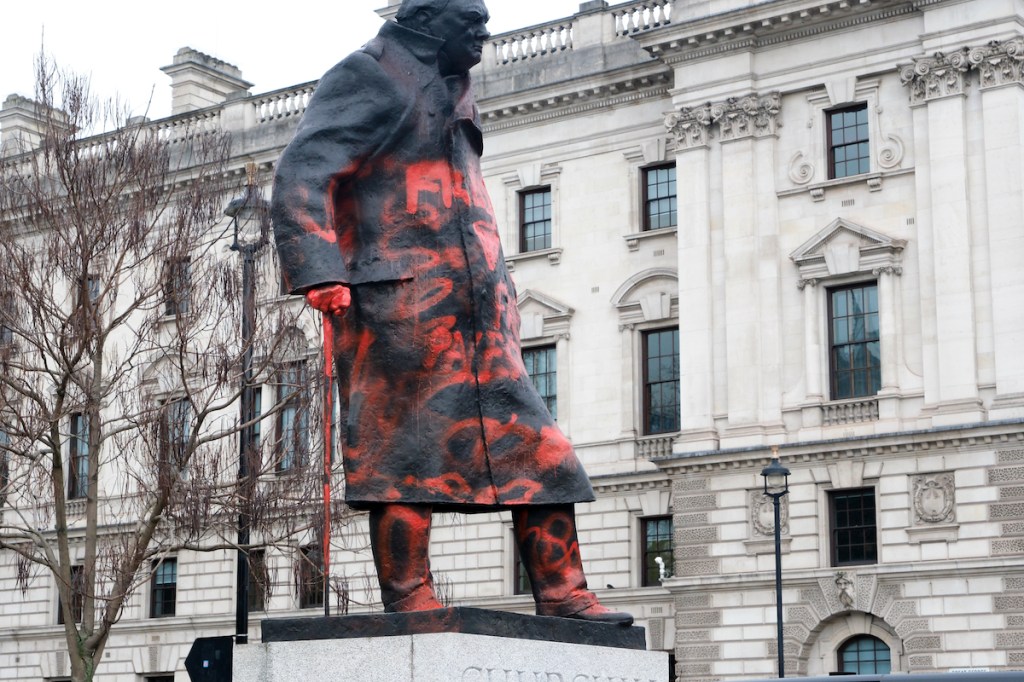
A bronze statue of Winston Churchill in London's Parliament Square was vandalized with pro-Palestine graffiti, including the phrases "Stop the Genicide" and "Globalise the Intifada." A 38-year-old man, identified by prosecutors as Caspar San Giorgio but identifying himself as Olax Outis, was arrested and charged with criminal damage. The activist claimed the act was a protest against the British government's alleged complicity in human rights violations and the legacy of Churchill himself.

bad bunny crossing the delaware ektor rivera

Artist Ektor Rivera has created a painting titled "The Discovery of Americans" (2025) that reimagines Emanuel Leutze's "Washington Crossing the Delaware" to celebrate Puerto Rican cultural figures, with Bad Bunny at the center. The work was commissioned by Miami art collector Seth Goldberg as a response to conservative criticism over Bad Bunny being selected to perform at the Super Bowl halftime show. The five-by-eight-foot painting places George Washington in the background while Puerto Rican icons including Jennifer Lopez, Ricky Martin, and Roberto Clemente take center stage, with Bad Bunny draped in the Puerto Rican flag. The artwork has garnered over 2.3 million views on Instagram and Facebook.

cultural critics 2025

The Art Angle podcast hosted eight cultural critics, theorists, and artists throughout 2025 to reflect on key tensions and transformations in the art world. The roundup features voices including Nadia Asparouhova on the value of intimate 'antimemetic' art spaces, Andrea Fraser on the fragmentation of the art field, Alison E. Gingeras on the necessity of all-women exhibitions as resistance, Dean Kissick on the problems of social justice art, and Sean Monahan on social surveillance in the art world. Each thinker offers a snapshot of the debates, anxieties, and aspirations shaping contemporary cultural discourse.

donald trump jeffrey epstein statue removed dc

A statue of President Donald Trump and convicted sex offender Jeffrey Epstein, titled *The Secret Handshake*, was removed from a public park in Washington, D.C., early Wednesday morning after going viral online. The anonymous artists claim they had a legal permit for the 12-foot-tall sculpture, which depicted the two men smiling and dancing together, but that National Parks Service officials toppled and destroyed it without the 24-hour notice they were promised. The Department of the Interior said the removal was due to the statue exceeding the permit's six-foot height limit.

confederate heritage group sues stone mountain exhibition

A Confederate heritage group, the Georgia Division of the Sons of Confederate Veterans, has filed a lawsuit against Stone Mountain Park in Georgia, challenging a new exhibition that examines the site's history of slavery, segregation, and white supremacy. The group argues that the exhibition, commissioned by the Stone Mountain Memorial Association and developed by Warner Museums, violates state law by repurposing the park away from its original mandate to honor the Confederacy. The exhibition, funded with $11 million from the Georgia legislature in 2023, is not yet open to the public but has already sparked backlash from heritage groups.