filter_list Showing 1756 results for "Even" close Clear
search
dashboard All 1756 museum exhibitions 792article local 417article news 192trending_up market 144article culture 105article policy 29rate_review review 26person people 22candle obituary 15gavel restitution 14
date_range Range Today This Week This Month All
Subscribe

First Indigenous Representative of Peru at the Venice Biennale, Sara Flores Opens the Doors of Her Studio in the Heart of the Amazon

Première représentante autochtone du Pérou à la Biennale de Venise, Sara Flores ouvre les portes de son atelier au cœur de l’Amazonie

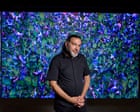
Sara Flores, a 76-year-old artist from the Shipibo-Konibo Indigenous community in the Peruvian Amazon, has been selected as the first Indigenous artist to represent Peru at the Venice Biennale. In her open-air studio deep in the rainforest, she creates large-scale geometric compositions in the kené ("true drawing") tradition, using natural dyes from local plants. She is also co-founder of the Bakish Mai Multiversity, an educational institution dedicated to Indigenous knowledge and artist residencies, alongside Matteo Norzi, one of the two curators of the Peruvian pavilion. The article offers an intimate portrait of her life, her matriarchal family, and her creative process.
Who Won New York’s $2.1 Billion Auction Week?

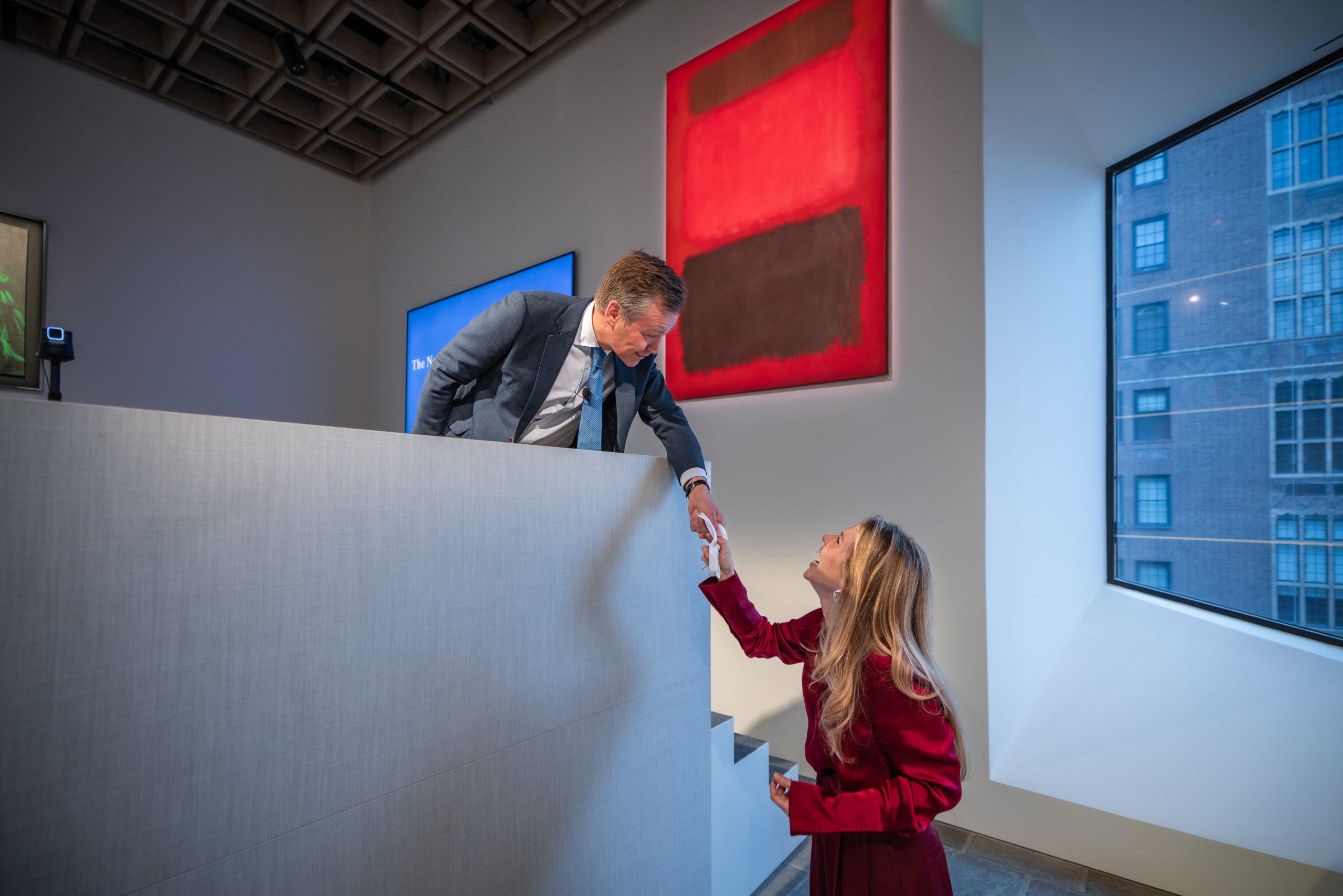
New York City's spring auction week generated approximately $2.1 billion in sales across Christie's, Sotheby's, and Phillips, more than doubling the $1 billion total from May 2024. Christie's led with a $1.3 billion haul, driven by the $630.8 million S.I. Newhouse collection and record prices for works by Jackson Pollock ($181.2 million) and Constantin Brancusi ($107.6 million). Sotheby's netted around $737 million, including a Rothko from the Robert Mnuchin collection, while Phillips rebounded with $115.2 million in a white-glove sale, its strongest New York spring result since 2022.

From a waterfall cube to a field of mushrooms: Vivid Sydney 2026 – in pictures

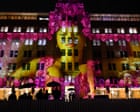
Vivid Sydney 2026 has launched, transforming the city with bold light installations, projections, and digital art. The festival features a 6.5km light walk from Barangaroo to Darling Harbour, along with live music, panel discussions, and pop-up dining. Highlights include works like 'Vaiola' by Sāmoan/Australian artist Angela Tiatia, projected onto the Museum of Contemporary Art. The event runs until 13 June.

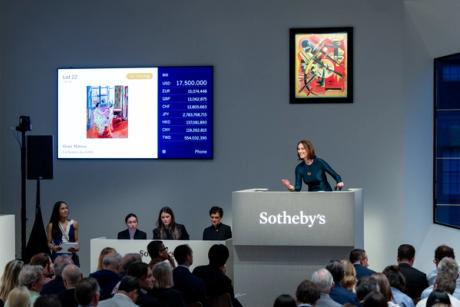
Bidding battle for Matisse leads Sotheby’s $303.3m Modern art evening sale in New York

Sotheby’s Modern evening auction on 19 May in New York achieved $303.3m with fees, falling within its pre-sale estimate of $244m to $322.8m. The standout lot was Henri Matisse’s 1919 painting *La Chaise lorraine*, which sold for $48.4m after a ten-minute bidding battle, becoming the second most valuable Matisse painting at auction. Other highlights included Alberto Giacometti’s *La Clairière (Composition avec neuf figures)* at $23.1m, Pablo Picasso’s *Arlequin (Buste, 1909)* at $42.6m, and a Mark Rothko untitled work on paper at $9.27m. The sale also saw strong demand for works by female Surrealists Leonor Fini and Leonora Carrington, while a Rodin sculpture was passed and a Gottlieb painting was withdrawn.

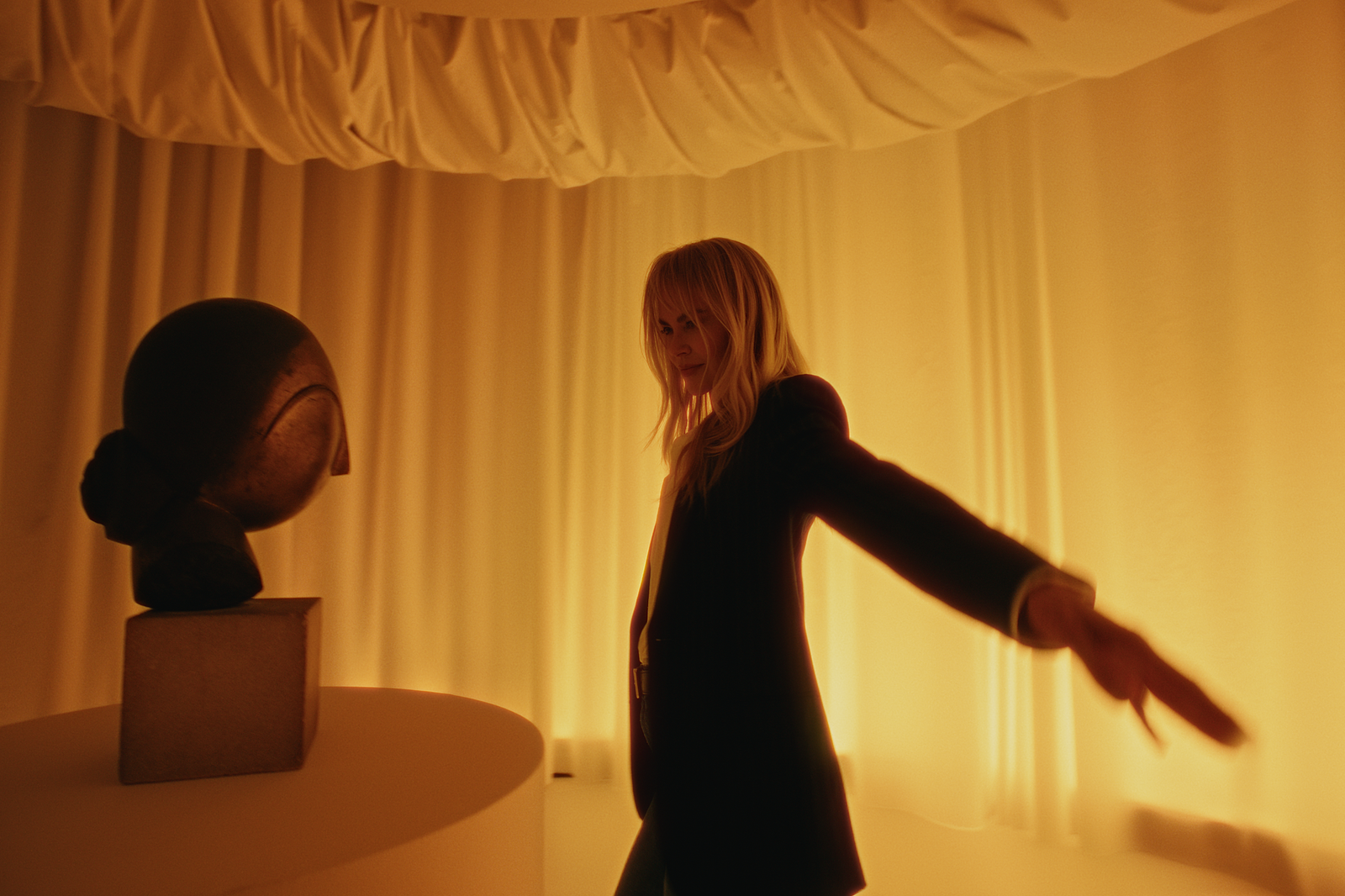
Nicole Kidman's Billion-Dollar Breakfast at Christie's

Christie's held a record-setting evening sale on May 18, 2025, that generated over $1 billion, featuring a promotional video starring Nicole Kidman. Jackson Pollock's drip painting "Number 7A, 1948" sold for $181.2 million, nearly tripling the artist's previous auction record, while Constantin Brancusi's bronze bust "Danaïde" (c. 1913) fetched $107.6 million, becoming the second most expensive sculpture ever sold. The works came from the collection of late magazine magnate S.I. Newhouse, and a Rothko from Agnes Gund's collection also set a new artist record at $98.4 million.

In the new film Nagi Notes, art is a vessel for characters’ desires

Japanese writer-director Koji Fukada's new film *Nagi Notes* premiered on 13 May at the Cannes Film Festival. The story follows Yuri (Shizuka Ishibashi), who visits the remote town of Nagi to sit for a sculptor friend, Yoriko (Takako Matsu). The film explores how characters use art—from drawings to sculptural busts—as a medium to express unspoken desires, grief, and identity, with key scenes set at the Nagi Museum of Contemporary Art featuring a permanent installation by Arakawa and Madeline Gins.

‘It’s like a Ouija board – I listen to the painting’: the supernatural art of Sanya Kantarovsky

Russian-born, New York-based artist Sanya Kantarovsky presents his new exhibition "Basic Failure" at Venice's Institute of Sciences, Letters and Arts, timed to coincide with the Venice Biennale. The show features his signature dishevelled, otherworldly figures—including a pallid boy with a cigarette, a child spinning in innocence, and a glass bust of a young boy with a dead spider under its eye—that explore tension, alienation, and the supernatural. Kantarovsky describes his process as listening to the painting like a Ouija board, and the exhibition includes works that confound narrative expectations, such as a scruffy toy panda and a recreation of Antonello Gagini's 16th-century sculpture.

Venice Biennale’s Russian Pavilion and Pussy Riot Spar Over Usage of Protest Footage

The Russian Pavilion at the 2026 Venice Biennale has become embroiled in a new controversy after accusing the anti-Putin art collective Pussy Riot of censorship. The pavilion posted on Instagram that Pussy Riot demanded the removal of footage featuring them from a documentary film about the pavilion's project, labeling the request as self-censorship. Pussy Riot responded sarcastically, questioning the pavilion's use of Instagram given Russia's 2022 ban of the platform. The dispute follows earlier protests at the pavilion's opening, led by Pussy Riot and FEMEN, against Russia's participation in the Biennale amid its ongoing invasion of Ukraine.

Political Fallout Rocks Venice Biennale Prize System

Dozens of artists participating in the 2026 Venice Biennale have withdrawn from consideration for the newly created Visitor Lion awards, replacing the traditional Gold and Silver Lion prizes. A total of 57 artists from the main exhibition and 22 national pavilions signed a statement published on e-flux on May 9, acting in solidarity with the five-person prize jury that resigned on April 30 over the continued participation of Russia and Israel. The jury had objected to awarding prizes to artists from countries whose leaders face International Criminal Court charges, including Russian president Vladimir Putin and Israeli prime minister Benjamin Netanyahu. In response, the Biennale organizers postponed the awards ceremony to November 22 and introduced visitor voting, a move they described as consistent with openness and dialogue. Meanwhile, the Russian Pavilion, which returned after lending its space to Bolivia in 2024, faced protests, closure after previews, and a €2 million funding pull by the European Union for the 2028 Biennale.

Putin ‘Won’ the Venice Biennale, Quips Italian Culture Minister

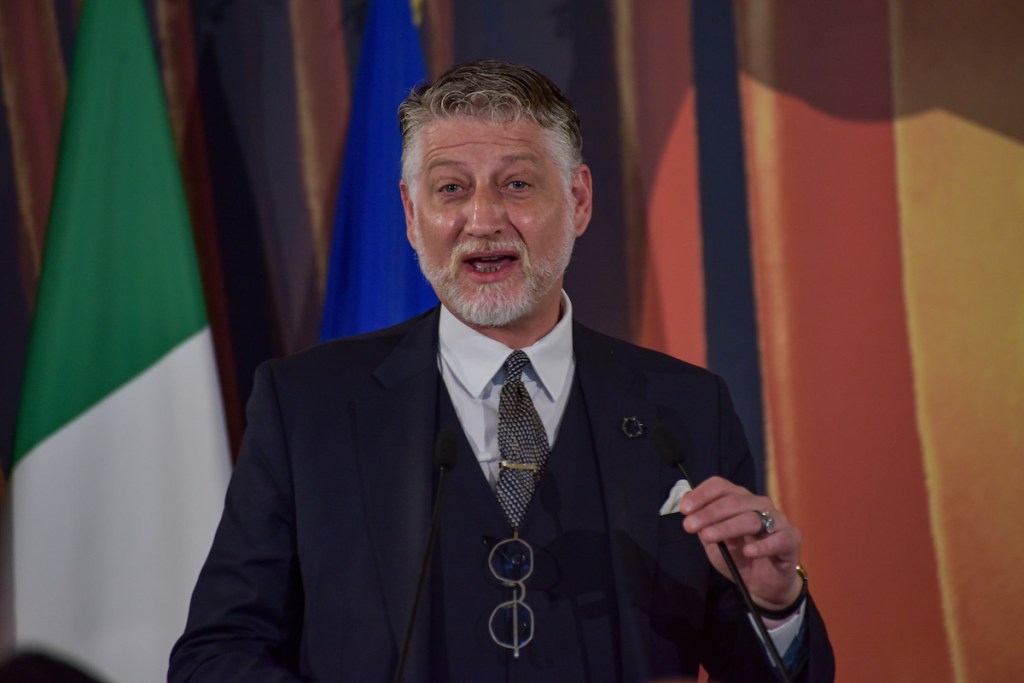
Italian Culture Minister Alessandro Giuli stated that Russian President Vladimir Putin "won" the 2024 Venice Biennale, criticizing Russia's controversial return to the event. Giuli, who repeatedly denounced Russia's presence, told Corriere della Sera that Russian artists in the pavilion cannot express dissent against their regime. The Biennale faced widespread calls to remove Russia, with the EU threatening to withhold a €2 million grant, but organizers argued they lacked legal authority to exclude the country. Protests by Pussy Riot and FEMEN marked the pavilion's opening, while the Biennale's jury resigned en masse after announcing that nations charged with crimes against humanity would be ineligible for Golden Lions.

Venice Biennale Artists Decline Consideration for Golden Lions Chosen by Public Vote

Nearly half of the artists in the main exhibition of the Venice Biennale have signed a statement declining consideration for the Golden Lion awards, in solidarity with the jury that resigned last month. The statement, published by e-flux, includes prominent names such as Alfredo Jaar, Tuan Andrew Nguyen, Otobong Nkanga, and Walid Raad, as well as national pavilion representatives from France, Lithuania, and the Netherlands. The Biennale had planned to replace the jury-selected Golden Lions with "Visitor Lions" decided by public vote, but the artists' refusal marks an unprecedented protest within the exhibition.

Who Owns the Megayachts Docked Outside the Venice Biennale?

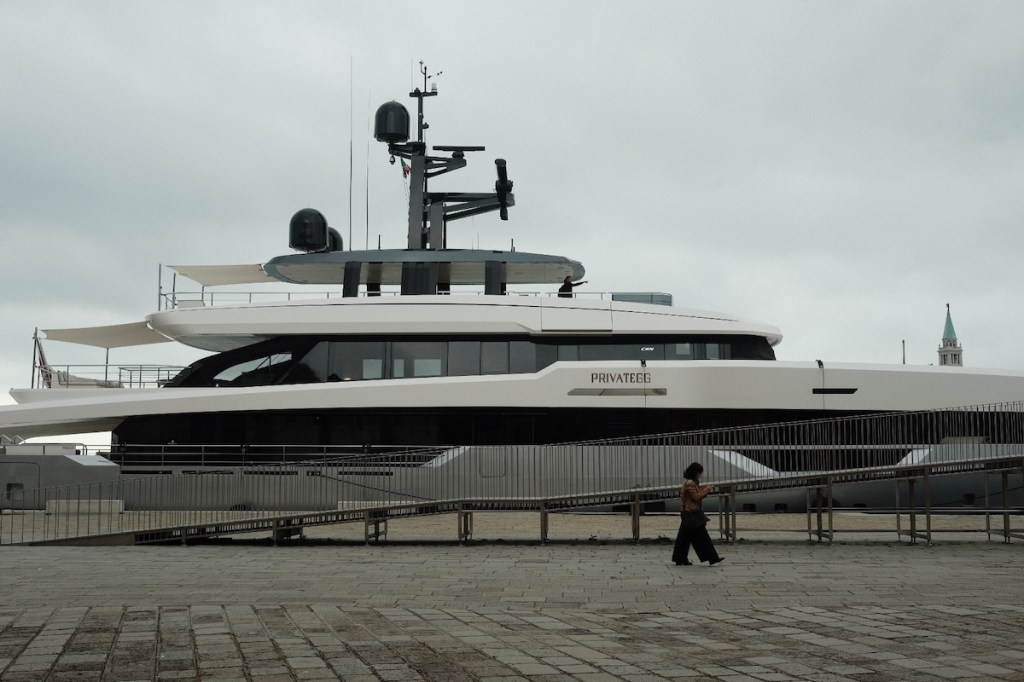
The article examines the megayachts docked outside the Venice Biennale, focusing on the 170-foot vessel 'Private GG' owned by Giancarlo Giammetti, cofounder of the Valentino fashion house. Giammetti, a serious art collector, was in Venice for the Biennale opening, posting photos of artworks and a dinner with actress Salma Hayek and her husband François-Henri Pinault, a major art collector. The yacht, built in 2022 by CRN, features luxury amenities including a jacuzzi, cinema saloon, and beach club.

Several Venice Biennale pavilions shut in protest over inclusion of Israel

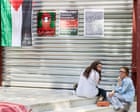
Several national pavilions at the 2026 Venice Biennale shut down during the final preview day in a strike organized by the Art Not Genocide Alliance (Anga) protesting Israel's inclusion due to its war in Gaza. Pavilions from Belgium, the Netherlands, Austria, Japan, Macedonia, and Korea closed entirely, while others like Britain, Spain, France, Egypt, Finland, and Luxembourg partially closed or reopened later. Artists in the main exhibition added Palestinian flags and posters reading "Palestine is the future of the world." The Israeli pavilion was closed for a private event, and earlier in the week Pussy Riot staged a protest at the Russian pavilion.

Khaled Sabsabi is finally at the Venice Biennale: ‘Being here is already a win’

Khaled Sabsabi has opened his exhibition 'conference of one’s self' at the Australian Pavilion of the 61st Venice Biennale, alongside a second installation 'Khalil' in the Arsenale. This follows a tumultuous period in which Creative Australia rescinded his appointment as Australia’s representative in February 2025, sparking widespread backlash from the art community. After being reappointed in July 2025, Sabsabi presents two monumental multimedia works inspired by Sufi practice, created in Bangkok and described as 'one body with two limbs'.

Drained, Drowning, and Decay: The Best National Pavilions at the Venice Biennale

The 2026 Venice Biennale is defined by themes of ruin and decay, with standout national pavilions exploring bodily, infrastructural, and archaeological collapse. The Slovenian Pavilion features the Nonument Group repurposing materials from past Biennales into a ruin of a mosque for Bosnian Muslim soldiers from World War I. Syria presents its first national pavilion since the Civil War, with Sara Shamma invoking Palmyra, destroyed by ISIS. Germany's pavilion, titled "Ruin," features works by Henrike Naumann (who died in February) and Sung Tieu, questioning the pavilion's fascist architecture and nationalist residue. The Austrian Pavilion, curated by Florentina Holzinger, offers a visceral performance titled "Sea World." The Biennale is also marked by the abrupt resignation of its five-member jury, who refused to consider nations charged with crimes against humanity, leading to awards being chosen by public vote. Additionally, the main exhibition "In Minor Keys" was affected by the death of its curator, Koyo Kouoh.

Lithuanian, Latvian, and Estonian Pavilions Stage Pro-Ukraine Procession During Venice Biennale

On May 6, 2026, the Lithuanian, Latvian, and Estonian pavilions at the Venice Biennale organized a procession in solidarity with Ukraine, walking approximately one and a half miles from the Lithuanian Pavilion in the Fucina del Futuro to the Estonian pavilion. The action honored Ukrainian cultural workers creating under war conditions and those who have died. It is one of several political protests at the contentious 2026 Biennale, including demonstrations by Pussy Riot and FEMEN at the Russian pavilion, a "Solidarity Drone Chorus" opposing Israel's inclusion, and a planned 24-hour strike by the Art Not Genocide Alliance.

An Unprecedented 24-Hour Strike Could Upend the Venice Biennale

An unprecedented 24-hour strike is set to interrupt the Venice Biennale's opening week on Friday, May 8, in protest of Israel's participation in the global art event. The action, organized by the activist group Art Not Genocide Alliance (ANGA), follows a letter signed by over 230 Biennale participants demanding Israel's exclusion. The strike has exposed divisions among participants, with some artists and pavilion teams weighing solidarity against the rare opportunity to platform their own political messages. The Slovenian pavilion, represented by Nika Grabar of the Nonument Group, has committed to the strike, while others like Ecuador's Tawna Collective remain undecided, balancing protest with their mission to highlight ecological crises in the Amazon.

‘Exclusion can only satisfy the ego’: Venice Biennale president hits out at critics amid Russia and Israel controversy

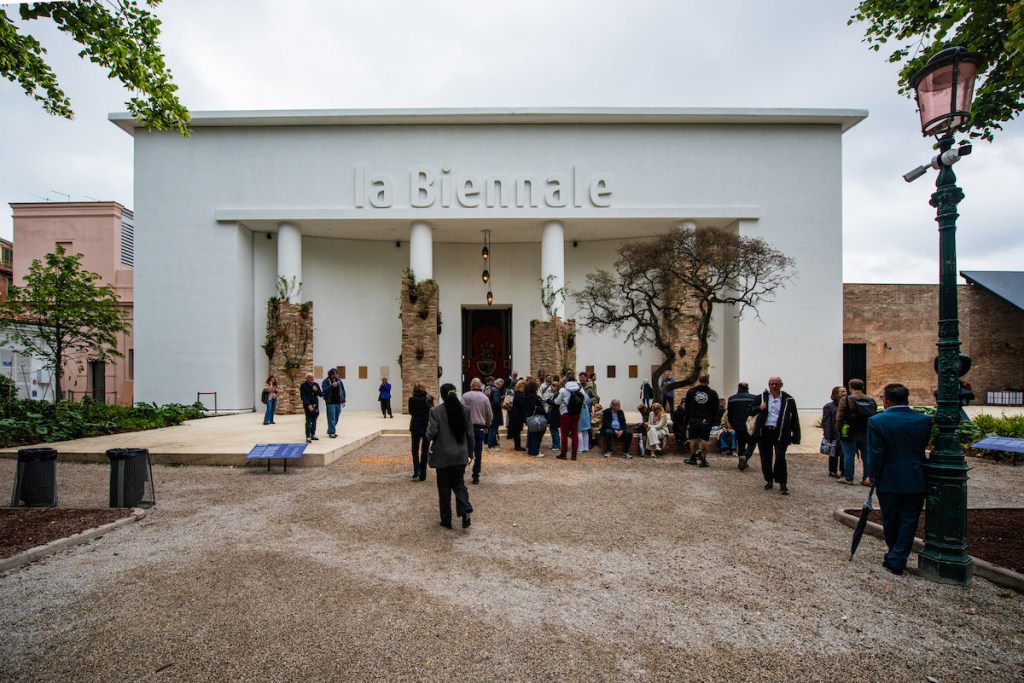
Venice Biennale president Pietrangelo Buttafuoco defended the institution against critics at a conference on May 6, three days before the public opening, amid controversy over Russia's return to the event for the first time since its 2022 invasion of Ukraine and ongoing disputes over Israel's participation. He accused critics of “narcissism” and “censorship,” while Italian culture minister Alessandro Giuli sent inspectors to investigate whether Russia's involvement breached sanctions; a report was submitted to Prime Minister Giorgia Meloni's office. Meanwhile, the Biennale faces legal threats from the artist representing Israel over alleged discrimination, and protests have erupted, including a demonstration by Art Not Genocide Alliance and a Pussy Riot action at the Russia pavilion.

Parasol Unit returns with a showcase of women from Central Asia and beyond

Parasol Unit, the London non-profit exhibition space that closed in 2020 after 16 years, has relaunched with a new exhibition titled "Turandot: To the Daughters of the East" as an official collateral event of the Venice Biennale. Held at the historic Palazzo Franchetti, the show features 11 female artists from Central Asia and surrounding regions, curated by founder Ziba Ardalan. The exhibition spans video, installation, sculpture, painting, textile, and sound works by artists including Lida Abdul, Huma Bhabha, Mona Hatoum, and Tala Madani, and runs from 9 May to 31 October.

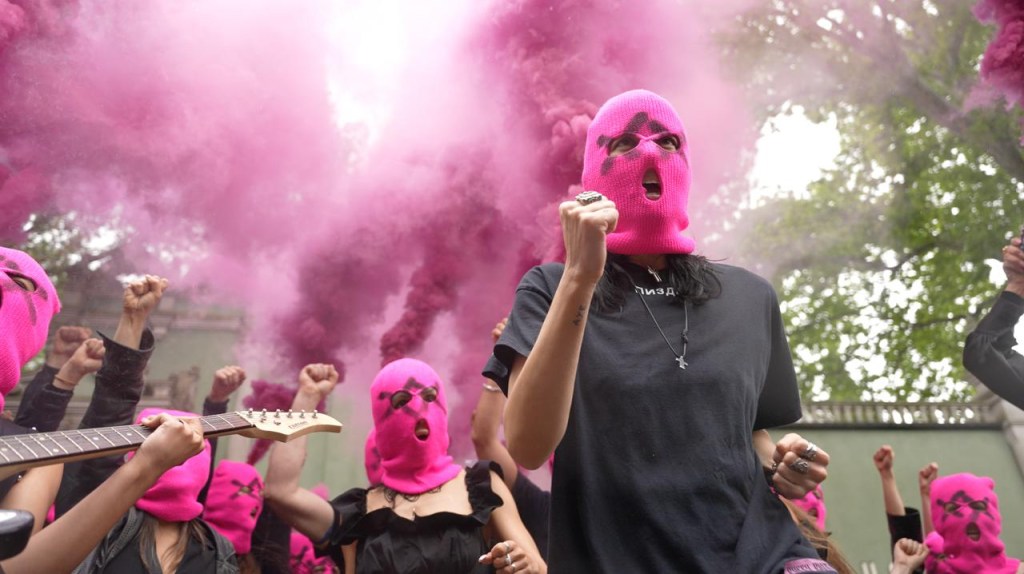
Pussy Riot protest at Venice Biennale forces Russian pavilion to briefly close

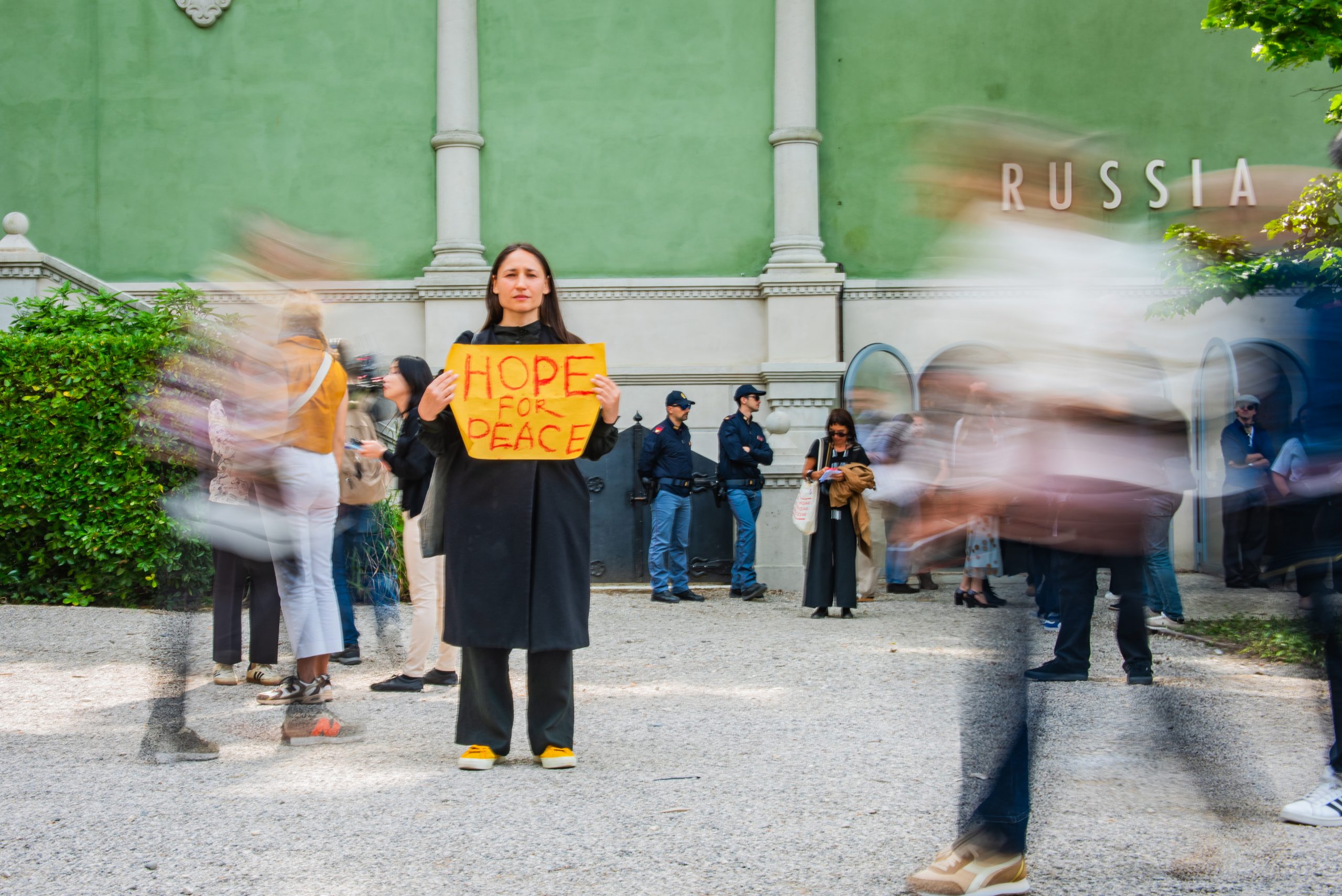
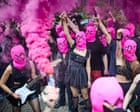
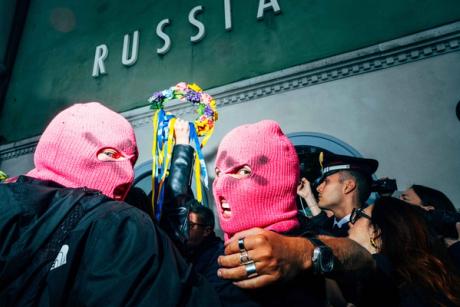
On the second day of the Venice Biennale preview, the activist group Pussy Riot staged a chaotic protest at the Russian pavilion, forcing it to temporarily close. Wearing pink balaclavas and carrying flares, about 40 activists—including members of Femen—gathered outside the pavilion, shouting slogans like "Blood is Russia's Art" and attempting to enter before being pushed back by police. Founding member Nadya Tolokonnikova led the protest, condemning Europe for allowing Russian participation despite the war in Ukraine. Separately, the Art Not Genocide Alliance (Anga) demonstrated outside the Israeli pavilion, which was locked from inside, over Israel's war in Gaza.

Malaysia Showcases Recovered 1MDB Artworks, From Picasso to Miró

Four artworks recovered from the 1MDB scandal—by Picasso, Miró, Balthus, and Maurice Utrillo—have gone on public display for the first time at the Malaysian Anti-Corruption Commission headquarters in Putrajaya. The paintings were repatriated from New York after being traced through Sotheby’s and shipped back to Malaysia on April 14. They are part of a broader art trail linked to the massive financial fraud, with Malaysian officials framing the display as an act of restitution rather than an art event.

Major protests take place at Venice Biennale previews

Major protests erupted during the preview days of the Venice Biennale, with multiple demonstrations targeting the Israeli and Russian pavilions. On Wednesday, the Art Not Genocide Alliance (ANGA) held a large protest outside the temporary Israeli pavilion in the Arsenale, attended by over 200 people calling for its closure. Separately, the Solidarity Drone Chorus performed a sound composition by Gazan artist Ahmed Muin, with 60 artists wearing T-shirts bearing names of artists from Gaza. Meanwhile, Pussy Riot and FEMEN protested Russian participation, forcing the Russian pavilion to shut its doors. These actions follow the resignation of the entire Golden Lion jury days before the opening, after they stated they would not consider pavilions from countries whose leaders are charged with crimes against humanity by the ICC—widely seen as a reference to Russia and Israel.

In Protest of Israeli Pavilion, Activists and Unions Plan Strike on Venice Biennale’s Opening Day

The Art Not Genocide Alliance (ANGA) has announced a 24-hour strike and rally on May 8, the day before the 2026 Venice Biennale opens to the public, in protest of the Israeli Pavilion. ANGA, formed in opposition to Israel's inclusion in the 2024 Biennale, refers to the current Israeli presentation—featuring Haifa-based artist Belu-Simion Fainaru—as the "Genocide Pavilion." Over 200 artists, curators, and culture workers have signed an open letter demanding Israel's exclusion, and a separate action called Solidarity Drone Chorus involved 60 artists. ANGA is collaborating with local labor and culture organizations including Biennalocene, Vogliamo Tutt'altro, S.a.L.E. Docks, and Mi Riconosci.

A Pavilion of Ruins: Germany Reconsiders Its Past in Venice

The German Pavilion at the 61st Venice Biennale features a dual presentation exploring the country's layered political history. Artist Sung Tieu has cloaked the pavilion's fascist-era facade with a mosaic reconstruction of a GDR housing estate for Vietnamese contract workers, where she lived as a child. Inside, the late Henrike Naumann's immersive installation 'The Home Front' uses furniture and design to stage a confrontation between East and West German domestic and political ideologies. Naumann died in February 2025 at age 41, but her fully realized concept was completed collaboratively by her partner and curator Kathleen Reinhardt.

Dark clouds, protests and resignations dampen start of 61st Venice Biennale

The 61st Venice Biennale opened under grey skies and rain, with political tensions overshadowing the art world's premier event. The Russian pavilion, absent for two editions due to the Ukraine war, reappeared with a party atmosphere, though the Italian ministry of culture confirmed it would not be open to the public. The Ukrainian culture minister called Russia's symbolic presence powerful. The Iranian pavilion withdrew without explanation, and a protest by 60 artists from the In Minor Keys show marched through the Giardini humming in solidarity against Israel's participation. Over 200 artists, including Lubaina Himid and Alfredo Jaar, signed an open letter demanding the Israeli pavilion's cancellation. The event also proceeded without its curator, Koyo Kouoh, who died in May 2025; her curatorial team delivered the exhibition following her plans.

David Nahmad maintains that his Modigliani was not looted by the Nazis

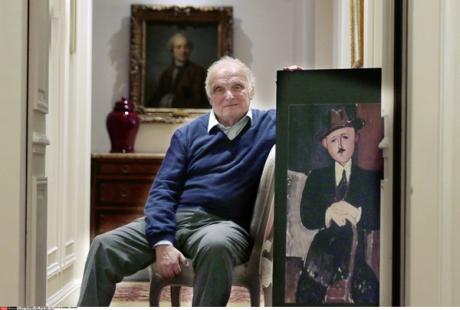
David Nahmad is continuing his legal battle to prove that his Modigliani painting, *Seated Man with a Cane* (1918), was not looted by the Nazis from the Jewish dealer Oscar Stettiner. Despite a recent New York ruling against him, Nahmad’s lawyers have filed a motion to review the case based on new eyewitness testimony. Two witnesses claim the painting they saw in the Van der Klip family—which bought the Nazi-looted work in 1944—is completely different from Nahmad’s painting, lacking a seated man or a cane. Nahmad’s legal team also cites a 1946 French bailiff report and a recent catalogue raisonné by Marc Restellini to argue that Mondex, the restitution firm working for Stettiner’s heirs, misidentified the work.

How the adoption of canvas in Venice changed the way artists painted

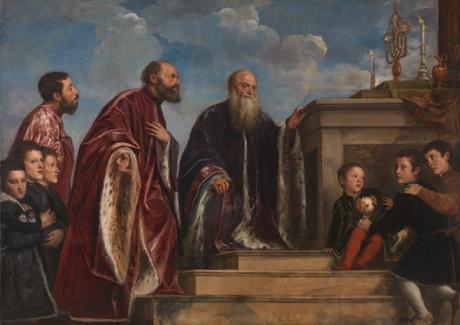
Art historian Cleo Nisse has published a new book, *Venetian Canvas and the Transformation of Painting*, examining how 16th-century Venetian painters such as Titian, Veronese, and Tintoretto pioneered the use of canvas as a painting support. Nisse reveals that canvas was not a uniform material—artists experimented with different weaves, including tabby and herringbone patterns, and even repurposed sailcloth and tablecloth-quality fabrics to achieve specific visual effects. The book argues that canvas was already familiar in the late Middle Ages for banners and alternatives to tapestry, and that Vittore Carpaccio was the first master of the medium, varying canvas types for expressive purposes in his *Legend of St Ursula* series.

BBC ‘Buried’ Footage of Banksy at NYC Mural Site, Former Reporter Claims

Former BBC New York correspondent Nick Bryant claims the BBC suppressed footage he captured of Banksy at a mural site in New York City in March 2018. In a Substack post, Bryant recounts being tipped off by Banksy's PR team about a new artwork at the Houston Bowery Wall, where he and his cameraman filmed the artist—described as a middle-aged man in a black beanie and grey coat—fleeing the scene with fresh paint on his fingers. Despite believing he had a world exclusive, Bryant says BBC editors in London decided not to air the footage, citing concerns about unmasking the artist and preserving the mystery for audiences, including a senior colleague's daughter who compared revealing Banksy's identity to telling children there is no Santa Claus.

Seen a ghost? The eeriest images from Fotografia Europea – in pictures

Fotografia Europea, the international photography festival in Reggio Emilia, Italy, has opened with 20 exhibitions and related events under the theme 'ghosts of the moment'. The festival features works by artists including Tania Franco Klein, Giulia Vanelli, Felipe Romero Beltrán, and Salvatore Vitale, exploring themes of memory, migration, identity, and the unseen forces shaping contemporary life. The festival runs until 14 June 2026.

Anish Kapoor says US’s ‘politics of hate’ should exclude it from Venice Biennale

Anish Kapoor has called for the United States to be excluded from the Venice Biennale, citing the country's "abhorrent politics of hate" and "incessant warmongering." His comments follow the resignation of the five-member international jury, who stepped down in protest over the inclusion of Israel and Russia. Kapoor praised the jury's decision as "courageous" but argued they should have also targeted the US. The US pavilion, featuring artist Alma Allen and his exhibition "Call Me the Breeze," has faced scrutiny over perceived Trump administration interference and a delayed selection process. Meanwhile, the Israeli and Russian pavilions remain flashpoints, with over 200 participants signing a letter demanding the cancellation of the Israeli pavilion, and the Russian pavilion closed to the public but viewable through windows.