filter_list Showing 1315 results for "Allen" close Clear
search
dashboard All 1315 museum exhibitions 826article culture 121article news 101article local 75rate_review review 54trending_up market 39person people 38candle obituary 33article policy 17gavel restitution 10article events 1
date_range Range Today This Week This Month All
Subscribe

Valie Export en 2 minutes

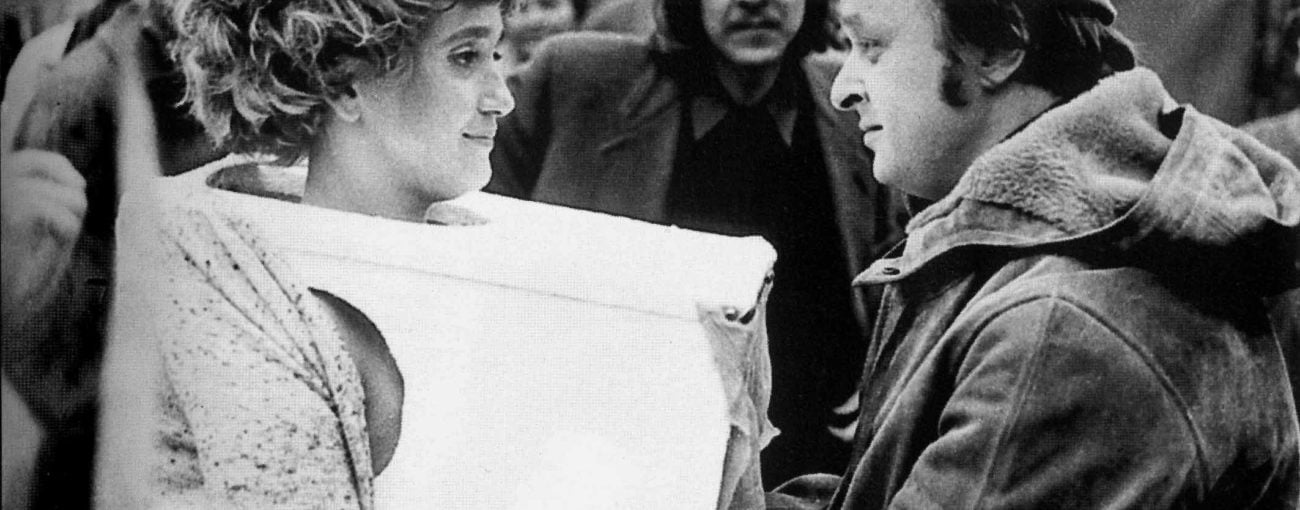
Valie Export (1940–2026), the Austrian avant-garde artist known for radical feminist body art and video, has died at age 85. Born Waltraud Lehner in Linz, she studied design in Vienna before adopting her iconic pseudonym from a Canadian cigarette brand in 1967. Export rose to prominence with her 1969 performance *Genitalpanik*, which critiqued the male gaze and women's societal roles. She became a key figure in body art alongside the Vienna Actionists, later expanding into film and photography. Her first feature *Unsichtbare Gegner* (1976) screened at the Berlinale, and she won the Golden Bear in 1985 for *Die Praxis der Liebe*. She taught in Cologne from 1995 and participated in Documenta 6.

Victorien Bornéat : « De l’échec de la démocratisation culturelle est né un sentiment d’exclusion »

Victorien Bornéat has published a manifesto arguing that French cultural democratization policy, rooted in André Malraux's vision of making masterworks accessible to all, has failed. He cites budget cuts by regional presidents Laurent Wauquiez and Christelle Morançais, police raids on bookshops like Violette and Co, and statistical studies showing that working-class audiences still do not spontaneously attend theaters, museums, or opera. Bornéat contends that the policy's emphasis on direct confrontation with canonical works ignored the need for cultural codes and institutional literacy, creating an exclusion that politicians now exploit for electoral gain.

L’œuvre « indocile » du photographe Guido Guidi exposée au BAL

The article announces the exhibition of photographer Guido Guidi's work at Le BAL in Paris, curated by Simona Antonacci, Pippo Ciorra, and Antonello Frongia, with scenography by Cyril Delhomme. The show, titled "Col tempo, 1956-2024," runs from February 20 to May 24, 2026, and was previously presented in a larger version at the MAXXI museum in Rome. Guidi, now 85, is described as the last of a generation of Italian photographers—alongside Luigi Ghirri and Ugo Mulas—who radically redefined photographic language through patient, obstinate reflection on the act of seeing.

‘What Color is Your Sky Today?’: The Becoming of the Image

Armineh Negahdari, a Bordeaux-based artist, presents her first institutional solo exhibition in France at the Fondation Louis Vuitton's Open Space series. Titled 'What Color is Your Sky Today?': The Becoming of the Image, the show features a new body of drawings that use charcoal, pastel, and oil paint to explore unstable morphologies between human, vegetal, and animal forms. The works resist narrative closure, emphasizing drawing as an event rather than representation, with lines that accumulate, falter, and begin again. The exhibition is on view at Gallery 8 until 30 August 2026.

US SCULPTURES AMID CONTROVERSY AT THE VENICE BIENNALE

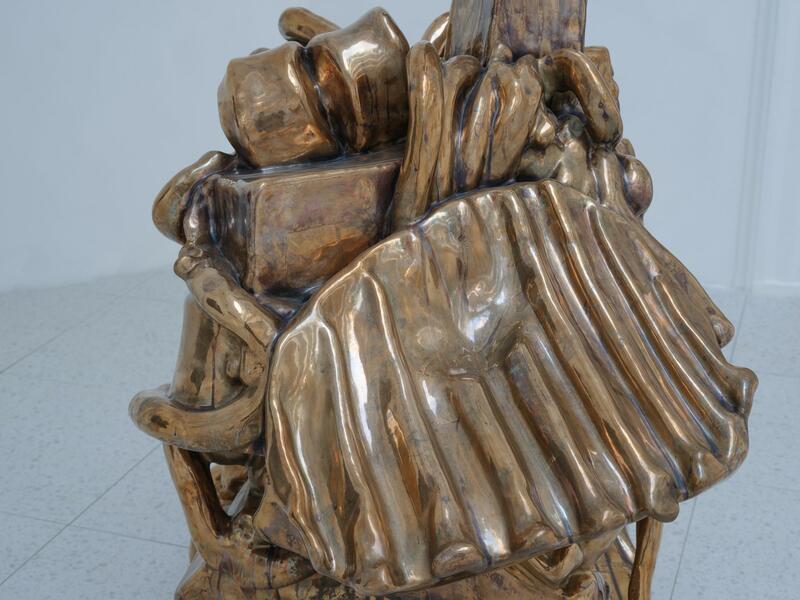
The United States Pavilion at the 61st Venice Biennale features sculptor Alma Allen's exhibition "Call Me the Breeze," which opened with no clear funding just ten days prior. Unlike previous pavilions supported by major foundations like Ford and Mellon, Allen's show relies on a $375,000 US government contribution and public donations via the American Arts Conservancy. The selection process was unconventional: the State Department, which took over after Trump's NEA budget cuts, imposed restrictions on DEI policies and required proposals promoting "American exceptionalism." Curator Jeffrey Uslip directly approached Allen without a formal proposal, leading the artist's two galleries—Olney Gleason and Mendes Wood DM—to drop him when he accepted the commission.

MANUEL SEGADE: “PRESERVAR LA COMPLEJIDAD DEL MUNDO ES UNA DE LAS TAREAS FUNDAMENTALES DEL MUSEO”

Manuel Segade, director of the Museo Nacional Centro de Arte Reina Sofía, is interviewed as part of a series for International Museum Day. He discusses the museum's role as a space historically tied to critique, conflict, and negotiation with tradition, emphasizing the need to preserve the world's complexity. Segade advocates for institutions that can speak on multiple levels, from introductory lectures to para-academic research, and stresses transforming internal structures toward more horizontal and interdependent models.

CUANDO LOS OBJETOS HABLAN. MUSEO HECHIZO, DE JUAN JOSÉ SANTOS

Juan José Santos's book "Museo hechizo" (Metales Pesados, 2025) challenges the perceived neutrality of the Western museum, presenting it as an institution shaped by colonial logics of classification, extraction, and representation. The essay centers on the concept of "lo hechizo"—understood as both artisanal precariousness and disruptive enchantment—and explores small, community-based Latin American museum experiences that operate from precarity, reciprocity, and care. Santos argues that the museum is a space of conflict where voices, narratives, and ways of constructing history are contested, and he proposes thinking of the museum through its minor, situated, and alternative forms in Latin America.

SOL HENARO: “BAJAR LA VELOCIDAD ES POLÍTICO Y, AUNQUE CUESTA MUCHO, HAY QUE SEGUIR INTENTÁNDOLO”

Sol Henaro, director of the Museo Universitario del Chopo in Mexico City, argues in an interview for Artishock Revista that museums must resist neoliberal pressures to accelerate production, spectacularize content, and convert cultural experience into immediate consumption. She advocates for the museum as a space of plurality, deceleration, and critical thought, emphasizing the need for horizontal, careful practices that allow for dissent and coexistence. The interview is part of a series on International Museum Day featuring directors from Latin American and Ibero-American institutions.

Meet the Former Monk Taking Over Venice During This Year’s Biennale

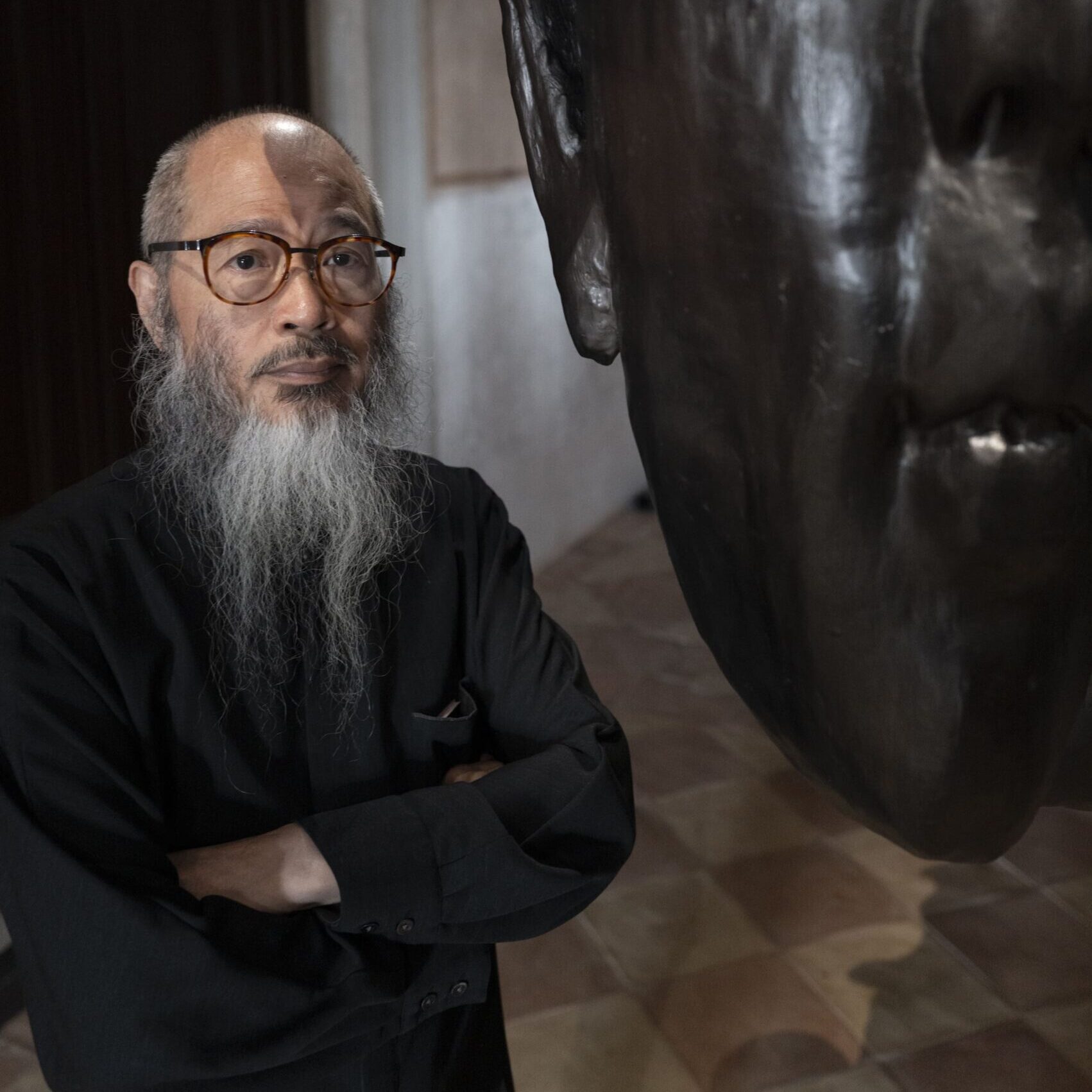
Wallace Chan, a Hong Kong-born sculptor and jeweler who once lived as a Buddhist monk, is presenting his latest exhibition “Vessels of Other Worlds” at the Chapel of Santa Maria della Pietà in Venice on May 8, coinciding with his 70th birthday and the Venice Biennale, followed by a show at Shanghai’s Long Museum on July 18. The exhibition features three monumental titanium sculptures standing seven, eight, and 10 meters tall, evoking religious oil vessels, and explores themes of birth, growth, and rebirth through the demanding medium of titanium, which Chan describes as the material closest to eternity.

architecture frida escobedo serpentine pompidou

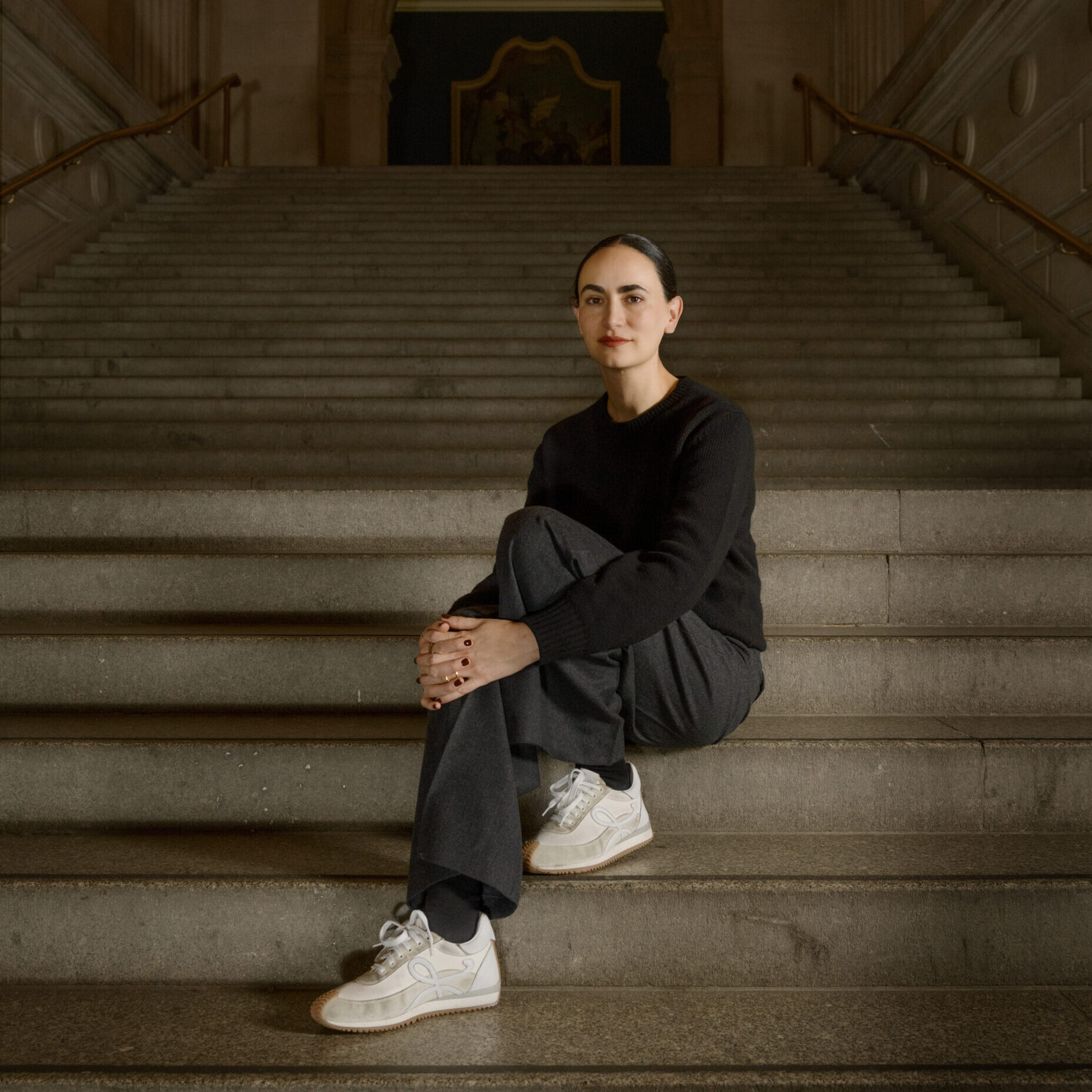
Frida Escobedo, a Mexican architect who founded her Mexico City studio at age 23, is profiled as part of Cultured's 2026 CULT100 honorees. She became the youngest architect to win the Serpentine Pavilion commission and is set to debut her biggest project yet in 2030: the Metropolitan Museum of Art's new modern and contemporary wing. The article presents a Q&A format covering her influences, including architect Lebbeus Woods, her views on patience and imagination, and her reflections on career challenges such as protecting her time.

“Cartographies of Growth” at MARTa Herford

From February 7 to June 7, 2026, MARTa Herford presents a dual exhibition dedicated to Lois Weinberger (1947–2020) and Katinka Bock (born 1976). The show explores poetic phenomena beyond human control, where materials react, spaces shift, and natural forces leave their traces both inside the museum and beyond.

“Magnanrama. Portraits, Networks, and News of Nathalie Magnan” at Villa Arson, Nice

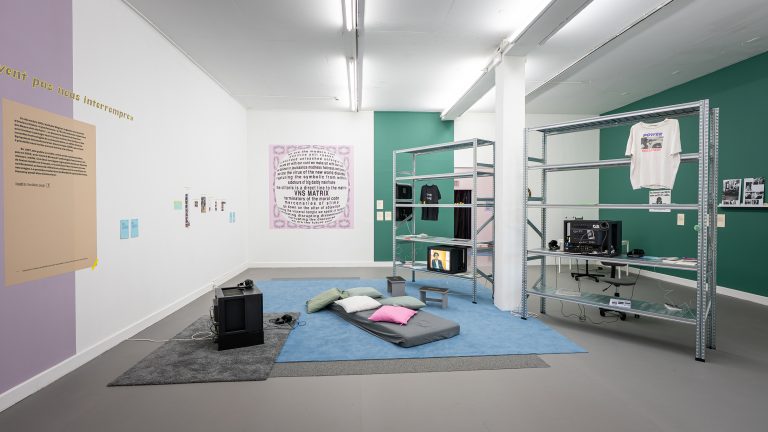
Mousse Magazine reports on the exhibition “Magnanrama. Portraits, Networks, and News of Nathalie Magnan” at Villa Arson in Nice, which celebrates the life and work of Nathalie Magnan (1956-2016). Magnan was a media theorist, filmmaker, cyberfeminist, educator, webmistress, hacktivist, and interdisciplinary figure who navigated the internet and the high seas, contributing to the history of thought, technology, feminism, and LGBTQI+ struggles. The show presents portraits, networks, and news related to her legacy, positioning her as a mediator and artist despite her reluctance to use that term.

“Clean / Clear / Cut” Malta Biennale 2026

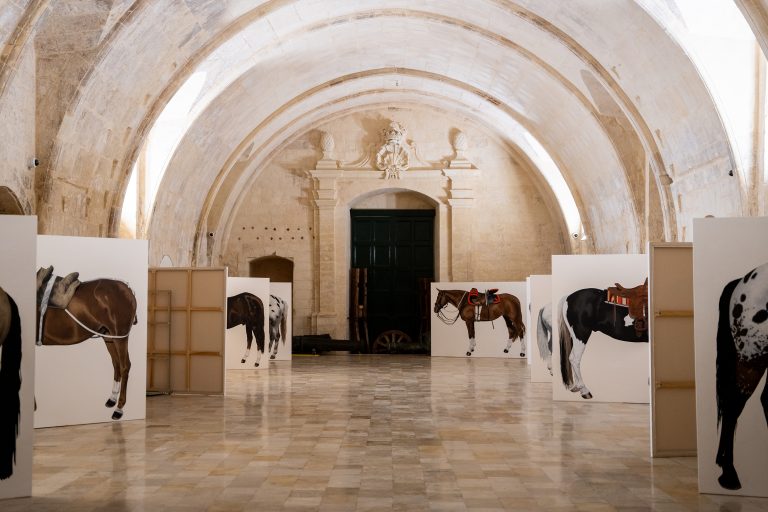
The Malta Biennale 2026, titled "Clean / Clear / Cut," launched on March 11 and runs through May 29, transforming historical sites and cultural landmarks across Malta and Gozo into venues for contemporary art and critical dialogue. The biennale is under the artistic direction of international curator Rosa Martínez.

“In the Presence of Others” at Nørrebro Teater, Copenhagen

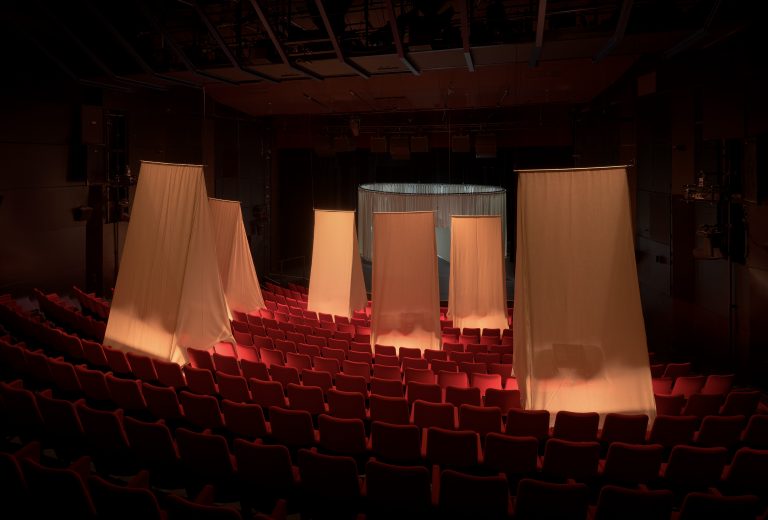
Nørrebro Teater in Copenhagen is hosting its first major contemporary art exhibition, "In the Presence of Others," featuring works by Marina Abramović, Laurie Anderson, and Miranda July. The show focuses on the artists' engagement with sound and will be staged throughout the entire theatre building.

Reba Maybury “I Come in Peace” at Secession, Vienna

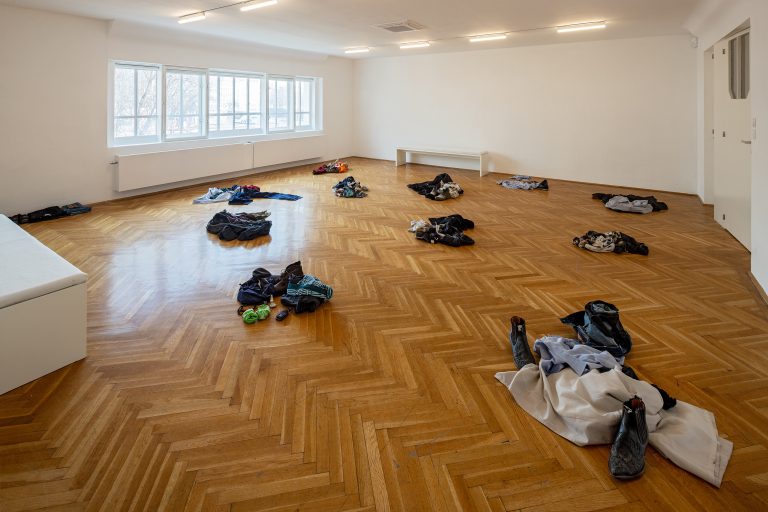
Reba Maybury presents her exhibition "I Come in Peace" at Secession in Vienna, an installation that spans four sites within the building—including the façade, foyer, and upstairs spaces. Maybury, an artist, writer, and political dominatrix, uses her multidisciplinary practice to explore themes of feminism, sexuality, labor, and power, directly engaging with the institution's history by questioning how to dominate the legacy of Gustav Klimt.

Protests and Shutdowns Engulf 61st Venice Biennale Opening

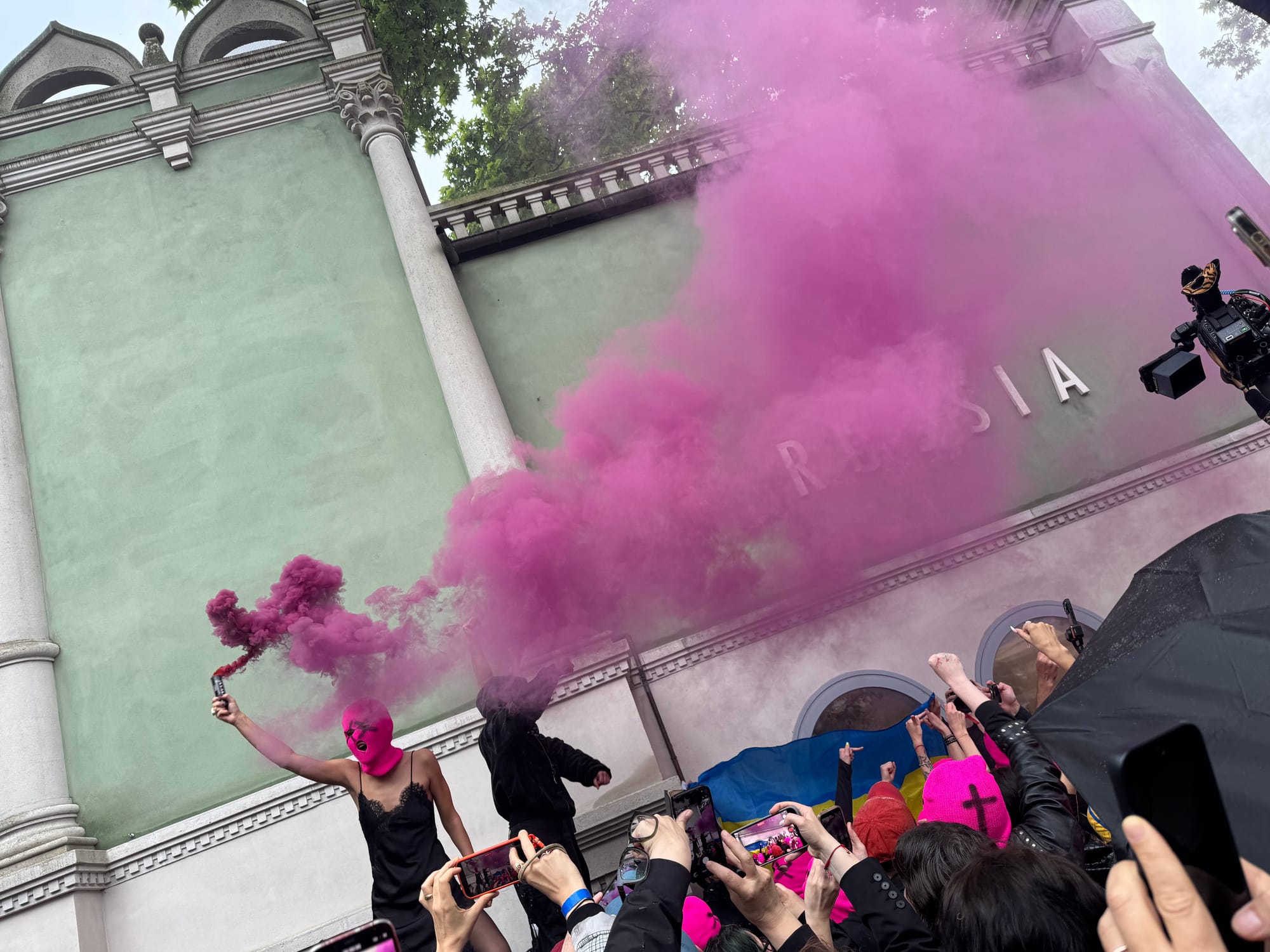
The 61st Venice Biennale preview week, opening to press and professionals ahead of its May 9 public launch, has been engulfed by protests and institutional crises. On May 5, around 60 artists from Koyo Kouoh's exhibition “In Minor Keys” staged a Solidarity Drone Chorus outside the Giardini, drawing on Gazan composer Ahmed Muin's Drone Song (2025) to highlight victims of warfare. On May 6, the Art Not Genocide Alliance (ANGA) organized protests outside Israel's pavilion at the Arsenale, leading to a security-enforced closure, while Pussy Riot and FEMEN demonstrated outside the Russian pavilion. The jury resigned on April 30 after controversy over award eligibility tied to ICC arrest warrants, prompting the Biennale to scrap Golden Lions and transfer prize voting to the public. Iran withdrew its pavilion on May 4, and Russia's will close on May 9, with only exterior video projections remaining. ANGA and Italian unions have announced a 24-hour strike on May 8.

“Human Being Human” at The Private Museum

The Private Museum in Singapore presents "Human Being Human: Selections from the Collection of John and Cheryl Chia," an exhibition running from January 19 to April 26, 2026. Organized into four chapters—"Stateless," "State," "Statehood," and "Rebirth"—the show features works by artists including Joseph Beuys, Lee Wen, Eadweard Muybridge, Sherman Ong, John Clang, Sun Xun, and Green Zeng, exploring the body as a central site of inquiry into identity, vulnerability, and societal conditioning. The collection, amassed over 25 years by doctors John and Cheryl Chia, uses the body to examine themes of statelessness, state control, collective ideology, and rebirth, with works that challenge linear narratives and embrace conceptual loops.

Wiggy stardust! The mind-blowing hair artist who astonished Rihanna and Cate Blanchett

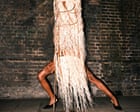
Taiba Akhuetie, a London-based artist who uses human and synthetic hair as her primary medium, is preparing for her first solo exhibition at the Sarabande Foundation. Her unsettling, taxidermy-like sculptures transform everyday objects—handbags, mirrors, rocking chairs, and umbrellas—into eerie, hair-covered artworks. Akhuetie began her career as a braider, founding the salon Keash Braids in Peckham, and pivoted to sculptural work during the pandemic. Her creations have attracted high-profile clients including Rihanna, Cate Blanchett, and Nigerian singer Tems, and have been featured by Vogue.

Would you sit on this? Australian designers take on the humble chair – in pictures

For the 10th edition of Melbourne Design Week, over 100 chairs by Australian designers are on display in an exhibition titled '100 Chairs', curated by Friends & Associates. Selected from an open call, each chair had to be made in Australia and functional for sitting. The designs range from traditional timber dining chairs to experimental pieces, including a chair that transforms into a table, a horse-shaped chair, and one with a satanic theme. The exhibition is held at South Magdalen Laundry, Abbotsford Convent in Melbourne until 24 May 2026.

‘How can nudity be so provocative?’ Florentina Holzinger on rocking Venice with naked jetskiers, human bells and urine divers

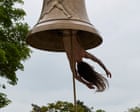
Florentina Holzinger, an Austrian dancer and choreographer known for provocative, physically extreme performances, is representing Austria at the Venice Biennale with a new work titled *Seaworld Venice*. The piece features naked performers on a barge in the lagoon, including a woman suspended upside down inside a cast-iron bell hoisted by a crane, a guitarist rocking at a vertiginous height, and a vocalist screaming like Yoko Ono. Holzinger’s previous opera *Sancta* included a climbing wall, nuns on roller skates, and a pregnant pope on a robot arm, and has toured European opera houses for two years.

From men on dog leads to public breast-fondling, Valie Export’s art demanded a total feminist revolution

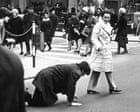
Valie Export, the pioneering Austrian feminist artist known for her provocative and confrontational performances from the 1960s onward, is the subject of a reflective essay by writer and academic Hettie Judah. The article revisits Export's radical works such as *Hyperbulia* (1973), where she crawled naked through electrified wires; *From the Portfolio of Doggedness* (1968), in which she led a man on a dog lead through Vienna; and *Action Pants: Genital Panic* (1969), where she walked through a cinema with exposed genitals. Judah draws on her own interviews with Export, who died in 2023, and discusses the artist's manifesto demanding that women use art to reshape consciousness and achieve liberation.

‘Touch the earth lightly’: the Australian home that floats above the landscape

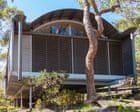
The article profiles the Ball-Eastaway House, a home designed by pioneering Australian architect Glenn Murcutt in 1983 for artist Sydney Ball and his partner Lynne Eastaway. Located on a 10-hectare block of dry sclerophyll forest northwest of Sydney, the house is elevated on 14 steel columns sunk into a sandstone rock shelf, allowing it to float above the landscape and minimize its environmental impact. Murcutt, who later won the Pritzker Prize, incorporated sustainable design features such as natural ventilation, a gutter system inspired by eucalypt leaf patterns, and a structure that can be dismantled without trace.

Venice Biennale strike sees more than 15 pavilions temporarily or partially close

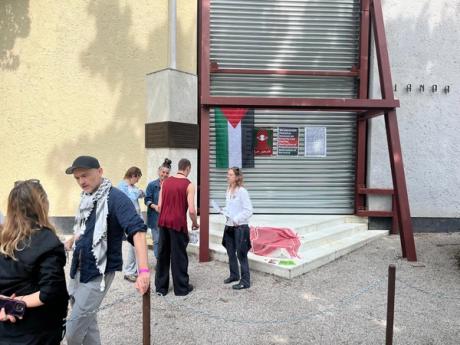
On 8 May, more than 15 national pavilions at the Venice Biennale temporarily or partially closed in a coordinated strike organized by the Art Not Genocide Alliance (ANGA). The protest opposes Israel’s participation in the event, which organizers say normalizes what they call genocide and exploits precarious labor. Participating countries include Austria, Lebanon, Slovenia, Egypt, Poland, and the Netherlands, whose artist Dries Verhoeven stood outside his shuttered pavilion with a Palestinian flag. Some pavilions, like Japan’s, remained open but suspended interactive elements. The strike follows earlier controversies, including the resignation of the prize jury and an open letter demanding the Israeli pavilion’s cancellation.

The Most Provocative Performance in Venice

Florentina Holzinger, a performance artist known for extreme feminist works involving nudity, bodily fluids, and physical endurance, is representing Austria at the 2026 Venice Biennale with a pavilion titled “Seaworld Venice.” Opening May 9, the installation transforms the Austrian Pavilion in the Giardini into an underwater theme park and a functioning sewage treatment plant, where audience urine collected from portable toilets is cleaned and recycled into the tanks. The work explores themes of the human body, ecology, and Venice’s own struggles with sinking infrastructure and mass tourism.

S&M-inspired Greek Pavilion in Venice confronts its fascist chains

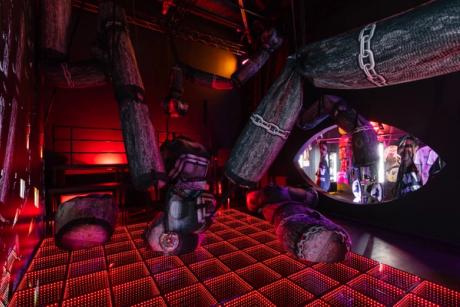
The Greek Pavilion at the 2026 Venice Biennale, titled "Grecia" and conceived as a drag artist, presents an S&M-inspired installation by artist and architect Andreas Angelidakis. The immersive space features a red neon-lit floor, soft sculptures resembling beanbags, fragmented marble columns wrapped in chains, and souvenirs bearing images of queer artists and the late activist Zak Kostopoulos (Zackie Oh). The pavilion aims to deconstruct the idea of a fixed national identity, exploring themes of queerness, fascism, and historical trauma.

The Bahamian Pavilion Brings Junkanoo to Venice in a Biennale Standout

After a thirteen-year hiatus, the Bahamian Pavilion has returned to the Venice Biennale with an exhibition titled "In Another Man's Yard," featuring the late master John Beadle and his former student Lavar Munroe. The pavilion, housed in the San Trovaso Art Space in Dorsoduro, centers on Junkanoo—the vibrant, crepe-costumed procession that is a defining cultural tradition of the Bahamas. Munroe's large-scale sculptural works incorporate strips of discarded Junkanoo costumes, while paintings and installations commemorate Beadle, who died in 2024. The presentation was revived with support from Baha Mar, a resort company, after government funding was withdrawn in 2014.

Abbas Akhavan Transforms the Canada Pavilion Into a Greenhouse, Daring Viewers to Leave Behind Their Preconceptions

Artist Abbas Akhavan has transformed the Canada Pavilion at the Venice Biennale into a functioning greenhouse for his exhibition "Entre chien et loup." The pavilion now houses a 6,000-gallon pool containing giant Victoria water lilies, with modifications including grow lights, water misters, a new ventilation system, and structural reinforcements to support the 25-ton water tank. The installation evokes Victorian-era Wardian cases and London's Crystal Palace, but Akhavan emphasizes that his interest in the lilies began intuitively, not as a commentary on colonialism or empire. The project, developed with curator Kim Nguyen, involved collaboration with Kew Gardens and the Orto Botanico di Padova to cultivate the plants, and the outcome remains uncertain as the lilies may thrive or wither over the exhibition's six-month run.

Dozens of Venice Biennale Artists Stage ‘Drone’ Perfomance in Protest of Israel’s Participation

On the opening day of the Venice Biennale, around 60 artists and dozens of other participants staged a protest titled “Solidarity Drone Chorus” at the Giardini entrance, humming a viral song by Gazan composer Ahmed “Muin” Abu Amsha to sonically occupy the space. The action, organized by artists in the main exhibition over several months, protested Israel’s participation in the Biennale and expressed support for Palestine, with participants wearing T-shirts bearing the names and artworks of Gazan and Palestinian artists, many of whom have been killed. The protest follows an open letter from the Art Not Genocide Alliance demanding Israel’s exclusion.

With Nearly 30,000 Clay Earth Bricks, Dana Awartani Remakes History in the Saudi Arabia Pavilion

Dana Awartani, a Jeddah- and New York-based artist of mixed Palestinian, Saudi, Jordanian, and Syrian descent, has created the Saudi Arabia Pavilion at the Venice Biennale using nearly 30,000 clay earth bricks. The installation, titled "May your tears never dry, you who weep over stones," replicates traditional mosaic motifs sourced from over 20 cultural heritage sites across the Arab world that have been destroyed by human conflict. Awartani emphasizes collaboration, crediting numerous skilled craftsmen—economic migrants to Saudi Arabia—who worked alongside her, and her practice blends formal training at Central St. Martins with Islamic geometry and illumination studies in Turkey.

How the adoption of canvas in Venice changed the way artists painted

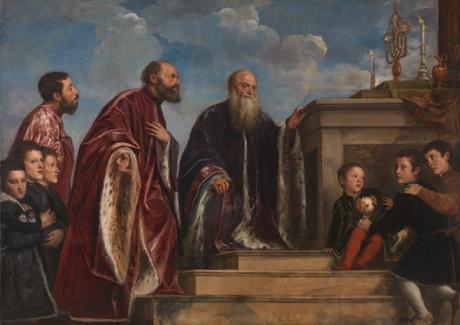
Art historian Cleo Nisse has published a new book, *Venetian Canvas and the Transformation of Painting*, examining how 16th-century Venetian painters such as Titian, Veronese, and Tintoretto pioneered the use of canvas as a painting support. Nisse reveals that canvas was not a uniform material—artists experimented with different weaves, including tabby and herringbone patterns, and even repurposed sailcloth and tablecloth-quality fabrics to achieve specific visual effects. The book argues that canvas was already familiar in the late Middle Ages for banners and alternatives to tapestry, and that Vittore Carpaccio was the first master of the medium, varying canvas types for expressive purposes in his *Legend of St Ursula* series.