filter_list Showing 242 results for "German" close Clear
search
dashboard All 242 museum exhibitions 115article news 33candle obituary 23rate_review review 21article culture 17article policy 8trending_up market 7person people 7gavel restitution 7article local 4
date_range Range Today This Week This Month All
Subscribe

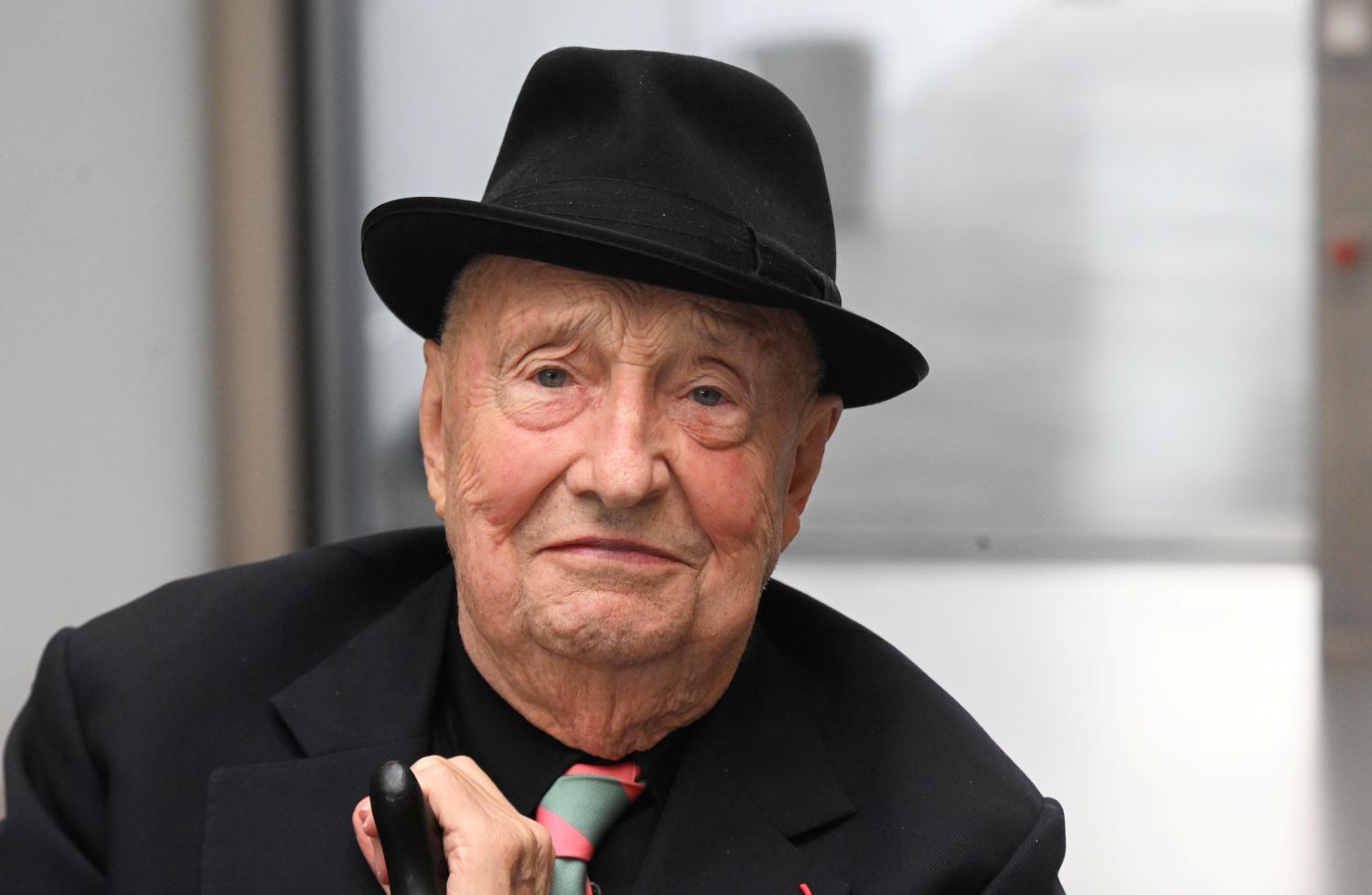
Georg Baselitz, grande figure de l’art allemand, est mort à l’âge de 88 ans : retour sur sa vie et son œuvre

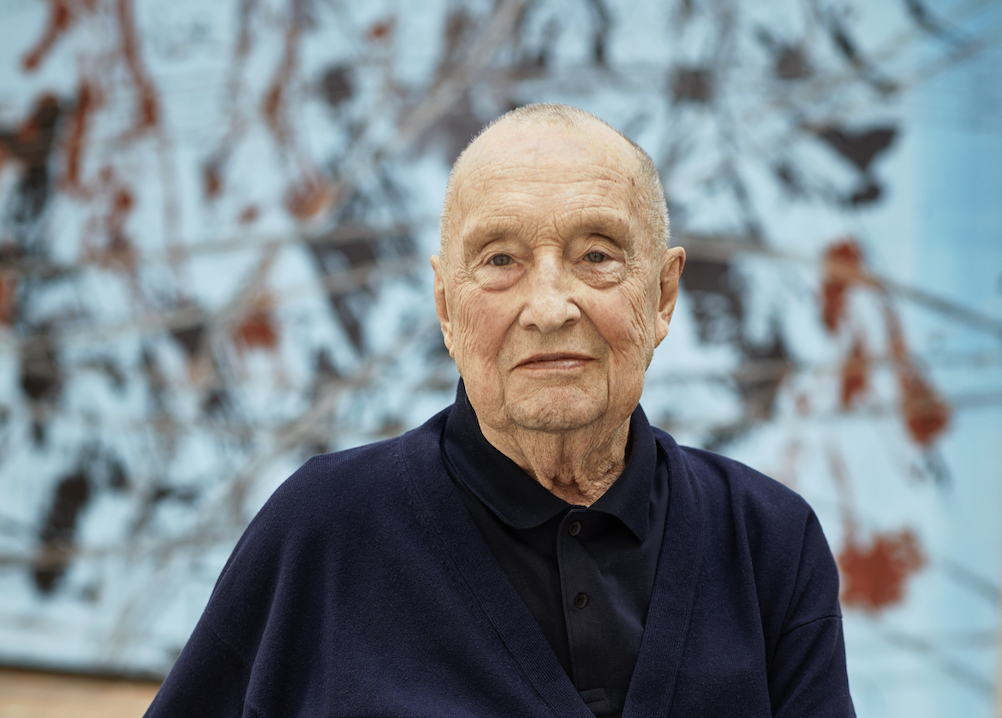
Georg Baselitz, one of Germany's most significant post-war artists, has died at age 88. Born Hans-Georg Kern in 1938, he grew up in Nazi-era Saxony and later rejected his father's ideology, fleeing to West Berlin in 1957. Known for his provocative, expressionist works and signature upside-down paintings, Baselitz challenged artistic conventions with brutalist techniques—attacking wood with chainsaws and axes—and created scandalous pieces like "Die große Nacht im Eimer" (1962–1963), which was banned from exhibition. His career included major retrospectives at the Musée d'Art Moderne de la Ville de Paris (2011) and Centre Pompidou (2021), and commissions for the Reichstag.

Martin Schongauer in 2 Minutes

Martin Schongauer en 2 minutes

Martin Schongauer (c. 1445–1491), the Alsatian painter, draftsman, and engraver, is celebrated as the greatest German copperplate engraver before Albrecht Dürer and one of the first artists to achieve pan-European fame in his lifetime. The article outlines his life and career, from his early training in his father's goldsmith workshop in Colmar to his studies at the University of Leipzig and travels through Flanders, where he absorbed the influence of Rogier van der Weyden and Dirk Bouts. It highlights his 116 copper engravings, signed with the monogram 'M+S', which elevated engraving to a high art and circulated from Spain to Bohemia, inspiring Dürer and the young Michelangelo. Key works discussed include the painting 'La Vierge au buisson de roses' (1473) and the engraving 'La Tentation de saint Antoine' (c. 1470–1475).

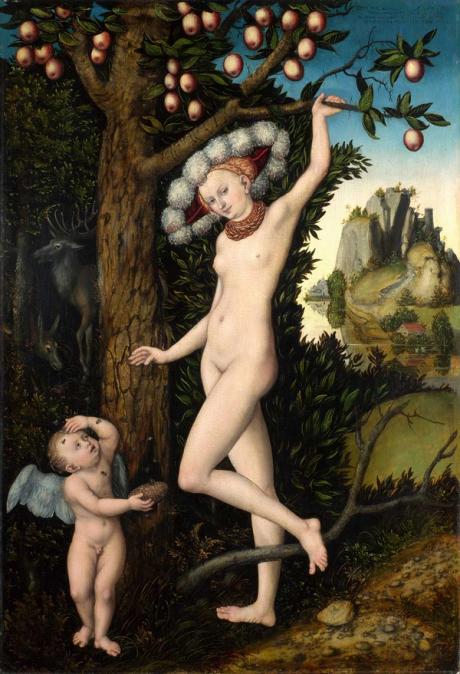
Famous Cranach painting spotted in rare photograph of Hitler’s apartment

A rare photograph from the early 1940s reveals that Lucas Cranach the Elder's painting *Cupid complaining to Venus* (1526-27), now a masterpiece in the National Gallery, London, once hung in Adolf Hitler's private Munich apartment. The image, previously published in Germany by provenance expert Birgit Schwarz, appears for the first time in an English-language publication. The painting was acquired by the National Gallery in 1963 from E. and A. Silberman Galleries in New York, which provided a false provenance. It had been taken from a warehouse of recovered art in 1945 by American journalist Patricia Lochridge, who smuggled it into the United States.

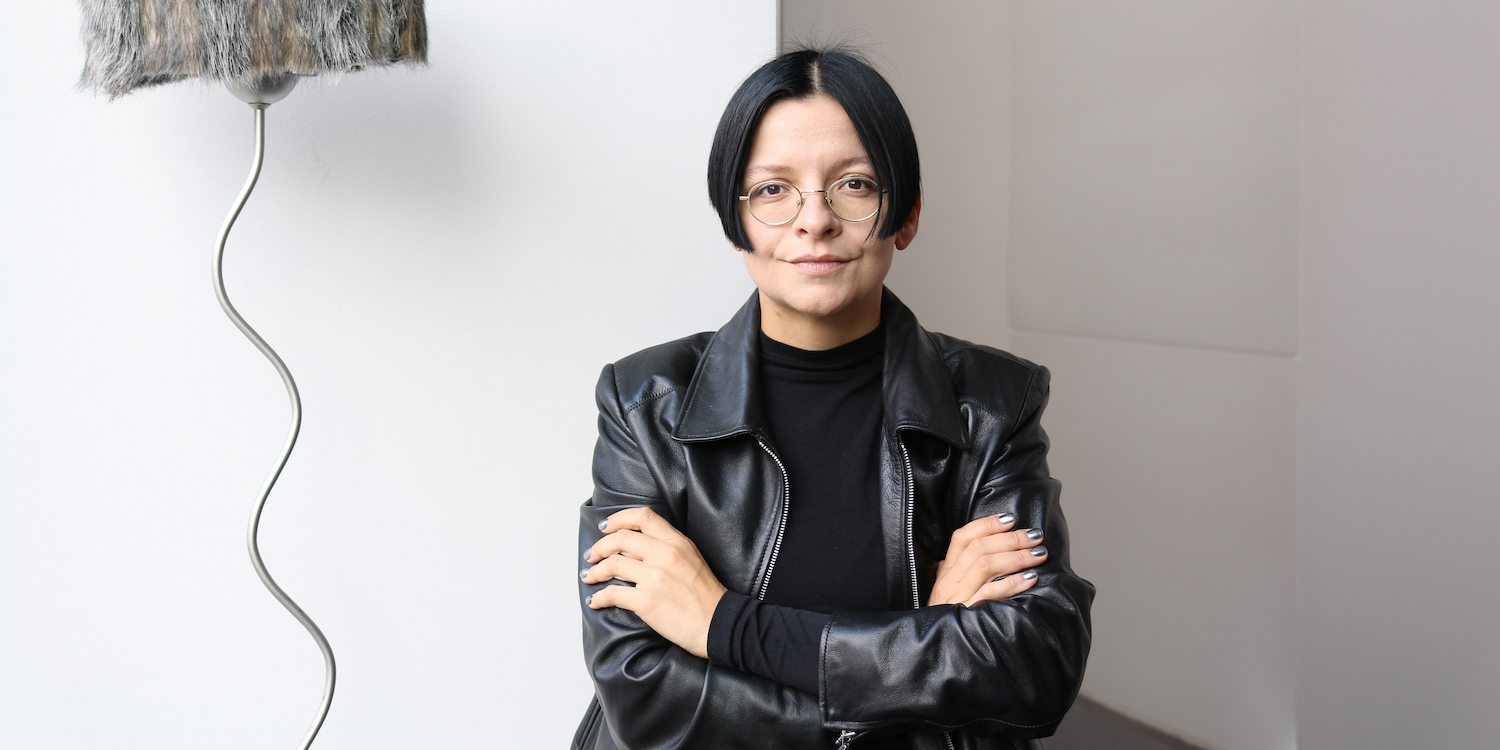
Henrike Naumann Stared Down a Divided Germany’s Past While Eyeing Our Troubled Present

Henrike Naumann, a German artist known for using secondhand furniture and design to explore political extremism and consumer capitalism, is profiled in ARTnews. The article recounts her first US exhibition, “Re-Education” at SculptureCenter in New York in 2022, where she created installations referencing the January 6 Capitol attack, juxtaposing Federal-style office furniture with a Flintstonian mancave and chairs arranged by ideological subtext. The show gained unexpected attention when German media covered it, linking her small hometown of Zwickau with New York, and she later visited Thomas Hart Benton’s murals at the Met to understand American power and aesthetics.

There Has Never Been an Apolitical Venice Biennale

The Venice Biennale, with its national pavilion structure, has always been a platform for political expression and soft power, a reality evident from its early 20th-century origins. Contemporary critic Arturo Lancellotti's 1909 review of the German and British pavilions was steeped in geopolitical context, revealing how national artistic displays were interpreted through the lens of imperial power and military alliances.

Georg Baselitz ist tot

German artist Georg Baselitz has died at the age of 88. According to Galerie Thaddeus Ropac, he passed away peacefully on Thursday. Born Hans-Georg Bruno Kern in 1938 in Deutschbaselitz, Saxony, Baselitz fled East Germany in 1957 after political repression and academic conflicts. His first solo exhibition in West Berlin in 1963 was shut down due to scandal, and works were confiscated. He became internationally known in the late 1960s for his radical upside-down painting, a signature inversion that destabilized pictorial logic. He also created an extensive sculptural body of work. Key career milestones include representing Germany at the Venice Biennale in 1980 alongside Anselm Kiefer, multiple Documenta appearances, the Praemium Imperiale in 2004, and election to the Académie des Beaux-Arts in Paris in 2019. Major late-career exhibitions included "Nackte Meister" at the Kunsthistorisches Museum in Vienna in 2023.

Martin Kippenberger at Galerie Gisela Capitain

Galerie Gisela Capitain in Cologne is presenting "Per Pasta ad Astra," an exhibition of works by the late German artist Martin Kippenberger, running from March 21 to May 29, 2026. The show includes a press release, checklist, and 104 images documenting the display, with photography by Daniele Molajoli.

Fundación Casa Wabi x ArtReview Open-Call Residency Prize 2026–27

Fundación Casa Wabi and ArtReview have announced the ninth annual open-call residency prize for three artists or collectives, offering a residency at Casa Wabi in Puerto Escondido, Oaxaca, Mexico. The residency includes lodging, studio space, meals, and support for a community project, with applications due by 14 June 2026 and winners notified in July 2026. The prize aims to foster cultural cross-pollination between artists and local communities, with past winners including artists from Australia, the UK, Germany, Argentina, Brazil, and Mexico.

Georg Baselitz, German Neo-Expressionist Painter, Dies at 88

Georg Baselitz, the German Neo-Expressionist painter known for his provocative, upside-down figurative works, has died at age 88. Along with contemporaries like Anselm Kiefer, Baselitz led a frontal assault on the dominant Minimalist and Conceptualist art movements of the 1970s, reviving expressive, gestural painting in postwar Germany.

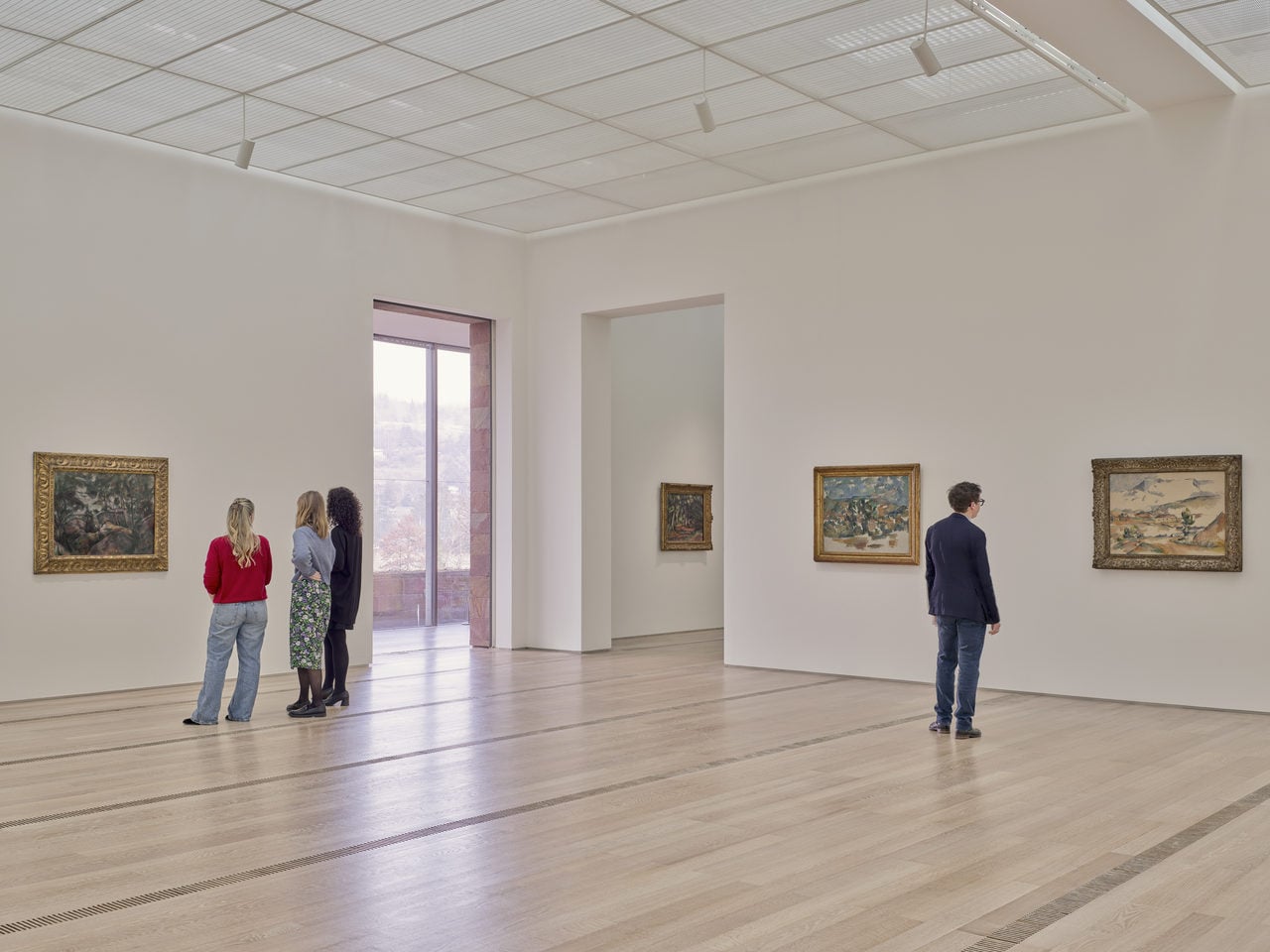
All the complexity of Cézanne on display at the legendary Fondation Beyeler in Basel

Tutta la complessità di Cézanne in mostra alla mitica Fondation Beyeler di Basilea

The Fondation Beyeler in Basel has opened a major exhibition dedicated to Paul Cézanne, marking the 120th anniversary of his death. Curated by senior curator Ulf Küster, the show features 80 works—58 paintings and 21 watercolors—drawn from public and private collections across Switzerland, Germany, France, the UK, the Netherlands, Spain, Denmark, and the United States. Highlights include nine versions of Mont Sainte-Victoire, rare comparisons of two watercolor versions of "Boy in a Red Waistcoat," and two versions of "The Card Players" from the Courtauld Gallery and the Musée d'Orsay. The exhibition runs until May 25, 2026, and is accompanied by a catalog published by Hatje Cantz Verlag.

Performance, gioco, rischio. Il grande Paul McCarthy è in mostra a Madrid: l’intervista

Paul McCarthy's latest exhibition, titled "A&E," is on view at Bowman Hal gallery in Madrid, part of the SOLO CONTEMPORARY initiative founded by a Spanish collector couple. The show features large-scale works on paper and videos created in collaboration with German actress Lilith Stangenberg, exploring role-play, performance, and the blurred lines between art and entertainment. The acronym "A&E" alludes to historical pairs like Adam and Eve or Adolf Hitler and Eva Braun, as well as "Arts & Entertainment." The works stem from private encounters between McCarthy and Stangenberg, with drawings serving as storyboards for videos that capture their improvisational, trance-like interactions.

The Last Interview with the Great Artist Georg Baselitz on the Occasion of His Exhibition in Florence

L’ultima intervista al grande artista Georg Baselitz in occasione della sua mostra a Firenze

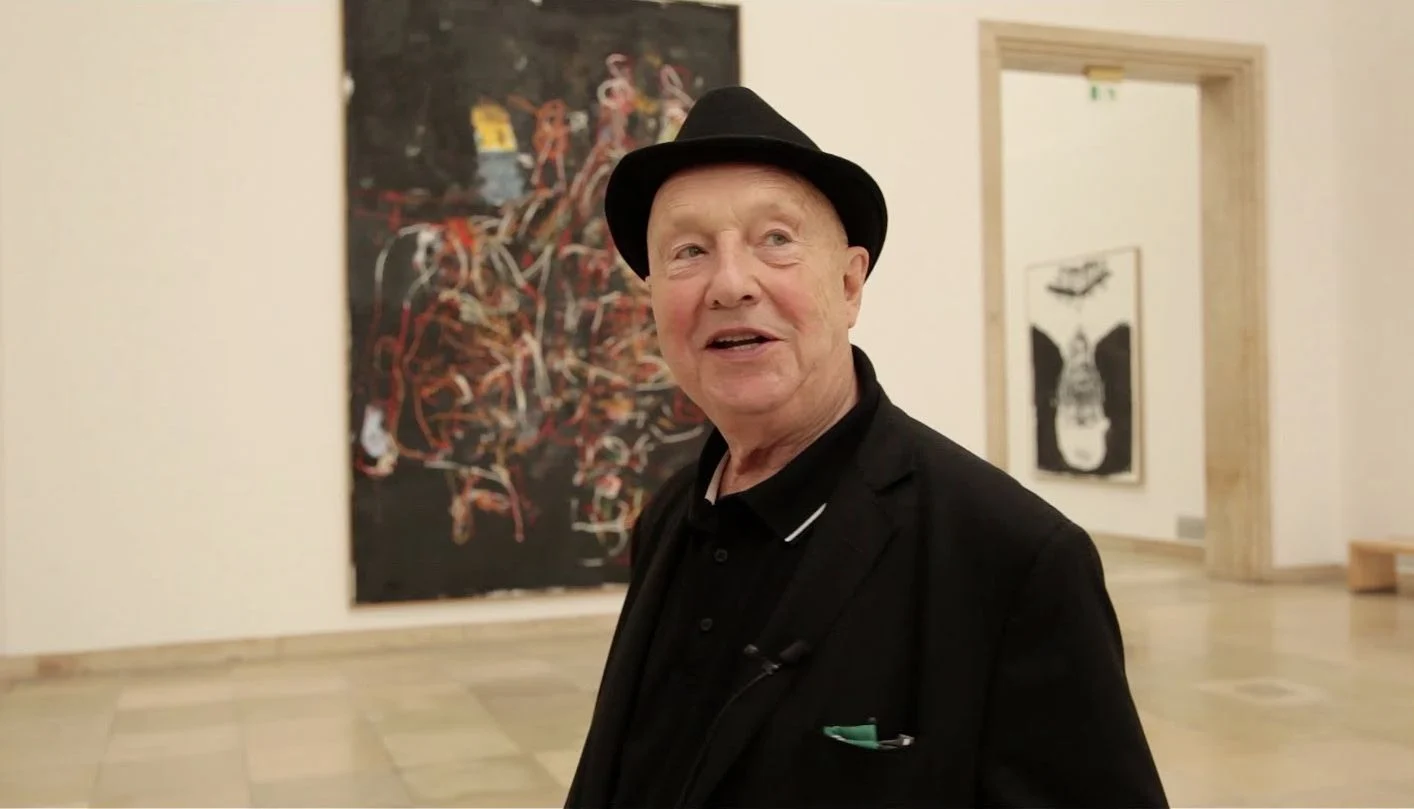
Georg Baselitz, the German artist born in 1938, is the subject of a major retrospective titled "Avanti!" at the Museo Novecento in Florence, featuring 170 works including paintings, works on paper, and sculptures, with a strong focus on his graphic output. The exhibition, curated by Sergio Risaliti and Daniel Blau (Baselitz's son and an artist himself), spans three floors and traces the evolution of Baselitz's practice, culminating in a dialogue with the work of Italian artist Ottone Rosai. The show is accompanied by a prequel exhibition honoring the 120th anniversary of Villa Romana, where Baselitz once held a fellowship, and will be followed by another exhibition at the Fondazione Giorgio Cini in Venice in May, which together with the Florence show form the artist's testament. Artribune published Baselitz's last interview in its new bimonthly issue.

È morto a 88 anni il grande artista tedesco Georg Baselitz

German painter Georg Baselitz, known for his expressionist works that confronted the horrors of Nazi Germany, died on April 30, 2026 at age 88. Born Hans-Georg Kern in 1938, he grew up amid World War II rubble and became a pioneering, anti-conformist figure of the post-war era, famously inverting his images to force viewers to reconstruct meaning. A major exhibition, 'GEORG BASELITZ – AVANTI!', had just opened on March 25 at the Museo Novecento in Florence, focusing on his graphic works and his ties to the city. Another show, 'Georg Baselitz. Eroi d’Oro', was set to open May 6 at the Fondazione Giorgio Cini in Venice during the 61st Venice Biennale, featuring large recent paintings and portraits of his wife Elke.

Art and Social Consciousness: The Ideals of Legendary Artist Joseph Beuys Told in a Comic

Arte e coscienza sociale: gli ideali del leggendario artista Joseph Beuys raccontati in un fumetto

A new graphic novel by Italian illustrator Gianluca Costantini explores the life and social ideals of the legendary German artist Joseph Beuys. The comic focuses on Beuys's final major work, 'Palazzo Regale' (1985), an environmental installation housed at the K20 museum in Düsseldorf, interpreting it as a synthesis of his belief in art as a transformative social force.

The Artist Who Painted Pixels Before We Saw in Pixels

Der Künstler, der Pixel malte, bevor wir in Pixel sahen

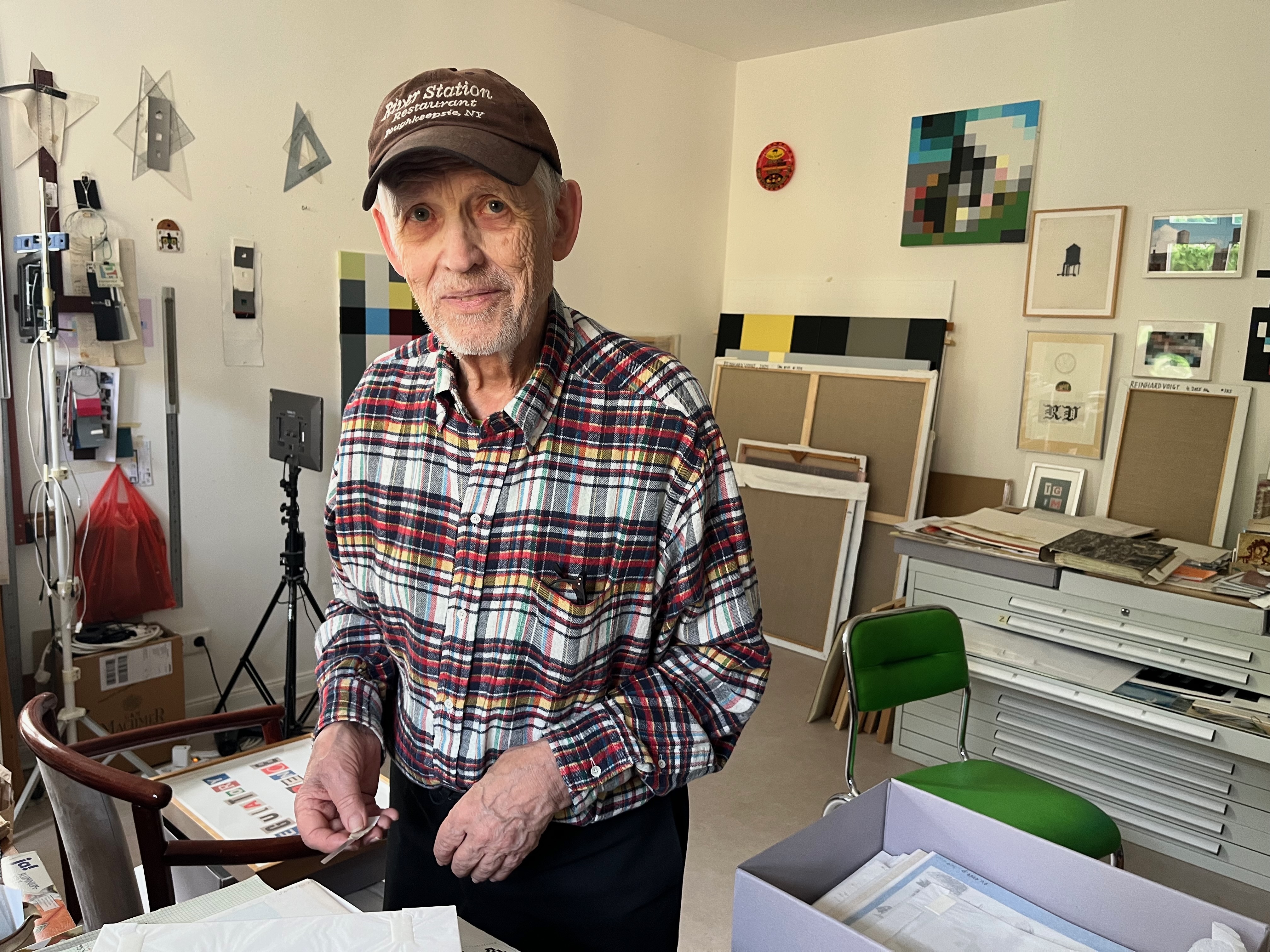
Reinhard Voigt, a German artist little known to the public, painted grid-based pictures as early as 1968—years before pixels became ubiquitous in daily life. Despite early discouragement from Gerhard Richter and fellow artist Alan Jones, Voigt persisted, creating meticulous works on paper and canvas using transparent paper, rulers, pencil, and oil paint. His first major exhibition, "Pure Pleasure," took place in 2023/2024 in Nuremberg, and his current duo show "High on Low" with Anna-Sophie Berger is on view at Berlin's Kunstraum Grotto, featuring his Word Paintings series. Voigt lives and works in Berlin-Prenzlauer Berg with his wife, artist Susan Elias.

Explore 6 World Cup-inspired exhibits coming to Kansas City museums

Kansas City museums are launching six soccer-themed and World Cup-inspired exhibitions ahead of the world's largest soccer tournament arriving in the city this summer. Highlights include “The Beautiful Game” at the National World War I Museum and Memorial, which explores soccer's role during World War I; “The World in Kansas City” at the Kemper Museum of Contemporary Art, featuring works by over 16 local international artists; “United We Play: Kicking It With The Trumans” at the Harry S. Truman Presidential Library & Museum, celebrating sports unity through artifacts from Kansas City teams; and “Homeland: The Osage in Missouri” at The Museum of Kansas City, tracing Osage Nation history.

Julia Stoschek Foundation to Close in Berlin

The Julia Stoschek Foundation will close its Berlin outpost at the end of October 2025, after a decade of operation. The Düsseldorf-based nonprofit, which holds one of the world's largest collections of time-based art, opened the Berlin space in 2016 and welcomed over 450,000 visitors across 22 exhibitions, including solo shows by Meriem Bennani, Stan Douglas, Arthur Jafa, and Mark Leckey. The foundation cited a "strategic realignment" that will shift focus to projects elsewhere in Germany and abroad. Its Düsseldorf space is currently closed for renovations and expected to reopen next year.

Un grand dessin de Beckmann pour Stuttgart

The Staatsgalerie Stuttgart has acquired a monumental drawing by Max Beckmann titled *Resurrection*, measuring nearly five meters long and three and a half meters high. Executed between 1916 and 1918, it is the largest painting by the artist and a key work in his oeuvre, created after his traumatic experience as a volunteer medical orderly in World War I. Beckmann described the piece as expressing 'the terrifying cry of pain of deceived poor humanity,' marking a shift toward a new formal vocabulary influenced by the war.

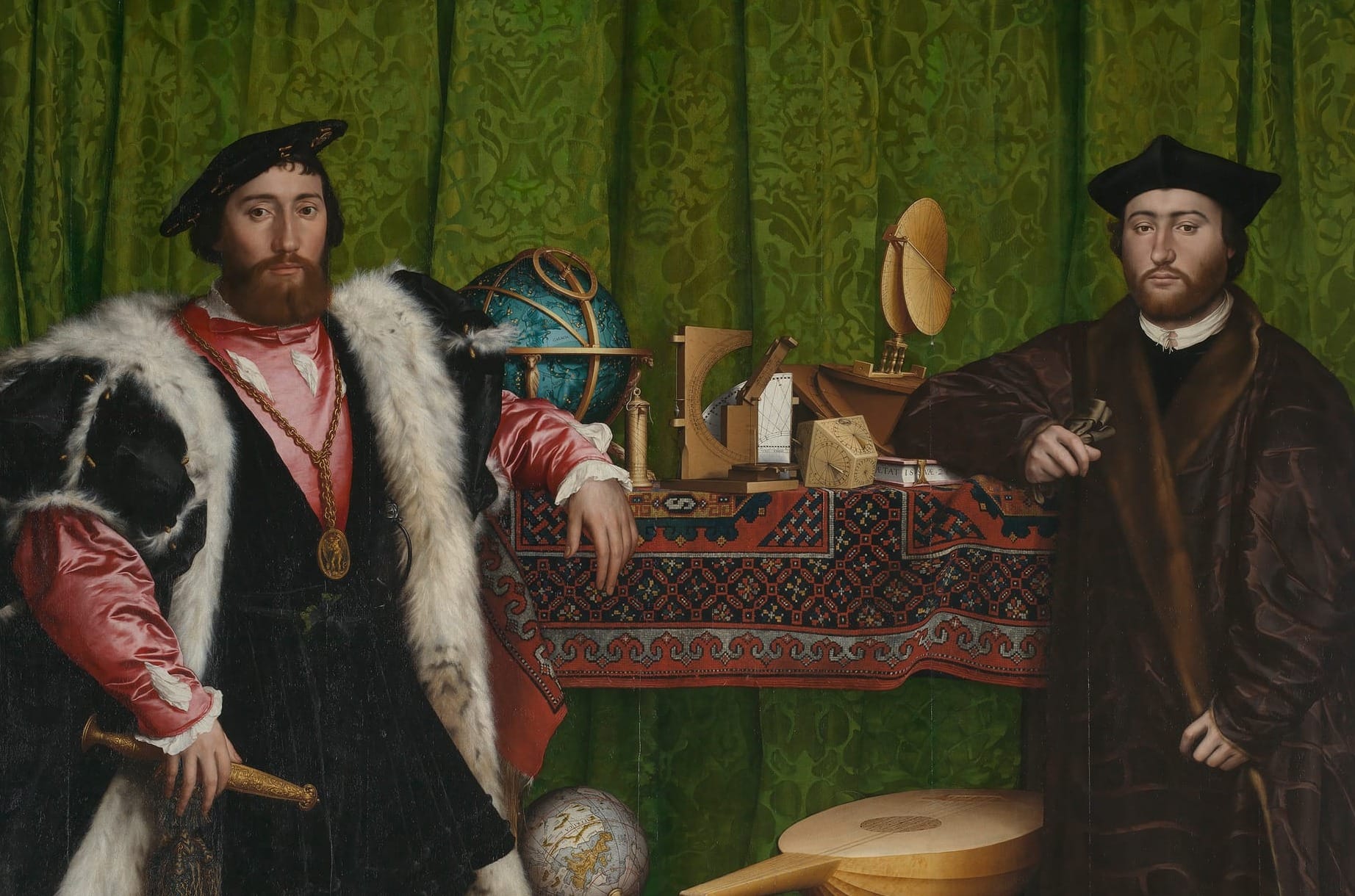
Hans Holbein Painted the Human

A new book, 'Holbein: Renaissance Master' by Elizabeth Goldring, published by Yale University Press and the Paul Mellon Centre, offers a comprehensive scholarly examination of the 16th-century German painter Hans Holbein the Younger. The review focuses on Holbein's masterful portraiture, particularly his depictions of opposing Tudor-era figures like Sir Thomas More and Thomas Cromwell, which are highlighted as embodying the era's complex political and religious tensions through their visual presentation at the Frick Collection in New York.

Prize commemorates Henrike Naumann – MMK takes over estate

Preis erinnert an Henrike Naumann – MMK übernimmt Nachlass

A new prize named after the late artist Henrike Naumann has been established by the Institut für Auslandsbeziehungen (ifa) and the Zeit Stiftung Bucerius, coinciding with her posthumous presentation at the German Pavilion of the Venice Biennale. The €15,000 Henrike-Naumann-Preis für Bildende Kunst, plus €5,000 in production funds, will be awarded regularly starting this year to early- to mid-career artists whose work engages with social transformation, political fault lines, or transnational contexts. Meanwhile, the Museum für Moderne Kunst Frankfurt (MMK) has acquired Naumann's estate, which will be catalogued and made publicly accessible to ensure her work receives long-term scholarly and curatorial attention.

Venice in Crisis Mode

Venedig im Krisenmodus

The 61st Venice Biennale has opened under extraordinary circumstances, marked by political protests, a jury resignation, and canceled awards. The Biennale's jury resigned en masse after announcing they would exclude Israeli and Russian contributions from their decisions, leading to the cancellation of the Golden Lion awards and a crisis over the international competition's legitimacy. A newly introduced audience prize also faced boycotts from artists in solidarity. Protests, closed pavilions, and pro-Palestinian actions dominated the preview days, with artists pasting protest posters directly onto their works, reflecting heightened tensions.

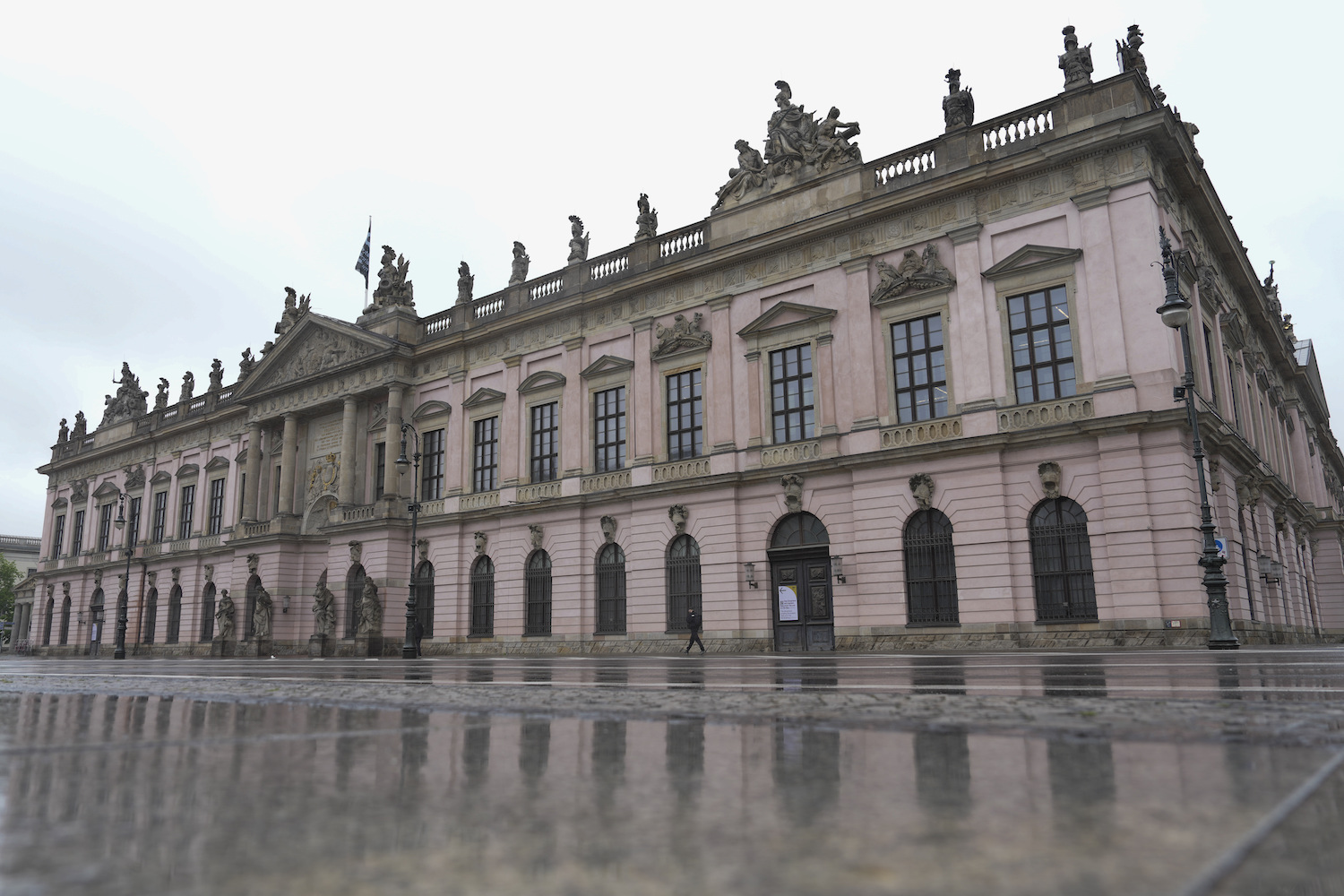
DHM main building likely closed until 2031

DHM-Hauptbau wohl bis 2031 dicht

The German Historical Museum (DHM) in Berlin will remain without its main building, the Zeughaus on Unter den Linden, until at least 2031 due to further delays in its renovation. Museum director Raphael Gross announced that a binding timeline from the property owner and the federal construction authority is not expected until 2027, and a reopening before 2031 is unrealistic. In the meantime, the museum is using its modern Pei-Bau wing to host a new exhibition titled "Objekte. Geschichte. Geschichten," featuring around 200 highlights from its collection of one million objects, including a samurai armor once gifted to Adolf Hitler and objects from a refugee shelter.

Deutscher Pavillon wird zum Plattenbau

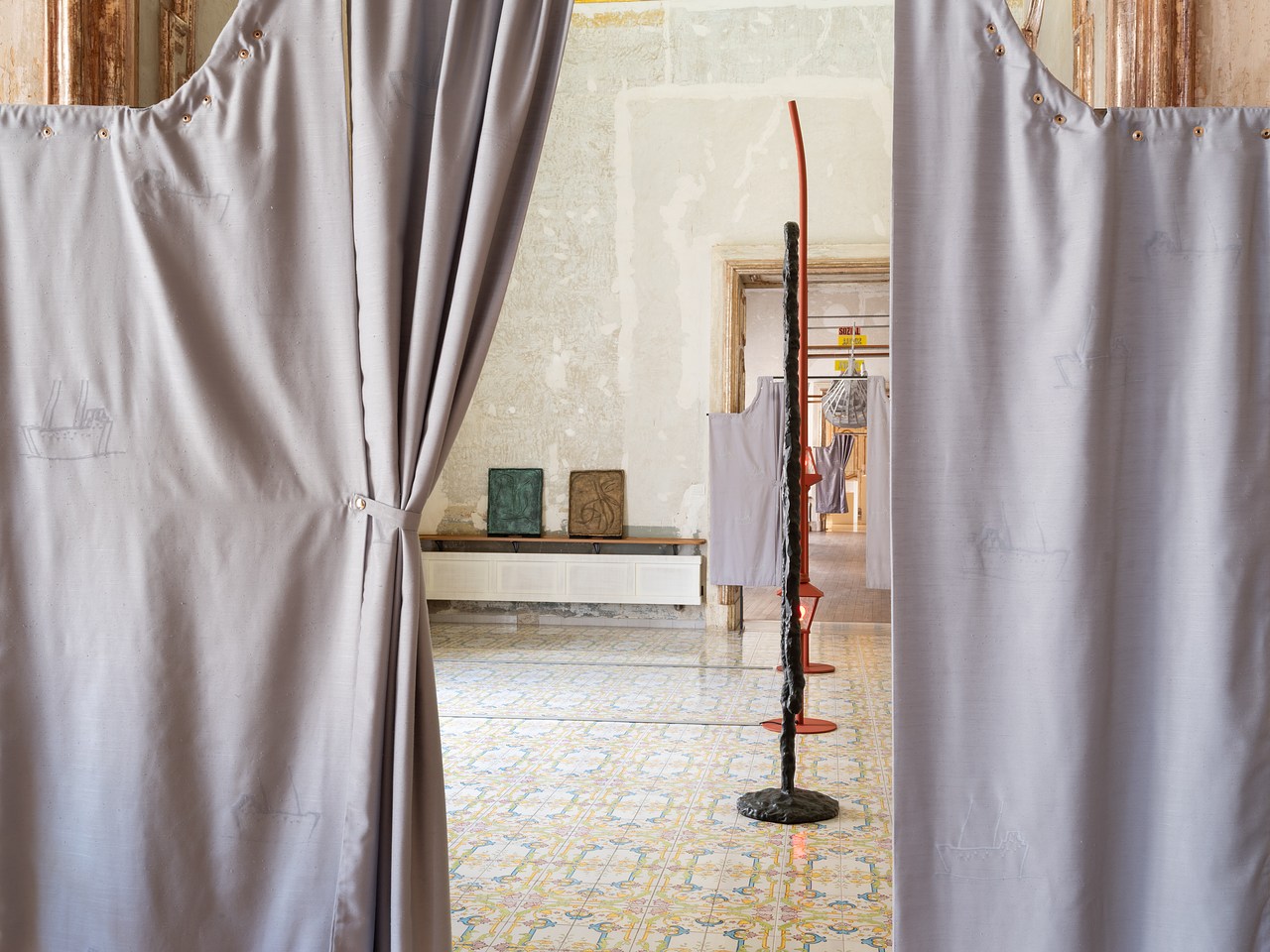
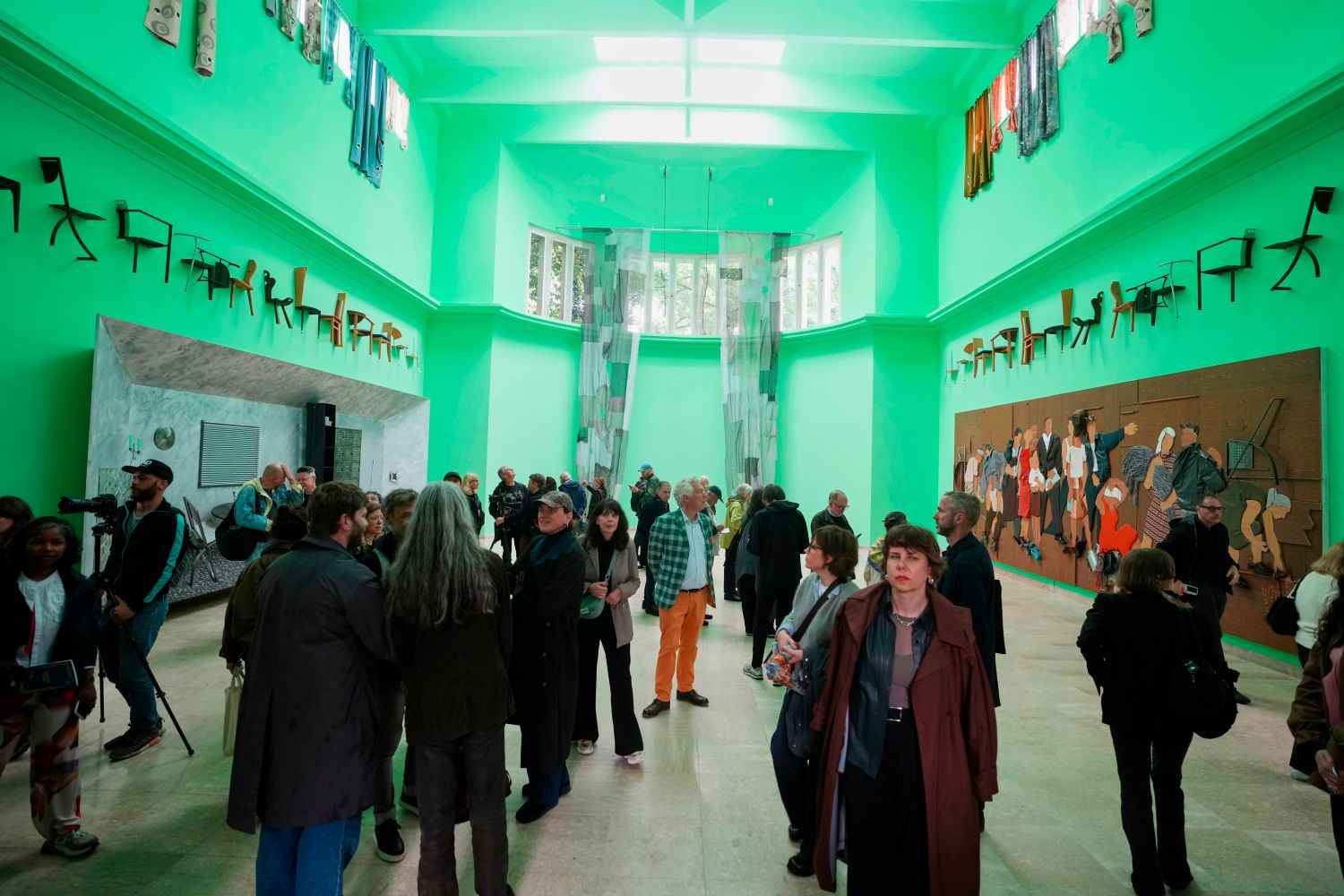
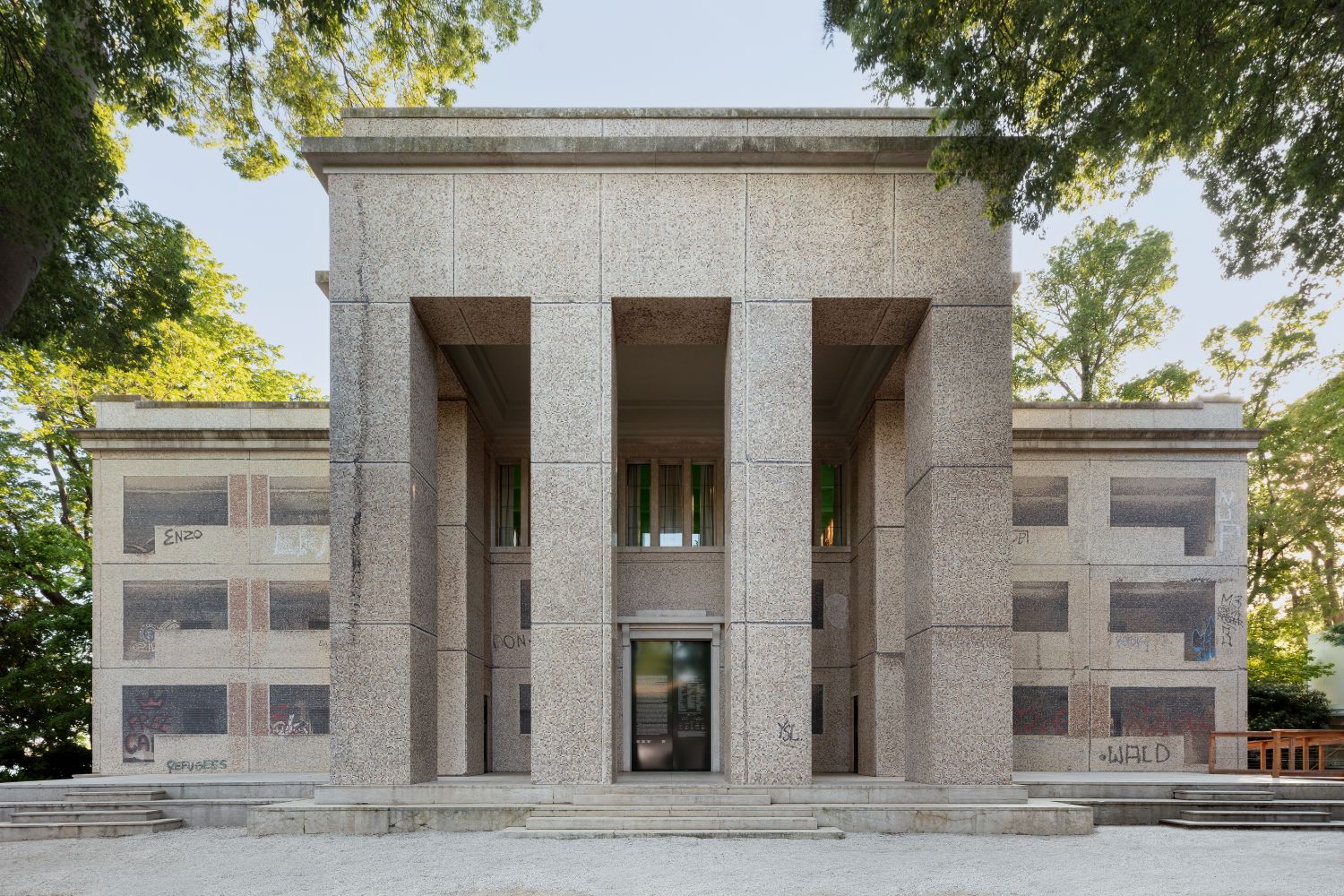
The German Pavilion at the Venice Art Biennale has been transformed into a prefabricated concrete slab building (Plattenbau) for this year's edition, designed by artists Sung Tieu and the late Henrike Naumann, who died suddenly in February at age 41 from cancer. Curator Kathleen Reinhardt described the pavilion as part of a highly political Biennale, with Tieu covering the 1938 fascist-era building with a mosaic of over three million tiles depicting a Berlin apartment block that once housed Vietnamese contract workers. Naumann's interior installation features mint-green references to Soviet barracks in East Germany, a cartography of war, and works including a relief of chairs, a curtain of chainmail, and the performance "Trümmerfrau."

Where to go in May?

Wohin im Mai?

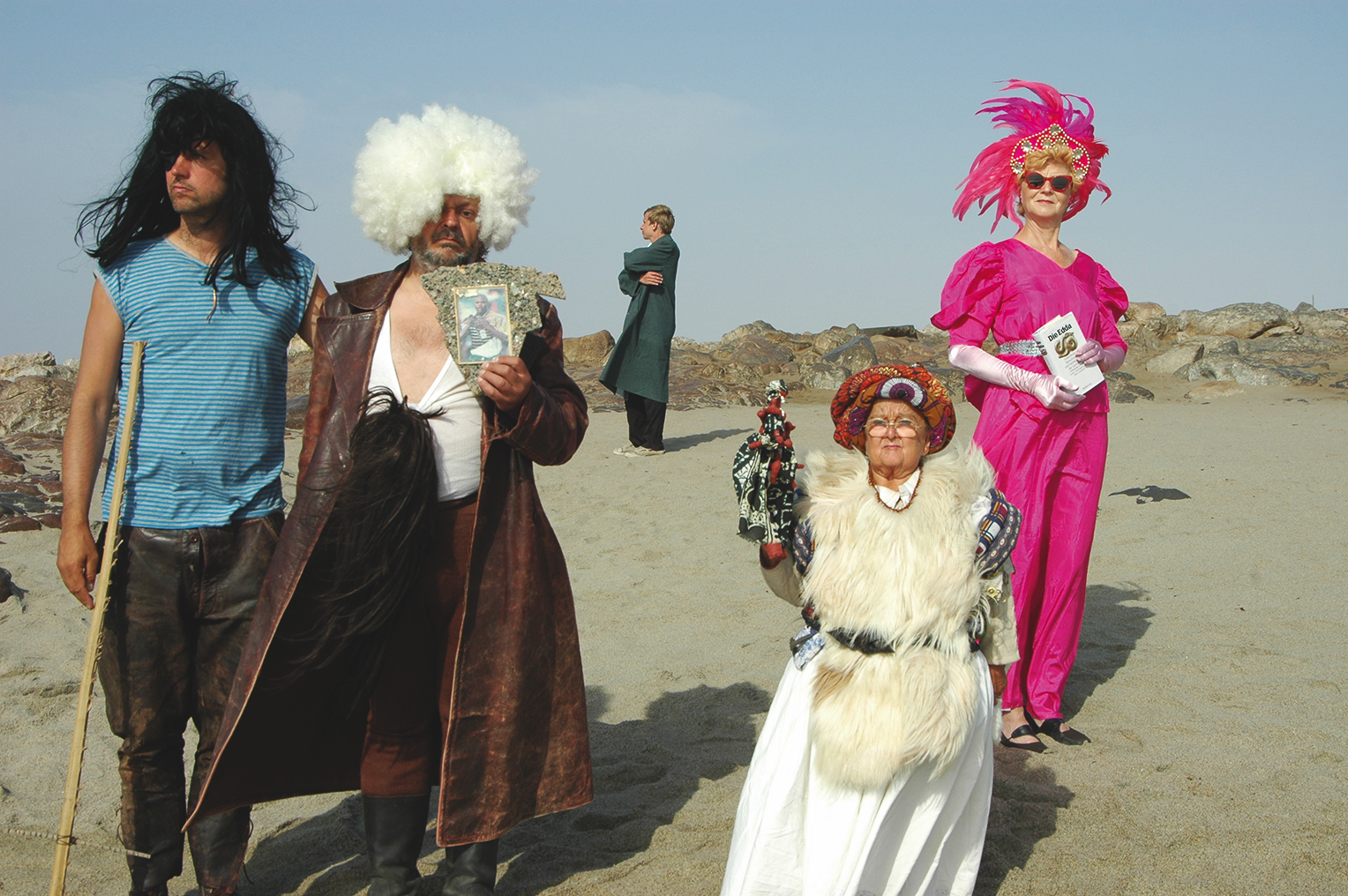
The article, published by Monopol magazine, previews a selection of art exhibitions and biennials opening in May. Highlights include the 61st Venice Biennale, a solo show by Lina Lapelytė at Hamburger Bahnhof in Berlin (part of the CHANEL COMMISSION series), a group exhibition titled "Lebt und arbeitet in Wien. Contemporary Art from Vienna" at Kunsthalle Wien, and a presentation of Christoph Schlingensief's work "The African Twin Towers" (2005) at MAK Wien. Also featured is Maximiliane Baumgärtner's exhibition at Kunstverein für die Rheinlande und Westfalen in Düsseldorf.

Venice’s Chicest Invite This Week? A Pizza Party Where the Artists Chose the Ingredients

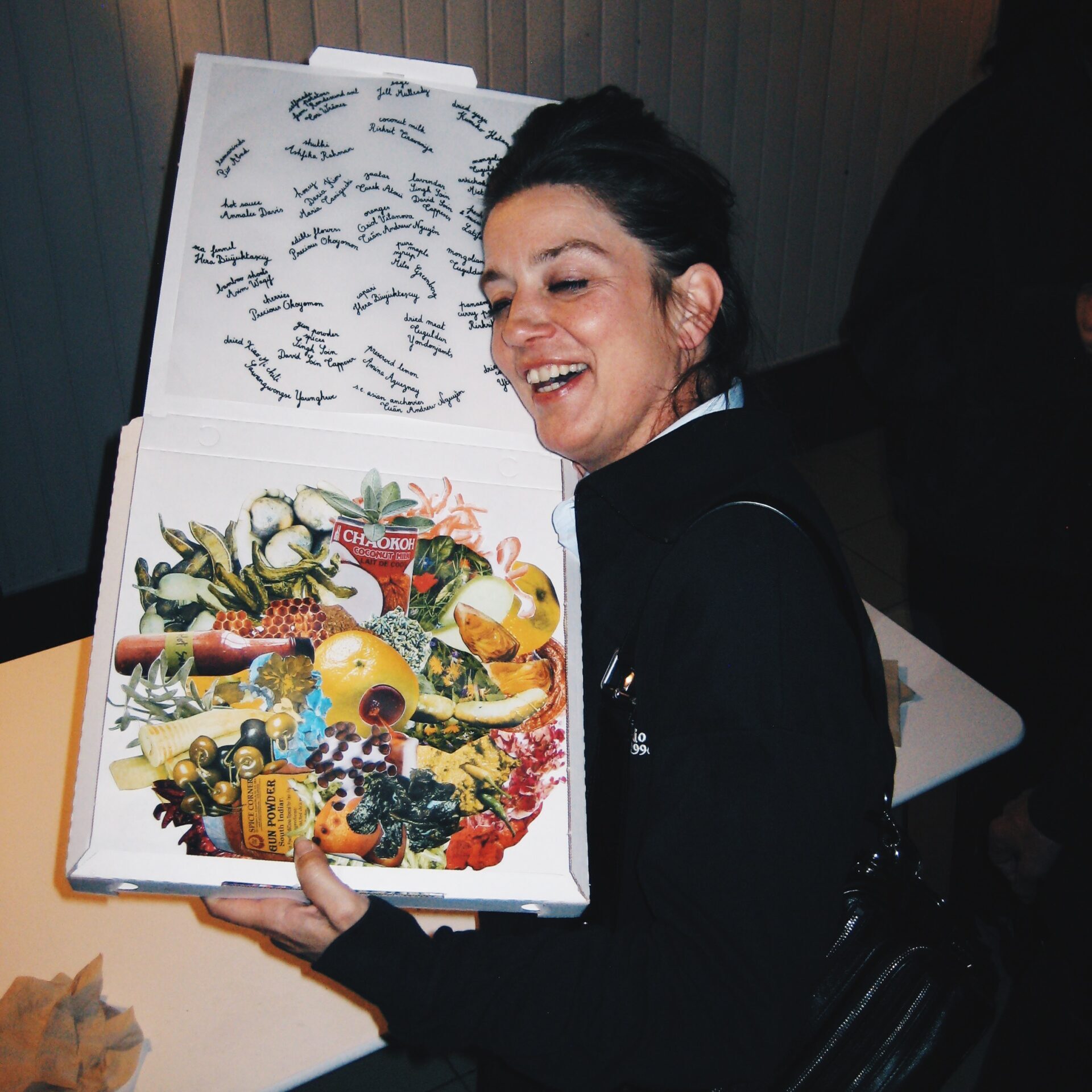
Diana Campbell, Chomwan Weeraworawit, and Paris-based art advisors Samy Ghiyati and Nicolas Nahab of NG Partners organized a pizza party called Pizzalo Mundo during the Venice Biennale. Each artist contributed an ingredient from home: Rirkrit Tiravanija brought a Penang coconut base, Precious Okoyomon added flowers, Daria Kim wild honey, Tarek Atoui za'atar on hummus, Miet Warlop artichoke hearts, Tori Wrånes self-grown potatoes, and Alexa Kumiko Hatanaka fig leaf oil with yuzu salt. The event drew a crowd of curators, directors, and collectors from institutions including Tate, Musée d'Orsay, Guggenheim Abu Dhabi, MoMA, and Centre Pompidou.

Martin Schongauer en toute majesté

The Louvre Museum in Paris has opened a major retrospective dedicated to Martin Schongauer (c. 1445–1491), the German engraver and painter from Colmar, bringing together a large portion of his known works. The exhibition features around one hundred pieces, including fifty engravings, five of his rare drawings, and nearly all of his attributed paintings—such as the "Virgin and Child at the Window" (c. 1480) from the Getty Museum and the "Orlier Altarpiece" (c. 1470–1475) from the Musée Unterlinden. The centerpiece is Schongauer's "Virgin of the Rose Bush" (1473), displayed at low height to reveal its botanical precision. Co-curated by Pantxika Béguerie De Paepe and Hélène Grollemund, the show also highlights Schongauer's influence on contemporaries and later artists through comparative works by Rogier van der Weyden and others.

Drained, Drowning, and Decay: The Best National Pavilions at the Venice Biennale

The 2026 Venice Biennale is defined by themes of ruin and decay, with standout national pavilions exploring bodily, infrastructural, and archaeological collapse. The Slovenian Pavilion features the Nonument Group repurposing materials from past Biennales into a ruin of a mosque for Bosnian Muslim soldiers from World War I. Syria presents its first national pavilion since the Civil War, with Sara Shamma invoking Palmyra, destroyed by ISIS. Germany's pavilion, titled "Ruin," features works by Henrike Naumann (who died in February) and Sung Tieu, questioning the pavilion's fascist architecture and nationalist residue. The Austrian Pavilion, curated by Florentina Holzinger, offers a visceral performance titled "Sea World." The Biennale is also marked by the abrupt resignation of its five-member jury, who refused to consider nations charged with crimes against humanity, leading to awards being chosen by public vote. Additionally, the main exhibition "In Minor Keys" was affected by the death of its curator, Koyo Kouoh.

A Pavilion of Ruins: Germany Reconsiders Its Past in Venice

The German Pavilion at the 61st Venice Biennale features a dual presentation exploring the country's layered political history. Artist Sung Tieu has cloaked the pavilion's fascist-era facade with a mosaic reconstruction of a GDR housing estate for Vietnamese contract workers, where she lived as a child. Inside, the late Henrike Naumann's immersive installation 'The Home Front' uses furniture and design to stage a confrontation between East and West German domestic and political ideologies. Naumann died in February 2025 at age 41, but her fully realized concept was completed collaboratively by her partner and curator Kathleen Reinhardt.

Venice Diary Day 1: At the Giardini, Artists Refuse to Make Fascism Cozy

Henrike Naumann's posthumous installation at the German Pavilion, which retains its 1938 Nazi-era fascist architecture, refuses to make the space 'cozy' by adorning windows with violently ripped domestic fabrics. The 2026 Venice Biennale is the first under president Pietrangelo Buttafuoco, associated with neo-fascist politics, and is overshadowed by controversy over his 'neutrality' policy allowing all countries to participate despite human rights concerns. The exhibition jury initially announced it would not consider pavilions from countries whose leaders are charged with crimes against humanity, then abruptly quit, leaving the situation unresolved. The US Pavilion features unimpressive blobs by Alma Allen, while the Russian Pavilion offers cut flowers and free vodka, and Andreas Angelidakis responds to fascist aesthetics at the Greek Pavilion.

Women behind the lens: ‘After state massacres, I began burning the prints as an act of mourning’

Iranian-Canadian visual journalist and artist Parisa Azadi describes her process of creating protest photographs during the 2022 Iranian revolution from exile in Dubai. Unable to return to Iran, she used open-source protest footage from social media, isolating frames and printing them with a Fujifilm instax camera to transform ephemeral digital images into physical objects. In January 2026, after state massacres and executions, she began burning these prints as an act of mourning, scarring their surfaces to echo the violence they depict.