filter_list Showing 133 results for "National Pavilions" close Clear
search
dashboard All 133 museum exhibitions 67article news 42rate_review review 22article culture 2
date_range Range Today This Week This Month All
Subscribe

Venice Biennale 2026: The Pavilions Not to Be Missed

Biennale de Venise 2026 : les pavillons à ne surtout pas manquer

The 61st Venice Biennale, curated by Koyo Kouoh as an invitation to slow down and reconnect with emotions, features a constellation of contemplative and powerful proposals across the city. Notable national pavilions include the Holy See transforming a monastic garden into an immersive sound experience by Soundwalk Collective, Canada exploring colonial heritage through giant water lilies by Abbas Akhavan, and Austria electrifying the Giardini with radical performances by Florentina Holzinger. Other highlights include Spain dissecting collective memory through postcards, Poland imagining new forms of language between human and underwater worlds, and India's pavilion exploring notions of home.
« No art washing ! » : à la Biennale de Venise, près de 3 000 manifestants réunis pour dénoncer la présence du pavillon israélien

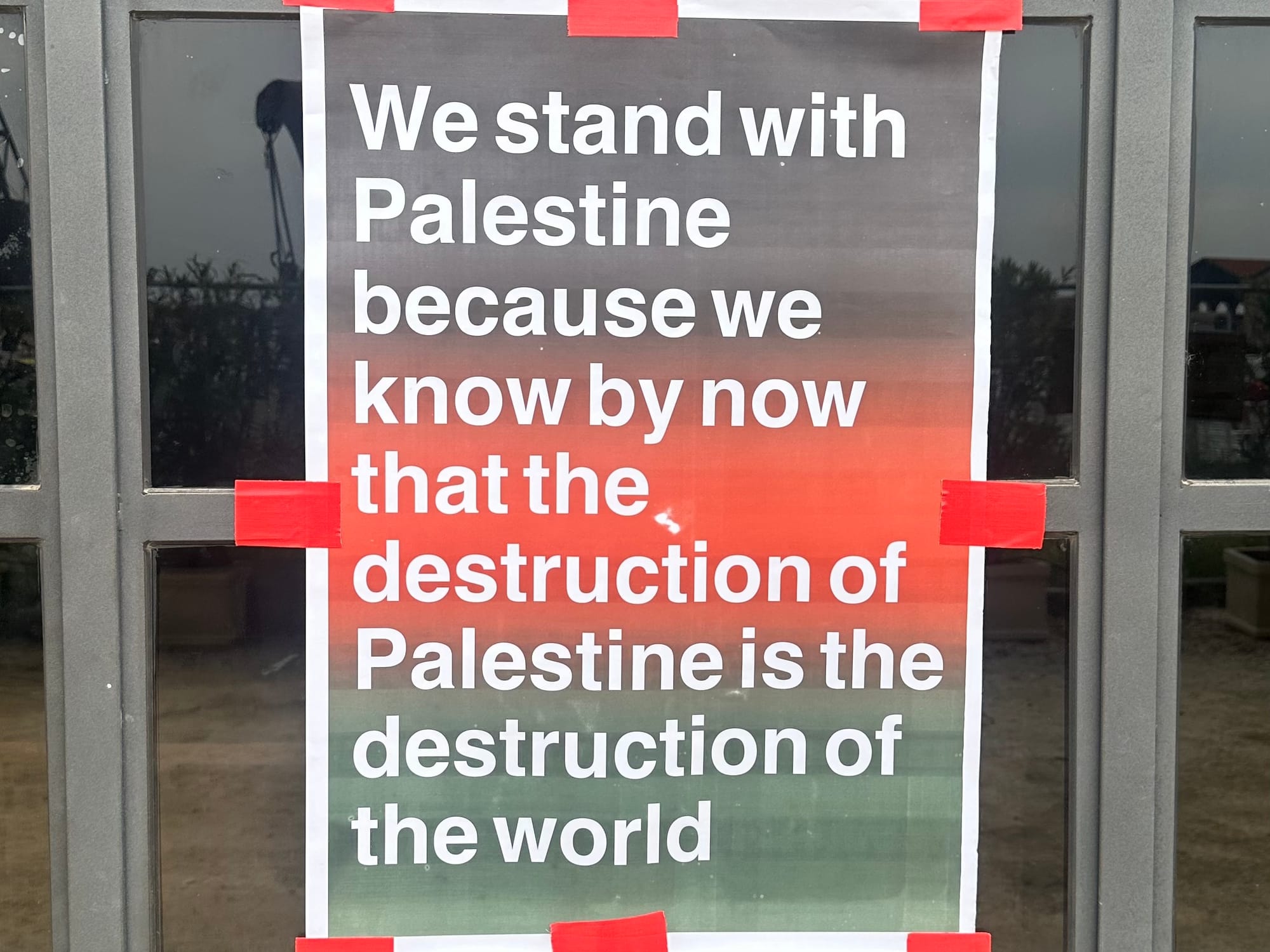
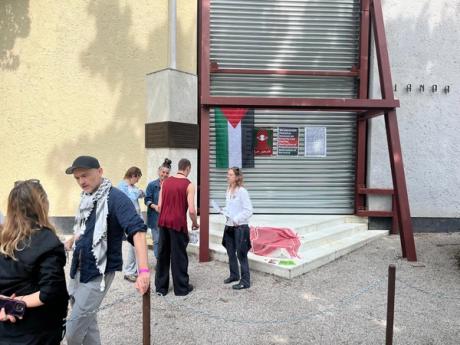
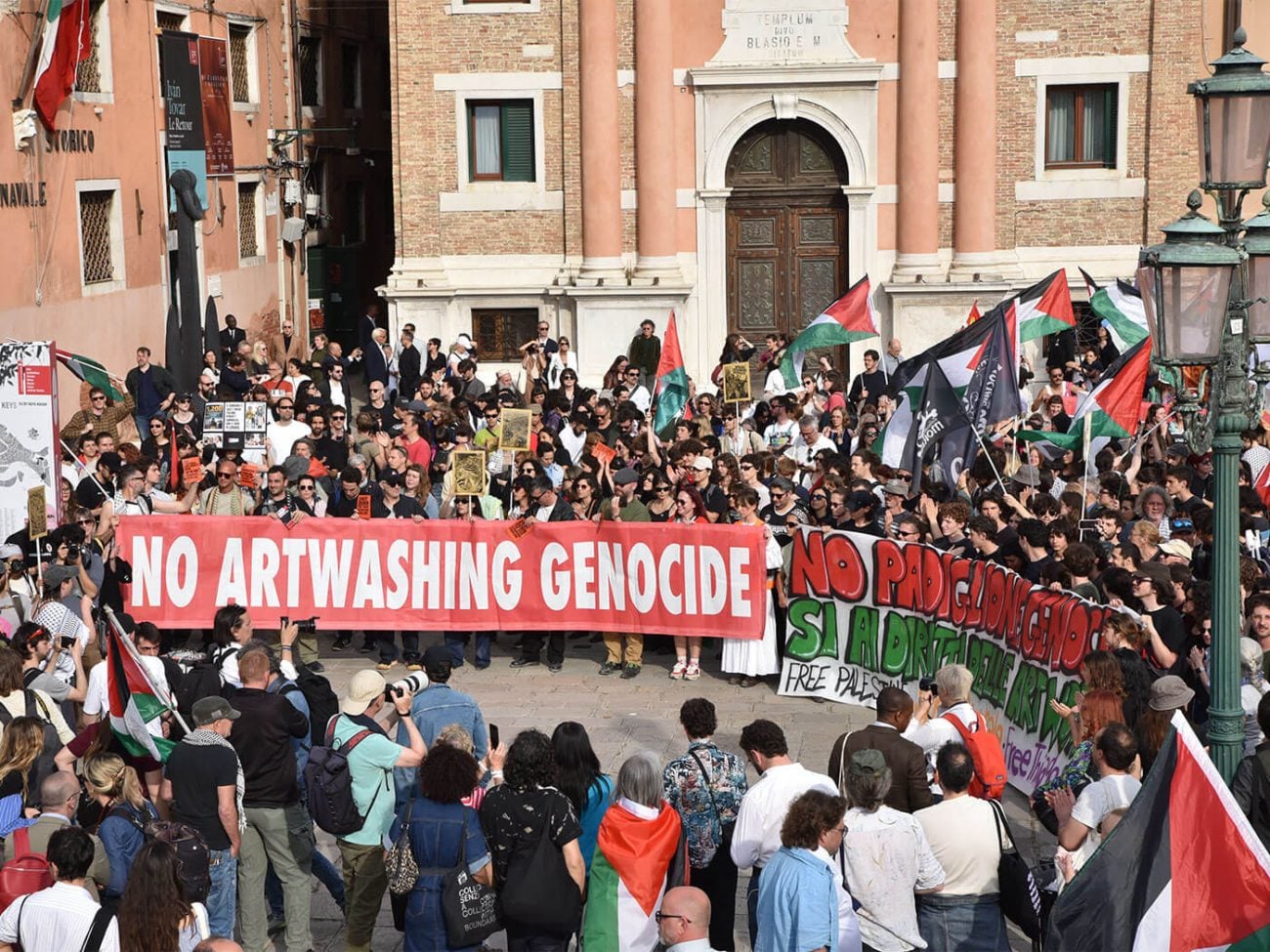
On May 8, 2026, nearly 3,000 protesters gathered in Venice to demonstrate against the presence of the Israeli pavilion at the Venice Biennale. Led by the collective Art Not Genocide Alliance (Anga), the crowd included artists, curators, and cultural workers who chanted slogans such as "Stop al Padiglione genocidio" and called for a strike on the closing day of the professional previews. Dozens of national pavilions, including those of France, Belgium, Poland, Spain, the United Kingdom, Lebanon, and Ukraine, closed in solidarity. The protest followed a letter sent by Anga in March demanding Israel's exclusion, which went unanswered, and the self-dissolution of the awards jury on April 30 over the presence of both Israel and Russia.

Biennale de Venise 2026 : les saturnales éblouissantes d’Yto Barrada pour le pavillon français

Yto Barrada has been selected to represent France at the 61st Venice Biennale in 2026 with her exhibition "Comme Saturne" (Like Saturn) in the French Pavilion. The installation features rebellious stage curtains hiding wasp nests and a copper daguerreotype plate of a planet, a large rock, a Wheel of Fortune, and a nostalgic vanitas arrangement around a missing mirror frame. Curated by Myriam Ben Salah, the show explores textile and natural dyeing, with three cabinets addressing the transmission of know-how, migration of plants and people, postcolonial history, and Enlightenment imperialism. A central room displays 70 pieces forming a symmetrical frieze of red natural dyes, while a black monochrome patchwork highlights the difficulty of achieving black in dyeing. Barrada is the fifth woman to represent France at the Biennale.

Alison Roman’s Top Picks from the Frieze Viewing Room

Andrew Durbin reviews the national pavilions at the Venice Biennale, contrasting a vacuous US presentation with incisive and moving installations from Britain and Germany. The review highlights the thematic and emotional depth of the British and German pavilions while critiquing the lack of meaning in the US entry.

Dozens of Pavilions Close During Strike at 61st Venice Biennale

On May 8, 2026, a 24-hour strike organized by the Art Not Genocide Alliance (ANGA) and several Italian activist groups brought the 61st Venice Biennale to a standstill. Approximately 27 of the 100 national pavilions closed fully or partially in solidarity with protesters demanding Israel’s exclusion from the event, including those of Austria, Belgium, France, Great Britain, Japan, South Korea, and Ukraine. Over 3,500 people marched through Venice, with speakers including artist Gabrielle Goliath and curator Caroline Dumalin. The main exhibition, "In Minor Keys," curated by the late Koyo Kouoh, closed by late afternoon, and riot police were stationed outside the Arsenale. The Israeli pavilion, already shuttered during previews, remained closed.

Venice Biennale strike sees more than 15 pavilions temporarily or partially close

On 8 May, more than 15 national pavilions at the Venice Biennale temporarily or partially closed in a coordinated strike organized by the Art Not Genocide Alliance (ANGA). The protest opposes Israel’s participation in the event, which organizers say normalizes what they call genocide and exploits precarious labor. Participating countries include Austria, Lebanon, Slovenia, Egypt, Poland, and the Netherlands, whose artist Dries Verhoeven stood outside his shuttered pavilion with a Palestinian flag. Some pavilions, like Japan’s, remained open but suspended interactive elements. The strike follows earlier controversies, including the resignation of the prize jury and an open letter demanding the Israeli pavilion’s cancellation.

S&M-inspired Greek Pavilion in Venice confronts its fascist chains

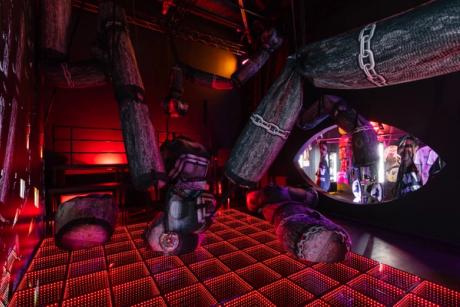
The Greek Pavilion at the 2026 Venice Biennale, titled "Grecia" and conceived as a drag artist, presents an S&M-inspired installation by artist and architect Andreas Angelidakis. The immersive space features a red neon-lit floor, soft sculptures resembling beanbags, fragmented marble columns wrapped in chains, and souvenirs bearing images of queer artists and the late activist Zak Kostopoulos (Zackie Oh). The pavilion aims to deconstruct the idea of a fixed national identity, exploring themes of queerness, fascism, and historical trauma.

Abbas Akhavan Transforms the Canada Pavilion Into a Greenhouse, Daring Viewers to Leave Behind Their Preconceptions

Artist Abbas Akhavan has transformed the Canada Pavilion at the Venice Biennale into a functioning greenhouse for his exhibition "Entre chien et loup." The pavilion now houses a 6,000-gallon pool containing giant Victoria water lilies, with modifications including grow lights, water misters, a new ventilation system, and structural reinforcements to support the 25-ton water tank. The installation evokes Victorian-era Wardian cases and London's Crystal Palace, but Akhavan emphasizes that his interest in the lilies began intuitively, not as a commentary on colonialism or empire. The project, developed with curator Kim Nguyen, involved collaboration with Kew Gardens and the Orto Botanico di Padova to cultivate the plants, and the outcome remains uncertain as the lilies may thrive or wither over the exhibition's six-month run.

Dozens of Venice Biennale Artists Stage ‘Drone’ Perfomance in Protest of Israel’s Participation

On the opening day of the Venice Biennale, around 60 artists and dozens of other participants staged a protest titled “Solidarity Drone Chorus” at the Giardini entrance, humming a viral song by Gazan composer Ahmed “Muin” Abu Amsha to sonically occupy the space. The action, organized by artists in the main exhibition over several months, protested Israel’s participation in the Biennale and expressed support for Palestine, with participants wearing T-shirts bearing the names and artworks of Gazan and Palestinian artists, many of whom have been killed. The protest follows an open letter from the Art Not Genocide Alliance demanding Israel’s exclusion.

Meet the Writer Who Sees Every Single Show at the Venice Biennale

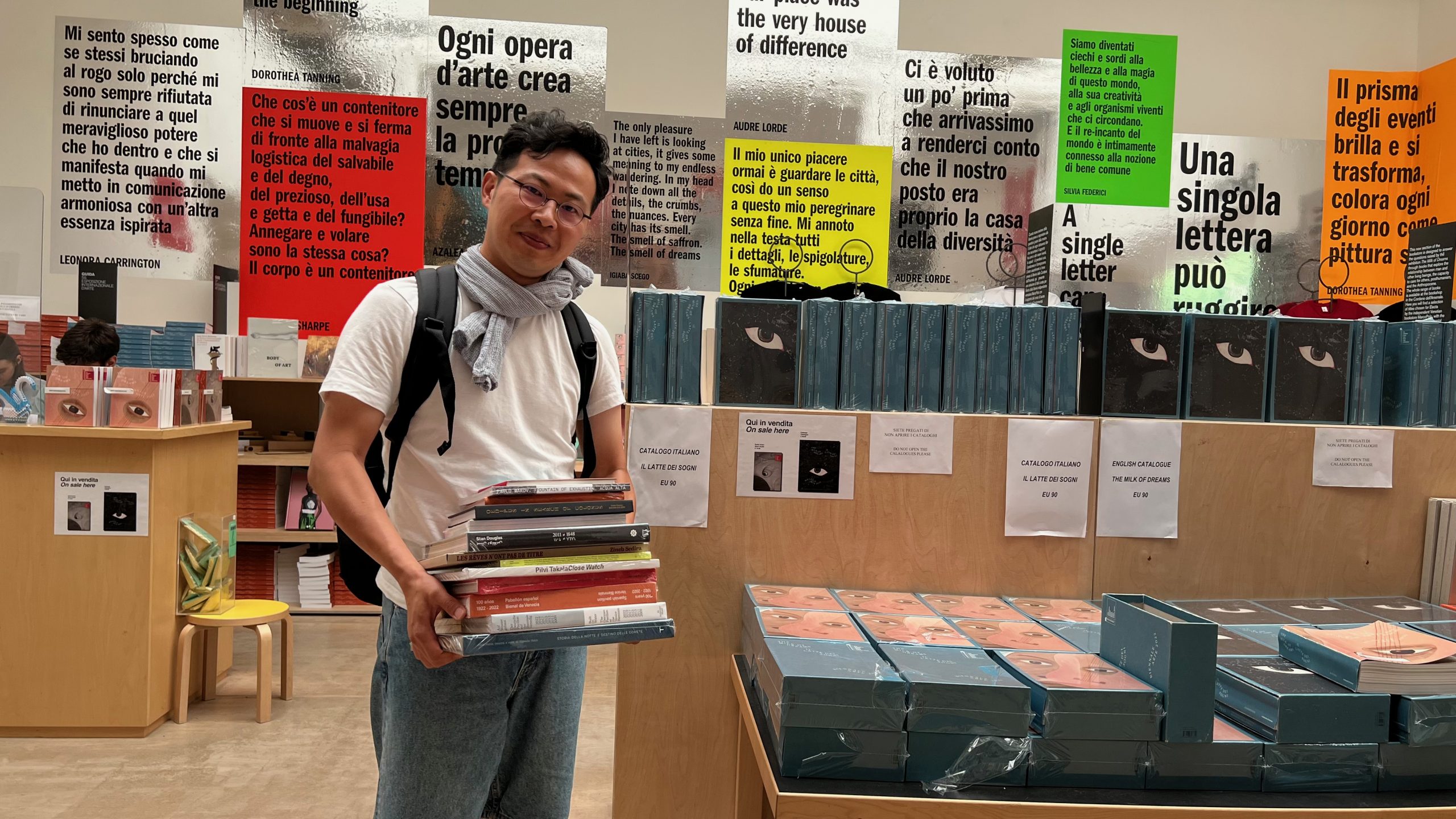
Jaeyong Park, a Seoul-based writer, translator, and interpreter, has attended every edition of the Venice Biennale since 2022—including both art and architecture cycles—and seen every single show, from the central exhibition and national pavilions to collateral and unofficial events. He documents his journeys in regular dispatches and has compiled a free bilingual guide to the biennial. Park organizes his trips with a group of fellow art workers, splitting accommodation costs and sharing reviews over dinner to ensure full coverage.

Somali artists and culture workers express concern over Somalia Pavilion in Venice

Somali artists, cultural workers, and organizations have published multiple open letters and statements expressing concern over the Somalia Pavilion at the Venice Biennale. The pavilion, announced in March for the 2026 edition, is titled 'SADDEXLEEY' and features Somali-Swedish artist Ayan Farah, Somali-Danish poet and filmmaker Asmaa Jama, and Somali-British writer Warsan Shire, curated by Stockholm-based Mohamed Mire and Italian project manager Fabio Scrivanti. Critics, including the Somali Arts Foundation and the queer collective Warbixinta Cidda, allege that the pavilion was organized without meaningful consultation of artists and organizations based in Somalia, and object to the appointment of an Italian co-curator given Italy's colonial history in Somalia. An anonymous open letter further alleges intimidation and coercive pressure against critics, and demands Scrivanti's removal, calling for a boycott if demands are not met.

Dries Verhoeven on Representing the Netherlands at the 61st Venice Biennale

Dries Verhoeven will represent the Netherlands at the 61st Venice Biennale (2026) with a new work titled *The Fortress*, installed in the Dutch Rietveld Pavilion in the Giardini. The 25-minute performance piece transforms the sunlit pavilion into a darkened bunker, featuring a raw vocal composition using only false vocal cords. Verhoeven describes the work as a meditation on transition and self-preservation, reflecting a Western society caught between its enlightened self-image and a dark vision of the future. The piece responds to geopolitical unrest outside the Biennale grounds and is designed to be melancholic and confrontational, contrasting with the main exhibition's theme, *In Minor Keys*.

Sung Tieu on Representing Germany at the 61st Venice Biennale

Sung Tieu, who is co-representing Germany at the 61st Venice Biennale alongside Henrike Naumann, responds to a questionnaire from ArtReview about her plans for the German Pavilion. She describes her inspiration as her mother and childhood home, a site built for foreign contract workers in the GDR that later became a refuge for the diaspora. Tieu states that her work relates to the Biennale theme "In Minor Keys" through the lens of Gehrenseestrasse, a concrete record of collective memory. She also expresses skepticism about the Biennale's importance, noting that the German Pavilion's fascist architecture compels artists to work against it, and that national pavilions reveal how much work remains in undoing nationalism.

Miet Warlop on Representing Belgium at the 61st Venice Biennale

Miet Warlop, the artist representing Belgium at the 61st Venice Biennale (2026), discusses her plans for the Belgian Pavilion in the Giardini in an interview with ArtReview. Her installation, inspired by the Belgian motto 'L'union fait la force' ('unity makes strength'), aims to create a space between a workspace, exhibition, and performance that brings people together in introspection. She cites time spent with Venice's artistic communities, including students at the Accademia, as influential, and notes that her work engages with the Biennale's theme 'In Minor Keys' by incorporating minor-key music to evoke nuanced, introspective emotions.

The Interview: Gabrielle Goliath

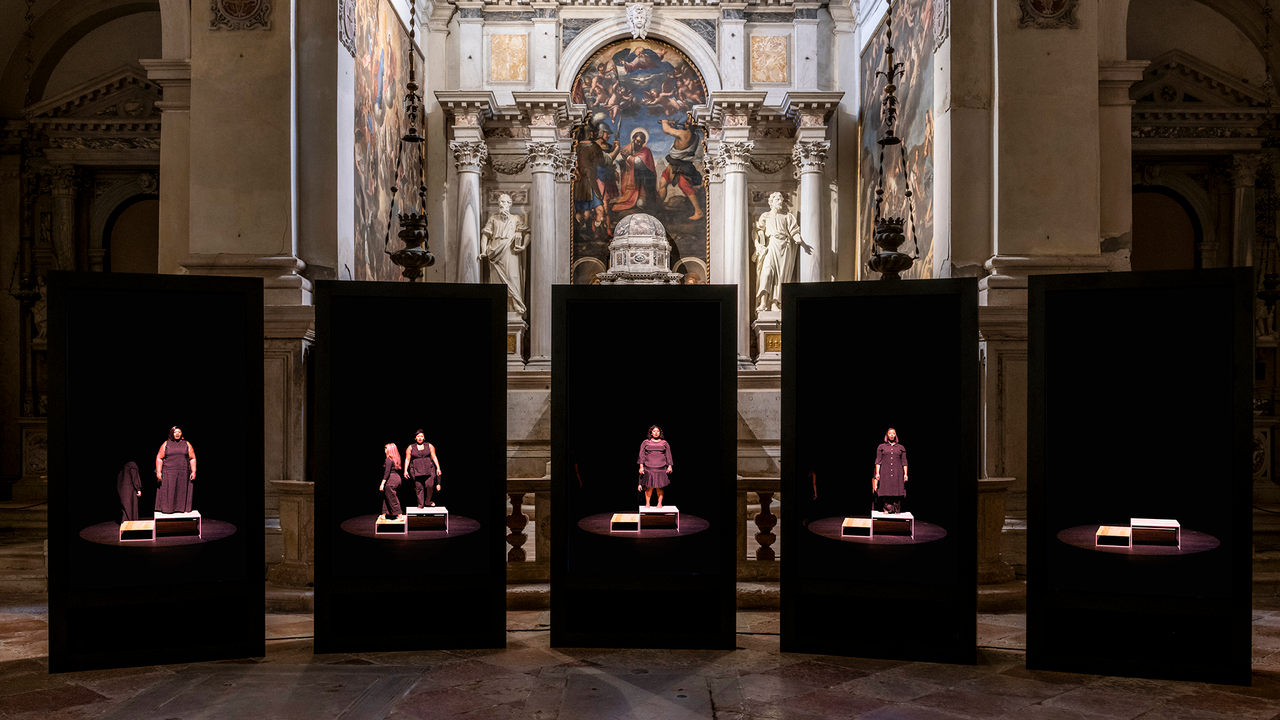
Gabrielle Goliath, a South African artist, created the performance work "Elegy" in 2015 after hearing a father mourn his daughter, Ipeleng Christine Moholane, who was raped and murdered. The piece features seven operatic women sustaining a single note in relay for an hour, evolving over a decade into a series of iterations that address systemic violence and grief. In January 2026, South Africa's Minister of Sport, Arts and Culture, Gayton McKenzie, cancelled Goliath's presentation of the latest version of "Elegy" at the 61st Venice Biennale, which was to include tributes to victims in South Africa, Namibia, and Gaza, including journalist Hiba Abu Nada. Goliath refused to alter the work, took legal action, and will now show it independently at the Chiesa di Sant'Antonin in Venice, while the official South African Pavilion will remain empty for the first time since 2011.

Margaret Whyte on Representing Uruguay at the 61st Venice Biennale

Margaret Whyte, an artist from Uruguay, is set to represent her country at the 61st Venice Biennale in 2026, with her pavilion located in the Giardini. In an interview with ArtReview, Whyte discusses her exhibition, which builds on her earlier show "Tiempo de Escuchar" at the National Museum of Visual Arts in Uruguay, curated by Patricia Bentancur. Her work is inspired by Nassim N. Taleb's book "Antifragile" (2012), exploring themes of chaos, uncertainty, and resilience. She sees her antifragile approach as complementary to the Biennale's theme, "In Minor Keys," curated by Koyo Kouoh, emphasizing emotional depth, silence, and healing.

Pavel Brǎila on Representing Moldova at the 61st Venice Biennale

Pavel Brǎila is representing Moldova at the 61st Venice Biennale with an installation titled "Echoes of Harmony and Silent Cries" (2026), featuring flying carpets that fill the pavilion space at Santa Veneranda. In an interview with ArtReview, Brǎila explains that the work was driven by the constant presence of war in the news—Ukraine, Israel and Gaza, and other conflicts—and evolved into a sound installation as the propellers of the carpets created a minor-key resonance. He describes his first visit to the Biennale 25 years ago as a festive art festival, but now sees the platform as a crucial opportunity to represent his country's voice and express his urgent feelings about the world.

Bugarin + Castle on Representing Scotland at the 61st Venice Biennale

ArtReview published a questionnaire response from Bugarin + Castle, the artist duo representing Scotland at the 61st Venice Biennale (2026). Their exhibition, titled "Shame Parade" and curated by Mount Stuart Trust, explores charivari—medieval public shaming rituals involving sound, costume, and cross-dressing. The work draws on the artists' research into how noise and music have been used as tools of control, with particular attention to the Filipino legal definition of charivari as a punishable public disturbance. The exhibition includes sculpture, print, moving image, and a musical score created with Manila-based band Kalye Teresa, and is housed at the Olivolo, Castello pavilion.

‘In Minor Keys’ Review: Its Best Moments Live in the Institutions Koyo Kouoh Built

Andrew Durbin reviews the national pavilions at the 2026 Venice Biennale, contrasting a vacuous US presentation with incisive and moving installations from Britain and Germany. The review highlights how the best moments of the exhibition live in the institutions built by curator Koyo Kouoh, who organized the Biennale's main exhibition.

Ariel West Probes Our Desire for Oil

Andrew Durbin reviews the national pavilions at the 2026 Venice Biennale, contrasting a vacuous US presentation with incisive and moving installations from Britain and Germany. The review critiques the US pavilion for lacking meaningful content, while praising the British and German contributions for their depth and emotional resonance.

What’s Showing in Chelsea During Frieze Week New York

This article is a critic's guide reviewing national pavilions during Frieze Week New York. Andrew Durbin contrasts a vacuous US presentation with incisive and moving installations from Britain and Germany, questioning the meaning and depth of the American contribution.

How to Have the Perfect Day at Frieze New York 2026

Andrew Durbin reviews the national pavilions at Frieze New York 2026, contrasting a vacuous US presentation with incisive and moving installations from Britain and Germany. The review highlights the disparity in conceptual depth and emotional resonance among the three pavilions, with the US offering little meaning while the British and German contributions engage seriously with contemporary issues.

Venice Biennale Diary: An Editor on the Ground

Andrew Durbin reviews national pavilions at the Venice Biennale, contrasting a vacuous US presentation with incisive and moving installations from Britain and Germany. The article is part of Frieze's Critic's Guides series, published on May 6, 2026.

Arsenale Review: Where Voices Resist Erasure

At the 2026 Venice Biennale's Arsenale, critic Andrew Durbin reviews national pavilions, finding the US presentation vacuous and lacking meaning, while praising the British and German pavilions for their incisive and moving installations that resist erasure. The review highlights a stark contrast in curatorial ambition and political engagement among the participating nations.

Off-Site Exhibitions Review: The Politics of Listening

Andrew Durbin reviews the national pavilions at an unnamed biennial, contrasting a vacuous US presentation with incisive and moving installations from Britain and Germany. The review critiques the lack of meaningful engagement in the US pavilion while praising the depth and emotional resonance of the British and German contributions.

The Books That Influence Sohrab Hura

Andrew Durbin reviews the national pavilions at an unnamed biennial, contrasting a vacuous US presentation with incisive and moving installations from Britain and Germany. The review critiques the lack of meaning in the US pavilion while praising the depth and emotional resonance of the British and German contributions.

Jerald Cooper’s Top Picks from Frieze New York 2026

Andrew Durbin reviews the national pavilions at the 2026 Venice Biennale, contrasting a vacuous US presentation with incisive and moving installations from Britain and Germany. The article critiques the lack of meaning in the American pavilion while praising the depth and emotional resonance of the British and German contributions.

‘YBA & BEYOND’ Exports British Cool

Frieze critic Andrew Durbin reviews the national pavilions at the Venice Biennale, contrasting a vacuous US presentation with incisive and moving installations from Britain and Germany. The British pavilion, titled 'YBA & BEYOND,' exports British cool by showcasing works from Young British Artists and their successors, while the German pavilion offers a deeply resonant experience. The US pavilion is criticized for lacking meaningful content, raising questions about curatorial direction and national representation.

‘Afterimages’: What Does It Mean to See Through Overload?

Andrew Durbin reviews the national pavilions at the Venice Biennale, contrasting a vacuous US presentation with incisive and moving installations from Britain and Germany. The article critiques the lack of meaningful engagement in the US pavilion while praising the depth and emotional resonance of the British and German contributions.

Frieze’s Christine Messineo Takes a Tour of Chelsea

Andrew Durbin reviews national pavilions at the Venice Biennale, contrasting a vacuous US presentation with incisive and moving installations from Britain and Germany. The review highlights the disparity in thematic depth and emotional resonance among the three pavilions.