filter_list Showing 213 results for "Russia" close Clear
search
dashboard All 213 article news 114museum exhibitions 73article culture 10article policy 7rate_review review 4article local 3trending_up market 1person people 1
date_range Range Today This Week This Month All
Subscribe

Protests and Shutdowns Engulf 61st Venice Biennale Opening

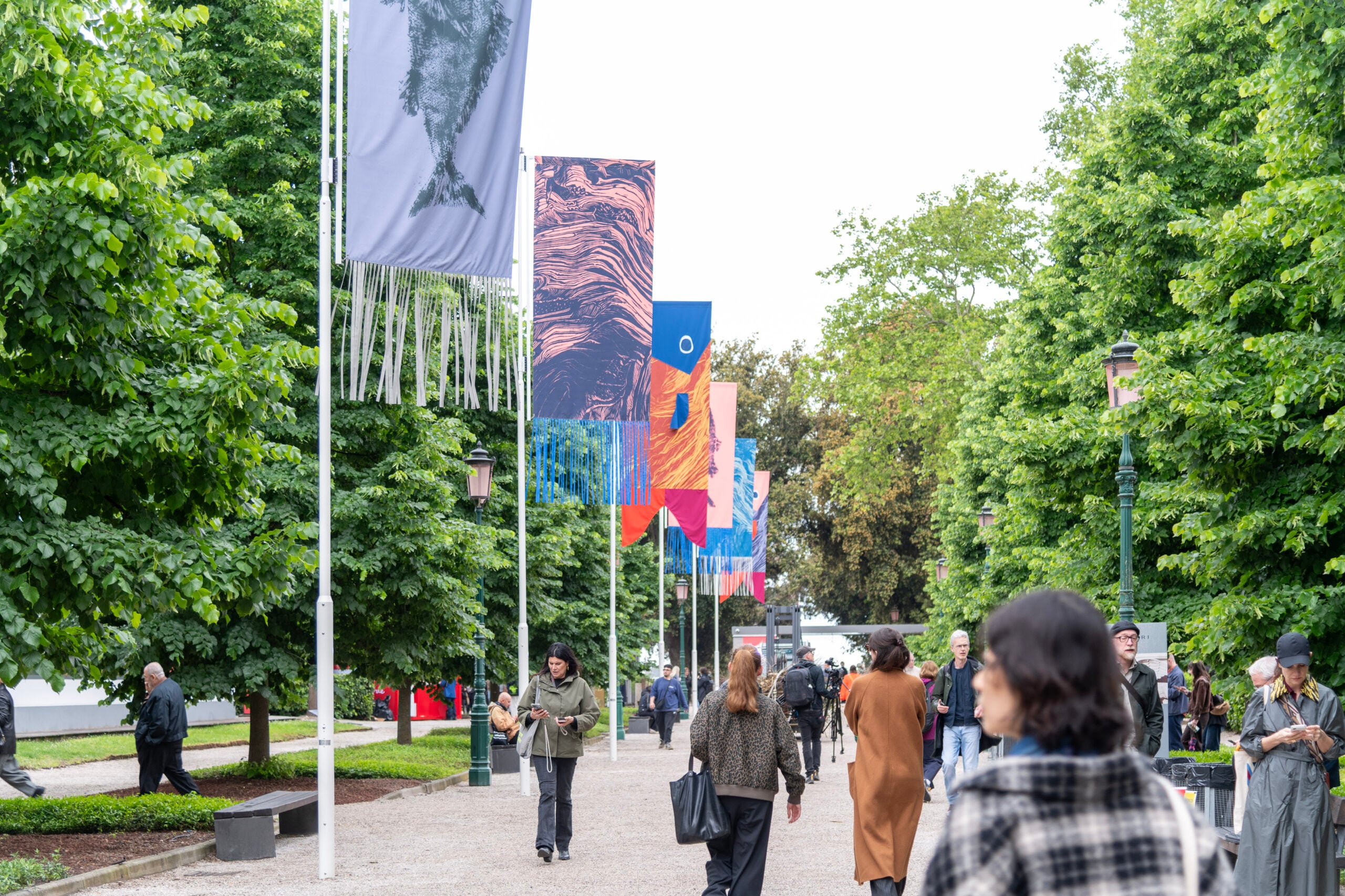
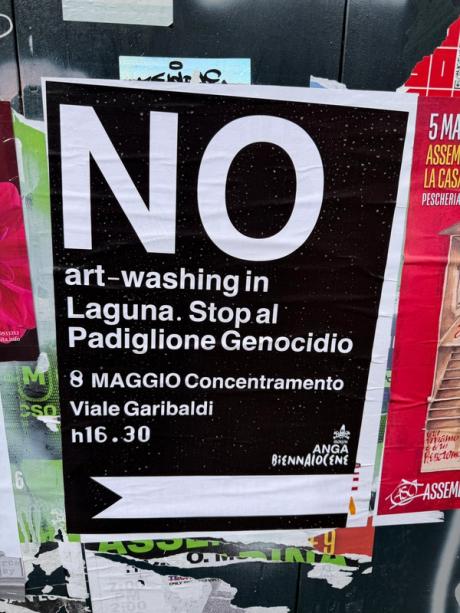
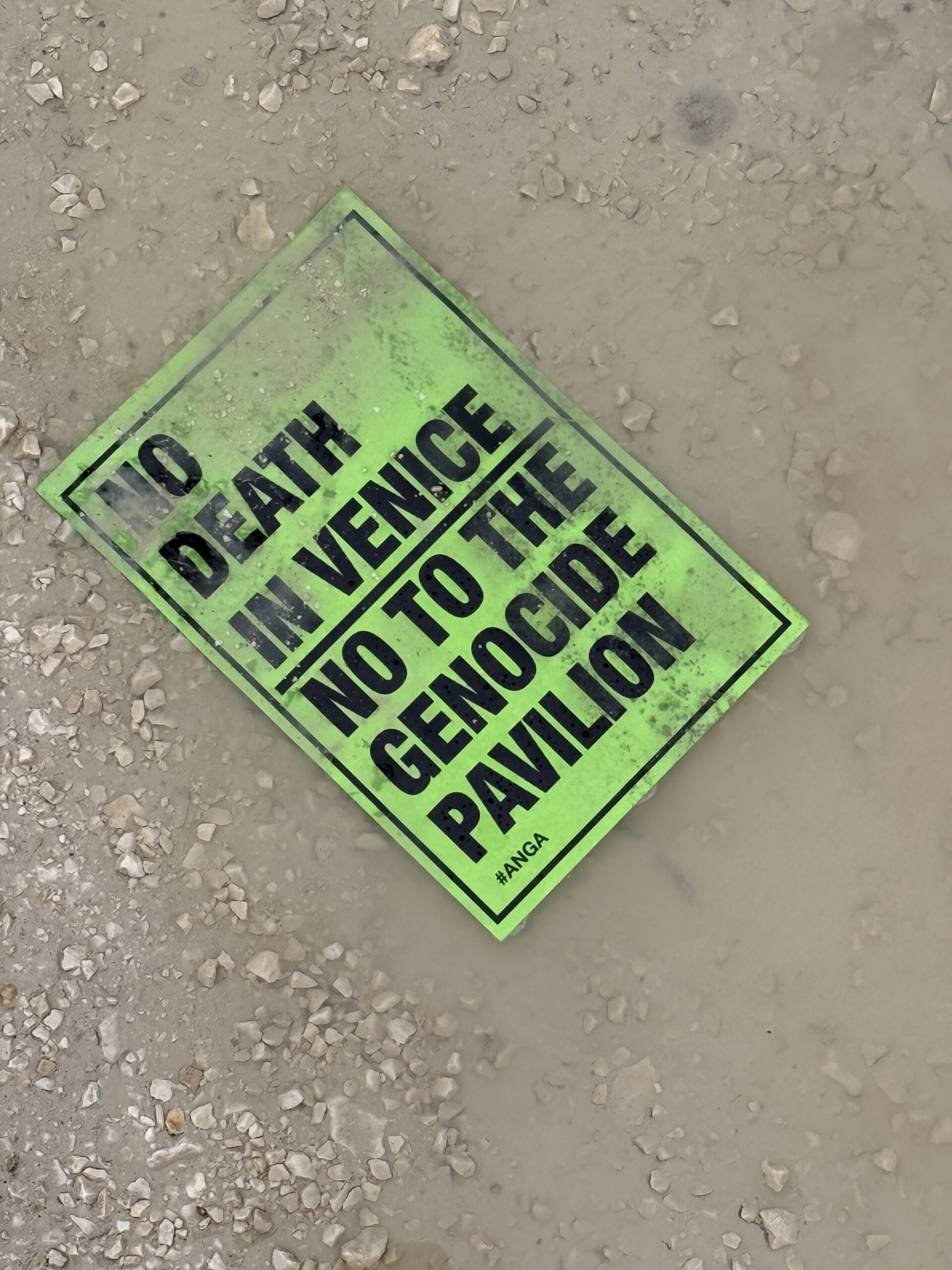
The 61st Venice Biennale preview week, opening to press and professionals ahead of its May 9 public launch, has been engulfed by protests and institutional crises. On May 5, around 60 artists from Koyo Kouoh's exhibition “In Minor Keys” staged a Solidarity Drone Chorus outside the Giardini, drawing on Gazan composer Ahmed Muin's Drone Song (2025) to highlight victims of warfare. On May 6, the Art Not Genocide Alliance (ANGA) organized protests outside Israel's pavilion at the Arsenale, leading to a security-enforced closure, while Pussy Riot and FEMEN demonstrated outside the Russian pavilion. The jury resigned on April 30 after controversy over award eligibility tied to ICC arrest warrants, prompting the Biennale to scrap Golden Lions and transfer prize voting to the public. Iran withdrew its pavilion on May 4, and Russia's will close on May 9, with only exterior video projections remaining. ANGA and Italian unions have announced a 24-hour strike on May 8.
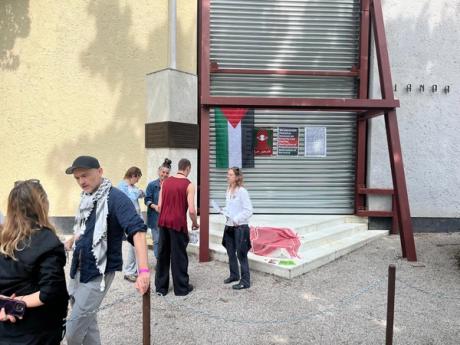

Venice Biennale strike sees more than 15 pavilions temporarily or partially close

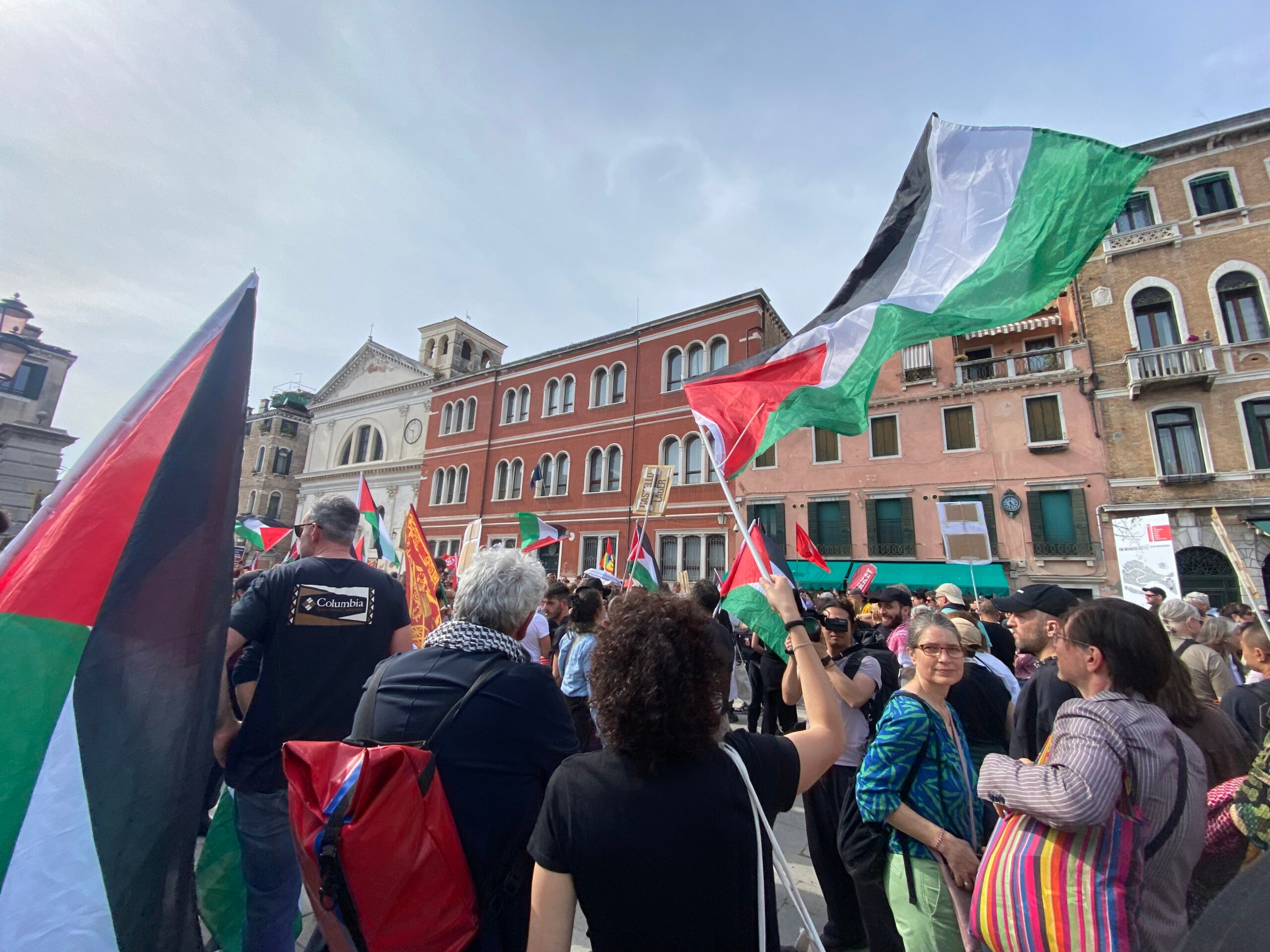
On 8 May, more than 15 national pavilions at the Venice Biennale temporarily or partially closed in a coordinated strike organized by the Art Not Genocide Alliance (ANGA). The protest opposes Israel’s participation in the event, which organizers say normalizes what they call genocide and exploits precarious labor. Participating countries include Austria, Lebanon, Slovenia, Egypt, Poland, and the Netherlands, whose artist Dries Verhoeven stood outside his shuttered pavilion with a Palestinian flag. Some pavilions, like Japan’s, remained open but suspended interactive elements. The strike follows earlier controversies, including the resignation of the prize jury and an open letter demanding the Israeli pavilion’s cancellation.

Venice exhibition of site-specific films aims to capture the hyper stimulating times we are living in

The Fondazione In Between Art Film presents "Canicula," the third and final exhibition in its Trilogy of Uncertainties, opening on 6 May at the Complesso dell’Ospedaletto in Venice. Curated by Leonardo Bigazzi, the show features eight newly commissioned site-specific films that explore themes of excess, sensory overload, and geopolitical tension. Works include Roman Khimei and Yarema Malashchuk's "Affirmations" (2026), depicting fictional deathbed testimonies of Russian soldiers, Lawrence Abu Hamdan's "450XL: The Story of a Fugitive Sound" (2026) about a sonic attack in Belgrade, and Maya Watanabe's "Jarkov" (2025-26) reflecting on Arctic ice melt and Pleistocene remains.

Oleg Prokofiev’s Lost Trove of Paintings Comes to Light After Decades in Hiding

A trove of abstract paintings and sculptures by Russian artist Oleg Prokofiev, hidden for decades in Moscow after he fled the Soviet Union, has been rediscovered and is now on public display for the first time. Prokofiev concealed the works in the 1950s and 1960s to avoid state persecution—abstract art was banned in the USSR, and his relationship with British scholar Camilla Gray made marriage impossible until 1969. After Gray's death and his move to England, the artworks remained safely stored in Moscow, where he found them intact after the Soviet collapse. The collection, including paintings, sculptures, sketchbooks, and letters, is now exhibited at the newly founded Prokofiev Studio in Hackney, London, established by his four children and curator Anzhela Popova.

New space dedicated to Oleg Prokofiev—whose abstract art was censored by Soviet Russia—opens in London

A new art space called Prokofiev Studio has opened in Hackney, London, dedicated to the Russian artist Oleg Prokofiev. Its inaugural exhibition, 'Bending Time,' presents abstract works from the 1950s that were banned under Soviet censorship and long thought lost. The space was founded by Prokofiev’s children, including composer Gabriel Prokofiev, in collaboration with curator Anzhela Popova. The works were rediscovered in 1994 when Prokofiev returned to his former Moscow home and found them preserved by the new owner.

Israel Addresses Venice Biennale Jury’s ‘Boycott’ of Pavilion: ‘A Contamination of the Art World’

Israel’s foreign ministry has condemned a statement by the Venice Biennale jury, in which the five curators declared they would not consider pavilions from countries charged with crimes against humanity by the International Criminal Court. The jury’s decision effectively boycotts Israel and Russia, whose leaders face ICC arrest warrants. Israel called the move a “contamination of the art world,” while the artist representing Israel, Belu-Simion Fainaru, also denounced the jury for creating a hostile environment. The Biennale’s organizers have distanced themselves from the jury, stating they cannot exclude any recognized state from the exhibition.

The Ukrainian Pavilion’s Deer Seen Around the World

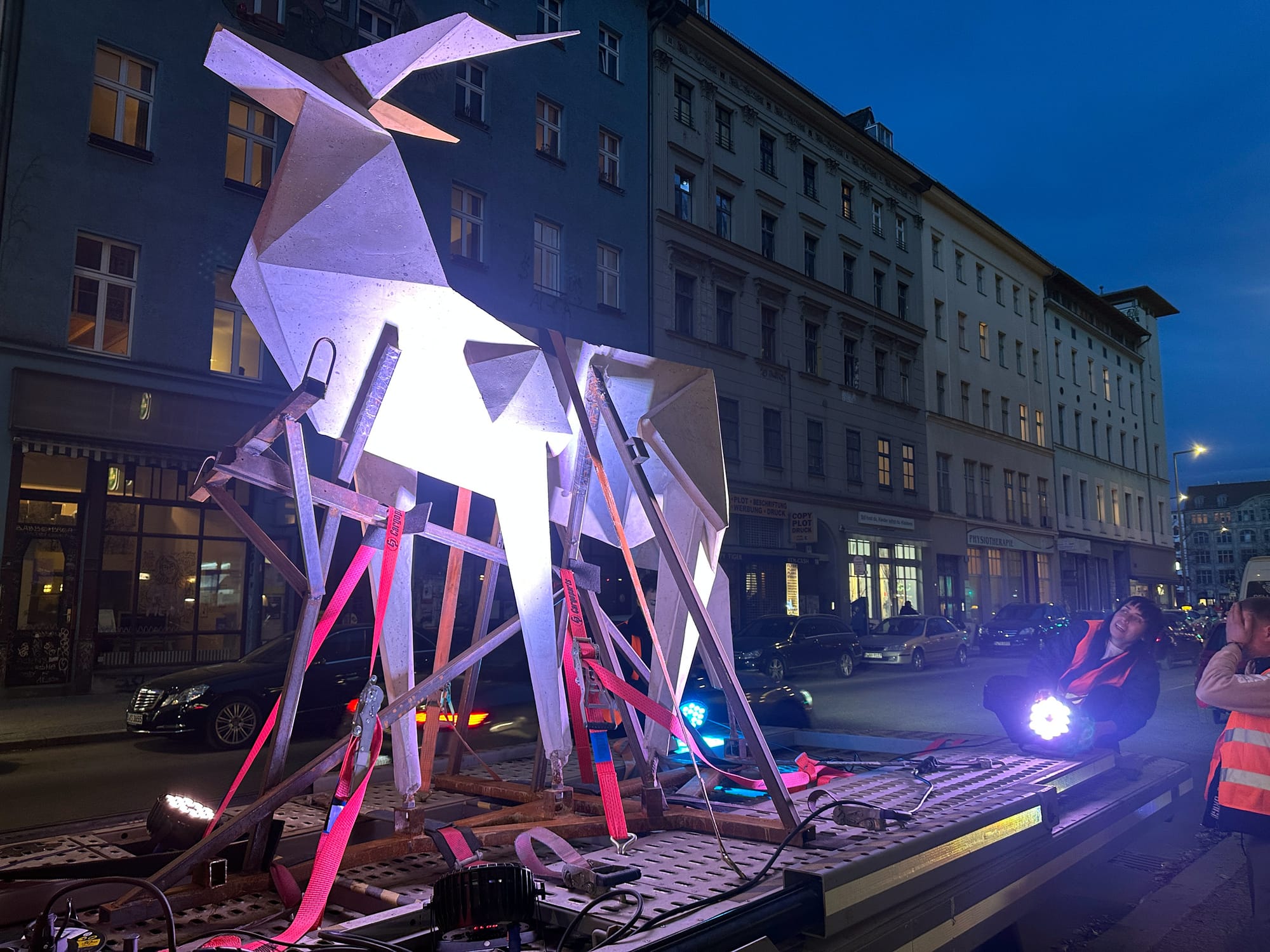
Zhanna Kadyrova's concrete sculpture "The Origami Deer" (2019) is prominently displayed at the entrance to the Giardini during the 61st Venice Biennale, part of her project "Security Guarantees" in the Ukrainian Pavilion. Originally installed in Pokrovsk, eastern Ukraine, the work was removed in 2024 as Russian forces advanced, then traveled through Vienna, Warsaw, Prague, Berlin, and Paris before reaching Venice—a journey mirroring the displacement of millions of Ukrainians. The sculpture, shaped like a deer and evoking folded paper, references the 1994 Budapest Memorandum, in which Russia, the UK, and US guaranteed Ukraine's security in exchange for its nuclear disarmament—guarantees that proved worthless after Russia's invasions.

Director of the Hermitage Museum Sanctioned by the European Union

Le directeur du Musée de l'Ermitage sanctionné par l'Union européenne

The European Union has imposed sanctions on Mikhail Piotrovsky, the 81-year-old director of the State Hermitage Museum in Saint Petersburg, as part of its 20th sanctions package against Russia. Piotrovsky was blacklisted for supporting the war in Ukraine and overseeing illegal archaeological excavations in occupied Crimea. The EU cited his use of Kremlin war rhetoric—calling the museum's exhibition policy a "cultural special operation"—and the Hermitage's role in incorporating Ukrainian cultural objects from occupied territories into Russia's state museum fund. Additionally, under his leadership, unauthorized digs were conducted at the ancient Greek site of Myrmekion in Crimea, led by Hermitage archaeologist Alexander Butyagin, who was arrested in Warsaw and later released in a prisoner exchange.

'ART FROM WAR TO WAR: CHASING BUTTERFLIES OVER THE VERGE OF A CLIFF' at Beck & Eggeling International Fine Art, Düsseldorf, Germany on 28 May–15 Aug 2026

An exhibition titled 'ART FROM WAR TO WAR: CHASING BUTTERFLIES OVER THE VERGE OF A CLIFF' is on view at Beck & Eggeling International Fine Art in Düsseldorf, Germany, from 28 May to 15 August 2026. Curated by Antonio Geusa and Kay Heymer, the show features selected works from the Valeria Rodnianski collection, spanning artists from Germany and the Soviet/post-Soviet space. It is structured around two historical turning points—the construction of the Berlin Wall in 1961 and Russia's full-scale invasion of Ukraine in 2022—and organized into three thematic sections: Topos, Anthropos, and Logos, exploring place, human experience, and language.

The 10 best pavilions to see at the 2026 Venice Art Biennale. Artribune's top ten

I 10 migliori padiglioni da vedere alla Biennale d’Arte di Venezia 2026. La top ten di Artribune

Artribune presents its top ten must-see national pavilions at the 2026 Venice Biennale, which features a record 100 participating countries. The article highlights standout projects including Greece's escape room by Andreas Angelidakis critiquing nationalist populism, Belgium's participatory dance installation by Miet Warloop, and Canada's greenhouse-like pavilion by Abbas Akhavan exploring colonial botany. The Biennale, curated by Koyo Kouoh under the theme "In Minor Keys," is marked by last-minute jury resignations leading to public voting for the Golden Lions, as well as protests over the participation of Russia and Israel.

PinchukArtCentre opens new exhibition at the Venice Biennale

The PinchukArtCentre has opened a new exhibition titled "Still Joy — From Ukraine Into the World" as part of the official parallel program of the 61st Venice Biennale. The show, which opened on May 7 at Palazzo Contarini Polignac and runs through August 1, features works by over 20 international and Ukrainian artists exploring joy as an act of resilience and humanity. Central to the exhibition are testimonies from Hlib Stryzhko, a marine veteran who returned from Russian captivity, which are transformed into sculptural elements. Notable works include a protest performance by Yurii Hruzinov at the Russian pavilion, a video installation of Kyiv rave parties by Malashchuk and Khimei, and installations by Future Generation Art Prize laureates Ashfika Rahman and Zhanna Kadyrova.

Hermitage Museum Director and Putin Ally Mikhail Piotrovsky Sanctioned by European Union

The European Union has sanctioned Mikhail Piotrovsky, the longtime director of the State Hermitage Museum in St. Petersburg, for his close association with Vladimir Putin and his active support of Russia's war against Ukraine. Announced on April 23, the sanctions are part of a broader package targeting over a hundred individuals and entities, including other cultural figures like Sergei Obryvalin, Igor Solonin, and Andrey Polyakov, for their roles in the seizure of Ukrainian cultural property and the spread of Russian propaganda in occupied regions.

Archives : MAMM : Lauren Greenfield : Generation Wealth

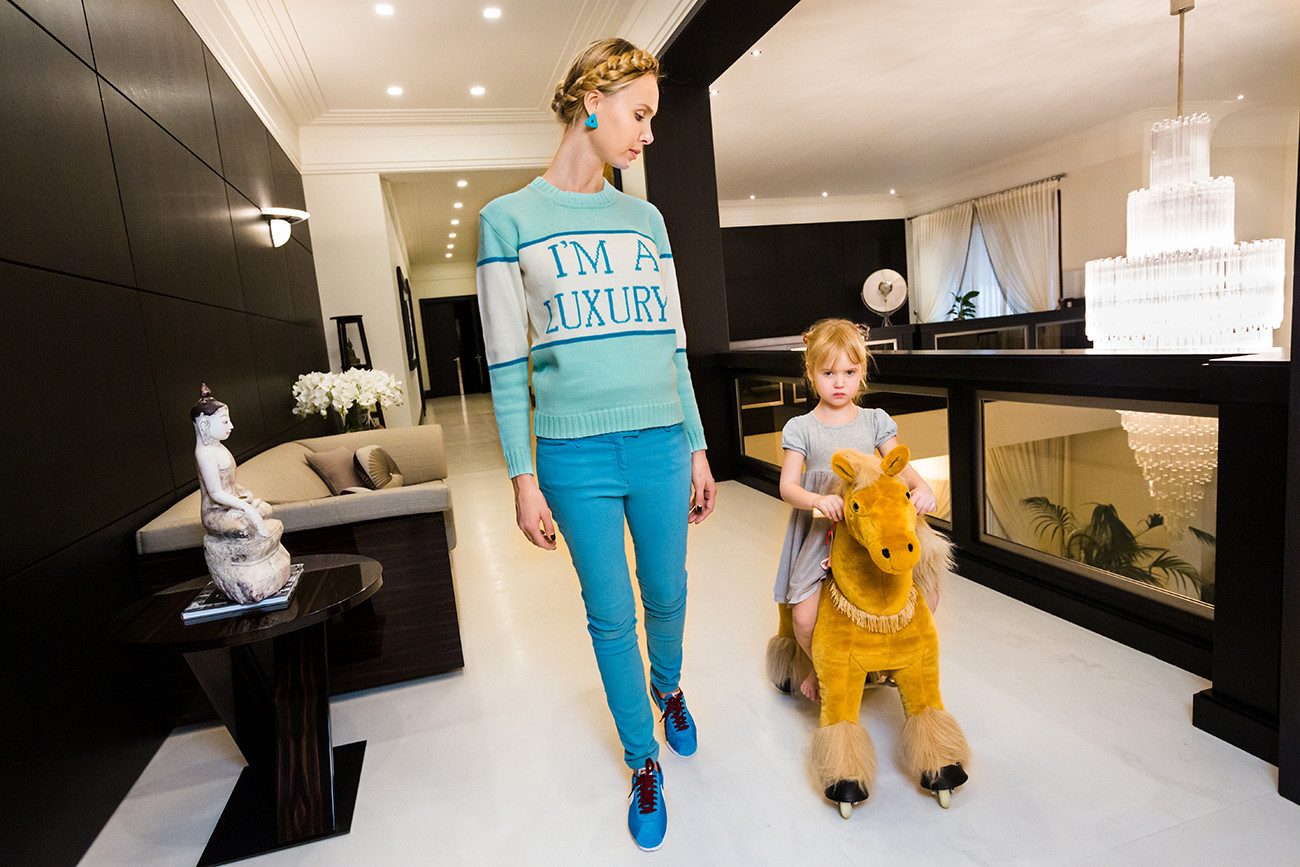
The Multimedia Art Museum, Moscow (MAMM) presents 'Generation Wealth' by American documentary photographer and director Lauren Greenfield as part of the XII Moscow International Biennale 'Fashion and Style in Photography 2021'. The exhibition, opening May 21, 2021, includes over 200 photographs, documentary films, and interviews drawn from Greenfield's 25-year investigation into global consumer culture, wealth aspiration, and the transformation of happiness. It marks Greenfield's third exhibition at MAMM, following previous shows in 2000 and 2004.

Prokofiev Studio: new gallery devoted to the abstract art of Oleg Prokofiev son of the composer & father of composer Gabriel Prokofiev

Composer Gabriel Prokofiev has opened Prokofiev Studio in Hackney, London, a new gallery dedicated to the abstract art of his father, Oleg Prokofiev (1928-1998). Oleg, son of the famed composer Sergei Prokofiev, created abstract works in the 1950s that defied the Soviet Union’s strict socialist realism doctrine. His career was shaped by his relationship with British art historian Camilla Gray, whom he married in 1969 after hiding his art for a decade; she died two years later. Oleg moved to the UK but believed his abstract works lost until a 1994 return to Moscow revealed they had been preserved. The gallery houses Oleg’s archive, including 1950s abstract artworks, letters, sketchbooks, and sculptures, with an inaugural exhibition titled "Bending Time" reconstructing his 1990s studio in Hackney Wick.

Iran Will Not Participate in Venice Biennale, Organizers Say

Iran will not participate in the 61st Venice Biennale, which opens for previews this week, the Biennale Foundation announced on May 4. The decision comes two months after the United States and Israel launched strikes across Iran, and amid renewed tensions along the Strait of Hormuz. The Iranian pavilion was to be commissioned by Aydin Mehdizadeh Tehrani, director general of the visual arts office in the Iranian Ministry of Culture. Iran has had inconsistent attendance at the Biennale since 1958, with a long absence between the 1960s and 2003, but has participated semi-consistently over the last two decades, most recently in 2024.

The Craziest Venice Biennale Ever: One Week Before Opening, the Jury Resigns (The Public Will Decide the Lions!)

La Biennale di Venezia più pazza di sempre: a una settimana dall’apertura si dimette la giuria (I Leoni li deciderà il pubblico!)

The entire international jury of the 61st Venice Biennale has resigned en masse just one week before the opening. The jury, chaired by Solange Oliveira Farkas and including Zoe Butt, Elvira Dyangani Ose, Marta Kuzma, and Giovanna Zapperi, had publicly announced they would not consider countries whose leaders are accused of crimes against humanity by the International Criminal Court—effectively excluding Russia and Israel from the Golden Lion competition. This decision came amid ongoing tensions between Italian Culture Minister Alessandro Giuli and Biennale President Pietrangelo Buttafuoco over Russia's participation, as well as controversy surrounding Israel's presence. After a meeting with Buttafuoco, the jury resigned, leaving the Biennale without a key body to award its top prizes.

Cultural workers at Venice Biennale to strike over Israel’s participation

Cultural workers and participants at the Venice Biennale plan to strike on 8 May during the opening week of the 61st edition, protesting Israel’s participation in the event. The strike, organized by the Art Not Genocide Alliance (ANGA) and supported by Italian trade unions, includes a rally near the Arsenale site. ANGA previously sent a letter signed by over 230 artists and curators demanding the cancellation of the Israeli pavilion, citing opposition to "genocide normalisation in culture" and precarious labor conditions. Israel is represented this year by sculptor Belu-Simion Fainaru, who opposes cultural boycotts.

Venice Biennale jury quits amid row over participation of Russia

The entire jury of the Venice Biennale resigned just days before the 61st international art exhibition's opening on May 9, following a dispute over the decision to allow Russia to participate. The five-member panel, led by Solange Farkas and including Zoe Butt, Elvira Dyangani Ose, Marta Kuzma, and Giovanna Zapperi, had previously stated it would not award prizes to artists from countries whose leaders face charges of crimes against humanity, a move seen as targeting Russia and Israel. The Biennale responded by postponing the award ceremony to November 22 and announcing it would give two awards, including one that could go to any national participation, citing its founding principles of openness and rejection of censorship.

Il fotoreport Andy Rocchelli morto nel Donbass nel 2014 ha un giardino a lui dedicato a Pavia

On May 24, the Collegio Ghislieri in Pavia inaugurated the Giardino della Ricerca, a garden dedicated to photojournalist Andy Rocchelli, who was killed in 2014 in the Donbas region of Ukraine alongside human rights activist Andrei Mironov. The garden, opened on the twelfth anniversary of his death, features a commemorative plaque and includes speeches by Gherardo Colombo and Michele Serra, as well as a podcast by Agostino Zappia and Enrico Rotondi. Italian courts have ruled that Rocchelli and Mironov were killed by Ukrainian army fire, but no one has been convicted.

There is an absent pavilion at the 2026 Venice Art Biennale that no one has talked about: Venezuela

C’è un padiglione assente alla Biennale d’Arte di Venezia 2026 di cui nessuno ha parlato: il Venezuela

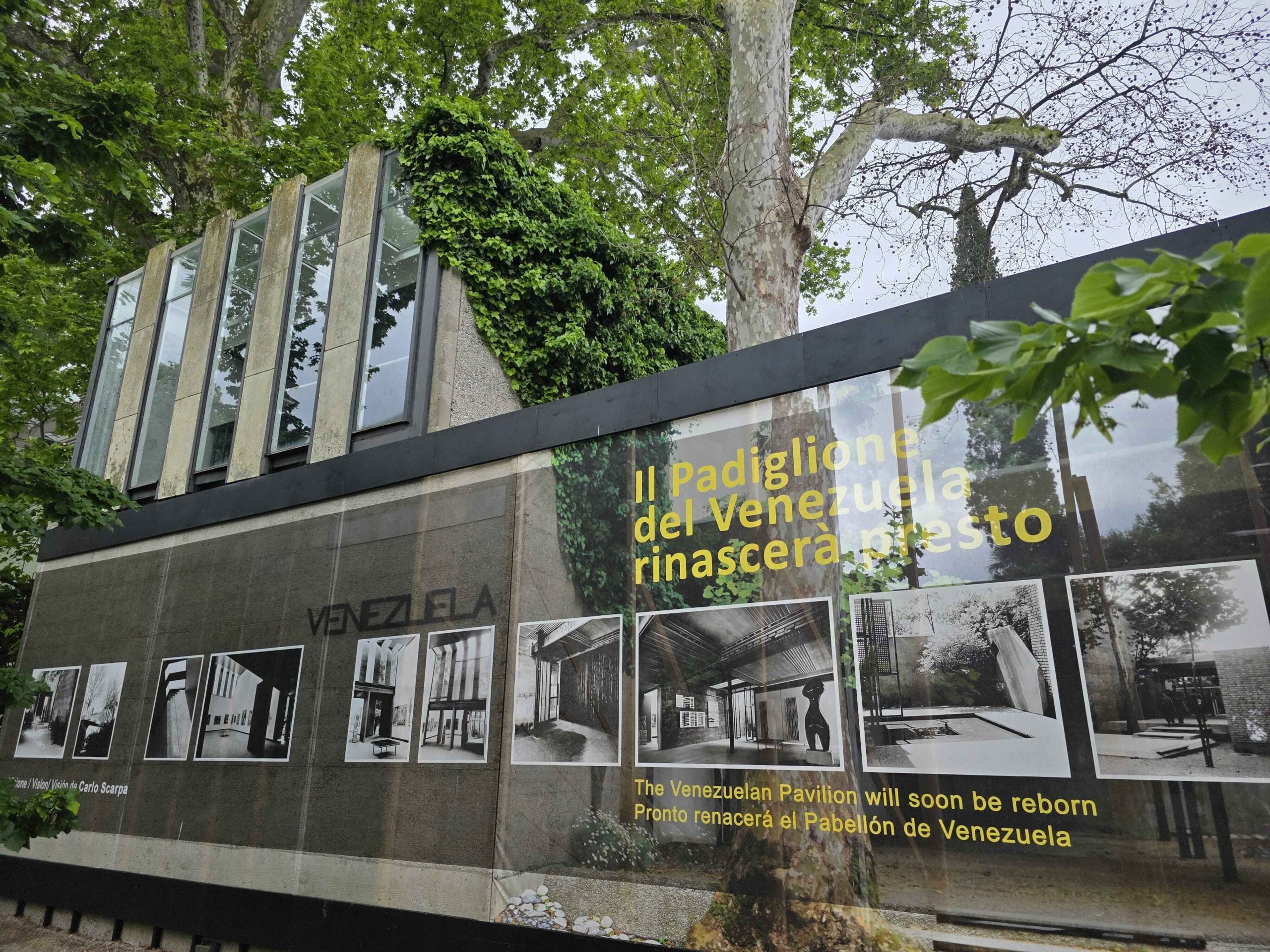
The Venezuelan pavilion at the 2026 Venice Art Biennale remains closed, an absence that has gone largely unnoticed amid other controversies surrounding the Russian, Israeli, South African, and Iranian pavilions. Designed by architect Carlo Scarpa and built between 1953 and 1956, the pavilion now displays a trilingual sign stating it will "rise again soon," reflecting the country's collapse after the kidnapping and imprisonment of President Nicolás Maduro by the United States and the installation of a fragile pro-American interim government.

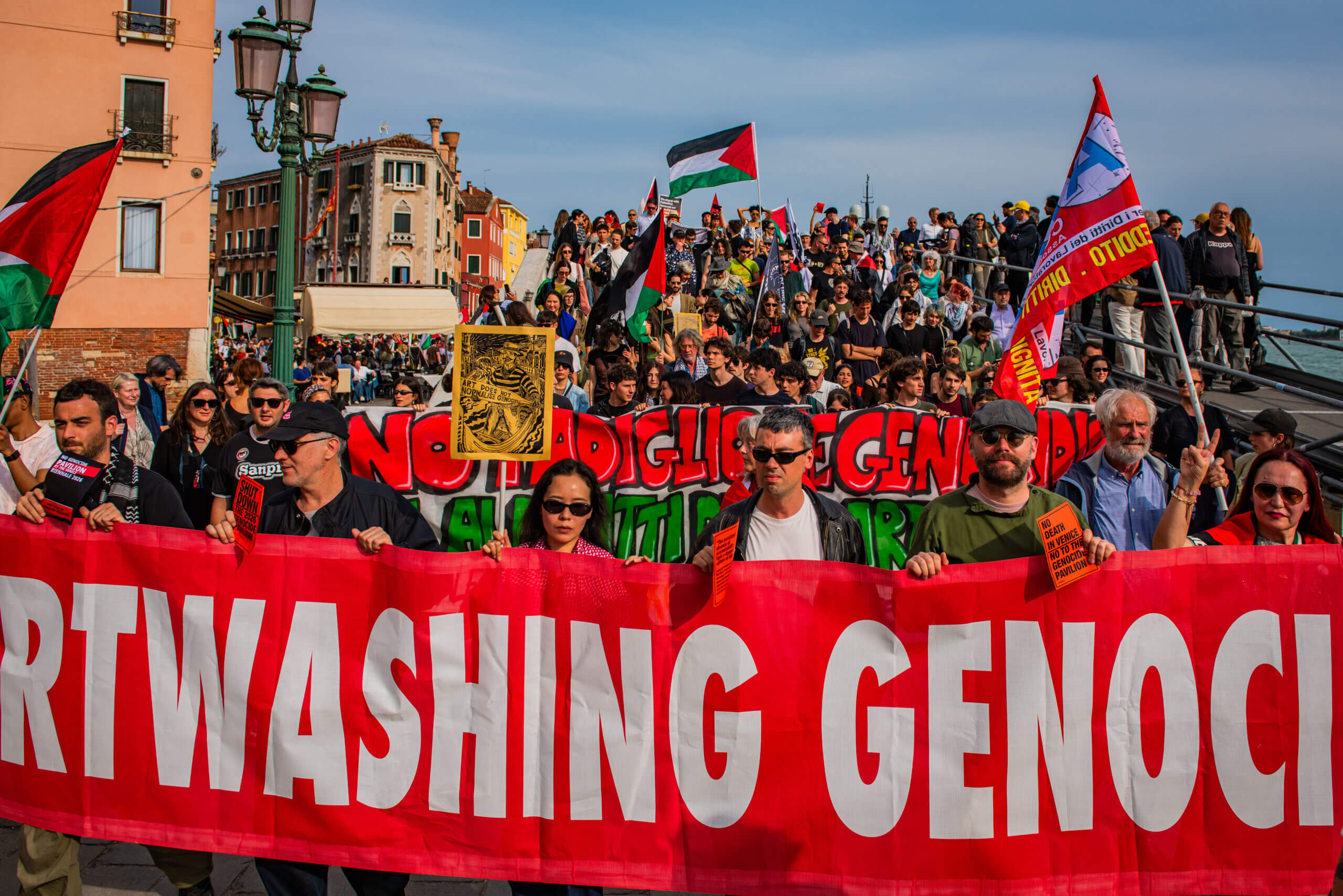
At the 2026 Venice Biennale, pavilions shut down for pro-Palestine strike. The map of protests

Alla Biennale di Venezia 2026 serrata dei padiglioni per sciopero pro Palestina. La mappa delle proteste

On May 8, 2026, the third VIP preview day of the 61st Venice Biennale, a massive strike shut down numerous national pavilions and disrupted the exhibition. Led by the Art Not Genocide Alliance (Anga), the protest demands Israel's exclusion from the Biennale over allegations of genocide in Palestine, and also targets poor labor conditions in the cultural sector. Pavilions closed one after another due to staff shortages, and protest posters appeared around artworks at the Giardini and Arsenale. The strike involved the Biennale Foundation itself, along with about twenty contractors managing services and national pavilions, with unions Adl Cobas, USB Lavoro privato, and Cub supporting the action. Tensions rose when the UK Pavilion reportedly replaced striking staff to remain open, and the Foundation issued a statement falsely denying that its employees were covered by the strike.

Art and politics: to take a stand or not? Nine artists and curators respond

Arte e politica: bisogna esporsi o no? Rispondono in 9 tra artisti e curatori

Nove tra artisti e curatori italiani rispondono alla domanda se l'arte debba esporsi politicamente, in un articolo pubblicato su Artribune. Marco Trulli, responsabile Cultura Arci e curatore, sostiene che l'arte non possa prescindere dal contesto storico e geopolitico, e che il mondo dell'arte debba mettere in discussione le connessioni tra istituzioni culturali, guerre e violenze sistemiche. Gabi Scardi, curatrice, rifiuta la categoria di 'arte politica' e invita gli artisti ad agire politicamente, citando esempi di padiglioni nazionali alla Biennale di Venezia (Turchia 2017, Israele 2015) come modelli di critica radicale dall'interno. Un altro contributo, legato al progetto 'Francesco 2026' per il Padiglione Internet a Venezia, propone una regola etica: l'arte deve minimizzare il danno alle persone più vulnerabili.

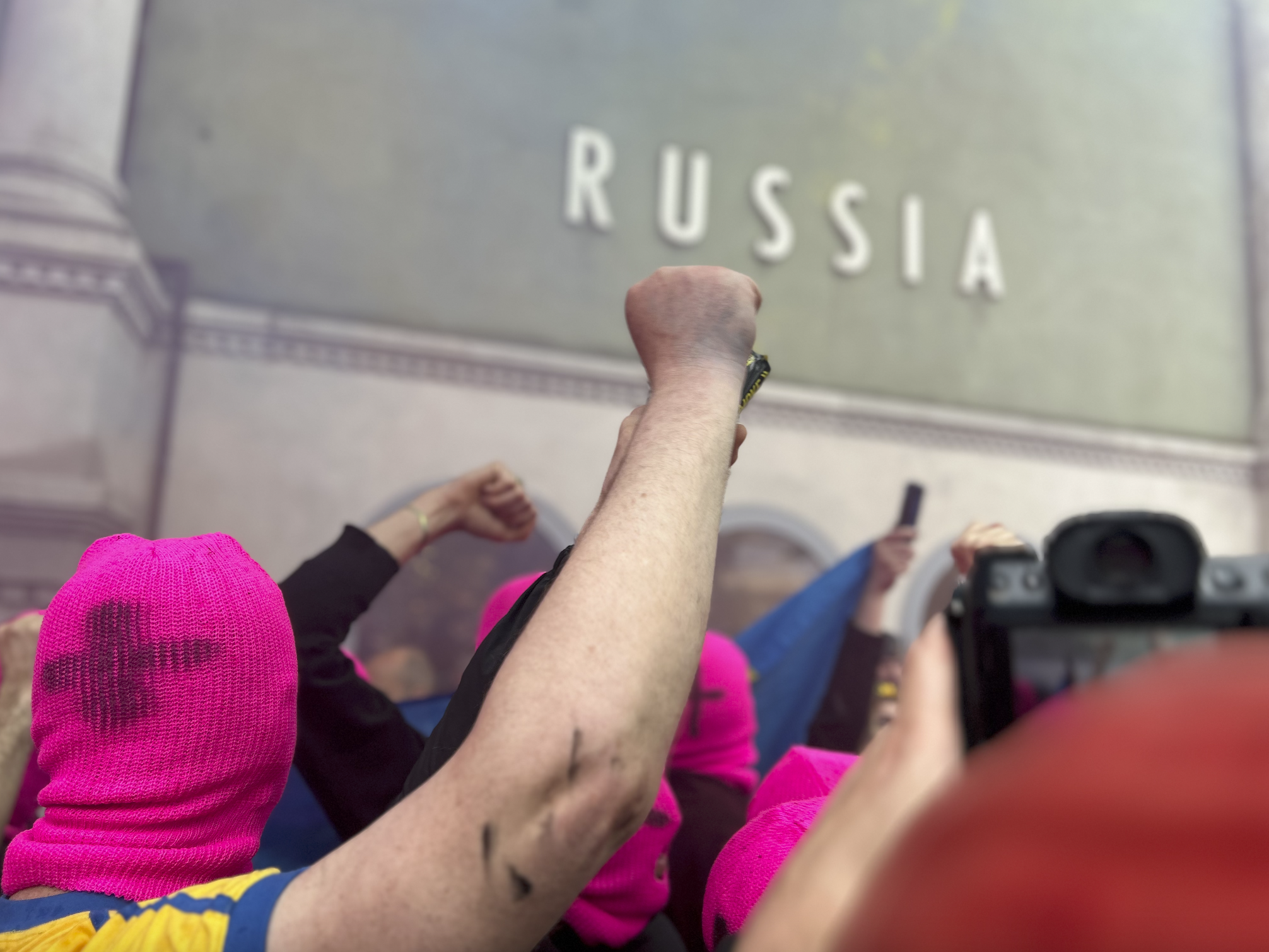
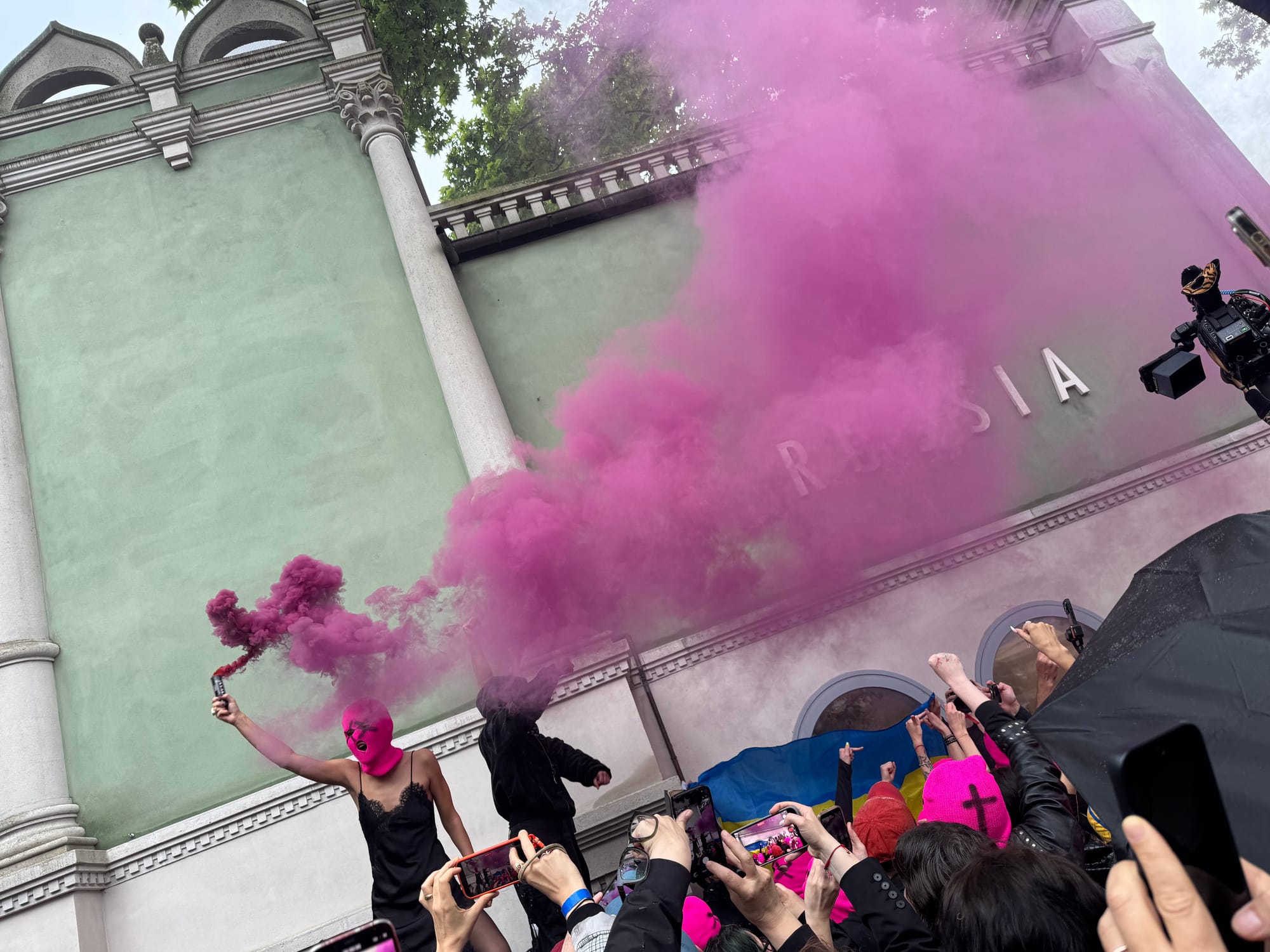
Pussy Riot and FEMEN protest at the Russian Pavilion at the Venice Biennale. "Blood is the true language of Russia"

Le Pussy Riot e le FEMEN in protesta al Padiglione russo alla Biennale di Venezia. “Il sangue è il vero linguaggio della Russia”

On May 6, 2026, during the preview days of the 61st Venice Biennale, Pussy Riot and FEMEN staged a joint protest outside the Russian Pavilion. Led by Nadya Tolokonnikova, the activists denounced Russia's participation in the Biennale as a form of political normalization while the war in Ukraine continues. The action included chants and slogans such as "Russia kills, Biennale exhibits. Blood is Russia's art," and targeted the Russian ambassador present inside the pavilion. The protest was unannounced and caught Biennale security off guard, drawing a crowd of journalists, visitors, and art professionals.

Italian culture minister will not attend opening of Venice Biennale

Italian culture minister Alessandro Giuli has announced he will not attend the opening of the Venice Biennale next week, protesting Russia's involvement in the exhibition. Russia, which has a permanent pavilion in the Giardini, has been absent from the Biennale since 2022 but is returning this year, sparking widespread criticism. The European Union recently cut its €2 million grant to the Biennale following Russia's return, and Golden and Silver Lion jurors have stated they will not consider pavilions from countries whose leaders are charged with crimes against humanity by the International Criminal Court, effectively excluding Russia.

At the Venice Biennale, protests, self-mutilation and rage against Israel and Russia. Is anyone left to talk about the art?

At the 61st Venice Biennale, protests and controversies have overshadowed the art itself. The Art Not Genocide Alliance (ANGA) demonstrated against the inclusion of Israel and Russia, while the Israeli Pavilion became a flashpoint. Artist Belu-Simion Fainaru, presenting his installation "Rose of Nothingness" in a temporary space, complained that he was forced to defend his art's right to exist amid questions about politics rather than his work. The Biennale also saw barricades, strikes, the resignation of the Golden Lion jury, Iran's last-minute withdrawal, and anger directed at the American pavilion over Trump administration policies. The central exhibition, "In Minor Keys," curated by the late Koyo Kouoh, was eclipsed by these events.

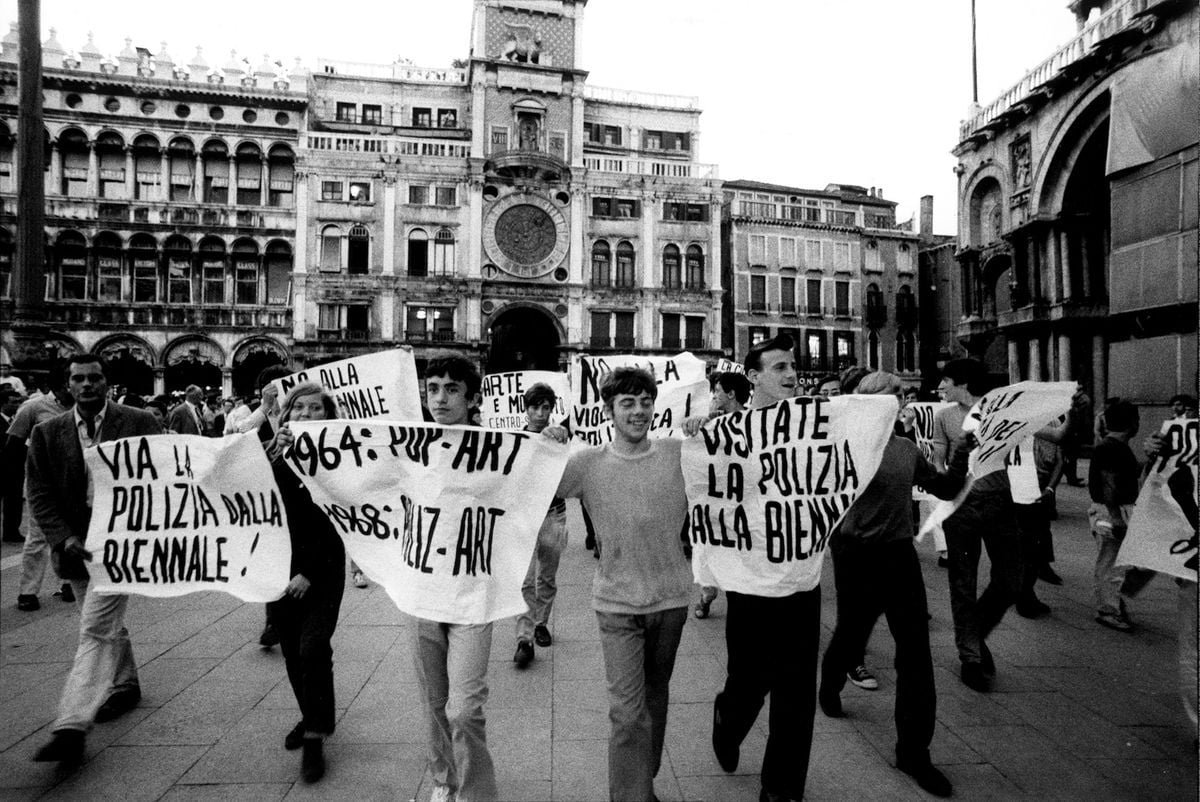
Since 1968, Protests Have Revealed the Real Impact of the Venice Biennale

The article recounts the 1968 protests at the Venice Biennale, where artists, students, and activists clashed with police over the event's perceived ties to bourgeois power and capitalist commodification. It draws parallels to the 2024 Biennale, where groups like Art Not Genocide Alliance, Pussy Riot, and Femen demonstrated against the participation of Russia and Israel, while artists staged strikes and performances like the Solidarity Drone Chorus to highlight the Gaza conflict.

‘Africa in the Spotlight’ exhibition in Lisbon

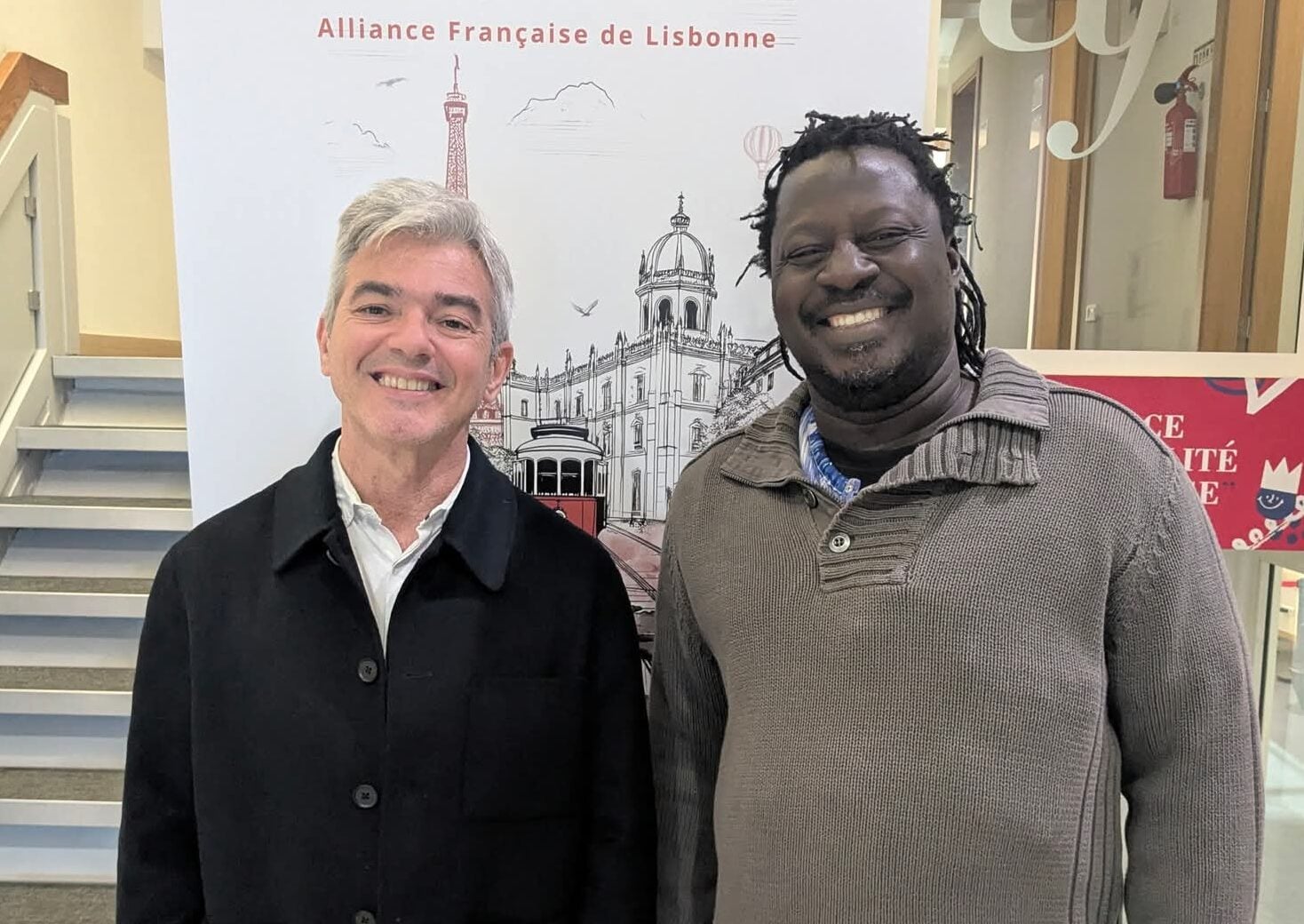
An exhibition titled 'Africa in the Spotlight' has opened at the Lisbon Alliance Française, curated by Tatyana Jolivet. The show features seven contemporary African artists from Burkina Faso, Angola, and São Tomé e Príncipe, including Casimir Bationo (CasziB), SDZabila, Flore Kaboré, and Valdemar Dória. Jolivet, a Russian-born curator based in Lisbon who runs the online Jolie Art Gallery, organized the exhibition to promote cultural diversity and dialogue, highlighting the deep-rooted African presence in Portugal dating back five centuries.

Venice Biennale Opens Amid Strikes, Protests and Institutional Rupture.

The 61st Venice Biennale opened in May 2026 amid strikes, protests, and political unrest, rather than celebration. Coordinated by Italian labor groups and transnational coalitions, demonstrators targeted the Biennale's decision to allow participation by Israel and Russia during the ongoing wars in Gaza and Ukraine. The Art Not Genocide Alliance (ANGA) led protests against Israel's participation, while Pussy Riot and FEMEN activists staged a protest outside the Russian pavilion. The Israeli pavilion's relocation from the Giardini to the Arsenale added symbolic weight, with critics viewing it as institutional endorsement. The late curator Koyo Kouoh's vision for the exhibition, titled "In Minor Keys," emphasized tenderness and complexity, contrasting with the volatile atmosphere.

Israel’s Artist Reportedly Pressured Venice Biennale Before Jury’s Resignation

Artist Belu-Simion Fainaru, Israel’s representative at the Venice Biennale, reportedly pressured the exhibition’s organizers before the five-person jury abruptly resigned last week. The jury, tasked with selecting Golden Lion winners, had stated it would not consider nations charged with crimes against humanity by the International Criminal Court—applying to Israel and Russia. According to Italian news agency Adnkronos, Fainaru alleged “racial discrimination” and “antisemitism,” threatened to take his claims to the European Court of Human Rights, and the Biennale warned jury members they could be held personally liable for damages. Hyperallergic confirmed the threats of legal action, and a Biennale spokesperson acknowledged the reports were true.

From Eurovision to the Venice Biennale, culture contests are being overshadowed by politics

The Venice Biennale and Eurovision Song Contest are being overshadowed by political controversies rather than artistic merit. At the Venice Biennale, the Russian pavilion opened for press previews for the first time since the Ukraine invasion, a decision that may cost the festival €2m in EU funds. The Israeli pavilion will open despite protests from 200 artists and curators, while the South African pavilion will remain empty after its government blocked an artist's tribute to a Palestinian poet. The Iranian pavilion is also shut, and the awarding jury has resigned en masse, meaning no Golden or Silver Lion awards will be given for the first time in 40 years. Similarly, Eurovision's 70th anniversary is dominated by five countries boycotting over Israel's participation, with little focus on the music.