filter_list Showing 172 results for "antiquities" close Clear
search
dashboard All 172 gavel restitution 57article news 41museum exhibitions 29article policy 15trending_up market 15article culture 6candle obituary 4rate_review review 2person people 1article local 1article event 1
date_range Range Today This Week This Month All
Subscribe

roman medusa cameo hallstatt

A rare ancient Roman cameo relief depicting the gorgon Medusa was discovered by construction workers during excavation work for a new funicular railway in Hallstatt, Austria. The 1.5-cm banded agate piece, dated to the 2nd century C.E., was likely crafted in a northern Adriatic workshop and worn as a necklace by an elite Roman woman. It will become part of the permanent collection at Austria's Linz Castle Museum.

san francisco asian art museum returns sculptures thailand

Four ancient bronze sculptures illegally removed from Thailand in the 1960s have been repatriated from San Francisco’s Asian Art Museum to their original home in Thailand, following an investigation led by the US Department of Homeland Security. The works, which were featured in the museum’s 2024 exhibition “Moving Objects: Learning from Local and Global Communities,” were linked to convicted antiquities trafficker Douglas Latchford and had been acquired by the museum’s founding collector Avery Brundage. The Asian Art Commission unanimously approved the return after a two-stage voting process that began in September 2024 and concluded in April 2025.

thirty five arrested in bulgaria criminal art trafficking network

Bulgarian authorities, with support from Europol, arrested 35 individuals and conducted 131 searches across Bulgaria, seizing over 3,000 cultural artifacts valued at more than €100 million. The operation targeted a criminal network trafficking artifacts from Thracian and Greco-Roman civilizations across Europe, with connections to illegal excavations in Bulgaria and the Balkans. The investigation, which began after a 2020 house raid that uncovered 7,000 artifacts, involved law enforcement from Albania, France, Germany, Greece, Italy, and the UK, and was coordinated from Sofia and Eurojust in The Hague.

ancient rome new orleans tombstone

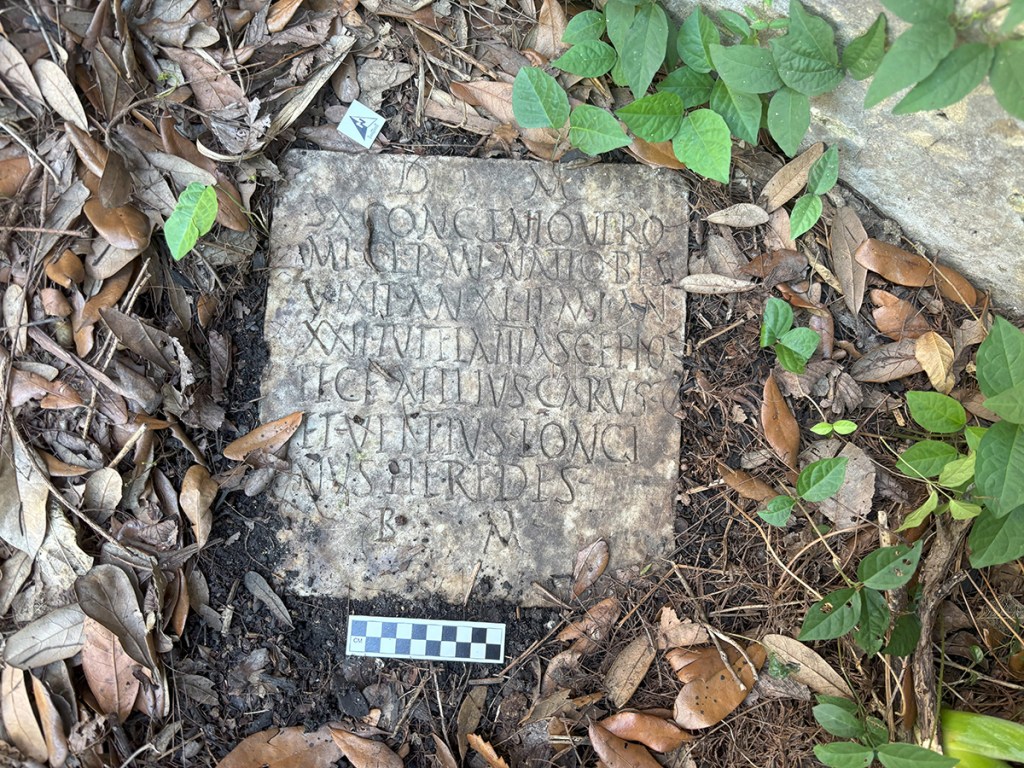
A 2nd-century Roman gravestone inscribed for a sailor named Sextus Congenius Verus was discovered in March 2025 by Daniella Santoro and Aaron Lorenz while doing yard work at their New Orleans home. University of New Orleans archaeologist D. Ryan Gray, working with colleagues at the University of Innsbruck and Tulane University, traced the stone to a missing object from a museum in Civitavecchia, Italy. Researchers believe it was brought to the U.S. as a souvenir by a member of the 34th division of the Fifth Army after the liberation of Rome in 1944. The FBI’s Art Crime Team is now involved in repatriating the headstone to Italy.

egyptian antiquities trafficker jfk airport prison sentence

Egyptian doctor Ashraf Omar Eldarir has been sentenced to six months in prison by U.S. District Judge Rachel P. Kovner for smuggling hundreds of ancient Egyptian artifacts into the United States. Eldarir was arrested in 2019 after importing over 600 artifacts without declaring them on customs forms, including a polychrome relief, Roman limestone pieces, gold amulets, and wooden tomb model figures dating to 1900 BCE. The largest seizure of smuggled antiquities at JFK Airport occurred in January 2020, when customs officers found 590 artifacts wrapped in bubble wrap and foam, with loose sand and dirt indicating recent excavation. Eldarir pleaded guilty to four counts of smuggling and used fake provenances—including forged documents and photoshopped photographs—to sell artifacts at U.S. auction houses.

senator john fetterman proposes bill to apply anti money laundering protections to us art market

On July 23, U.S. Senator John Fetterman introduced the Art Market Integrity Act, a bill that would apply anti-money laundering (AML) and counter-terrorism financing regulations to art dealers, auction houses, galleries, advisers, consultants, custodians, museums, collectors, and other intermediaries in the art market. The legislation amends the Bank Secrecy Act, requiring these entities to conduct client due diligence, maintain records, and report suspicious transactions. It exempts artists selling their own work, nonprofits, and businesses with under $50,000 in annual art transactions. The bill is co-sponsored by Senators Chuck Grassley, Sheldon Whitehouse, Bill Cassidy, Andy Kim, and David McCormick.

looted antiquities sold facebook marketplace palmyra syria

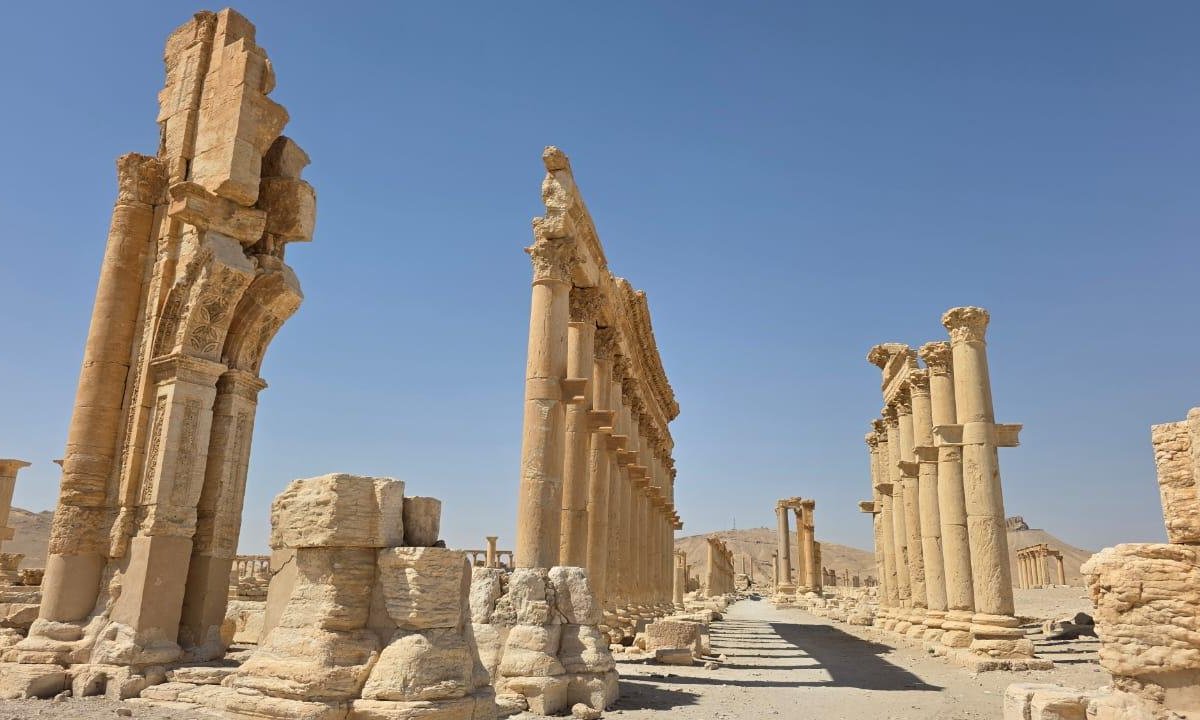
Thieves in Syria are looting ancient artifacts from archaeological sites like Palmyra, a UNESCO World Heritage city dating back to the 3rd century BCE, and selling them on Facebook Marketplace. The looting has surged since the overthrow of former president Bashar al-Assad in December, with traffickers listing funerary gold, statues, and mosaics alongside ordinary secondhand goods. The Antiquities Trafficking and Heritage Anthropology Research (ATHAR) Project reports that nearly one-third of its 1,500 Syrian cases occurred in December alone, and sales are happening faster than ever—mosaics that once took a year to sell now move in two weeks.

eu import regulations

The European Union's Regulation 2019/880, aimed at combating illicit trafficking and terrorism, will take effect on June 28, imposing stricter import controls on antiquities and artworks over 200 years old and valued above €18,000 ($19,500). The regulation requires importers to provide evidence that an object was lawfully exported from its country of origin, even for items exported decades ago when such documentation was not required. This reverses the presumption of innocence, placing the burden of proof on importers. Dealers and experts express concern that the rules are not based on market realities, as importers must be registered within the E.U., forcing non-E.U. dealers to rely on third-party agents or shippers. The regulation also poses challenges for ancient objects, where borders and export controls may be historically ambiguous.

art market minute may 5

The article reports that at the 100-day mark of Trump's second presidency, his economic policies—particularly tariffs—are disrupting the art world. While artworks remain exempt, antiques and design objects are not, causing concern for dealers, including those preparing for Tefaf New York. Changes to de minimis rules have lowered the customs processing threshold from $2,500 to $800, triggering widespread shipping delays. Additionally, Frieze has been sold to Hollywood powerbroker Ari Emanuel, and auction veteran Alex Rotter has been tapped as Christie's new global president.

US Returns 337 Looted Objects to Italy in Repatriation Effort

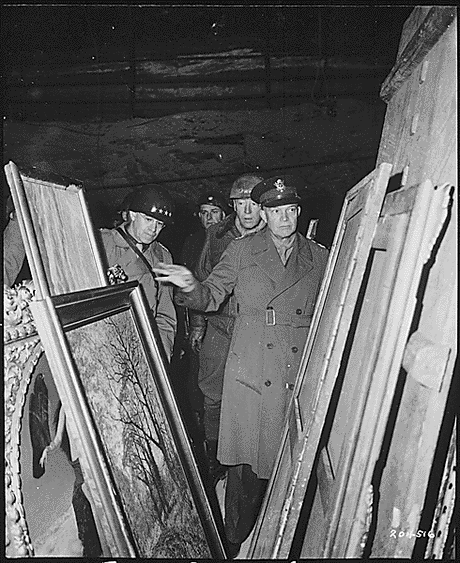
The United States officially returned 337 looted antiquities to Italy at a ceremony held at La Marmora barracks in Rome. Of these, 221 objects were repatriated through the Manhattan District Attorney’s Office, while the remaining 116 were recovered on April 10, 2026, via joint efforts by the FBI, Homeland Security Investigations, the District Attorney’s Office, and Christie’s New York auction house. The objects span from the Villanovan era (900–700 BCE) to the Hellenistic period (323–31 BCE) and include a 1st-century CE marble head of Alexander the Great, a bronze sculpture from Herculaneum, and two Egyptian basalt sculptures.

Colnaghi, world's oldest gallery, to open Saudi Arabian outpost

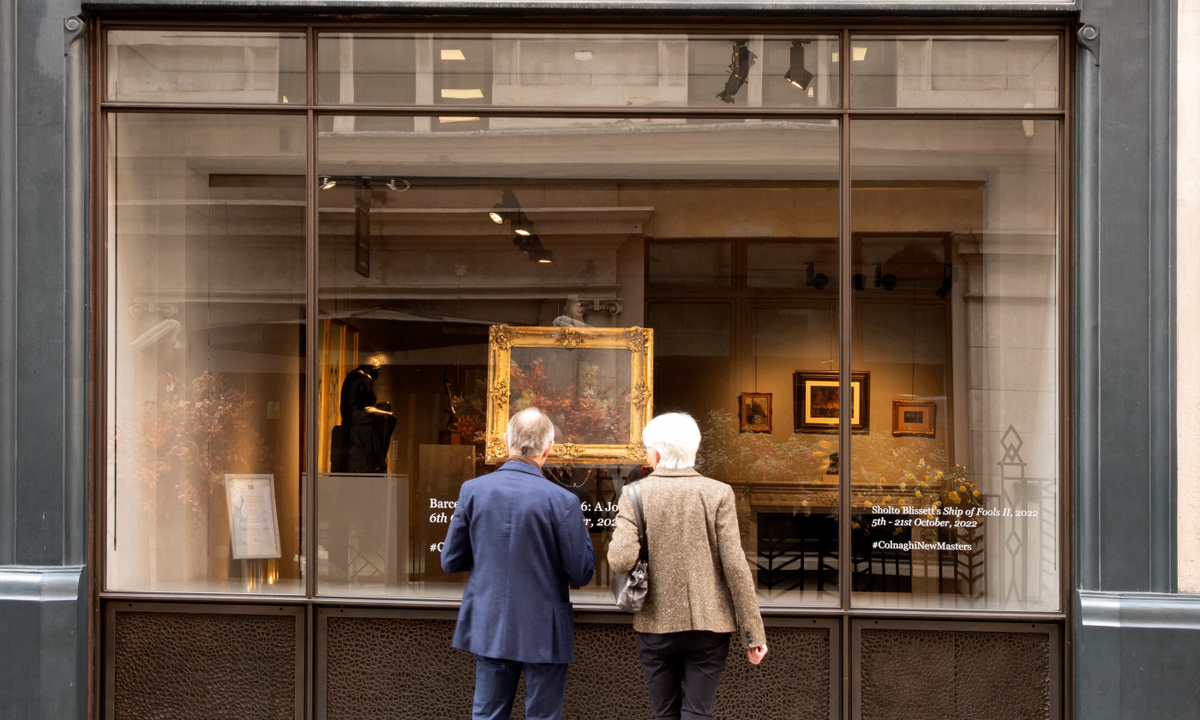
Colnaghi, the world's oldest surviving art dealership founded in 1760, will open a new outpost in Riyadh, Saudi Arabia, following a deal worth 10 million Saudi riyals (around £2 million) with the Saudi private equity firm Sarat Investment Holding. The gallery, which specializes in Old Masters, antiquities, and pre-20th century art, already has locations in London, New York, and Madrid. The opening date has not been announced, but the move marks the first time an Old Master gallery has entered the Saudi market, a surprising development given that most art sales in the kingdom focus on Modern and contemporary works.

manhattan da office repatriates artifacts peru

The Manhattan District Attorney’s Office returned eight artifacts to Peru during a ceremony at the Peruvian consulate in New York on May 15. The repatriated items include funerary objects illegally taken from tombs in northern Peru during the 1960s and ’70s, a copper mask believed to represent the Moche deity Ai Apaec (circa 300 BCE) from the looted Loma Negra site, and a ceramic portrait vessel from the Chavín culture (1000–700 BCE). This is the second time New York officials have returned a group of works to Peru.

The largest U.S. showcase of ancient Italy's fascinating Etruscan culture debuts at Legion of Honor.

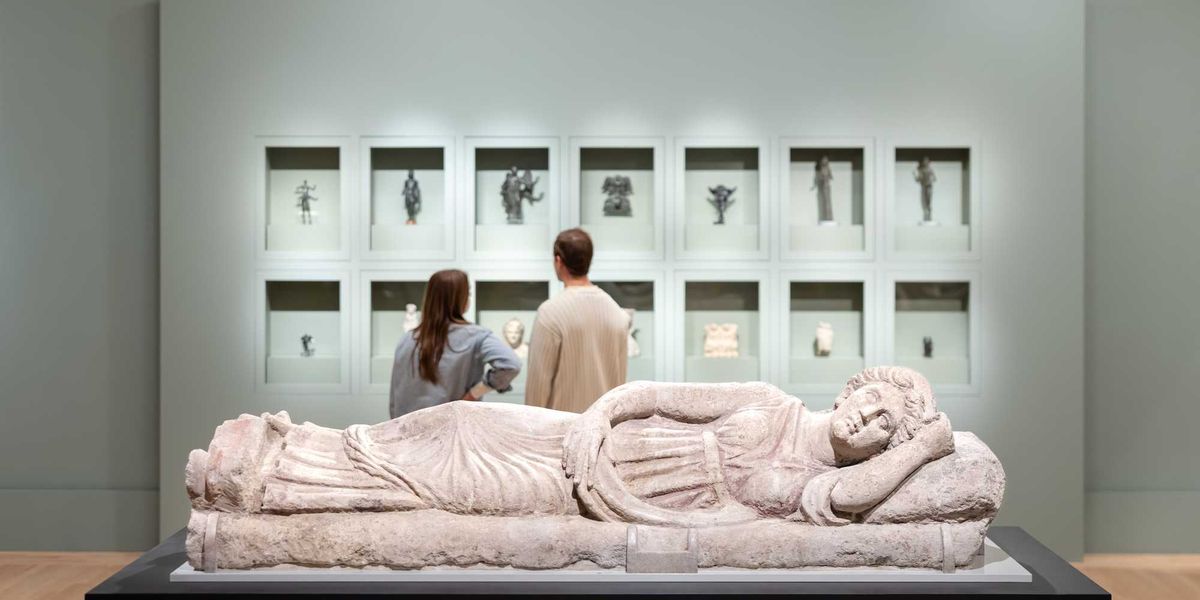
The Fine Arts Museums of San Francisco have opened "The Etruscans: From the Heart of Ancient Italy" at the Legion of Honor, the largest U.S. exhibition dedicated to the ancient Etruscan civilization. Curated by Renée Dreyfus, the show brings together approximately 150 objects borrowed from 28 institutions, including the Vatican, the British Museum, and the Metropolitan Museum of Art. It explores Etruscan engineering, architecture, art, and social customs, including the elevated status of women, and features highlights such as a granulated gold drinking bowl and the bronze Liver of Piacenza.

Blockbuster show on ancient Egyptian pharaoh Ramses II opens in London

The blockbuster exhibition "Ramses the Great and the Gold of the Pharaohs" has opened in London near Battersea Power Station, featuring over 180 ancient Egyptian treasures. Produced by Neon Global in collaboration with Egypt’s Supreme Council of Antiquities, the show includes the coffin of Ramses II, animal mummies, and a VR experience. The tour has already visited cities like Paris and Sydney, serving as a major international cultural ambassador for Egypt.

Syria’s Hasakah Museum—occupied by military for more than a decade—to finally open

The Hasakah Museum in Syria, a completed but never-opened archaeological museum, is finally being prepared to open to the public after being occupied by military forces for over a decade. The building, constructed in 2002, was seized by the Assad regime's military in 2011 and used as a base and weapons depot, becoming part of a fortified security zone in the city center until the regime's forces withdrew in December 2024.

Louvre staff vote to strike, citing failures of management and building maintenance

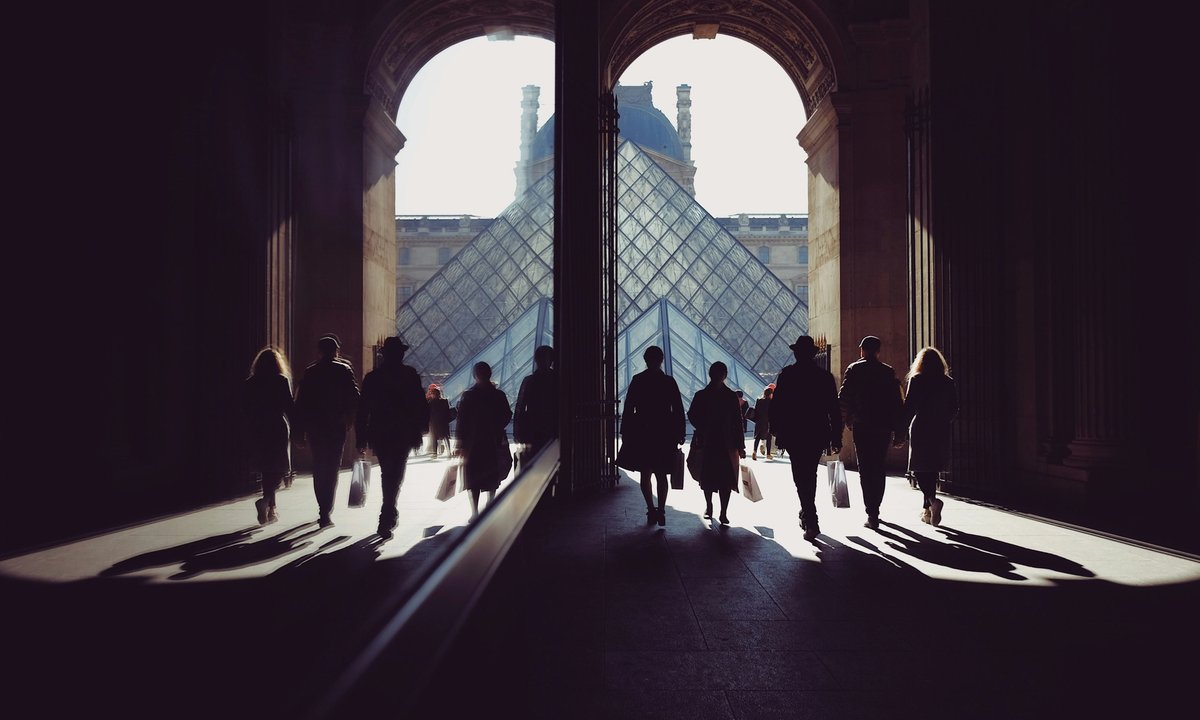
Staff at the Louvre Museum in Paris voted unanimously to strike, with rolling walkouts set to begin on December 15. The unions, representing around 200 employees, filed a strike notice with the French culture ministry, citing insufficient staff, technical failures, and the building's aging condition. They also criticized the museum's director, Laurence des Cars, for a top-down management system that ignores staff alerts. The strike follows a series of incidents, including the theft of the French crown jewels in October, a forced closure of the Campana Gallery due to structural issues, and a water leak that damaged hundreds of books in the Egyptian antiquities library.

Heritage experts call for international task force to plan Palmyra rebuild

Heritage experts, antiquities officials, and Syrian community members convened at a conference organized by the University of Lausanne and the Aliph foundation in Switzerland, marking the first comprehensive international meeting on Palmyra since the fall of Bashar Al Assad's regime in 2024. The group issued recommendations including the creation of an international expert task force to work toward removing Palmyra from the UNESCO List of World Heritage in Danger, and outlined three key priorities: rehabilitating the looted and damaged Palmyra museum, restoring artefacts currently held at the Damascus Museum, and repairing the foot bridge to the site. Aliph executive director Valery Freland aims to begin work in January 2026.

Netherlands will return stolen ancient statue—featured at Tefaf art fair in 2022—to Egypt

The Netherlands will return a 3,500-year-old stolen Ancient Egyptian statue to Egypt after it was spotted at the Tefaf Maastricht art fair in 2022 by an eagle-eyed visitor. The stone statue, believed to depict a high official from the dynasty of Pharaoh Thutmose III, was flagged via an anonymous tip, leading the dealer to voluntarily surrender it. An investigation by Dutch police and the Information and Heritage Inspectorate confirmed it was likely plundered unlawfully and illegally exported. The statue will be handed to the Egyptian ambassador in The Hague later this year, in line with the 1970 Unesco convention against trafficking cultural property.

Gold Romanian Helmet Recovered After Explosive Heist at Dutch Museum

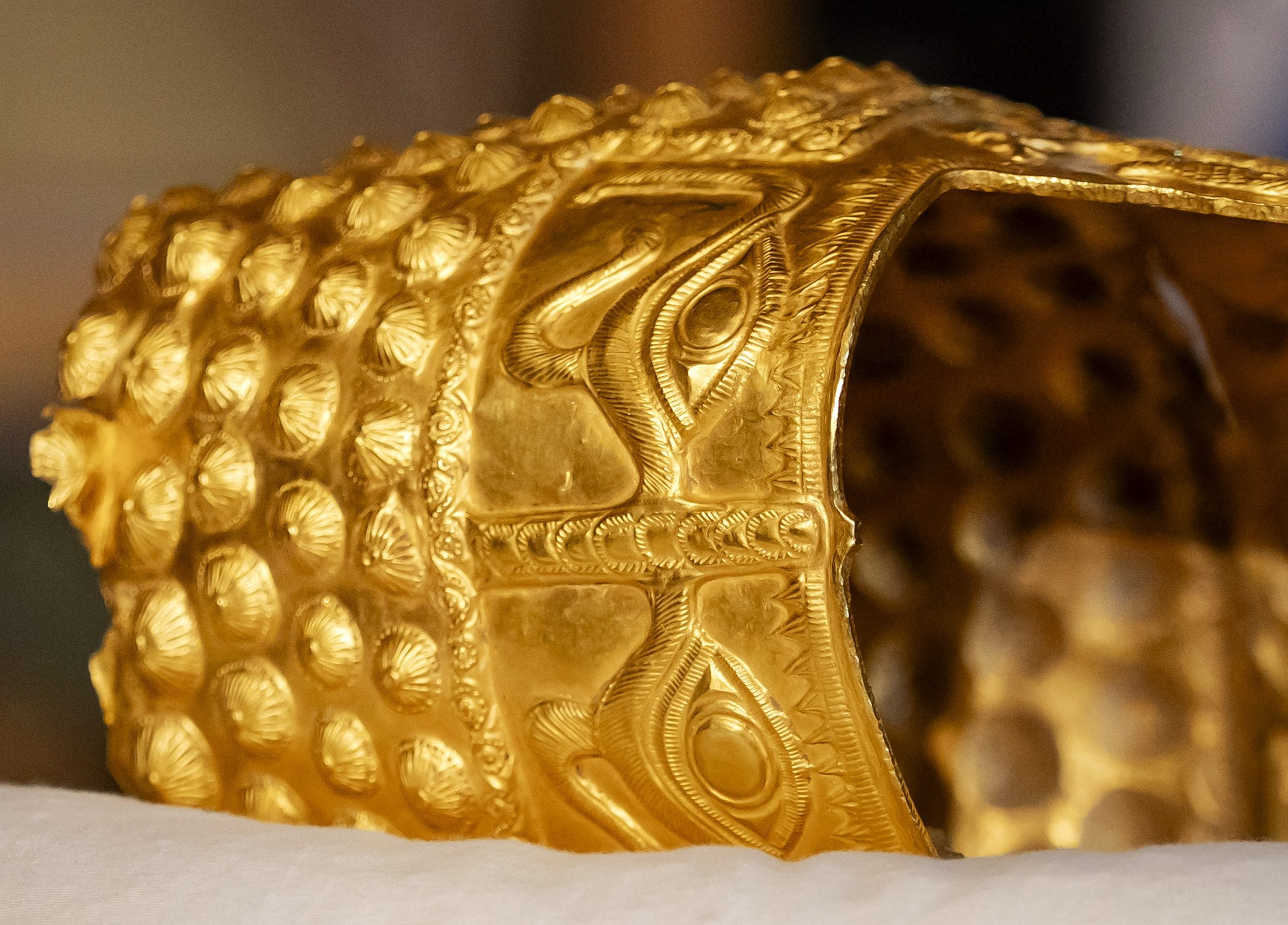
Dutch police have recovered a 2,500-year-old gold Dacian helmet and two of three gold bracelets stolen in a 2025 museum heist. The artifacts were returned as part of a plea deal with suspects, who were offered reduced sentences and a cash enticement to reveal their location.

The Syrian Pavilion returns to Venice after the fall of the regime. The interview

A Venezia torna il Padiglione della Siria dopo il crollo del regime. L’intervista

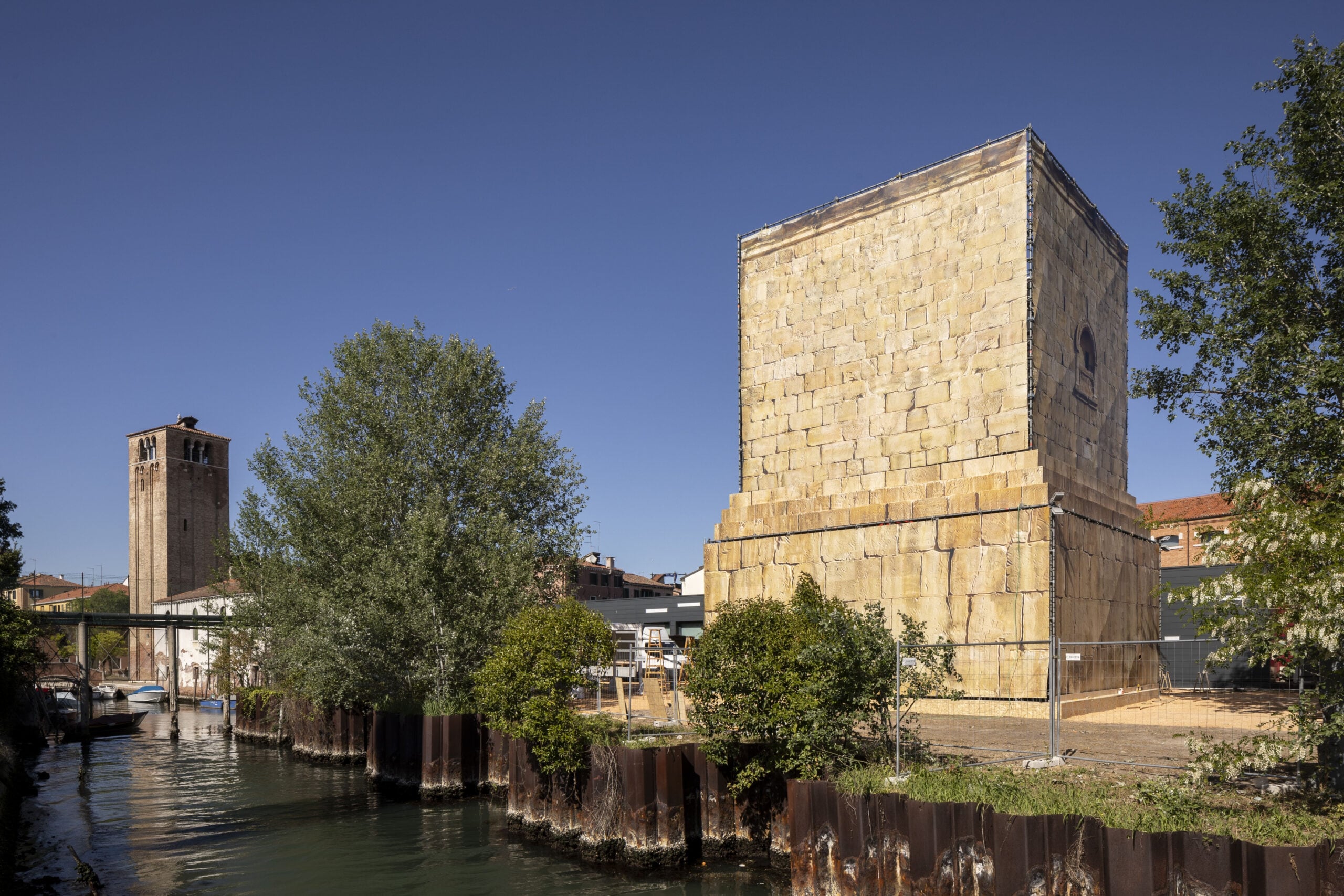
The Syrian Pavilion returns to the Venice Biennale after the fall of the regime, marking the country's first participation since 2024. The pavilion, curated by artist Sara Shamma, is housed in the former refrigerated warehouses of Santa Marta at the Iuav University of Venice and runs until November 22. It features an installation inspired by the ancient funerary towers of Palmyra, combining painting, architecture, light, sound, and scent to explore cultural heritage and the restitution of looted antiquities.

egypt prince waserif re tomb discovered saqqara

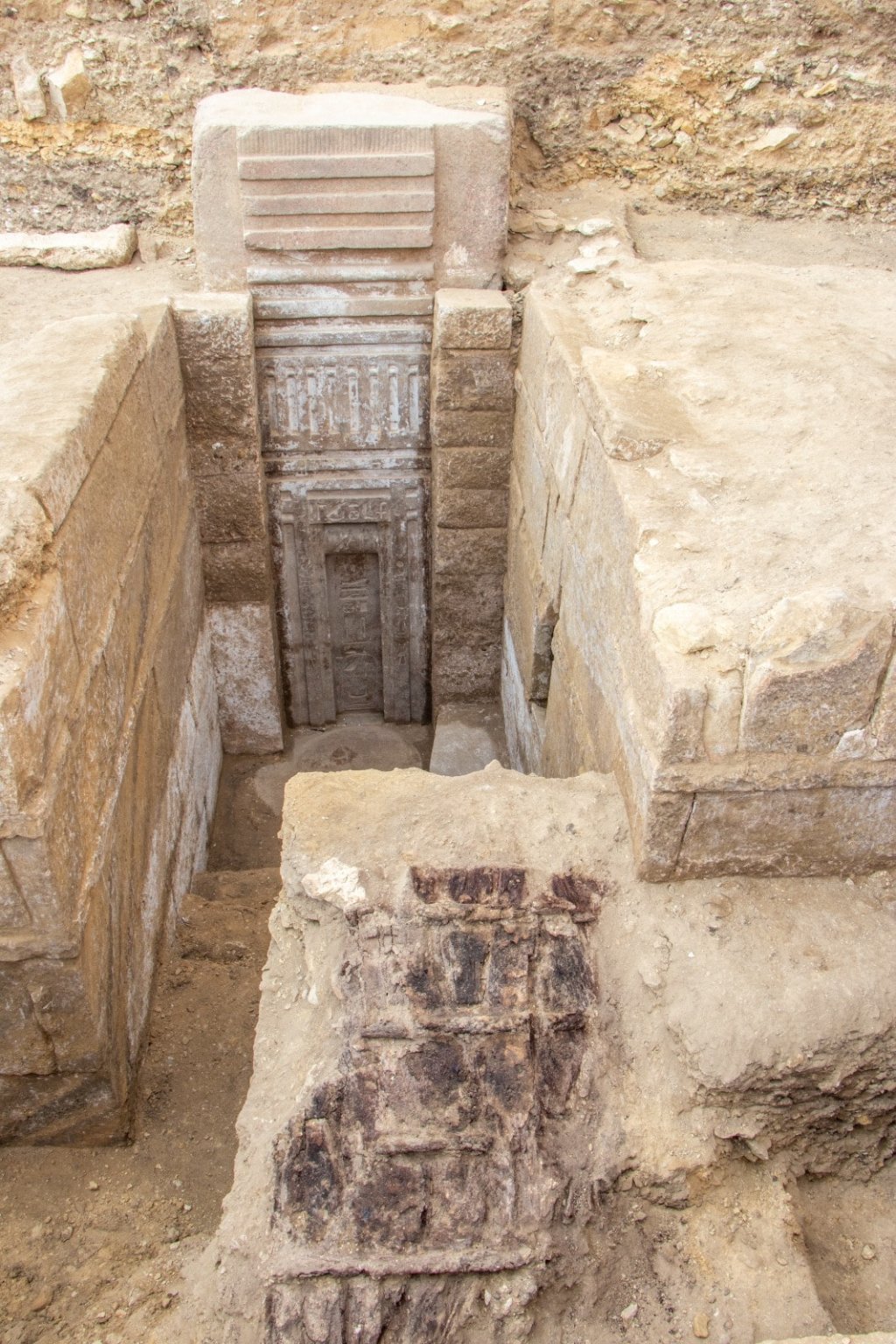
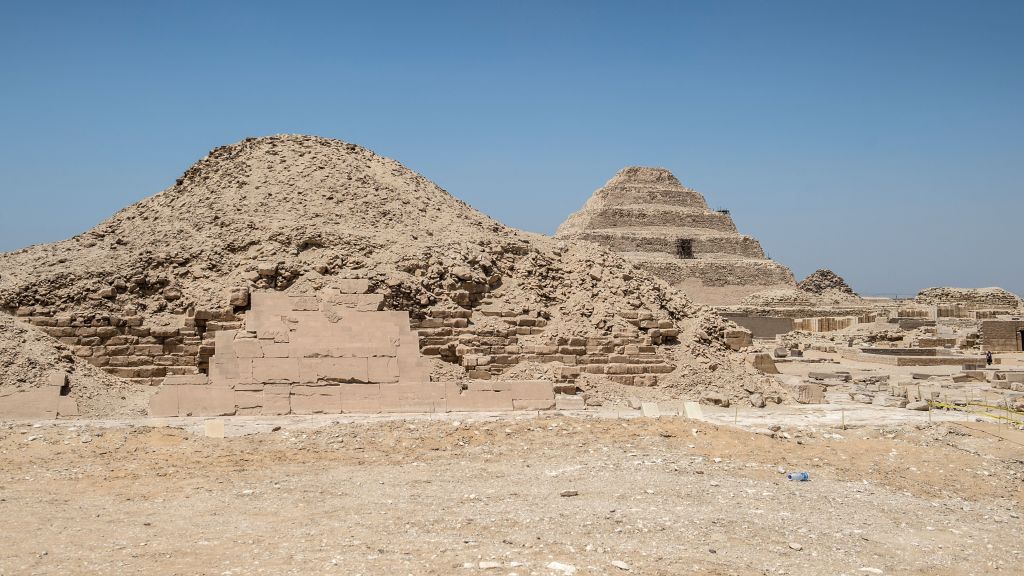
Archaeologists in Egypt have discovered the tomb of Prince Waserif Re, son of King Userkaf, founder of the Fifth Dynasty, at the Saqqara necropolis. The multi-chamber tomb features a 15-foot-tall pink granite false door inscribed with the prince's name and titles, a red granite offering table, and statues of Third Dynasty pharaoh Djoser, his wife, and ten daughters that were moved there during the Late Period. A black granite statue with hieroglyphic inscriptions from the 26th Dynasty suggests the tomb was reused nearly 2,000 years after its original construction. The joint Egyptian mission was led by the Supreme Council of Antiquities and the Dr. Zahi Hawass Foundation for Antiquities and Heritage.

UK Heritage Department feared ‘mass restitutions’ when Stone of Scone was returned to Scotland

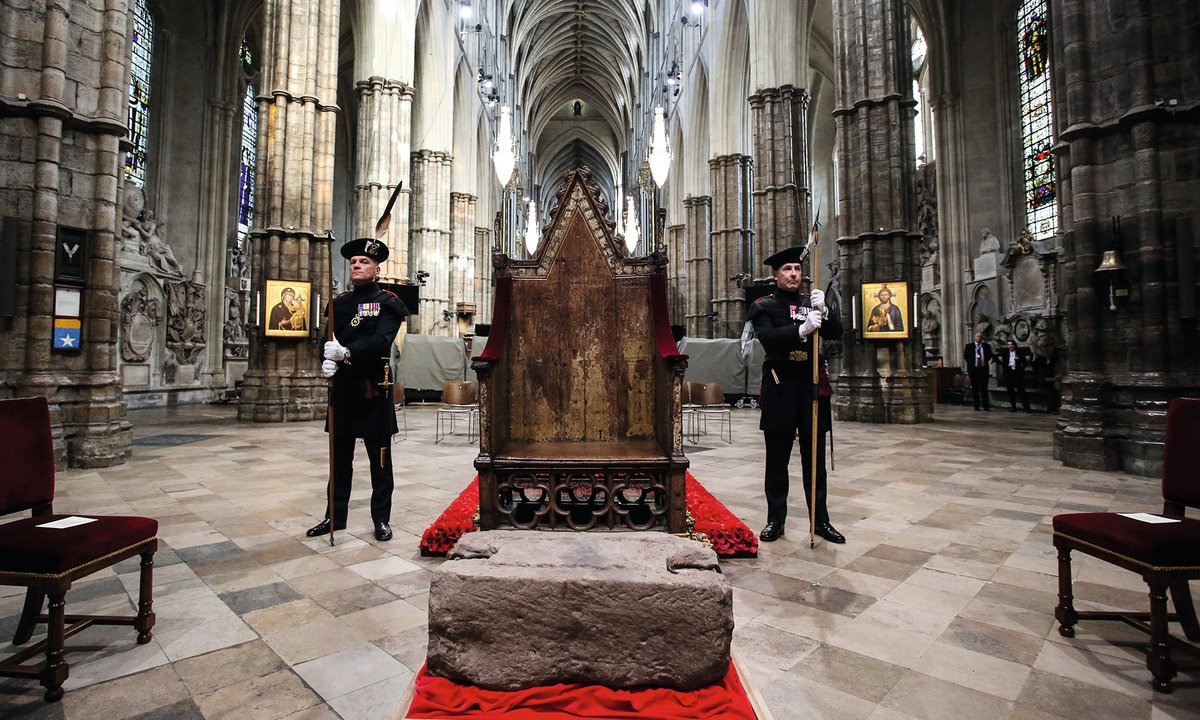
Newly released UK government files reveal that in 1996, the Department of National Heritage strongly opposed Prime Minister John Major's decision to return the 13th-century Stone of Scone to Scotland. The department's cultural property unit head, Lynn Gates, warned that the return would set a 'precedent to mass restitution,' triggering claims from Greece for the Parthenon Marbles, Egypt for the Rosetta Stone and Sphinx's Beard fragment, and Nigeria for the Benin Bronzes, with fears of further demands from Ethiopia, India, Pakistan, and other nations. The internal memo criticized Major for failing to consult the department before agreeing to the transfer from Westminster Abbey.

337 œuvres et objets volés récupérés : la vaste opération italienne de lutte contre le trafic de biens culturels aux États-Unis

On April 29, Italy's carabinieri dedicated to cultural heritage protection announced the recovery of 337 looted or stolen artworks and objects repatriated from the United States between December 2025 and April 2026. The haul includes archaeological artifacts, archival documents, and other artworks, such as a marble head of Alexander the Great from the 1st century AD, a bronze sculpture stolen from Herculaneum, and two Egyptian basalt sculptures. The objects were dispersed through international markets using forged provenance documents, and their return involved U.S. agencies including the FBI.

Les États-Unis restituent près de 300 biens culturels à l’Italie

Italy presented 337 cultural artifacts repatriated from the United States at the Caserma "La Marmora" in Rome, following operations between December 2025 and April 2026. The objects span from the 5th century BCE to the 3rd century CE, including Roman sculptures, bronze works, pottery, jewelry, coins, and architectural fragments. Among the notable pieces is a marble head attributed to Alexander the Great, stolen from a Roman museum in 1960, and a bronze sculpture looted from Herculaneum. The recovery involved the Manhattan District Attorney's office, the FBI, Homeland Security Investigations, and Christie's New York, with 221 items seized through the DA's collaboration and 116 returned in April.

Egypt Unveils a Hidden Tomb of 3,500-Year-Old Coffins at Luxor’s Abu el-Naga

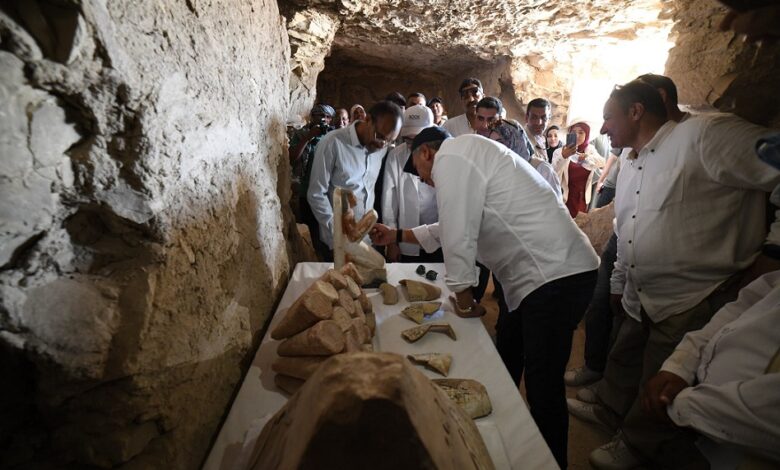
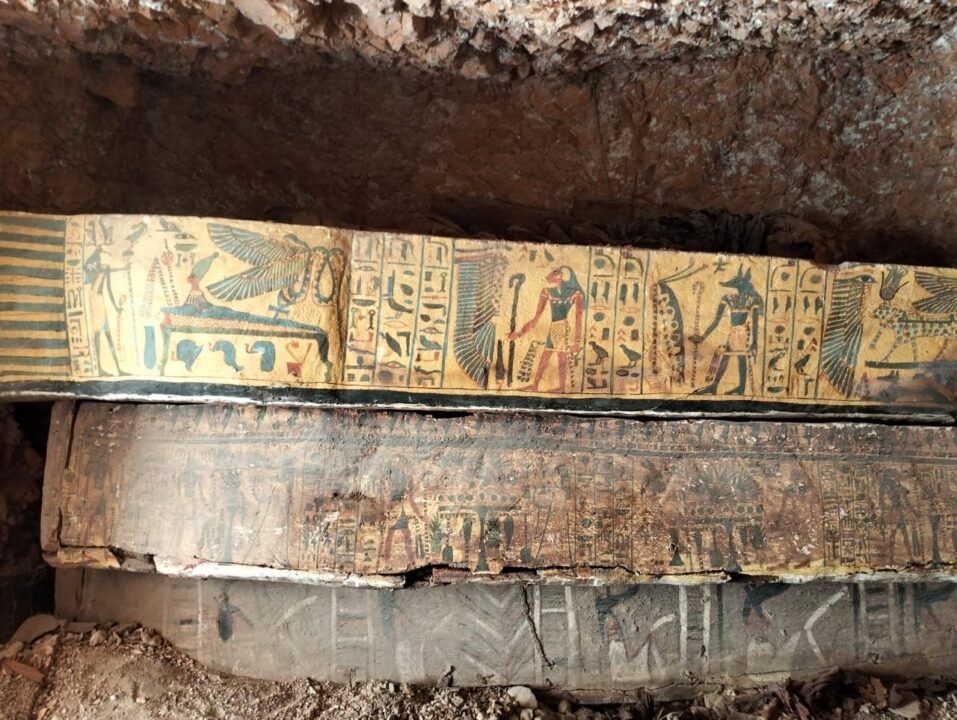
An Egyptian archaeological mission excavating at the Abu El-Naga necropolis near Luxor has uncovered a cache of ten well-preserved painted wooden coffins hidden in the courtyard shaft of the tomb of Baki. The coffins span multiple periods, including the 18th Dynasty, the Ramesside period, and the Late Period, with inscriptions naming individuals such as Merit, a chantress of the god Amun, and Padi-Amun, a priest in the Temple of Amun. The team also discovered the tomb of a purification priest named A-Shafi-Nakhtu, decorated with funerary scenes, and a burial site containing over 30 mummified cats from the Ptolemaic Period. The discoveries were announced by Egypt's Supreme Council of Antiquities, with the excavation season beginning in November 2025.

Israel Advances Bill Granting Sweeping Civilian Authority over West Bank Archaeological Sites

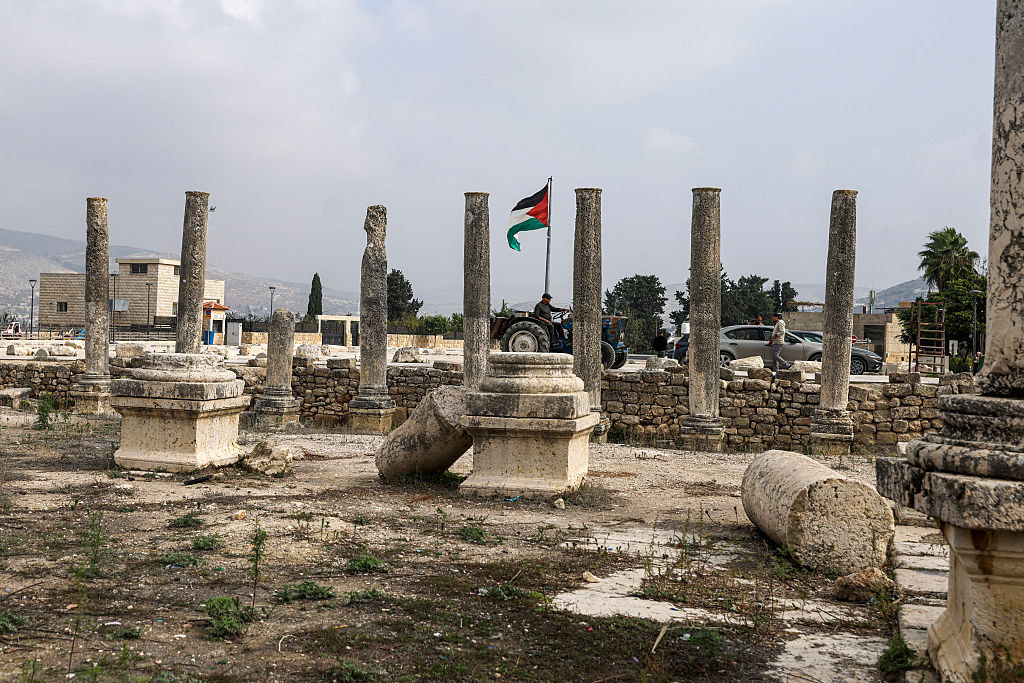
Israel advanced a bill on Tuesday that would grant sweeping civilian authority over antiquities and archaeology in the occupied West Bank, replacing the current military-run system. The Likud-backed legislation would create a "Judea and Samaria Heritage Authority" under the Israeli heritage minister, empowered to purchase and expropriate land, oversee excavations, and manage heritage sites across Areas B and C of the West Bank. The bill passed its first of three votes (23-14) and would be led by Amichai Eliyahu, a far-right politician who advocates for annexation. Human rights groups and the Israeli NGO Emek Shaveh warned the move amounts to de facto annexation and a violation of Palestinian rights.

Today’s war, tomorrow’s loot: attempts at stemming the illicit trade in art

The article examines the ongoing challenge of preventing the illicit trade in cultural property looted from conflict zones. It discusses the Hague Convention of 1954 and its protocol, which require signatory countries to prevent theft and pillage during armed conflict and to seize and repatriate unlawful exports. However, the protocol only applies to situations of 'occupation,' leaving a gap for looting that occurs in the chaos of war beyond formal occupation. The article also notes UN Security Council Resolutions that restrict unlawfully removed cultural property from Iraq and Syria, but no similar consensus exists for countries like Afghanistan, Libya, Ukraine, Lebanon, Yemen, Sudan, and Iran. EU Regulation 2019/880 is highlighted as a measure that prohibits introducing goods removed unlawfully from their place of origin into the EU, though its scope has expanded beyond its original anti-terrorist financing purpose.

giorgos tsagarakis dealer arrested stolen antiquities

Greek authorities have arrested Athens-based art dealer and television personality Giorgos Tsagarakis following an investigation into a suspected criminal network involved in the theft, forgery, and illegal trade of antiquities. The arrest, executed by the Organized Crime Division, led to the seizure of hundreds of paintings, ancient ceramics, Byzantine artifacts, and a rare 1745 gold-plated Gospel manuscript. Investigators were reportedly alerted to the illicit items after Tsagarakis posted a video of the artifacts on social media.

Egyptian Archeologists Find 3,000-Year-Old Coffins of Temple Chanters in Luxor

Archaeologists in Luxor have discovered 22 painted wooden coffins containing mummies, along with eight sealed papyrus scrolls, in a tomb within the Theban Necropolis. The coffins, dating to Egypt's Third Intermediate Period (1077–664 BCE), were found stacked in a rock-cut chamber, indicating they had been moved from their original burial sites.

Egyptian Tour Guide Arrested for Drawing on Pyramid in Viral Video

egyptian tour guide pyramid drawing arrest video

Egyptian authorities arrested a tour guide after a viral video showed him sketching a stick figure onto the 24th-century BCE Pyramid of Unas in Saqqara. The guide was reportedly using the drawing as a visual aid to explain the site's history to a group of tourists before attempting to wipe the mark away with his hands. Following a report from an antiquities inspector, the man confessed to the act, and the Ministry of the Interior confirmed that the drawing has since been removed.