filter_list Showing 468 results for "Israel" close Clear
search
dashboard All 468 article news 219museum exhibitions 115article policy 52article culture 30trending_up market 14person people 9article local 8candle obituary 8gavel restitution 6rate_review review 5article events 1article event 1
date_range Range Today This Week This Month All
Subscribe

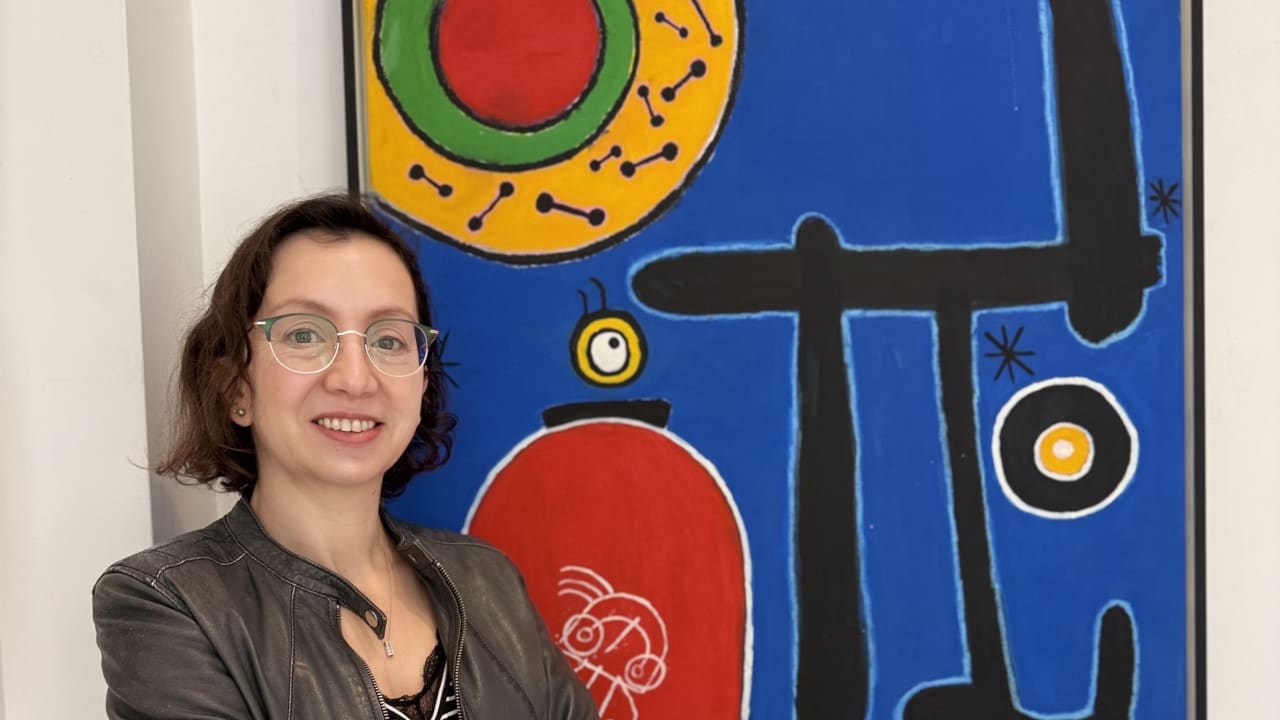
Three artists, three questions: Immersed in colors

Three Israeli artists—Vera Kunis, Avraham Kan, and Tal Tenne Czaczkes—are featured in a column exploring their use of color amid the ongoing war with Iran. Kunis, a data engineer and artist, opened her first solo exhibition, "Imagination Algorithm," at the Global Art Gallery in Tel Aviv on March 10, 2026, during the conflict. The interview was conducted remotely due to war conditions, with a siren interrupting the conversation. The artists discuss their inspirations, definitions of art, and what makes their work unique, emphasizing resilience and optimism through color.
Art and politics clash at Venice Biennale, as world conflicts upstage exhibition's opening

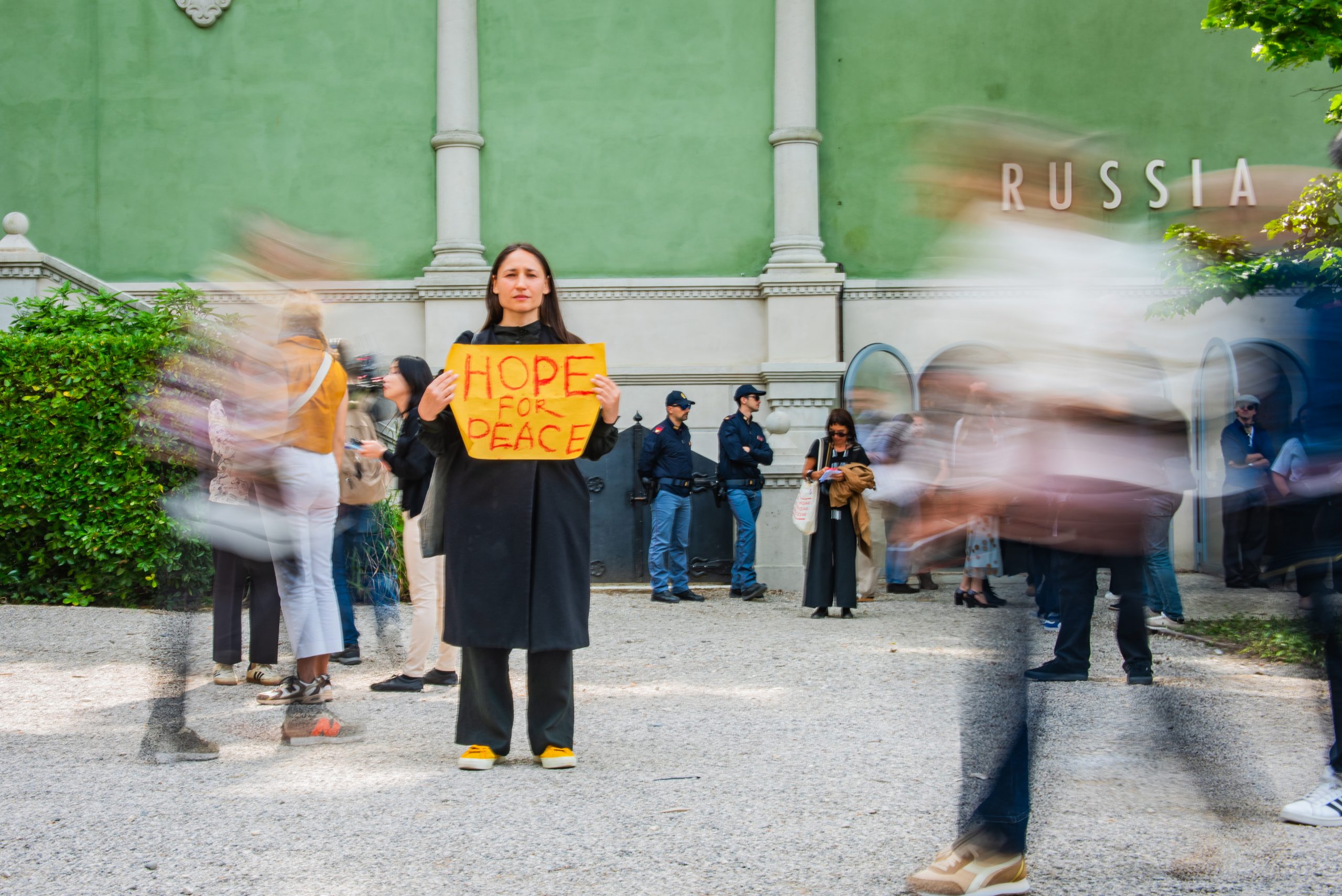
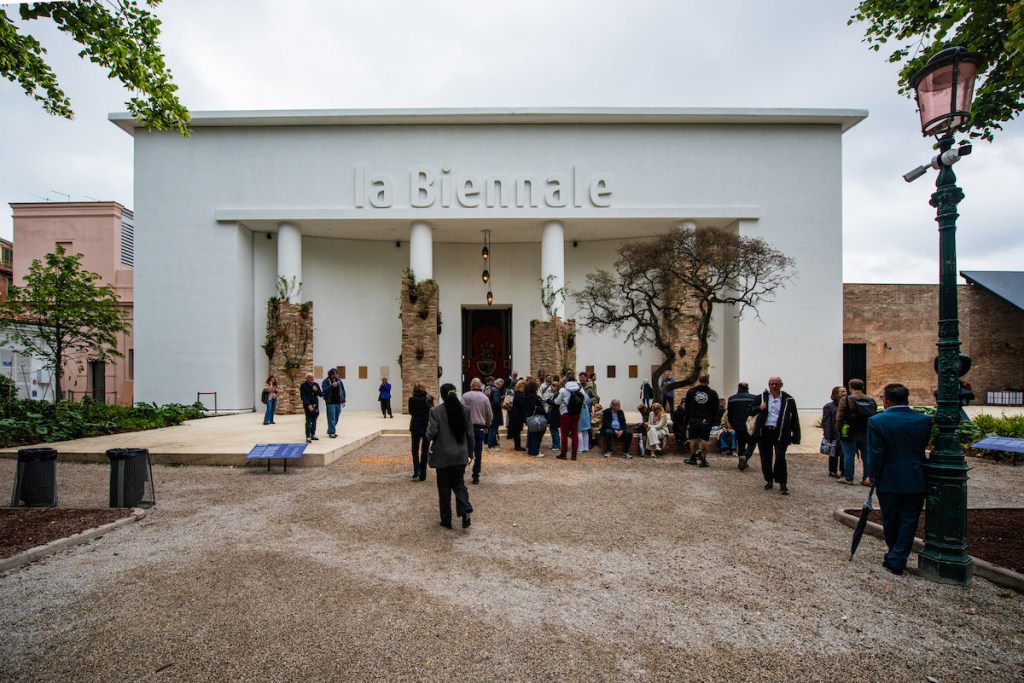
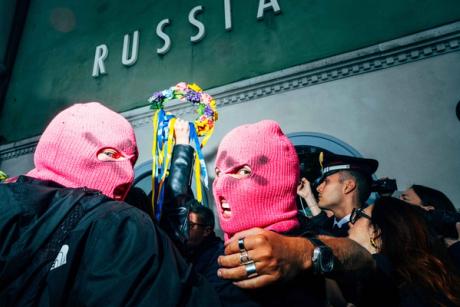
The 61st Venice Biennale, the world's most prestigious art exhibition, opens under unprecedented turmoil. For the first time, its vision was shaped by the late Cameroonian curator Koyo Kouoh, who centered artists from Africa and its diaspora. However, political conflicts over Russia and Israel have overshadowed the art. All five jurors resigned after the Italian culture minister investigated their decision to withhold prizes from Russia and Israel over alleged crimes against humanity. Protests erupted at the Russian pavilion, with Pussy Riot activists denouncing Russia's participation, while the Israeli pavilion artist threatened legal action over the jury's snub. The Biennale will proceed without a jury, with visitors voting for two awards, and the fate of the Golden Lion remains uncertain.

Frist Art Museum Celebrates 25th-Anniversary Year with Major Group Exhibition Spotlighting the Work of Nashville-Based Women Artists

The Frist Art Museum in Nashville is launching its 25th-anniversary year with a major group exhibition titled "In Her Place: Nashville Artists in the Twenty-First Century," on view from January 29 to April 26, 2026. The show features nearly 100 works by 28 Nashville-based women artists, including María Magdalena Campos-Pons, Alicia Henry, and Karen Seapker, and is cocurated by Sai Clayton, Katie Delmez, and Shaun Giles. It is part of the 2026 Tennessee Triennial for Contemporary Art and is accompanied by a catalogue published by Vanderbilt University Press.

UK’s Palestinian Ambassador Calls on Government to Have British Museum Reinstate the Word ‘Palestinian’

The Palestinian ambassador to the UK, Husam Zomlot, has called on the British government to intervene in a dispute with the British Museum over the removal of the word “Palestinian” from wall texts in its Middle East galleries. Zomlot raised the complaint with the Foreign & Commonwealth Office after reports that the museum had stripped the term from maps and didactics, following lobbying by UK Lawyers for Israel. The museum denies removing the word entirely, stating it still appears elsewhere, but photographic evidence suggests otherwise. Zomlot declined a tour with director Nicholas Cullinan, calling the issue “existential.”

Venice Biennale Jury Resigns in the Wake of Controversial Prize Ban

The jury for the 2026 Venice Biennale has resigned just days before the public opening on May 9, after announcing on April 22 that it would not consider artists from countries accused of crimes against humanity for the Golden and Silver Lion prizes. The jury, consisting of Solange Oliveira Farks (president), Zoe Butt, Elvira Dyangani Ose, Marta Kuzma, and Giovanna Zapperi, cited its earlier statement of intention in its resignation, which directly impacted the participation of Russia and Israel—both subject to International Criminal Court warrants. In response, the Biennale postponed the awards ceremony from May 9 to November 22 and replaced the traditional jury with a public vote for best participant and best national participation, framing the move as upholding openness and rejecting censorship.

Venice Biennale Jury Resigns En Masse, Organizers to Award “Visitors’ Lions” in November

The jury for the 2026 Venice Biennale has resigned en masse, announcing the decision via e-flux's Instagram account on April 30 without providing a reason. The five-member jury, including president Solange Oliveira Farks, Zoe Butt, Elvira Dyangani Ose, Marta Kuzma, and Giovanna Zapperi, had previously stated they would not consider national pavilions from countries charged with crimes against humanity by the International Criminal Court, directly affecting Israel and Russia. In response, the Biennale postponed the awards ceremony from May to November 22 and replaced the Golden Lions with two "Visitors' Lions" voted on by the public.

Israel’s foreign ministry accuses Venice Biennale's jury of ‘politicising’ exhibition

Israel’s foreign ministry has accused the Venice Biennale's jury of politicizing the exhibition after jurors announced they would not consider for prizes countries whose leaders face International Criminal Court charges for crimes against humanity. The jury’s statement, which did not name specific nations, is broadly understood to apply to Israel and Russia, both returning to the Biennale for the first time since the Gaza war and the Ukraine invasion, respectively. The Israeli ministry posted on X that the jury had decided to 'boycott' Israeli sculptor Belu-Simion Fainaru, calling it 'a contamination of the art world.' The Biennale distanced itself from the jury’s announcement, stating the jury acts autonomously, while the Russian pavilion is reportedly set to open only for a limited pre-opening period due to budget constraints amid sanctions.

More than 200 cultural figures sign statement criticising international response to destruction of Iran’s heritage

More than 200 international scholars and cultural heritage professionals have signed a joint statement condemning the United States and Israel for inflicting "irreversible damage" on Iran’s cultural heritage. The group, which includes academics from leading global institutions, alleges that recent military strikes have damaged over 130 UNESCO-registered monuments and museums, including the Senate Palace in Tehran and sites in Isfahan. They argue these actions violate the 1954 Hague Convention and criticize international bodies like UNESCO for failing to issue a sufficiently forceful response.

unesco new chief gaza and ukraine us exit anti israel bias 1234756336

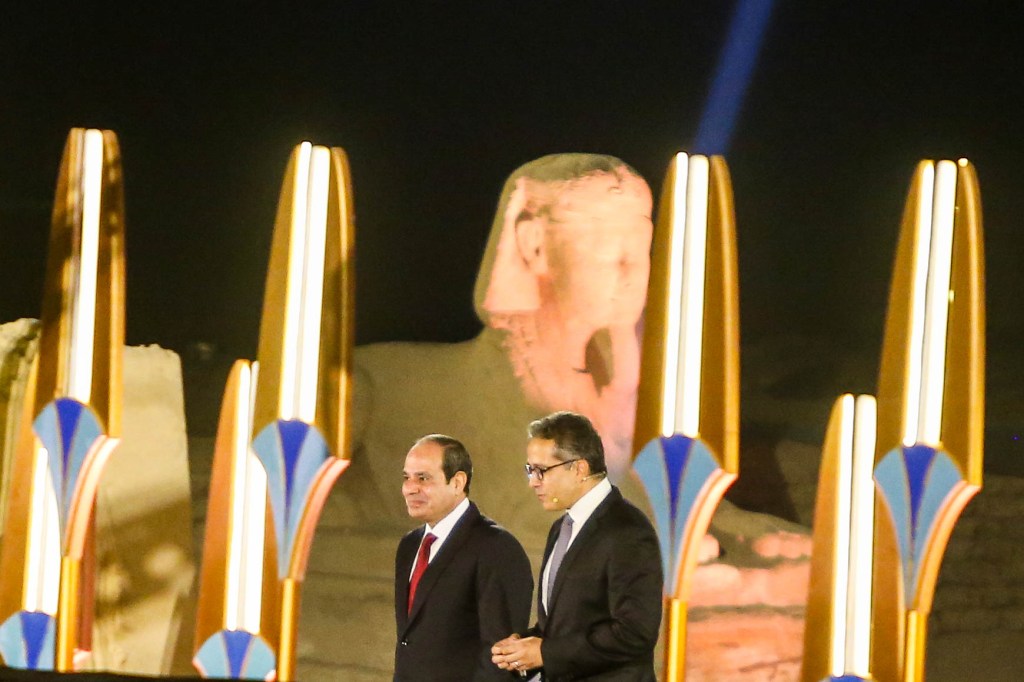
UNESCO's executive board has nominated Khaled El-Enany Ezz as its sole candidate for the next director-general, following a decisive vote during the organization's meetings at United Nations High Week. El-Enany, a 54-year-old Egyptian professor of Egyptology and former minister of tourism and antiquities, previously oversaw the construction and renovation of more than 20 museums, including the Grand Egyptian Museum. He will be the first Arab to lead UNESCO, replacing outgoing director-general Audrey Azoulay.

documenta 16 artistic team naomi beckwith 1234749529

Naomi Beckwith, deputy director and chief curator of the Guggenheim Museum, has announced her four-person artistic team for Documenta 16, set to open in Kassel, Germany, in June 2027. The team includes Carla Acevedo-Yates, Romi Crawford, Mayra A. Rodríguez Castro, and Xiaoyu Weng, who will collaborate on the exhibition, publication, and programming for the quinquennial.

kazimir malevich mnac bucharest yaniv cohen dispute 1234747568

Yaniv Cohen, a Bucharest-based Israeli businessman, is threatening to sue the art publication e-flux and Ukrainian American art historian Konstantin Akinsha for defamation over an article questioning the authenticity of three paintings attributed to Kazimir Malevich. The works—'Suprematist Composition in Color' (ca. 1915), 'Cubo-Futurist Composition' (ca. 1912–13), and 'Linear Suprematism' (ca. 1916)—are currently on view at the National Museum of Contemporary Art (MNAC) in Bucharest as part of the exhibition 'Kazimir Malevich: Outliving History.' Akinsha accused MNAC of lacking expertise and challenged the provenance of the previously unseen works, prompting Cohen to demand the article's removal and an apology via a letter from the Tel Aviv–based law firm Rosen-Ben Gal.

inside grand egyptian museum 2658355

The Grand Egyptian Museum (GEM) in Cairo has delayed its official opening again, now expected in the fourth quarter of 2025, due to regional conflicts including the Israel-Iran war. Originally proposed in 1992 and under construction since 2002, the $1 billion museum has faced repeated setbacks from the Arab Spring, the pandemic, and wars in Gaza and Sudan. When it opens, it will showcase over 100,000 artifacts, making it the largest archaeological museum in the world, with the Tutankhamun galleries as its centerpiece featuring over 5,398 objects from the pharaoh's tomb.

museums in tehran and tel aviv move to safeguard their collections 1234745234

Iran and Israel have taken urgent steps to protect their cultural heritage amid escalating military hostilities, including air strikes on Tehran and Tel Aviv. Iran's Cultural Heritage Organization transferred museum artifacts to secure storage and closed all museums and heritage sites, with deputy minister Ali Darabi directing custodians to follow crisis protocols. Israeli institutions, including the Israel Museum in Jerusalem and the Tel Aviv Museum of Art, removed artworks from display to underground facilities and closed indefinitely, following Iran's retaliatory strikes on Tel Aviv.

shooting washington dc jewish museum 2648407

A shooting outside the Capital Jewish Museum in Washington, D.C., on Wednesday night killed two Israeli embassy staff members, Yaron Lischinsky and Sarah Milgrim, in what authorities have called an antisemitic attack. The gunman, Elias Rodriguez of Chicago, opened fire as the victims exited a diplomatic event hosted by the American Jewish Committee, then entered the museum where he was detained by security. Police reported that Rodriguez shouted “free, free Palestine” after being taken into custody. The museum expressed heartbreak and condemned the violence, while the Israeli embassy mourned the loss of the couple, who were engaged to be married.

ronen zien tel aviv museum of art 1234739623

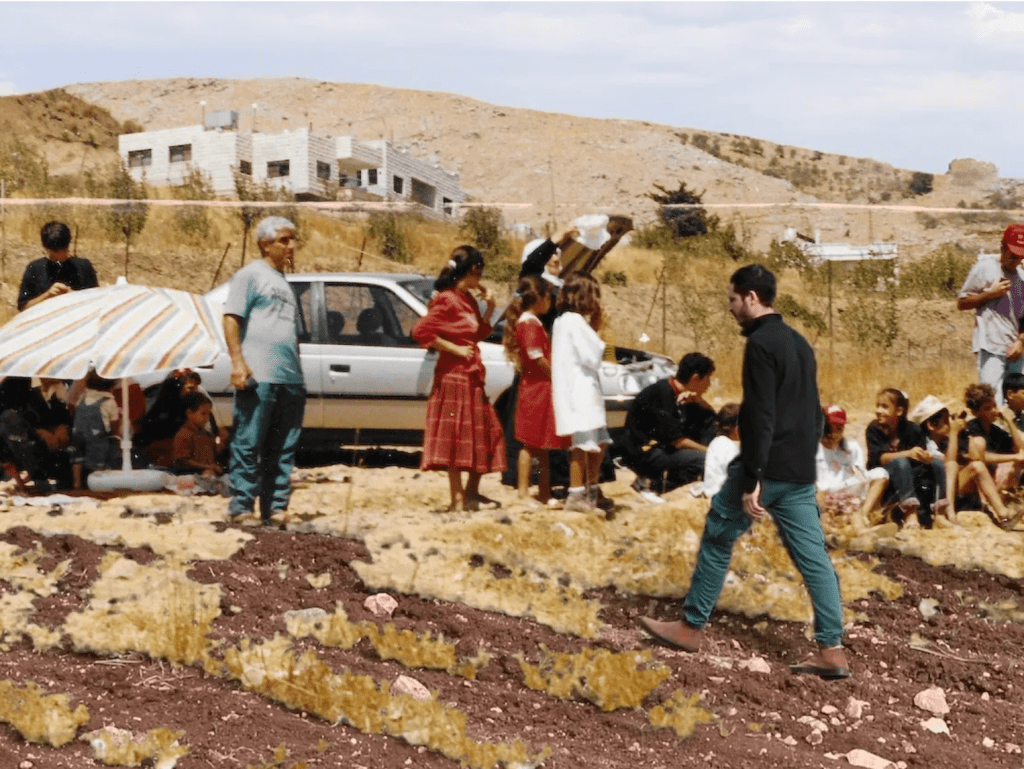
Ronen Zien, an artist born in the Arab city of Shefa Amr in northern Israel, presents a solo exhibition titled "Walking Into" at the Tel Aviv Museum of Art. The show features works that explore memory, time, and borders, including a life-size video piece where Zien walks into a faded family photograph from the 1990s. Using chroma key technology, he inserts himself into images from his childhood and historic photographs, such as a 19th-century print by Félix Bonfils. The exhibition draws on Zien's family history within the Druze community, which is divided by the Israel–Syria border, and includes works created in the six months before its February 2025 opening, amid ongoing war tensions.

art world gallery dinner politics parties

Art-world insiders share their best and worst experiences at gallery dinners, from seating disasters and VIP-only food queues to intimate gatherings and haunted-house Halloween parties. Contributors include collectors, artists, curators, writers, and gallerists who recount memorable evenings hosted by figures like Jose Martos and White Cube, revealing the social dynamics that define these events.

Venice in Crisis Mode

Venedig im Krisenmodus

The 61st Venice Biennale has opened under extraordinary circumstances, marked by political protests, a jury resignation, and canceled awards. The Biennale's jury resigned en masse after announcing they would exclude Israeli and Russian contributions from their decisions, leading to the cancellation of the Golden Lion awards and a crisis over the international competition's legitimacy. A newly introduced audience prize also faced boycotts from artists in solidarity. Protests, closed pavilions, and pro-Palestinian actions dominated the preview days, with artists pasting protest posters directly onto their works, reflecting heightened tensions.

Deutscher Pavillon wird zum Plattenbau

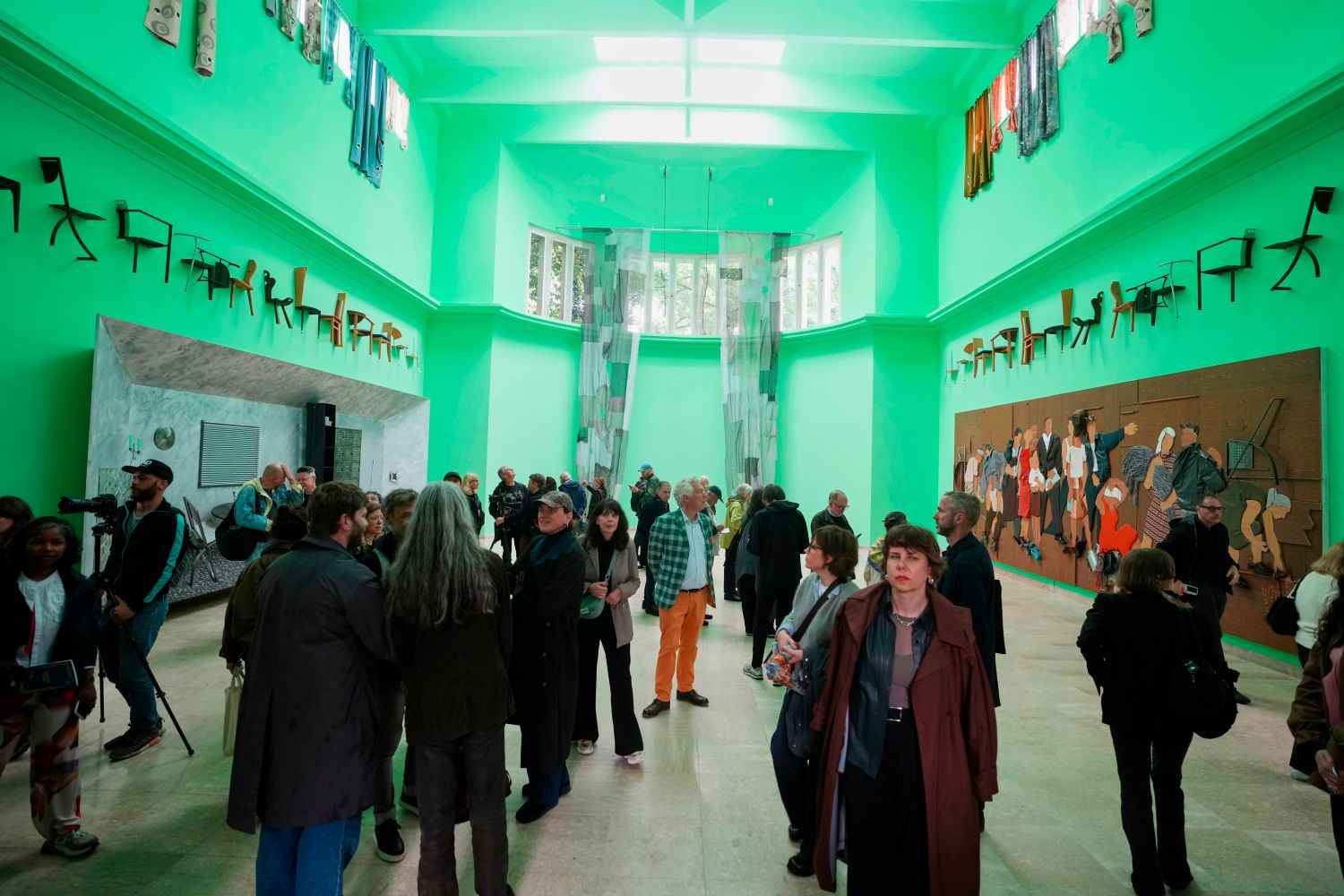
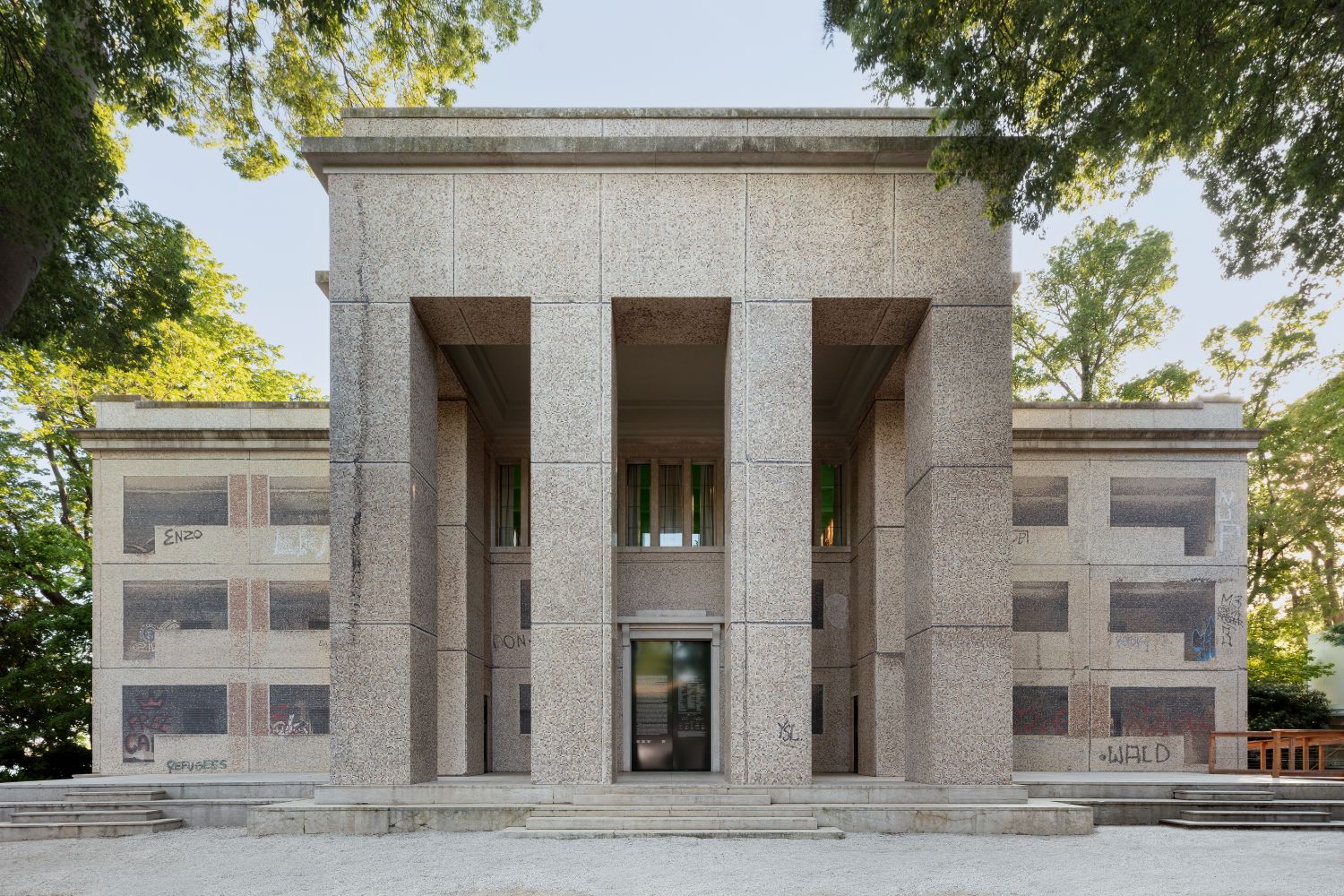
The German Pavilion at the Venice Art Biennale has been transformed into a prefabricated concrete slab building (Plattenbau) for this year's edition, designed by artists Sung Tieu and the late Henrike Naumann, who died suddenly in February at age 41 from cancer. Curator Kathleen Reinhardt described the pavilion as part of a highly political Biennale, with Tieu covering the 1938 fascist-era building with a mosaic of over three million tiles depicting a Berlin apartment block that once housed Vietnamese contract workers. Naumann's interior installation features mint-green references to Soviet barracks in East Germany, a cartography of war, and works including a relief of chairs, a curtain of chainmail, and the performance "Trümmerfrau."

Foreign Office Reprimands Goethe-Institut for Exhibition

Auswärtiges Amt rügt Goethe-Institut für Ausstellung

The German Foreign Office has formally reprimanded the Goethe-Institut for its involvement in an exhibition in Vilnius, Lithuania, featuring Palestinian-American artist Basma al-Sharif. The ministry stated that events organized by German cultural intermediaries must leave no doubt about the government's firm rejection of antisemitism and hatred of Israel, and demanded greater care in planning and conceptualizing such events with partners. The exhibition, "Bells and Cannons - Contemporary Art in Times of Militarization," was a collaboration between the Goethe-Institut Vilnius, the Contemporary Art Centre Vilnius, and the Berlin Academy of Arts.

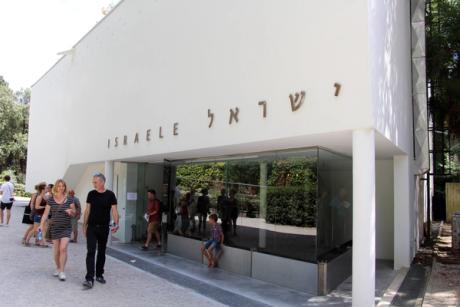
Israeli Pavilion artist issued legal warnings before Biennale jury resignation

Belu-Simion Fainaru, the artist representing Israel at the 2026 Venice Biennale, issued legal warnings to the Biennale, the Italian Ministry of Culture, and the Italian Prime Minister’s office after the Golden Lion jury announced it would not consider pavilions from countries whose leaders are charged with crimes against humanity by the International Criminal Court, including Israel and Russia. Fainaru’s legal threats cited alleged antisemitism and nationality-based discrimination. Shortly after, the Biennale jury resigned, prompting organizers to postpone the awards ceremony to the closing day and replace the Golden and Silver Lions with two 'Visitors’ Lions' voted on by attendees, with all national participations eligible.

Ittai Gradel, Whistleblower in British Museum Gem Theft, Dies at 61

Ittai Gradel, the Israel-born Danish gem expert who alerted the British Museum to the theft of thousands of antiquities from its collection after discovering them for sale on eBay, died on April 28 of renal cancer at age 61. Days before his death, British Museum officials visited him in hospice and presented him with a rarely awarded medal for his service. Gradel first warned deputy director Jonathan Williams in 2021 that artifacts were being sold online, identified veteran curator Peter Higgs as the culprit, and provided detailed evidence. After the museum failed to act, Gradel contacted then-director Hartwig Fischer; two years later, Higgs was fired, and Fischer and Williams left the institution amid the scandal.

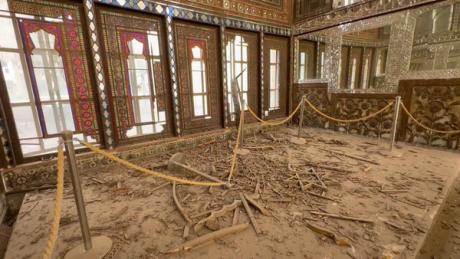
US-Israel Strikes Damage 17th-Century Chehel Sotoun Palace In Isfahan, Iran

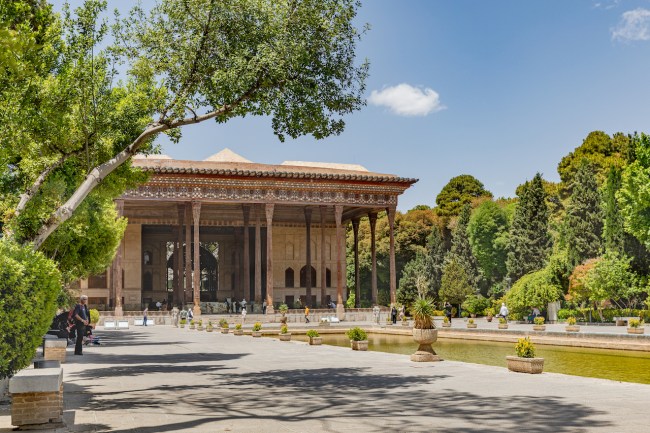
Airstrikes conducted by the United States and Israel on Isfahan, Iran, have caused significant damage to the 17th-century Chehel Sotoun Palace and several other nearby cultural landmarks. The palace, a UNESCO World Heritage Site, suffered shattered windows, damaged vaulted ceilings, and cracked historic murals, likely due to shock waves from strikes on a nearby government building.

Political Fallout Rocks Venice Biennale Prize System

Dozens of artists participating in the 2026 Venice Biennale have withdrawn from consideration for the newly created Visitor Lion awards, replacing the traditional Gold and Silver Lion prizes. A total of 57 artists from the main exhibition and 22 national pavilions signed a statement published on e-flux on May 9, acting in solidarity with the five-person prize jury that resigned on April 30 over the continued participation of Russia and Israel. The jury had objected to awarding prizes to artists from countries whose leaders face International Criminal Court charges, including Russian president Vladimir Putin and Israeli prime minister Benjamin Netanyahu. In response, the Biennale organizers postponed the awards ceremony to November 22 and introduced visitor voting, a move they described as consistent with openness and dialogue. Meanwhile, the Russian Pavilion, which returned after lending its space to Bolivia in 2024, faced protests, closure after previews, and a €2 million funding pull by the European Union for the 2028 Biennale.

Venice Biennale Artists Decline Consideration for Golden Lions Chosen by Public Vote

Nearly half of the artists in the main exhibition of the Venice Biennale have signed a statement declining consideration for the Golden Lion awards, in solidarity with the jury that resigned last month. The statement, published by e-flux, includes prominent names such as Alfredo Jaar, Tuan Andrew Nguyen, Otobong Nkanga, and Walid Raad, as well as national pavilion representatives from France, Lithuania, and the Netherlands. The Biennale had planned to replace the jury-selected Golden Lions with "Visitor Lions" decided by public vote, but the artists' refusal marks an unprecedented protest within the exhibition.

Lithuanian, Latvian, and Estonian Pavilions Stage Pro-Ukraine Procession During Venice Biennale

On May 6, 2026, the Lithuanian, Latvian, and Estonian pavilions at the Venice Biennale organized a procession in solidarity with Ukraine, walking approximately one and a half miles from the Lithuanian Pavilion in the Fucina del Futuro to the Estonian pavilion. The action honored Ukrainian cultural workers creating under war conditions and those who have died. It is one of several political protests at the contentious 2026 Biennale, including demonstrations by Pussy Riot and FEMEN at the Russian pavilion, a "Solidarity Drone Chorus" opposing Israel's inclusion, and a planned 24-hour strike by the Art Not Genocide Alliance.

An Unprecedented 24-Hour Strike Could Upend the Venice Biennale

An unprecedented 24-hour strike is set to interrupt the Venice Biennale's opening week on Friday, May 8, in protest of Israel's participation in the global art event. The action, organized by the activist group Art Not Genocide Alliance (ANGA), follows a letter signed by over 230 Biennale participants demanding Israel's exclusion. The strike has exposed divisions among participants, with some artists and pavilion teams weighing solidarity against the rare opportunity to platform their own political messages. The Slovenian pavilion, represented by Nika Grabar of the Nonument Group, has committed to the strike, while others like Ecuador's Tawna Collective remain undecided, balancing protest with their mission to highlight ecological crises in the Amazon.

‘Exclusion can only satisfy the ego’: Venice Biennale president hits out at critics amid Russia and Israel controversy

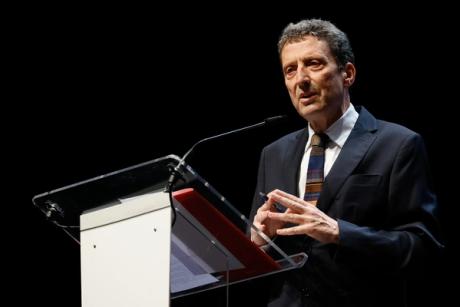
Venice Biennale president Pietrangelo Buttafuoco defended the institution against critics at a conference on May 6, three days before the public opening, amid controversy over Russia's return to the event for the first time since its 2022 invasion of Ukraine and ongoing disputes over Israel's participation. He accused critics of “narcissism” and “censorship,” while Italian culture minister Alessandro Giuli sent inspectors to investigate whether Russia's involvement breached sanctions; a report was submitted to Prime Minister Giorgia Meloni's office. Meanwhile, the Biennale faces legal threats from the artist representing Israel over alleged discrimination, and protests have erupted, including a demonstration by Art Not Genocide Alliance and a Pussy Riot action at the Russia pavilion.

First Impressions of a Venice Biennale Torn Apart by the Present

The 61st Venice Biennale, titled "In Minor Keys," opens amid turmoil: its curator Koyo Kouoh died of cancer during planning, and the festival jury resigned after a controversial statement about excluding Israel and Russia from prizes, replaced by a Eurovision-style people's choice award. The main exhibition, completed by a team of five collaborators using Kouoh's plans, features over 110 artists and collectives, with highlights including works by Big Chief Demond Melanchon, Tammy Nguyen, Guadalupe Maravilla, Ayrson Heráclito, and a section focused on Michael Armitage's Nairobi Contemporary Art Institute.

The Biennale Isn’t a Court. Tell That to the Protesters.

Pietrangelo Buttafuoco, president of the Venice Biennale, defended the decision to allow Russia to reopen its pavilion for the first time since its 2022 invasion of Ukraine, stating that the Biennale is "not a court; it is a garden of peace." The move has sparked widespread backlash, including threats to pull €2.3 million in EU funding. Protests have erupted on the ground, with Pussy Riot and FEMEN staging a theatrical demonstration outside the Russian Pavilion, setting off smoke flares and chanting slogans. Separately, around 60 artists performed a "Solidarity Drone Chorus" to protest Israel's participation, and the Art Not Genocide Alliance has called for a 24-hour strike and rallies across Venice. The Russian Pavilion will be open only during press preview days due to EU sanctions, with video projections visible from outside for the rest of the Biennale's run.

Major protests take place at Venice Biennale previews

Major protests erupted during the preview days of the Venice Biennale, with multiple demonstrations targeting the Israeli and Russian pavilions. On Wednesday, the Art Not Genocide Alliance (ANGA) held a large protest outside the temporary Israeli pavilion in the Arsenale, attended by over 200 people calling for its closure. Separately, the Solidarity Drone Chorus performed a sound composition by Gazan artist Ahmed Muin, with 60 artists wearing T-shirts bearing names of artists from Gaza. Meanwhile, Pussy Riot and FEMEN protested Russian participation, forcing the Russian pavilion to shut its doors. These actions follow the resignation of the entire Golden Lion jury days before the opening, after they stated they would not consider pavilions from countries whose leaders are charged with crimes against humanity by the ICC—widely seen as a reference to Russia and Israel.