filter_list Showing 4103 results for "Cal" close Clear
search
dashboard All 4103 museum exhibitions 2192article local 753article news 337article culture 261trending_up market 164rate_review review 116person people 96article policy 92candle obituary 56gavel restitution 33article event 2article gallery 1
date_range Range Today This Week This Month All
Subscribe

Wiggy stardust! The mind-blowing hair artist who astonished Rihanna and Cate Blanchett

Taiba Akhuetie, a London-based artist who uses human and synthetic hair as her primary medium, is preparing for her first solo exhibition at the Sarabande Foundation. Her unsettling, taxidermy-like sculptures transform everyday objects—handbags, mirrors, rocking chairs, and umbrellas—into eerie, hair-covered artworks. Akhuetie began her career as a braider, founding the salon Keash Braids in Peckham, and pivoted to sculptural work during the pandemic. Her creations have attracted high-profile clients including Rihanna, Cate Blanchett, and Nigerian singer Tems, and have been featured by Vogue.

Would you sit on this? Australian designers take on the humble chair – in pictures

For the 10th edition of Melbourne Design Week, over 100 chairs by Australian designers are on display in an exhibition titled '100 Chairs', curated by Friends & Associates. Selected from an open call, each chair had to be made in Australia and functional for sitting. The designs range from traditional timber dining chairs to experimental pieces, including a chair that transforms into a table, a horse-shaped chair, and one with a satanic theme. The exhibition is held at South Magdalen Laundry, Abbotsford Convent in Melbourne until 24 May 2026.

‘How can nudity be so provocative?’ Florentina Holzinger on rocking Venice with naked jetskiers, human bells and urine divers

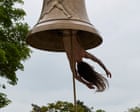
Florentina Holzinger, an Austrian dancer and choreographer known for provocative, physically extreme performances, is representing Austria at the Venice Biennale with a new work titled *Seaworld Venice*. The piece features naked performers on a barge in the lagoon, including a woman suspended upside down inside a cast-iron bell hoisted by a crane, a guitarist rocking at a vertiginous height, and a vocalist screaming like Yoko Ono. Holzinger’s previous opera *Sancta* included a climbing wall, nuns on roller skates, and a pregnant pope on a robot arm, and has toured European opera houses for two years.

Artist Outraged After His Conservationist Mural in Dallas Is Painted Over to Allow for FIFA Promo

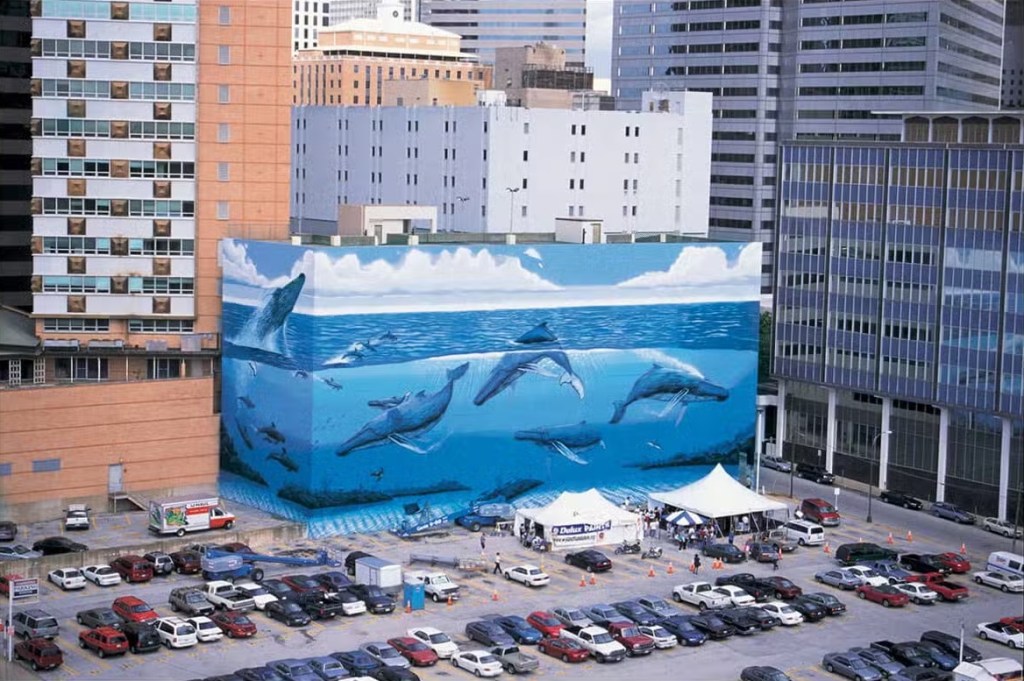
A giant mural by conservationist artist Robert Wyland, titled *Ocean Life* (1999), was painted over in Dallas to make way for a FIFA promotional mural. The piece was number 82 of Wyland's 100 "whaling wall" murals worldwide, covering two sides of the Texas Utilities Building. Crews began painting over the larger 164-by-82-foot section last week, while a smaller panel remains visible. Wyland and the Wyland Foundation have denied giving permission, calling the city's claim a lie. The building's owner, Slate Asset Management, allowed the North Texas FIFA World Cup Organizing Committee to cover the mural. FIFA plans to unveil a new work by a local artist ahead of the 2026 World Cup, for which Dallas will host nine matches.

A snapshot of the photographer Raghu Rai | Brief letters

A letter to the editor from Gabrielle Palmer recounts her experience contacting photographer Raghu Rai in 1987 to request permission to use one of his photographs in her book "The Politics of Breastfeeding." Unable to afford the £200 fee, Palmer called Rai in India, who generously waived the fee entirely and wished her well. The letter is a brief tribute published in response to Rai's obituary in The Guardian.

From men on dog leads to public breast-fondling, Valie Export’s art demanded a total feminist revolution

Valie Export, the pioneering Austrian feminist artist known for her provocative and confrontational performances from the 1960s onward, is the subject of a reflective essay by writer and academic Hettie Judah. The article revisits Export's radical works such as *Hyperbulia* (1973), where she crawled naked through electrified wires; *From the Portfolio of Doggedness* (1968), in which she led a man on a dog lead through Vienna; and *Action Pants: Genital Panic* (1969), where she walked through a cinema with exposed genitals. Judah draws on her own interviews with Export, who died in 2023, and discusses the artist's manifesto demanding that women use art to reshape consciousness and achieve liberation.

‘Touch the earth lightly’: the Australian home that floats above the landscape

The article profiles the Ball-Eastaway House, a home designed by pioneering Australian architect Glenn Murcutt in 1983 for artist Sydney Ball and his partner Lynne Eastaway. Located on a 10-hectare block of dry sclerophyll forest northwest of Sydney, the house is elevated on 14 steel columns sunk into a sandstone rock shelf, allowing it to float above the landscape and minimize its environmental impact. Murcutt, who later won the Pritzker Prize, incorporated sustainable design features such as natural ventilation, a gutter system inspired by eucalypt leaf patterns, and a structure that can be dismantled without trace.

The Christophers review – Ian McKellen and Michaela Coel are the double act of the year

Steven Soderbergh's new film "The Christophers" is a London-set movie about contemporary art, starring Ian McKellen as Julian Sklar, a once-dominant but now outmoded English painter, and Michaela Coel as Lori Butler, a former art student hired as his assistant. The plot revolves around a series of hidden paintings called "The Christophers" that Julian's grasping adult children want to find and potentially forge for profit. The film is described as fast, literate, and funny, with McKellen and Coel delivering a compelling double act.

‘It takes an entire museum to do it justice’: the Smithsonian celebrates America in 250 objects

The Smithsonian National Museum of American History in Washington DC is marking the 250th anniversary of US independence with a major exhibition titled "In Pursuit of Life, Liberty & Happiness," opening on 14 May. The show displays 250 objects spanning all three floors of the museum, ranging from a Revolutionary War-era gunboat (the Philadelphia) to a Donald Trump "Make America great again" hat. Seventy-six rarely seen objects are concentrated in entry hall cases, while the rest are embedded throughout existing galleries, connected by a "ribbon" design. Director Anthea Hartig frames the exhibition as a commemoration of moments where individuals and communities fought for recognition and identity, pairing each object with an action verb to emphasize democracy as participatory.

The Founders of Open Restitution Africa (ORA) on Their New Open Data Platform

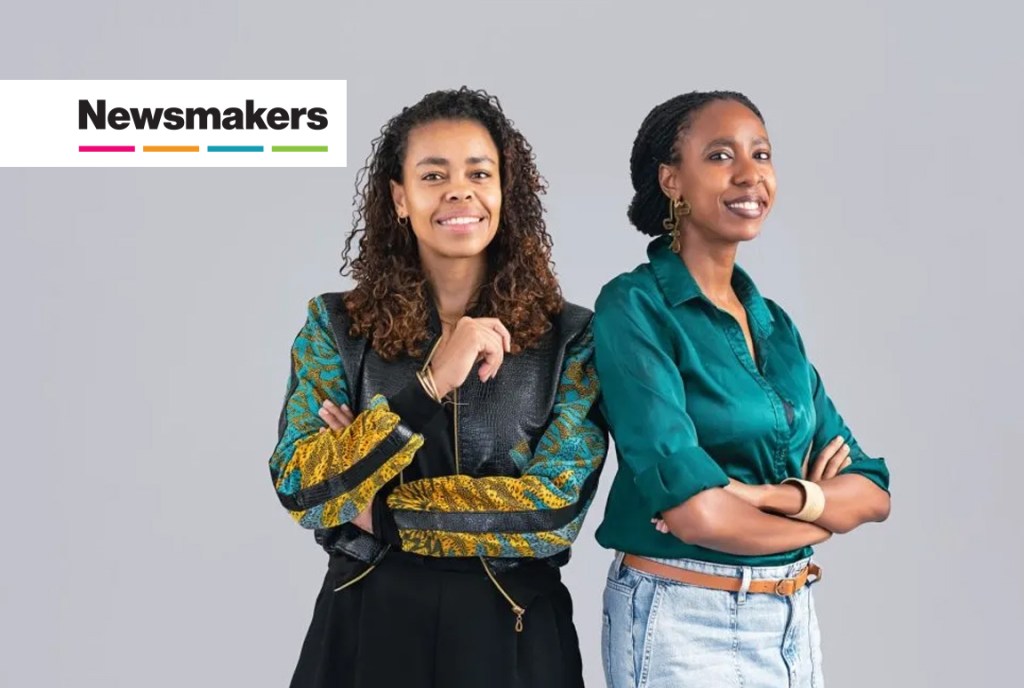
On March 31, the research initiative Open Restitution Africa (ORA) launched the ORA Open Data Platform, a database providing information on the restitution of African artifacts and ancestral remains. Developed over six years by ORA’s all-woman, pan-African team, the site uses case histories and AI-powered tools to offer practical insights into the return process, available in French and English. It presents 25 case histories spanning 200 years, using data visualizations, essays, and interactive tools to help individuals and communities develop their own restitution strategies. ARTnews interviewed founders Chao Tayiana Maina and Molemo Moiloa about the project's origins and goals.

Fire erupts at San Francisco's Vaillancourt Fountain during its dismantling

A fire broke out at San Francisco's Vaillancourt Fountain on May 4, 2025, as construction crews used torches to dismantle the 1971 Brutalist structure, igniting debris inside its steel tubes. The San Francisco Arts Commission confirmed the fire was quickly extinguished with no major damage, but the incident has raised concerns about safety protocols, as workers were reportedly not wearing protective gear against potential lead or asbestos exposure, and no public warnings were posted. The dismantling proceeded after a California appeals court denied a request from the local coalition Friends of the Plaza to halt the removal, which the city justified citing asbestos and structural risks.

Venice Biennale strike sees more than 15 pavilions temporarily or partially close

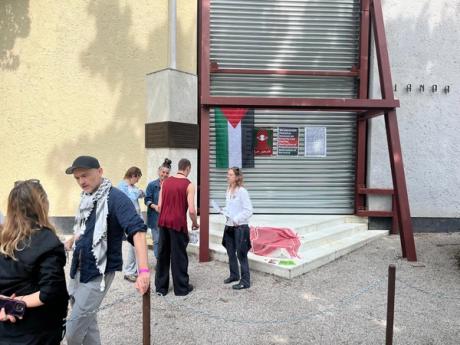
On 8 May, more than 15 national pavilions at the Venice Biennale temporarily or partially closed in a coordinated strike organized by the Art Not Genocide Alliance (ANGA). The protest opposes Israel’s participation in the event, which organizers say normalizes what they call genocide and exploits precarious labor. Participating countries include Austria, Lebanon, Slovenia, Egypt, Poland, and the Netherlands, whose artist Dries Verhoeven stood outside his shuttered pavilion with a Palestinian flag. Some pavilions, like Japan’s, remained open but suspended interactive elements. The strike follows earlier controversies, including the resignation of the prize jury and an open letter demanding the Israeli pavilion’s cancellation.

The Most Provocative Performance in Venice

Florentina Holzinger, a performance artist known for extreme feminist works involving nudity, bodily fluids, and physical endurance, is representing Austria at the 2026 Venice Biennale with a pavilion titled “Seaworld Venice.” Opening May 9, the installation transforms the Austrian Pavilion in the Giardini into an underwater theme park and a functioning sewage treatment plant, where audience urine collected from portable toilets is cleaned and recycled into the tanks. The work explores themes of the human body, ecology, and Venice’s own struggles with sinking infrastructure and mass tourism.

S&M-inspired Greek Pavilion in Venice confronts its fascist chains

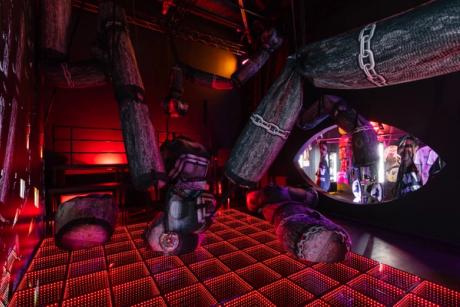
The Greek Pavilion at the 2026 Venice Biennale, titled "Grecia" and conceived as a drag artist, presents an S&M-inspired installation by artist and architect Andreas Angelidakis. The immersive space features a red neon-lit floor, soft sculptures resembling beanbags, fragmented marble columns wrapped in chains, and souvenirs bearing images of queer artists and the late activist Zak Kostopoulos (Zackie Oh). The pavilion aims to deconstruct the idea of a fixed national identity, exploring themes of queerness, fascism, and historical trauma.

The Bahamian Pavilion Brings Junkanoo to Venice in a Biennale Standout

After a thirteen-year hiatus, the Bahamian Pavilion has returned to the Venice Biennale with an exhibition titled "In Another Man's Yard," featuring the late master John Beadle and his former student Lavar Munroe. The pavilion, housed in the San Trovaso Art Space in Dorsoduro, centers on Junkanoo—the vibrant, crepe-costumed procession that is a defining cultural tradition of the Bahamas. Munroe's large-scale sculptural works incorporate strips of discarded Junkanoo costumes, while paintings and installations commemorate Beadle, who died in 2024. The presentation was revived with support from Baha Mar, a resort company, after government funding was withdrawn in 2014.

Gabrielle Goliath Discusses Her Canceled South African Pavilion as She Shows New Work in a Venice Church

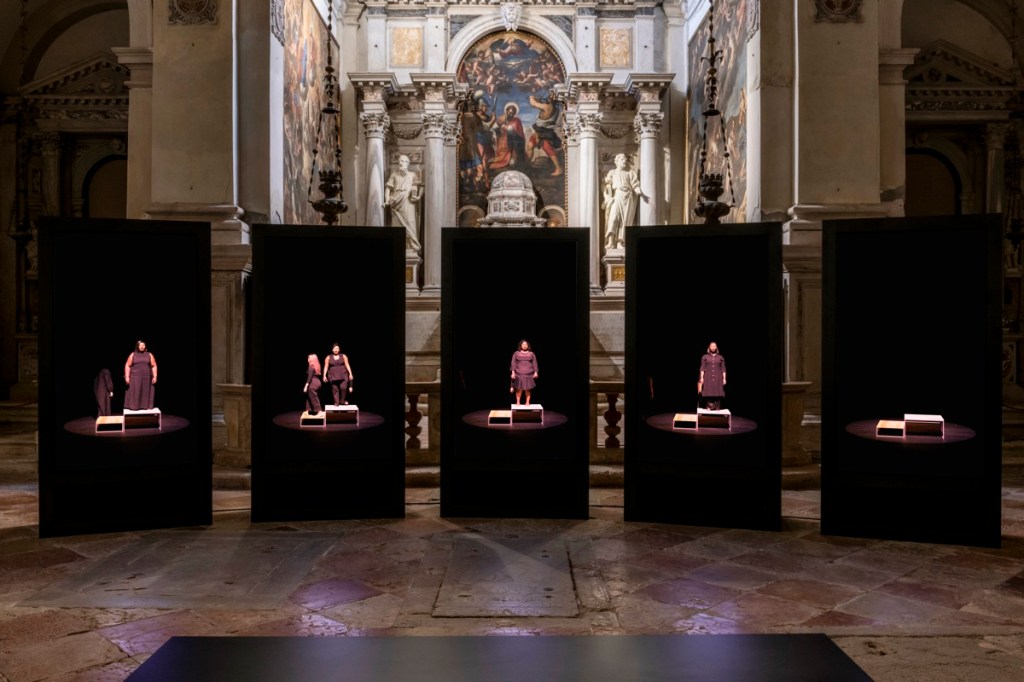
South African artist Gabrielle Goliath’s planned pavilion for the South Africa Pavilion at the Venice Biennale was canceled by culture minister Gayton McKenzie, who deemed it “highly divisive.” Despite the cancellation, Goliath has installed her work, a multi-screen iteration of her ongoing performance series *Elegy*, at the Chiesa di Sant’Antonin, half a mile from the Giardini. The new piece mourns victims of atrocities including South African femicide, the Herero and Nama genocide, and the death of Gazan poet Hiba Abu Nada, killed by an Israeli airstrike. Goliath stated that McKenzie explicitly demanded removal of the Palestinian content while deeming the other subjects acceptable.

Abbas Akhavan Transforms the Canada Pavilion Into a Greenhouse, Daring Viewers to Leave Behind Their Preconceptions

Artist Abbas Akhavan has transformed the Canada Pavilion at the Venice Biennale into a functioning greenhouse for his exhibition "Entre chien et loup." The pavilion now houses a 6,000-gallon pool containing giant Victoria water lilies, with modifications including grow lights, water misters, a new ventilation system, and structural reinforcements to support the 25-ton water tank. The installation evokes Victorian-era Wardian cases and London's Crystal Palace, but Akhavan emphasizes that his interest in the lilies began intuitively, not as a commentary on colonialism or empire. The project, developed with curator Kim Nguyen, involved collaboration with Kew Gardens and the Orto Botanico di Padova to cultivate the plants, and the outcome remains uncertain as the lilies may thrive or wither over the exhibition's six-month run.

Not Just the Biennale: What to See in Venice in Spring 2026 Among Galleries, Independent Spaces, and Special Projects

Non solo Biennale: cosa vedere a Venezia nella primavera 2026 tra gallerie, spazi indipendenti e progetti speciali

The article highlights a curated selection of exhibitions to see in Venice during spring 2026, beyond the main shows of the 61st Venice Biennale. It features projects in galleries, independent spaces, and historic venues, including a group show titled "Waves" at Casa Sanlorenzo with works by Alexander Calder and Lucio Fontana, a video installation by Ieva Lygnugarytė at Oratorio dei Crociferi, a Judy Chicago survey at Galleria Alberta Pane, a solo show by Hanna Rochereau at Mare Karina, and a Barry X Ball retrospective at the Abbey of San Giorgio Maggiore.

Dozens of Venice Biennale Artists Stage ‘Drone’ Perfomance in Protest of Israel’s Participation

On the opening day of the Venice Biennale, around 60 artists and dozens of other participants staged a protest titled “Solidarity Drone Chorus” at the Giardini entrance, humming a viral song by Gazan composer Ahmed “Muin” Abu Amsha to sonically occupy the space. The action, organized by artists in the main exhibition over several months, protested Israel’s participation in the Biennale and expressed support for Palestine, with participants wearing T-shirts bearing the names and artworks of Gazan and Palestinian artists, many of whom have been killed. The protest follows an open letter from the Art Not Genocide Alliance demanding Israel’s exclusion.

With Nearly 30,000 Clay Earth Bricks, Dana Awartani Remakes History in the Saudi Arabia Pavilion

Dana Awartani, a Jeddah- and New York-based artist of mixed Palestinian, Saudi, Jordanian, and Syrian descent, has created the Saudi Arabia Pavilion at the Venice Biennale using nearly 30,000 clay earth bricks. The installation, titled "May your tears never dry, you who weep over stones," replicates traditional mosaic motifs sourced from over 20 cultural heritage sites across the Arab world that have been destroyed by human conflict. Awartani emphasizes collaboration, crediting numerous skilled craftsmen—economic migrants to Saudi Arabia—who worked alongside her, and her practice blends formal training at Central St. Martins with Islamic geometry and illumination studies in Turkey.

How the adoption of canvas in Venice changed the way artists painted

Art historian Cleo Nisse has published a new book, *Venetian Canvas and the Transformation of Painting*, examining how 16th-century Venetian painters such as Titian, Veronese, and Tintoretto pioneered the use of canvas as a painting support. Nisse reveals that canvas was not a uniform material—artists experimented with different weaves, including tabby and herringbone patterns, and even repurposed sailcloth and tablecloth-quality fabrics to achieve specific visual effects. The book argues that canvas was already familiar in the late Middle Ages for banners and alternatives to tapestry, and that Vittore Carpaccio was the first master of the medium, varying canvas types for expressive purposes in his *Legend of St Ursula* series.

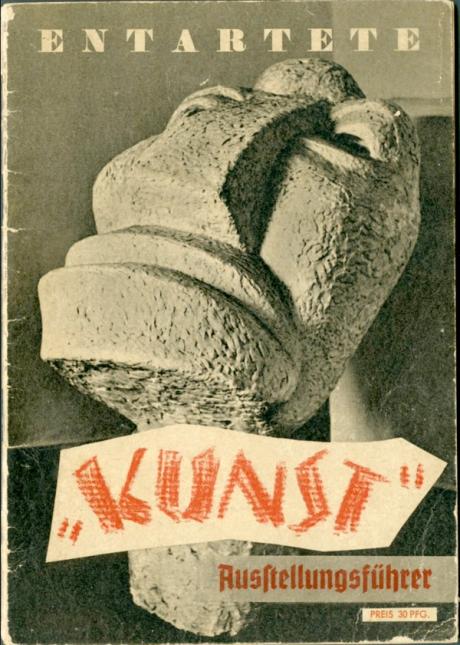
Comment | Degenerate art all over again? Nazi attack on Modern art is not far away from trends in today’s world

The article draws a provocative parallel between the Nazi regime's attack on modern art—epitomized by the 1937 "Degenerate Art" (Entartete Kunst) exhibition—and contemporary political aesthetics, particularly around President Donald Trump. It traces the Nazi party's early use of visual spectacle, mass rallies, and monumental art to forge a national identity, contrasting this with Trump's proposed National Garden for American Heroes and stalled White House Ballroom, which the author dismisses as kitsch but lacking the cohesive fascist aesthetic of Albert Speer's masterplans.

Venice exhibition of site-specific films aims to capture the hyper stimulating times we are living in

The Fondazione In Between Art Film presents "Canicula," the third and final exhibition in its Trilogy of Uncertainties, opening on 6 May at the Complesso dell’Ospedaletto in Venice. Curated by Leonardo Bigazzi, the show features eight newly commissioned site-specific films that explore themes of excess, sensory overload, and geopolitical tension. Works include Roman Khimei and Yarema Malashchuk's "Affirmations" (2026), depicting fictional deathbed testimonies of Russian soldiers, Lawrence Abu Hamdan's "450XL: The Story of a Fugitive Sound" (2026) about a sonic attack in Belgrade, and Maya Watanabe's "Jarkov" (2025-26) reflecting on Arctic ice melt and Pleistocene remains.

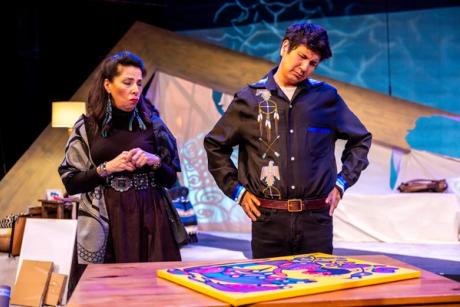
In new play, Norval Morrisseau forgery scandal prompts questions about authenticity and Indigenous identity

A new play by Ojibway playwright Drew Hayden Taylor, *The Undeniable Accusations of Red Cadmium Light*, dramatizes the massive Norval Morrisseau art forgery scandal in Canada. The story follows an Indigenous art expert named Nazhi, her adopted daughter Beverly, and a journalist whose investigation into Morrisseau forgeries unravels Nazhi’s own identity and status. The play uses Morrisseau’s iconic imagery and the forensic analysis of paint colors to explore the blurred lines between authentic and fake, both in art and in personal identity. It concluded its run at Vancouver’s Firehall Arts Centre on 3 May.

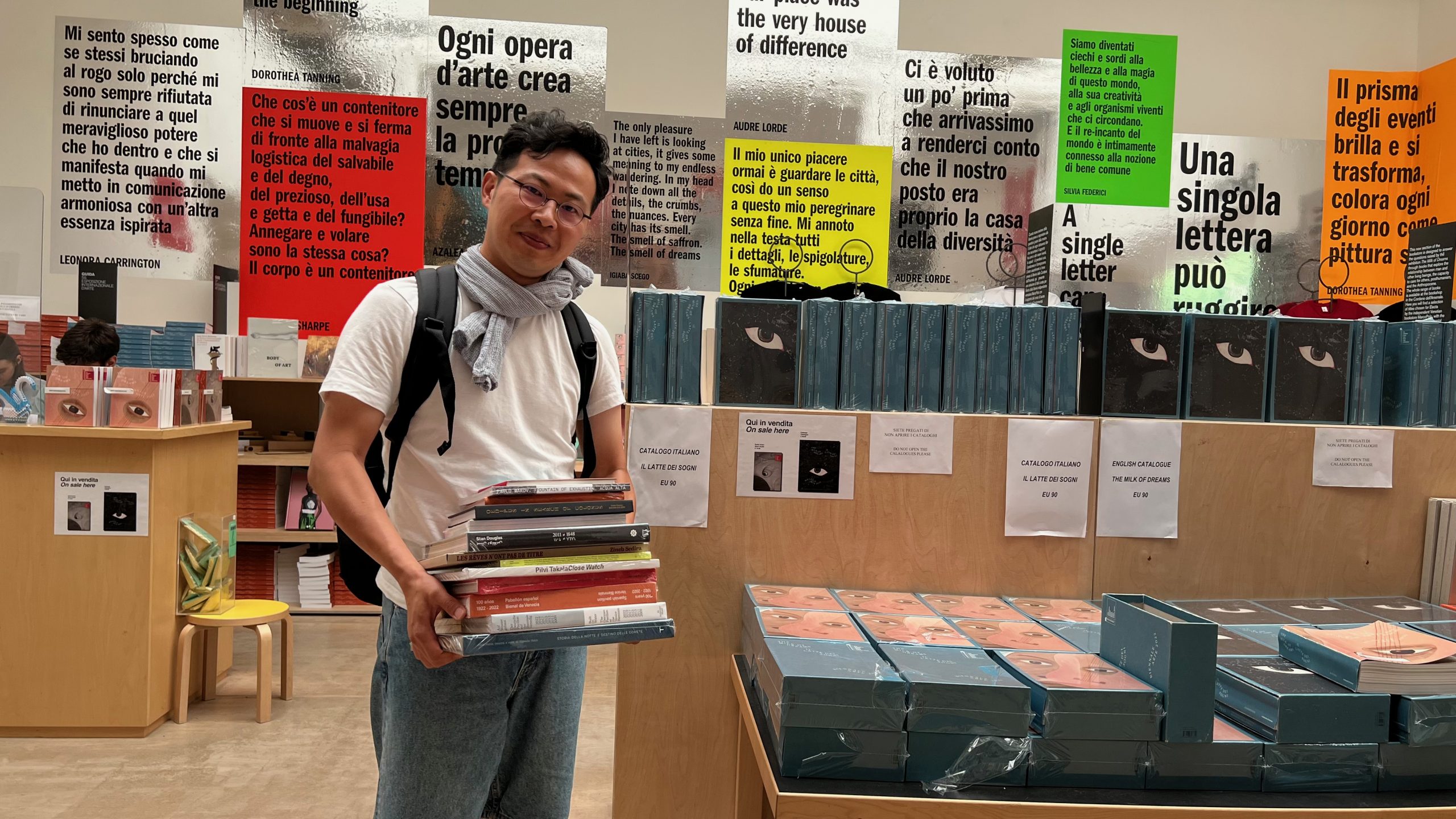
Meet the Writer Who Sees Every Single Show at the Venice Biennale

Jaeyong Park, a Seoul-based writer, translator, and interpreter, has attended every edition of the Venice Biennale since 2022—including both art and architecture cycles—and seen every single show, from the central exhibition and national pavilions to collateral and unofficial events. He documents his journeys in regular dispatches and has compiled a free bilingual guide to the biennial. Park organizes his trips with a group of fellow art workers, splitting accommodation costs and sharing reviews over dinner to ensure full coverage.

Rose Finn-Kelcey review – flying puns, smart pranks and prayers for 20p

The Guardian reviews "Rose Finn-Kelcey: House Rules," a posthumous exhibition at the new Arts Collective in Northampton, UK. The show features works by the British conceptual artist (1945–2014), including her 1972 flag installation "Power for the People" at Battersea Power Station, a prayer vending machine titled "It Pays to Pray," and pieces exploring permission, spirituality, and societal restrictions. The exhibition is presented as a homecoming for Finn-Kelcey, who was born in Northampton.

Trippy Film by British-Ethiopian Artist Theo Eshetu Hits the Venice Biennale

British-Ethiopian artist Theo Eshetu is presenting a new installation, *The Garden of the Broken-Hearted* (2026), at the Venice Biennale. The work features a live olive tree mounted on a rotating dais, with a video of the tree projected onto itself, marking a shift from his decades-long practice of multi-screen video installations. Eshetu discusses the project's origins in conversations with the late Biennale curator Koyo Kouoh, framing the tree as a space for mourning, human consciousness, and elemental storytelling.

Oleg Prokofiev’s Lost Trove of Paintings Comes to Light After Decades in Hiding

A trove of abstract paintings and sculptures by Russian artist Oleg Prokofiev, hidden for decades in Moscow after he fled the Soviet Union, has been rediscovered and is now on public display for the first time. Prokofiev concealed the works in the 1950s and 1960s to avoid state persecution—abstract art was banned in the USSR, and his relationship with British scholar Camilla Gray made marriage impossible until 1969. After Gray's death and his move to England, the artworks remained safely stored in Moscow, where he found them intact after the Soviet collapse. The collection, including paintings, sculptures, sketchbooks, and letters, is now exhibited at the newly founded Prokofiev Studio in Hackney, London, established by his four children and curator Anzhela Popova.

Genuine Fake Premium Economy review – brilliantly obnoxious millennial rage at a rigged financial world

The exhibition "Genuine Fake Premium Economy" at a London gallery features works by American artists Jenna Bliss, Buck Ellison, and Jasmine Gregory, all born in the mid-1980s. Their pieces—including Bliss's shaky videos of New York's financial district, Ellison's fictional bank advertisements pairing classical paintings with cynical taglines, and Gregory's luxury watch ads stripped of watches—collectively express millennial rage at a rigged financial system and the aftermath of the 2008 crash.

Museo de Arte Moderno de Bogotá's director departs amid accusations she harassed staff

The Museo de Arte Moderno de Bogotá (Mambo) is in a leadership crisis after its director, Martha Ortiz, resigned amid accusations of harassment and creating a toxic work environment. Her departure follows the dismissal of artistic director Eugenio Viola in February, which sparked an open letter signed by over 140 cultural figures demanding transparency. The museum's board chair, Ángela Royo, and financial manager Francy Hernández are temporarily overseeing operations while searches for both director and artistic director are underway.