filter_list Showing 21 results for "National Pavilions" close Clear
search
dashboard All 21 museum exhibitions 12article news 6rate_review review 2article culture 1
date_range Range Today This Week This Month All
Subscribe

At the Venice Biennale, the Thrill of Victory, the Agony of Defeat

The article reports on the opening of the 61st Venice Biennale, highlighting the central exhibition "In Minor Keys" conceived by the late Koyo Kouoh, along with national pavilions and collateral events. It notes standout contributions from artists such as Alvaro Barrington, Kaloki Nyamai, Florentina Holzinger, Ei Arakawa-Nash, Li Yi-Fan, and Dries Verhoeven, while describing the American pavilion as lackluster and the overall commercial offerings as uneven. The text also covers performances and exhibitions featuring nudity and body horror, including Tino Sehgal's "The Kiss" and Maja Malou Lyse's video with the collective DIS.
Venice Biennale 2026 Highlights: Off-Site Exhibitions

ArtReview editors highlight off-site pavilions and exhibitions at the 61st Venice Biennale, running from 9 May through 22 November 2026. Featured works include Li Yi-Fan's film *Screen Melancholy* at Palazzo delle Prigioni, which uses motion capture and a free-trial videogame engine to explore digital alienation and the 'enshittosphere,' and Roberto Diago's installation *Free Men* at the Pavilion of Cuban Republic, comprising rusted iron heads, fragmented wooden figures, and text works critiquing political oppression in Cuba.

A Time of Transition

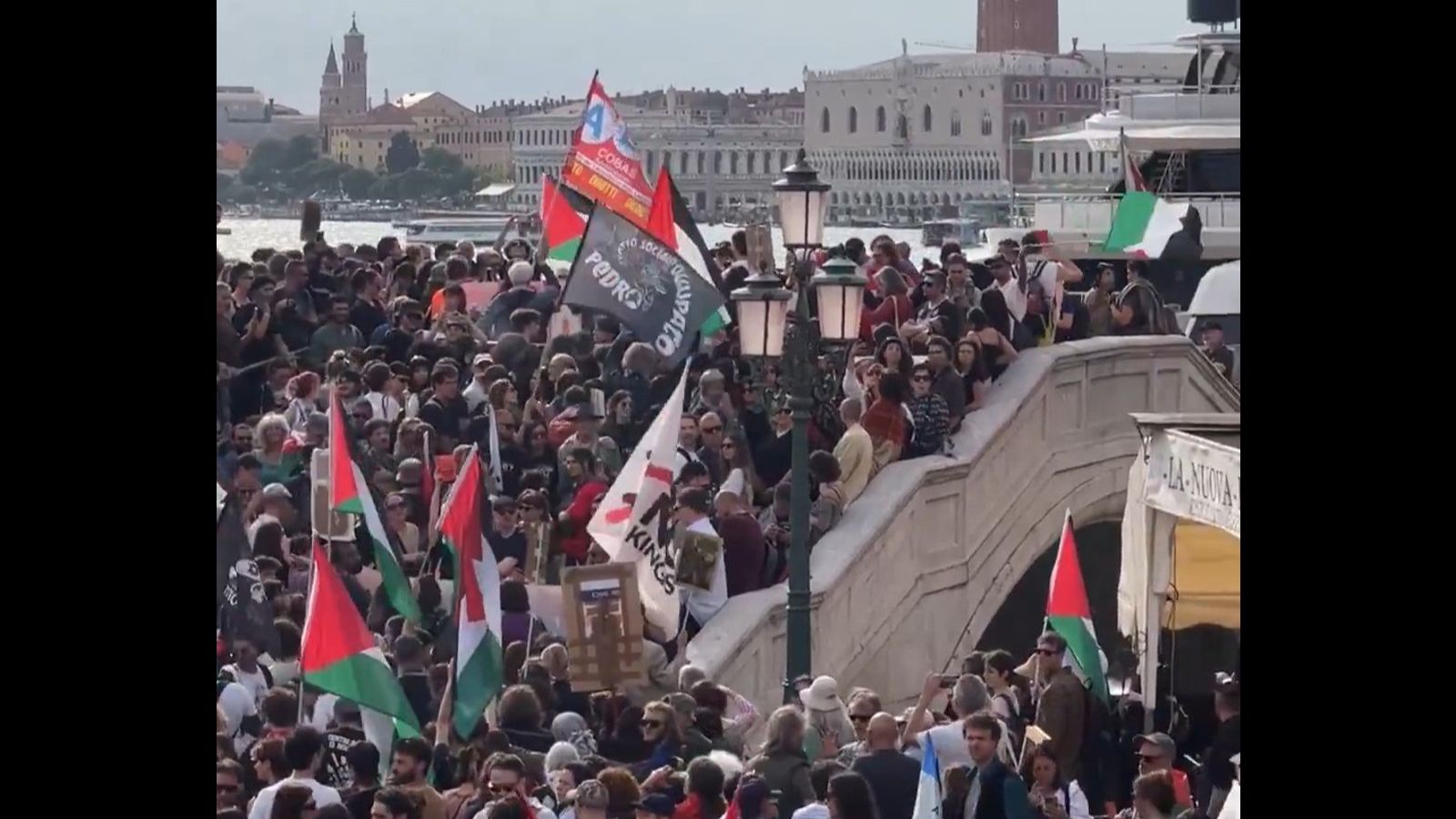
During the preview week of the 61st Venice Biennale, escalating protests targeted the national pavilions of Israel and Russia, with demonstrations by Pussy Riot, ANGA (Art Not Genocide Alliance), and Baltic pavilions. A major protest on May 8 drew over 3,000 people in solidarity with Palestine, and 27 national pavilions—including Austria, the Netherlands, France, and Japan—staged a strike, the first at the Biennale since 1968. The Golden Lion jury resigned after declaring they would not consider countries under ICC investigation (Israel and Russia), and the Biennale administration replaced the prize with a visitors' award, from which half the artists in the main exhibition have withdrawn.

The art of chaos

The 61st Venice International Art Biennale has opened in Venice, running until November, amid unprecedented turmoil. The main exhibition, "In Minor Keys," was curated by Koyo Kouoh, who died of cancer shortly after presenting her vision featuring 111 artists including Carsten Höller, Alvaro Barrington, and Laurie Anderson. Her death has eliminated the Lifetime Achievement Award this year. Additionally, the Biennale faces a funding crisis as the EU threatens to withdraw its €2 million subsidy over Russia's participation with 38 artists following the invasion of Ukraine. Iran, Nigeria, and Israel are absent from their pavilions, while the US Pavilion, now organized by the American Arts Conservancy under inexperienced leadership, features self-taught artist Alma Allen.

Review: The Good, The Bad and The Venice Biennale

The article reviews the 2024 Venice Biennale, focusing on controversies over Russia's and Israel's participation. Protests erupted during opening week, leading the EU to cut funding and the International Jury to resign. As a result, awards like the Golden Lion and Silver Lion will be decided by public vote, with many pavilions and artists withdrawing in protest. The main exhibition, curated under the theme 'Minor Keys,' features standout works by Alfredo Jaar and Carrie Schneider, alongside national pavilions like Austria's provocative entry by Florentina Holzinger.

WTF Is an “A-Corp”?

Hyperallergic's daily newsletter announces that Noah Fischer's comic "Prospect Heights Ghost Story" won a 2026 New York Press Club Award, thanks to collaboration with the Economic Hardship Project (EHRP). The edition also covers anti-Trump guerrilla protest art in Washington, D.C., including an arcade game titled "Operation Epic Furious: Strait to Hell" that satirizes the White House's foreign policy. Other stories include Ridgewood, Queens emerging as a new art hotspot, a feature on Francisco de Zurbarán's religious paintings, and Paddy Johnson's guide to what an "Artist Corporation" (A-Corp) is and whether artists should start one. The newsletter also reports that the Belgian Pavilion at the Venice Biennale closed on May 8 as part of cultural workers' strike for Palestine, and that nearly half of the artists in the international exhibition plus 22 national pavilions withdrew from awards consideration in solidarity with the jury's resignation.

Ayan Farah and Asmaa Jama on Representing Somalia at the 61st Venice Biennale

Ayan Farah and Asmaa Jama, two of the three artists representing Somalia at the 61st Venice Biennale (2026), discuss their plans for the national pavilion in an interview with ArtReview. Farah will present an installation of large-scale embroidered landscape paintings using clay pigment sourced from Somalia and shell-derived pigment from Scotland, alongside silk paintings exploring time and nature. Jama will focus on the Somali poetry form saddexleey, creating a sensorial experience through moving image, installation, and visual artworks that draw on magical realism and cinematic surrealism. The pavilion is located in the Palazzo Caboto, and the third representative is poet Warsan Shire.

Venice Biennale 2026 Collateral Events Six Of The Best – Nico Kos Earle

The 61st Venice Biennale is described as the most contested and chaotic in recent history, marked by the absence of a curator following the death of Koyo Kouoh and overshadowed by global conflicts that made presentations in national pavilions fraught with difficulty. Amid this turmoil, standout collateral events include Michael Armitage's exhibition 'The Promise of Change' at Palazzo Grassi, curated by Jean-Marie Gallais and Hans-Ulrich Obrist, which uses softly painted scenes to address sociopolitical tensions and post-colonial identity. Another highlight is The Holy See Pavilion, curated by Hans Ulrich Obrist and Ben Vickers, featuring a sonic prayer by Soundwalk Collective with contributions from contemporary composers including Patti Smith.

At this year's Venice Biennale, a clash of politics and art exposes the need for a rethink

The 2026 Venice Biennale is plagued by controversy and structural issues. Curator Koyo Kouoh died of cancer in 2025, leaving her team to execute the main exhibition "In Minor Keys" without her. The Biennale's jury resigned after refusing to judge entries from countries charged with war crimes, and media coverage during preview week focused on protests against the Israeli and Russian pavilions rather than the art. The sprawling exhibition features 96 national pavilions and 110 artists, with works ranging from Daniel Lind-Ramos's found-material figures to María Magdalena Campos-Pons's tribute to Toni Morrison and Kouoh.

Venice Biennale 2026: The Pavilions Not to Be Missed

Biennale de Venise 2026 : les pavillons à ne surtout pas manquer

The 61st Venice Biennale, curated by Koyo Kouoh as an invitation to slow down and reconnect with emotions, features a constellation of contemplative and powerful proposals across the city. Notable national pavilions include the Holy See transforming a monastic garden into an immersive sound experience by Soundwalk Collective, Canada exploring colonial heritage through giant water lilies by Abbas Akhavan, and Austria electrifying the Giardini with radical performances by Florentina Holzinger. Other highlights include Spain dissecting collective memory through postcards, Poland imagining new forms of language between human and underwater worlds, and India's pavilion exploring notions of home.

Somali artists and culture workers express concern over Somalia Pavilion in Venice

Somali artists, cultural workers, and organizations have published multiple open letters and statements expressing concern over the Somalia Pavilion at the Venice Biennale. The pavilion, announced in March for the 2026 edition, is titled 'SADDEXLEEY' and features Somali-Swedish artist Ayan Farah, Somali-Danish poet and filmmaker Asmaa Jama, and Somali-British writer Warsan Shire, curated by Stockholm-based Mohamed Mire and Italian project manager Fabio Scrivanti. Critics, including the Somali Arts Foundation and the queer collective Warbixinta Cidda, allege that the pavilion was organized without meaningful consultation of artists and organizations based in Somalia, and object to the appointment of an Italian co-curator given Italy's colonial history in Somalia. An anonymous open letter further alleges intimidation and coercive pressure against critics, and demands Scrivanti's removal, calling for a boycott if demands are not met.

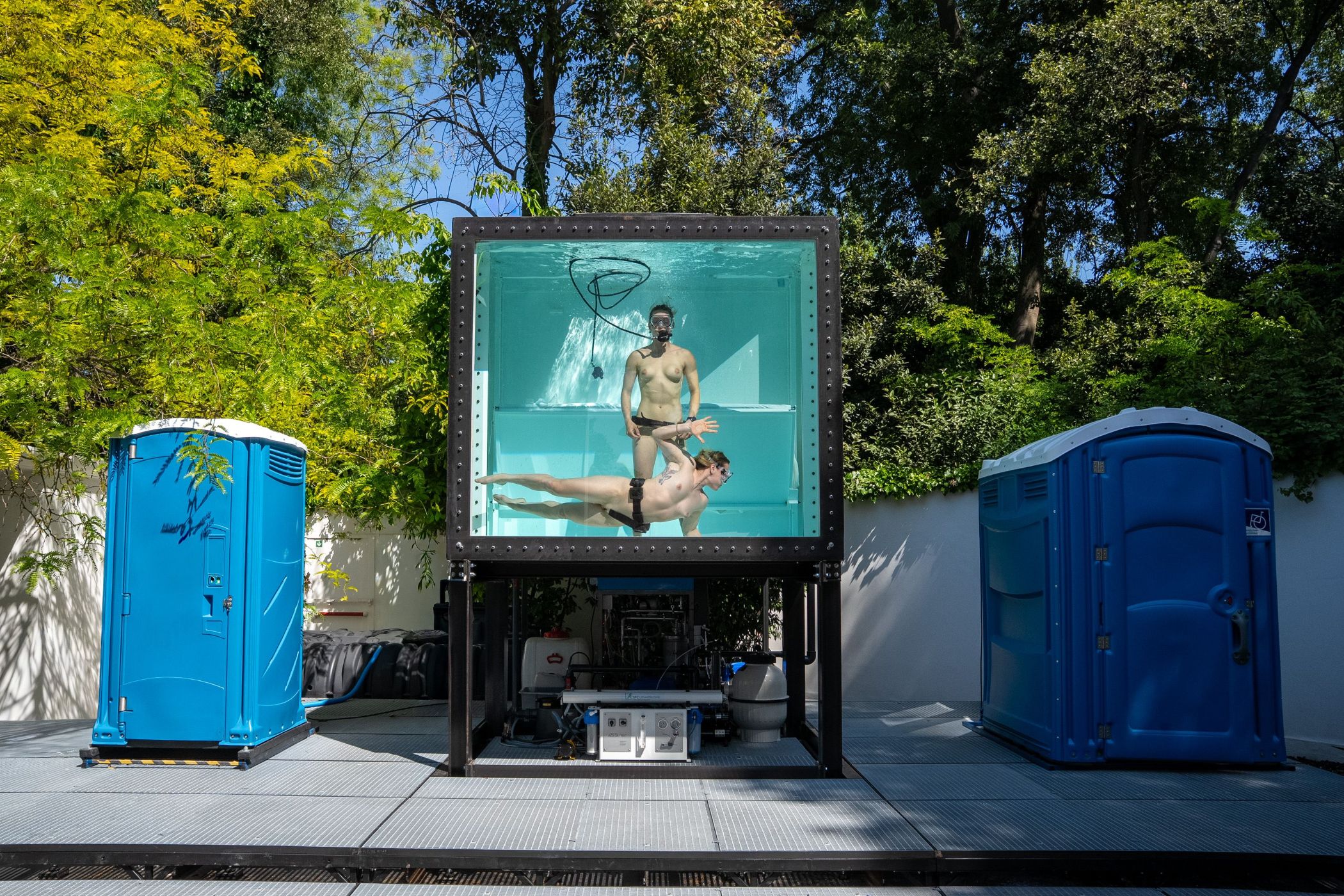
Dries Verhoeven on Representing the Netherlands at the 61st Venice Biennale

Dries Verhoeven will represent the Netherlands at the 61st Venice Biennale (2026) with a new work titled *The Fortress*, installed in the Dutch Rietveld Pavilion in the Giardini. The 25-minute performance piece transforms the sunlit pavilion into a darkened bunker, featuring a raw vocal composition using only false vocal cords. Verhoeven describes the work as a meditation on transition and self-preservation, reflecting a Western society caught between its enlightened self-image and a dark vision of the future. The piece responds to geopolitical unrest outside the Biennale grounds and is designed to be melancholic and confrontational, contrasting with the main exhibition's theme, *In Minor Keys*.

Haiti goes to Venice: Artist Duval-Carrié selected to represent nation at Biennale expo | PHOTOS

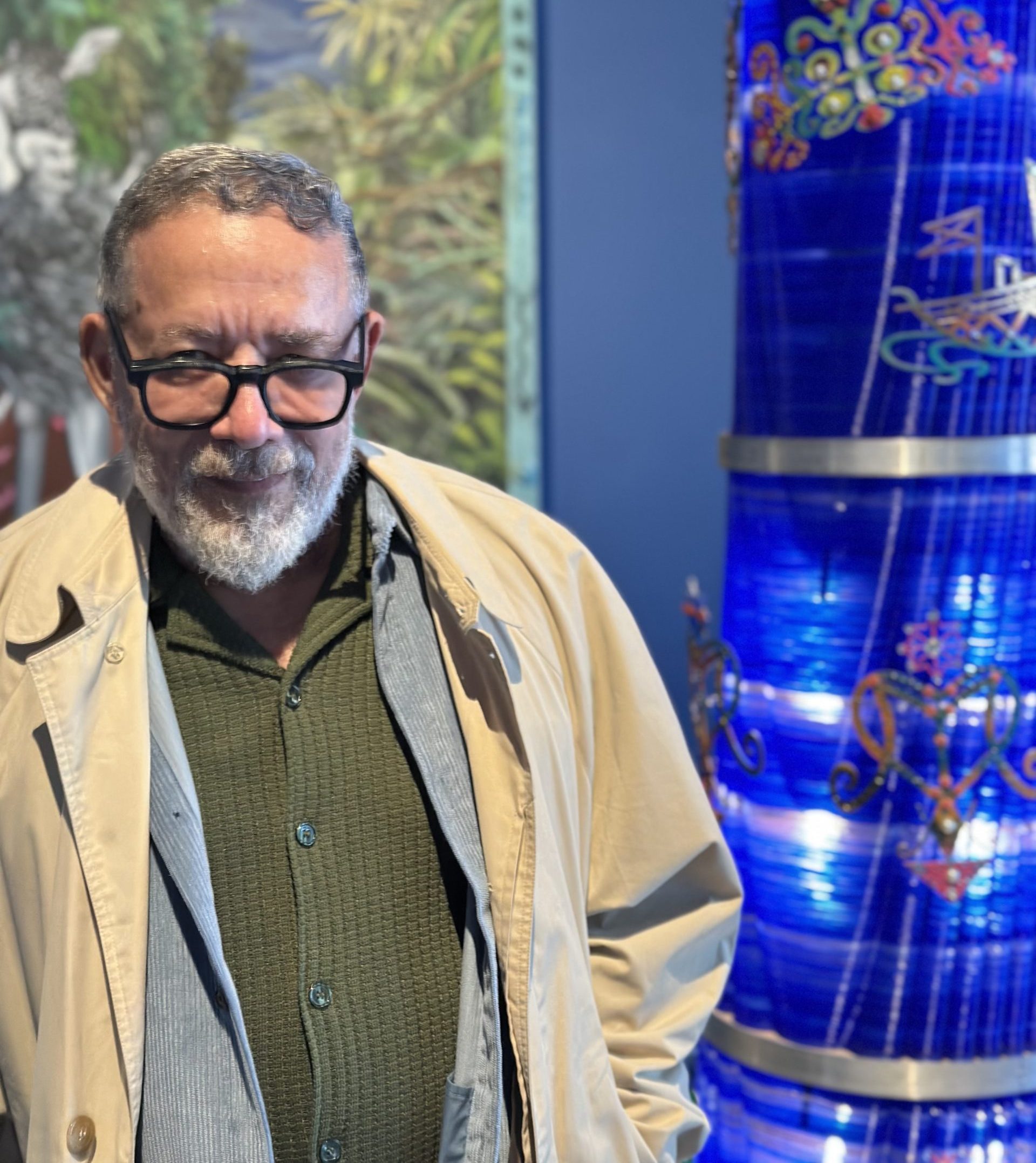
Internationally acclaimed Miami-based artist Edouard Duval-Carrié has been selected to represent Haiti at the 2026 Venice Biennale, the 61st International Art Exhibition of La Biennale di Venezia. Ahead of the May 9 opening, Duval-Carrié hosted a behind-the-scenes preview event at his Little Haiti studio in Miami on April 24, 2026, where he discussed his conceptual approach. His installation draws on themes of history, politics, and spirituality in Haiti and the Caribbean, reflecting evolving perspectives on the nation's past and present. Duval-Carrié collaborated with Vanessa Selk, founding artistic director of the Tout-Monde Art Foundation, to frame Haiti's presence as both a national showcase and a reflection of diasporic influence and Caribbean identity. The exhibition runs through November 22, 2026.

Iran has not withdrawn from 2026 Venice Biennale, pavilion commissioner says

Iran has denied withdrawing from the 2026 Venice Biennale, despite the Biennale's announcement that the country would not participate. Aydin Mahdizadeh Tehrani, director-general of visual arts at Iran's ministry of culture and Islamic guidance and the country's pavilion commissioner, stated that Iran requested more time rather than submitting a withdrawal. He cited the US-Israel war with Iran, political and economic challenges, and a sharp currency devaluation that tripled projected costs as reasons for the delay. Iran proposed a shorter two-to-three-month participation, which was rejected, but has since sent a letter insisting on opening its pavilion even after the opening. The foreign ministry has intervened to support Iran's participation, and a final response from the Biennale is expected soon.

Baby dolls, whale songs and swimming in urine: The Venice Biennale’s must-see national pavilions

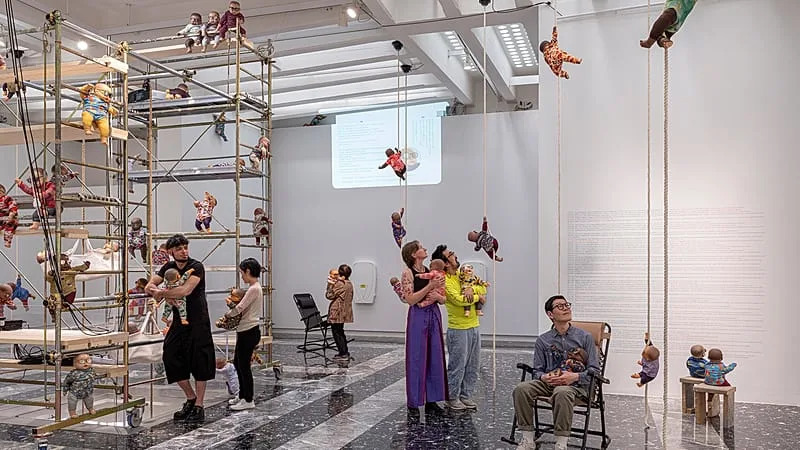
The 61st Venice Biennale, themed 'In Minor Keys' by late curator Koyo Kouoh, has been marked by political protests against Russia and Israel's participation, pavilion closures, and threats to funding. Despite this tense atmosphere, several national pavilions quietly embody Kouoh's vision of nurture, intimacy, and reflection. Highlights include the Japan Pavilion's 'Grass Babies, Moon Babies' by Ei Arakawa-Nash, where visitors carry and care for baby dolls, and the Polish Pavilion's 'Liquid Tongues' by Bogna Burska and Daniel Kotowski, an immersive sound installation exploring Deaf culture and marginalized communication.

Frieze New Writers Pick Vienna’s Must-See Exhibitions

Andrew Durbin reviews national pavilions at a major art event, contrasting a vacuous US presentation with incisive and moving installations from Britain and Germany. The piece is part of Frieze's 'Critic's Guides' series, offering a pointed critique of the US pavilion's lack of meaning against the strength of its European counterparts.

The Venice Biennale of Art has begun! The pavilions you should not miss this year

The Venice Biennale of Art has officially opened, showcasing national pavilions and exhibitions from around the world. The article highlights key pavilions that visitors should prioritize this year, offering a curated guide to the most notable presentations at the prestigious international art event.

Iran’s Participation in the Venice Biennale Still Uncertain

Iran’s participation in the 61st Venice Biennale remains uncertain after a public contradiction emerged between the Biennale Foundation and Iran’s Ministry of Culture and Islamic Guidance (MCIG). The Biennale Foundation had announced that Iran would not participate in the 2026 edition, curated by Koyo Kouoh, but Aydin Mahdizadeh Tehrani, director general of visual arts at the MCIG and commissioner of the Iranian Pavilion, stated in an interview with the Iranian Students’ News Agency (ISNA) that Iran never submitted a withdrawal letter. Instead, Iran requested more time and sent a letter on May 10 asking for the pavilion to open even if ineligible for prizes. Mahdizadeh Tehrani cited the US-Israel war with Iran as causing currency fluctuations that nearly tripled projected costs, complicating prior agreements, and noted that Iran had proposed a shorter exhibition period, which the Biennale rejected.

Doosan Yonkang Foundation Joins as Sponsor of Korean Pavilion at Venice International Art Exhibition

The Doosan Yonkang Foundation has joined as a sponsor of the Korean Pavilion at the 61st Venice International Art Exhibition, held at Giardini Park in Italy until November 22. The pavilion, themed "Haebang Space," explores political and social changes in Korean society since liberation in 1945. Artistic Director Choi Bitna oversees the exhibition, featuring artists Noh Hyeri and Choi Goeun, along with fellows Han Kang, Kim Hoojoo, Lee Rang, Hwang Yeji, and Christian Nyampeta. This marks the foundation's first sponsorship of the Korean Pavilion as part of its visual arts support program.

61st Venice Biennale: Cultural workers and artists strike and protest against the Israeli genocide in Gaza

Thousands of artists, cultural workers, and protesters marched through Venice on May 8, 2026, one day before the opening of the 61st Venice Biennale, to protest the Israeli genocide in Gaza and Lebanon. The strike, organized by the Art Not Genocide Alliance (ANGA), led to the closure of approximately 27 of the Biennale's 100 national pavilions, with signs reading "We Stand with Palestine." The Israeli pavilion remained closed and guarded by armed police, who clashed with protesters. Meanwhile, the European Commission threatened to suspend €2 million in EU grants to the Biennale Foundation over its decision to allow Russia to participate, citing incompatibility with EU sanctions and the invasion of Ukraine.

The Biennale and the Weight of Flags. What Is the Point of National Pavilions?

La Biennale e il peso delle bandiere. Che senso hanno i padiglioni nazionali?

The article examines the inherent contradiction within the Venice Biennale: its historical structure of national pavilions, a legacy of 19th-century world fairs and state-sponsored art, clashes with the transnational, post-identity vision of the international exhibition curated by Koyo Kouoh. The return of the Russia Pavilion amid geopolitical conflict and the international show titled "In Minor Keys," which rejects national belonging as an interpretive criterion, highlight this tension. The piece also addresses the controversy over the lack of Italian artists in the main exhibition, questioning whether a Biennale hosted in Italy should guarantee national representation.