filter_list Showing 37 results for "archaeology" close Clear
dashboard All 37 article news 13museum exhibitions 13article culture 3article policy 3article local 2person people 2gavel restitution 1
date_range Range Today This Week This Month All
Subscribe

Who Went to Venice Last Week? Jenny Saville, Glenn Lowry, Jewel, and Many Other Power Players

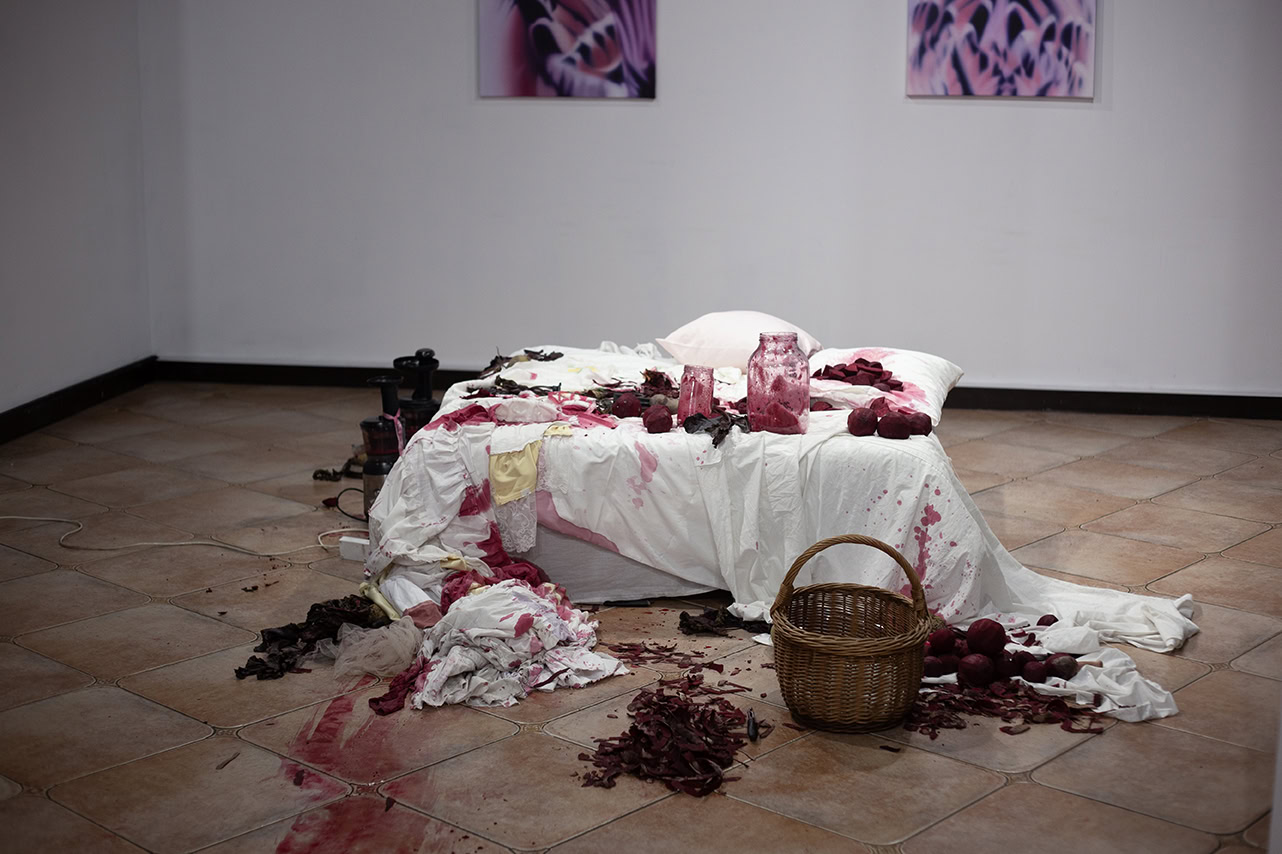
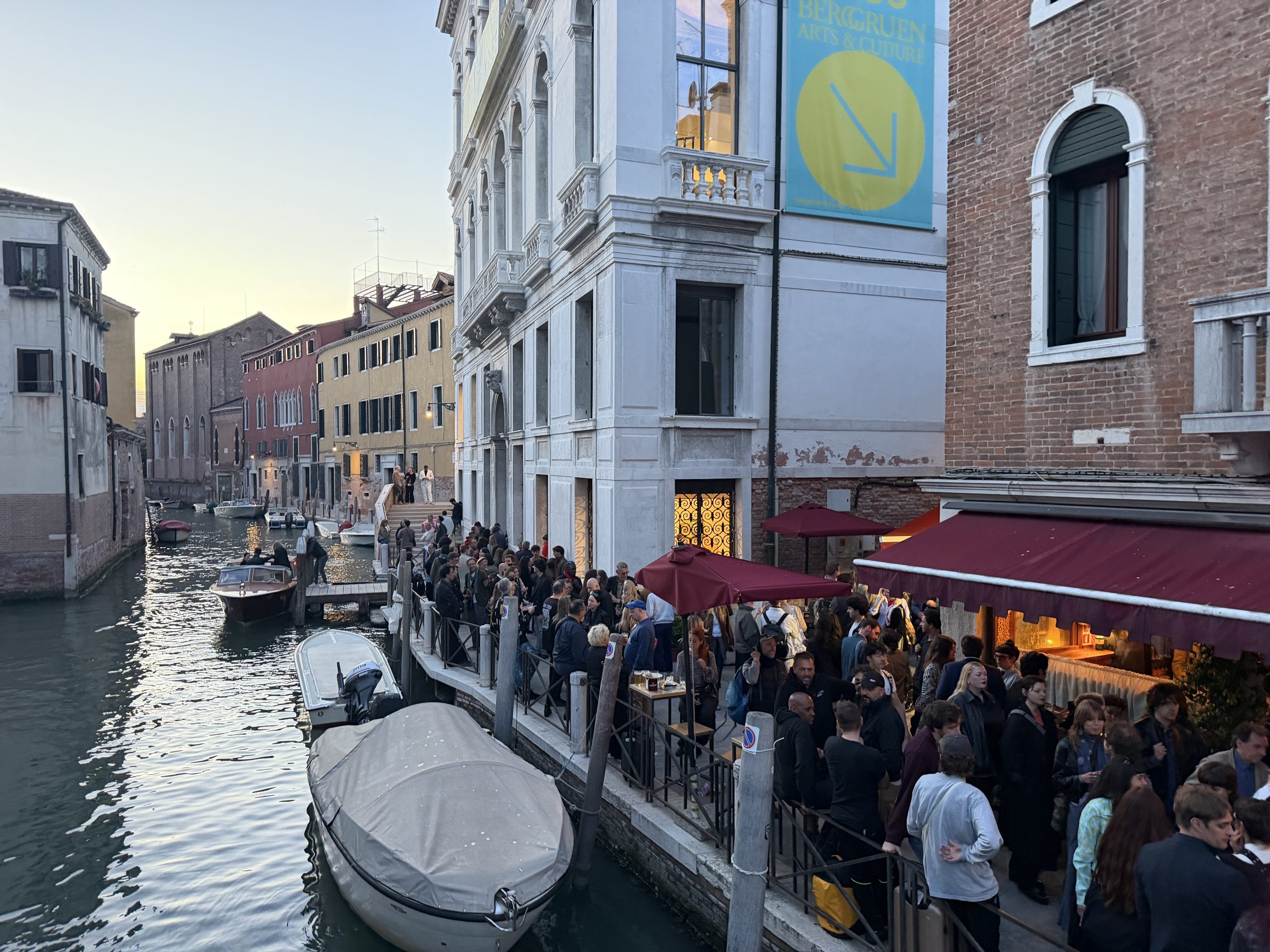
Artnet News reporter Katya Kazakina recounts her experience at the opening week of the 61st Venice Biennale, describing a whirlwind of art, parties, and chance encounters. Notable figures spotted include former MoMA director Glenn Lowry, singer-songwriter Jewel (who debuted her visual art show "Matriclysm: An Archaeology of Connections Lost"), and Japanese Nintendo heir and collector Banjo Yamauchi. High-profile events included Thaddaeus Ropac gallery's reception for Georg Baselitz's final paintings (priced up to $1.5 million) and François Pinault's annual party at Fondazione Giorgio Cini, attended by Selma Hayek, Lorna Simpson, and JR. The article also highlights the social dynamics of the biennale, where dealers, curators, and collectors network across historic palazzos and hotels.
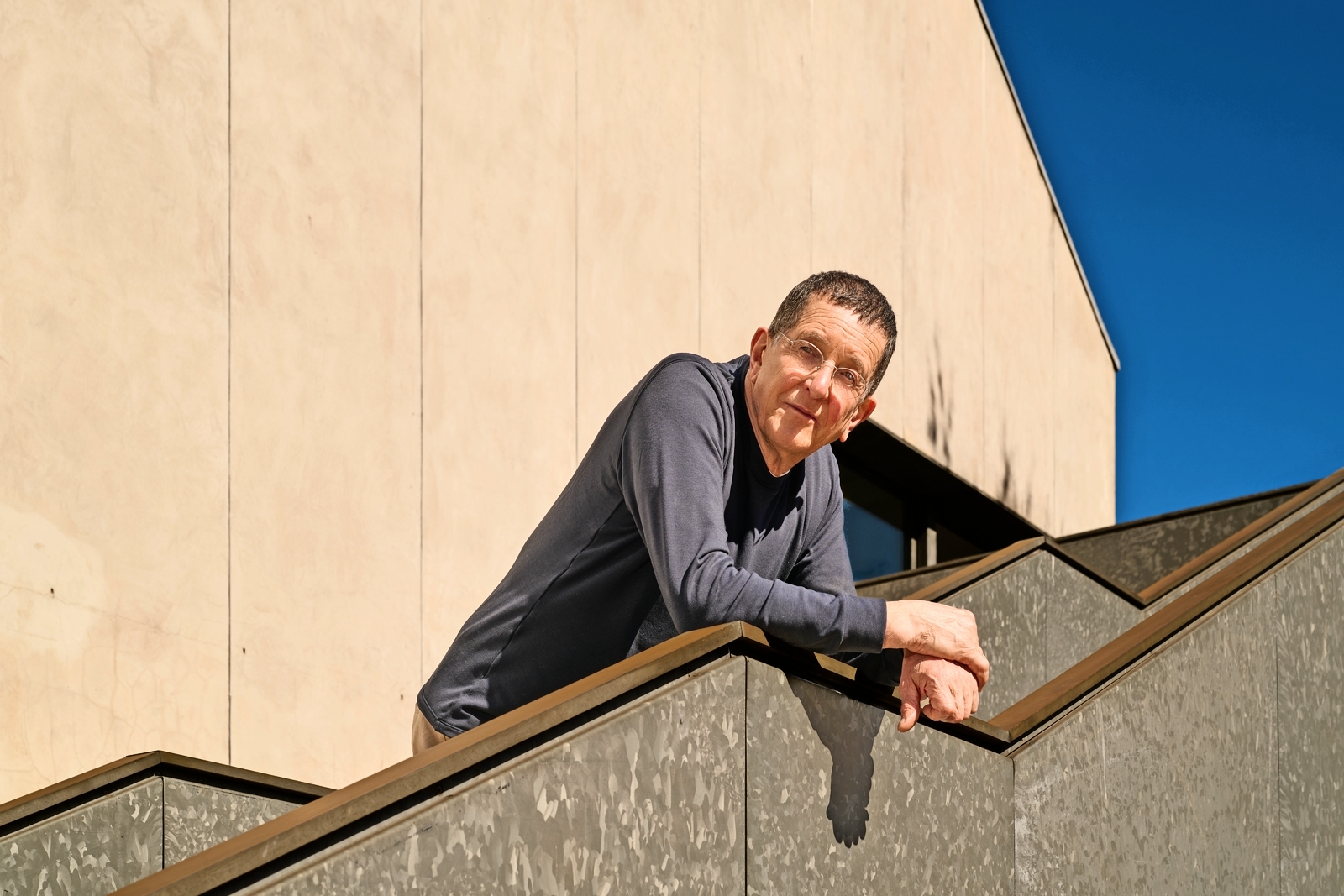
Antony Gormley: ‘Put a sculpture on the moon? No, that would be a bad idea’

Renowned British sculptor Antony Gormley is preparing for a major creative season, marked by two upcoming exhibitions at the Royal Museum of Fine Arts in Antwerp and Galleria Continua in San Gimignano, alongside the release of a new book dedicated to his drawings. Speaking from his David Chipperfield-designed studio in London, the artist reflects on his rigorous daily practice and his background in art history, contrasting his own ascetic, industrial aesthetic with the fleshy opulence of Flemish masters like Rubens.

Exhibition | Daniel Arsham, 'Eroded Horizon' at Baró Galeria, Palma, Spain

Baró Galeria presents 'Eroded Horizon', Daniel Arsham's fifth collaboration with the gallery and his second exhibition at its Mallorca location, as part of Art Palma Summer 2026. The show features recent and previously unseen works across sculpture, drawing, and painting, exploring themes of time, decay, and the intersection of body and landscape. Arsham employs materials like marble, sand, bronze, and charcoal to create forms that blend ancient and futuristic aesthetics, continuing his signature fictional archaeology.

Ancient Gaza artefacts meet contemporary Palestinian stories in Turin exhibition

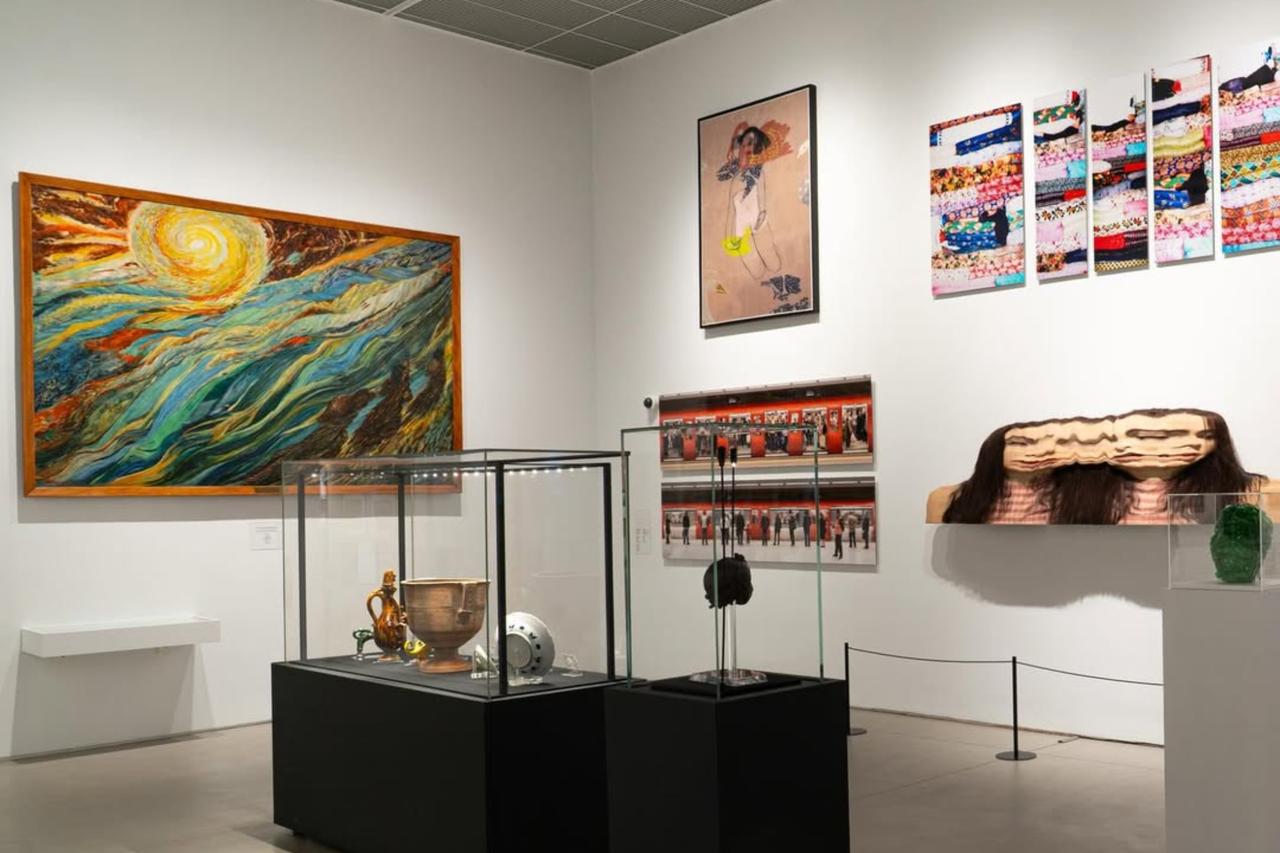
A new exhibition in Turin, Italy, titled "Gaza, The Future Has an Ancient Heart," brings together over 80 ancient artefacts from Palestine with contemporary works by Levantine artists. Organized by Fondazione Merz in collaboration with the Egizio archaeology museum and the MAH – Museum of Art and History Geneva, the show features objects dating from the Bronze Age to the Ottoman period, originally intended for a museum in Palestine but held in Geneva since 2007 due to conflict. Contemporary artists including Mirna Bamieh, Samaa Emad, Khalil Rabah, Vivien Sansour, Wael Shawky, Dima Srouji, and Akram Zaatari contribute works that explore archaeology, history, and memory, with Emad's "Genocide Kitchen" documenting recipes created amid war and shortages in Gaza.

A New Landmark Survey Aims to Bring Transparency to Museum Collecting Practices

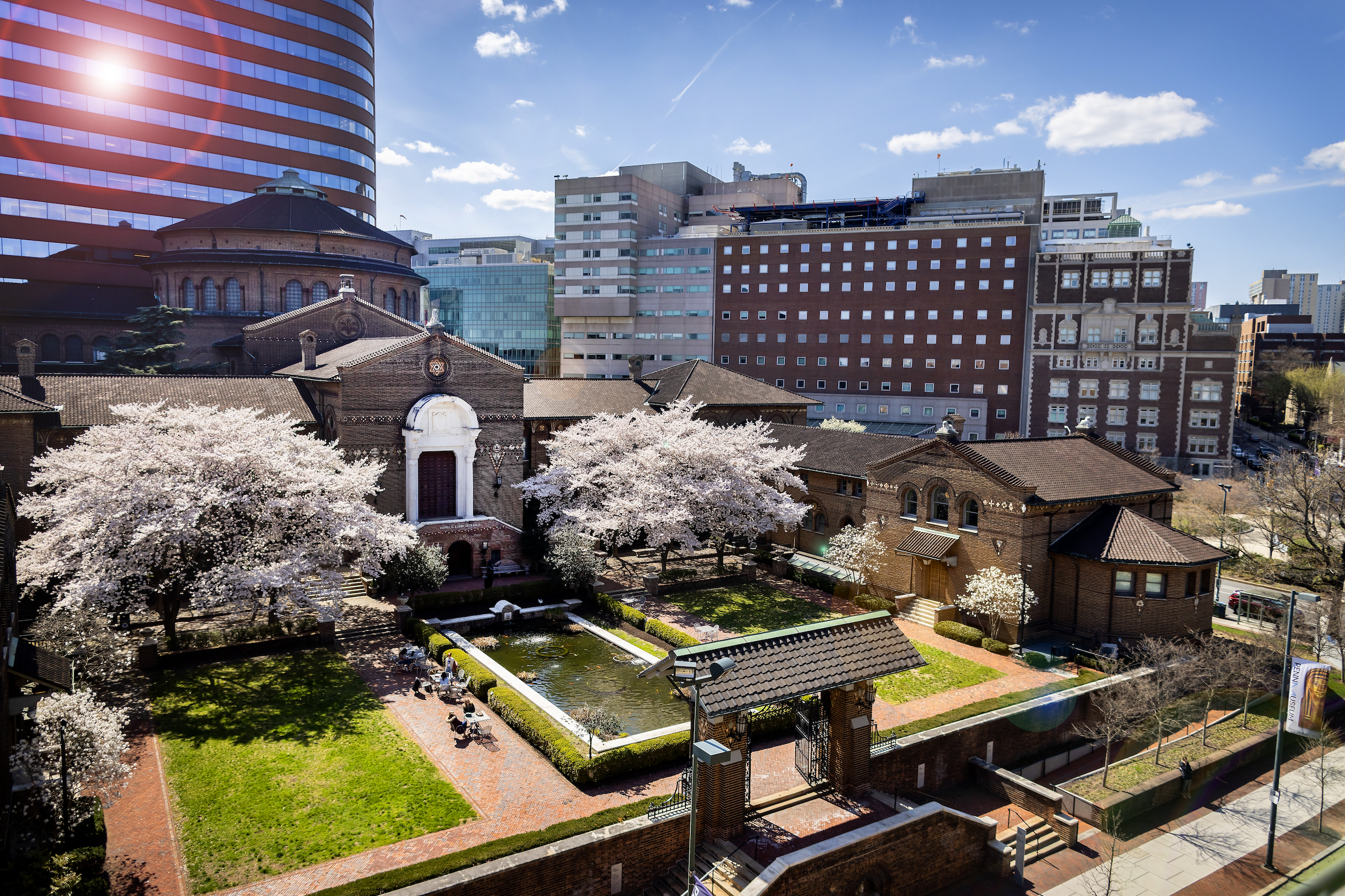
The Penn Cultural Heritage Center (PennCHC) at the University of Pennsylvania's Penn Museum will launch the National Survey of Museum Collecting Practices on May 20, running through August 20. This first-of-its-kind survey, part of the Museums: Missions and Acquisitions Project (M2A Project), will collect data on acquisitions, deaccessions, loans, provenance research, and policies from U.S. nonprofit museums and libraries. Results will be published in 2027, with only generalized insights to maintain anonymity.

"The Palestine Pavilion Exists, and It's in Turin": Interview on the Exhibition Dedicated to the History of Gaza at the Merz Foundation

“Il Padiglione della Palestina esiste, ed è a Torino”. Intervista sulla mostra dedicata alla storia di Gaza alla Fondazione Merz

The Merz Foundation in Turin is hosting the exhibition 'Gaza, il futuro ha un cuore antico. Materie e memorie del Mediterraneo' (Gaza, the future has an ancient heart. Matters and memories of the Mediterranean). The show, created in collaboration with the Egyptian Museum and the MAH – Musée d’art et d’histoire in Geneva, juxtaposes ancient archaeological artifacts from Gaza with contemporary artworks. It aims to present Gaza's history as a Mediterranean crossroads, moving beyond its current wartime representation. The exhibition features artifacts from a collection of about 500 pieces, temporarily held in Geneva, alongside works by contemporary artists like Samaa Emad, Mirna Bamieh, and Wael Shawky.

Dance Your Way to the Museum

Curator Naz Cuguoğlu argues in an opinion essay that museums should embrace the ethos of rave culture to become more welcoming and inclusive spaces, suggesting they can foster new forms of belonging. The article also covers several other art stories, including the discovery of pre-Hispanic rock art in Mexico that led to the rerouting of a train line, an exhibition of Genesis P-Orridge's mail art in Toronto, and artist Jean Shin's memorial project at Green-Wood Cemetery.

Turkey Notches Another Successful Restitution After Denver Art Museum Returns 1500-Year-Old Marble Head

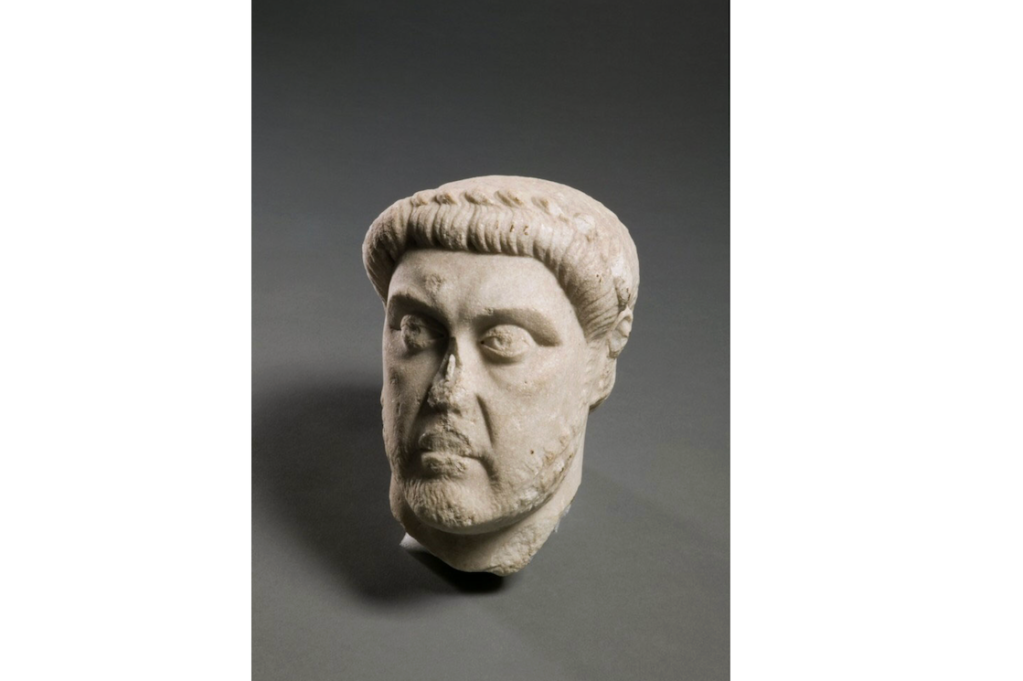
The Denver Art Museum has repatriated a 1,500-year-old marble head of a bearded man to Turkey, following a successful restitution claim. The sculpture, which dates back to the fifth century BCE, was originally unearthed in the agora of the ancient city of Smyrna (modern-day Izmir) and was likely trafficked illicitly before entering the museum's collection. The artifact is now on public display at the İzmir Archaeology Museum.

When archaeology was dominated by men | Letters

A reader named Elke Bachler writes a letter to The Guardian challenging a sentence in a review of Thomas Laqueur's book *The Dog's Gaze*. The review described a prehistoric scene as showing "a boy and a dog" standing together in wonder before cave art. Bachler argues there is no evidence the child was a boy, noting that archaeology has historically been dominated by men who interpreted evidence through contemporary gender roles.

Summer Exhibitions Coming to West Texas & the Panhandle

Art galleries and institutions across West Texas and the Panhandle have announced their summer exhibition schedules. Highlights include the El Paso Museum of Art's "From the Collection: Portraiture, 1903-2021," featuring works by César Martínez, Edward Curtis, and Andy Warhol; Ballroom Marfa's solo show "Raven Halfmoon: Flags of Our Mothers" with colossal stoneware sculptures; and The Grace Museum in Abilene's "Memory Painters: The Art of Memories," showcasing Texas intuitive painters. Other venues include the Rubin Center for the Visual Arts, the Louise Hopkins Underwood Center for the Arts in Lubbock, and the Museum of the Southwest in Midland, with exhibitions spanning portraiture, student art, memory painting, and immersive installations.

Art as Collective Responsibility: Hestia Artistic Journey Grant Programme Winners

The Hestia Artistic Journey National Grant Programme (Artystyczna Podróż Hestii) has announced the winners of its third edition, selecting eight projects from nearly 200 applications across Poland. The programme, subtitled "Opening Time" (Czas otwarcia), supports artists and cultural institutions planning exhibitions that address collective responsibility for global issues. Winners include "Ślady pamięci" by Fundacja Szałfynster in Katowice, exploring memory and dementia; "Głodne drzewa/Thirsty Trees" by Przemek Branas at the Central Museum of Textiles in Łódź, critiquing human greed through eucalyptus metaphors; and "Tymczasowa pława" by Norbert Delman at the State Art Gallery in Sopot, an installation on ecocide using a sunken fishing boat and amber. Each project will present an exhibition between July 2026 and the last quarter of 2027, with increased funding due to exceptional submissions.

Museum Moves 1 – 7 May 2026

Tate has appointed Daisy Desrosiers as its Britton Family Curator at Large, North America, based in the US, focusing on developing North American art in Tate’s collection through research and acquisitions. Meanwhile, Lycia Lobo, chief operating officer at the Design Museum, has been confirmed as chair of the board of trustees of Chiswick House & Gardens Trust. Several new exhibitions are opening across UK museums, including 'Colour' at the Royal Albert Memorial Museum & Art Gallery in Exeter, 'Aleksandra Kasuba: Shelters for the Senses' at Tate St Ives, 'Wildlife Photographer of the Year' at Brighton Museum & Art Gallery, and 'Helios' by Luke Jerram at National Museum Cardiff. Additionally, the Museum of Archaeology at Palace Green Library has received a £217,844 grant from The National Lottery Heritage Fund for gallery redevelopment.

Larissa Sansour: Rogue Agents of History

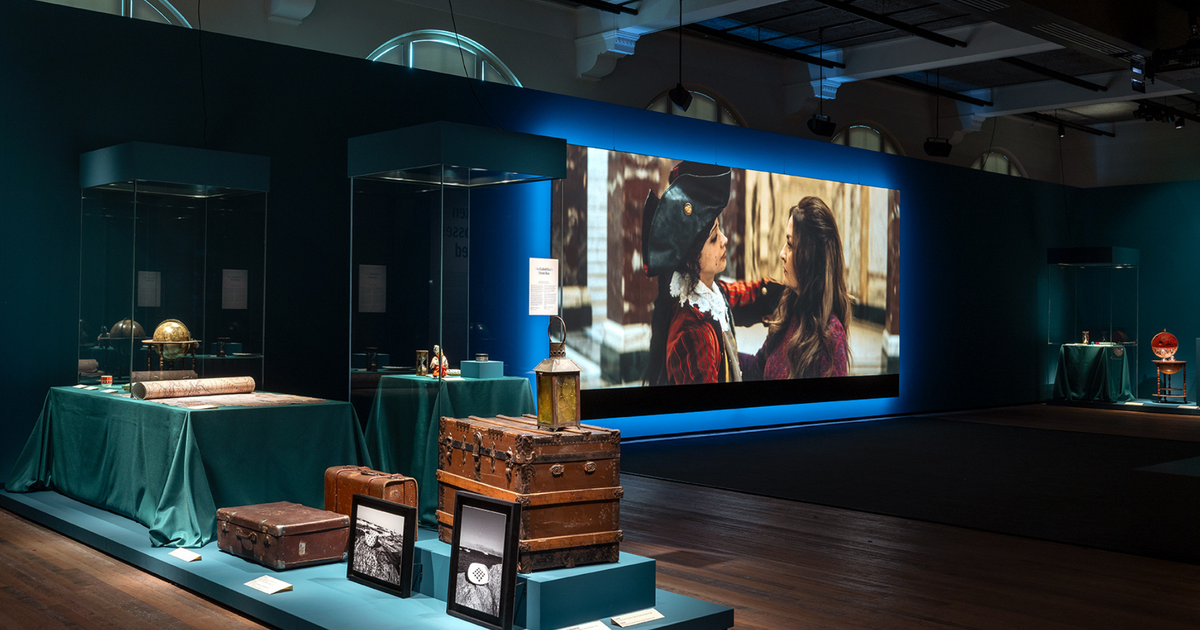
Wereldmuseum Amsterdam is presenting "Rogue Agents of History," the first solo exhibition in the Netherlands by Palestinian artist Larissa Sansour. Running from April 24 to September 27, 2026, the show features three films—including the premiere of "A Sunken Tale of Losses Delayed" commissioned by the museum—alongside Sansour's artworks, personal heirlooms, film props, and historical objects. Curated by Nat Muller, the exhibition explores themes of identity, memory, belonging, and loss through a science-fiction lens, drawing on the Palestinian context and blurring boundaries between fact and fiction.

Coming to campus this spring? Check out these exhibitions.

The University of Chicago is hosting a diverse slate of art exhibitions across its campus this spring. Highlights include 'A Bestiary of Ancient Nubia' at the Institute for the Study of Ancient Cultures, 'Beyond Boundaries: Three Decades of Contemporary Chinese Art' and 'Composing Color: Paintings by Alma Thomas' at the Smart Museum of Art, the photography exhibition 'Black Culture in Chicago' at the Logan Center, and 'History on the Edges: Michel-Rolph Trouillot’s Caribbean' at the Regenstein Library.

Historic Istanbul exhibition reveals century of growth and creative vision

Yapı Kredi Culture Arts and Publishing has opened a landmark exhibition in Istanbul titled "Imprints on the Century: The Koç Group and the Arts," running until November 29, 2026, at the Yapı Kredi Culture Center in Galatasaray. Curated by YKYM Gallery Director Didem Yazıcı over two years, the show commemorates the 100th anniversary of the Koç Group, tracing its evolution from a small business registered by Vehbi Koç in 1926 to a global industrial conglomerate. The exhibition draws on archives from the Sadberk Hanım Museum, Arter, and the Rahmi M. Koç Museums, highlighting the group's contributions to archaeology, museology, contemporary art, publishing, and theater, including milestones like the first color film in Turkey and the Bauhaus-inspired Küçük Sahne theater.

Director of the Hermitage Museum Sanctioned by the European Union

Le directeur du Musée de l'Ermitage sanctionné par l'Union européenne

The European Union has imposed sanctions on Mikhail Piotrovsky, the 81-year-old director of the State Hermitage Museum in Saint Petersburg, as part of its 20th sanctions package against Russia. Piotrovsky was blacklisted for supporting the war in Ukraine and overseeing illegal archaeological excavations in occupied Crimea. The EU cited his use of Kremlin war rhetoric—calling the museum's exhibition policy a "cultural special operation"—and the Hermitage's role in incorporating Ukrainian cultural objects from occupied territories into Russia's state museum fund. Additionally, under his leadership, unauthorized digs were conducted at the ancient Greek site of Myrmekion in Crimea, led by Hermitage archaeologist Alexander Butyagin, who was arrested in Warsaw and later released in a prisoner exchange.

8 musées incontournables à visiter à Montréal

Montréal, a UNESCO City of Design, is home to a wealth of cultural institutions. This article highlights eight must-visit museums, including the Musée des Beaux-Arts de Montréal (the city's largest art museum, with nearly 47,000 works from antiquity to today), the Musée McCord Stewart (a centennial museum focusing on Canadian history and Indigenous voices), the Écomusée du Fier Monde (dedicated to working-class history and eco-design), and Pointe-à-Callière (an archaeology and history museum built on the city's original foundations). Each museum offers a unique perspective on art, history, and society.

19th-century European weapons found in cenote in Mexico

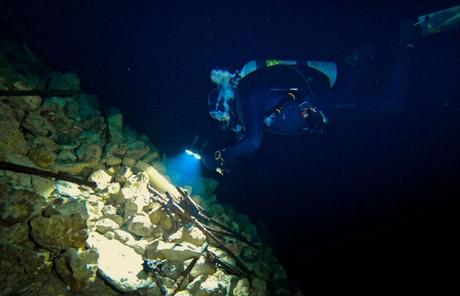
Archaeologists from Mexico's National Institute of Anthropology and History (INAH) have discovered 153 Spanish and British muskets and rifles, along with an iron cannon, in the Síis Já cenote beneath the 16th-century former convent San Bernardino de Siena in Valladolid, Mexico. The weapons were likely discarded by the Yucatecan government during the early years of the Caste War of Yucatán (1847-1901) to prevent them from falling into Maya rebels' hands. The site also yielded Maya ceramic pieces and 18th-century Chinese porcelain, and INAH reported debris and pollution affecting the cenote.

1,000-year-old archaeological site bulldozed during construction of Mexico-US border wall

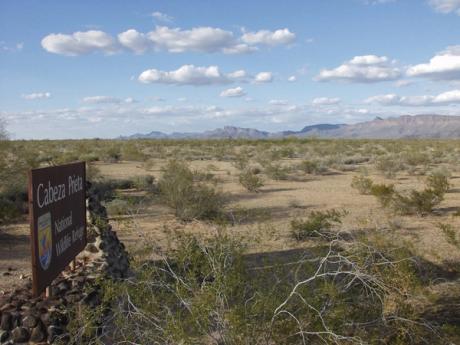
On 24 April, a Department of Homeland Security contractor bulldozed a 1,000-year-old intaglio—a 280ft by 50ft etching in the desert sand—during construction of the US-Mexico border wall in Arizona's Cabeza Prieta National Wildlife Refuge. The site, sacred to local Indigenous communities including the Hia-Ced O’odham, was part of a UNESCO biosphere and contained over 3,000 petroglyphs. Despite warnings from tribal members and refuge staff, the contractor destroyed a 70ft stretch of the fish-shaped intaglio, which elders and archaeologists describe as an irreplaceable cultural and archaeological treasure.

Metal Detectorists Unearth Norway’s Largest-Known Viking Coin Hoard

Two hobbyist metal detectorists, Rune Sætre and Vegard Sørlie, discovered Norway's largest-known Viking Age coin hoard in a field in Østerdalen, east-central Norway. Starting with 19 silver coins on April 10, the find grew to over 3,250 coins dating from the 980s to the 1040s, surpassing the previous record of 1,800 coins found in the 1800s. The hoard includes coins minted under Æthelred the Unready, King Cnut, and Holy Roman Emperor Otto III, as well as early Norwegian coins from after Harald Hardråde's return from Byzantium. The coins have been transferred to the Museum of Cultural History in Oslo for expert analysis.

Seven-Foot-Tall Monument to Ramses II Discovered in Eastern Nile Delta Region

Archaeologists in Egypt have discovered the upper half of a 7-foot-tall statue of Ramses II at the site of Tell El-Faraoun in the eastern Nile Delta. Weighing over 5 tons, the fragment is believed to have originally been carved for a temple in the ancient capital of Per-Ramesses and was later relocated. The find was announced by the Egyptian Ministry of Tourism and Antiquities, with Hisham El-Leithy of the Supreme Council of Antiquities noting its importance for understanding how statues were moved and reused during the New Kingdom.

Ruins of a ‘Unique‘ Temple Complex Discovered in Northern Sinai

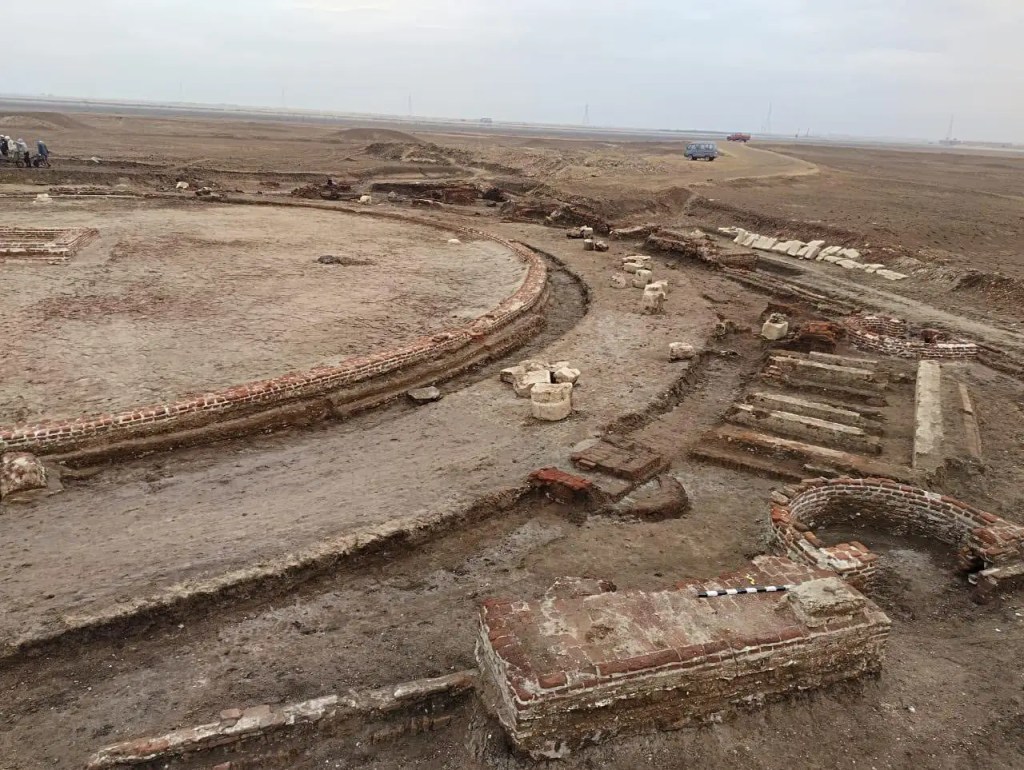
An Egyptian archaeological mission has unearthed a unique temple complex at Tell el-Farama, the site of the ancient city of Pelusium in northern Sinai. The discovery features a massive circular water basin, approximately 100 feet in diameter, surrounded by drainage channels and a central plinth likely intended for a statue. Initially mistaken for a civic building when first excavated in 2019, further study has revealed the site to be a sacred water installation used for religious rituals between the 2nd century BC and the 6th century AD.

Petroglyphs and cave paintings, some more than 4,000 years old, discovered in Mexico

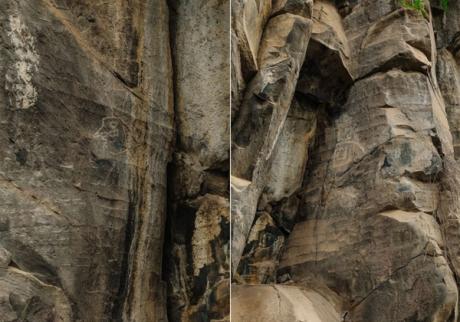
Archaeologists from Mexico’s Instituto Nacional de Antropología e Historia (INAH) have identified 16 petroglyphs and cave paintings near the Tula River in Hidalgo. The artworks span over 4,000 years, ranging from prehistoric times through the Mesoamerican Postclassic period and into the early colonial era. The discovery, which includes depictions of the rain god Tláloc and various anthropomorphic figures, was made during archaeological salvage work for a new passenger rail line connecting Mexico City and Querétaro.

Shakespeare’s London Home Finally Located After Centuries of Mystery

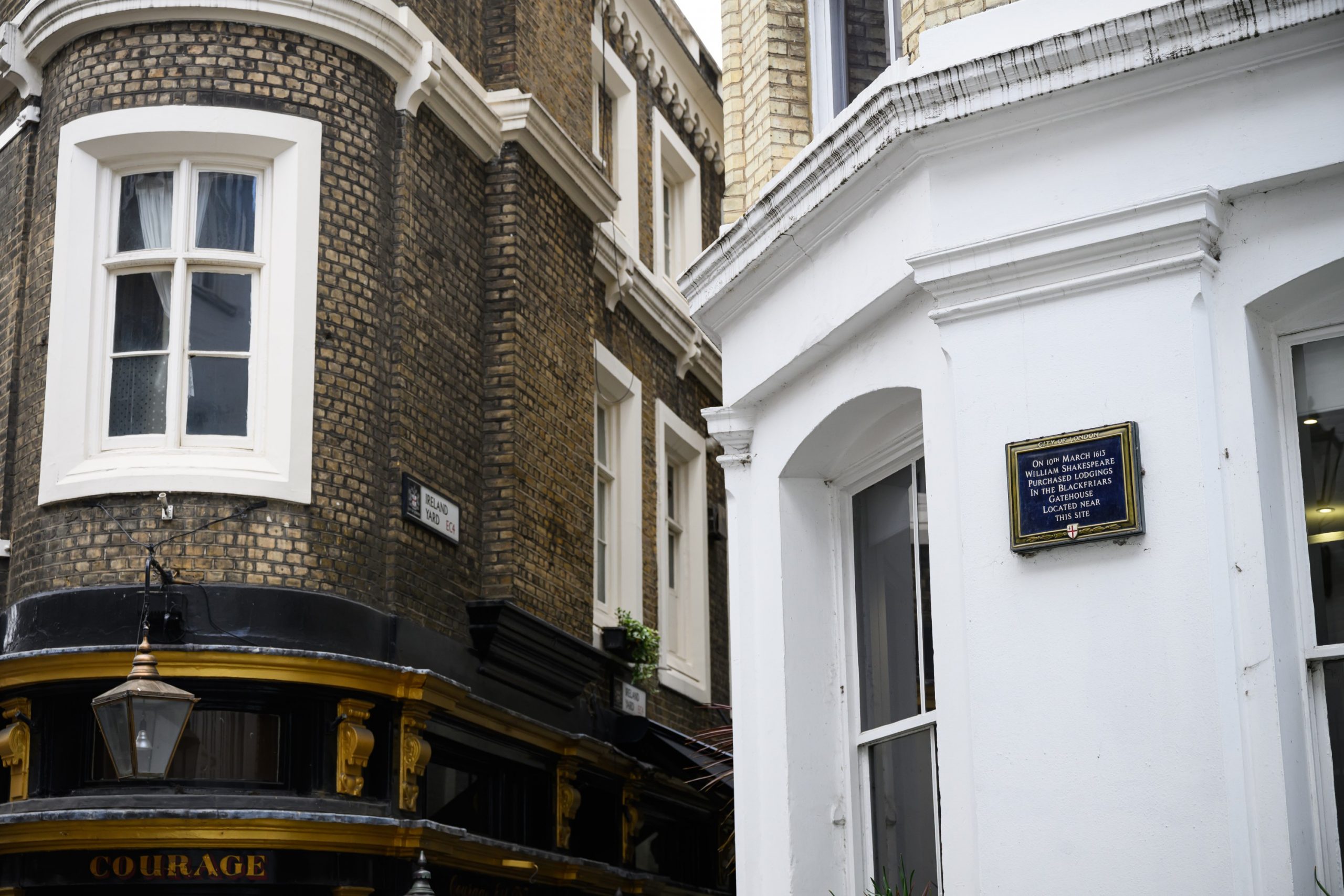
Scholar Lucy Munro of King’s College London has identified the precise location of William Shakespeare’s only owned London home in the Blackfriars neighborhood. By analyzing a 1668 property map created after the Great Fire of London, Munro pinpointed the site—now occupied by Ireland Yard and St. Andrew’s Hill—which was previously known only through vague historical references to the Blackfriars Gatehouse.

Q&A: Laura Pass Barry

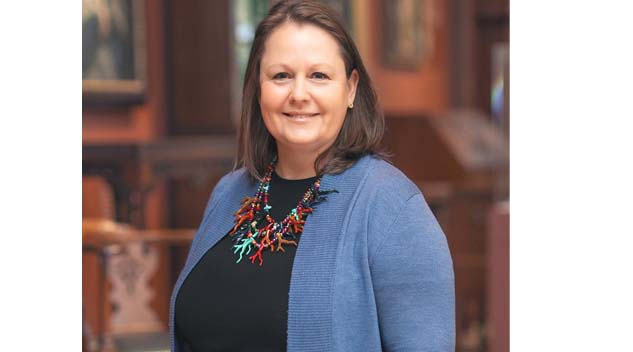
Laura Pass Barry has been appointed the Carlisle H. Humelsine chief curator at Colonial Williamsburg, a role that expands her responsibilities to include leadership of Collections, Conservation and Museums as vice president. Barry began her career at Colonial Williamsburg over 30 years ago as a curatorial intern in folk art, later working as assistant curator to Margaret Pritchard and eventually overseeing the graphics, paintings, and folk art collections. She holds degrees from the College of Wooster and the College of William & Mary.

Mexico to Divert Train Route After Cave Art Discovery

Archaeologists in Mexico discovered 16 pre-Hispanic paintings and petroglyphs along the planned route of a high-speed passenger train connecting Mexico City to Querétaro. The discovery, made in the state of Hidalgo, includes rock art dating from 4,000 years ago to the Postclassic period (900-1521 CE), with imagery linked to Aztec deities and the Toltec city of Tula. In response, President Claudia Sheinbaum announced the $8 billion train project will be rerouted to preserve the ancient site.

GABRIEL CHAILE UNFOLDS HIS ARCHAEOLOGY OF MIGRATION IN LONDON

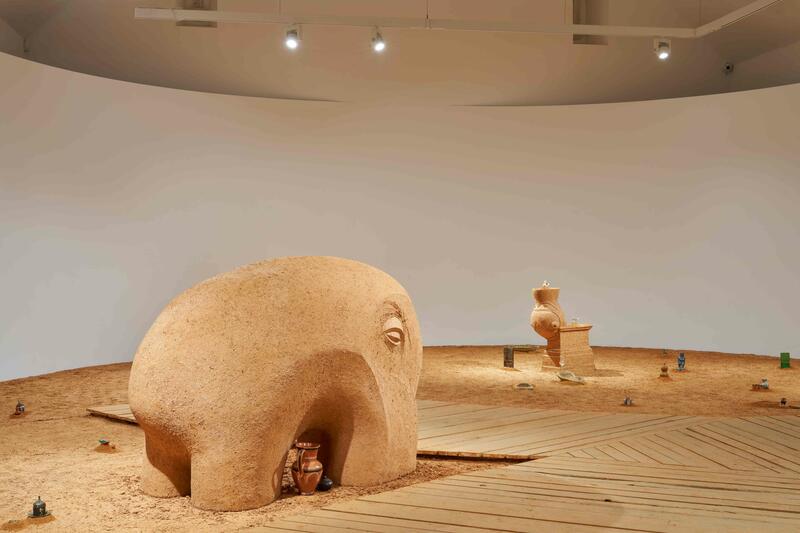
Argentine artist Gabriel Chaile has opened a new commission titled "Archaeology of Memory" at London's Whitechapel Gallery. The site-specific installation features monumental adobe sculptures that incorporate everyday and decorative objects sourced from the surrounding East End neighborhood. Chaile, who is based in Lisbon, draws on the material traditions of Indigenous communities from northwest Argentina, blending roles as artist, anthropologist, and storyteller to explore themes of migration, identity, and cultural memory.

GABRIEL CHAILE DESPLIEGA SU ARQUELOGIA DE LO MIGRATORIO EN LONDRES

Argentine artist Gabriel Chaile has opened a new commission titled "Archaeology of Memory" at the Whitechapel Gallery in London. The site-specific installation transforms a large gallery space into an archaeological excavation site, incorporating everyday and decorative objects sourced from the surrounding East End neighborhood. These objects are embedded into monumental adobe sculptures that draw on the forms and material traditions of Indigenous communities from northwest Argentina, where Chaile originates. The artist acts as both anthropologist and storyteller, exploring a "genealogy of form" that traces recurring motifs across cultures and time.

Egypt Unveils a Hidden Tomb of 3,500-Year-Old Coffins at Luxor’s Abu el-Naga

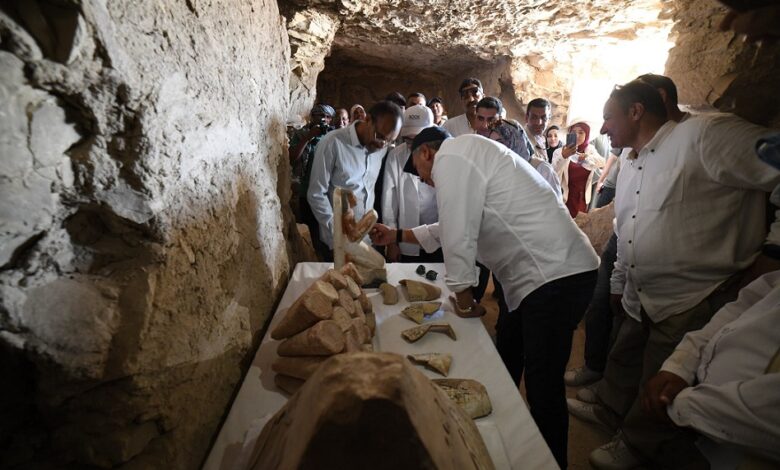
An Egyptian archaeological mission excavating at the Abu El-Naga necropolis near Luxor has uncovered a cache of ten well-preserved painted wooden coffins hidden in the courtyard shaft of the tomb of Baki. The coffins span multiple periods, including the 18th Dynasty, the Ramesside period, and the Late Period, with inscriptions naming individuals such as Merit, a chantress of the god Amun, and Padi-Amun, a priest in the Temple of Amun. The team also discovered the tomb of a purification priest named A-Shafi-Nakhtu, decorated with funerary scenes, and a burial site containing over 30 mummified cats from the Ptolemaic Period. The discoveries were announced by Egypt's Supreme Council of Antiquities, with the excavation season beginning in November 2025.

Israel Advances Bill Granting Sweeping Civilian Authority over West Bank Archaeological Sites

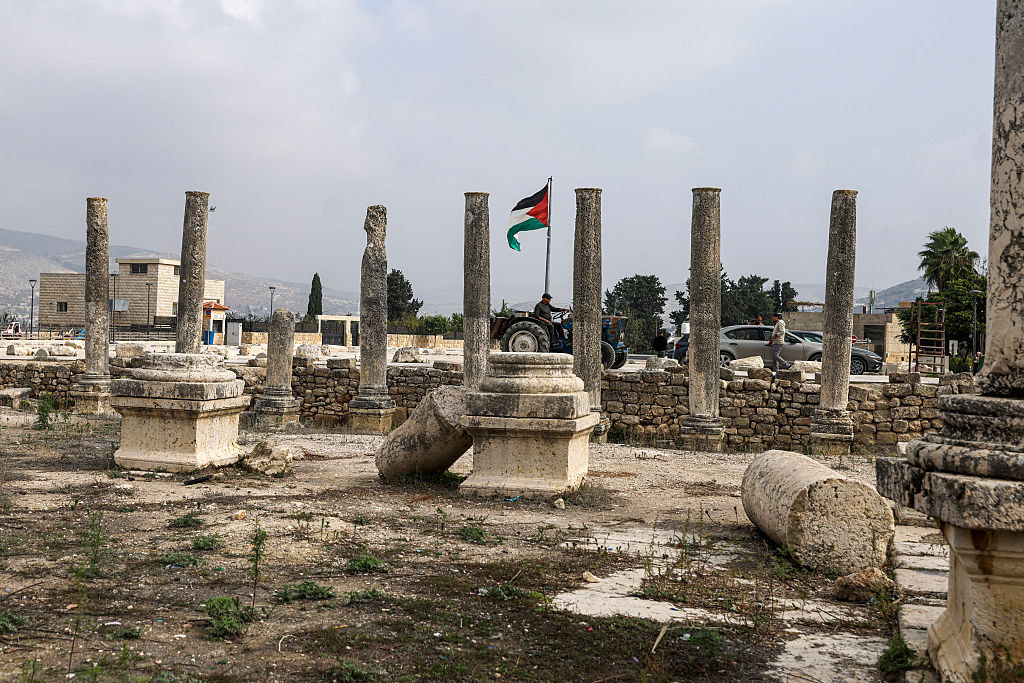
Israel advanced a bill on Tuesday that would grant sweeping civilian authority over antiquities and archaeology in the occupied West Bank, replacing the current military-run system. The Likud-backed legislation would create a "Judea and Samaria Heritage Authority" under the Israeli heritage minister, empowered to purchase and expropriate land, oversee excavations, and manage heritage sites across Areas B and C of the West Bank. The bill passed its first of three votes (23-14) and would be led by Amichai Eliyahu, a far-right politician who advocates for annexation. Human rights groups and the Israeli NGO Emek Shaveh warned the move amounts to de facto annexation and a violation of Palestinian rights.