filter_list Showing 80 results for "censorship" close Clear
search
dashboard All 80 museum exhibitions 34article news 27article culture 9article policy 4article local 3rate_review review 1candle obituary 1person people 1
date_range Range Today This Week This Month All
Subscribe

Georg Baselitz obituary

Georg Baselitz, the German painter and sculptor known for his provocative, expressionistic works and his iconic upside-down paintings, has died at the age of 88. The article traces his life from his childhood in war-torn Germany, through his early career as a rebellious artist in divided Berlin, to his rise as an international art star. It highlights his 1961 manifesto poster "Pandemonium I," his rejection of American abstraction, and his controversial 1963 exhibition that was raided by police for its explicit content.
Artists v fascists, Khmer Rouge horrors, fab flowers and an eye-popping nude – the week in art

This week's art roundup from The Guardian features a major exhibition at Towner Eastbourne titled 'Comrades in Art: Artists Against Fascism,' which examines how artists, poets, and intellectuals used their work to resist the rise of extremism in 1930s Europe, drawing on the history of the Artists International Association (AIA). Other highlights include 'Hidden: Photography and Displacement Under the Khmer Rouge' at The Wiener Holocaust Library in London, a show of early Netherlandish drawings at the British Museum, Katharina Grosse's colorful installations at White Cube, and a flower-themed survey at Kettle's Yard. The image of the week is Sylvia Sleigh's 1963 portrait 'The Bridge (Johanna Lawrenson),' part of a new exhibition of the Welsh artist's work. The article also covers news items such as Lydia Ourahmane's Venice Biennale installation, a Holbein portrait mystery, a restored stained-glass window by Edward Burne-Jones and William Morris, and Anish Kapoor's call to exclude the US from the Venice Biennale due to 'politics of hate.'

Venice Biennale 2026: all the national pavilions, artists and curators so far

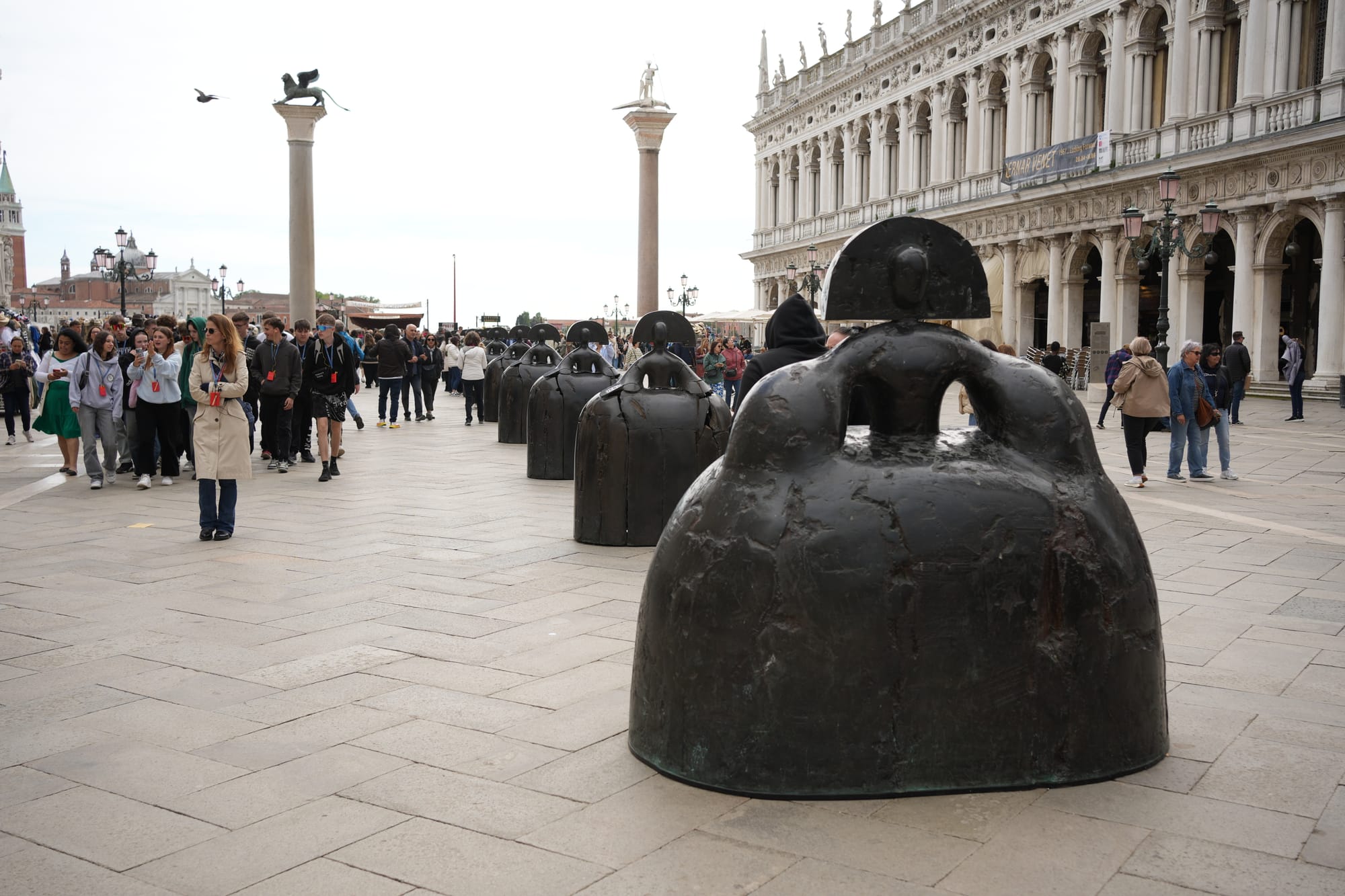
The 61st edition of the Venice Biennale, the world's oldest and most prestigious art biennial, will open on 9 May 2026 and run through 22 November. The main exhibition follows the curatorial plan of the late Koyo Kouoh, while national pavilions have been announcing their participating artists and organizers. The article provides a comprehensive list of confirmed pavilions so far, including artists such as Genti Korini (Albania), Matías Duville (Argentina), Khaled Sabsabi (Australia), Florentina Holzinger (Austria), Faig Ahmed (Azerbaijan), and many others, with details on venues and organizers.

2026 Venice Biennale pavilions: your go-to list [Updated]

ArtReview has compiled a running list of national pavilions for the 61st Venice Biennale, running from 9 May to 22 November 2026. The Biennale was set to be curated by Koyo Kouoh, who died on 10 May 2025. Recent announcements include Haitham Al Busafi representing Oman, Genti Korini representing Albania with a three-channel video installation titled 'A Place in The Sun (still)', and Matías Duville representing Argentina with an interactive salt-and-charcoal installation. The Australia Pavilion will feature artist Khaled Sabsabi and curator Michael Dagostino, who were initially dropped due to controversy over Sabsabi's 2007 film 'You' but later reinstated. Florentina Holzinger will represent Austria with a water-themed performance.

10 Must-See Shows During the Venice Biennale 2026

The 2026 Venice Biennale is embroiled in multiple controversies, including the cancellation and reinstatement of Australia's representative artist Khaled Sabsabi, ongoing calls to bar Israel from participating, criticism over allowing Russia to participate, and mounting voices to exclude the U.S. in response to President Donald Trump's actions in Iran. Despite these disputes, the article highlights that many of the city's most exciting shows will take place away from the main Biennale venues.

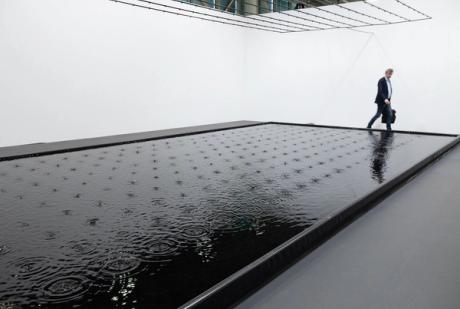
What does a woman swimming in urine tell us about the state of the world? Lots! – Venice Biennale review

The 2026 Venice Biennale, curated by the late Koyo Kouoh under the theme "In Minor Keys," has been plagued by months of turmoil including countries withdrawing, artists being fired, exhibitions cancelled, funding pulled, and protests during the preview. A five-person curatorial team took over after Kouoh's death, resulting in what the critic describes as a disjointed, committee-driven exhibition that prioritizes quiet contemplation and healing over direct political engagement. The central shows in the Giardini and Arsenale feature a vast, poorly explained array of art from the global south, with installations of ceramics, textiles, slide projectors, and serene natural scenes that the critic finds anachronistic and dull.

It’s the Most Controversial Venice Biennale in Years. Can the Art Stand Up to the Noise?

The 2026 Venice Biennale is embroiled in controversy, with the US Pavilion at the center of a political storm. The Trump administration's State Department overhauled the selection process, bypassing the usual NEA panel and commissioning a nonprofit, the American Arts Conservancy, to organize the pavilion. Artist Alma Allen, who accepted the invitation despite threats from galleries and curators, presents a show that critics find politically muted. The Biennale's jury resigned days before the opening, and annual prizes were canceled, adding to the turmoil.

Hungary’s New Minister of Culture Vows to Restore Artistic Freedom, Turner’s Famous ‘Self-Portrait’ Called Into Doubt, and More: Morning Links for May 14, 2026

An expert claims that the iconic self-portrait of J.M.W. Turner, which hangs in Tate Britain and appears on British £20 notes, was not actually painted by Turner. James Hamilton, a Turner scholar, argues the work was misattributed when it entered the Turner Bequest and may instead be by Turner contemporary John Opie. Meanwhile, Hungary’s new Minister of Culture, Zoltán Tarr, vows to restore artistic freedom and dismantle political control over cultural institutions following the election of Prime Minister Peter Magyar. The Trump administration is proceeding with construction of a contested Triumphal Arch and a White House ballroom, and a former Louvre employee has been charged in a ticket fraud scandal.

On Paranoid Time

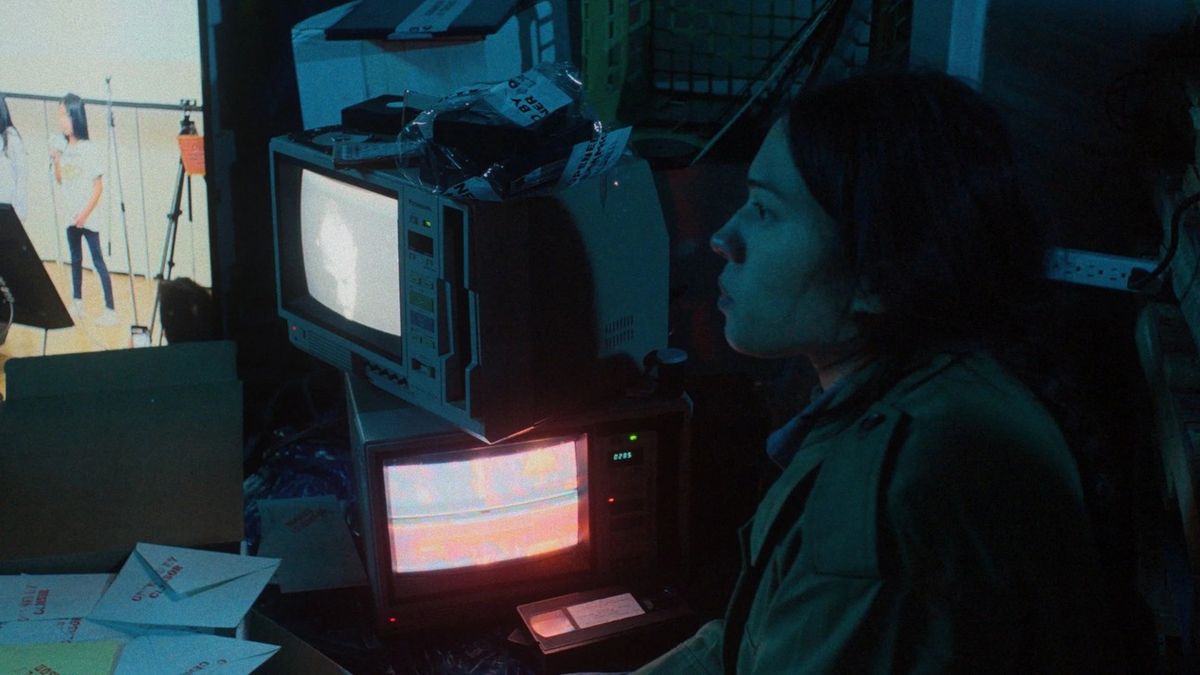
Film Notes has published Qingyuan Deng's essay exploring the intersection of Lacan's concept of retroactive meaning and Eve Kosofsky Sedgwick's distinction between paranoid and reparative reading, as applied to recent artists' films and moving-image installations. The essay examines how works like Alison Nguyen's installation "Perforation, Ellipse" at New York's Storefront for Art and Architecture use cinematic techniques—such as perforations, splices, and missing scenes—to hold the temporal gap between an event and its belated political comprehension, focusing on the censorship of Vietnamese bolero songs after the American War.

Shirin Neshat's Venice exhibition explores identity, exile and a social media tragedy

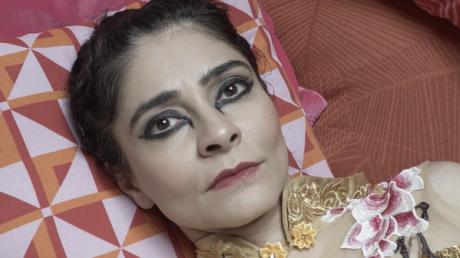
Shirin Neshat presents a new film trilogy, *Do U Dare!*, at the 16th-century Palazzo Marin in Venice alongside the Biennale. The work explores exile, fractured identity, and power through a female protagonist whose public isolation transforms into empowered expression in private. The trilogy is directly inspired by the story of Nasim Aghdam, an Iranian American known as the 'YouTube Shooter,' who in 2018 attacked YouTube's headquarters before taking her own life. Neshat interprets Aghdam's double life as a recluse and a social media star, focusing on the unstable boundary between self and performance in digital culture.

A Brief History of Protest at the Venice Biennale

The article provides a historical overview of protest actions that have taken place at the Venice Biennale, tracing key moments of political and social dissent within the prestigious international art exhibition. It highlights instances where artists, activists, and participating nations have used the Biennale as a platform to challenge authority, address censorship, and critique global issues, from the 1968 student protests to more recent controversies involving national pavilions and institutional policies.

Hyperallergic’s Guide to the 2026 Venice Biennale

Hyperallergic has published its guide to the 2026 Venice Biennale, detailing what to see and do at this year's edition. The guide covers the three main categories of the Biennale—the Giardini with 29 permanent national pavilions, the Arsenale with temporary rented spaces, and collateral events across the city. Key developments include the return of Russia to its permanent Giardini pavilion and Israel's participation with a new contractual stipulation preventing its artist from closing the pavilion, after Ruth Patir's protest in 2024. South Africa withdrew following the cancellation of Gabrielle Goliath's video installation 'Elegy,' which mourns victims of Israel's genocide in Gaza and will now be shown at a historic church. The United States will be represented by Alma Allen after Barbara Chase-Riboud stepped down, and Qatar is set to become the first country in decades to build a new pavilion in the Giardini.

Required Reading

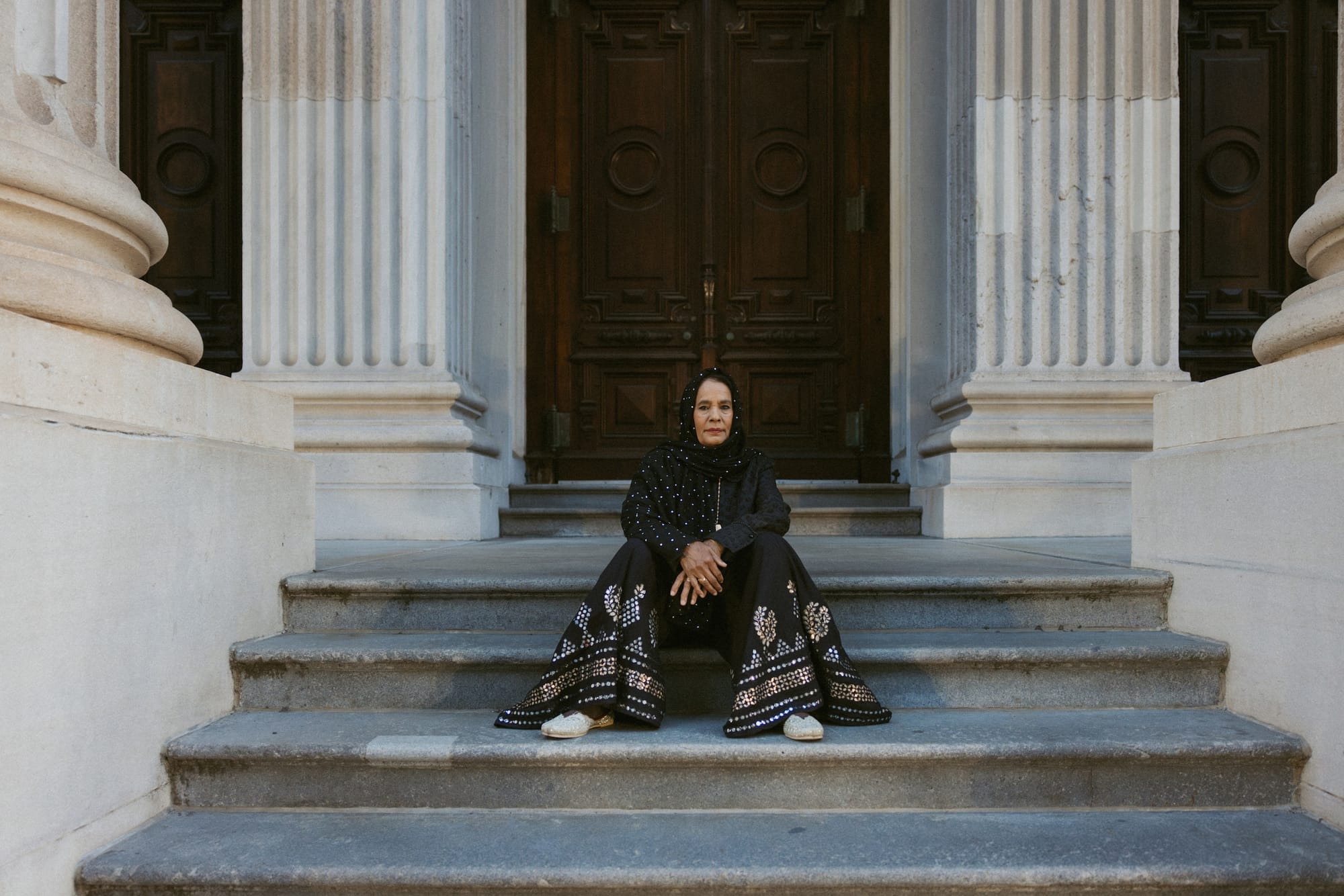
Pakistani-born, Brooklyn-based tailor and community leader Hafeez Raza was honored by Mayor Zohran Mamdani as one of six garment workers photographed by Kara McCurdy, highlighting the real faces behind the fashion industry. Meanwhile, the Los Angeles Times's Image Editor-in-Chief Elisa Wouk Almino recounts a peculiar correspondence with artist Sophie Calle, who orchestrated a fake but real exchange using pre-written texts. In other news, Ai Weiwei discusses his new exhibition in Italy, censorship in Europe, and the Venice Biennale in an interview with El País. Additionally, Jacci Gresham, the first professional Black tattoo artist in the United States, reflects on her career since 1976, including tattooing Klan members and innovating with brown paper for Black and Brown clients.

Previews: 61st Venice Biennale: In Minor Keys

The 61st Venice Biennale, titled "In Minor Keys" and curated by the late Koyo Kouoh, opens amid global turmoil and internal controversy. Kouoh, who passed away in May 2025, conceived the exhibition around the metaphor of a "creole garden," emphasizing deep affinities between 111 artists from diverse locations such as Dakar, Beirut, and Salvador. The Biennale is overshadowed by recent geopolitical events, including US-Israeli airstrikes on Iran, and faces protests: over 70 participating artists signed an open letter opposing the participation of Israel, Russia, and the US, while the Australian pavilion saw the reinstatement of Khaled Sabsabi after being dropped, and South Africa withdrew its official pavilion over Gabrielle Goliath's femicide project, which she will still present independently.

After the Afterparty: Berlin Art Tests Its Pulse during Gallery Weekend

Gallery Weekend Berlin took place from late April into early May, drawing large crowds despite ongoing concerns about the city's declining art-market relevance. The weekend kicked off with early previews on Wednesday, including Alex Heide's solo exhibition "the darkroom beams horizons" at the new space Klix, and continued with events at Sprüth Magers, the Between Bridges Foundation, and the hidden venue CHB Fine Arts, which featured works by Nairy Baghramian, Jack O'Brien, Sofia Duchovny, Ilya Lipkin, and Mania Godarzani-Bakhtiari. Friday, coinciding with May Day, saw gallery visits at Molitor and KOW, where Ketuta Alexi-Meskhishvili and Candice Breitz presented solo shows.

11 can’t-miss art shows to see in Phoenix this spring

Phoenix is hosting a diverse array of spring art exhibitions across the city. Highlights include the 19th Annual Erotic Art Show at Exposed Gallery, Amy Menousek's feminist fiber work at Five15 Arts, Rachel Rinker's interactive sound and painting show at Tempe Center for the Arts, a group show of Japanese artists in Arizona at Shemer Art Center, and the "Art is History" exhibition at Lisa Sette Gallery, which critically examines art historical narratives.

Across Venice, Artists Defy Censorship to Mourn and Memorialize Gaza

The 2026 Venice Biennale, titled “In Minor Keys,” features numerous artworks that mourn and memorialize the destruction of Gaza, despite censorship pressures. The main exhibition opens with a poem by slain Palestinian poet Refaat Alareer, and includes works by artists such as Theo Eshetu, Mohammed Joha, Manuel Mathieu, and Avi Mograbi that directly or indirectly address the conflict. Outside the official Biennale, South African artist Gabrielle Goliath’s performance series “Elegy” was censored by her country’s culture minister after she proposed a version honoring murdered Palestinian poet Hiba Abu Nada, leading her to present the work independently at a church in Venice.

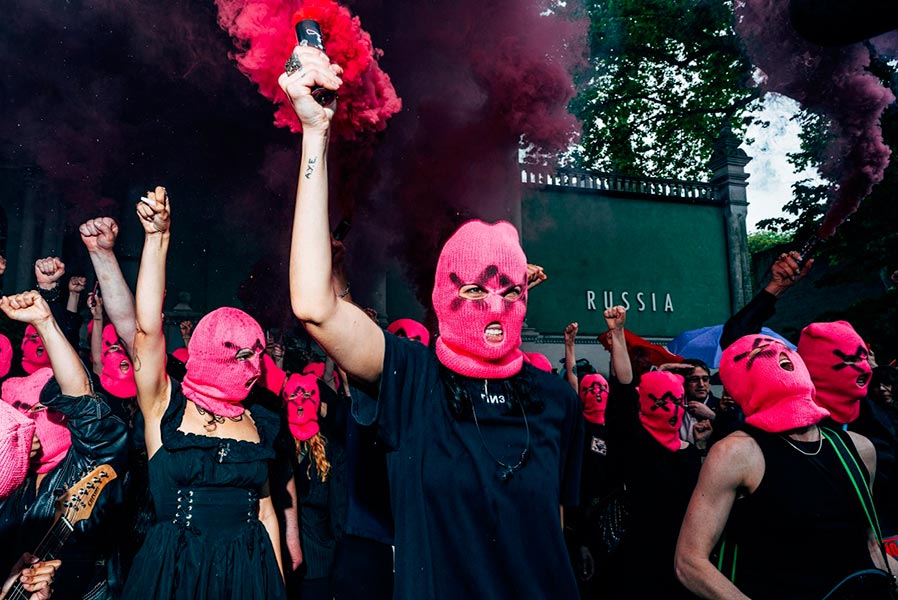
Pussy Riot and FEMEN Join Forces in Punk Protest in Venice: ‘Russia Kills! Biennale Exhibits!’

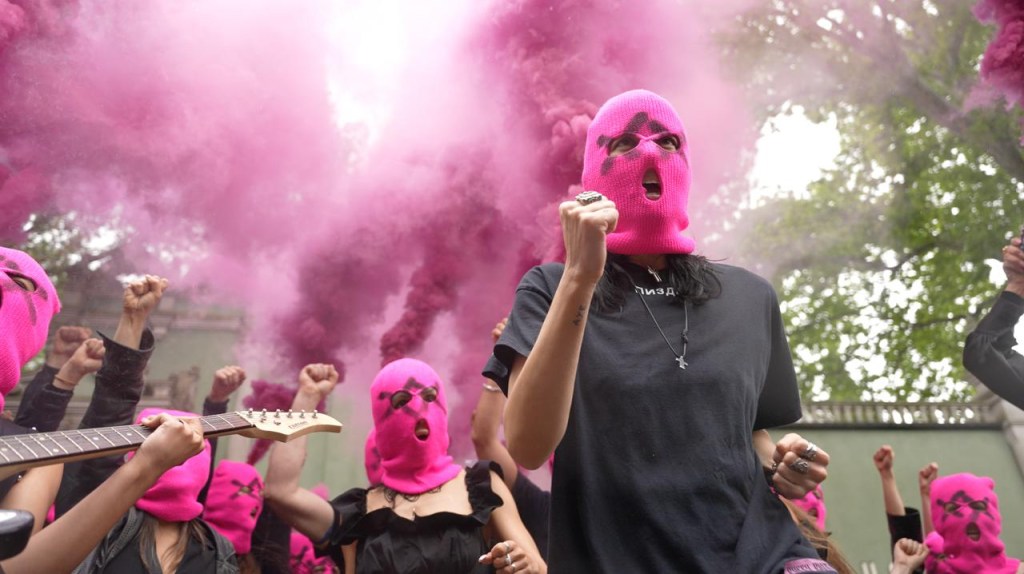
On Wednesday morning, Pussy Riot and FEMEN led a protest outside the Russian Pavilion at the 2026 Venice Biennale, chanting slogans like “Russia kills! Biennale exhibits!” and “Blood is Russia’s art!” Dozens of protesters, some in pink balaclavas and others bare-chested with floral crowns, gathered in the Giardini under light rain, carrying guitars and blasting punk rock and hip-hop. The action was organized by Nadya Tolokonnikova and other Pussy Riot members alongside FEMEN, a Ukrainian-founded women’s movement. They released pink, yellow, and blue smoke, and Tolokonnikova criticized the Biennale for allowing Russian participation while artists who oppose the war in Ukraine are imprisoned. She proposed an alternative exhibition, “Resistance Imprisoned,” currently on view in Strasbourg, featuring incarcerated artists.

Joan Semmel Kicks Ass at 93

A profile of 93-year-old artist Joan Semmel reveals her continued artistic vigor and rising market demand. The article details her recent studio visit, her philosophy of persistence, and her significant body of work focused on the female form.

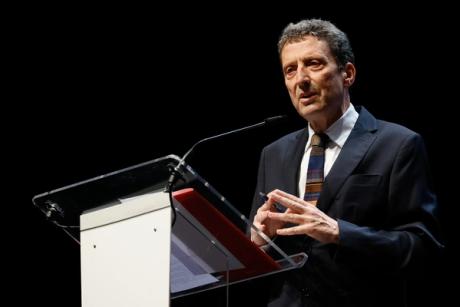
Some cry censorship, others cry antisemitism

"Die einen schreien Zensur, die anderen Antisemitismus"

A constitutional law scholar, Christoph Möllers, warns in an interview with Die Zeit about the dangerous escalation of cultural policy conflicts, sparked by Documenta 15, where accusations of censorship and antisemitism collide. In Poland, Adam Budak was removed as director of MOCAK in Krakow after just a few months, facing 79 allegations including mobbing and problematic leadership. Meanwhile, the New York spring auctions have launched, and Jason Farago's review of the Venice Biennale in the New York Times criticizes the shift from aesthetic innovation toward identity-driven art. Robin Pogrebin also reports on the merger of the Met and the Neue Galerie, described as a rare convergence of two museum models.

Salon des Refusés 2.0

Salon des Refusés 2.0

A group exhibition titled "we refuse_d" has opened at the Museum van Hedendaagse Kunst (M HKA) in Antwerp, bringing together 15 artists, many of whom faced cancellations or disinvitations from exhibitions following the October 7, 2023 attacks. The show, referencing the historic 1863 Salon des Refusés, aims to reclaim reputation and amplify marginalized voices, specifically focusing on Palestinian history and artists affected by the cultural fallout.

La Biennale de Venise s’ouvre dans un climat houleux

The 61st Venice Biennale opened amid intense controversy after its president, Pietrangelo Buttafuoco, announced the return of the Russian pavilion, which had been absent since the start of the Ukraine war. The European Commission suspended its €2 million subsidy for the 2028 edition, and the entire Biennale jury resigned on April 30. Buttafuoco later declared the Russian pavilion would remain closed, but protests erupted during the pre-opening days (May 6–8), drawing 28,000 professionals. Pussy Riot members, Femen activists, and the Free Nations League staged demonstrations, while the Israeli pavilion remained open despite a letter signed by nearly 200 artists calling for its exclusion.

The art of politics: how global conflicts are playing out in this year's Venice Biennale

Israel is making a controversial return to the 2025 Venice Art Biennale after its pavilion was locked in 2024 with a note demanding a ceasefire in Gaza. The artist representing Israel, Belu-Simion Fainaru, will present his project "Rose of Nothingness" in the Arsenale, while Russia also returns to the Biennale after its Giardini pavilion was reassigned to Bolivia in 2024. The Art Not Genocide Alliance (ANGA) has renewed calls for a boycott and is organizing strike action to disrupt the event, accusing Israel of genocide.

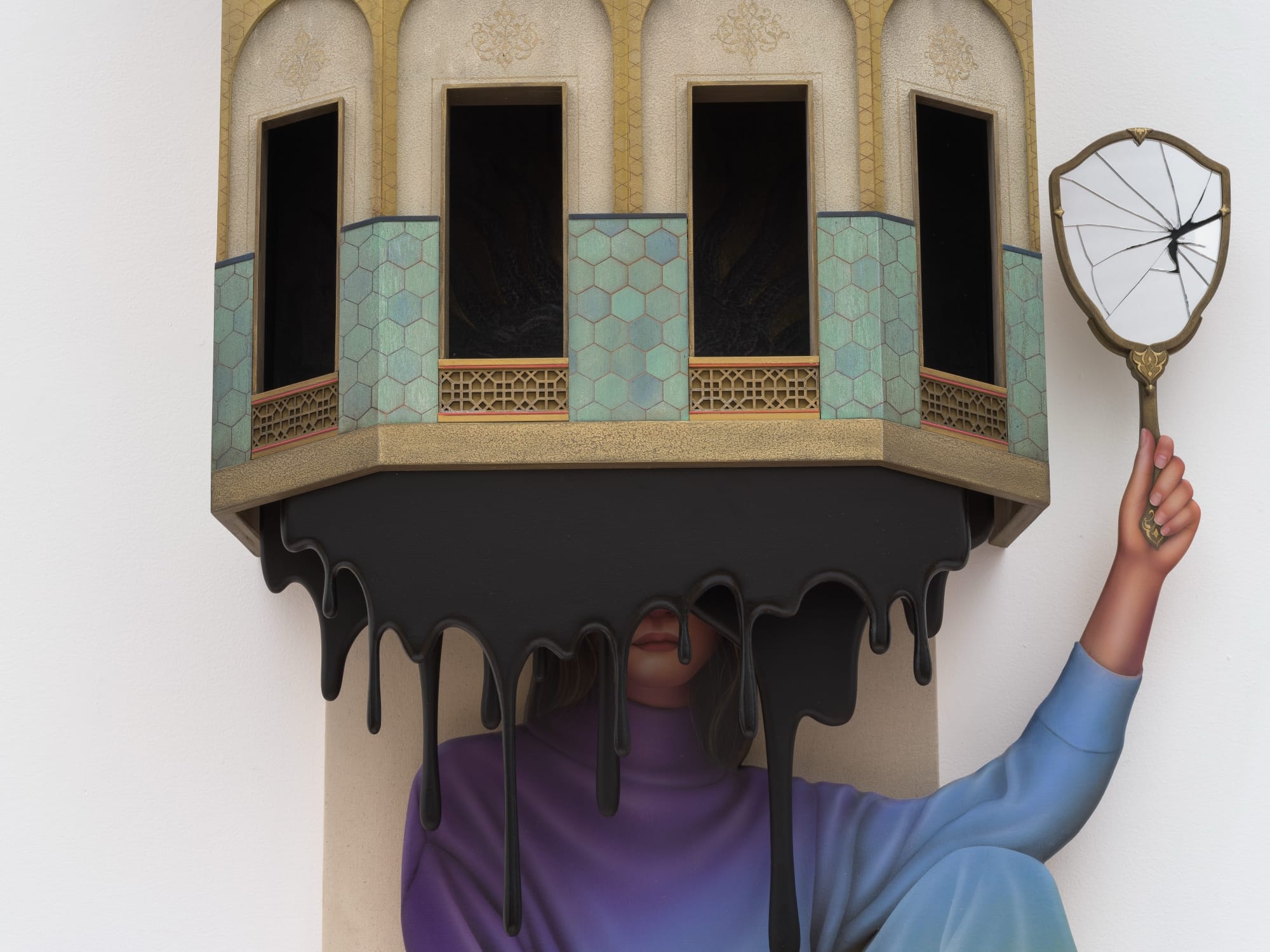
Arghavan Khosravi Breaks Through Gendered Restrictions in Her Architectural Portraits

Arghavan Khosravi's solo exhibition "What Remains" opens today at Uffner & Liu in New York, presenting a new body of sculptural paintings that fuse Persian architecture with Christian altarpieces. The works explore women's fight for equality under censorship and religious dogma in Iran, featuring figures restricted by domestic objects, hinged shutters, and suspended cords, with fragments of limbs or faces visible. Key pieces include "Suspended" (2026), "Bearing" (2026), and "The Whisper" (2026), running through July 2.

'Something Borrowed, Something New' at Sarasota Art Museum features 85 works from 10 private collections

Ten art collectors from Tampa, St. Petersburg, and Sarasota have loaned 85 works from their private collections to the Sarasota Art Museum for the exhibition 'Something Borrowed, Something New.' The show features pieces by renowned artists including Kara Walker, Ai Weiwei, Alex Katz, Robert Mapplethorpe, Chuck Close, Hank Willis Thomas, and Yoko Ono, with many prints coming from Graphicstudio at the University of South Florida. The exhibition was conceived by executive director Virginia Shearer after visiting collectors' homes and was inspired by a trip to the Renwick Museum at the Smithsonian.

What not to miss at the 2026 Venice Biennale

The article highlights five standout pavilions and installations at the 2026 Venice Biennale. Florentina Holzinger's Austrian pavilion features extreme, nude performances including a woman submerged in a urine-purified tank, drawing police attention. Sanya Kantarovsky presents eerie paintings and a Murano glass sculpture in a historic palazzo. Gabrielle Goliath's 'Elegy'—a hypnotic mourning performance for women killed in violence—was banned by South Africa but staged with London's Ibraaz. Carrie Schneider's 1.5km photographic curl in the Arsenale references Chris Marker's 'La Jetée'. Lydia Ourahmane's delicate sculptural show uses materials sourced from Venice, including a bead curtain made by inmates.

Venice Biennale Jury Resigns in the Wake of Controversial Prize Ban

The jury for the 2026 Venice Biennale has resigned just days before the public opening on May 9, after announcing on April 22 that it would not consider artists from countries accused of crimes against humanity for the Golden and Silver Lion prizes. The jury, consisting of Solange Oliveira Farks (president), Zoe Butt, Elvira Dyangani Ose, Marta Kuzma, and Giovanna Zapperi, cited its earlier statement of intention in its resignation, which directly impacted the participation of Russia and Israel—both subject to International Criminal Court warrants. In response, the Biennale postponed the awards ceremony from May 9 to November 22 and replaced the traditional jury with a public vote for best participant and best national participation, framing the move as upholding openness and rejecting censorship.

What Has the American Inquisition Done to Art?

An exhibition titled "American Inquisition" opened in mid-March at No Place Gallery, an artist-run space in Columbus, Ohio. Featuring paintings by Shiva Addanki and Nikholis Planck, the show draws its name from a statement by the Popular Front for the Liberation of Palestine supporting detained activist Mahmoud Khalil, and its critical framework from Mike Davis's book "Buda's Wagon." Addanki's works depict scenes of US imperial violence, including downed drones and counterinsurgents at detention centers, while Planck's paintings map extractive infrastructure, subverting traditional landscape painting with industrial detritus and petroleum tankers.

Venice Biennale’s Russian Pavilion and Pussy Riot Spar Over Usage of Protest Footage

The Russian Pavilion at the 2026 Venice Biennale has become embroiled in a new controversy after accusing the anti-Putin art collective Pussy Riot of censorship. The pavilion posted on Instagram that Pussy Riot demanded the removal of footage featuring them from a documentary film about the pavilion's project, labeling the request as self-censorship. Pussy Riot responded sarcastically, questioning the pavilion's use of Instagram given Russia's 2022 ban of the platform. The dispute follows earlier protests at the pavilion's opening, led by Pussy Riot and FEMEN, against Russia's participation in the Biennale amid its ongoing invasion of Ukraine.

‘Exclusion can only satisfy the ego’: Venice Biennale president hits out at critics amid Russia and Israel controversy

Venice Biennale president Pietrangelo Buttafuoco defended the institution against critics at a conference on May 6, three days before the public opening, amid controversy over Russia's return to the event for the first time since its 2022 invasion of Ukraine and ongoing disputes over Israel's participation. He accused critics of “narcissism” and “censorship,” while Italian culture minister Alessandro Giuli sent inspectors to investigate whether Russia's involvement breached sanctions; a report was submitted to Prime Minister Giorgia Meloni's office. Meanwhile, the Biennale faces legal threats from the artist representing Israel over alleged discrimination, and protests have erupted, including a demonstration by Art Not Genocide Alliance and a Pussy Riot action at the Russia pavilion.