filter_list Showing 87 results for "censorship" close Clear
search
dashboard All 87 museum exhibitions 37article news 31article culture 6article policy 5article local 4rate_review review 2person people 1candle obituary 1
date_range Range Today This Week This Month All
Subscribe

Dark clouds, protests and resignations dampen start of 61st Venice Biennale

The 61st Venice Biennale opened under grey skies and rain, with political tensions overshadowing the art world's premier event. The Russian pavilion, absent for two editions due to the Ukraine war, reappeared with a party atmosphere, though the Italian ministry of culture confirmed it would not be open to the public. The Ukrainian culture minister called Russia's symbolic presence powerful. The Iranian pavilion withdrew without explanation, and a protest by 60 artists from the In Minor Keys show marched through the Giardini humming in solidarity against Israel's participation. Over 200 artists, including Lubaina Himid and Alfredo Jaar, signed an open letter demanding the Israeli pavilion's cancellation. The event also proceeded without its curator, Koyo Kouoh, who died in May 2025; her curatorial team delivered the exhibition following her plans.

Venice Biennale’s fierce pussy Group Says City Censored Posters About Queer and Trans People

The lesbian artist collective fierce pussy, comprising Nancy Brooks Brody, Joy Episalla, Zoe Leonard, and Carrie Yamaoka, claims that the city of Venice censored their posters for the Venice Biennale. The posters, which feature phrases like "Welcome queers and trans people" and "we are queers and trans people" alongside a list of occupations, were intended to be pasted across the city. After the city blocked the full-scale posting, the group created stickers and placed them on walls, windows, and advertising spaces. As a concession, La Biennale installed the original posters inside the Arsenale entrance.

Women behind the lens: ‘After state massacres, I began burning the prints as an act of mourning’

Iranian-Canadian visual journalist and artist Parisa Azadi describes her process of creating protest photographs during the 2022 Iranian revolution from exile in Dubai. Unable to return to Iran, she used open-source protest footage from social media, isolating frames and printing them with a Fujifilm instax camera to transform ephemeral digital images into physical objects. In January 2026, after state massacres and executions, she began burning these prints as an act of mourning, scarring their surfaces to echo the violence they depict.

Anish Kapoor says US’s ‘politics of hate’ should exclude it from Venice Biennale

Anish Kapoor has called for the United States to be excluded from the Venice Biennale, citing the country's "abhorrent politics of hate" and "incessant warmongering." His comments follow the resignation of the five-member international jury, who stepped down in protest over the inclusion of Israel and Russia. Kapoor praised the jury's decision as "courageous" but argued they should have also targeted the US. The US pavilion, featuring artist Alma Allen and his exhibition "Call Me the Breeze," has faced scrutiny over perceived Trump administration interference and a delayed selection process. Meanwhile, the Israeli and Russian pavilions remain flashpoints, with over 200 participants signing a letter demanding the cancellation of the Israeli pavilion, and the Russian pavilion closed to the public but viewable through windows.

Venice Bound? Here’s All the News You Need to Know About This Year’s Biennale

The 61st Venice Biennale is embroiled in geopolitical controversy over Russia's return to the event in 2026, which has sparked widespread backlash. Nearly 10,000 artists and cultural leaders signed an open letter opposing Russia's participation, and the European Union withdrew €2 million in funding for the 2028 edition. Leaked emails reveal Biennale officials worked with Russian pavilion commissioner Anastasia Karneeva to circumvent EU sanctions, while Italy's culture minister Alessandro Giuli plans to boycott the opening week. Meanwhile, activists continue to push for Israel's removal from the Biennale, though Israel will be accommodated in the Arsenale this year.

Anish Kapoor Condemns Inclusion of US in Venice Biennale

Anish Kapoor has publicly condemned the inclusion of the United States in the upcoming 61st Venice Biennale, calling for its exclusion due to what he describes as the country's 'abhorrent politics of hate and its incessant warmongering.' In an interview with The Guardian, Kapoor praised the five-person jury that resigned en masse after refusing to consider Israel and Russia for the event's top prize, both nations having been accused by the International Criminal Court of crimes against humanity. Kapoor's remarks come amid the ongoing US war with Iran under the Trump administration, and he previously threatened to sue the Trump administration over a photo taken at his Cloud Gate sculpture in Chicago.

Pussy Riot and Topless Activists Rally Against Russian Pavilion at Venice Biennale

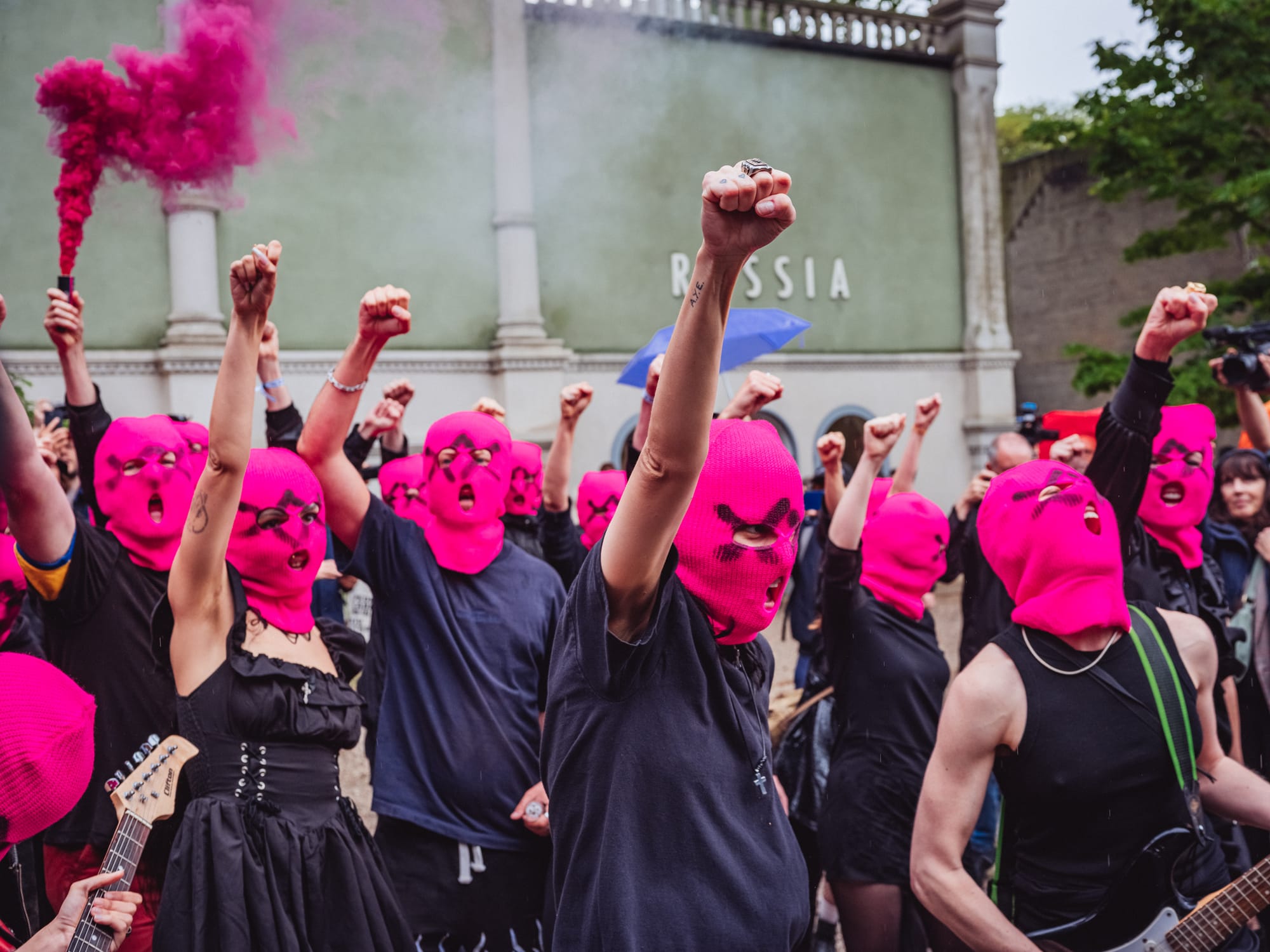
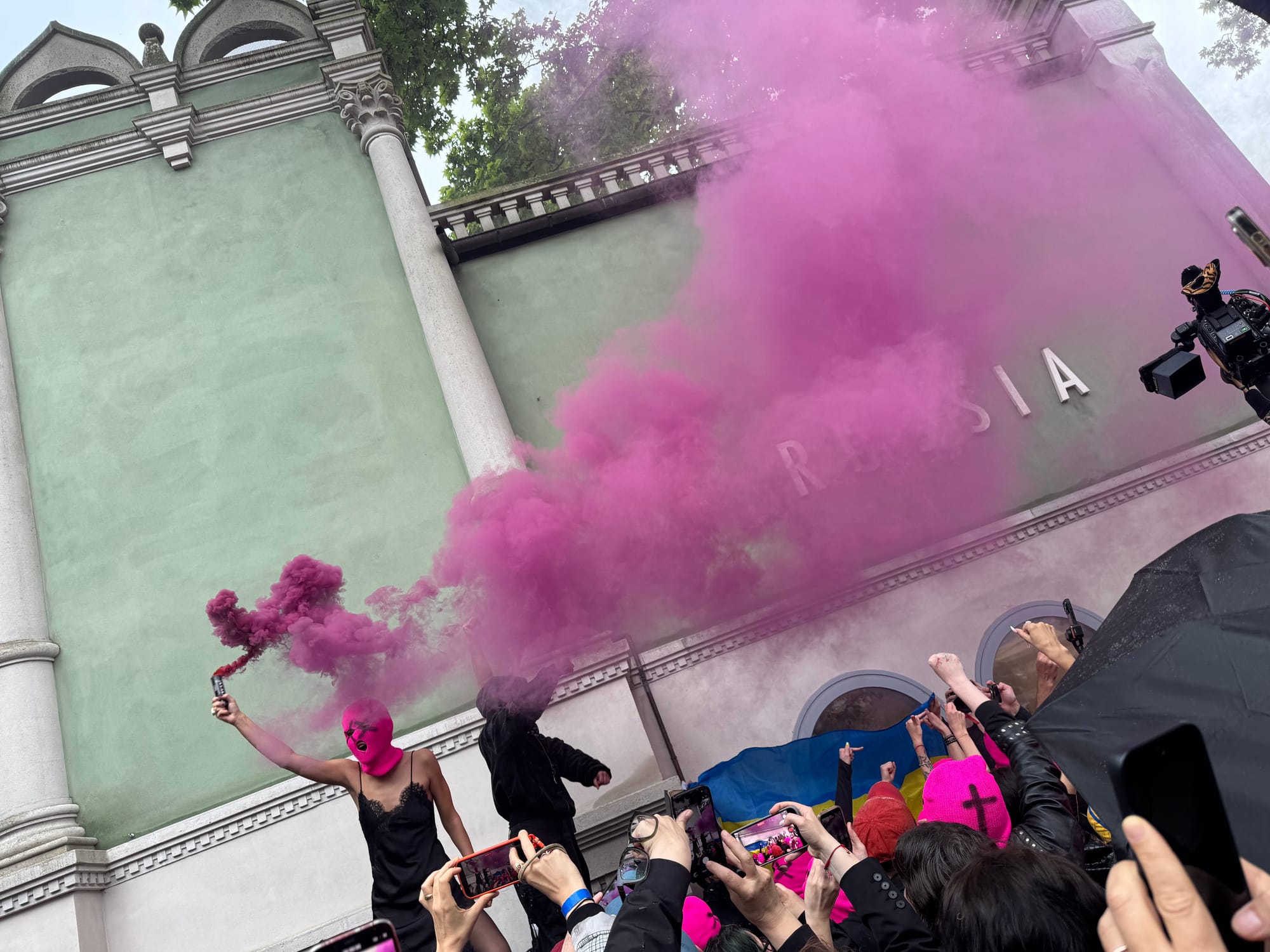
On May 6, 2026, the art collective Pussy Riot and the Ukrainian feminist group FEMEN staged a protest outside the Russian Pavilion at the 61st Venice Biennale. Approximately 50 activists released pink smoke and blue-and-yellow flares evoking the Ukrainian flag, while FEMEN members staged a topless protest with anti-war slogans like “RUSSIA KILLS, BIENNALE EXHIBITS.” Italian police and Biennale security blocked access to the pavilion, and some Pussy Riot activists were tackled after entering. The protest targeted Russia’s participation in the Biennale for the first time since its full-scale invasion of Ukraine in 2022, with activists condemning the event for lending legitimacy to Russian officials and artists aligned with the government.

"One of the most dramatic Biennales": 11 unmissable art shows to see at Venice

Theo Christelis reports from the opening week of the 2024 Venice Biennale, describing it as one of the most dramatic editions in recent memory. Key events include the death of main curator Koyo Kouoh and German Pavilion artist Henrike Naumann, the resignation of the prize jury over the participation of Israel and Russia, a protest by Pussy Riot, and a boycott by half the participating artists. Amid the turmoil, Christelis highlights unmissable shows including the Indian Pavilion (returning after seven years), Jenny Saville at Ca' Pesaro, Michael Armitage at Palazzo Grassi, and presentations at the British, Japanese, and Saudi Arabian Pavilions.

Venice Biennale 2026 Roundup

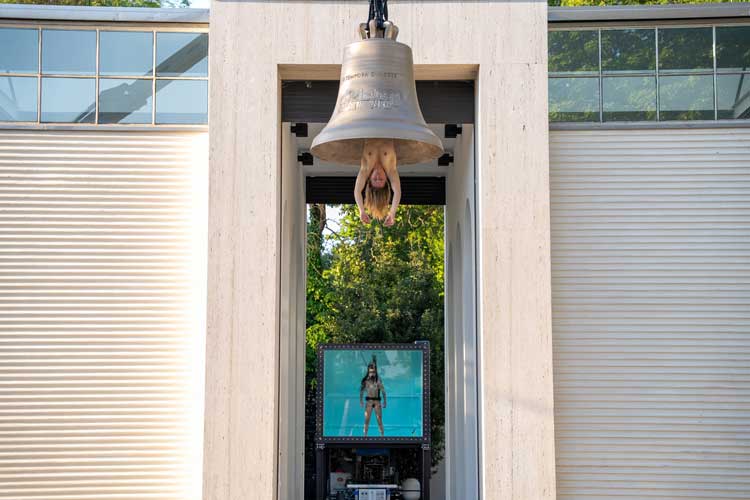
The 61st Venice Biennale, titled "In Minor Keys" and curated by the late Koyo Kouoh, opened in May 2026 amid significant turmoil. The Austrian Pavilion features Florentina Holzinger's performance piece "Seaworld Venice," centered on a giant bell that chimes hourly. The biennale has been marked by the death of its curator, the resignation of the international jury over the inclusion of Russia and Israel, protests by Pussy Riot and the Art Not Genocide Alliance, and the cancellation of the South African Pavilion over Gabrielle Goliath's "Elegy," which honors murdered women including a Palestinian poet. The US Pavilion's state-sponsored offerings have also drawn criticism.

Dozens of Venice Biennale Artists Withdraw From Awards En Masse

Almost half of the artists in the 61st Venice Biennale's international exhibition, along with 16 national pavilion teams, have withdrawn from awards consideration in solidarity with the jury's resignation. The jury resigned on April 30 after stating it would not consider countries whose leaders are charged with crimes against humanity by the ICC, effectively disqualifying Israel and Russia. The Biennale Foundation then replaced the traditional Golden Lions with new "Visitor Lions" decided by public vote, reinstating all pavilions including Israel and Russia. The withdrawal follows protests at the Russian and Israeli pavilions and a historic labor strike that shuttered multiple pavilions.

Who’s Afraid of____? at Turquoise

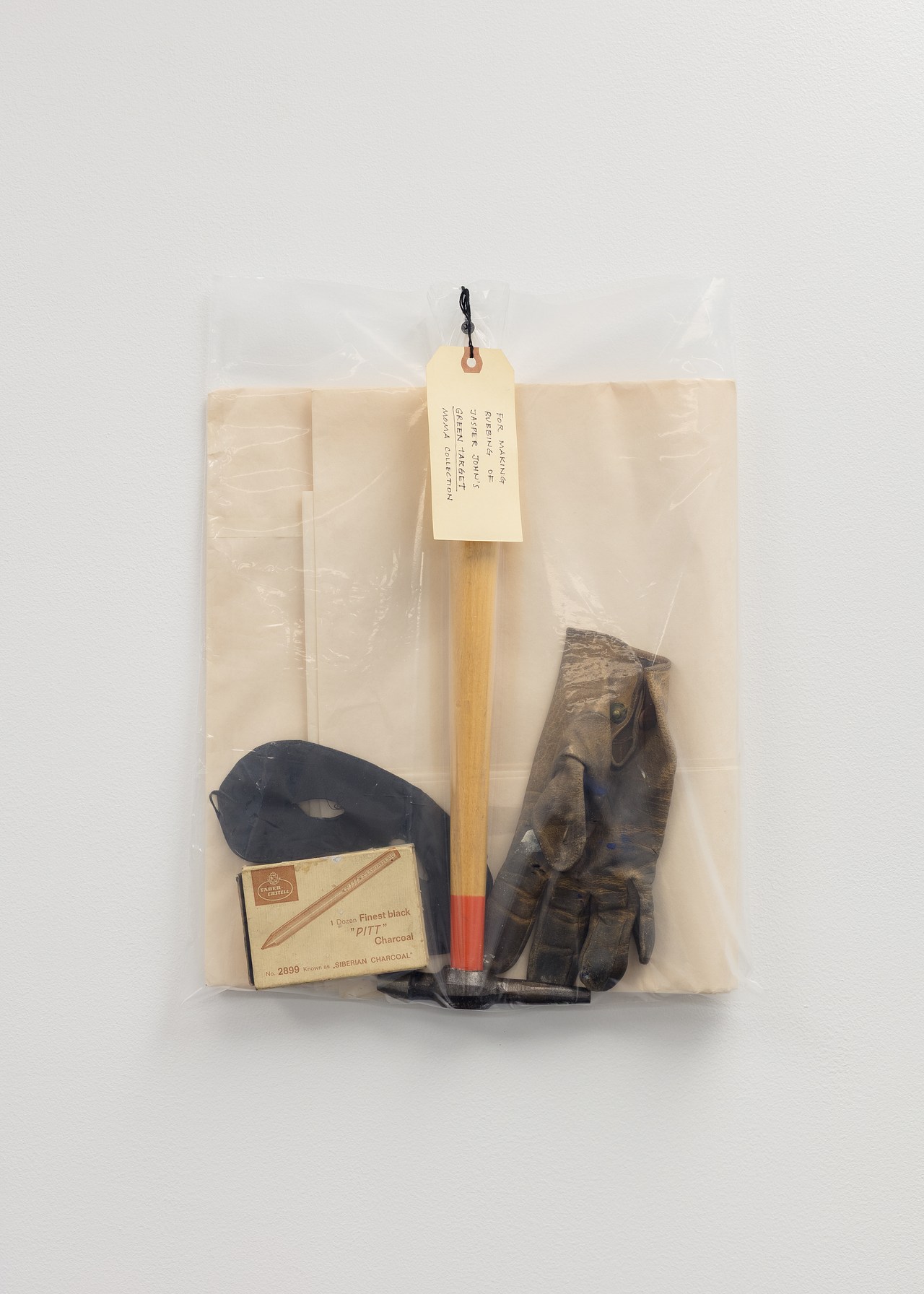
Turquoise gallery in New York is presenting a group exhibition titled "Who’s Afraid of____?" from March 27 to May 10, 2026. The show features works by Anna-Sophie Berger, K.P. Brehmer, David Diao, Gaylen Gerber, Joseph Grigely, John Heartfield, Nandi Loaf, and Alicia Riccio, with images courtesy of the artists, The Heartfield Community of Heirs / Artists Rights Society (ARS), New York, and the gallery.

Here is who Florentina Holzinger is, the artist protagonist of the Austrian Pavilion at Venice 2026

Ecco chi è Florentina Holzinger, l’artista protagonista del Padiglione Austria a Venezia 2026

Florentina Holzinger, an Austrian artist, performer, and choreographer born in Vienna in 1986, has been selected to represent Austria at the Venice Biennale 2026. The article traces her career from her early work *Silk* (2012), which won the Prix Jardin d’Europe at ImPulsTanz Festival, through boundary-pushing pieces like *Recovery* (2015), *Schönheitsabend* (2015), *Apollon* (2018), and *Tanz* (2019), which earned a Nestroy Prize. Her practice blends dance, circus, horror, body art, stunt techniques, and sideshow, often featuring all-female casts and full nudity, and has provoked censorship in Italy while being hailed as avant-garde elsewhere. She became an associate artist at Berlin’s Volksbühne in 2021 and will join its ensemble from the 2026/27 season.

As Democracy Falters, a New York Museum Champions Activism

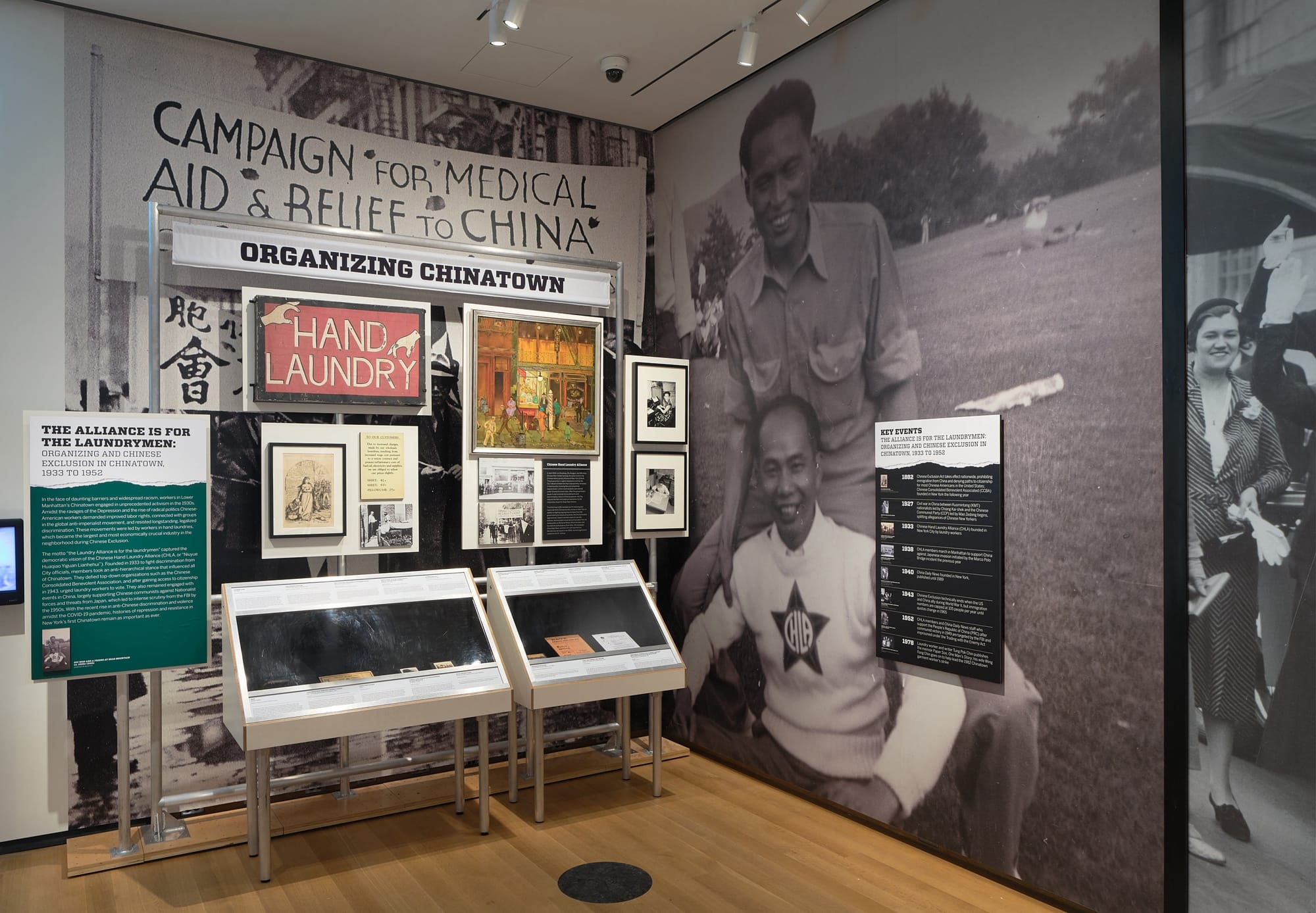
The Museum of the City of New York (MCNY) in East Harlem will open the Puffin Foundation Center for Social Activism this fall, replacing its existing Puffin Foundation Gallery. The expanded center, funded by an $8 million donation from the Puffin Foundation, will feature a new version of the permanent exhibition "Activist New York," along with temporary shows, public programs, and an annual fellowship. The inaugural temporary exhibition, "Halumii Ktapihna: Lenape Legacies and Future," marks the 400th anniversary of Manhattan's purchase from Indigenous peoples.

Artist appointed, axed then reinstated from Venice Biennale triumphs

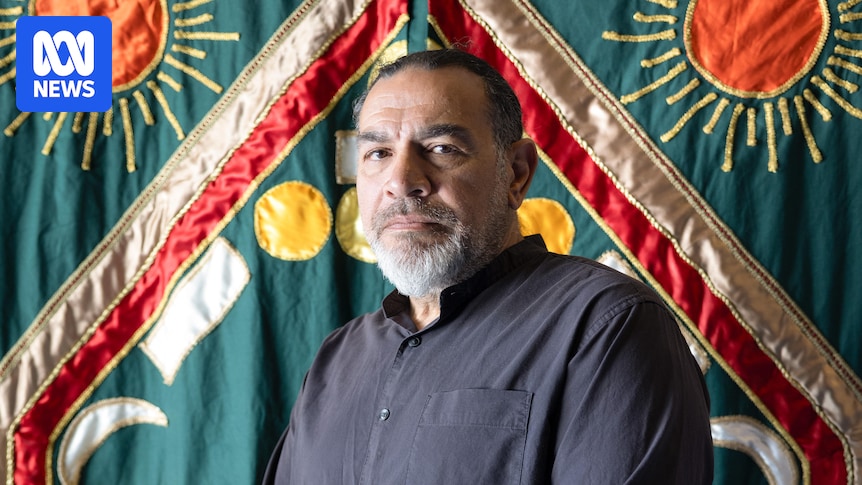
Khaled Sabsabi, a Lebanese Australian artist, presents his installation 'conference of one's self' at the Australia Pavilion of the Venice Biennale, alongside a second work 'khalil' in the main exhibition 'In Minor Keys' curated by Koyo Kouoh. His participation follows a tumultuous period in February 2025 when he was initially appointed to represent Australia, then controversially sacked by Creative Australia's board after a political dispute triggered by Senator Claire Chandler's comments, and later reinstated. Sabsabi is now one of only three artists in the Biennale's 131-year history to show in both a national pavilion and the main exhibition.

Hundreds Protest Israel’s “Genocide Pavilion” at Venice Biennale

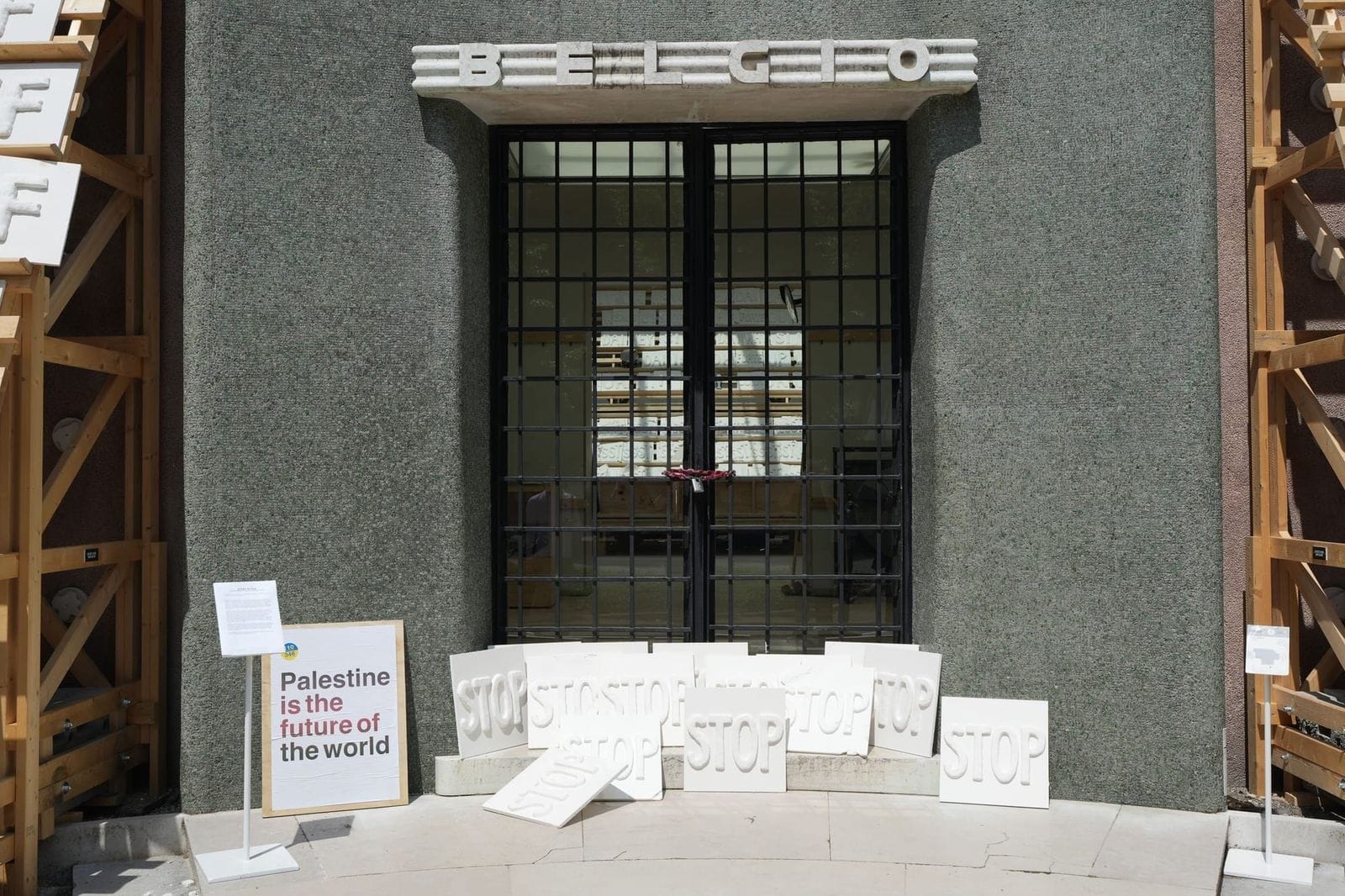
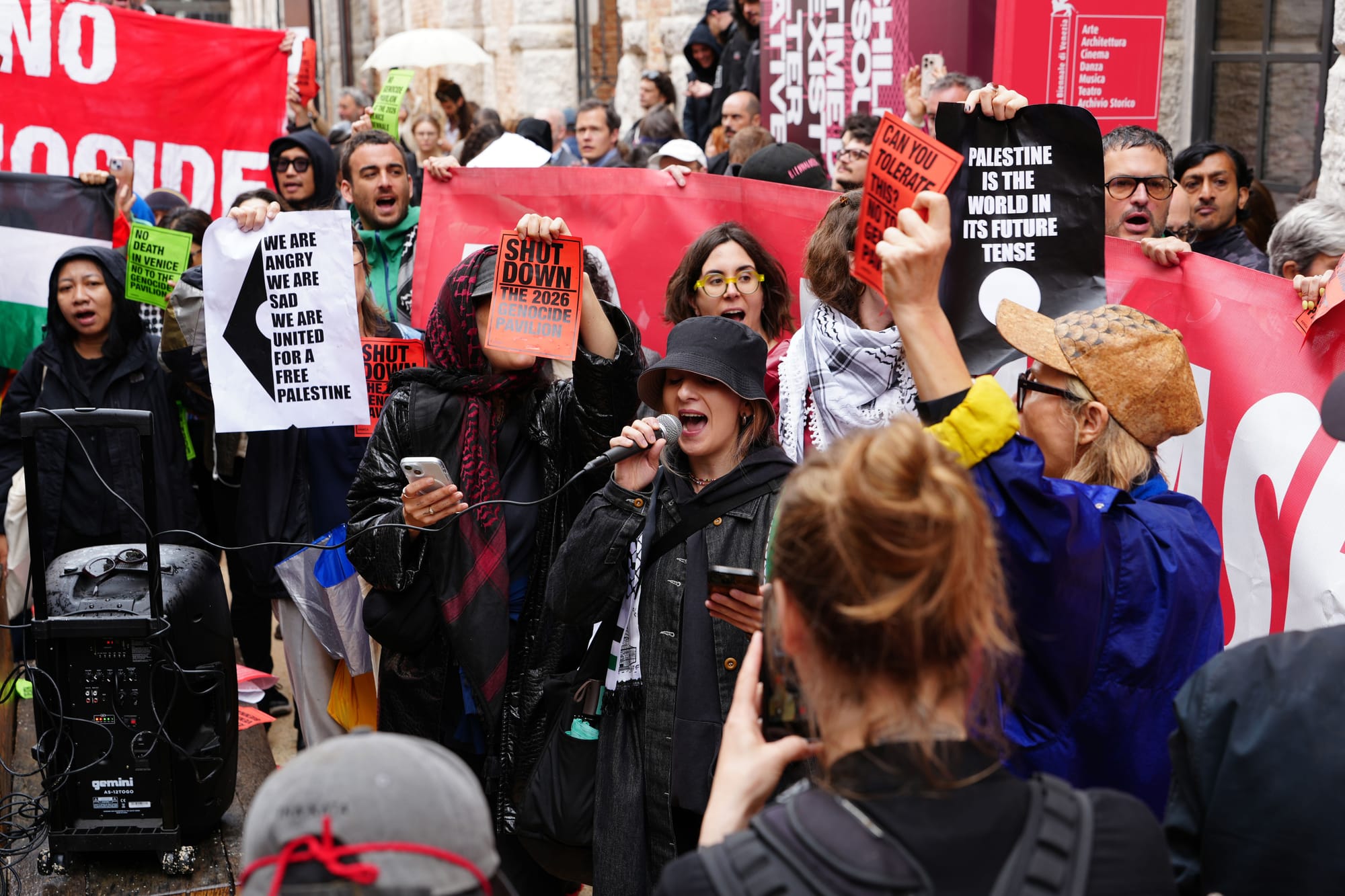
On May 6, 2026, the first day of previews at the Venice Biennale, hundreds of pro-Palestine activists led by the Art Not Genocide Alliance (ANGA) blocked the entrance to the Israeli pavilion, demanding its immediate closure. Protesters waved Palestine flags and banners reading "No Artwashing Genocide" and "No Genocide Pavilion at Biennale," chanting accusations of genocide against Israel. The demonstration temporarily shut down access to Belu-Simion Fainaru's exhibition "Rose of Nothingness" for about half an hour. The protest followed a letter signed by over 200 artists urging the Biennale to exclude Israel, which instead moved the pavilion to an alternative location in the Arsenale due to renovations. Separately, Pussy Riot and FEMEN rallied outside the Russian pavilion, which will only open during preview days due to sanctions. Venice cultural workers plan a 24-hour strike on May 8 in solidarity with Palestinians, potentially disrupting the Biennale's schedule.

"Hier darf laut gelacht werden"

During the opening week of the Venice Biennale, multiple reports detail controversies surrounding the Israeli and Russian pavilions. According to Hyperallergic, artist Belu-Simion Fainaru of the Israeli pavilion threatened legal action against the Biennale after the jury sought to exclude Israel and Russia from prizes over alleged human rights violations, citing antisemitism and nationality-based discrimination. This may have prompted the jury's sudden resignation. Meanwhile, taz reports that Russia's pavilion is a macabre 'dance of death' blending techno and political denial, while Israel's pavilion faces a 'silent boycott' and social ostracism. Zeit describes protests by Pussy Riot and Femen outside the Russian pavilion as a defining image, with activists chanting 'blood sticks to the art of this country.'

Seen in Venice, Bought in Venice

"In Venedig gesehen, in Venedig gekauft"

The article reports on multiple developments surrounding the Venice Biennale. Iran has withdrawn from the Biennale, citing political and economic crises, with logistical challenges such as no flights or postal service making participation nearly impossible. Artist Anish Kapoor has called for the exclusion of the United States from the Biennale, criticizing its "abhorrent policy of hate" and "ongoing warmongering." A memorial installation by Derrick Adams for the late curator Koyo Kouoh, who was set to lead the main exhibition, will be displayed near the Arsenale. Additionally, the Biennale faces a funding cut from the EU due to Russia's continued participation despite the Ukraine war, leading to the resignation of the jury and the culture minister's withdrawal.

Yosra Mojtahedi, Iranian artist who moved from painting to astonishing living sculptures

Yosra Mojtahedi, artiste iranienne passée de la peinture à de stupéfiantes sculptures vivantes

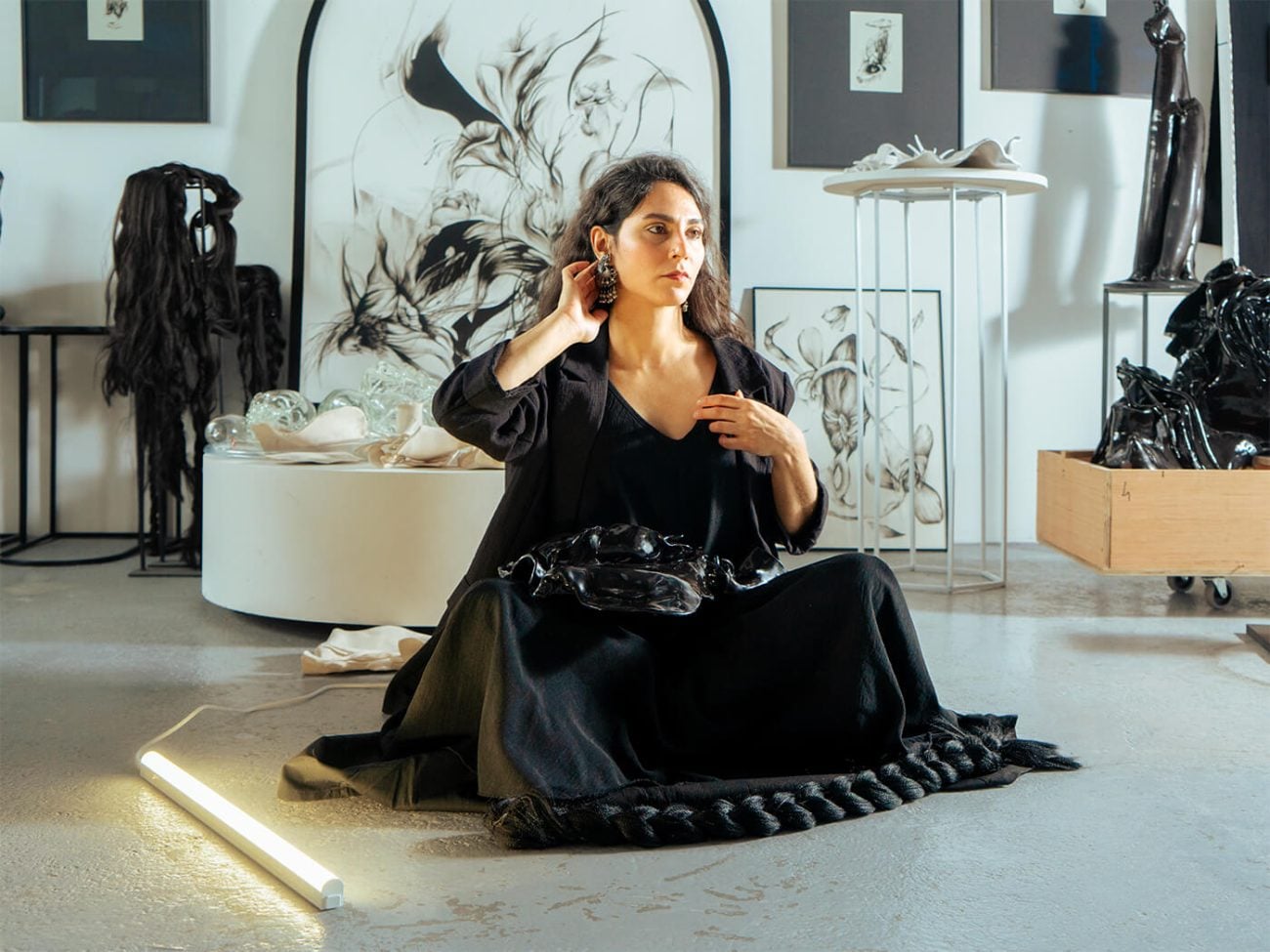
Yosra Mojtahedi, an Iranian artist born in 1986, has transitioned from painting to creating stunning living sculptures. Her work, characterized by black and white contrasts, features sculptures that breathe, have hair, and incorporate torn tights and synthetic locks, evoking themes of identity, censorship, and bodily autonomy. She recently presented a spectacular installation titled "Isthme noir" at the Espace Monte-Cristo in Paris and an exhibition at the Abbaye de Maubuisson, where her spiritual universe unfolds across multiple rooms. Mojtahedi's practice includes sound elements in Persian or Kurdish, and she views her sculptures as "bodies" that are both intimate and political.

Victorien Bornéat : « De l’échec de la démocratisation culturelle est né un sentiment d’exclusion »

Victorien Bornéat has published a manifesto arguing that French cultural democratization policy, rooted in André Malraux's vision of making masterworks accessible to all, has failed. He cites budget cuts by regional presidents Laurent Wauquiez and Christelle Morançais, police raids on bookshops like Violette and Co, and statistical studies showing that working-class audiences still do not spontaneously attend theaters, museums, or opera. Bornéat contends that the policy's emphasis on direct confrontation with canonical works ignored the need for cultural codes and institutional literacy, creating an exclusion that politicians now exploit for electoral gain.

Protests and Shutdowns Engulf 61st Venice Biennale Opening

The 61st Venice Biennale preview week, opening to press and professionals ahead of its May 9 public launch, has been engulfed by protests and institutional crises. On May 5, around 60 artists from Koyo Kouoh's exhibition “In Minor Keys” staged a Solidarity Drone Chorus outside the Giardini, drawing on Gazan composer Ahmed Muin's Drone Song (2025) to highlight victims of warfare. On May 6, the Art Not Genocide Alliance (ANGA) organized protests outside Israel's pavilion at the Arsenale, leading to a security-enforced closure, while Pussy Riot and FEMEN demonstrated outside the Russian pavilion. The jury resigned on April 30 after controversy over award eligibility tied to ICC arrest warrants, prompting the Biennale to scrap Golden Lions and transfer prize voting to the public. Iran withdrew its pavilion on May 4, and Russia's will close on May 9, with only exterior video projections remaining. ANGA and Italian unions have announced a 24-hour strike on May 8.

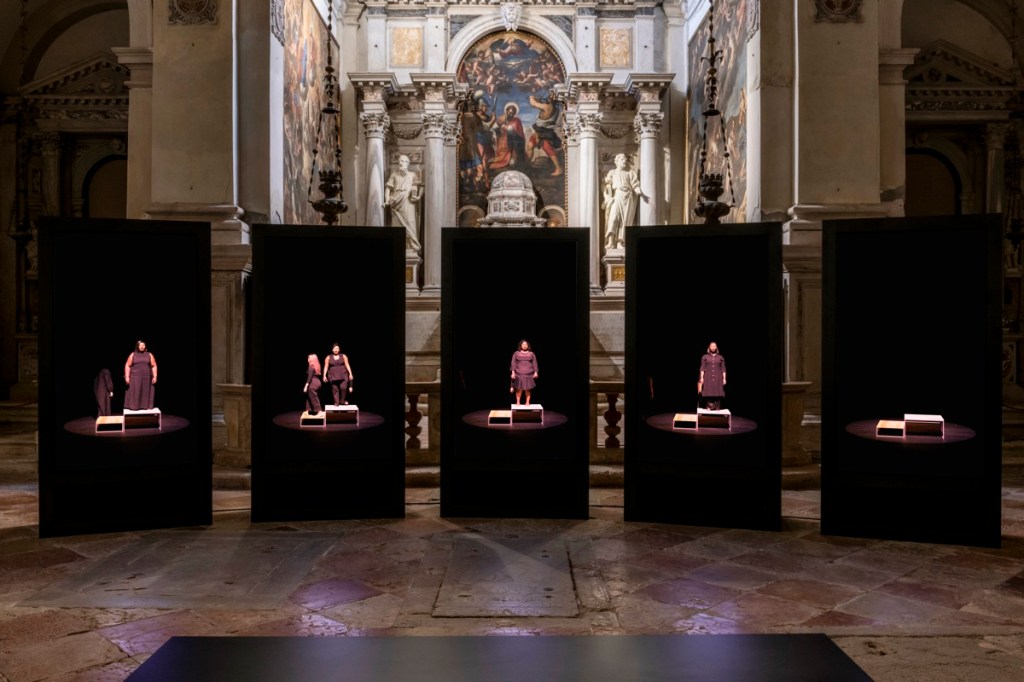
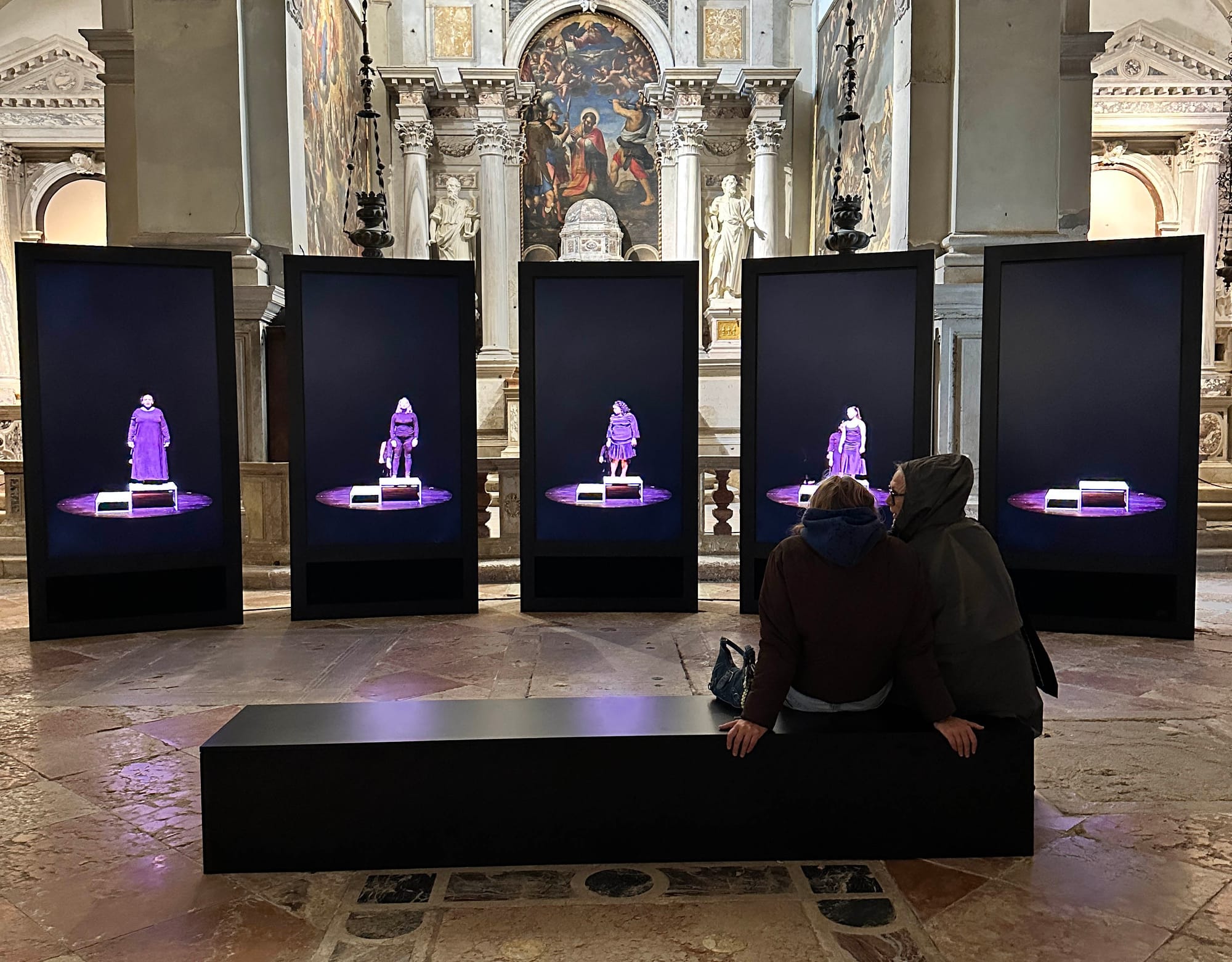
Gabrielle Goliath Discusses Her Canceled South African Pavilion as She Shows New Work in a Venice Church

South African artist Gabrielle Goliath’s planned pavilion for the South Africa Pavilion at the Venice Biennale was canceled by culture minister Gayton McKenzie, who deemed it “highly divisive.” Despite the cancellation, Goliath has installed her work, a multi-screen iteration of her ongoing performance series *Elegy*, at the Chiesa di Sant’Antonin, half a mile from the Giardini. The new piece mourns victims of atrocities including South African femicide, the Herero and Nama genocide, and the death of Gazan poet Hiba Abu Nada, killed by an Israeli airstrike. Goliath stated that McKenzie explicitly demanded removal of the Palestinian content while deeming the other subjects acceptable.

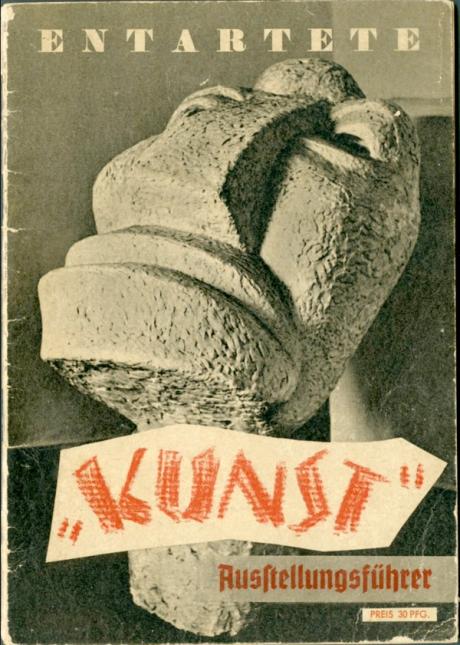
Comment | Degenerate art all over again? Nazi attack on Modern art is not far away from trends in today’s world

The article draws a provocative parallel between the Nazi regime's attack on modern art—epitomized by the 1937 "Degenerate Art" (Entartete Kunst) exhibition—and contemporary political aesthetics, particularly around President Donald Trump. It traces the Nazi party's early use of visual spectacle, mass rallies, and monumental art to forge a national identity, contrasting this with Trump's proposed National Garden for American Heroes and stalled White House Ballroom, which the author dismisses as kitsch but lacking the cohesive fascist aesthetic of Albert Speer's masterplans.

Oleg Prokofiev’s Lost Trove of Paintings Comes to Light After Decades in Hiding

A trove of abstract paintings and sculptures by Russian artist Oleg Prokofiev, hidden for decades in Moscow after he fled the Soviet Union, has been rediscovered and is now on public display for the first time. Prokofiev concealed the works in the 1950s and 1960s to avoid state persecution—abstract art was banned in the USSR, and his relationship with British scholar Camilla Gray made marriage impossible until 1969. After Gray's death and his move to England, the artworks remained safely stored in Moscow, where he found them intact after the Soviet collapse. The collection, including paintings, sculptures, sketchbooks, and letters, is now exhibited at the newly founded Prokofiev Studio in Hackney, London, established by his four children and curator Anzhela Popova.

New space dedicated to Oleg Prokofiev—whose abstract art was censored by Soviet Russia—opens in London

A new art space called Prokofiev Studio has opened in Hackney, London, dedicated to the Russian artist Oleg Prokofiev. Its inaugural exhibition, 'Bending Time,' presents abstract works from the 1950s that were banned under Soviet censorship and long thought lost. The space was founded by Prokofiev’s children, including composer Gabriel Prokofiev, in collaboration with curator Anzhela Popova. The works were rediscovered in 1994 when Prokofiev returned to his former Moscow home and found them preserved by the new owner.

Read a book, flip off a Nazi: when reading meant resistance – in pictures

A new exhibition at Poster House in New York, titled "Reading Under Fire: Arming Minds & Hearts During Wartime," showcases vintage posters from World War I and World War II that promoted reading and book donations to support troops. The posters, drawn from the collections of the American Library Association, the YMCA, and other organizations, encouraged the public to supply soldiers with reading material as a form of morale-boosting and education. The exhibition runs until 1 November and is curated by Molly Guptill Manning.

Open Letter in Support of the Artist Asel Kadyrkhanova

An open letter initiated by members of the Kazakhstani and international art community protests the removal of artist Asel Kadyrkhanova's work *Machine* (2013) from the Kazakhstan pavilion at the 2026 Venice Biennale. The mixed-media installation, which addresses Stalinist repression through a vintage typewriter, arrest warrants, and red threads, was dismantled on May 5, 2026, reportedly by order of Kazakhstan's Ministry of Culture and Information, just before the pavilion's opening. The artist and curator were allegedly pressured to alter the work beforehand, and the ministry initially cited restrictions from the Italian side, but the Italian Ministry of Defense denied involvement.

Khaled Sabsabi’s Rocky Road From Australia to the Biennale

Lebanese-Australian artist Khaled Sabsabi was nearly removed from his commission for the Venice Biennale after being accused of supporting terrorism, but was later reinstated. He is now arriving in Venice to present not one but two works at the prestigious international exhibition.

The Interview: Gabrielle Goliath

Gabrielle Goliath, a South African artist, created the performance work "Elegy" in 2015 after hearing a father mourn his daughter, Ipeleng Christine Moholane, who was raped and murdered. The piece features seven operatic women sustaining a single note in relay for an hour, evolving over a decade into a series of iterations that address systemic violence and grief. In January 2026, South Africa's Minister of Sport, Arts and Culture, Gayton McKenzie, cancelled Goliath's presentation of the latest version of "Elegy" at the 61st Venice Biennale, which was to include tributes to victims in South Africa, Namibia, and Gaza, including journalist Hiba Abu Nada. Goliath refused to alter the work, took legal action, and will now show it independently at the Chiesa di Sant'Antonin in Venice, while the official South African Pavilion will remain empty for the first time since 2011.

Gabrielle Goliath Sounds a Call to Action in Venice

Gabrielle Goliath’s exhibition "Elegy" is presented as South Africa’s unofficial pavilion at the 61st Venice Biennale, after the country’s Culture Minister Gayton McKenzie overrode an independent committee’s selection of Goliath, citing her proposed inclusion of a memorial for Palestinians killed in Gaza. The installation features three video works in which singers sound a single note in tribute to victims of violence: a South African femicide victim, two women killed in Germany’s colonial genocide in Namibia, and Palestinian poet Heba Abunada. The show occupies the Chiesa di Sant'Antonin in Venice, curated with Ingrid Masondo, after a legal challenge against McKenzie was dismissed.

Get to know these 5 unconventional galleries driving art forward in North Texas

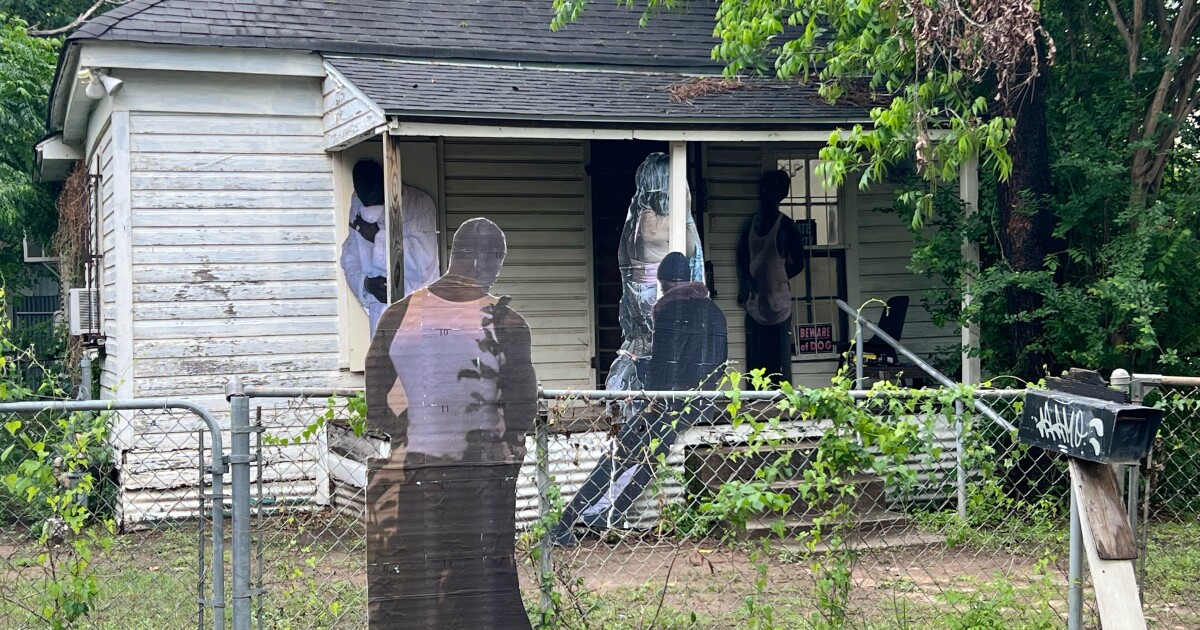
A wave of independent, artist-run galleries is emerging across North Texas, operating out of unconventional spaces like houses, lofts, and apartments. Notable examples include PRP (Permanent Research Project) in a little white house in Trinity Groves, Nature of Things in a Deep Ellum loft, and 2 BED 1 BATH in an Oak Cliff apartment. These venues often face precarious funding and zoning issues, yet they persist, with some like 500X operating since 1978 and PRP for a decade. Recent exhibitions have addressed themes such as the treatment of bodies in visual culture and political commentary, including a protest show after the University of North Texas shut down an exhibition critical of Immigration and Customs Enforcement.