filter_list Showing 43 results for "Purpose" close Clear
search
dashboard All 339 museum exhibitions 143article local 73article culture 43article news 34trending_up market 12article policy 12person people 10rate_review review 7gavel restitution 3candle obituary 2
date_range Range Today This Week This Month All
Subscribe

how top curators spot the artists of tomorrow

Artnet News spoke to seven leading curators about how they identify emerging artists who will become the next big names. The curators, including Amy Smith-Stewart of The Aldrich Contemporary Art Museum and iLiana Fokianaki of Kunsthalle Bern, describe their methods: seeking artists who address erased histories, geopolitical contexts, and marginalized perspectives. The article also references a recent debate sparked by Dean Kissick's polemic 'The Painted Protest' in Harper's, which criticized contemporary art for being overly dictated by identity politics, a view countered by curators who affirm their commitment to socially engaged work.
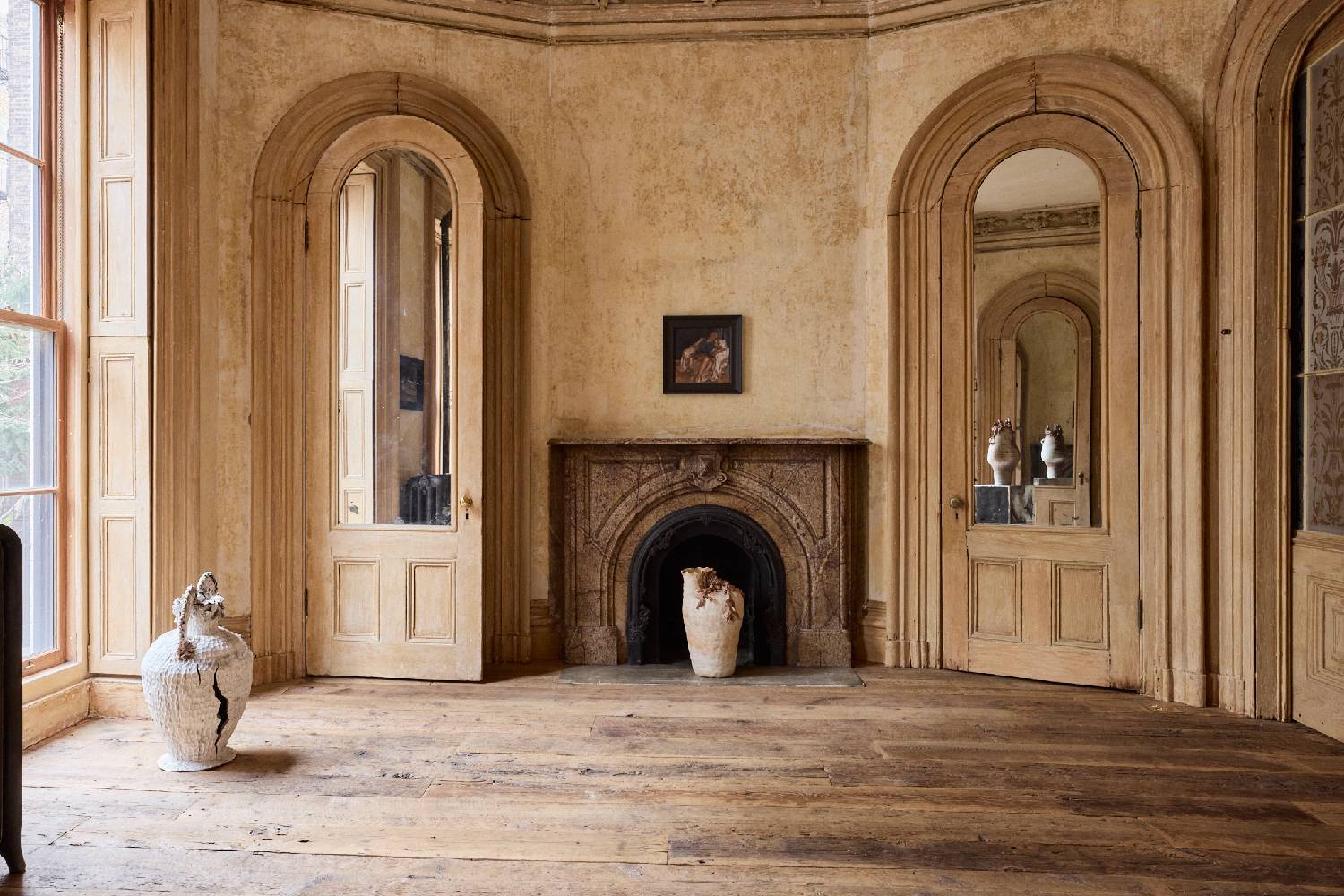
Meet the Gallerists Trading White Cubes for Unconventional Architecture

A growing number of gallerists are moving away from the traditional 'white cube' gallery model, opting instead for spaces with unconventional architecture and distinct character. These include locations in repurposed industrial buildings, historic structures, and uniquely designed new constructions that actively shape the visitor's experience of the art.

psychedelics and art ryan mcginniss

Artist Ryan McGinness has published a new art book titled 'Trip Advisor: Notes From over 25 Years of Psychedelic Voyages.' The book combines images of his paintings, studio photos, and personal diaries chronicling his experiences with psilocybin mushrooms since 1999, alongside essays reflecting on their significance.

see super bowl heroes depicted in classical paintings

A Nobilified, a start-up that lets customers insert themselves into classic paintings for about $140, has created a series of artworks depicting Super Bowl heroes from the New England Patriots and Seattle Seahawks in historical masterpieces. Patriots quarterback Tom Brady appears as Prometheus (1868) by Gustave Moreau, tight end Rob Gronkowski as Abduction of Ganymede by Jupiter (ca. 1644) by Eustache Le Sueur, while Seahawks quarterback Russell Wilson is shown in Ideal portrait of a Spanish King (ca. 1643) by Alonso Cano, with other players featured in works by John Singleton Copley and Benjamin West.

roman sculpture

This article explores the rediscovery of Roman sculpture during the Renaissance and its profound influence on artists like Raphael, Donatello, Michelangelo, and Leonardo da Vinci. It details how Roman sculptors, inspired by Greek methods after the conquest of Greece in 146 B.C.E., created highly realistic works that served both artistic and political purposes, glorifying emperors and reinforcing imperial power. The piece highlights six iconic Roman sculptures—including the Equestrian Statue of Marcus Aurelius, the Colossus of Constantine, Trajan's Column, and the Augustus of Prima Porta—describing their historical context, artistic features, and enduring legacy.

artificial intelligence museums

Randall Suffolk, director of the High Museum of Art, argues that art museums should let artists lead the integration of artificial intelligence into programming, rather than institutions racing to adopt the technology themselves. He advocates for using AI primarily behind the scenes for organizational efficiency and decision-making, while cautioning against letting AI distract from the direct experience of artworks in galleries.

art in america new talent issue 2025

Art in America's 2025 "New Talent" issue features 20 emerging artists chosen by the magazine's editors, including Nico Williams, Bint Mbareh, Justin Allen, Agnes Questionmark, and Brooklin A. Soumahoro. The issue also includes a postmortem on figurative painting by Barry Schwabsky, an essay on spiritual art by Eleanor Heartney, a symposium on art's purpose with seven artists, and a tribute to the late Jaune Quick-to-See Smith by Emmi Whitehorse. Other sections cover Suzanne Valadon, Hito Steyerl's book, and a debate between art fairs and biennials.

why did leonardo and michelangelo have beef

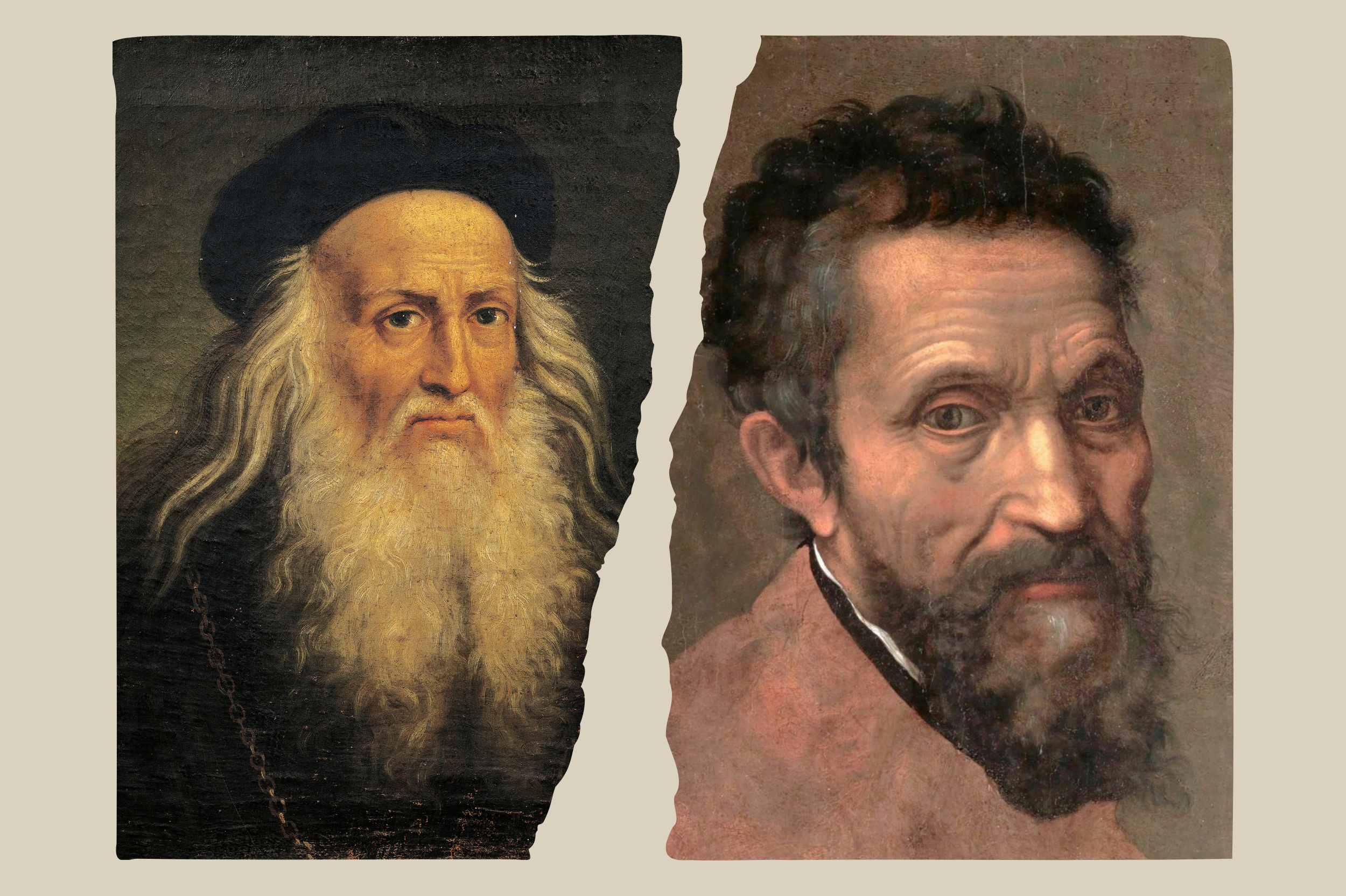
Leonardo da Vinci and Michelangelo, two of history's most celebrated artists, had a well-documented rivalry rooted in competition for commissions, class differences, and artistic disagreements. Their first known encounter occurred when Leonardo served on a committee deciding the placement of Michelangelo's *David* (1501), where Leonardo reportedly mocked the sculpture by sketching it as the sea god Neptune. Their rivalry escalated when both were commissioned to paint opposing murals in Florence's Salone dei Cinquecento—Leonardo's *Battle of Anghiari* and Michelangelo's *Battle of Cascina*—neither of which was completed. The artists traded insults over the years, with Michelangelo criticizing Leonardo's view of sculpture as inferior to painting, and Leonardo deriding Michelangelo's muscular figures as resembling "a bag of walnuts."

art dead artists museum exhibitions politics

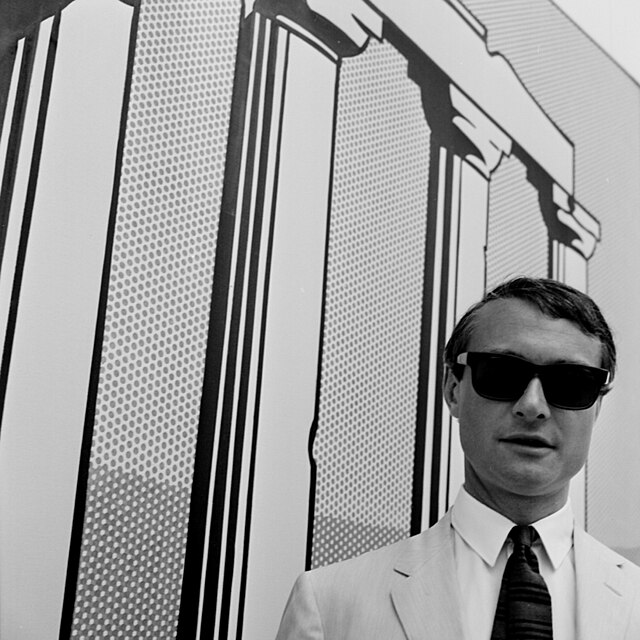
CULTURED reports that in 2025, nearly 50 percent of solo exhibitions at New York museums featuring modern and contemporary art focused on deceased artists, more than double the 18 percent share in 2019. Major institutions like MoMA, the Broad, ICA Miami, and the Whitney have programmed posthumous shows for figures such as Wifredo Lam, Helen Frankenthaler, Ruth Asawa, Robert Therrien, Joyce Pensato, Richard Hunt, and Roy Lichtenstein. The article traces this trend to a confluence of factors: ongoing scholarly revisionism, a cultural swing toward equity during the Biden administration, and the long lead times for museum exhibitions that have landed in a more polarized political climate under Trump II.

Comment | We must avoid amputating art in the name of preservation

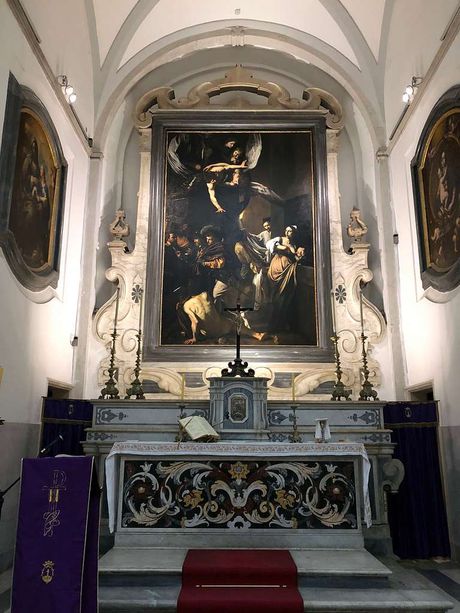
The article recounts the author's experience viewing Caravaggio's *Seven Acts of Mercy* (1607) in its original chapel in Naples, where the painting's crowded, dramatic composition directly mirrors the chaotic streets of the city, revealing its sacred meaning through context. In contrast, the author describes Caravaggio's *Flagellation of Christ* (1607), moved from the church of San Domenico Maggiore to the Museo di Capodimonte for security reasons, as a painting "marooned"—its spiritual purpose broken, reduced to a mere object for aesthetic appreciation.

What Art Can Do

A conversation between German author and filmmaker Alexander Kluge and curator Hans Ulrich Obrist, originally published in 2017, has been republished following Kluge's recent death at age 94. The dialogue explores the unique capacities of different art forms, the need for interdisciplinary collaboration, and the role of art as an "oasis" or "garden" within an overwhelming technological landscape.

The Guardian view on the legacy of the Festival of Britain: look to the future | Editorial

The Guardian editorial reflects on the 75th anniversary of the Festival of Britain, launched by King George VI on 3 May 1951 as a "tonic" for a war-weary nation. It highlights the festival's most enduring legacy: the construction of the South Bank, including the Royal Festival Hall, which later became the Southbank Centre—the UK's largest arts complex. This summer, commemorations include poems from London schoolchildren projected onto its walls and a mobile poetry library visiting coastal towns, recreating the journey of the repurposed naval ship Campania. The festival, a triumph for the Labour government, faced critics like Evelyn Waugh and Noël Coward, and much of its physical infrastructure was demolished by the incoming Conservative government, save for the Royal Festival Hall.

art gabriela hearst adam pendleton nina simone

Fashion designer Gabriela Hearst and visual artist Adam Pendleton have collaborated on a limited edition of 25 Nina bags, reimagining Hearst's classic style with Pendleton's unique silkscreens. The bags are being sold this month at Sotheby's, with net sales proceeds going to preserve singer Nina Simone's childhood home, which Pendleton and other artists purchased in 2017. The collaboration coincides with Pendleton's exhibition "Love, Queen" at the Hirshhorn Museum in Washington, DC, running through January 2027.

design fashion black bourgeois aesthetic rob franklin

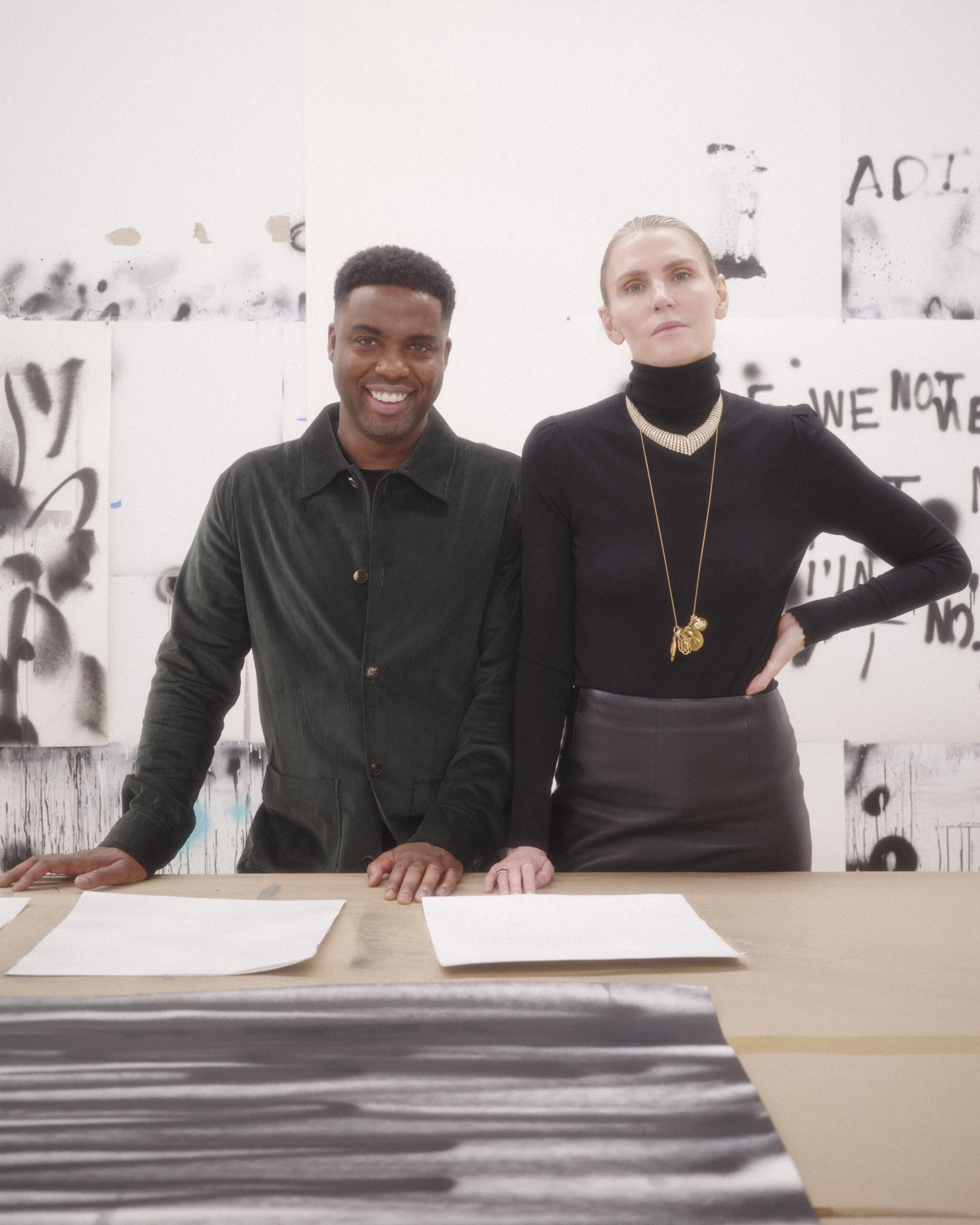
The article is a personal essay by a writer reflecting on the play "Purpose" and its depiction of a Black political family's home, which triggers memories of his own childhood in the Morehouse College president's residence. He observes a recent surge in popular culture's portrayal of Black bourgeois aesthetics, citing examples like the Met Gala exhibition "Superfine: Tailoring Black Style," Ralph Lauren's Oak Bluffs collection, and the HBO series "And Just Like That…" with its focus on the Todd Wexley family's art-filled apartment.

Iran’s arts community and heritage suffer as US-Israeli attacks continue

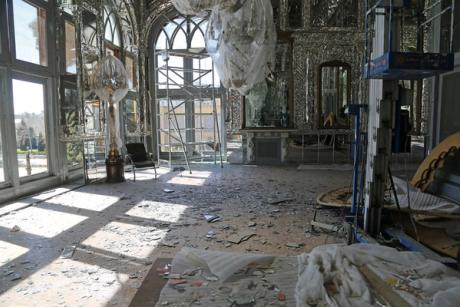
The US-Israeli bombardment of Iran, beginning in late February, has severely disrupted the country's cultural life and art scene. The typically busy Nowruz (Persian New Year) period was marked by fear, travel restrictions, and internet blackouts, leading to the evacuation of museum collections, the closure of galleries, and artists being unable to work in their studios.

secret mall apartment documentary michael townsend

A new documentary titled *Secret Mall Apartment*, directed by Jeremy Workman and produced by Jesse Eisenberg, tells the true story of eight artists who secretly built and lived in a hidden apartment inside the Providence Place mall in Providence, Rhode Island, for four years in the late 1990s and early 2000s. Led by Michael Townsend, the group—including Adriana Valdez Young, Andrew Oesch, Jay Zehngebot, Colin Bliss, James Mercer, Greta Scheing, and Emily Ustach—transformed a forgotten dead zone of the corporate complex into a living space and art collective headquarters, calling the project "Malllife." The film features never-before-identified participants and footage of their discovery by mall authorities.

How the adoption of canvas in Venice changed the way artists painted

Art historian Cleo Nisse has published a new book, *Venetian Canvas and the Transformation of Painting*, examining how 16th-century Venetian painters such as Titian, Veronese, and Tintoretto pioneered the use of canvas as a painting support. Nisse reveals that canvas was not a uniform material—artists experimented with different weaves, including tabby and herringbone patterns, and even repurposed sailcloth and tablecloth-quality fabrics to achieve specific visual effects. The book argues that canvas was already familiar in the late Middle Ages for banners and alternatives to tapestry, and that Vittore Carpaccio was the first master of the medium, varying canvas types for expressive purposes in his *Legend of St Ursula* series.

28 years later antony gormley angel of the north

The article examines the appearance of Antony Gormley's iconic 1998 sculpture *Angel of the North* in the zombie film *28 Years Later*. The Cor-Ten steel work, which towers 66 feet tall near Gateshead, appears in an overgrown field as a symbol of post-apocalyptic abandonment, reflecting the film's themes of failed quarantine and societal collapse. Director Danny Boyle and screenwriter Alex Garland use the sculpture to critique conservative British politics, with the film's ending making explicit reference to a British celebrity posthumously accused of rape.

art bites dali yoko ono blade of grass

The article recounts a bizarre anecdote from art history involving Salvador Dalí and Yoko Ono. After meeting in 1969 during Ono's honeymoon with John Lennon, Ono later requested a hair from Dalí's mustache, offering $10,000. Dalí, suspicious that Ono might use the hair for occult purposes, instead sent her a dry blade of grass in a pretty box, as recalled by his muse Amanda Lear.

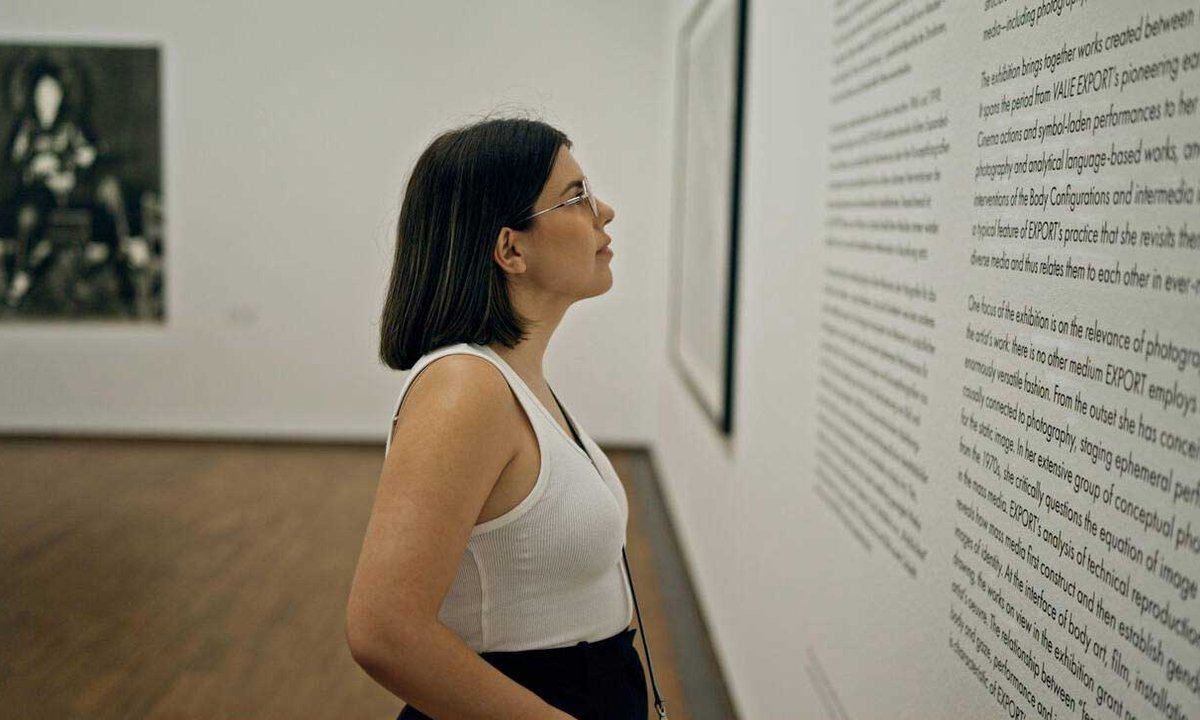
Museum wall texts are an art in their own right—but will they survive the digital age?

The article explores the debate over museum wall texts, examining whether they enhance or hinder the visitor experience. It highlights contrasting approaches: Calder Gardens in Philadelphia has eliminated wall text entirely, branding itself as "open to interpretation," while institutions like the Frick Pittsburgh and the Royal Ontario Museum (ROM) continue to use carefully crafted labels, often with strict word limits and multiple languages. The Frick Pittsburgh invites guest "labelists" from the local community to write labels, and the ROM focuses on making text shorter and more scannable to hold visitors' limited attention.

A brush with… Suzanne Jackson—podcast

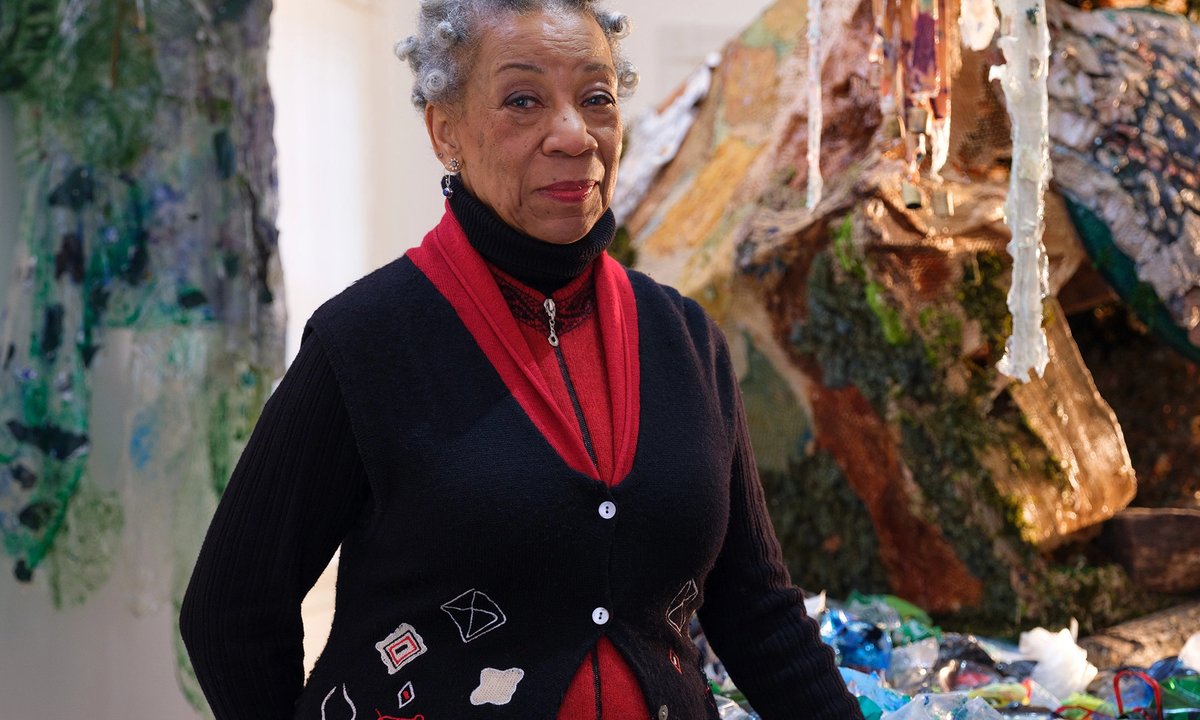
This podcast episode features an in-depth conversation with artist Suzanne Jackson, who discusses her multifaceted career spanning drawing, painting, poetry, dance, and theatre. Born in 1944 in St. Louis and raised in San Francisco and Fairbanks, Alaska, Jackson draws on Native American and African American traditions to explore the spiritual connection between people and nature. She reflects on influences including Barbara Chase Riboud, Elizabeth Catlett, and Torkwase Dyson, and shares insights into her studio practice and her view on art's purpose. The episode also highlights her current survey exhibition "What is Love," which travels to SFMOMA, the Walker Art Center, and the Museum of Fine Arts, Boston through 2027.

Comment | The greatest failure of PST Art: its successes are not travelling

The article critiques PST Art (formerly Pacific Standard Time), a $20 million Getty-funded initiative in Southern California, as its current edition wraps up. It highlights the closure of key exhibitions like "For Dear Life: Art, Medicine and Disability" at the Museum of Contemporary Art San Diego before major art events like Frieze Los Angeles, and notes that only 7 of the 72 exhibitions are traveling to other institutions. The piece questions the initiative's purpose and effectiveness in reaching broader audiences.

What does it really mean to ‘age well’?

The article explores the concept of 'aging well' through the lens of art and creativity, examining how artists and cultural figures approach their later years. It discusses various perspectives on maintaining vitality, purpose, and artistic practice as one ages.

SOL HENARO: “BAJAR LA VELOCIDAD ES POLÍTICO Y, AUNQUE CUESTA MUCHO, HAY QUE SEGUIR INTENTÁNDOLO”

Sol Henaro, director of the Museo Universitario del Chopo in Mexico City, argues in an interview for Artishock Revista that museums must resist neoliberal pressures to accelerate production, spectacularize content, and convert cultural experience into immediate consumption. She advocates for the museum as a space of plurality, deceleration, and critical thought, emphasizing the need for horizontal, careful practices that allow for dissent and coexistence. The interview is part of a series on International Museum Day featuring directors from Latin American and Ibero-American institutions.

cultural critics 2025

The Art Angle podcast hosted eight cultural critics, theorists, and artists throughout 2025 to reflect on key tensions and transformations in the art world. The roundup features voices including Nadia Asparouhova on the value of intimate 'antimemetic' art spaces, Andrea Fraser on the fragmentation of the art field, Alison E. Gingeras on the necessity of all-women exhibitions as resistance, Dean Kissick on the problems of social justice art, and Sean Monahan on social surveillance in the art world. Each thinker offers a snapshot of the debates, anxieties, and aspirations shaping contemporary cultural discourse.

Taking a Deep Dive into a Connecticut Ranch House

Artist couple Janis Provisor and Brad Davis transformed an indoor swimming pool in their Connecticut ranch house into a studio, prioritizing their creative work over leisure. The article explores how they adapted the unconventional space to suit their artistic practices.

Go big or go home: how The Lost Giants revived the ancient art of goliath-making

The Lost Giants (TLG), an art collective based in Lostwithiel, Cornwall, is reviving the British tradition of making processional giants—large, community-built figures made from wood, cloth, and papier-mâché. Founded three years ago by theatre designer Ruth Webb and her sister-in-law Amy Webb, the group has created giants for events ranging from local lantern parades to a harvest procession at Hauser & Wirth’s Somerset gallery. This New Year’s Eve, environmentalist Lisa Schneidau joined a massive procession of these giants in Lostwithiel, describing it as an extraordinary experience. The collective recently issued a public callout for an environmental group to collaborate on making a new beastie.

11 Worst Modern Art Collection & It’s Reviews

The article presents a list of what it considers the worst modern artworks, including Jackson Pollock's abstract expressionist paintings, Tracey Emin's installation 'My Bed,' and Damien Hirst's project 'The Currency.' It offers personal commentary and critical reviews for each piece, questioning their artistic merit and cultural value.

charli xcx sound sculpture amanda camenisch

The article reports that Charli XCX plays a sculptural harp by artist Amanda Camenisch in the film *100 Nights Of Hero*, which premiered at the Venice International Film Festival. The instrument, titled *Elemental Harp: Fire* (or "Fire Harp"), was commissioned by the London Brent Biennial in 2022 and is part of a series of five sound sculptures representing elemental forces. Camenisch, a London-based photographer, filmmaker, and performer, creates hand-forged sonic sculptures designed for participatory rituals and vibrational healing.

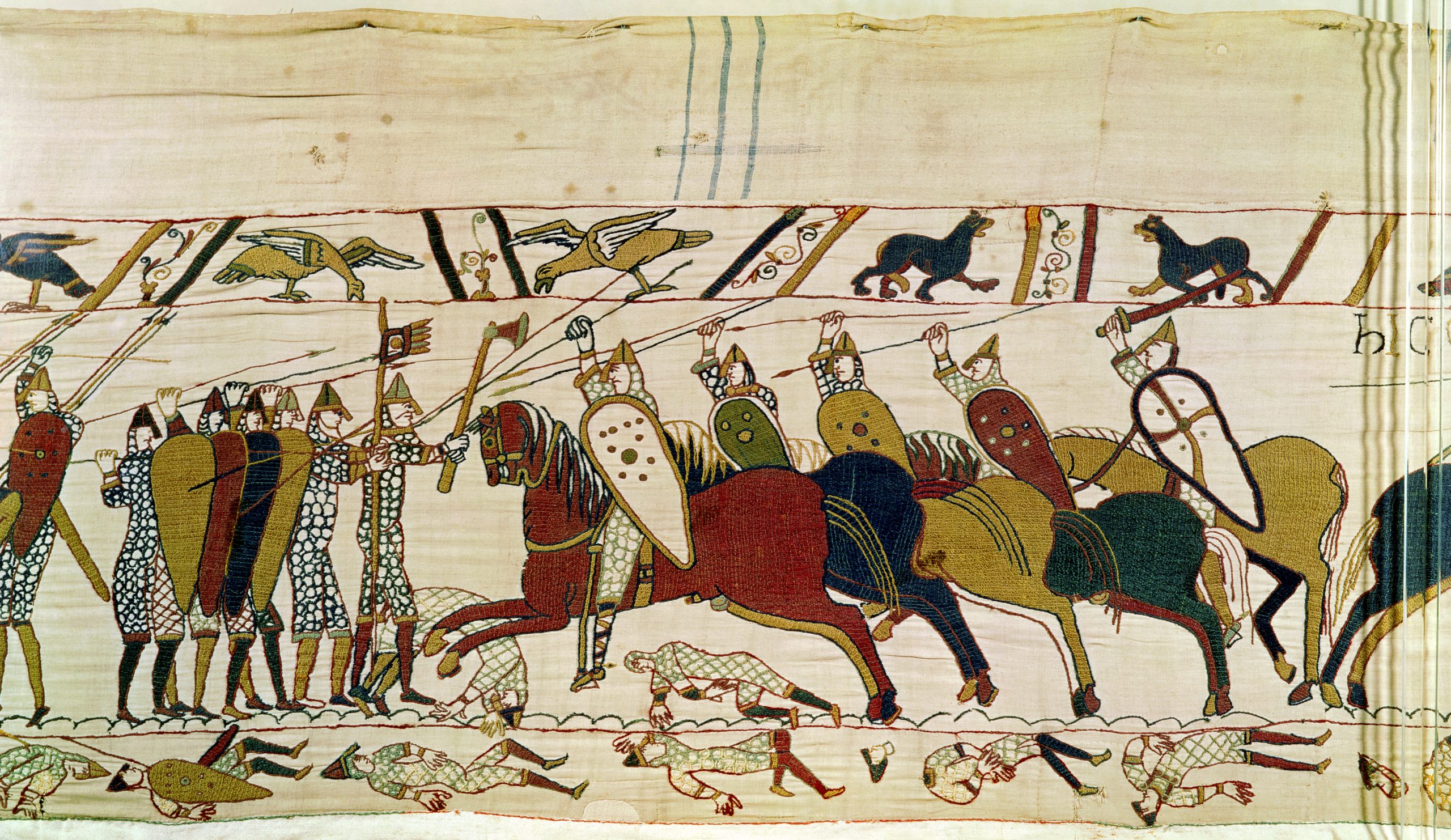
bayeux tapestry 93 penises offer clues

The article examines historian George Garnett's analysis of the 93 penises depicted in the Bayeux Tapestry, a 225-foot-long embroidery chronicling the Norman conquest of England in 1066. Garnett, a professor of Medieval history at Oxford University, argues that the size and placement of these genitalia—88 on horses and five on men—offer clues about the tapestry's meaning. He notes that the largest equine phallus belongs to Duke William's stallion, followed by those of Harold Godwinson and Odo of Bayeux, suggesting a hierarchy of importance. More significantly, Garnett interprets four penises attached to men in the tapestry's border as references to Aesop's fables, indicating themes of deceit, shame, and illicit sex, which he believes challenge the traditional attribution of the tapestry's commission to Odo of Bayeux.