filter_list Showing 8694 results for "One" close Clear
search
dashboard All 8694 museum exhibitions 4006article news 1118trending_up market 1021article local 798article culture 591person people 366article policy 286candle obituary 205rate_review review 164gavel restitution 122article event 10article events 4article museums & heritage 1article museum 1article school 1
date_range Range Today This Week This Month All
Subscribe

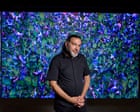
Photographer Giles Duley brings images of historic and current wars into dialogue in Manhattan pop-up show

British photographer Giles Duley has opened a pop-up exhibition titled "Distortion/Memory/Resilience" in a 77th-floor penthouse at Sutton Tower in Manhattan, running from 12 to 24 May. The show features haunting war photography alongside installations—Youth, Childhood, and Memory—that draw parallels between historic and current conflicts. Duley, who lost both legs and an arm after stepping on a landmine in Afghanistan, uses a camera obscura, children's art from war zones, and side-by-side images of injured children from the London Blitz and Beirut to create an immersive experience. The exhibition is presented by the luxury tower's developer and includes benefit dinners hosted by Duley.
Enter the unsettled space of Asian American abstraction

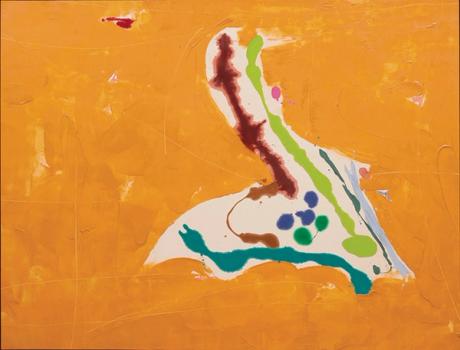
The Milton Resnick and Pat Passlof Foundation in New York is hosting the exhibition "How Asian Is It?", featuring 12 pioneering East Asian American abstractionists born between 1928 and 1955. Curated by Lilly Wei, the show includes works by Barbara Takenaga, Emily Cheng, Charles Yuen, and David Diao, among others. These artists navigated an art world where downplaying their Asian identities often felt necessary for survival, especially after the 1965 Immigration and Nationality Act reshaped US immigration policy. The exhibition explores how their abstraction—marked by attention to interval, pause, and what remains unsaid—reflects a disciplined negotiation with space rather than a shared style or manifesto.

Clothing Brand Hurley Is Collaborating with Keith Haring Estate on Capsule Collection

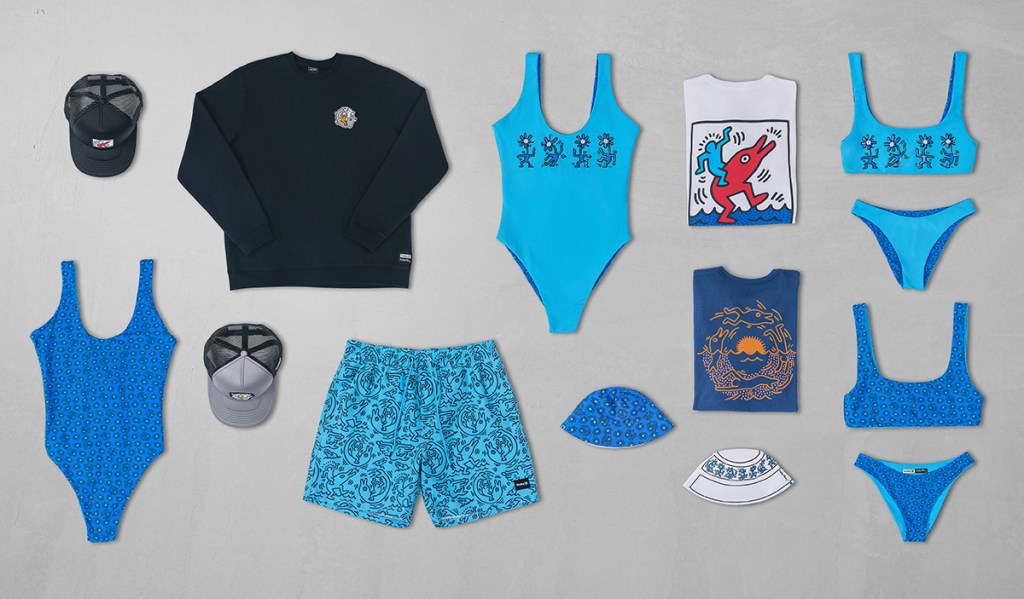
Streetwear brand Hurley, known for surf and swim apparel, has released a capsule collection inspired by the late artist Keith Haring. The collection includes T-shirts, board shirts, hats, bathing suits, and sweatshirts for men and women, with prices ranging from $28 to $100. Haring, who died of AIDS-related causes in 1990 at age 31, was internationally known for his graffiti-inspired artworks and recurring motifs like radiant babies and dancing figures.

Close encounters: the new wave of women photographers – in pictures

The Saltzman-Leibovitz photography prize, founded in 2025 by Lisa Saltzman and Annie Leibovitz, announces its winners and runners-up for 2026. Bolivian photographer Marisol Mendez wins for her series 'MADRE,' which challenges patriarchal representations of women in Bolivia through portraits of matriarchs and references to the Inca moon goddess. Runner-up Miranda Barnes documents African American debutante cotillions in Detroit, while other featured photographers include Bettina Pittaluga and Cole Ndelu, whose works explore body diversity and the fusion of Zulu cosmology with Catholicism. The exhibition runs at Photo London, Olympia, 13–17 May 2026.

Political Fallout Rocks Venice Biennale Prize System

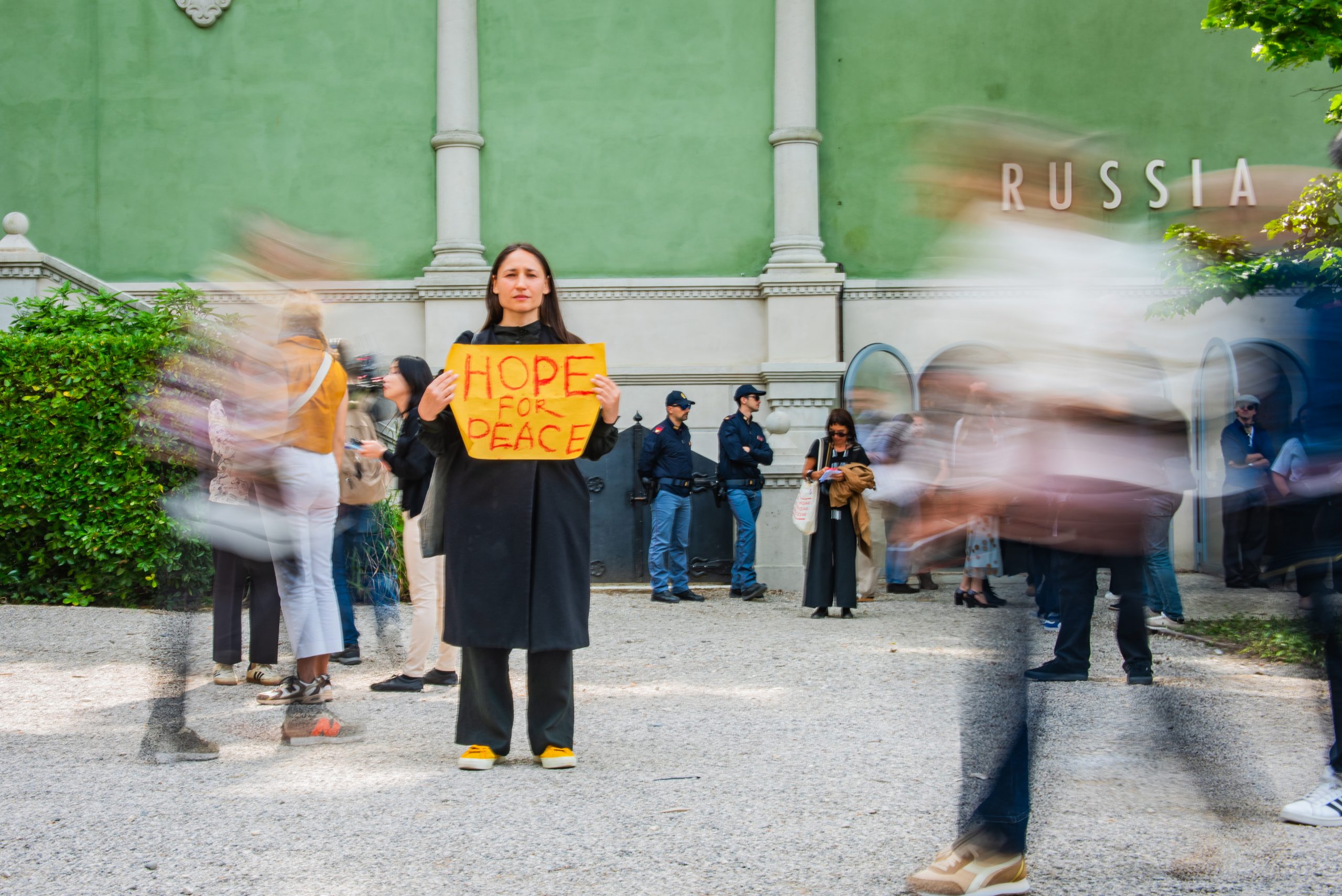
Dozens of artists participating in the 2026 Venice Biennale have withdrawn from consideration for the newly created Visitor Lion awards, replacing the traditional Gold and Silver Lion prizes. A total of 57 artists from the main exhibition and 22 national pavilions signed a statement published on e-flux on May 9, acting in solidarity with the five-person prize jury that resigned on April 30 over the continued participation of Russia and Israel. The jury had objected to awarding prizes to artists from countries whose leaders face International Criminal Court charges, including Russian president Vladimir Putin and Israeli prime minister Benjamin Netanyahu. In response, the Biennale organizers postponed the awards ceremony to November 22 and introduced visitor voting, a move they described as consistent with openness and dialogue. Meanwhile, the Russian Pavilion, which returned after lending its space to Bolivia in 2024, faced protests, closure after previews, and a €2 million funding pull by the European Union for the 2028 Biennale.

Who Owns the Megayachts Docked Outside the Venice Biennale?

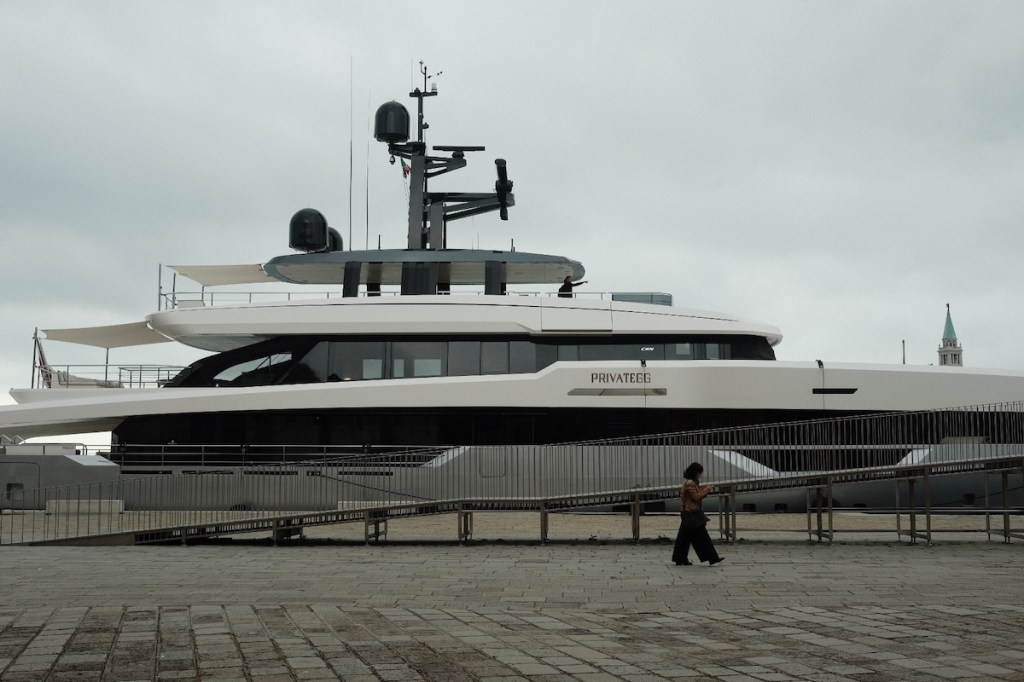
The article examines the megayachts docked outside the Venice Biennale, focusing on the 170-foot vessel 'Private GG' owned by Giancarlo Giammetti, cofounder of the Valentino fashion house. Giammetti, a serious art collector, was in Venice for the Biennale opening, posting photos of artworks and a dinner with actress Salma Hayek and her husband François-Henri Pinault, a major art collector. The yacht, built in 2022 by CRN, features luxury amenities including a jacuzzi, cinema saloon, and beach club.

Several Venice Biennale pavilions shut in protest over inclusion of Israel

Several national pavilions at the 2026 Venice Biennale shut down during the final preview day in a strike organized by the Art Not Genocide Alliance (Anga) protesting Israel's inclusion due to its war in Gaza. Pavilions from Belgium, the Netherlands, Austria, Japan, Macedonia, and Korea closed entirely, while others like Britain, Spain, France, Egypt, Finland, and Luxembourg partially closed or reopened later. Artists in the main exhibition added Palestinian flags and posters reading "Palestine is the future of the world." The Israeli pavilion was closed for a private event, and earlier in the week Pussy Riot staged a protest at the Russian pavilion.

At the Venice Biennale, Ukraine’s Pinchuk Art Centre finds fragile moments of joy amid loss

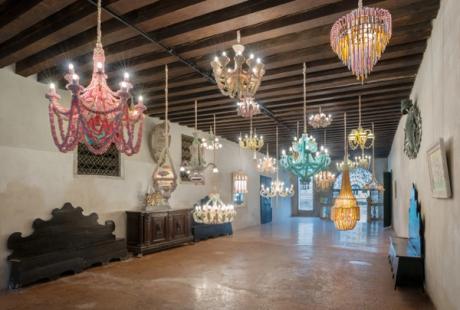
The Pinchuk Art Centre in Kyiv has transformed its Venice Biennale presentation from a glamorous celebration of young artists into a somber exhibition responding to the Russian invasion of Ukraine. This year's show, titled "Still Joy — From Ukraine into the World" (9 May-1 August) at the Palazzo Contarini-Polignac, features works by international artists like Tacita Dean and Julian Charriere alongside Ukrainian artists, as well as testimonials from soldiers collected by former marine Hlib Stryzhko. The exhibition explores how joy can persist amid trauma, with installations including pink scrolls bearing survivors' quotes, light box photographs of bombed interiors with rescued pot plants, and a sculpture of bells with displaced women's fingerprints.

Khaled Sabsabi is finally at the Venice Biennale: ‘Being here is already a win’

Khaled Sabsabi has opened his exhibition 'conference of one’s self' at the Australian Pavilion of the 61st Venice Biennale, alongside a second installation 'Khalil' in the Arsenale. This follows a tumultuous period in which Creative Australia rescinded his appointment as Australia’s representative in February 2025, sparking widespread backlash from the art community. After being reappointed in July 2025, Sabsabi presents two monumental multimedia works inspired by Sufi practice, created in Bangkok and described as 'one body with two limbs'.

Drained, Drowning, and Decay: The Best National Pavilions at the Venice Biennale

The 2026 Venice Biennale is defined by themes of ruin and decay, with standout national pavilions exploring bodily, infrastructural, and archaeological collapse. The Slovenian Pavilion features the Nonument Group repurposing materials from past Biennales into a ruin of a mosque for Bosnian Muslim soldiers from World War I. Syria presents its first national pavilion since the Civil War, with Sara Shamma invoking Palmyra, destroyed by ISIS. Germany's pavilion, titled "Ruin," features works by Henrike Naumann (who died in February) and Sung Tieu, questioning the pavilion's fascist architecture and nationalist residue. The Austrian Pavilion, curated by Florentina Holzinger, offers a visceral performance titled "Sea World." The Biennale is also marked by the abrupt resignation of its five-member jury, who refused to consider nations charged with crimes against humanity, leading to awards being chosen by public vote. Additionally, the main exhibition "In Minor Keys" was affected by the death of its curator, Koyo Kouoh.

Lithuanian, Latvian, and Estonian Pavilions Stage Pro-Ukraine Procession During Venice Biennale

On May 6, 2026, the Lithuanian, Latvian, and Estonian pavilions at the Venice Biennale organized a procession in solidarity with Ukraine, walking approximately one and a half miles from the Lithuanian Pavilion in the Fucina del Futuro to the Estonian pavilion. The action honored Ukrainian cultural workers creating under war conditions and those who have died. It is one of several political protests at the contentious 2026 Biennale, including demonstrations by Pussy Riot and FEMEN at the Russian pavilion, a "Solidarity Drone Chorus" opposing Israel's inclusion, and a planned 24-hour strike by the Art Not Genocide Alliance.

Fondazione Sandretto Re Rebaudengo’s New Art Island Made a Sunny Splash in a Rainy Venice Vernissage Week

Patrizia Sandretto Re Rebaudengo, an ARTnews Top 200 collector, inaugurated a new art site on the island of San Giacomo in Venice’s Northern Lagoon during the rainy preview week of the Biennale. The island, purchased in 2018, features two Napoleonic-era powder magazines transformed into exhibition spaces: one hosting the group show “Don’t have hope, be hope!” from the Sandretto Re Rebaudengo Collection, and the other presenting “Fanfare/Lament,” a solo exhibition by Matt Copson curated by Hans Ulrich Obrist. The site also includes permanent installations by artists such as Claire Fontaine, Mario Garcia Torres, Hugh Hayden, Goshka Macuga, Pamela Rosenkranz, and Thomas Schütte, and will serve as a venue for exhibitions, performances, and residencies.

An Unprecedented 24-Hour Strike Could Upend the Venice Biennale

An unprecedented 24-hour strike is set to interrupt the Venice Biennale's opening week on Friday, May 8, in protest of Israel's participation in the global art event. The action, organized by the activist group Art Not Genocide Alliance (ANGA), follows a letter signed by over 230 Biennale participants demanding Israel's exclusion. The strike has exposed divisions among participants, with some artists and pavilion teams weighing solidarity against the rare opportunity to platform their own political messages. The Slovenian pavilion, represented by Nika Grabar of the Nonument Group, has committed to the strike, while others like Ecuador's Tawna Collective remain undecided, balancing protest with their mission to highlight ecological crises in the Amazon.

Parasol Unit returns with a showcase of women from Central Asia and beyond

Parasol Unit, the London non-profit exhibition space that closed in 2020 after 16 years, has relaunched with a new exhibition titled "Turandot: To the Daughters of the East" as an official collateral event of the Venice Biennale. Held at the historic Palazzo Franchetti, the show features 11 female artists from Central Asia and surrounding regions, curated by founder Ziba Ardalan. The exhibition spans video, installation, sculpture, painting, textile, and sound works by artists including Lida Abdul, Huma Bhabha, Mona Hatoum, and Tala Madani, and runs from 9 May to 31 October.

Venice Diary Day 2: “In Minor Keys” Is a Major Statement on Perseverance and Play

The article is a diary entry from the 2026 Venice Biennale, focusing on the exhibition "In Minor Keys" curated by the late Koyo Kouoh. The author describes an emotional experience, beginning with a poem by Refaat Alareer on the Arsenale wall, and highlights works by Guadalupe Maravilla, Alexa Kumiko Hatanaka, and others that address themes of perseverance, healing, and survival. Maravilla's sculptures reference a child kidnapped by ICE, while Hatanaka's linocuts explore bipolar disorder as an adaptive trait. The show also features artist-led collectives like Denniston Hill and fierce pussy, emphasizing institution-building and world-making.

First Impressions of a Venice Biennale Torn Apart by the Present

The 61st Venice Biennale, titled "In Minor Keys," opens amid turmoil: its curator Koyo Kouoh died of cancer during planning, and the festival jury resigned after a controversial statement about excluding Israel and Russia from prizes, replaced by a Eurovision-style people's choice award. The main exhibition, completed by a team of five collaborators using Kouoh's plans, features over 110 artists and collectives, with highlights including works by Big Chief Demond Melanchon, Tammy Nguyen, Guadalupe Maravilla, Ayrson Heráclito, and a section focused on Michael Armitage's Nairobi Contemporary Art Institute.

The Biennale Isn’t a Court. Tell That to the Protesters.

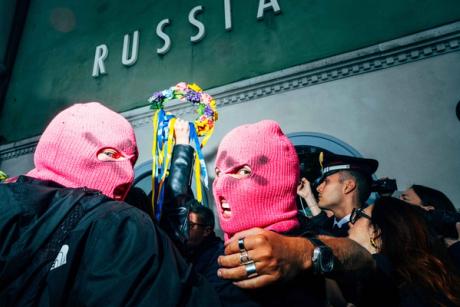
Pietrangelo Buttafuoco, president of the Venice Biennale, defended the decision to allow Russia to reopen its pavilion for the first time since its 2022 invasion of Ukraine, stating that the Biennale is "not a court; it is a garden of peace." The move has sparked widespread backlash, including threats to pull €2.3 million in EU funding. Protests have erupted on the ground, with Pussy Riot and FEMEN staging a theatrical demonstration outside the Russian Pavilion, setting off smoke flares and chanting slogans. Separately, around 60 artists performed a "Solidarity Drone Chorus" to protest Israel's participation, and the Art Not Genocide Alliance has called for a 24-hour strike and rallies across Venice. The Russian Pavilion will be open only during press preview days due to EU sanctions, with video projections visible from outside for the rest of the Biennale's run.

Malaysia Showcases Recovered 1MDB Artworks, From Picasso to Miró

Four artworks recovered from the 1MDB scandal—by Picasso, Miró, Balthus, and Maurice Utrillo—have gone on public display for the first time at the Malaysian Anti-Corruption Commission headquarters in Putrajaya. The paintings were repatriated from New York after being traced through Sotheby’s and shipped back to Malaysia on April 14. They are part of a broader art trail linked to the massive financial fraud, with Malaysian officials framing the display as an act of restitution rather than an art event.

Major protests take place at Venice Biennale previews

Major protests erupted during the preview days of the Venice Biennale, with multiple demonstrations targeting the Israeli and Russian pavilions. On Wednesday, the Art Not Genocide Alliance (ANGA) held a large protest outside the temporary Israeli pavilion in the Arsenale, attended by over 200 people calling for its closure. Separately, the Solidarity Drone Chorus performed a sound composition by Gazan artist Ahmed Muin, with 60 artists wearing T-shirts bearing names of artists from Gaza. Meanwhile, Pussy Riot and FEMEN protested Russian participation, forcing the Russian pavilion to shut its doors. These actions follow the resignation of the entire Golden Lion jury days before the opening, after they stated they would not consider pavilions from countries whose leaders are charged with crimes against humanity by the ICC—widely seen as a reference to Russia and Israel.

In Protest of Israeli Pavilion, Activists and Unions Plan Strike on Venice Biennale’s Opening Day

The Art Not Genocide Alliance (ANGA) has announced a 24-hour strike and rally on May 8, the day before the 2026 Venice Biennale opens to the public, in protest of the Israeli Pavilion. ANGA, formed in opposition to Israel's inclusion in the 2024 Biennale, refers to the current Israeli presentation—featuring Haifa-based artist Belu-Simion Fainaru—as the "Genocide Pavilion." Over 200 artists, curators, and culture workers have signed an open letter demanding Israel's exclusion, and a separate action called Solidarity Drone Chorus involved 60 artists. ANGA is collaborating with local labor and culture organizations including Biennalocene, Vogliamo Tutt'altro, S.a.L.E. Docks, and Mi Riconosci.

A Pavilion of Ruins: Germany Reconsiders Its Past in Venice

The German Pavilion at the 61st Venice Biennale features a dual presentation exploring the country's layered political history. Artist Sung Tieu has cloaked the pavilion's fascist-era facade with a mosaic reconstruction of a GDR housing estate for Vietnamese contract workers, where she lived as a child. Inside, the late Henrike Naumann's immersive installation 'The Home Front' uses furniture and design to stage a confrontation between East and West German domestic and political ideologies. Naumann died in February 2025 at age 41, but her fully realized concept was completed collaboratively by her partner and curator Kathleen Reinhardt.

Dark clouds, protests and resignations dampen start of 61st Venice Biennale

The 61st Venice Biennale opened under grey skies and rain, with political tensions overshadowing the art world's premier event. The Russian pavilion, absent for two editions due to the Ukraine war, reappeared with a party atmosphere, though the Italian ministry of culture confirmed it would not be open to the public. The Ukrainian culture minister called Russia's symbolic presence powerful. The Iranian pavilion withdrew without explanation, and a protest by 60 artists from the In Minor Keys show marched through the Giardini humming in solidarity against Israel's participation. Over 200 artists, including Lubaina Himid and Alfredo Jaar, signed an open letter demanding the Israeli pavilion's cancellation. The event also proceeded without its curator, Koyo Kouoh, who died in May 2025; her curatorial team delivered the exhibition following her plans.

Pleasure, parody and propaganda: rethinking the art of illustration in a new history of the genre

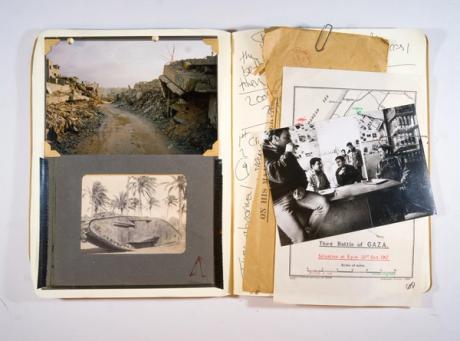
D.B. Dowd's new book "Reading Pictures" offers a sweeping 400-page history of illustration, tracing the genre from the Diamond Sutra frontispiece in Tang China (AD868) to Molly Crabapple's Gaza reports in 2015. The book examines key works such as Jules Chéret's 1891 poster for the Alcazar d'Été Club, Stuart Davis's caustic covers for The Masses, and Duong Ngoc Canh's Vietnamese propaganda poster, arguing that illustrations are meant to be "read" rather than admired like museum paintings.

Treasures From Matthew Perry’s Estate Head to Auction for a Good Cause

Heritage Auctions will sell a trove of artifacts from Matthew Perry's estate starting June 5, including scripts and memorabilia from the sitcom *Friends*, artworks by Banksy and Mel Bochner, and personal items like a 3D portrait of his invented superhero "Mattman." Proceeds benefit the Matthew Perry Foundation, a nonprofit focused on ending addiction stigma and expanding access to evidence-based care, founded after the actor's death in 2023.

‘She had a fresh, informed eye’: mural depicting late Venice Biennale curator Koyo Kouoh displayed in lagoon city

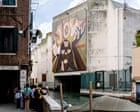
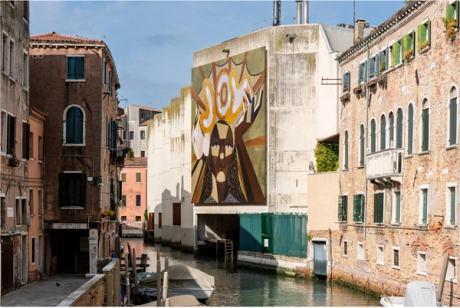
A mural honoring Koyo Kouoh, the late curator of the 2025 Venice Biennale, has been unveiled in Venice. Created by US artist Derrick Adams, the collage titled "Heavy is the head that wears the crown" adorns the facade of the Palazzetto dello sport Giobatta Gianquinto near the Arsenale. Kouoh died on 10 May 2025 at age 57 after a cancer diagnosis. The tribute was organized by curator Francesco Bonami, who had invited Kouoh to join the jury for the 50th Venice Biennale in 2003.

BBC ‘Buried’ Footage of Banksy at NYC Mural Site, Former Reporter Claims

Former BBC New York correspondent Nick Bryant claims the BBC suppressed footage he captured of Banksy at a mural site in New York City in March 2018. In a Substack post, Bryant recounts being tipped off by Banksy's PR team about a new artwork at the Houston Bowery Wall, where he and his cameraman filmed the artist—described as a middle-aged man in a black beanie and grey coat—fleeing the scene with fresh paint on his fingers. Despite believing he had a world exclusive, Bryant says BBC editors in London decided not to air the footage, citing concerns about unmasking the artist and preserving the mystery for audiences, including a senior colleague's daughter who compared revealing Banksy's identity to telling children there is no Santa Claus.

Seen a ghost? The eeriest images from Fotografia Europea – in pictures

Fotografia Europea, the international photography festival in Reggio Emilia, Italy, has opened with 20 exhibitions and related events under the theme 'ghosts of the moment'. The festival features works by artists including Tania Franco Klein, Giulia Vanelli, Felipe Romero Beltrán, and Salvatore Vitale, exploring themes of memory, migration, identity, and the unseen forces shaping contemporary life. The festival runs until 14 June 2026.

What It Takes to Build the Venice Biennale

Three weeks before the Venice Biennale opens on May 5, the city remains a construction site, with the Giardini closed and parts of the Arsenale requiring special access. Artist Faustin Linyekula rehearses his performance *The Galeazze Project* in a 16th-century roofless complex, working with the existing gravel, natural light, and lagoon acoustics rather than imposing a structure. Geopolitical conflicts, supply chain disruptions, and the sudden resignation of the Biennale’s international jury via Instagram add pressure to the already challenging logistics of mounting the global exhibition.

‘It has become a symbol of hope’: the epic journey of Ukraine’s origami deer to the Venice biennale

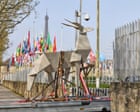
Ukrainian artist Zhanna Kadyrova's concrete origami deer sculpture, originally installed in Pokrovsk in 2018, has been evacuated from the war-torn Donetsk region and transported across Europe to become the centerpiece of Ukraine's national pavilion at the 2026 Venice Biennale. The sculpture, which replaced a Soviet fighter-bomber monument in a local park, was rescued in August 2024 by co-curator Leonid Marushchak amid intensifying Russian attacks, with the help of city authorities and museum staff.

After His Untimely Death, Rutherford Chang’s Survey Rewrites What a Square Can Do

Rutherford Chang, who died last year at age 45, is the subject of a posthumous survey at UCCA Center for Contemporary Art Beijing titled "Hundreds and Thousands." The exhibition centers on Chang's socially engaged works that explore value, circulation, and systems through the deceptively simple form of the square. His best-known piece, "We Buy White Albums" (2013–25), involved amassing roughly one percent of the first pressing of the Beatles' "White Album," highlighting how objects accrue personal and economic worth through use and history. Other works include melting 10,000 copper pennies into a cube and assembling Wall Street Journal portraits from 2008 into a grid that captures a year of crisis and change.