filter_list Showing 39 results for "Ader" close Clear
search
dashboard All 1362 museum exhibitions 641article local 187article news 159article culture 121trending_up market 83person people 72article policy 40rate_review review 39gavel restitution 11candle obituary 9
date_range Range Today This Week This Month All
Subscribe

Notes from New York: The World in a Convex Mirror

The article reviews the sixth edition of MoMA PS1's quinquennial survey 'Greater New York 2026,' which coincides with the institution's 50th anniversary. It highlights works by artists such as Covey Gong, Win McCarthy, Mekko Harjo, and Sophie Friedman-Pappas, noting how the exhibition's themeless structure and use of reflective surfaces create a hall of distorted reflections. The show includes 53 emerging and midcareer artists, mostly millennials, and is accompanied by a block party and gala rather than a dedicated commemorative exhibition like FORTY (2016).
What ‘Costume Art’ Gets Wrong About the Body

The Metropolitan Museum of Art's Costume Institute spring exhibition, featuring nearly 400 objects, pairs garments and ensembles with Western figurative artworks from the museum's permanent collection in dyadic, associative displays. The show eschews traditional art-historical timelines and context in favor of visual and thematic parallels—comparing, for example, Rudi Gernreich's Pubikini with an Egyptian statuette, or Ying Gao's sound-responsive dress with a David Hockney drawing. The exhibition is sponsored by Jeff and Lauren Sánchez Bezos.

What You Should Definitely Avoid in Venice

Was man in Venedig unbedingt vermeiden sollte

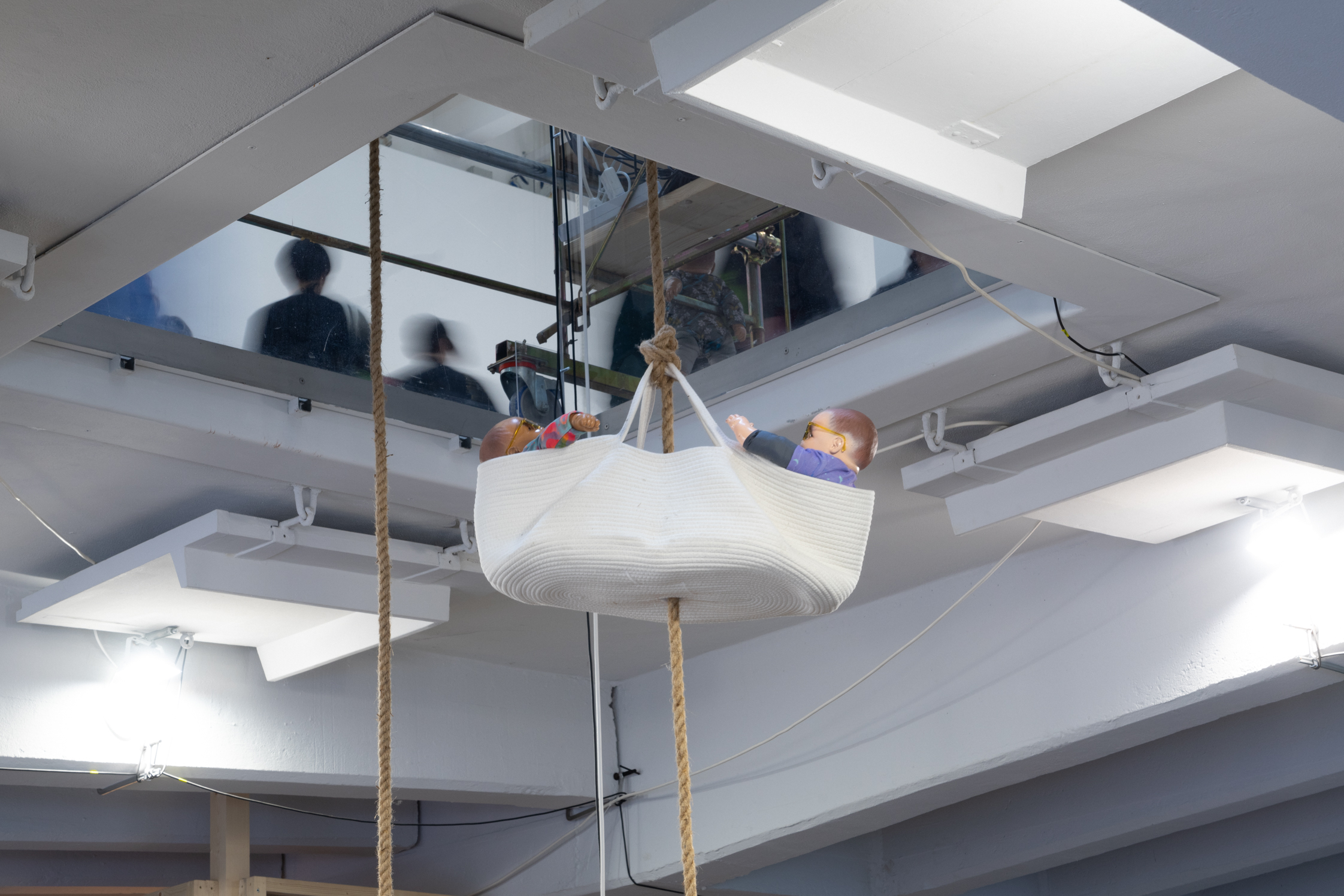
The article humorously critiques the Venice Biennale, highlighting several disappointments. It describes a Japanese pavilion installation by Ei Arakawa-Nash featuring baby dolls for diaper-changing, which a critic dismisses as a male artist over-romanticizing parenthood. Other flops include long queues for the German and Austrian pavilions, underwhelming main exhibition "In Minor Keys," and annoying self-promotional performers outside venues. The piece also laments the presence of loud American collectors and donors who dominate the event.

The Big Review | Venice Biennale 2026: In Minor Keys ★★★½

The Venice Biennale 2026, titled "In Minor Keys," was curated posthumously following the death of artistic director Koyo Kouoh in May 2025. A team of five curators and advisors—Gabe Beckhurst Feijoo, Marie Hélène Pereira, Rasha Salti, Siddhartha Mitter, and Rory Tsapayi—executed her vision across the Giardini and Arsenale venues. The exhibition features 110 artists, with a strong emphasis on new commissions, and is structured around themes of procession, resistance, and joy. Key works include Big Chief Demond Melancon's "Amistad Takeover" (2026), Nick Cave's "Amalgam (Origin)" (2025), and Otobong Nkanga's rewilded columns at the Central Pavilion.

The Making of a Maintenance Artist

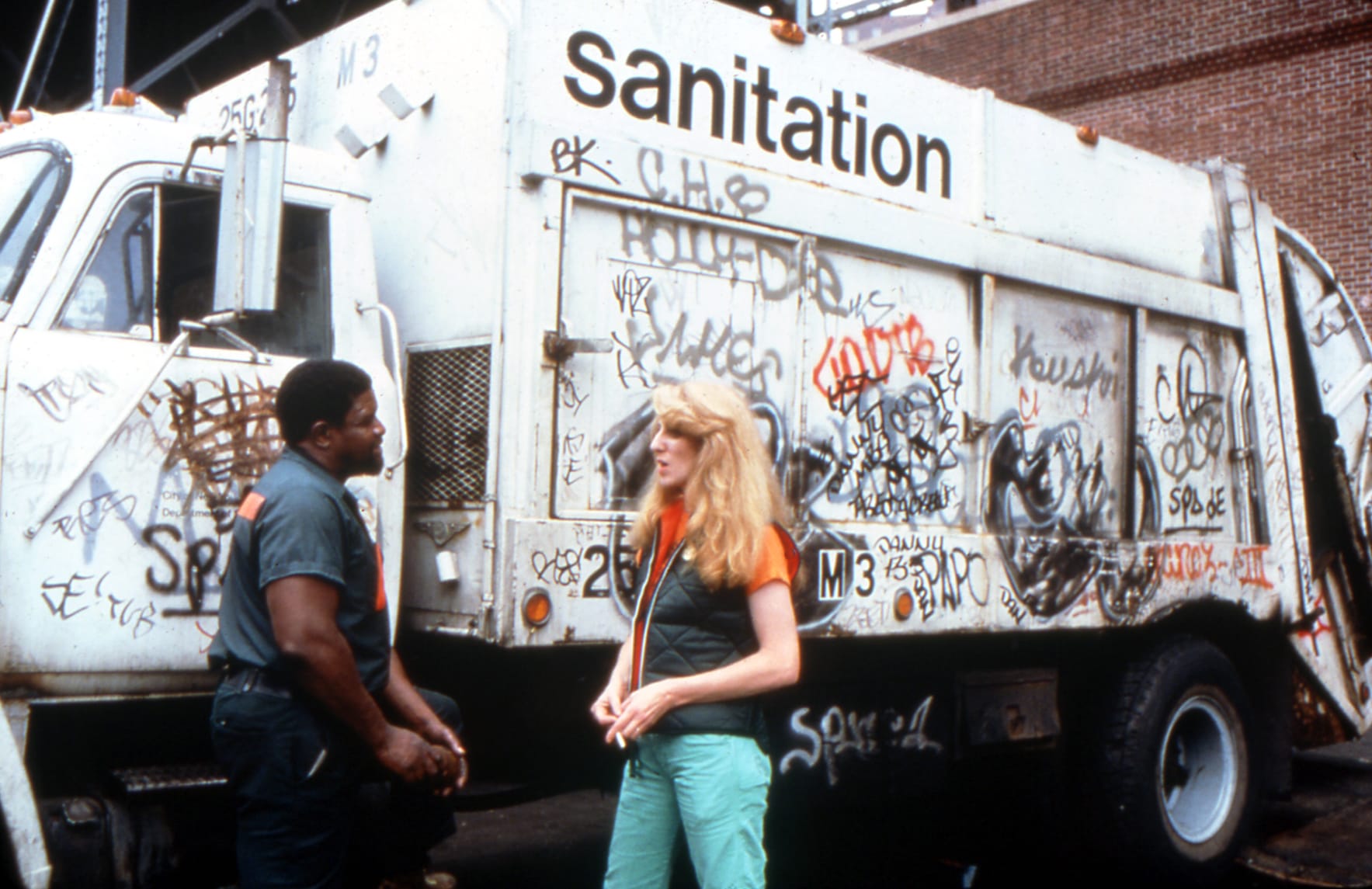
A new documentary titled "Maintenance Artist" (2025) traces the decades-long practice of Mierle Laderman Ukeles, a pioneering artist who focused on marginal, unpaid, and feminine labor. The film covers her career from her 1969 "CARE" manifesto, through her role as artist-in-residence at the New York City Department of Sanitation, to her first retrospective at the Queens Museum in 2017. It highlights her critique of art-world gender biases and her efforts to recognize discounted labor in all fields.

Anni Albers Wasn’t Afraid to Start From Zero

Nicholas Fox Weber's new biography, *Anni Albers: A Life*, draws on his nearly 25-year friendship with the artist to offer an intimate, nuanced portrait of the pioneering textile artist. The book traces Albers's journey from her birth in Berlin in 1899, through her studies and teaching at the Bauhaus and Black Mountain College, her escape from Nazi Germany in 1933, and her later years in Connecticut. Weber, who serves as executive director of the Josef & Anni Albers Foundation, fills the biography with lively anecdotes—from her love of Kentucky Fried Chicken to her sharp wit—while correcting the "stock stories" she often repeated, revealing her personality and artistic dedication with rare depth.

The Enigma of Alison Knowles

Lauren Moya Ford reviews the only book dedicated to Fluxus artist Alison Knowles, who died six months ago. The book, "Performing Chance: The Art of Alison Knowles In/Out of Fluxus" by Nicole L. Woods (2026), attempts to illuminate Knowles's life and work, but Ford notes that much of her personal life remains mysterious despite the author's efforts. The article is part of a broader books newsletter that also features new tomes on Hans Holbein’s portraits, Jan Staller’s photographs of Manhattan construction sites, and a discussion of a Black Panther family album at the Studio Museum in Harlem.

I’ve Got the Post-Duchamp Blues

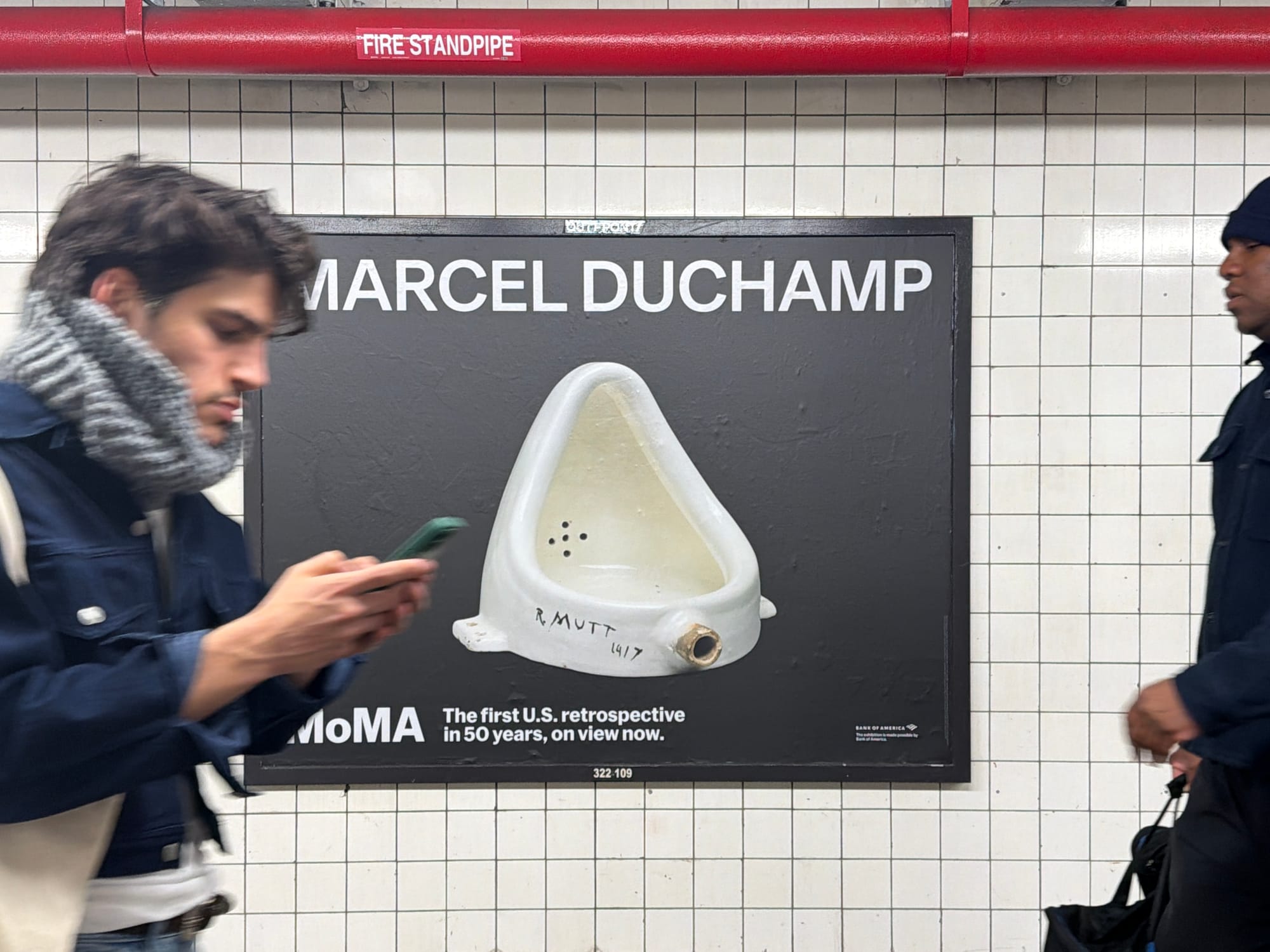
The article is a review of the Marcel Duchamp retrospective at the Museum of Modern Art (MoMA) in New York, the first such show since 1973. Featuring around 300 works from Duchamp's six-decade career, the exhibition includes his iconic readymades like "Fountain" (1917) and early paintings such as "Nude Descending a Staircase, No. 2" (1912). Co-curated by MoMA's Ann Temkin and Michelle Kuo along with Matthew Affron of the Philadelphia Museum of Art, the show runs through August 22, 2026, before traveling to Philadelphia.

Mounting Rene Matić’s snapshots in Perspex isn’t really enough to make them interesting | Charlotte Jansen

Rene Matić, at 29, became the youngest winner of the £30,000 Deutsche Börse Photography Foundation prize, nominated for their solo exhibition "As Opposed to the Truth" at CCA Berlin. A smaller version of that show is now at the Photographers’ Gallery in London. Matić was also the youngest Turner Prize nominee last year. The article critiques Matić's work, praising their 2022 piece "Upon This Rock" for exploring masculinity, fatherhood, and British identity, but dismissing much of their other output—like the snapshot installation "Feelings Wheel"—as immature, mediocre, and reliant on display gimmicks rather than photographic substance.

Review of the Italian Pavilion by Chiara Camoni and its relationship with the Biennale

La recensione del Padiglione Italia di Chiara Camoni e la sua relazione con la Biennale

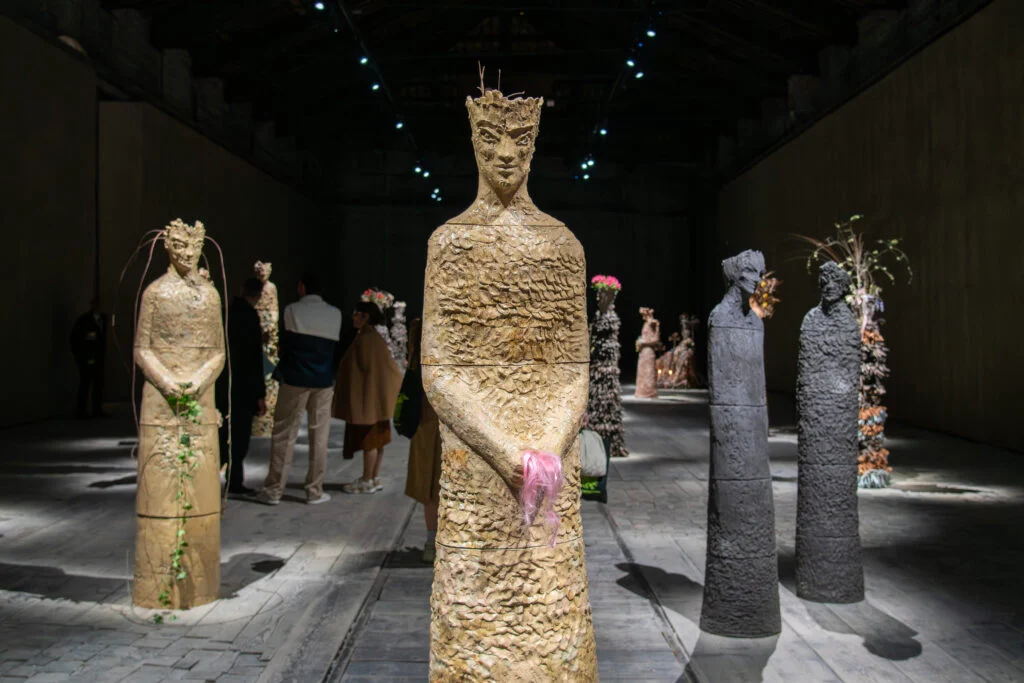
Chiara Camoni's Italian Pavilion at the 2026 Venice Biennale, titled "Con te con tutto," is reviewed in relation to Koyo Kouoh's central exhibition "In Minor Keys." Camoni's installation features a crowd of female figures sculpted in clay and natural materials, described as "donne tronco" (trunk women), which evoke growth, transformation, and the intuitive, manual gestures that Kouoh champions. The review highlights how Camoni's work dialogues with Kouoh's curatorial emphasis on drawing, painting, and craft as intuitive practices, moving away from conceptual art. It also notes a performance by Magdalena Campos Pons at the Tese theatre, which includes a portrait of Toni Morrison and Kouoh, accompanied by music by Kamal Malak.

Is there really an energy transformation in Marina Abramović's exhibition in Venice?

Nella mostra di Marina Abramović a Venezia c’è davvero una trasformazione di energia?

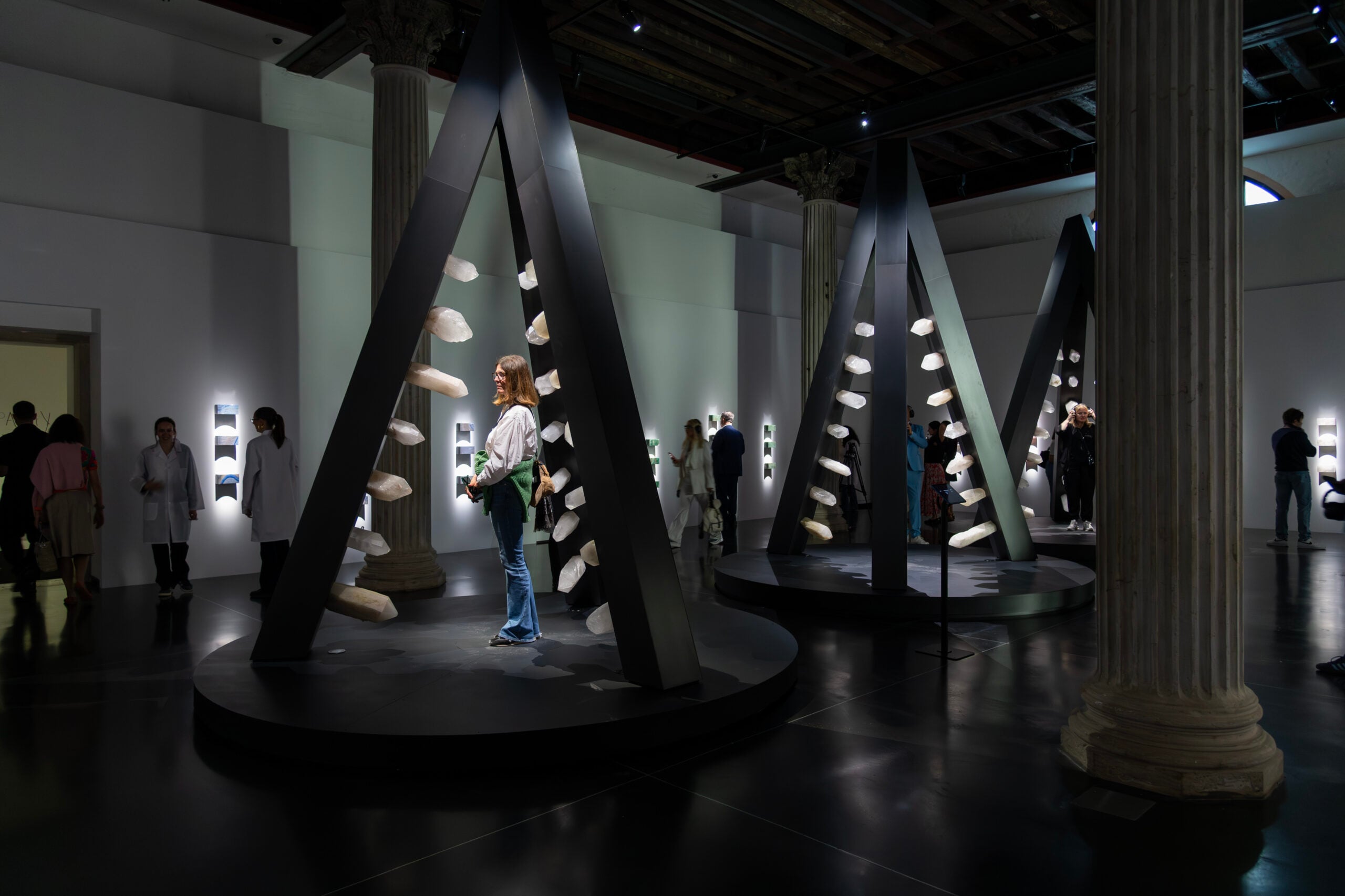
At the Gallerie dell'Accademia in Venice, Marina Abramović's exhibition "Transforming Energy" opens to the public from May 9 to September 30, 2026, as part of the 2026 Venice Biennale. The show is designed as an experiential device that moves beyond traditional exhibition formats, inviting viewers to determine their own presence through a sequence of rooms built around relationships between body, materials, and time. Crystals and locks of hair function not as decoration but as presences to be inhabited, demanding radical attention rather than spectacular participation. During the press conference, Abramović and curator Shai Baitel insisted that the materials, especially the crystals, possess real energy capable of directly affecting the viewer's body and perception, not merely as metaphor but as an active condition.

Renoir, Matisse, and the Temptation of Spectacle

Renoir, Matisse, et la tentation du spectacle

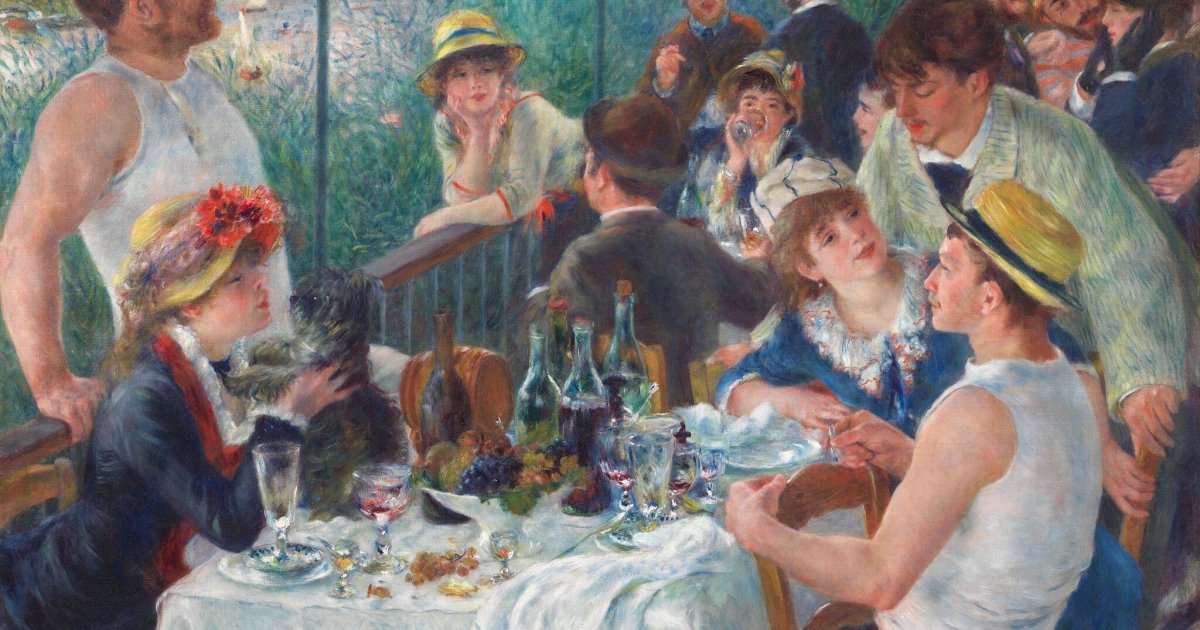
The article criticizes two major Parisian exhibitions scheduled for 2026: "Renoir et l'amour. La modernité heureuse (1865-1885)" and "Renoir dessinateur" at the Musée d'Orsay, and "Matisse 1941-1954" at the Galeries nationales du Grand Palais. The author argues that these shows prioritize spectacle and audience appeal over scholarly rigor, using flashy titles and famous names to attract crowds like movie releases.

Nancy Holt review – cosmic thrills as the universe’s hidden power is unleashed

The Guardian reviews a major UK exhibition of land artist Nancy Holt (1938-2014) at Goodwood in West Sussex, the largest show of her work to date. The exhibition features two large outdoor installations—Ventilation System, a metallic tubular structure resembling building lungs, and Hydra’s Head, six concrete pools arranged like the Hydra constellation in a chalk quarry—alongside indoor photographs, diagrams, and light works. The review praises the cosmic scale and bodily connection of the outdoor pieces but finds the indoor works less effective at conveying Holt’s themes of universal vastness and interconnectedness.

The tiniest event can tear a hole. Sara MacKillop by Margaret Kross

Sara MacKillop's exhibition "The Cutaway View" at Good Weather in Chicago presents sculptures made from humble analog materials like blank wall calendars, empty shopping bags, and gift wrapping. The London-based artist alters these objects with minimal interventions—such as surgically cut holes in shopping bags to accommodate vinyl records—drawing attention to the ephemera and texture of retail culture. Her series "Calendar Houses" (2021–ongoing) uses archive boxes and wall calendars to create miniature modernist dwellings that critique systems of order and self-optimization.

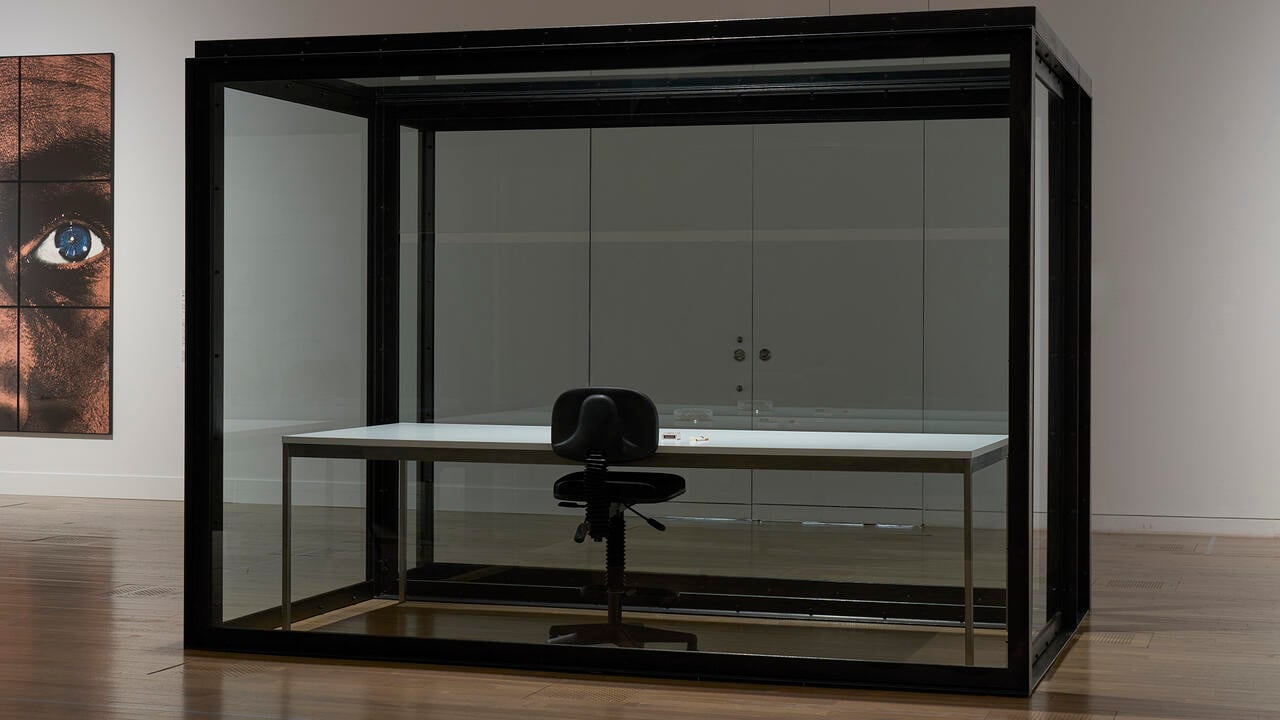
Blank Spaces. Sung Tieu by Sarah Johanna Theurer

Sung Tieu's installations, characterized by austere, bureaucratic surfaces, explore the hidden architectures of power embedded in everyday systems. The article examines her series of works that deconstruct administrative forms used in asylum procedures, reducing them to blank spaces and quantified grids to expose how institutional power operates through seemingly neutral documents. Her exhibition "In Cold Print" at Nottingham Contemporary physically manifests these themes by using steel fences to control viewer movement, drawing direct parallels between minimalist sculpture and the dehumanizing design of border controls.

Wilhelm Sasnal and the Intimacy of History

The article reviews national pavilions at a major international art exhibition, focusing on the US, British, and German presentations. Andrew Durbin critiques the US pavilion as vacuous and lacking meaning, while praising the British and German installations as incisive and moving. The review highlights a contrast between superficial spectacle and deeply engaging, historically resonant works.

Between Tropes and Treats at NADA New York

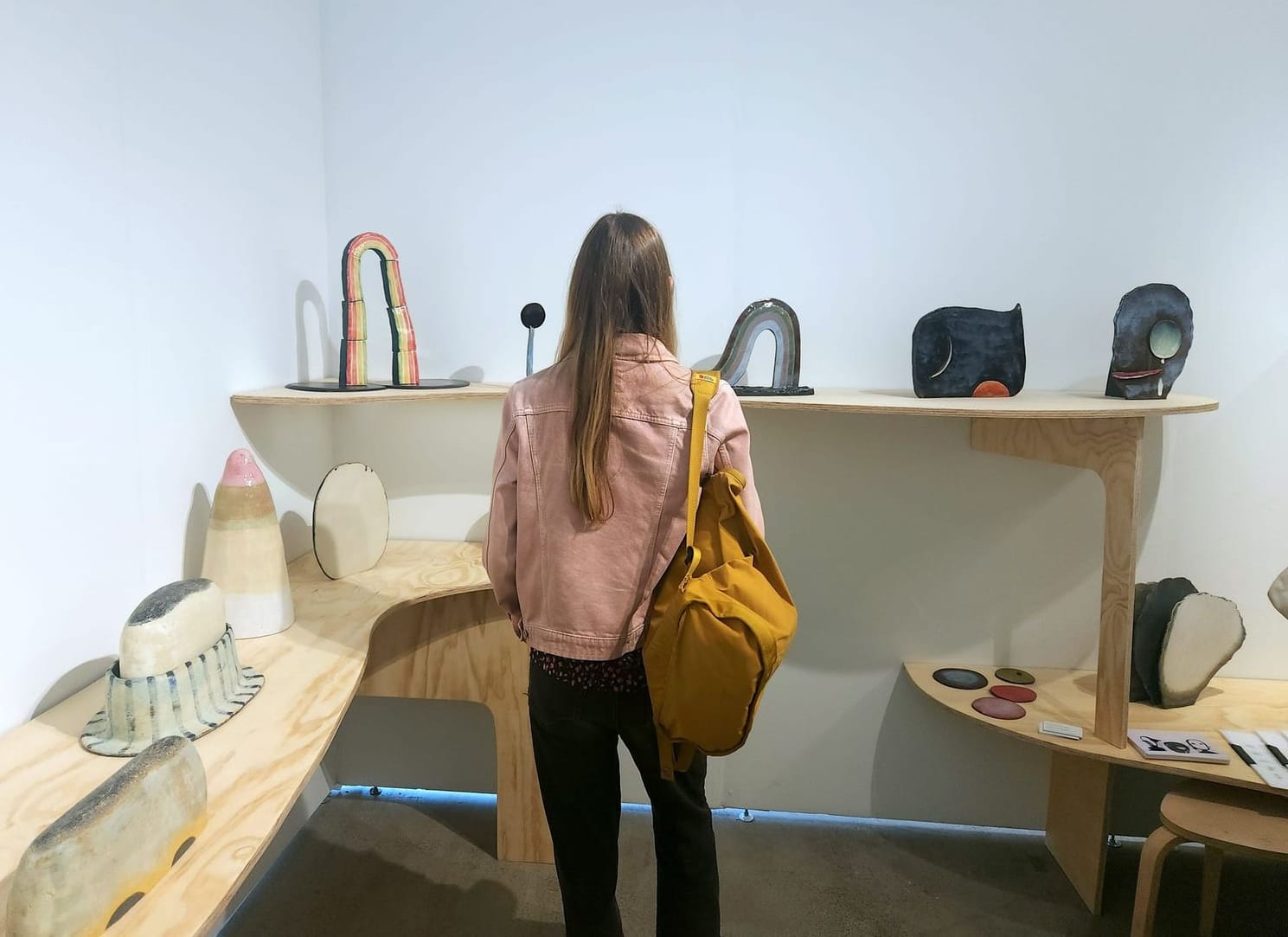
The 12th annual New Art Dealers Alliance (NADA) fair opened at the Starrett-Lehigh Building in Manhattan, featuring a wide array of contemporary works. Critic Rhea Nayyar notes that while many booths felt interchangeable due to prevalent trends like zany sculptures, shiny materials, and kitschy vibrancy, several standout pieces offered genuine engagement. Highlights include Elena Roznovan's maternal ephemera embedded in concrete with bondage tape, Kelly Tapia-Chuning's deconstructed serapes addressing colonial violence, and Niniko Morbedadze's folkloric illustrations.

Lionel Wendt: The Politics of the Male Nude

ArtReview publishes an essay by Qingyuan Deng analyzing the first US solo exhibition of Lionel Wendt's photographs at American Art Catalogues in Manhattan's West Village. The show presents Wendt's haunting gelatin silver prints of male nudes, still lifes, and solarized images, positioning him as a canonical figure of South Asian modernism. Deng argues that while the exhibition correctly identifies homoerotic desire in Wendt's work, it over-relies on queer theory's framework of opacity and fails to fully address the political radicality of Wendt's practice under British colonial rule in Ceylon, where homosexuality was criminalized under the 1883 Penal Code.

WeWork (oralmoral)

The article reviews "WeWork (oralmoral)," a temporary exhibition at The Gallery in Crown Heights, Brooklyn, curated by artist-turned-curator Florian Meisenberg. The show transforms a former office space into a free-form, non-hierarchical environment where works by over a dozen artists are placed unpredictably—in trash bins, closets, ventilation shafts, and on whiteboards left by the previous tenant. Artists span three generations, from Post-Minimal figures like B. Wurtz and David Humphrey to younger digital-savvy artists such as Lucas Blalock and Anna K.E., whose sound piece "Tamada" greets visitors. The exhibition runs from April 10 to May 18, 2026.

What I learned from Tracey Emin about regeneration

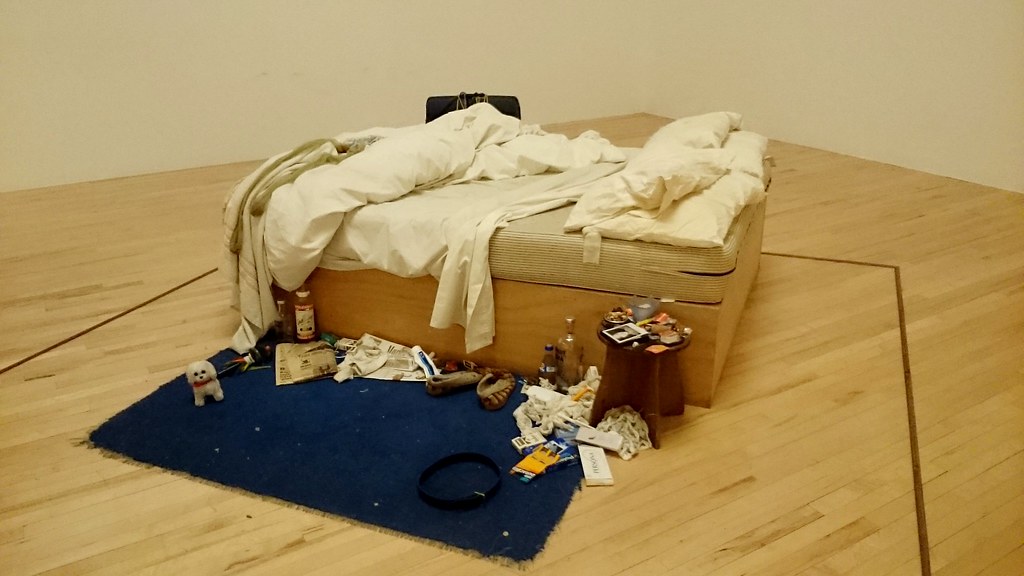
The article reviews Tracey Emin's exhibition "A Second Life" at Tate Modern, describing the author's initial lack of aesthetic connection to the artworks—finding the paintings derivative and neon signs tacky—but ultimately being moved by the exhibition's emotional force and the artist's refusal to disguise pain, humiliation, and grief. The author notes the crowded galleries, the predominantly female audience responding with visceral emotion, and highlights the film "How It Feels" as the most impactful piece, in which Emin discusses her traumatic abortion and its effect on her self-perception.

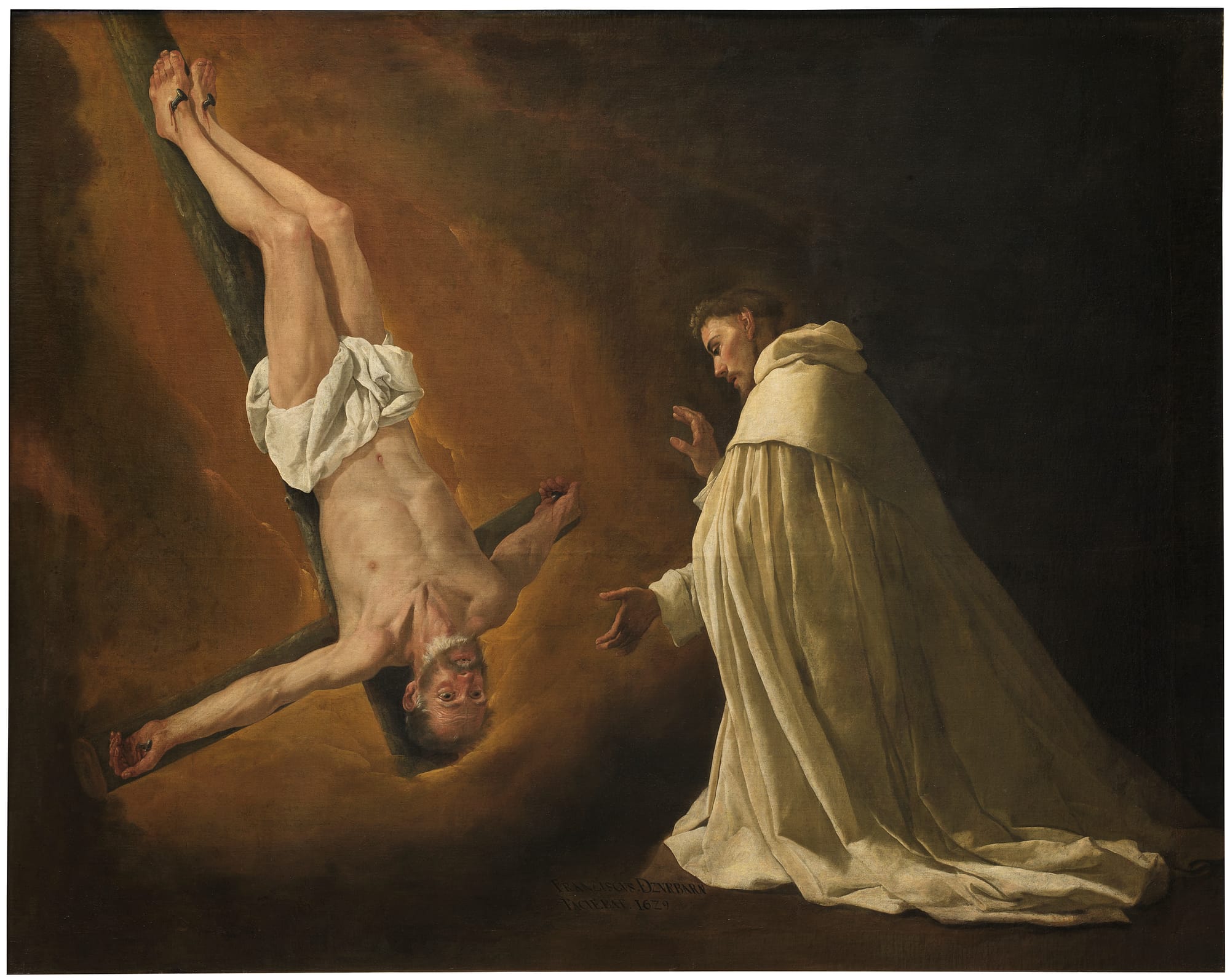
Zurbarán at the National Gallery is more agony than ecstasy

The article reviews the exhibition 'Zurbarán' at the National Gallery in London, arguing that the show fails to capture the spiritual intensity and emotional power of the Spanish Baroque painter's work. It criticizes the curatorial choices, suggesting the display feels flat and lacks the ecstatic religious fervor that defines Zurbarán's best paintings, leaving viewers with a sense of agony rather than transcendence.

Losing Frida Kahlo in "The Making of an Icon"

The article critiques the Museum of Fine Arts, Houston's (MFAH) exhibition "Frida: The Making of an Icon," arguing that it perpetuates a fetishized, commercialized view of Frida Kahlo by focusing on her biography—her marriage to Diego Rivera, her affairs, her accident—rather than her artistic skill. The author contrasts this with a visit to the Museo de Arte Moderno (MAM) in Mexico City, where the exhibition "Relatos modernos. Obras emblemáticas de la Colección Gelman Santander" presents Kahlo's work alongside other Mexican masters in a quiet, understated manner that allows viewers to appreciate her technical abilities without overwhelming narrative.

The In-Between Worlds of Larissa Borteh

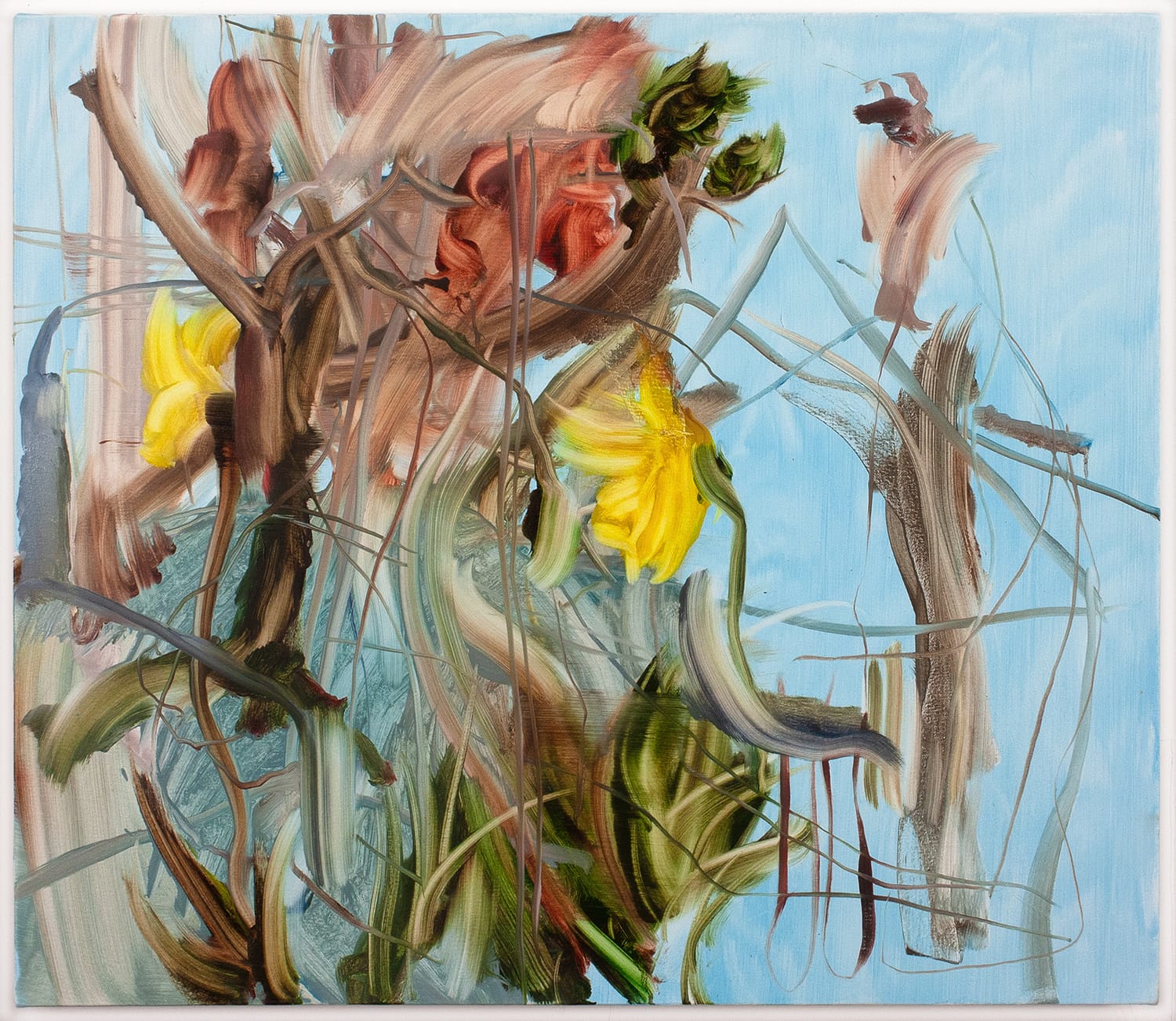
Hyperallergic reviews Larissa Borteh's solo exhibition "In the Wind" at Devening Projects in Chicago, featuring a dozen oil paintings that blur the line between still life and ethereal abstraction. The works, including "Glass House" (2025) and "Tending and Receiving" (2026), use thinned, viscous oil paint to create tactile surfaces that evoke plants in decay, ghosts, deities, or dreamlike visions. The review highlights Borteh's distinctive merging of image and elongated mark, reminiscent of fingerpainting, and her exploration of the spectrum between legibility and opacity.

Did Zurbarán Believe What He Painted?

An exhibition of Francisco de Zurbarán's 17th-century religious paintings at London's National Gallery prompts a critic to question whether the artist's personal faith influenced his artistic skill. The show features monumental works from Spanish churches and monasteries, displayed dramatically against black walls, including crucifixion scenes, monks, and saints. The critic notes that no personal records of Zurbarán survive—only contracts—leaving his beliefs unknown, and compares him to Agnolo Bronzino, who painted pious scenes but wrote obscene verses. A small painting of a crucified Christ with a painter, possibly a self-portrait of Bronzino, is presented as ambiguous evidence of faith.

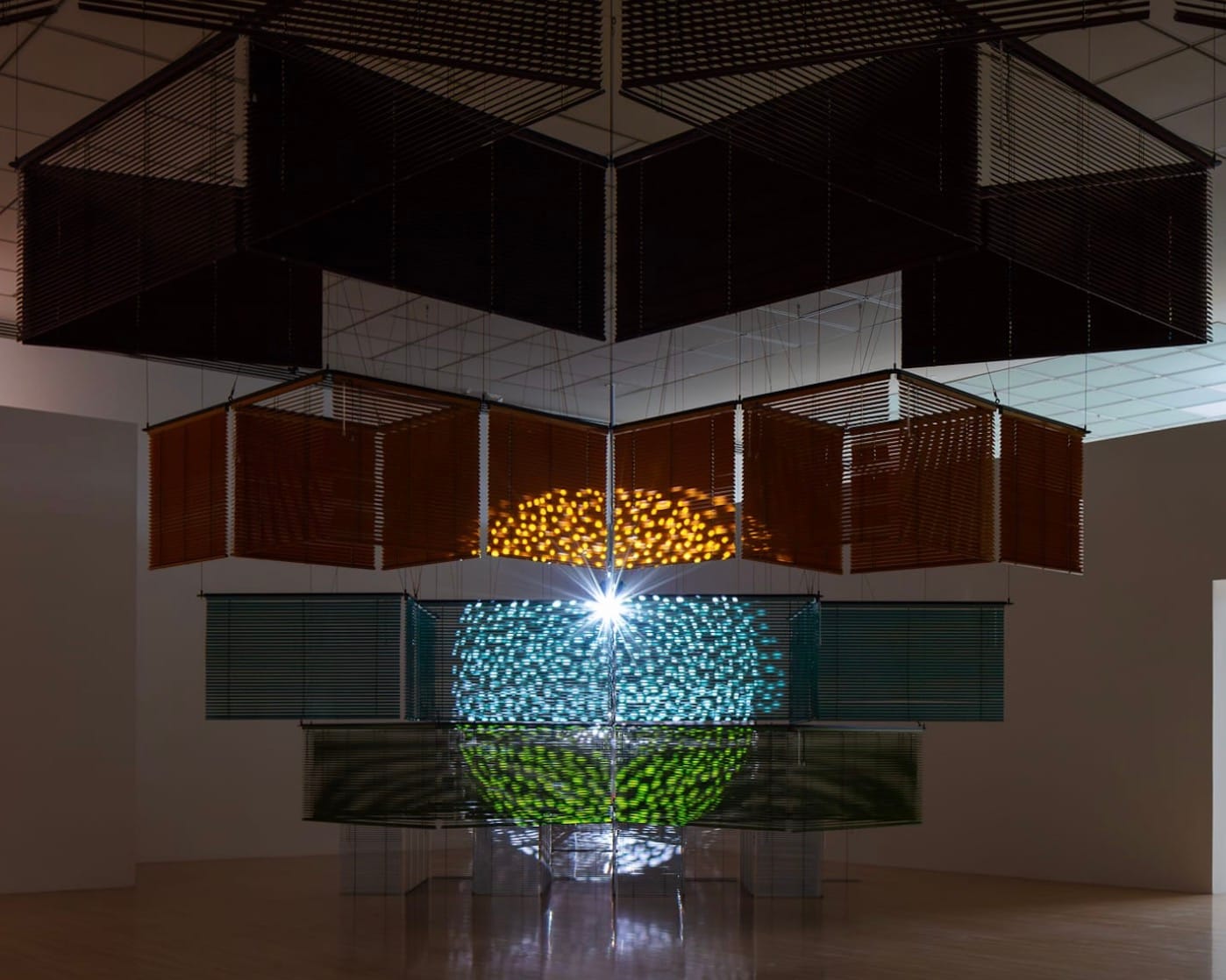
Haegue Yang’s Constellations for a Divided Korea

Haegue Yang's exhibition "Star-Crossed Rendezvous" at the Museum of Contemporary Art in Los Angeles features two large-scale Venetian blind installations that explore themes of division, exile, and reunification. The works draw on the arbitrary 1945 division of Korea by U.S. military officers and the life of composer Isang Yun, who was tortured and imprisoned by South Korean authorities. One installation mirrors and inverts a cube of white blinds inspired by Sol LeWitt, while the other uses colored blinds, projections, and Yun's "Double Concerto" to create a fragmented, shadow-filled meditation on longing and separation.

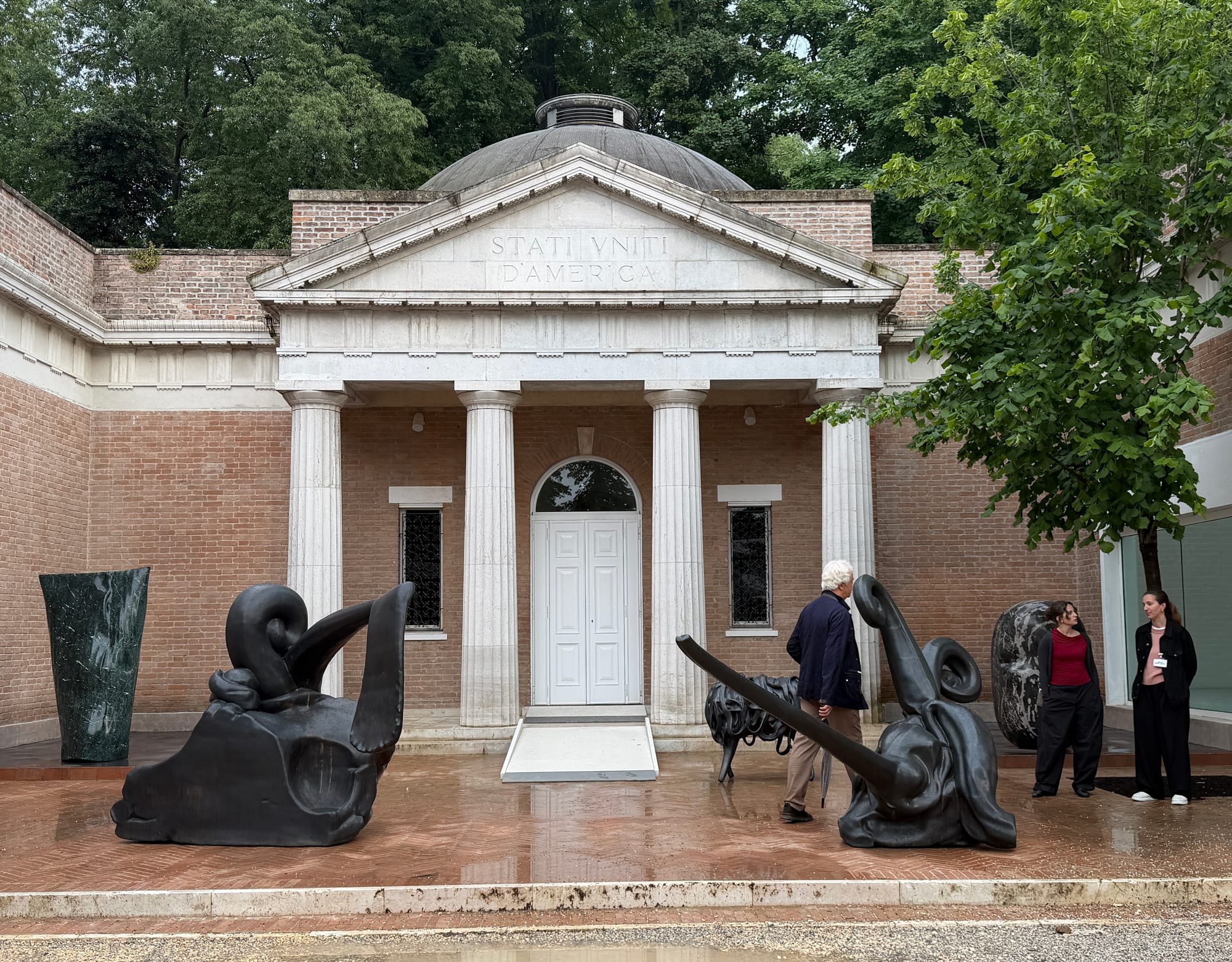
A Whole Lot of Nothing at the US Pavilion

The US Pavilion at the 2026 Venice Biennale features sculptor Alma Allen's exhibition "Call Me the Breeze," curated by Jeffrey Uslip. The show presents untitled, amorphous sculptures in bronze, wood, and stone, including Colorado Yule marble. The selection process was controversial: after the Trump administration excluded the National Endowment for the Arts, the State Department initially picked artist Robert Lazzarini and curator John Ravenal, but that plan collapsed. The American Arts Conservancy, a new nonprofit led by Jenni Parido (a former pet food store operator with Mar-a-Lago ties), then took over, hiring Uslip, who approached Barbara Chase-Riboud and William Eggleston before settling on Allen. Donors include businessman John Phelan and fashion designer Tommy Hilfiger.

Genuine Fake Premium Economy review – brilliantly obnoxious millennial rage at a rigged financial world

The exhibition "Genuine Fake Premium Economy" at a London gallery features works by American artists Jenna Bliss, Buck Ellison, and Jasmine Gregory, all born in the mid-1980s. Their pieces—including Bliss's shaky videos of New York's financial district, Ellison's fictional bank advertisements pairing classical paintings with cynical taglines, and Gregory's luxury watch ads stripped of watches—collectively express millennial rage at a rigged financial system and the aftermath of the 2008 crash.

What Would Orwell Think of the Mormon ‘Animal Farm’?

A new 3D-animated adaptation of George Orwell's 'Animal Farm' has been released, directed by Andy Serkis and featuring a star-studded voice cast including Glenn Close, Woody Harrelson, Kathleen Turner, and Seth Rogen. The film is backed by Angel Studios, a Mormon-run company based in Provo, Utah, known for family-friendly content. The adaptation adds a modern father-son plot between a pig named Lucky and Napoleon, introduces an evil corporation CEO, and replaces Orwell's bleak ending with a happy one where the animals blow up a hydroelectric dam. ArtReview critic Travis Diehl describes the film as 'sheer propaganda' and 'horrifying,' noting its marketing campaign included a fictional glue product called Boxer's Glue.

‘YBA & BEYOND’ Exports British Cool

Frieze critic Andrew Durbin reviews the national pavilions at the Venice Biennale, contrasting a vacuous US presentation with incisive and moving installations from Britain and Germany. The British pavilion, titled 'YBA & BEYOND,' exports British cool by showcasing works from Young British Artists and their successors, while the German pavilion offers a deeply resonant experience. The US pavilion is criticized for lacking meaningful content, raising questions about curatorial direction and national representation.

Arsenale Review: Where Voices Resist Erasure

At the 2026 Venice Biennale's Arsenale, critic Andrew Durbin reviews national pavilions, finding the US presentation vacuous and lacking meaning, while praising the British and German pavilions for their incisive and moving installations that resist erasure. The review highlights a stark contrast in curatorial ambition and political engagement among the participating nations.