filter_list Showing 43 results for "Dia" close Clear
search
dashboard All 2068 museum exhibitions 1289article local 264article culture 149article news 132trending_up market 62person people 47rate_review review 43candle obituary 39article policy 27gavel restitution 16
date_range Range Today This Week This Month All
Subscribe

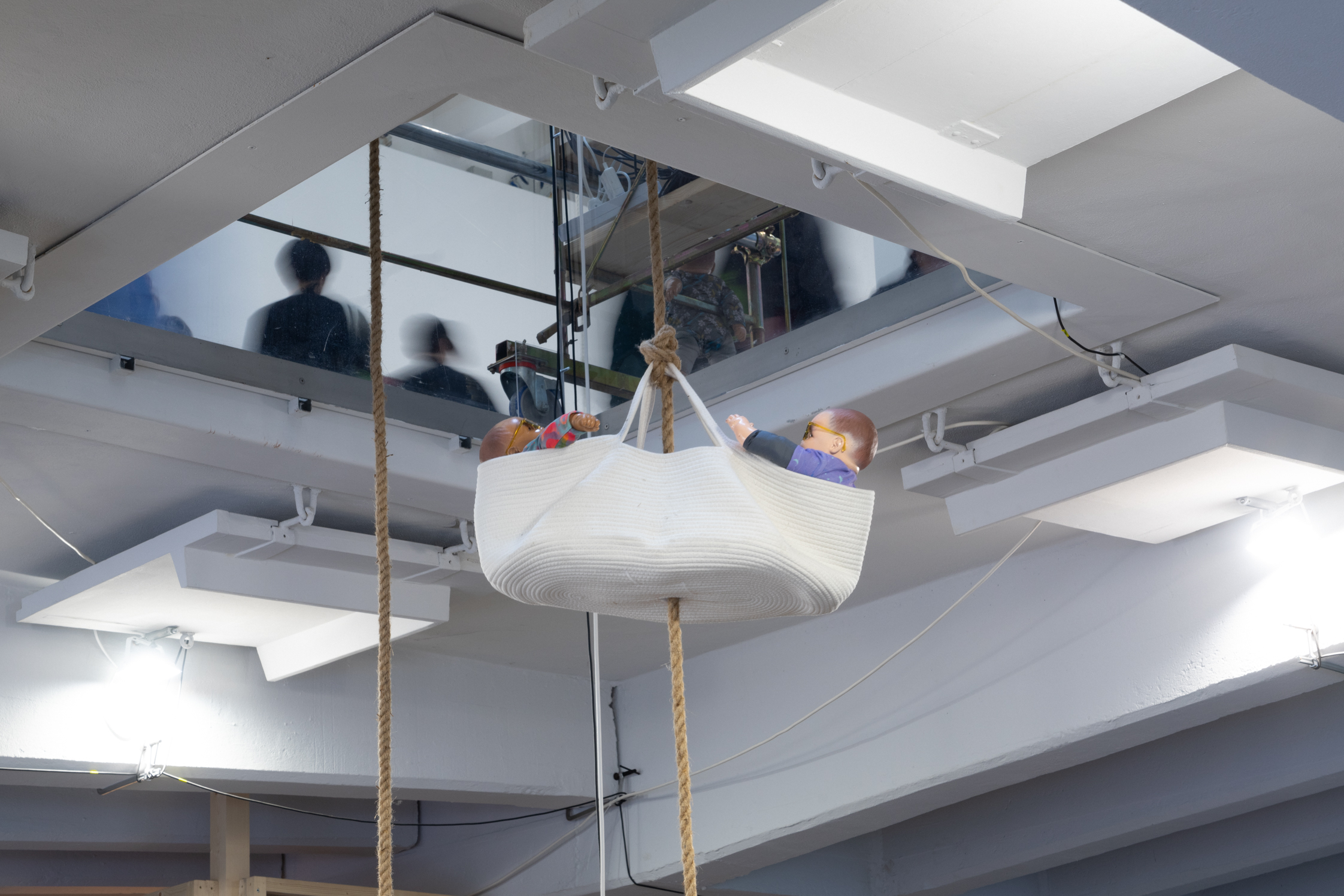
What You Should Definitely Avoid in Venice

Was man in Venedig unbedingt vermeiden sollte

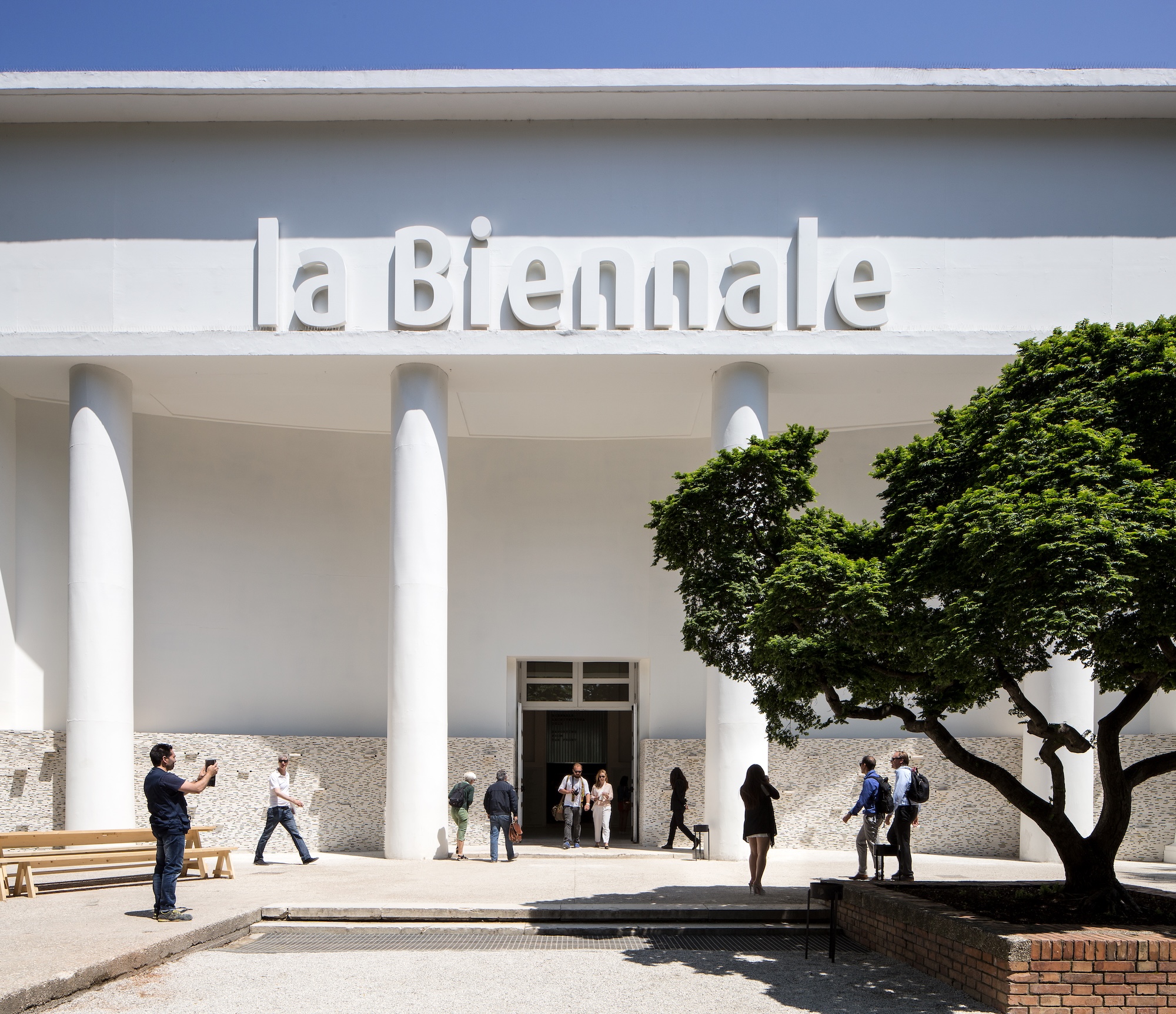
The article humorously critiques the Venice Biennale, highlighting several disappointments. It describes a Japanese pavilion installation by Ei Arakawa-Nash featuring baby dolls for diaper-changing, which a critic dismisses as a male artist over-romanticizing parenthood. Other flops include long queues for the German and Austrian pavilions, underwhelming main exhibition "In Minor Keys," and annoying self-promotional performers outside venues. The piece also laments the presence of loud American collectors and donors who dominate the event.
Hulda Guzmán review – lizards and ghosts gather for an art freakout in the rainforest

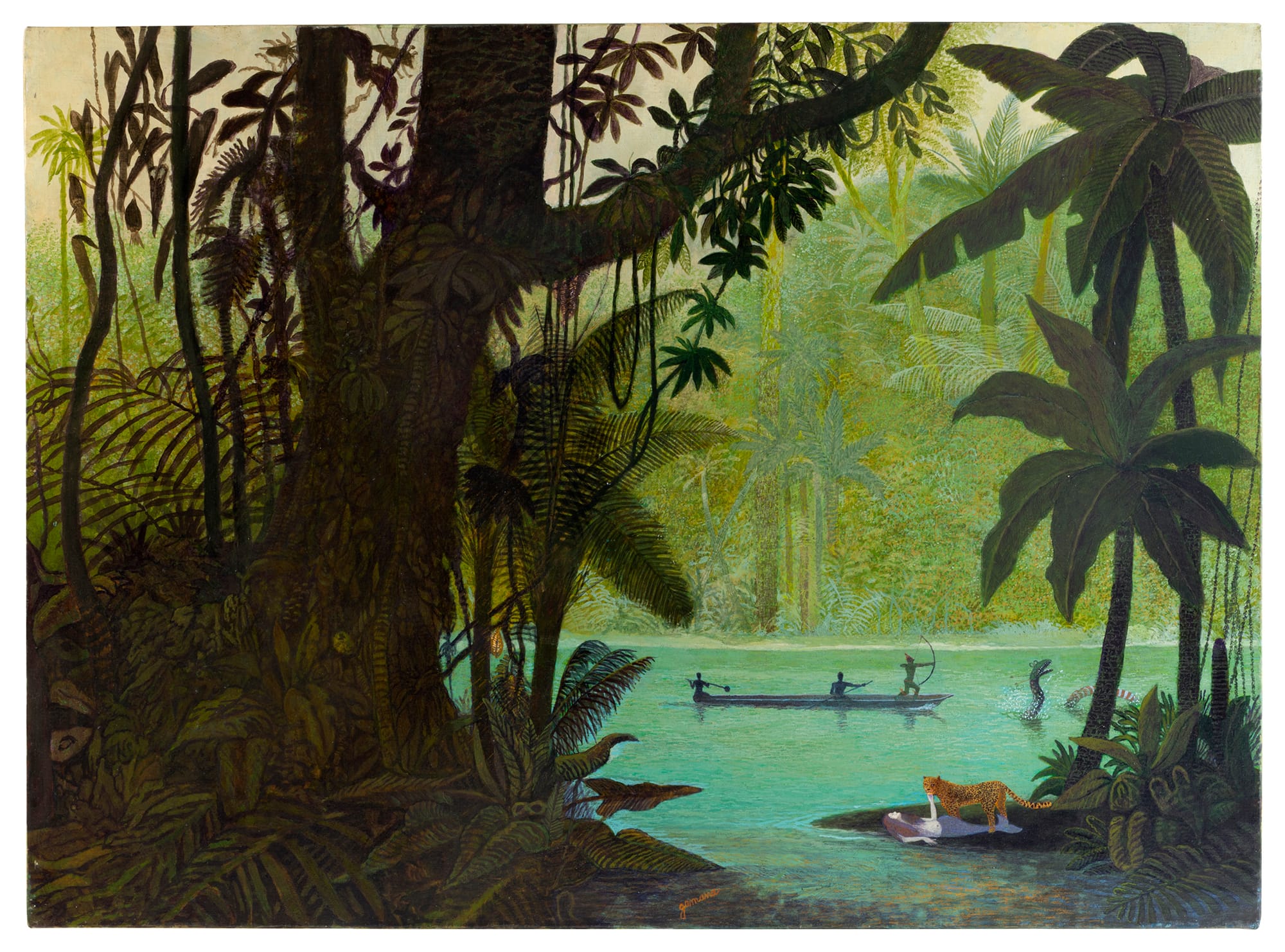
Hulda Guzmán's first institutional exhibition in Europe, "Please Awake – Asked Nature Kindly," is on view at Turner Contemporary in Margate, UK. The show features the Dominican artist's ultra-colorful, psychedelic jungle paintings that blend art historical references—from Japanese ukiyo-e prints to pointillism and symbolism—with personal mythology, demons, spirits, and lush tropical landscapes. The works are drawn from her life in the Dominican rainforest, where she lives and works in a studio built by her architect father.

Todd Gray Reframes Black Diasporic History

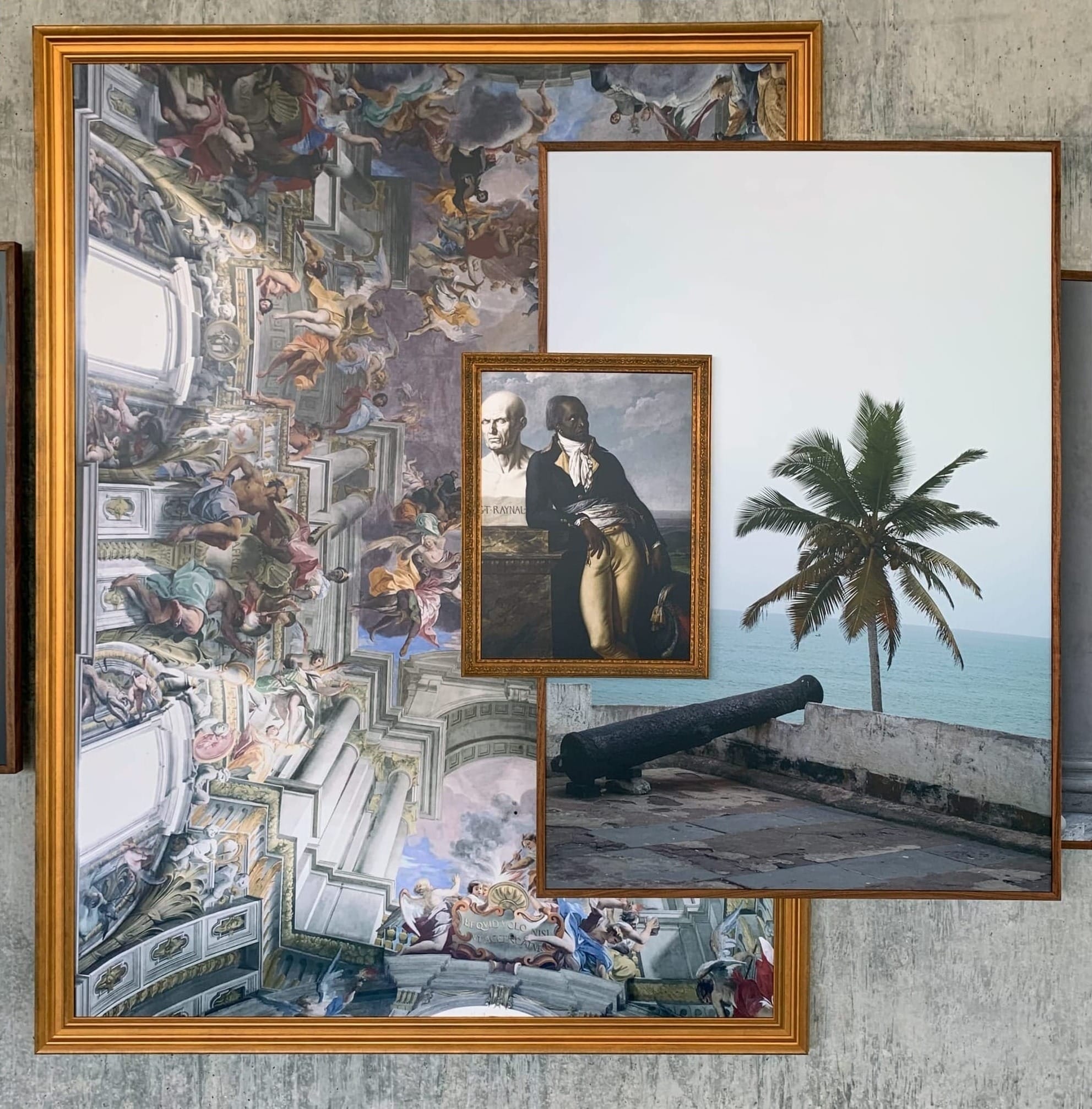
Todd Gray's exhibition "Portals" at Perrotin in Los Angeles features multi-paneled photo assemblages that juxtapose images of slavery with European art, architecture, and formal gardens, exploring the evolution of Black history and identity. The show coincides with the opening of his commissioned installation "Octavia's Gaze" (2025) at the new David Geffen Galleries of the Los Angeles County Museum of Art. Gray's works incorporate his own photographs alongside sources like Hubble Space Telescope imagery, creating layered visual puzzles that invite viewers to find connections and ask questions about African diasporic identity.

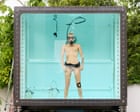
What does a woman swimming in urine tell us about the state of the world? Lots! – Venice Biennale review

The 2026 Venice Biennale, curated by the late Koyo Kouoh under the theme "In Minor Keys," has been plagued by months of turmoil including countries withdrawing, artists being fired, exhibitions cancelled, funding pulled, and protests during the preview. A five-person curatorial team took over after Kouoh's death, resulting in what the critic describes as a disjointed, committee-driven exhibition that prioritizes quiet contemplation and healing over direct political engagement. The central shows in the Giardini and Arsenale feature a vast, poorly explained array of art from the global south, with installations of ceramics, textiles, slide projectors, and serene natural scenes that the critic finds anachronistic and dull.

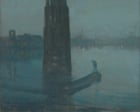
Fantastic visions and cosmic rhythms: how Whistler is making me see – and hear – differently

The article explores how the James McNeill Whistler exhibition at Tate in London prompts a reconsideration of the relationship between music and visual art. Whistler titled his works using musical terms like "Arrangement," "Symphony," and "Nocturne," arguing that painting should be abstract and independent of narrative, much like instrumental music. The exhibition, reviewed by Jonathan Jones, highlights Whistler's radical art-for-art's-sake philosophy, which influenced composer Claude Debussy, whose orchestral Nocturnes were directly inspired by Whistler's paintings of light and atmosphere.

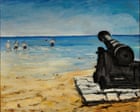
Winston Churchill: The Painter review – We will daub them on the beaches

The Guardian reviews "Winston Churchill: The Painter," an exhibition of nearly 60 paintings by the former British prime minister, curated by Xavier Bray and Lucy Davis. The show assembles works from across the UK and private collections, depicting scenes from Churchill's travels, stately homes, and leisure moments, painted as an amateur Sunday painter for stress relief rather than artistic acclaim. The review notes Churchill's use of techniques borrowed from Walter Sickert, including projectors and monochrome underlayers, and describes his style as charmingly amateurish with a vivacity in seascapes but weakness in figures and architectural luminosity.

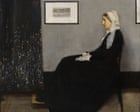
James McNeill Whistler review – a luscious, seductive blockbuster for the painter who scandalised Britain

Tate Britain has opened a major retrospective dedicated to James McNeill Whistler, the American painter who scandalized Victorian Britain. The exhibition centers on his iconic work *Arrangement in Grey and Black No. 1* (commonly known as *Whistler's Mother*), lent by the Musée d'Orsay, and traces his evolution from raw realist scenes of London's docks to radical, abstract celebrations of color and pattern. It includes a reconstruction of *The Peacock Room* and highlights his rivalry with critic John Ruskin, who accused him of 'flinging a pot of paint in the public's face.'

V&A Rising Voices review – can decades of stunning global art really be squished into three rooms?

The V&A Museum in London has mounted an exhibition titled "Rising Voices" that attempts to summarize three decades of the Asia Pacific Triennial, a vast survey of contemporary art from Asia, Australia, and the Pacific organized by Queensland Art Gallery. The show crams works from multiple continents, island nations, and Indigenous cultures into just three rooms, featuring bark cloth paintings from Papua New Guinea, Indigenous Australian abstracts, shark sculptures from the Torres Strait, and Tahitian textiles. Many works address colonialism, political oppression, and tyranny, with artists like Elisabet Kauage, Pala Pothupitiye, and Svay Ken using art as resistance. The exhibition includes pieces by Maryam Ayeen, Abbas Shahsavar, Lila Warrimou, Pennyrose Sosa, Aline Amaru, Brenda V Fajardo, and Heri Dono.

Zineb Sedira review: A chic ode to revolutionary cinema, brainy boozers – and exceptional berets

Zineb Sedira's exhibition at Tate Britain presents a cinematic and sculptural homage to La Cinémathèque Algérienne, the Algerian film archive founded in 1965 that became a hub for leftist African filmmakers. The show recreates a 1970s Algerian cafe in Paris, complete with a jukebox, books on revolutionary cinema, and a model movie theater screening a documentary about the archive's director, Boudjemaâ Karèche. Sedira, born in Paris to Algerian parents and based in London, weaves personal and political narratives to explore identity, diaspora, and the role of art in social change.

Two Museums Take on Performative Masculinity, Looksmaxxing, Incels, and Other Macho Buzzwords That Don’t Belong There.

The Stedelijk Museum and Kunstmuseum St. Gallen have co-organized an exhibition titled "Beyond the Manosphere: Masculinities Today," which aims to critically examine contemporary masculinity and its online manifestations such as incels, looksmaxxing, and pickup artists. The show features works by artists including Reba Maybury and Richard Serra, and is curated by Melanie Bühler, with directors Rein Wolfs and Gianni Jetzer overseeing the project. The exhibition will travel from the Stedelijk to the Kunstmuseum St. Gallen later this year.

The Met’s Costume Institute Needs an Art History Lesson

The Metropolitan Museum of Art's Costume Institute spring exhibition, "Costume Art," pairs fashion with artworks from the Met's collection, including ancient Greek statues and Andy Warhol screenprints, alongside garments by designers from Charles James to CFGNY. Curator Andrew Bolton aims to suggest that fashion can expand understanding of art, but the show's juxtapositions often feel vague and sloppy, with only occasional resonant pairings like a Jean Paul Gaultier shirt and Joe Brainard drawing linked by queer artist lineage.

Zurbarán review – ecstatic visions, primitive surrealism … and the finest loincloths ever painted

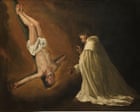
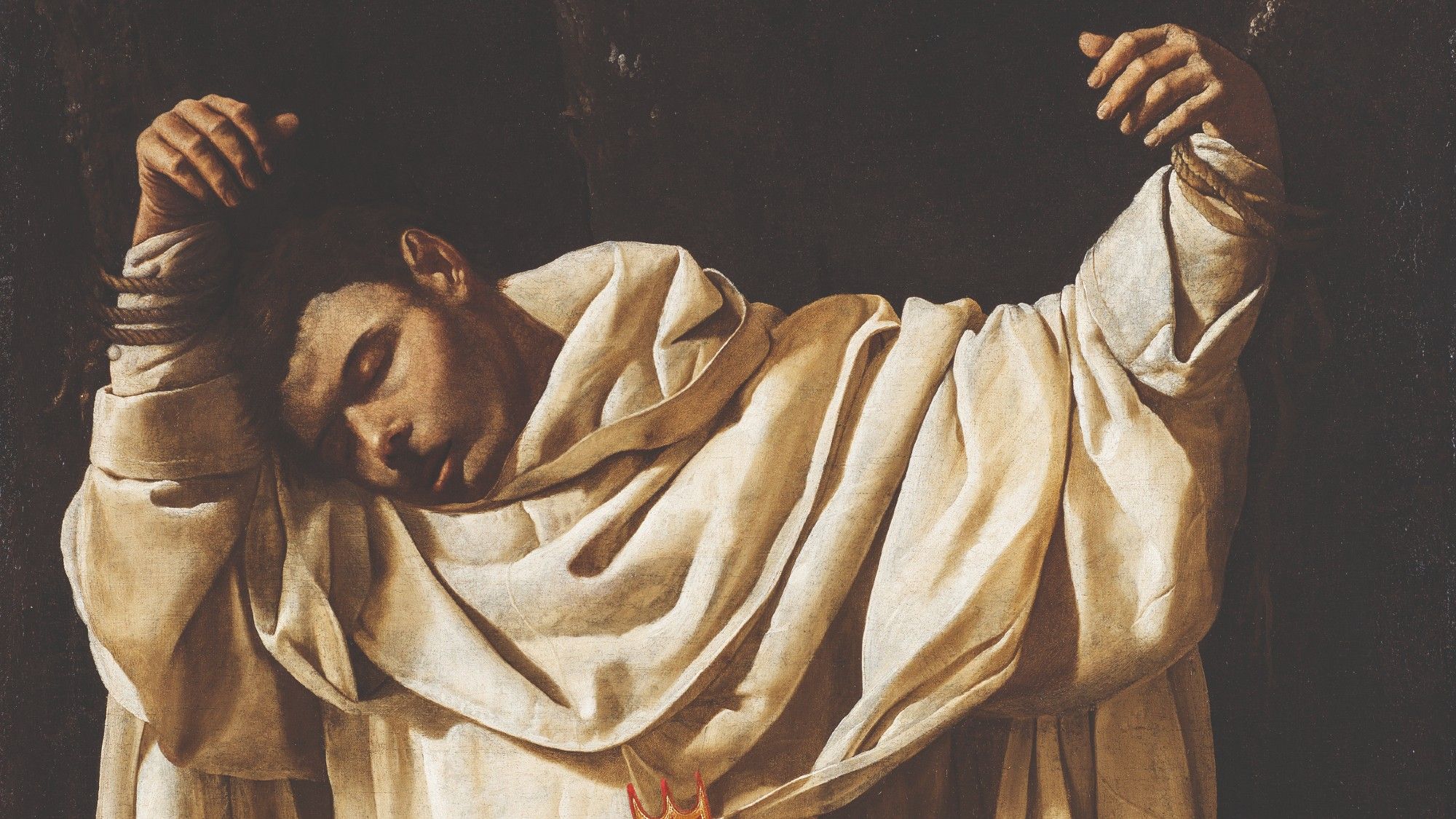
The Guardian reviews a major exhibition of 17th-century Spanish painter Francisco de Zurbarán, highlighting his visionary and surrealist qualities. The show features works such as "The Apparition of Saint Peter to Saint Peter Nolasco" (1629), newly attributed paintings including a giant mask, and iconic pieces like "The Crucified Christ" and "Saint Serapion," all drawn from collections including the Prado and the National Gallery, London. The review emphasizes Zurbarán's ability to paint supernatural subjects with naturalistic conviction, his exquisite rendering of fabrics—especially loincloths—and his influence on modern artists like Salvador Dalí.

25th Biennale of Sydney Review: From the Margins

The 25th Biennale of Sydney, titled "Rememory" and curated by Hoor Al Qasimi, features 143 works by 83 artists and collectives from 37 countries across five venues. The exhibition explores marginalized, fragmented, and repressed histories, drawing on Toni Morrison's concept of 'rememory' as a space between remembering and forgetting. Key works include Tuan Andrew Nguyen's film on Vietnam War trauma, Basel Abbas and Ruanne Abou-Rahme's immersive installation on Palestinian displacement, Khalid Albaih's photographs of Sudan, and Massinissa Selmani's drawings on Algerian socialist building projects.

Salon review – like getting to know fascinating guests at a fabulous party

The article reviews a salon-style exhibition curated by Matthew Higgs, director of New York's White Columns gallery, at an unnamed gallery space. The show features 43 paintings by a diverse group of artists including Denzil Forrester, Andrew Cranston, Kaye Donachie, Merlin James, Margot Bergman, Gillian Carnegie, Bill Lynch, and Adam Keay, arranged around mismatched chairs facing white windows painted on the walls. The reviewer describes moving through the space, engaging with individual works, and highlights the eclectic, unthemed curation that prioritizes personal taste and conversation over academic or political messaging.

Review: The Good, The Bad and The Venice Biennale

The article reviews the 2024 Venice Biennale, focusing on controversies over Russia's and Israel's participation. Protests erupted during opening week, leading the EU to cut funding and the International Jury to resign. As a result, awards like the Golden Lion and Silver Lion will be decided by public vote, with many pavilions and artists withdrawing in protest. The main exhibition, curated under the theme 'Minor Keys,' features standout works by Alfredo Jaar and Carrie Schneider, alongside national pavilions like Austria's provocative entry by Florentina Holzinger.

Sophia Rivera’s Mythology of Everyday New York

The article reviews "Sophie Rivera: Double Exposures" at El Museo del Barrio, the first survey of the late Nuyorican photographer Sophie Rivera, who died in 2021. The exhibition spans her career, including her feminist conceptual series "Rouge et Noir" and "Bowl Study" (c. 1976–78), which depict intimate bodily waste like used tampons and feces, and her socially engaged "Latino Portraits" series from the late 1970s, which countered negative media stereotypes of Puerto Ricans with affectionate, mythologizing portraits. The review highlights a moment where the critic misidentifies abstract toilet photographs as pinhole or double exposures before learning their true subject.

The Enigma of Alison Knowles

Lauren Moya Ford reviews the only book dedicated to Fluxus artist Alison Knowles, who died six months ago. The book, "Performing Chance: The Art of Alison Knowles In/Out of Fluxus" by Nicole L. Woods (2026), attempts to illuminate Knowles's life and work, but Ford notes that much of her personal life remains mysterious despite the author's efforts. The article is part of a broader books newsletter that also features new tomes on Hans Holbein’s portraits, Jan Staller’s photographs of Manhattan construction sites, and a discussion of a Black Panther family album at the Studio Museum in Harlem.

Édouard Glissant’s Museum-as-Archipelago

The article reviews the exhibition "The Earth, the Fire, the Water, and the Winds: For a Museum of Errantry with Édouard Glissant" at the Center for Art, Research and Alliances (CARA) in New York, the first U.S. showing of works from the personal collection of Martinician philosopher and writer Édouard Glissant. Curated from his archive, the exhibition features artists such as Roberto Matta, Wifredo Lam, Etel Adnan, Irving Petlin, Antonio Seguí, Öyvind Fahlström, Jack Whitten, and Mel Edwards, reflecting Glissant's friendships and intellectual exchanges across Europe, Africa, and the Americas. Highlights include Antonio Seguí's large pastel works from his Titanic series.

Yu Ji’s Democratic Play

Yu Ji's solo exhibition at PPOW, New York, titled "Origin of the Tiger," presents sculptures and collages created after a residency she organized in Phnom Penh that offered art education to children. The show features works like reed mats with snail shells, a Sony Trinitron looping video, collaged drawings incorporating Cambodian children's art, and composite sculptures such as chairs with concrete knee casts and a figure inspired by a misattributed sixth-century Krishna statue. The exhibition draws on a Khmer folktale about transformation and includes audio of children reciting the story, though the children appear more as muses than collaborators.

Mounting Rene Matić’s snapshots in Perspex isn’t really enough to make them interesting | Charlotte Jansen

Rene Matić, at 29, became the youngest winner of the £30,000 Deutsche Börse Photography Foundation prize, nominated for their solo exhibition "As Opposed to the Truth" at CCA Berlin. A smaller version of that show is now at the Photographers’ Gallery in London. Matić was also the youngest Turner Prize nominee last year. The article critiques Matić's work, praising their 2022 piece "Upon This Rock" for exploring masculinity, fatherhood, and British identity, but dismissing much of their other output—like the snapshot installation "Feelings Wheel"—as immature, mediocre, and reliant on display gimmicks rather than photographic substance.

Review of the Italian Pavilion by Chiara Camoni and its relationship with the Biennale

La recensione del Padiglione Italia di Chiara Camoni e la sua relazione con la Biennale

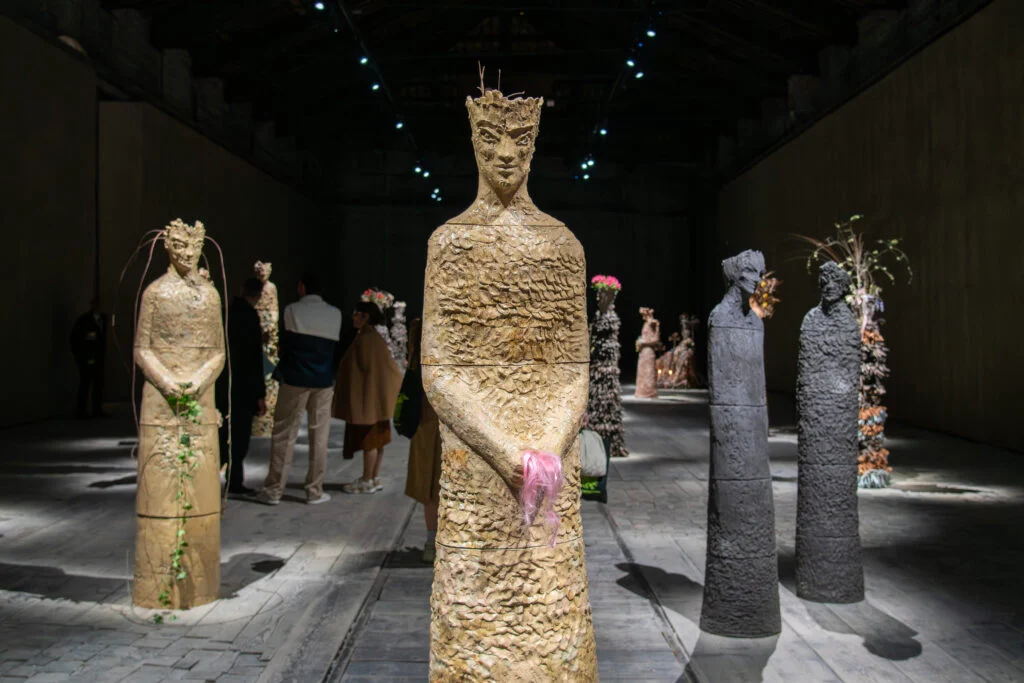
Chiara Camoni's Italian Pavilion at the 2026 Venice Biennale, titled "Con te con tutto," is reviewed in relation to Koyo Kouoh's central exhibition "In Minor Keys." Camoni's installation features a crowd of female figures sculpted in clay and natural materials, described as "donne tronco" (trunk women), which evoke growth, transformation, and the intuitive, manual gestures that Kouoh champions. The review highlights how Camoni's work dialogues with Kouoh's curatorial emphasis on drawing, painting, and craft as intuitive practices, moving away from conceptual art. It also notes a performance by Magdalena Campos Pons at the Tese theatre, which includes a portrait of Toni Morrison and Kouoh, accompanied by music by Kamal Malak.

Leonora in the Morning Light review – pioneering British artist who fled convention for the surrealists

A new biopic titled *Leonora in the Morning Light* chronicles the life of British surrealist painter Leonora Carrington, who fled her aristocratic upbringing in London to join the surrealist circle in Paris. The film, adapted from Elena Poniatowska's biographical novel, follows Carrington from her affair with the older Max Ernst through her mental health crisis in Spain and eventual settlement in Mexico, where she created art on her own terms. Olivia Vinall portrays Carrington with a fierce, uncompromising spirit, though the film is criticized for uneven storytelling and clunky dialogue.

Pleasure, parody and propaganda: rethinking the art of illustration in a new history of the genre

D.B. Dowd's new book "Reading Pictures" offers a sweeping 400-page history of illustration, tracing the genre from the Diamond Sutra frontispiece in Tang China (AD868) to Molly Crabapple's Gaza reports in 2015. The book examines key works such as Jules Chéret's 1891 poster for the Alcazar d'Été Club, Stuart Davis's caustic covers for The Masses, and Duong Ngoc Canh's Vietnamese propaganda poster, arguing that illustrations are meant to be "read" rather than admired like museum paintings.

Lubaina Himid’s British pavilion at the Venice Biennale review – alienation in a green and pleasant land

Lubaina Himid's installation at the British pavilion of the Venice Biennale presents monumental paintings and a wall of painted oars depicting tailors, cooks, architects, gardeners, and sailors—figures who shape Britain. The work is accompanied by an audio piece of bucolic country sounds, but the black figures in the paintings exchange sideways glances of discomfort, questioning whether they truly belong. The exhibition is anchored by 26 philosophical questions on the wall, such as "Can flies settle here?" and "Can poison taste delicious?"

Nancy Holt review – cosmic thrills as the universe’s hidden power is unleashed

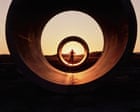
The Guardian reviews a major UK exhibition of land artist Nancy Holt (1938-2014) at Goodwood in West Sussex, the largest show of her work to date. The exhibition features two large outdoor installations—Ventilation System, a metallic tubular structure resembling building lungs, and Hydra’s Head, six concrete pools arranged like the Hydra constellation in a chalk quarry—alongside indoor photographs, diagrams, and light works. The review praises the cosmic scale and bodily connection of the outdoor pieces but finds the indoor works less effective at conveying Holt’s themes of universal vastness and interconnectedness.

Zurbarán: a ‘magnificently choreographed’ showing of the Spanish ‘genius’

The article reviews the first-ever British exhibition dedicated to Spanish Baroque painter Francisco de Zurbarán, held at the National Gallery in London. The show brings together 40 works from collections spanning Seville to San Diego, featuring his hyper-real religious paintings and radiant still lifes, described as a 'magnificently choreographed' trawl through his oeuvre. Critics praise the exhibition for its dramatic lighting and revelatory presentation, though some note uneven quality in his later works.

Karla Knight’s Cosmic Conspiracies

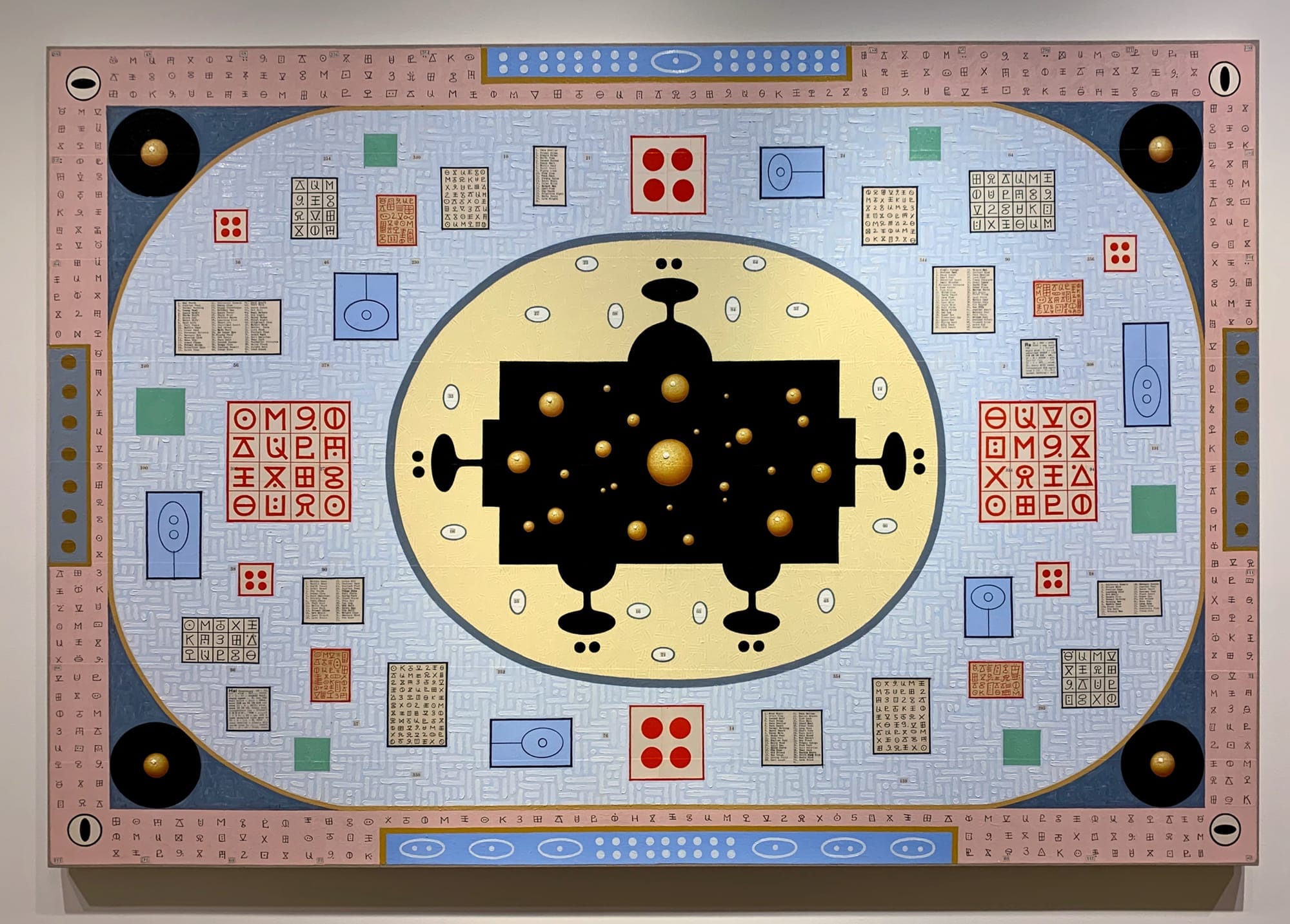
Karla Knight's exhibition "Orbit" at Andrew Edlin Gallery presents her game-like paintings and tapestries filled with cryptic symbols, cosmic diagrams, and celestial imagery. Works such as "Orbiter 2" (2024–25) and "Feelers" (2025–26) feature irregular black devices, floating spheres, and rows of arcane script, inviting viewers to decode what appear to be blueprints for extraterrestrial systems or maps of hidden dimensions. Knight employs meticulous grids, bold primary colors, and textile techniques to render the paranormal as strangely normal.

Haegue Yang’s Constellations for a Divided Korea

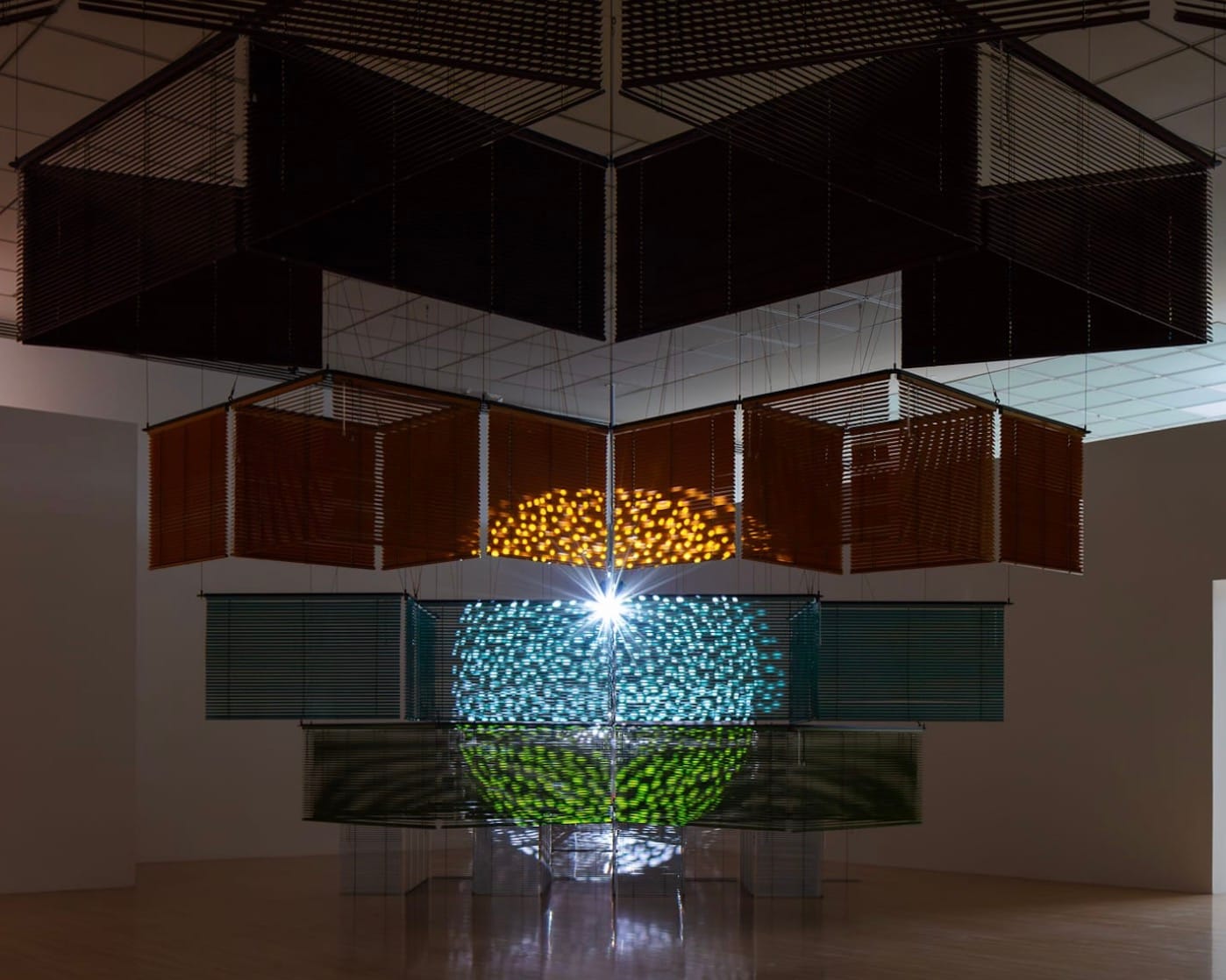
Haegue Yang's exhibition "Star-Crossed Rendezvous" at the Museum of Contemporary Art in Los Angeles features two large-scale Venetian blind installations that explore themes of division, exile, and reunification. The works draw on the arbitrary 1945 division of Korea by U.S. military officers and the life of composer Isang Yun, who was tortured and imprisoned by South Korean authorities. One installation mirrors and inverts a cube of white blinds inspired by Sol LeWitt, while the other uses colored blinds, projections, and Yun's "Double Concerto" to create a fragmented, shadow-filled meditation on longing and separation.

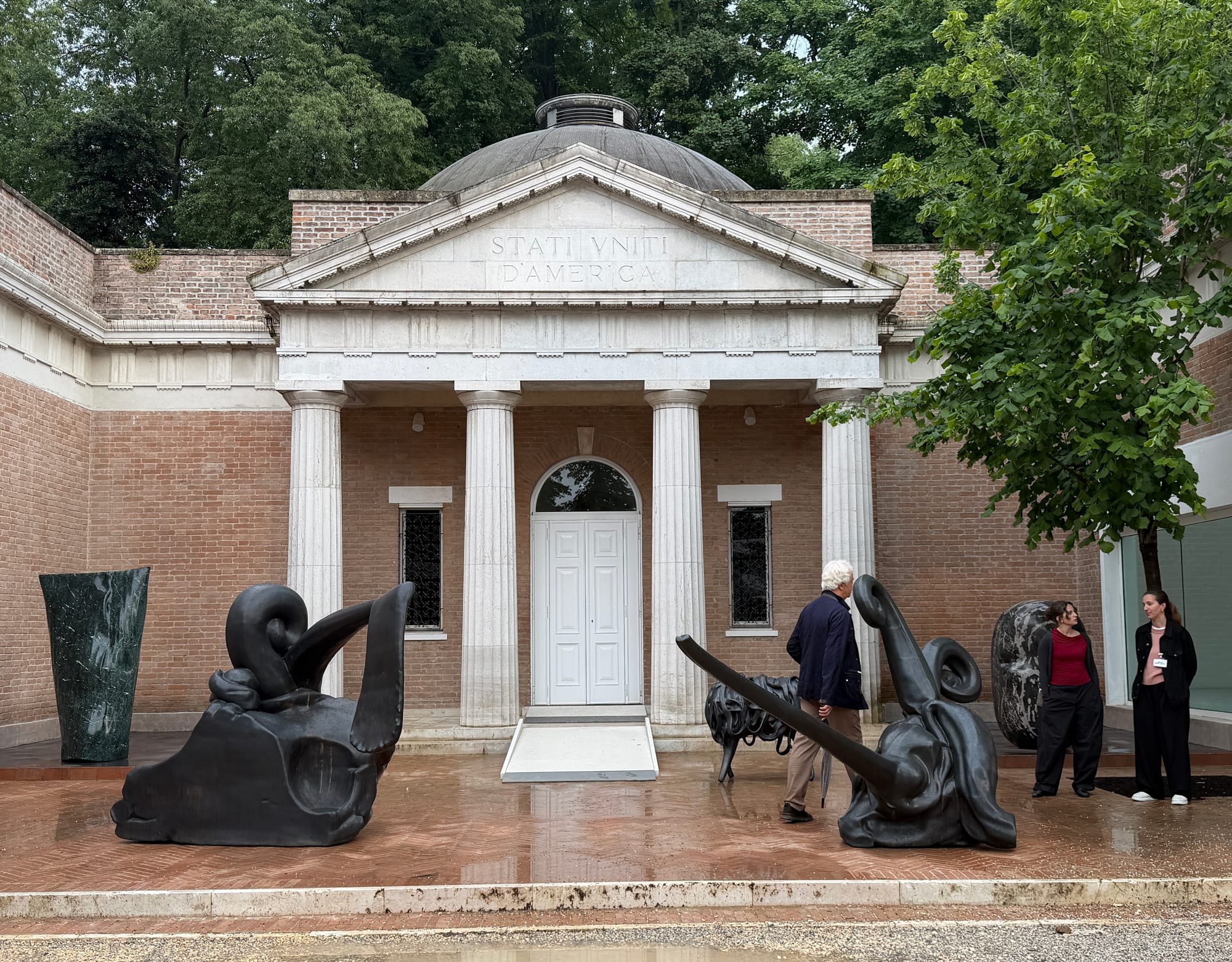
A Whole Lot of Nothing at the US Pavilion

The US Pavilion at the 2026 Venice Biennale features sculptor Alma Allen's exhibition "Call Me the Breeze," curated by Jeffrey Uslip. The show presents untitled, amorphous sculptures in bronze, wood, and stone, including Colorado Yule marble. The selection process was controversial: after the Trump administration excluded the National Endowment for the Arts, the State Department initially picked artist Robert Lazzarini and curator John Ravenal, but that plan collapsed. The American Arts Conservancy, a new nonprofit led by Jenni Parido (a former pet food store operator with Mar-a-Lago ties), then took over, hiring Uslip, who approached Barbara Chase-Riboud and William Eggleston before settling on Allen. Donors include businessman John Phelan and fashion designer Tommy Hilfiger.

The Christophers review – Ian McKellen and Michaela Coel are the double act of the year

Steven Soderbergh's new film "The Christophers" is a London-set movie about contemporary art, starring Ian McKellen as Julian Sklar, a once-dominant but now outmoded English painter, and Michaela Coel as Lori Butler, a former art student hired as his assistant. The plot revolves around a series of hidden paintings called "The Christophers" that Julian's grasping adult children want to find and potentially forge for profit. The film is described as fast, literate, and funny, with McKellen and Coel delivering a compelling double act.