filter_list Showing 208 results for "History" close Clear
dashboard All 208 museum exhibitions 140article local 20article culture 15candle obituary 12article news 11rate_review review 6person people 2trending_up market 1article policy 1
date_range Range Today This Week This Month All
Subscribe

“Primary Structures,” Turns 60

On April 28, 1966, The New York Times published a review by conservative critic Hilton Kramer of the Jewish Museum's exhibition “Primary Structures,” organized by curator Kynaston McShine. Kramer, disdainful of contemporary art, described the 42 American and British artists as rejecting personal expression and subjective inflection, yet he acknowledged the show as the first comprehensive glimpse of a style that would define the 1960s. The exhibition featured then-little-known artists including Carl Andre, Dan Flavin, Donald Judd, Sol LeWitt, Walter De Maria, Robert Morris, Anne Truitt, John McCracken, Larry Bell, Robert Smithson, Judy Chicago, Philip King, Michael Bolus, and David Annesley, and is now recognized as the ur-survey of Minimalism—a term McShine deliberately avoided.
East Africa meets Western Europe as Michael Armitage takes on Venice's Palazzo Grassi

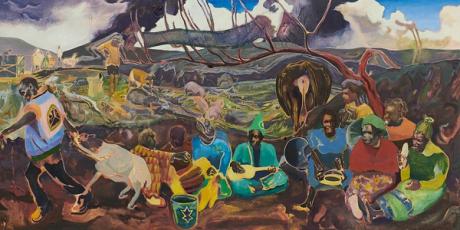
The artist Michael Armitage opens a monographic exhibition titled 'The Promise of Change' at Venice's Palazzo Grassi, featuring 46 large paintings and nearly 100 sketches that survey his past decade of work. At 42, Armitage is the youngest artist to receive a solo show at the palazzo, which is owned by François Pinault and has previously hosted Albert Oehlen, Luc Tuymans, and Marlene Dumas. The exhibition highlights Armitage's fusion of East African and Western European artistic influences, drawing on his upbringing in Kenya and his training at London's Byam Shaw School of Art, the Slade, and the Royal Academy.

Digital Art Pioneer Nancy Burson Collapses the Border Between Mysticism and Quantum Physics

Nancy Burson, a pioneering digital artist, presents her latest solo exhibition "Light Matter" at Heft Gallery in New York, featuring "Quantum Entanglement" paintings that appear as white dots on black canvases but reveal jittering forms and depth when viewed through a phone camera. The 78-year-old artist, known for her 1980s composite portraits blending faces of businessmen and movie stars, continues her exploration of perception and technology, claiming a special gift to perceive the universe's emergent energy grid. The exhibition runs through May 2.

Georg Baselitz, German artist who turned figurative painting on its head, has died, aged 88

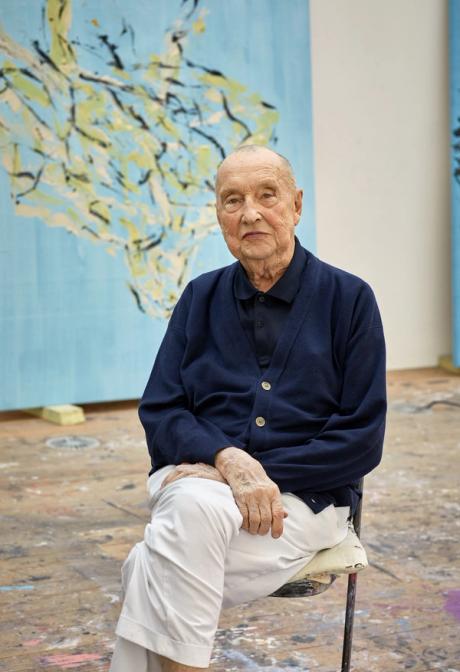
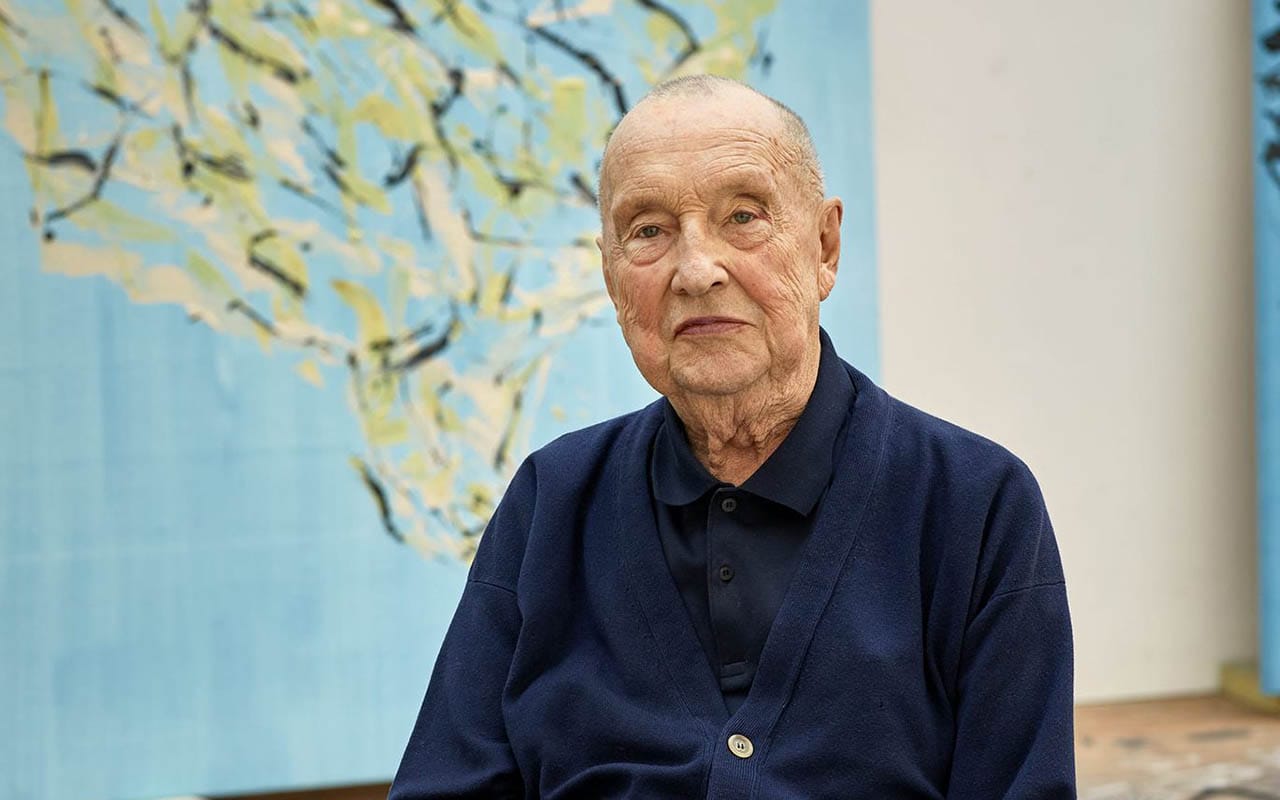
Georg Baselitz, the influential German painter and sculptor, died on 30 April at age 88. Born Hans-Georg Kern in 1938 in Deutschbaselitz, he grew up amid the ruins of Nazi Germany and later adopted his surname from his birthplace. Expelled from the East Berlin Academy for "sociopolitical immaturity," he moved to West Berlin, where he rejected both gestural abstraction and Expressionism. His first solo exhibition in 1963 was shut down for obscenity. In 1969 he pioneered his signature inverted paintings, turning subjects upside down to sever image from representation. He also created large carved sculptures using axes and chainsaws. His later series, from 2014 onward, are considered his most astonishing work, culminating in a sustained focus on his wife, artist Elke Kretzschmar.

Overlooked Artist Louisa Chase Returns to the Spotlight

Artnet News reports on a solo exhibition at Berry Campbell, New York, dedicated to overlooked American painter Louisa Chase (1951–2016). Titled "Louisa Chase: The Eighties," the show is the largest and most comprehensive survey of her work in 25 years and the first since the gallery began representing her estate. It features a curated selection of works on paper from the mid-1970s to mid-1980s, highlighting Chase's unique synthesis of abstraction and representation that positioned her between Neo-Expressionism and the New Image movement. Chase, who studied under Philip Guston at Yale, had major early success including solo shows at Robert Miller Gallery, appearances at the Whitney Biennial (1981, 1983), and inclusion in the American Pavilion at the Venice Biennale (1984), with works held by MoMA, the Met, the National Gallery of Art, and the Walker Art Center.

The Defining Themes of Today’s Biennial Art

The article analyzes the defining themes and styles of the past four years in the international biennial circuit, based on a survey of 130 biennials. It identifies a core group of artists who appeared most frequently, including Ali Eyal, Apichatpong Weerasethakul, Carolina Caycedo, Kapwani Kiwanga, and Tuan Andrew Nguyen, among others. Many of these artists are also featured in the upcoming 61st Venice Biennale curated by the late Koyo Kouoh. The piece categorizes their work under two broad themes: "Post-Colonial Post-Conceptualism," which involves poetic engagement with colonial history and artifacts, and "Families and Networks," where artists explore personal and political family histories.

Georg Baselitz, artist who turned painting upside down, 1938–2026

Georg Baselitz, the German painter, sculptor, and printmaker known for turning his canvases upside down, has died at age 88. Born Hans-Georg Kern in Saxony in 1938, he witnessed the bombing of Dresden as a child, an experience that shaped his artistic vision. Expelled from art school in East Berlin, he moved to West Berlin and adopted the name Baselitz. His first solo exhibition in 1963 was deemed obscene and confiscated. In 1969, he created his first upside-down painting, which became his signature. He rose to international prominence as a neo-expressionist in the late 1970s and 80s, represented Germany at the Venice Biennale in 1980, and continued working until his death. A recent series of his paintings will be shown at the Fondazione Giorgio Cini in Venice from May to September 2026.

Georg Baselitz, Lion of German Neo-Expressionism, Dead at 88

Georg Baselitz, the influential German Neo-Expressionist painter, printmaker, and sculptor, died on April 30 at age 88. His death was announced by Thaddaeus Ropac gallery, his longtime representative. Born Hans-Georg Kern in 1938 in Saxony, Baselitz was profoundly shaped by his childhood experience of war and the destruction of Nazi Germany. He was expelled from art school in East Berlin for "socio-political immaturity," moved to West Berlin, and adopted his pseudonym from his hometown. His first solo exhibition in 1963 was raided by police for obscenity, cementing his reputation as a provocateur. Known for his upside-down figures and fierce brushwork, he created series such as "Heroes" and "Fracture" that addressed trauma, violence, and the psychic toll of postwar life.

German artist Georg Baselitz dies aged 88

German artist Georg Baselitz has died at age 88, as confirmed by the Thaddaeus Ropac gallery. Known for his expressive paintings and sculptures, Baselitz rose to prominence in the 1960s after a scandal over sexually symbolic works led to a high-profile court case. He pioneered painting canvases upside down from 1969 onward, a technique he used to grapple with German history and collective guilt. His work spanned six decades and included notable sculptures, such as a wooden figure at the 1980 Venice Biennale that appeared to perform a Nazi salute, which he later clarified was inspired by an African artifact. Baselitz achieved international acclaim in the 1980s and became one of Germany's highest-priced living artists, alongside Gerhard Richter.

George Herms, Titan of West Coast Assemblage, Dies at 90

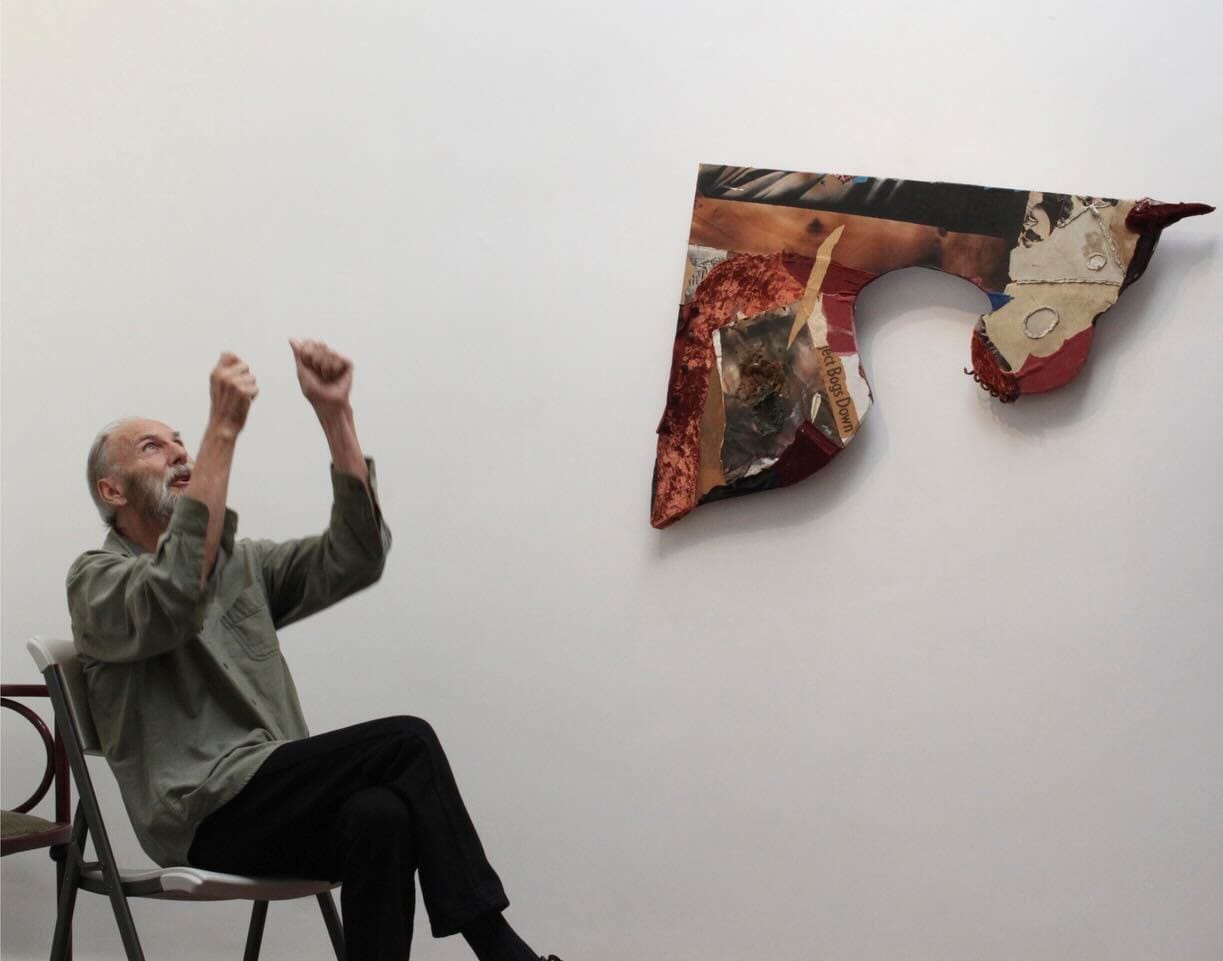
George Herms, a pioneering figure in the West Coast Assemblage movement, died on April 24 at age 90. Known for transforming found materials, rusted metal, and debris into poetic sculptures and collages, Herms emerged from the Beat scene in Topanga Canyon and was influenced by artist Wallace Berman. His first assemblage show, Secret Exhibition (1957), was held in a vacant lot, and he was later included in MoMA's landmark 1961 exhibition The Art of Assemblage. Over seven decades, he exhibited widely, including at the Museum of Contemporary Art, Los Angeles, and Morán Morán, and created public artworks in LA such as 'Portals to Poetry' and 'Clocktower: Monument to the Unknown.'

Tate Britain will Exhibit ‘90s Art and Fashion, and Other News.

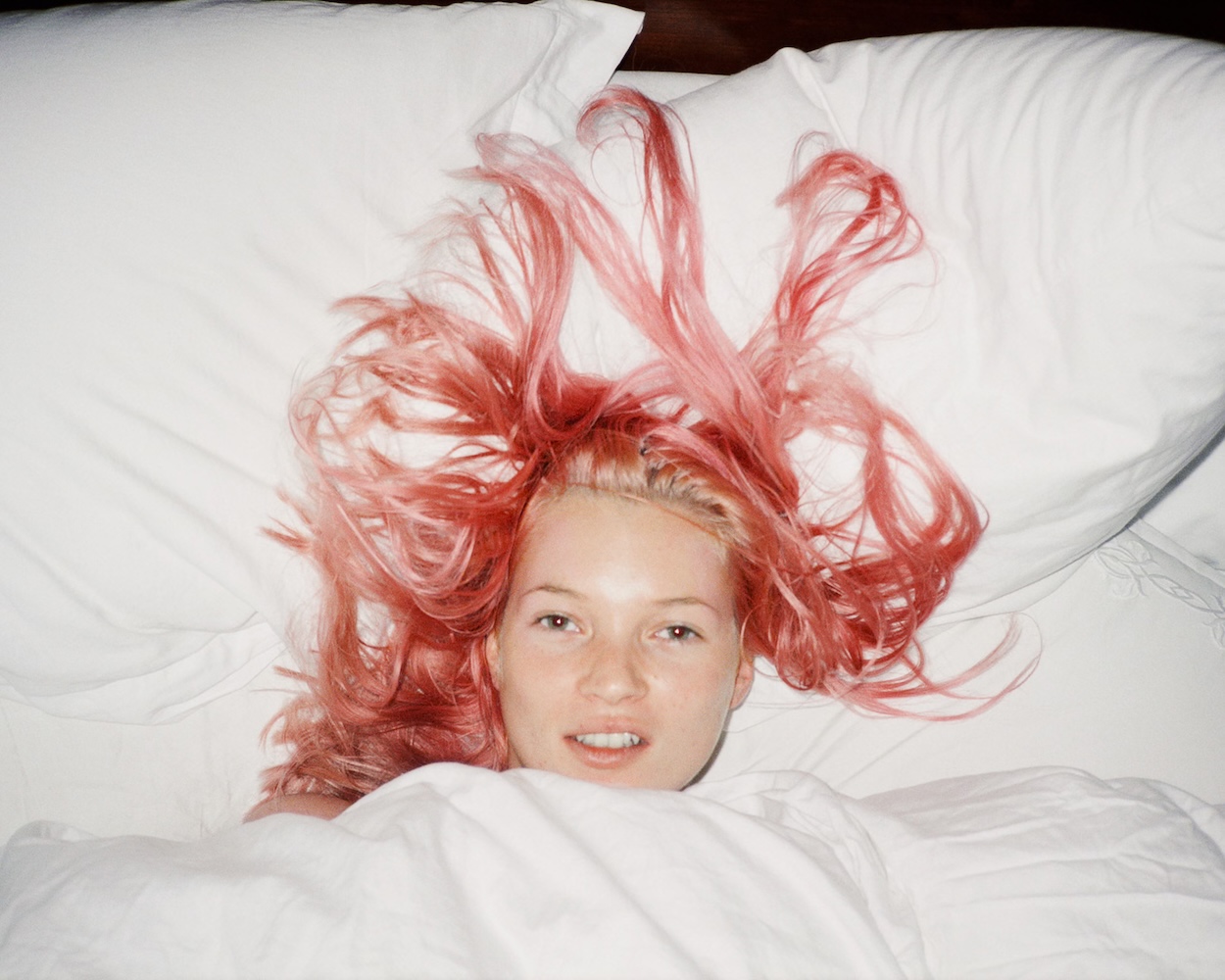
Tate Britain will stage "The 90s: Art and Fashion" in autumn 2026, guest curated by Edward Enninful, featuring nearly 70 artists, designers, and photographers including Steve McQueen, Damien Hirst, Alexander McQueen, and Vivienne Westwood. The exhibition explores how the decade reshaped British cultural identity through art, fashion, and social commentary, highlighting DIY anti-fashion aesthetics and themes of identity, race, class, and representation. Separately, Gagosian opened a new ground-floor flagship at 980 Madison Avenue in New York, replacing its longtime sixth-floor space after 37 years. A rare 17th-century Mughal astrolabe is heading to Sotheby's London with a £1.5–2.5 million estimate. Fondazione Sozzani launched an award for emerging creative talent. A Manhattan federal jury ordered art publisher Michael McKenzie to pay $102.2 million in damages to the Morgan Art Foundation for producing unauthorized works by Robert Indiana.

Au boulot ! 10 œuvres qui célèbrent le travail

Beaux Arts Magazine presents a feature on ten artworks that celebrate labor, from ancient Egyptian frescoes to modern depictions of workers. The article highlights pieces such as Pieter Brueghel the Elder's "The Harvesters" (1565), Diego Velázquez's "The Spinners" (c. 1657), and Johannes Vermeer's "The Milkmaid" (c. 1660), examining how artists have elevated peasant, artisan, and domestic work from background detail to central subject. The feature coincides with the Musée d'Orsay's nationwide initiative "100 œuvres qui racontent le travail" (100 Works That Tell the Story of Work), which explores the history and representation of labor in art.

Whitney Biennial 2026: Care, Catastrophe, and Private Gestures

The Whitney Biennial 2026, the 82nd edition of the longest-running survey of American art, opened with a stripped-down, self-referential title and no subtitle, reflecting a moment of national self-questioning. The exhibition features 56 artists, duos, and collectives, with highlights including Agosto Machado's shrine sculptures dedicated to friends lost to AIDS, Emilie Louise Gossiaux's tender works about her guide dog London, and Michelle Lopez's apocalyptic video projection *Pandemonium*. Machado, a longtime downtown New York artist and caregiver, died shortly after the biennial opened, and his ashes are to be mixed with those of Marsha P. Johnson and spread in the Hudson River.

The Relentless Avant-Garde of The Renaissance Society

The Renaissance Society at the University of Chicago, founded in 1915, has consistently championed avant-garde contemporary art from its modest gallery space on the fourth floor of Cobb Hall. Under the leadership of current director Myriam Ben Salah (since 2020), the institution continues its legacy of presenting visionary works by artists who later become household names, including Henri Matisse, Pablo Picasso, Man Ray, and Félix González-Torres. The article traces the society's history through its pioneering female directors—Eva Watson Schütze, Frances Strain Biesel, and Suzanne Ghez—who shaped its forward-thinking exhibition program, from early modernist shows to local Chicago talent and cross-disciplinary collaborations.

The Devil Wears Prada 2 to Lenny Henry: your complete entertainment guide to the week ahead

The Guardian's weekly entertainment guide highlights two major art exhibitions opening in May 2025: 'Aleksandra Kasuba' at Tate St Ives (2 May to 4 October) and 'Zurbarán' at the National Gallery, London (2 May to 23 August). The Kasuba show is the first UK presentation of the Lithuanian American artist's proto-immersive 'spatial environments,' featuring early paintings, mosaics, and installations focused on utopian social harmony. The Zurbarán exhibition presents a blockbuster survey of the 17th-century Spanish Baroque master, known for his intense religious subjects and dramatic chiaroscuro.

Simply divine: the extraordinary supernatural visions of Francisco de Zurbarán

Francisco de Zurbarán, one of the three great Spanish 17th-century painters alongside Velázquez and Murillo, is finally receiving his first solo exhibition in the UK at the National Gallery in London. The show highlights his distinctive style of religious painting, characterized by stark chiaroscuro, sculptural realism, and a meditative stillness that makes the immaterial seem tangible. Works such as his crucified Christ and The Apparition of Saint Peter to Saint Peter Nolasco exemplify his ability to depict visions and inner spirituality, often commissioned by powerful religious foundations in Seville during the Counter-Reformation.

Katherine El-Salahi, anti-apartheid activist, anthropologist and publisher, 1945–2026

Katherine El-Salahi, an anti-apartheid activist, anthropologist, and publisher, has died at age 81. Born Katherine Levine, she studied at Cambridge and SOAS before joining the clandestine group London Recruits in 1970, carrying out leaflet bomb propaganda and running guns into South Africa. She later became instrumental in the career of her husband, Sudanese painter Ibrahim El-Salahi, organizing his landmark 2013 retrospective at Tate Modern, building his archive, and securing gallery representation with Vigo Gallery.

Sue Webster: Fandoms and Icons

Sue Webster's solo exhibition 'Birth of an Icon' at Firstsite in Colchester traces her lifelong obsession with pop culture, from teenage fandom of Siouxsie Sioux to her evolution as an artist. The show features a sprawling installation 'The Crime Scene' (2017–) that maps her personal history through albums, newspaper clippings, and objects, alongside painted jackets and self-portraits. It marks a departure from her earlier work as half of the duo Tim Noble and Sue Webster, embracing a more personal, amateurish style that reflects her journey through adolescence, marriage dissolution, and motherhood.

7 Books We’re Looking Forward to in May

ARTnews has published a list of seven art books to look forward to in May 2026, covering a wide range of topics from contemporary theory and AI imagery to historical biographies and the Venice Biennale. Featured titles include Dena Yago's collected writings 'That Figures,' Victoria Johnson's biography of Frederic Church 'Glorious Country,' Trevor Paglen's 'How to See Like a Machine,' Nicholas Fox Weber's 'Anni Albers: A Life,' Massimiliano Gioni's 'High Waters: An Oral History of the Venice Biennale,' Rennie McDougall's 'Nonstop Bodies: How Dance Shaped New York City,' and Paul Elie's 'Last Supper: Art, Faith, Sex and Controversy in the 1980s.'

Diedrick Brackens’s Tapestries Beckon the Light of Freedom

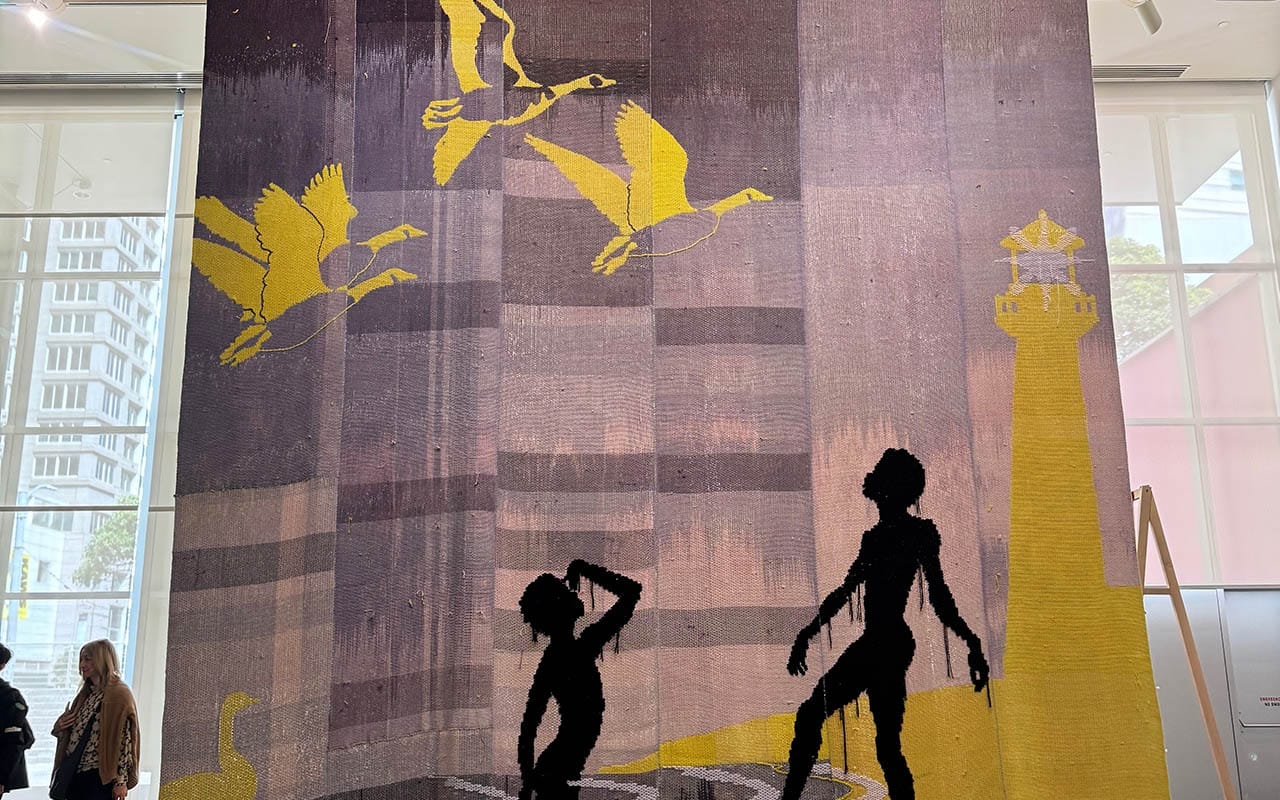
Diedrick Brackens presents his first solo exhibition in the Bay Area, "gather tender night," at Yerba Buena Center for the Arts in San Francisco. Guest-curated by Eungie Joo, the show features 15 tapestries from 2020 onward and three new works from 2026, including the immersive installation "clearing (2026)." Brackens, a Black queer artist and CCA professor, uses hand-dyed cotton and acrylic yarn to weave narratives of personal memory, myth, and the natural world, drawing from West African weaving, California fiber art, European tapestry, and Gee's Bend quilting. His approach, influenced by the "sloppy craft" ethos of his mentor Josh Faught, embraces unfinished edges and visible process as acts of refusal against polished traditions.

George Baselitz, Purveyor of the Tortured Male Genius Myth, Dies at 88

Georg Baselitz, the influential German Neo-Expressionist painter known for his emotionally charged, often violent works and his controversial statements about women artists, has died at age 88. His final paintings will be shown in the exhibition "Eroi d’Oro" at the Fondazione Giorgio Cini in Venice starting May 6. Baselitz rose to prominence with his "Heroes" series of monumental male soldiers and his signature "upside down" paintings, which forced viewers to focus on painterly gesture over representation. He was a key precursor to Germany's Neue Wilde movement and confronted Germany's World War II trauma in works that combined expressionistic brutality with Wagnerian grandeur.

Georg Baselitz – a life in pictures

Georg Baselitz, the German painter known for his raw, expressive works and inverted imagery, has died at age 88. Born in 1938 in Deutschbaselitz, he lived through Nazi Germany and East German communist rule, experiences that deeply shaped his art. The Guardian's obituary traces his life through photographs, from his early years to major exhibitions at Thaddaeus Ropac, White Cube, and the Serpentine, highlighting key works such as 'Das Grosse Pathos' (1966) and his 2024 series 'A Confession of My Sins'.

Return of Aparicio painting to Prado exemplifies trajectory of human taste

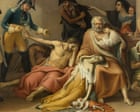
The Prado Museum in Madrid has launched a new exhibition series called "A Work, a Story," beginning with José Aparicio's 1818 painting "El año del hambre de Madrid" (The Year of the Famine in Madrid). Once the museum's most popular attraction, the propagandistic work celebrating Spanish resistance to Napoleon fell from favor and was removed from display for over 150 years, residing in government buildings and other museums before returning to the Prado.

Miniature Model and Giant Buddha

This Hyperallergic newsletter covers multiple New York art stories: Joe Macken's 50-foot hand-built wood replica of New York City now on long-term view at the Museum of the City of New York, Tuan Andrew Nguyen's towering Buddha sculpture on the High Line referencing the destroyed Bamiyan Buddhas, and the MoMA PS1 survey "Greater New York." It also reports on CONDUCTOR, New York's first art fair committed to the global majority, a new experimental artist-run space called The Gallery in Brooklyn, and reviews of Mark Milroy at JJ Murphy and Kim Gordon at Amant.

A brush with... Andrew Cranston—podcast

This episode of 'A brush with...' podcast features Scottish painter Andrew Cranston, born in 1969 in Hawick. Cranston discusses how his work draws on personal experiences—childhood memories, family recollections, and recent rituals—filtered through the painting process. His pictures are rich with references to art history, cinema, poetry, and television, and he often paints on the covers of old hardback books. The conversation covers his influences (Pieter Bruegel the Elder, Paul Klee, Pierre Bonnard, Winifred Nicholson, writers Hugh MacDiarmid and Elizabeth Bishop, filmmakers Nicholas Roeg and Dennis Potter), his studio life, and his answer to 'what is art for?' The episode is sponsored by Bloomberg Connects.

Isabel Nolan’s Work Challenges Everything We Think We Know About Creativity

Artist Isabel Nolan recently discovered she has aphantasia, a rare neurological condition that prevents her from visualizing mental images. Despite this, Nolan has built a successful career creating abstract sculptures, drawings, and tapestries, and her work is featured in the Irish Pavilion at the Venice Biennale. Her exhibition, "Dreamshook," explores themes of imagination versus reality and draws inspiration from late medieval history and the printer Aldo Manuzio.

Expanded Vocabulary: Revisiting Deborah Kass’ Studio

The article recounts the author's visit to Deborah Kass's Brooklyn studio, which she shares with her wife, artist Patricia Cronin. The visit was prompted by logistical issues related to the author's exhibition "Social Minimalism" (2025). During the visit, the author and Kass revisited themes central to Kass's work over three decades: the exclusion of women from art history, Jewish identity, queer voice, lesbian subjectivity, and postwar American art. The conversation also touched on Kass's series including the Warhol Project, Feel Good Paintings, No Kidding, and the large painting/sculpture installation "Everybody" (2019), which was recently featured in a conversation between Kass and Titus Kaphar in Interview magazine.

It’s not all movies: LA’s art, museums and exhibitions are world class

Los Angeles is expanding its cultural offerings with several new and renovated art institutions. The Museum of AI Arts, called Dataland, is set to open this spring at the Grand L.A. complex, created by artist Refik Anadol. It claims to be the world's first museum dedicated to AI art, featuring immersive installations like an Infinity Room with AI-generated scents. Meanwhile, the Natural History Museum completed a $75 million renovation in 2024, adding a 60,000-square-foot wing and displaying a unique green-boned dinosaur named Gnatalie, along with Barbara Carrasco's previously censored mural. The Los Angeles County Museum of Art is opening the David Geffen Galleries on May 4, a 110,000-square-foot space for its permanent collection.

Natasha Tontey to Unveil Major New Immersive Installation Exploring Indigenous Resistance During Venice Biennale

Artist Natasha Tontey will unveil a major immersive installation titled "The Phantom Combatants and the Metabolism of Disobedient Organs" during the Venice Biennale at the Ateneo Veneto di Scienze, Lettere ed Arti. Jointly commissioned by Berlin’s LAS Art Foundation and Helsinki’s Amos Rex, the work combines video, sound, light, and sculpture to reimagine the story of Len Karamoy, a combatant in the CIA-supported Permesta movement that fought the Indonesian government from 1957 to 1961 in North Sulawesi. Tontey, a Minahasan Indigenous artist, uses LiDAR, quantum ghost imaging, and other technologies to explore Indigenous identity, ecology, and the blurring of history and myth.

Giant Buddha Lands in New York

Artist Xandra Ibarra staged a nude performance titled "Nude Laughing" at the Museum of Fine Arts, Boston, walking through the contemporary galleries to challenge viewer etiquette and spark conversations about consent, art history, and the human body. Separately, a 27-foot-tall Buddha sculpture has been installed on the High Line in New York, serving as a resurrection of the destroyed Bamiyan Buddhas and a critical piece of cultural heritage.