filter_list Showing 35 results for "Method" close Clear
dashboard All 240 museum exhibitions 107article news 37article culture 35article local 22person people 17trending_up market 7rate_review review 4gavel restitution 4article policy 3candle obituary 3article events 1
date_range Range Today This Week This Month All
Subscribe

hong kong fire bamboo culture 2723917

A deadly fire in Hong Kong's Tai Po district, which killed at least 159 people and left 31 missing, has sparked an online battle over the role of bamboo scaffolding in the blaze. Photographer Elaine Li and other artists, architects, and cultural historians are defending the centuries-old craft against early news reports that implicated it, fearing it may be unfairly blamed and regulated out of existence. Officials have ordered all scaffolding mesh removed and arrested 21 people on suspicion of manslaughter, but the conversation has grown into a broader fight to protect a cultural symbol of Hong Kong's identity.

how top curators spot the artists of tomorrow 2661383

Artnet News spoke to seven leading curators about how they identify emerging artists who will become the next big names. The curators, including Amy Smith-Stewart of The Aldrich Contemporary Art Museum and iLiana Fokianaki of Kunsthalle Bern, describe their methods: seeking artists who address erased histories, geopolitical contexts, and marginalized perspectives. The article also references a recent debate sparked by Dean Kissick's polemic 'The Painted Protest' in Harper's, which criticized contemporary art for being overly dictated by identity politics, a view countered by curators who affirm their commitment to socially engaged work.

roman sculpture 2710619

This article explores the rediscovery of Roman sculpture during the Renaissance and its profound influence on artists like Raphael, Donatello, Michelangelo, and Leonardo da Vinci. It details how Roman sculptors, inspired by Greek methods after the conquest of Greece in 146 B.C.E., created highly realistic works that served both artistic and political purposes, glorifying emperors and reinforcing imperial power. The piece highlights six iconic Roman sculptures—including the Equestrian Statue of Marcus Aurelius, the Colossus of Constantine, Trajan's Column, and the Augustus of Prima Porta—describing their historical context, artistic features, and enduring legacy.

How did the only painting sold by Van Gogh in his lifetime end up in Russia?

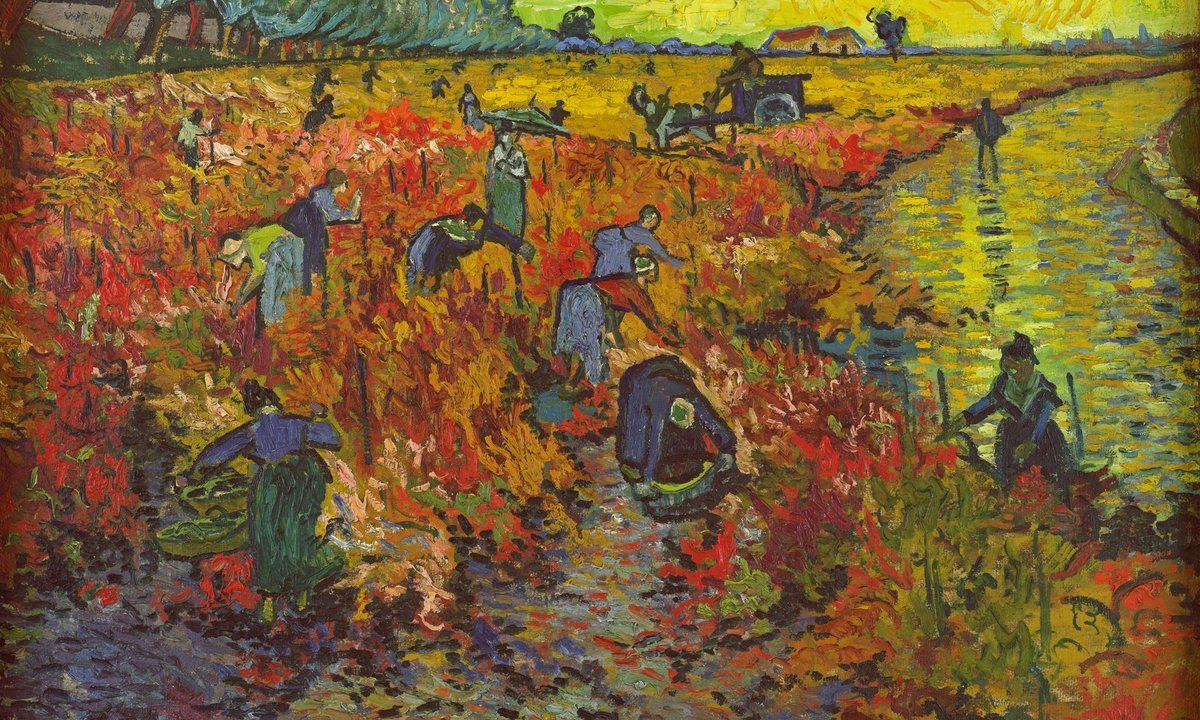
The article explores the history and conservation of Vincent van Gogh's "The Red Vineyard," the only painting he is certain to have sold during his lifetime. Sold for 400 francs at a Brussels exhibition in March 1890, the work now resides at the Pushkin State Museum of Fine Arts in Moscow. A recent conservation project used modern scientific techniques to uncover new details about the painting's creation, including Van Gogh's use of paint straight from the tube, compositional changes, and the fading of chrome yellow pigments. The article also recounts the painting's origin during Van Gogh's time in Arles with Paul Gauguin and its journey to Russia.

The Poetics of Error Between Art and Architecture

La poetica dell’errore tra arte e architettura

This essay challenges the historical obsession with perfection in architecture and art, rooted in Hegelian philosophy where beauty is equated with truth and flawlessness. It argues that the pursuit of the 'ideal' is a cognitive bias that ignores the value of complexity and structural failure. By reframing the 'error' not as a mistake but as a generative method, the text suggests that imperfection is often what elevates a work to the status of a masterpiece.

A brush with… Wolfgang Tillmans—podcast

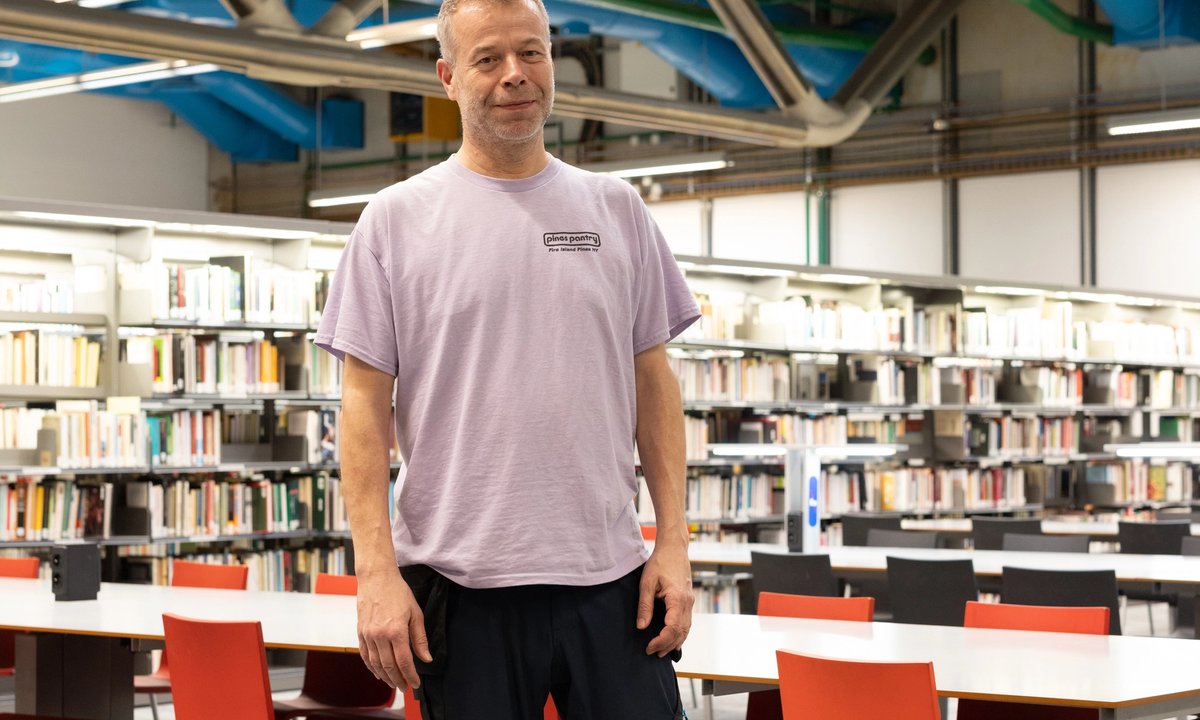
The article is a podcast transcript featuring an in-depth conversation with Wolfgang Tillmans, the influential German photographer born in 1968. It covers his four-decade career, his experimental approach to photography—spanning portraiture, still life, landscape, political subjects, and abstraction—and his innovative installation methods that respond to specific exhibition spaces. Tillmans discusses early influences like Kurt Schwitters, Francisco de Zurbarán, Isa Genzken, Laurie Anderson, and Jiddu Krishnamurti, and reflects on his expanding practice into video, text, sound, and music. The piece also lists current and upcoming exhibitions, including a solo show at Maureen Paley in London and his participation in the 36th Bienal São Paulo.

Sur Arte Radio et dans une expo, l’enquête d’Adrianna Wallis sur les traces de sa grand-mère peintre spoliée par les nazis

Artist Adrianna Wallis (born 1981) discovers that her paternal grandmother, painter Diane Esmond (1910–1981), was a victim of Nazi looting during World War II. After being contacted by historians Patricia Helletzgruber and Sophie Juliard, Wallis learns that much of Esmond's work was systematically destroyed by the ERR, the Nazi organization responsible for art theft in occupied countries. This revelation sparks a personal investigation that becomes a podcast for Arte Radio titled "Il restera la gravité," blending documentary, autobiographical inquiry, and sound installation. Wallis delves into archives, examining microfilms and lists that detail 46 of Esmond's paintings—each methodically described and declared destroyed, such as "Woman in blue evening dress: annihilated."

The Future of Museums Is a Dance Floor

Museums and art institutions are increasingly incorporating nightlife and rave culture into their programming, treating the dance floor as a site of cultural and political significance. Exhibitions like Steve McQueen's 2024 Dia Beacon show, the 2018 'Elements of Vogue' in Madrid, the Swiss National Museum's 2025 'Techno' exhibition, and the author's own 2025 curatorial project 'Rave into the Future: Art in Motion' at the Asian Art Museum demonstrate this institutional turn.

How to Take Great Photographs of Art, According to Artists

Contemporary gallery-going has become synonymous with digital documentation, as visitors increasingly use smartphones to capture paintings, sculptures, and installations. This shift from passive observation to active photography serves as a method of personal archiving, allowing viewers to preserve the fleeting experience of a physical exhibition and share it within their social circles.

how to look at art 2650882

Art critic Ben Davis shares a personal three-and-a-half-step method for getting the most out of visiting an art exhibition alone. The process begins with a quick walkthrough of the entire show to build a cognitive map of the space and note artworks that immediately stand out. The second step involves a systematic, slower tour to read wall texts, examine individual works, and uncover connections and hidden details, with special attention to time-based media like video art.

The Rembrandt robber: five takeaways from an insider’s book on a notorious art thief

Myles Connor, an experienced career criminal, stole Rembrandt's "Portrait of Elsbeth van Rijn" from the Museum of Fine Arts, Boston on April 14, 1975, using the painting as leverage in another crime. In his new book "The Rembrandt Heist," Anthony Amore—director of security at the Isabella Stewart Gardner Museum—analyzes Connor's motivations and methods, presenting five key takeaways from the heist.

Martin Parr steps out from behind the camera lens in informal autobiography

Martin Parr, the renowned British documentary photographer, has released an informal autobiography titled "Utterly Lazy and Inattentive: Martin Parr in Words and Pictures," written with author Wendy Jones. The book traces his career from early black-and-white work inspired by Garry Winogrand and Tony Ray-Jones to his signature vivid color series like "The Last Resort" (1983-85) and "Small World" (1987-94), which drew controversy for their satirical take on British leisure and global tourism. Parr, who was diagnosed with cancer in 2021, continues to be active, with his photographs of Bristol Pride currently on display at Bristol Museum and Art Gallery through March 2026.

Vincenzo Trione's new book aims to redefine the concept of the avant-garde (reviews by his students)

Il nuovo libro di Vincenzo Trione vuole ridefinire il concetto di avanguardia (le recensioni dei suoi allievi)

On March 9, 2026, at IULM University in Milan, Vincenzo Trione presented his new book *Rifare il mondo. Le età dell’avanguardia* (Einaudi, 2025). The event was part of the cultural program *Leonardo alla IULM*, which also featured pages from the Codex Atlanticus on loan from the Biblioteca Ambrosiana. Trione, a professor at IULM, discussed the book with four of his students: Anna Luigia De Simone, Vincenzo Di Rosa, Anna Calise, and Alessia Scaparra Seneca. The talk, titled "Nessuna parola caratterizza l’arte contemporanea più di avanguardia," explored the concept of the avant-garde, its historical legacy, and its contemporary reactivation through movements, manifestos, collectives, and cultural phenomena.

the artists way julia cameron interview 2713047

Artnet News published an interview with Julia Cameron, author of the bestselling creativity guide *The Artist's Way*, originally released in 1992. Cameron discusses the origins of her 12-week program for overcoming artistic blocks, including the famous 'Morning Pages' ritual of writing three pages of unedited text each day. She also introduces her new book *The Daily Artist's Way*, which offers a fresh approach for fans. The interview, conducted by Ben Davis, revisits how Cameron's practical, spiritually-infused techniques have become a staple for artists, musicians, and writers worldwide.

Homework till midnight and ‘one breakdown a week’: the mysterious art school keeping a forgotten style alive

The École Van der Kelen-Logelain, a unique and mythologized painting school in Brussels founded in 1892, continues to operate under strict, traditional methods. Students endure a rigorous six-month winter course, adhering to rules like mandatory white lab coats, silence, and no phones, to master specialized decorative painting skills, most notably the art of trompe l'oeil, or illusionistic painting.

georges seurat a sunday on la grande jatte why so important 2 1234747593

Georges Seurat's Post-Impressionist masterpiece, *A Sunday on La Grande Jatte* (1884–86), is analyzed in depth for its revolutionary technique and historical context. The painting depicts weekend day-trippers in a Parisian park, employing pointillism—which Seurat called divisionism or *peinture optique*—to fix modern life in a chromatic eternity. Influenced by his academic training under Henri Lehmann (a student of Ingres) and Michel Eugène Chevreul's color theory, Seurat used tiny dots of color that blend in the viewer's eye, merging science with art. The work was preceded by *Bathers at Asnières* (1884), which shares the same landscape and thematic concerns, together portraying both sides of the Seine.

eureka max ernst grattage technique 2521464

The article explores how German Surrealist Max Ernst developed the techniques of frottage and grattage in the mid-1920s. Frottage—rubbing paper over textured surfaces like floorboards, leaves, and netting—allowed Ernst to create spontaneous, unconscious imagery, culminating in his 1926 publication *Natural History*. He later adapted the method to canvas as grattage, scraping layers of paint over textured materials to reveal abstract forms, drawing on influences from Leonardo da Vinci and memories of his childhood in the Rhineland.

munch the scream bird droppings 2631108

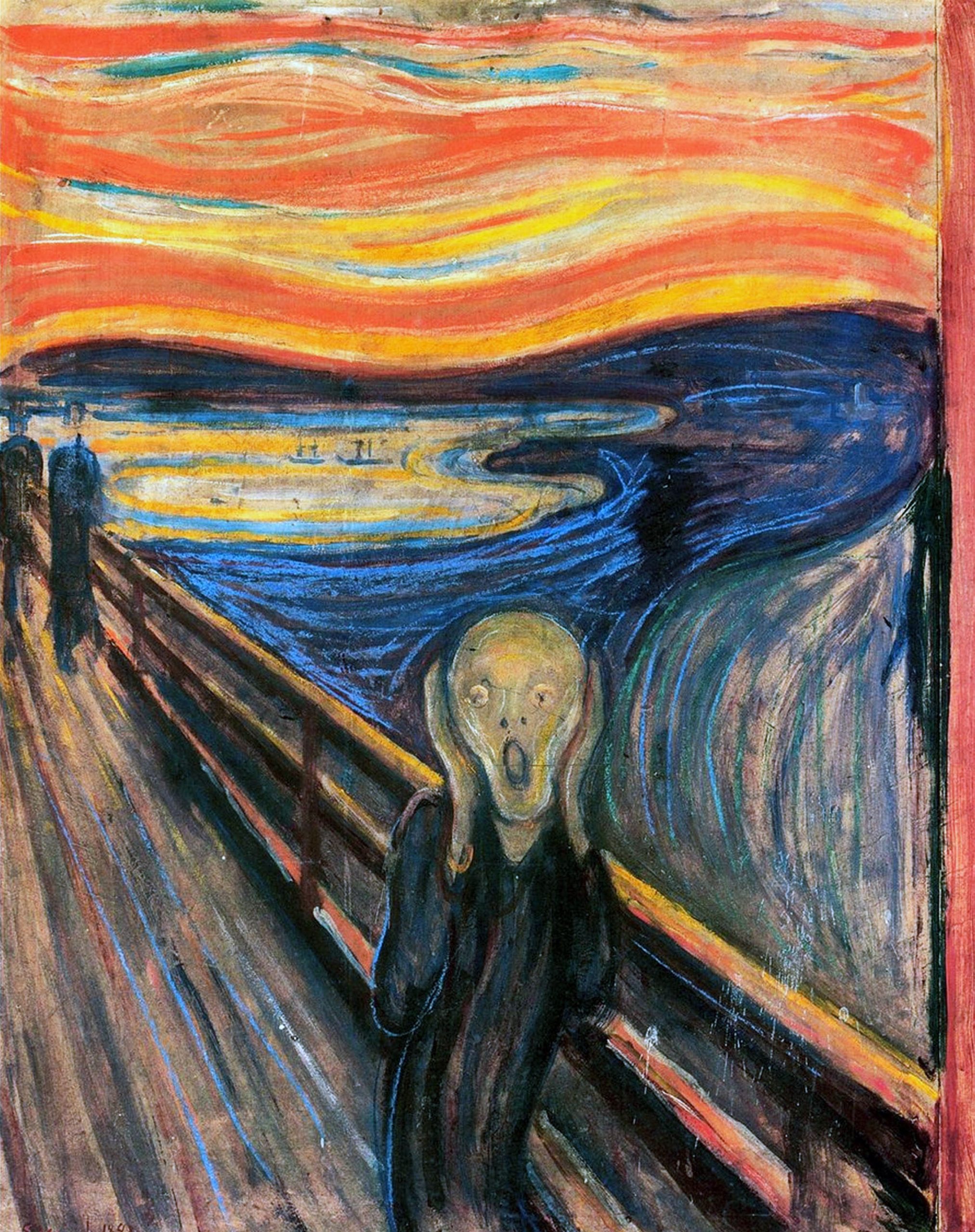
Edvard Munch, the Norwegian Expressionist and Symbolist painter, often worked and stored his paintings outdoors on the grounds of his 45-acre estate, Ekely. This unconventional approach led to many works suffering damage from the elements, including water damage, dog paw prints, and an enduring urban legend that white smears on his iconic painting *The Scream* (1893) were bird droppings. In 2016, researchers at the University of Antwerp used X-ray radiation to debunk this myth, proving the marks were actually candle wax.

Women behind the lens: ‘After state massacres, I began burning the prints as an act of mourning’

Iranian-Canadian visual journalist and artist Parisa Azadi describes her process of creating protest photographs during the 2022 Iranian revolution from exile in Dubai. Unable to return to Iran, she used open-source protest footage from social media, isolating frames and printing them with a Fujifilm instax camera to transform ephemeral digital images into physical objects. In January 2026, after state massacres and executions, she began burning these prints as an act of mourning, scarring their surfaces to echo the violence they depict.

Meet the Writer Who Sees Every Single Show at the Venice Biennale

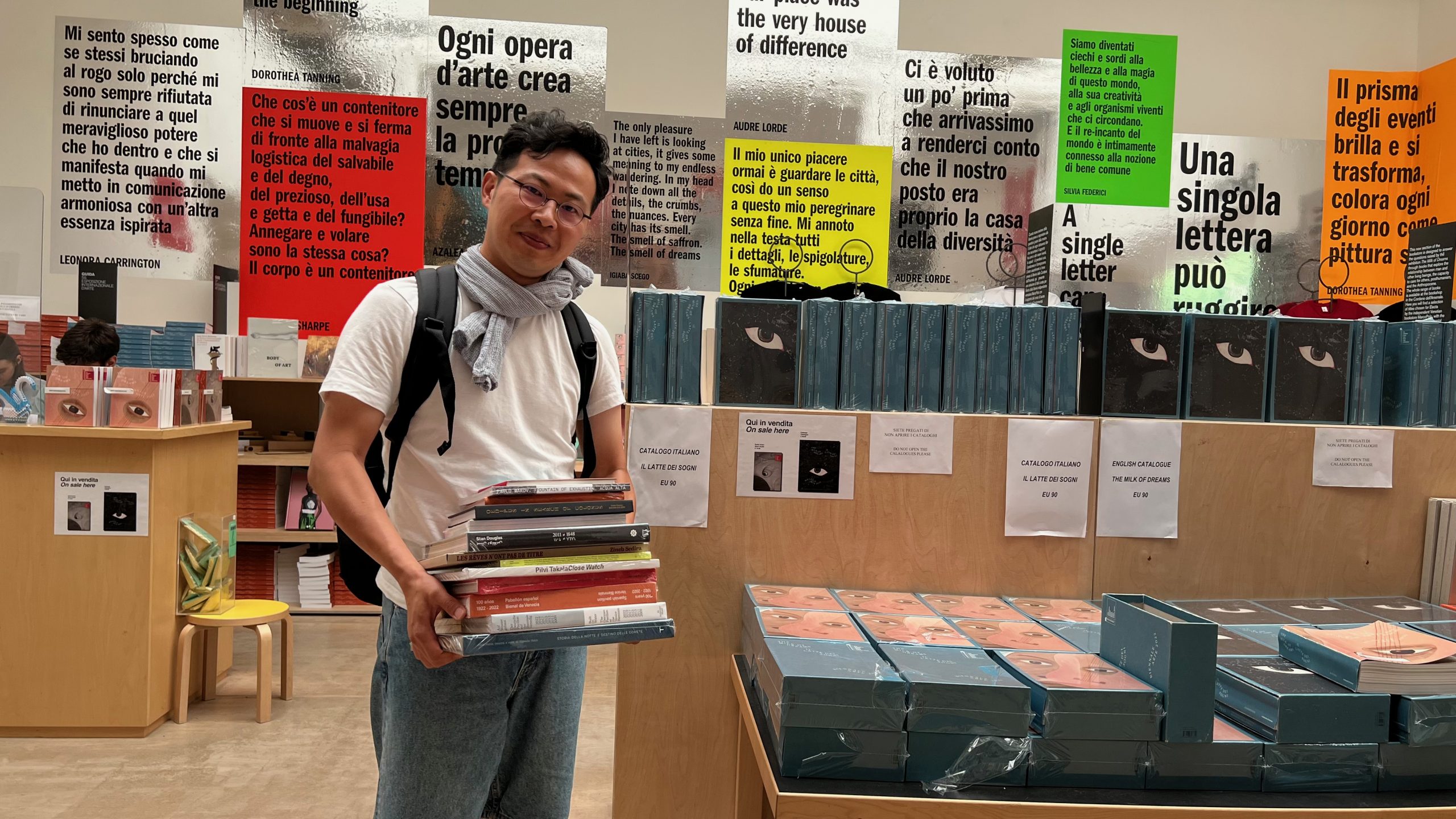
Jaeyong Park, a Seoul-based writer, translator, and interpreter, has attended every edition of the Venice Biennale since 2022—including both art and architecture cycles—and seen every single show, from the central exhibition and national pavilions to collateral and unofficial events. He documents his journeys in regular dispatches and has compiled a free bilingual guide to the biennial. Park organizes his trips with a group of fellow art workers, splitting accommodation costs and sharing reviews over dinner to ensure full coverage.

Euan Uglow monograph offers a fresh perspective through memoirs, papers and contributions

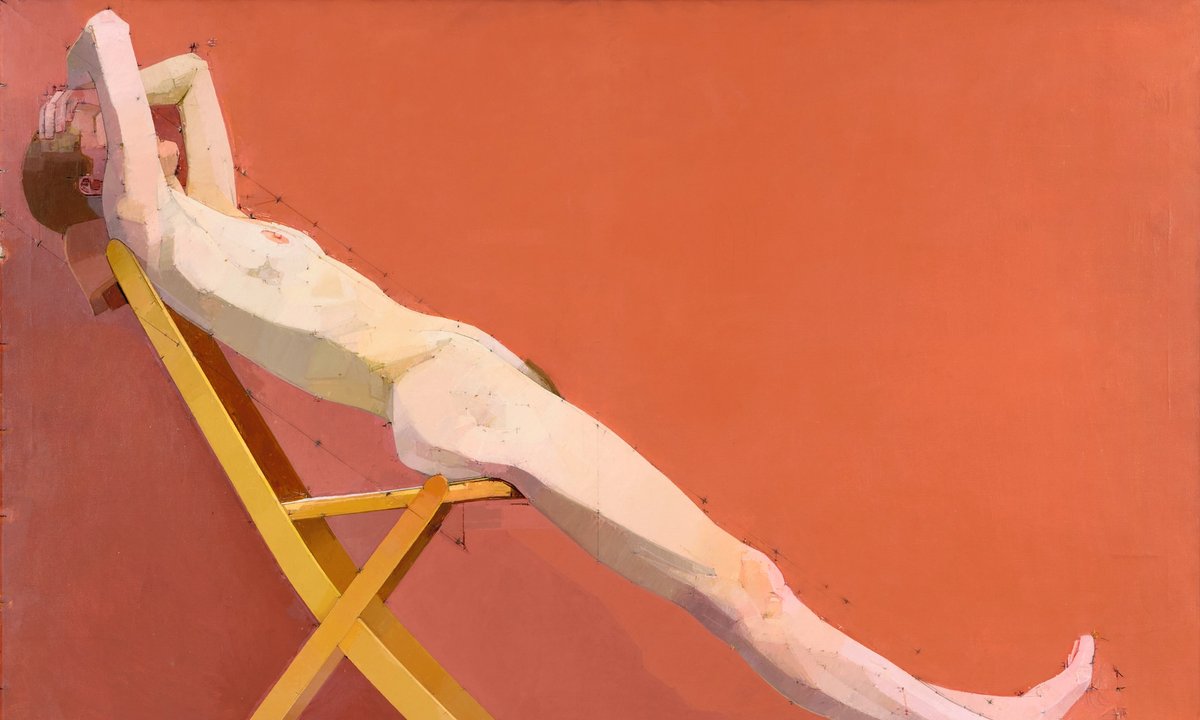
Andrew Lambirth's new book, *The Uglow Papers*, takes an unconventional approach to the monograph on British painter Euan Uglow (1932-2000). Instead of a traditional narrative, Lambirth compiles around 30 personal memoirs, papers, and contributions from friends, students, and colleagues—gathered through interviews, phone calls, emails, and letters. These firsthand accounts, paired with a concise introduction and a glossary of names, offer intimate recollections of Uglow's rigorous studio practice, his teaching methods, and his social life, including details about his Sunday night open houses and shared meals. The book also traces Uglow's artistic development from his studies at Camberwell School of Arts and Crafts and the Slade School of Fine Art, through his mentorship under William Coldstream, to his own distinctive geometric and emotionally charged works like *The Diagonal* (1971-77) and *Pyramid* (1993-96).

Director's Notes with Andrew Nadkarni | Trey Abdella's Miserable Dream

Director’s Notes with Andrew Nadkarni | Trey Abdella’s Miserable Dream

Director Andrew Nadkarni created a short film about artist Trey Abdella, titled "Trey Abdella's Miserable Dream." The film uses the metaphor of a Coney Island roller coaster to explore Abdella's artistic process, moving between his studio and the amusement park to show how he transforms personal memories and Americana into art.

Protect ya neck! Wu-Tang Clan as they’ve never been seen before – in pictures

Photographer Eddie Otchere has released a new photozine, "Wu-Tang 4 + 1 More," featuring a decade's worth of previously unseen portraits of the Wu-Tang Clan and other hip-hop artists. The images, captured between 1994 and 2004, document intimate and candid moments with members like RZA, Method Man, and Ghostface Killah, chronicling the group's early years and Otchere's determined mission to photograph each member.

Learning is something aesthetic and emotional. Marco Dallari says so in his latest book (and in this interview)

L’apprendimento è qualcosa di estetico e di emotivo. Lo dice Marco Dallari nel suo ultimo libro (e in questa intervista)

Italian pedagogist Marco Dallari discusses his latest book, "La bellezza di Sophia" (2026), which explores the intrinsic human drive for knowledge as an aesthetic and emotional necessity rather than a pragmatic survival tool. Drawing on Freudian concepts and the work of Alessandra Risso, Dallari argues that the desire to learn is a primal impulse that should be nurtured through beauty and curiosity rather than stifled by rigid institutional structures.

Cassandra Dias Takes an Impressionistic Approach to Painting with Thread

Cassandra Dias, a Southern California-based artist, creates lush embroideries of natural landscapes using thread painting, a technique that mimics the gestural strokes of a paintbrush. Since taking up needle and thread in 2020, she has developed an impressionistic style that captures cliffsides, vineyards, and mountains in richly textured scenes. Her forthcoming book, "Richly Stitched Landscape Embroidery: Mastering Thread Painted Scenes," is set for release in May and is available for pre-order through the Colossal Shop.

Social Malpractice in the Age of Cultural Compliance

Artist Ed Woodham reflects on the evolution and co-option of socially engaged art, using his own projects like 'The Keepers' protests and the Art in Odd Places initiative as examples. He describes a troubling trend where the language and strategies of social practice art, once used to challenge systems, are now being adopted by developers, corporations, and institutions for branding, place-making, and community engagement initiatives that often operate within the very economic structures driving displacement and eroding public space.

Comment | Art and science rely on freedom of thought—and on each other

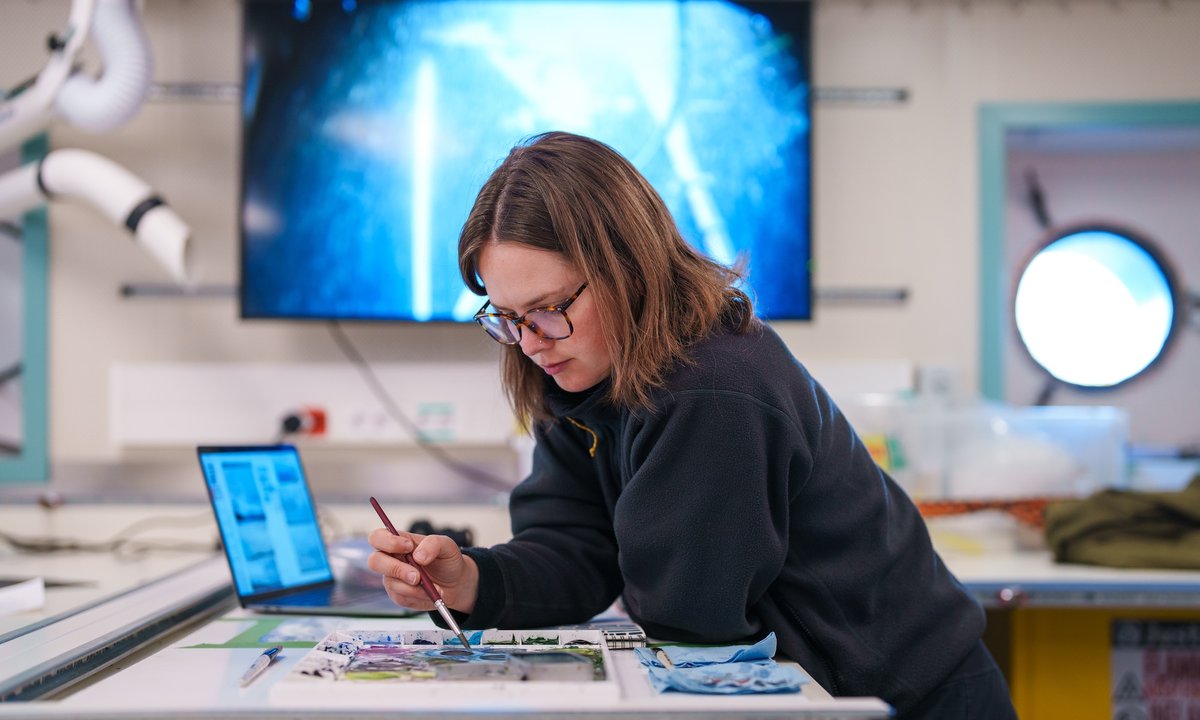
The article argues that art and science are deeply interconnected, both relying on freedom of thought and cross-disciplinary collaboration. It cites examples like birds' colorful feathers being explained by a study supported by Schmidt Sciences, which found that birds use a layer of white and black feathers to accentuate color—a technique painters have used for centuries. The piece highlights the Artist-at-Sea programme aboard the Schmidt Ocean Institute's research vessel Falkor (too), where artists like Constance Sartor and Jill Pelto collaborate with scientists to communicate marine science to broader audiences. The author, who works with scientists and is married to one, emphasizes that both disciplines pursue truth through different but complementary methods, from Leonardo da Vinci's anatomical studies to medieval Islamic tilework and Alexander von Humboldt's naturalist drawings.

Zurich: Peripheral Presence. by Tibor Bielicky and Ellena Ehrl

Zurich’s urban landscape is defined by functionalist structures from the 1990s and early 2000s that serve as the 'understated backdrop' to daily life. These buildings, including the Signal Box by Gigon Guyer and the Telecap 2000 by Hans Ulrich Imesch, act as navigational markers at the city’s geographic choke points. Despite their significance in shaping the city's rhythm and internal choreography, many of these structures are now reaching the end of their first lifecycle and face the threat of demolition due to real estate speculation.

For Another Buddhism, Against Byung-Chul Han

The article is a critical essay by Alex Taek-Gwang Lee challenging the philosophical approach of popular thinker Byung-Chul Han. It argues that Han's accessible, 'Sloterdijkian' style prioritizes rhetorical flair and immediate recognition over dialectical rigor and material political analysis, resulting in a critique that circulates comfortably within the very neoliberal attention economy it claims to oppose.

Who Created the Book of Kells? A Master Craftsman Takes on the Mystery

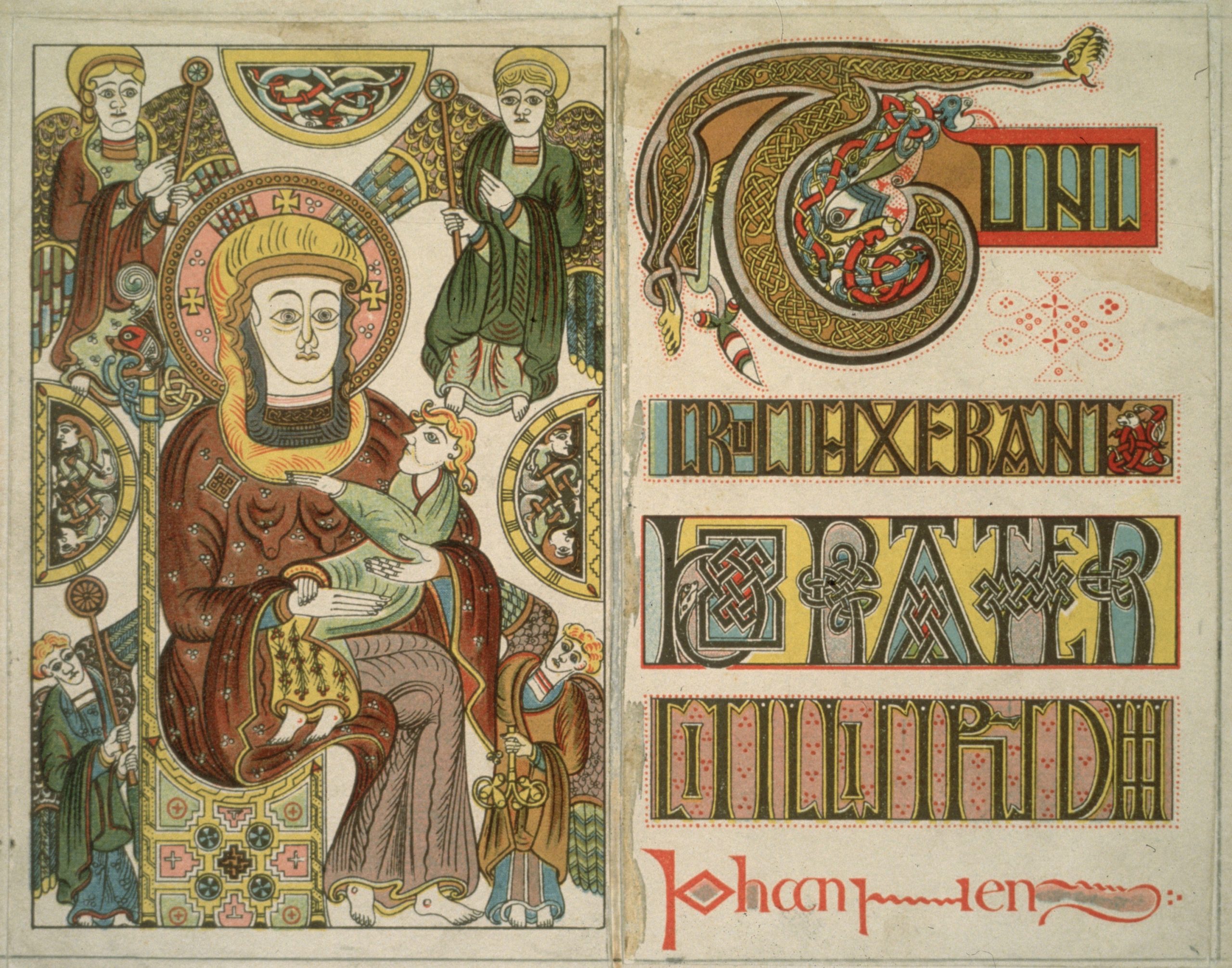
A new project led by master craftsman Thomas Keyes aims to recreate medieval vellum-making techniques to test theories about the origin of the Book of Kells. Keyes will build a replica of a washing tank found at the Scottish monastery of Portmahomack and use historically accurate methods, including potentially using seaweed-based lye, to produce vellum. This experimental archaeology seeks to determine if the manuscript's unique physical characteristics match the production methods used at Portmahomack.